2025-02-05 05:09
MUMBAI, Feb 5 (Reuters) - Dollar-rupee forward premiums and very-near-tenor swap rates dipped on Wednesday as some of the excess dollar liquidity in the banking system was drained and on expectations of an interest rate cut later this week. The dollar-rupee overnight swap rate eased to about 0.55 paisa on the day, commensurate with the prevailing rupee call rates, after staying elevated for the better part of December and January. That was partly because of the sheer volume of dollars pumped into the banking system due to the Reserve Bank of India's routine interventions to cushion the rupee's fall, traders said. While very near tenor interbank sell-buy swaps to manage the surplus dollars had pushed up swap rates, the RBI absorbed some of the excess via a $5 billion buy/sell dollar-rupee swap last week. The swap was part of the central bank's slew of liquidity-boosting measures, which have so far helped ease the deficit to 382 billion rupees ($4.39 billion) on Feb. 4 from 3.16 trillion rupees ($36.28 billion) less than two weeks ago. A softer overnight swap rate also helped bring down near-tenor dollar-rupee forward premiums, while far forward premiums were weighed down by expectations of an RBI rate cut by 25 basis points (bps) at the end of this week. The 1-month forward premium dropped to 17.75 paisa, while the 1-year implied yield declined 4 bps to 2.15%. A rate cut would keep the 1-year yield between 2.10% and 2.35%, while a pause could boost the yield to 2.70%, a trader at a state-run bank said. Meanwhile, the rupee was slightly weaker on the day at 87.1350 per U.S. dollar as of 10:20 a.m. IST. Asian currencies were trading mixed. "The rupee is likely to remain volatile amidst global headwinds, fluctuating between 86.80 and 87.20," said Amit Pabari, managing director at FX advisory firm CR Forex. ($1 = 87.1100 Indian rupees) Sign up here. https://www.reuters.com/markets/currencies/dollar-rupee-forwards-dip-rbi-rate-cut-bets-overnight-swap-rate-normalizes-2025-02-05/
2025-02-05 03:02
MUMBAI, Feb 5 (Reuters) - The Indian rupee is likely to decline at open on Wednesday weighed by the currency's weakness in the non-deliverable forward markets, while being unable to take advantage of the further decline in the dollar index. The 1-month non-deliverable forward indicated that the rupee will open at 87.14-87.16 to the U.S. dollar compared with 87.0675 in the previous session. There "does not seem to be a specific reason" for (dollar/rupee) NDF to be higher, a currency trader at a bank said. "If I had to provide a reason, it's the overall direction, which is higher (on dollar rupee)," the trader said. The rupee on Tuesday was in the 87.01-87.14 range, having to contend with the news flow on tariffs. The rally to near 87 brought about by the U.S. delaying tariffs on Canada and Mexico was cut short by China's retaliation to U.S. tariffs, to which the initial reaction of investors was to sell the Chinese yuan and avoid risk assets. That initial reaction faded, helping the rupee recover from the lows of Tuesday's session. All eyes on Wednesday were on China with markets resuming trade after the Lunar New Year break. The People's Bank of China set a higher-than-expected yuan mid-point. The onshore yuan was at 7.2832 to the U.S. dollar. Its offshore counterpart has declined past 7.36 on Tuesday. DOLLAR FALLS FURTHER The dollar index slipped below the 108 handle after rallying to near 110 on worries over U.S. tariffs on its trading partners. U.S. suspending tariffs on Mexico and Canada interrupted the upward march on the dollar. "With tariff news flow cooling off for now and no imminent deadlines, the focus will shift back towards the U.S. labour market," DBS Bank said in a note. Data released on Tuesday showed U.S. job openings fell by the most in 14 months. U.S. yields dropped. KEY INDICATORS: ** One-month non-deliverable rupee forward at 87.34; onshore one-month forward premium at 18.5 paise ** Dollar index down at 107.85 ** Brent crude futures down 0.4% at $75.9 per barrel ** Ten-year U.S. note yield at 4.5180 ** As per NSDL data, foreign investors sold a net $416.5mln worth of Indian shares on Feb. 3 ** NSDL data shows foreign investors bought a net $22.6mln worth of Indian bonds on Feb. 3 Sign up here. https://www.reuters.com/markets/currencies/weaker-dollar-dip-us-yields-no-help-rupee-2025-02-05/
2025-02-05 00:39
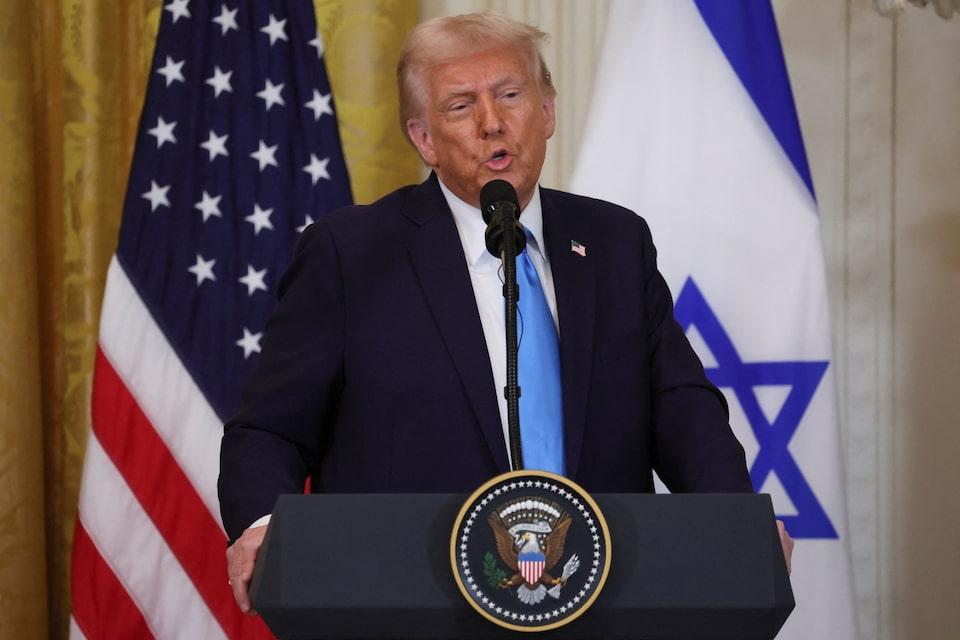
WASHINGTON, Feb 4 (Reuters) - U.S. President Donald Trump said on Tuesday that he would love to make a deal with Iran to improve bilateral relations, but added that Tehran should not develop a nuclear weapon. "I say this to Iran, who's listening very intently, 'I would love to be able to make a great deal. A deal where you can get on with your lives,'" Trump told reporters in Washington. "They cannot have one thing. They cannot have a nuclear weapon and if I think that they will have a nuclear weapon ... I think that's going to be very unfortunate for them," He said. Sign up here. https://www.reuters.com/world/trump-says-he-would-love-make-deal-with-iran-2025-02-05/
2025-02-05 00:36
Dollar falls as decline from Monday's high continues Trump negotiating on tariffs seen as positive signal Yen rallies on wage data NEW YORK, Feb 5 (Reuters) - The U.S. dollar fell to its lowest in more than a week on Wednesday as investor nerves about a global trade war abated, while the Japanese yen rallied on the back of strong wage data. The dollar index, which tracks the currency against six peers , was last down 0.435% at 107.58, having earlier touched its lowest since January 27 at 107.29. As U.S. President Donald Trump looked poised to impose 25% import tariffs on Mexico and Canada, the dollar on Monday jumped as much as 1.3% to 109.88. It has since fallen around 2% after both Mexico and Canada won a one-month reprieve by beefing up border security, although the United States did increase levies on China. "In particular, the market was relieved that China didn't hit back overly hard, and that shows that China is willing to tolerate high U.S. tariffs for the time being," said Adam Button, chief currency analyst at ForexLive. The euro rose 0.24% to $1.041 after dropping as much as 2.3% on Monday on fears about the global impact of tariffs and a possible extension of levies to the European Union. The dollar fell most sharply on Wednesday against the yen, which was boosted by strong Japanese wage data and comments from a Bank of Japan official hinting at further rate hikes. The U.S. currency was last 1.19% lower at 152.525, its lowest since December. "This (Wednesday) morning’s dollar pullback looks like an extension of recent trends, with markets continuing to price out tariff risks from FX markets," said Nick Rees, head of macro research at Monex Europe. The dollar extended its losses against the yen after data showed that U.S. services sector activity unexpectedly slowed in January amid cooling demand. The Institute for Supply Management (ISM) said on Wednesday its non-manufacturing purchasing managers index (PMI) slipped to 52.8 last month from 54.0 in December. Economists polled by Reuters had forecast the services PMI edging up to 54.3. Data showed Japan's December inflation-adjusted real wages rose 0.6% year-on-year thanks to a wintertime bonus bump. That left traders increasing bets on more BOJ rate hikes this year, with just over 30 basis points priced in by the year-end. Sterling was up 0.2% after hitting its highest in a month at $1.255. YUAN DIPS ON CHINA TARIFFS Trump's imposition of new, 10% tariffs on China knocked the yuan slightly on Monday as markets returned from an extended Lunar New Year break. The yuan fell 0.47% in onshore trading. Its gains were capped by the People's Bank of China setting a stronger-than-expected midpoint rate, around which the currency is allowed to trade in a 2% band. Investors had watched the fixing for clues on whether Beijing would allow the yuan to weaken to blunt the impact of the trade measures. China on Tuesday imposed its own tariffs on imports from the United States in a swift response, and Trump said the same day he was in no hurry to speak to Chinese President Xi Jinping to try to defuse the situation. Sign up here. https://www.reuters.com/markets/currencies/aussie-new-zealand-dollars-get-respite-ahead-chinas-reopen-2025-02-05/
2025-02-05 00:00
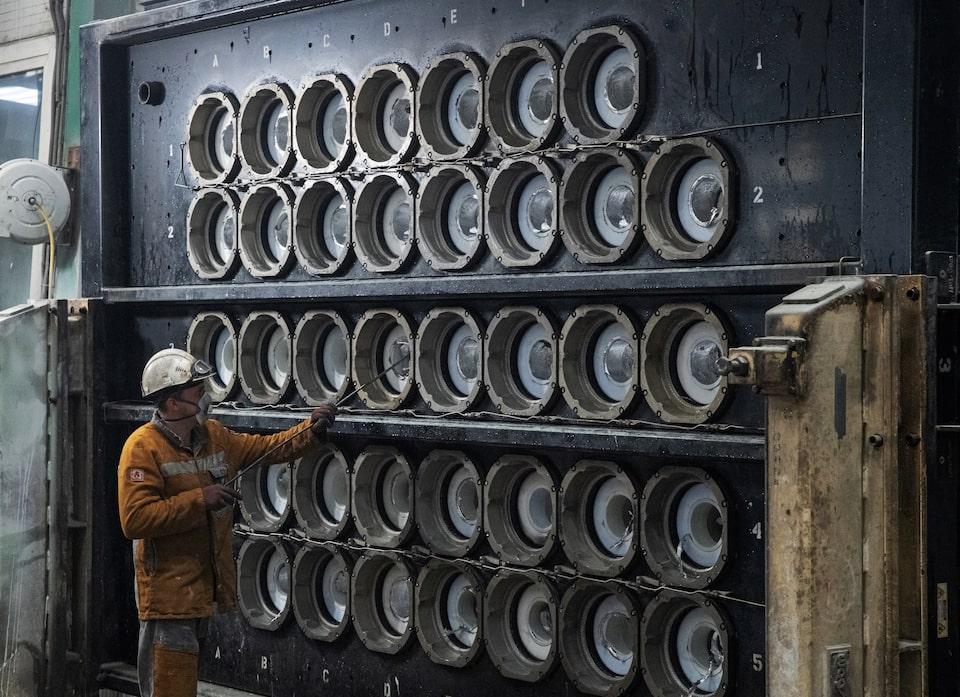
LONDON, Feb 4 (Reuters) - Aluminium is expected to be the top performer among the London Metal Exchange (LME) base metals pack in 2025, with analysts forecasting a supply shortfall of the light metal this year. Analysts participating in the Reuters January base metals poll also see higher average cash prices for zinc, copper and tin this year relative to 2024. Nickel is the conviction bear call even after the average LME cash price fell by almost 22% last year. No-one expects anything other than continued nickel oversupply both this year and next. Supply dynamics are top of analysts' minds in terms of likely winners and losers this year but a troubled macro picture hangs over the industrial metals complex. Median forecasts for copper, tin, nickel and lead have all been cut since Reuters' last quarterly poll in October, reflecting concern about the demand impact from a tariff trade war. ALUMINIUM BULLS The average LME cash aluminium price rose by 4.9% year-on-year in 2024 and is set to climb another 6.3% to $2,573.50 per metric ton in 2025, according to the median forecast of 33 analysts participating in the January poll. The outcome was little changed from the October poll, suggesting a hardening conviction in the metal's bullish prospects. Underpinning the higher price forecast is an expected shift in market dynamics to a supply shortfall. Analysts swung their consensus to a market deficit of 8,000 tons in 2025 from oversupply of 100,000 tons in the previous poll. The deficit is expected to grow to 365,000 tons in 2026 with the average price lifting further to $2,626 per ton. Tightness in the alumina market has recently buoyed the aluminium price but the bigger structural supply constraint is China's smelter capacity cap. China's national output was running at an annualised 43.9 million tons at the end of 2024, close to the 45.0 million cap. If the world's largest producer has run out of expansion potential, it's far from clear how the rest of the world is going to fill the output gap. ZINC PRICE RALLY SEEN FADING Zinc is forecast to be the second-best performer this year with the average cash price expected to increase by 4.2% to $2,895 per ton. Moreover, analysts lifted their zinc price expectations from the October poll against the broader trend. This tells you how much the zinc narrative has changed in the last three months. A market expected to register massive oversupply has turned out to be surprisingly tight as a shortfall of mined concentrates drags down global metal production. However, that should change this year as mine supply recovers and analysts expect zinc prices to weaken over 2025 and 2026. Indeed, zinc is the only LME base metal projected to fall in price next year. Zinc's premium over sister metal lead will also ease since the consensus is for lead prices to average a steady $2,050 both this year and next. DIALING BACK ON COPPER Analysts are dialing back expectations for copper's potential upside. While the average cash price is expected to rise by 3% to $9,425 per ton this year, the median forecast is 4.8% lower than the October poll. This should be no great surprise since copper is the LME metal most sensitive to shifts in macro sentiment. And right now the macro outlook is looking ever more stormy after U.S. president Donald Trump imposed a 10% tariff on imports of Chinese goods. The carefully calibrated Chinese response offers some hope that trade talks could avert a full trade war but copper is particularly sensitive to any negative consequences for China, the world's largest buyer of the red metal. The market spent much of last year looking for signs of revival in China's giant manufacturing sector and this year is shaping up to be no different. Tariffs and the threat of more to come muddy the waters. THINGS CAN ONLY GET BETTER FOR NICKEL The median nickel forecast for 2025 has also been downgraded by a hefty 5.9% to $16,265 per ton since October as market oversupply becomes increasingly visible in the form of rising LME stocks. But having already fallen so heavily over the last year, analysts don't think there's much further downside. The consensus is for LME cash nickel to bottom out at an average $15,550 per ton in the current quarter before edging steadily higher to $16,750 in the fourth quarter. The price recovery is expected to continue into 2026 with a median cash price forecast of $17,637 per ton. The betting seems to be that Indonesia, the world's dominant producer, will put the brakes on its runaway production growth to shore up prices. UNPREDICTABLE TIN Tin has been a particularly volatile market over the last couple of years and there's little consensus as to what is next in store for the soldering metal. The median forecast is for a modest 2.6% lift in average price this year relative to 2024. But that masks a very wide range of expectations, stretching from a low of $23,750 to a high of $33,000 per ton. The spectrum of outcomes is an even wider range of $21,000 and $37,000 for 2026. Which says much about how difficult it is to read this small but profoundly opaque market. The opinions expressed here are those of the author, a columnist for Reuters. Sign up here. https://www.reuters.com/markets/commodities/aluminium-is-base-metals-analysts-bull-pick-2025-andy-home-2025-02-04/
2025-02-04 23:48
BOGOTA, Feb 4 (Reuters) - Colombian President Gustavo Petro on Tuesday called for the sale of state oil firm Ecopetrol's (ECO.CN) , opens new tab fracking operations in the United States to invest in clean energy. The leftist leader's request was made to his minister of mines and energy, Andres Camacho, in an unusual live broadcast of a cabinet meeting. "I want this operation to be sold in order to invest in clean energy in Colombia, to be discussed technically, and economically," he said. "It cannot be that we are for death and not for life." A spokesperson for Ecopetrol said the company would not immediately provide a comment. The meeting came a day after Ecopetrol announced an agreement to renew its oil joint venture with Occidental Petroleum (OXY.N) , opens new tab in the U.S. Permian Basin in Texas, first signed in 2019. The contract extension is set to run until 2027 with the possibility of a further extension. The firm's Chief Executive Ricardo Roa said on Monday Ecopetrol could drill around 91 development wells with an investment of over $880 million this year. Ecopetrol's Permian Basin oil and gas production rose nearly 62% in the first nine months of last year to 95,200 barrels of oil equivalent per day, according to the firm, while output declined elsewhere. Last year, Ecopetrol backed out of a $3.6 billion deal to buy a 30% stake in shale producer CrownRock from Occidental at the eleventh hour after orders from Petro, prompting the ire of Occidental CEO Vicki Hollub. "We worked on that deal from March to just last week, and we thought we were done, but President Petro of Colombia didn't approve of it," she said in an earnings call last August. "Unfortunately, there are others in the world like Petro and there are some actually in the United States who believe oil and gas should go away and believe that we shouldn't be an industry anymore." Petro has made weaning Colombia away from fossil fuels a key goal of his government. "There is no other way for humanity but to stop the path of fossil fuels," Petro said at the meeting on Monday. "This is not happening because the oil companies are beating us, because we are afraid of them. I am not afraid of them." Sign up here. https://www.reuters.com/business/energy/colombias-petro-calls-sale-ecopetrol-fracking-operations-us-2025-02-04/