2025-02-04 23:11
Feb 4 (Reuters) - Atmos Energy (ATO.N) , opens new tab posted a rise in first-quarter profit on Tuesday, as the natural gas utility benefited from higher rates. During the reported quarter, the company implemented, or received approval to implement ratemaking regulatory actions which resulted in an increase in annual operating income of $150.5 million. Higher rates boosted operating income in its distribution segment by 12.7% to $316.1 million, from the previous year. Growth in residential customers and increased industrial load also helped the segment's quarterly performance. Atmos delivers natural gas to about 3 million distribution customers across eight U.S. states. The company, which also operates about 5,700 miles of transmission pipelines in Texas, said quarterly operating earnings in its pipeline and storage unit rose 20.9% to $143.4 million, from the previous year. It reaffirmed its full-year profit forecast range of $7.05 to $7.25 per share. The Dallas, Texas-based company's net income rose to $351.9 million, or $2.23 per share, in the quarter ended Dec. 31, from $311.3 million, or $2.08 cents per share, a year earlier. Sign up here. https://www.reuters.com/business/energy/atmos-energy-reports-higher-quarterly-profit-2025-02-04/

2025-02-04 23:06
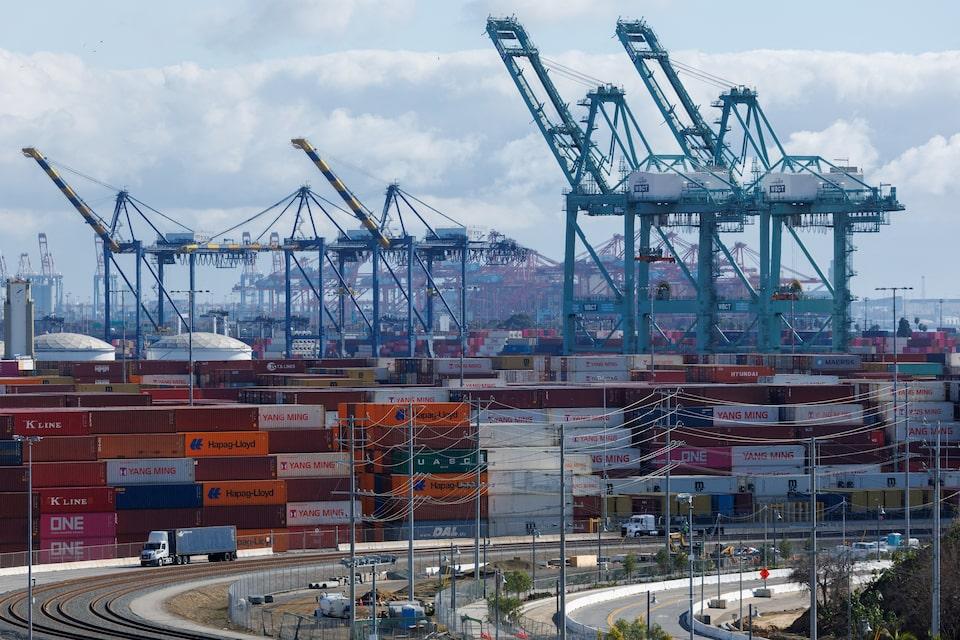
NAPERVILLE, Illinois, Feb 4 (Reuters) - A potential trade war between the United States and its two neighbors has been thwarted for now, though the U.S.-China status remains murky after both parties implemented tariffs on Tuesday, their leaders yet to speak with one another as of late afternoon. All four countries occupy significant spots on each other’s trade ledgers, though the highly diverse array of products and industries involved can complicate efforts to assess the impact of a trade dispute. China, Canada and Mexico are the top three origins for U.S. imports of all goods, accounting for about 45% of the value in 2022, which exceeded $3 trillion. On the export side, the same three countries are the top destinations for U.S. exports of all goods, accounting for almost 39% of the total, valued near $2 trillion in 2022. Data from the Observatory of Economic Complexity helps break down this data a bit further. EXPORTS The United States is the leading destination for Chinese goods and China is the No. 3 destination for U.S. ones. Both countries’ shares of each other’s exports have fallen since the first trade war began in 2018, though the United States’ piece of China’s exports has declined by a larger degree. In 2019, the portion of U.S. exports destined for China dropped to an 11-year low of 6.7% by value. The pre-trade-war peak was 8.7% in 2017, and it settled at 7.7% in 2022. The United States was the destination for 18% of Chinese exports by value in 2017 and 2018, though that share fell to 14.8% in 2022. For Mexico and Canada, exports to the United States are overwhelmingly more critical by comparison. In 2022, the United States accounted for 77% and 75%, respectively, of the total values of Mexican and Canadian exports. China was the No. 2 destination for Canadian exports at 4.3% of the value, and Canada was Mexico’s No. 2 destination at 4.1%. Canada and Mexico share a similar importance in U.S. exports as they accounted for about 16% and 15% of the 2022 value, respectively. IMPORTS Canada and Mexico also rely heavily on the United States for their imports, as U.S. goods accounted for 56% of the value of all imports for both countries in 2022. Mexico’s top U.S. imports include items like machinery, electronics, appliances, crude oil and natural gas. Those accounted for about 48% of the 2022 import value. Cars and other vehicles are Canada’s top U.S. import at nearly 17% of the 2022 value, followed by machinery, electronics and appliances at 21%. The United States, South Korea and Japan are generally the top contributors to China’s imports, each accounting for around 7% of the total value between 2020 and 2022. In each of those same years, soybeans were the No. 1 U.S. product imported by China, accounting for between 10% and 12% of the total value. Although China’s latest retaliation did not include soybeans, the oilseed offers an example of a trade flow threatened not only by possible tariffs, but also by rival suppliers. The United States over the last decade-plus has lost competitive advantage to Brazil, particularly in the agricultural space as Brazil’s output expands. This trend can be felt at the wider scale. In 2002, the United States and Brazil combined to account for 10.6% of China’s total import value, only slightly lower than the combined 2022 share of 11.2%. But Brazil over that period increased its individual share to 4.2% from 1.1%, and similar phenomena could ultimately result if the United States finds itself in prolonged tariff disputes with other trade partners. Karen Braun is a market analyst for Reuters. Views expressed above are her own. Sign up here. https://www.reuters.com/markets/commodities/by-numbers-us-mexico-canada-china-trade-braun-2025-02-04/
2025-02-04 23:06
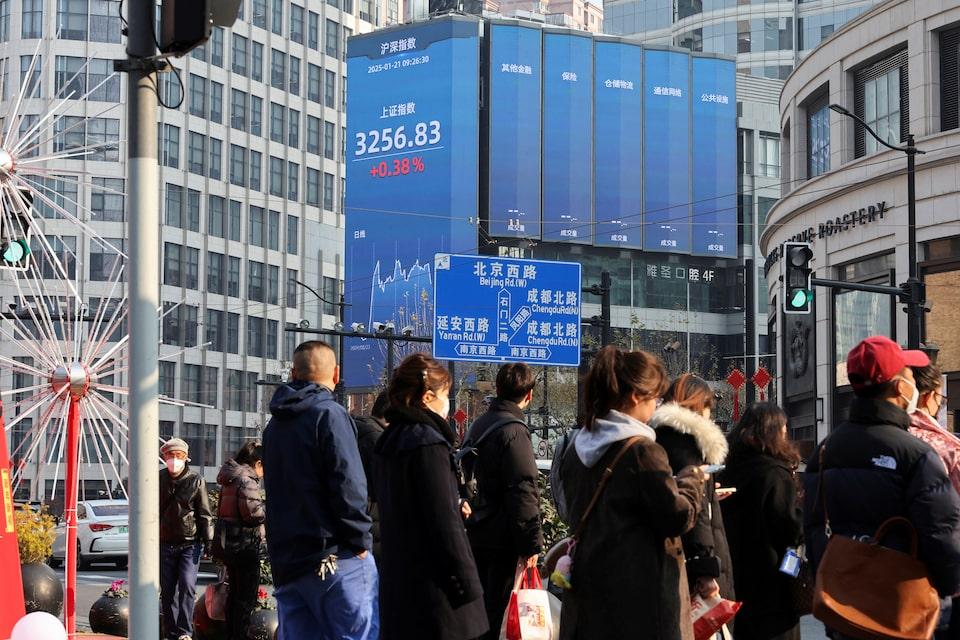
Mainland markets return to tariffs after week-long break HK-listed Chinese shares have surged this week Firm yuan fixing shows Beijing's resolve to minimise volatility SHANGHAI/HONG KONG, Feb 5 (Reuters) - China's stocks and currency came under pressure as markets returning from a week-long break were greeted by a fresh trade dispute with the United States and ructions in the global artificial intelligence sector. Tariffs so far have been less than what the Trump administration had initially indicated and relief was evident in Hong Kong, where Chinese stocks rallied this week. Meanwhile, enthusiasm around China's artificial intelligence company DeepSeek bolstered AI stocks. While investors were taking money off the table, declines have so far been limited with both the bluechip CSI300 (.CSI) , opens new tab and the Shanghai Composite Indexes (.SSEC) , opens new tab slipping roughly 0.2%. Investors are now mostly focused on what Beijing might do to bolster confidence. Kaiyuan Securities analyst Wei Jixing said President Donald Trump's 10% tariffs on Chinese goods had largely been priced in. "China's market will likely overlook the tariff disruptions, as DeepSeek is repairing risk appetite, while investors look forward to more proactive domestic policies," Wei said, referring to the new low-cost Chinese AI model that stunned markets last week. China's central bank on Wednesday set the yuan midpoint at 7.1693 per dollar, the strongest level since Nov. 8, 2024, which investors read as a sign of Beijing's reluctance to immediately resort to currency depreciation in response to U.S. tariffs. Yuan weakness helped blunt the impact of tariffs in U.S. Trump's first term as president, and the fix is widely followed for clues to China's negotiating stance on tariffs. Mainland stock markets (.SSEC) , opens new tab, (.CSI300) , opens new tab took their cue from Hong Kong, which opened two days earlier. Chinese stocks there rose strongly on Tuesday, despite a move by the Trump administration to impose 10% tariffs on Chinese imports. Much has happened during China's week-long Lunar New Year holiday. Over the weekend, Trump imposed levies on goods from China, a move that prompted Beijing to announce targeted tariffs on U.S. imports and put several companies, including Google, on notice for possible sanctions. Trump's actions, which also included duties on Mexico and Canada, jolted global markets. The tariffs came as the world of artificial intelligence -- another major driver for global stocks over the past year -- was roiled when China’s DeepSeek unveiled a cheaper AI model just a day before China went on break. That triggered a selloff across technology stocks as investors reassessed the sector's value. Even so, there was some relief for markets, as the initial tranche of tariffs on China was lower than what Trump has threatened in the past. And the president also gave reprieve to two other trading partners – Canada and Mexico – leading investors to believe that China could strike a deal as well. Trump and Chinese leader Xi Jinping are expected to speak soon, although the timing of the conversation is not clear. "Any sign that Xi and Trump have a 'good talk' or both countries expressed commitment to work on a deal should qualify as a temporary truce and be supportive of sentiments," said Christopher Wong, a currency strategist at OCBC Bank. Expectations Beijing will do more to support its economy in the face of U.S. tariffs, relief that the tariffs were lower than what Trump had initially threatened and bullishness on the AI and electric vehicle sectors drove gains in Hong Kong. Chinese companies listed in Hong Kong (.HSCE) , opens new tab rallied more than 4% this week to a three-month high, and tech heavyweights (.HSTECH) , opens new tab rallied nearly 7%. On Wednesday, the Hang Seng Index (.HSI) , opens new tab lost 1.2% in early trade, likely on profit-taking. Both the offshore and onshore yuan weakened too. The offshore yuan has shed 0.6% against the dollar since Jan 27, when mainland markets closed for the holiday, and hit a lifetime low this week. Investors will see any attempts by China to weaken the currency as a hint Beijing expects a protracted war and is using the yuan to counter the effect of tariffs, as it did during Trump's first term in 2018. "On the whole, having a trade war is not what the market wants... but investors are less likely to panic this time," said Elizabeth Kwik, investment director of Asian equities at abrdn, referring to how markets had been positioning for trade tensions for months. Artificial intelligence-related stocks jumped on the mainland as they played catch-up to stocks in Hong Kong, riding on bullishness on local technology firms spurred by DeepSeek. An index tracking Chinese AI stocks surged 3%, while shares of robot makers (.CSIH30590) , opens new tab rose nearly 4%. China's tech-heavy STAR 50 Index (.STAR50) , opens new tab gained 3%. China's benchmark blue chip index fell 3% in January as investors fretted over the increasingly volatile macro outlook and Beijing's tepid policy response. Sign up here. https://www.reuters.com/markets/asia/china-markets-return-holiday-facing-trade-war-ai-rally-2025-02-04/
2025-02-04 23:01
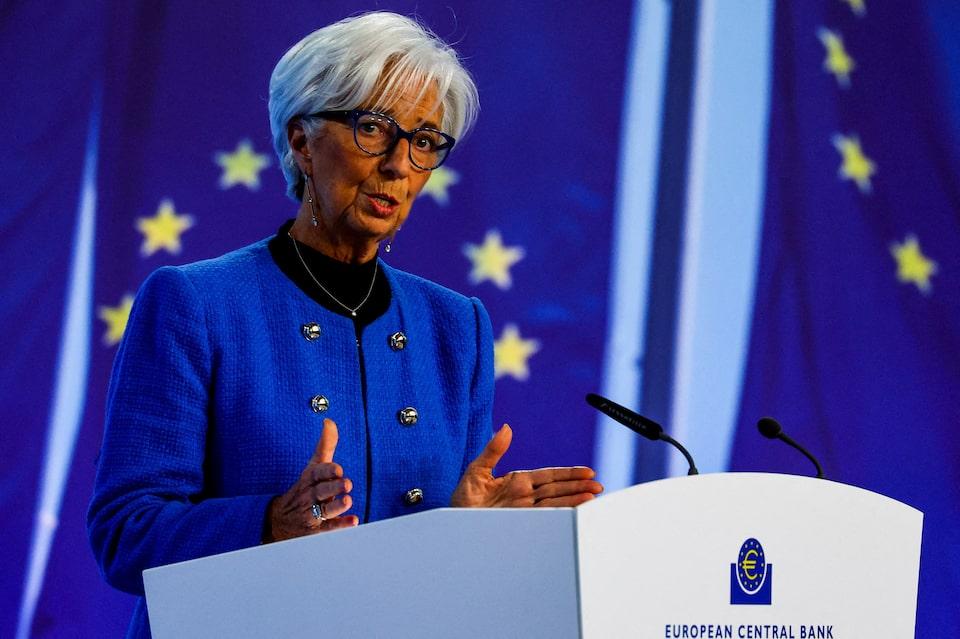
Feb 4 (Reuters) - U.S. Treasury Secretary Scott Bessent affirmed the importance of the U.S.-EU economic relationship and transatlantic cooperation in an introductory call with European Central Bank President Christine Lagarde, the Treasury Department said on Tuesday. Bessent and Lagarde discussed shared economic priorities and key policy areas of mutual interest, the Treasury Department said in a statement. The two spoke days after U.S. President Donald Trump declared that he would soon impose tariffs on imports from the European Union. At an informal meeting in Brussels on Monday, the bloc's 27 leaders discussed how to tackle the evolving relationship with Washington. Sign up here. https://www.reuters.com/markets/us-treasury-secretary-affirms-us-eu-economic-relationship-call-with-ecbs-lagarde-2025-02-04/
2025-02-04 22:45
WASHINGTON, Feb 4 (Reuters) - President Donald Trump has nominated Pierre Gentin, chief legal officer of consulting firm McKinsey & Co, to serve as general counsel at the U.S. Commerce Department, according to U.S. Senate records. On Monday, Trump also nominated other officials to serve in the department, including Neil Jacobs to head the National Oceanic and Atmospheric Administration. He named Arielle Roth to lead the Commerce National Telecommunications and Information Administration, which is overseeing a $42.5-billion fund to make access to high-speed broadband universal by 2030. Trump also on Monday nominated Washington trade lawyer Jeffrey Kessler to lead the Commerce Department's Bureau of Industry and Security (BIS), a key post in the U.S.-China tech war. Kessler, a partner at the law firm of WilmerHale, served as assistant secretary for enforcement and compliance during Trump's first term. Reuters first reported he was under consideration. The Senate Commerce Committee is set to vote on Howard Lutnick's nomination to head the department on Wednesday. Commerce will face a number of key issues during Trump's term, including export controls on U.S. AI chips and other efforts to crack down on Chinese tech companies, and overseeing nearly $40 billion in subsidies for semiconductor manufacturing. Jacobs, an atmospheric scientist, ran NOAA during Trump's first term on an acting basis after then-AccuWeather CEO Barry Myers was nominated and later withdrew citing health reasons. Trump proposed cutting NOAA's budget by 17% in his first term. The agency provides daily and long-term weather forecasts for agricultural planning and emergency response to severe weather such as hurricanes. The White House also nominated Paul Roberti, a U.S. Transportation Department official during Trump's first term who served as chief economic and policy adviser at the Rhode Island Division of Public Utilities and Carriers, to head the Pipeline and Hazardous Materials Safety Administration. Sign up here. https://www.reuters.com/world/us/trump-taps-mckinsey-lawyer-be-general-counsel-commerce-department-2025-02-04/
2025-02-04 22:07
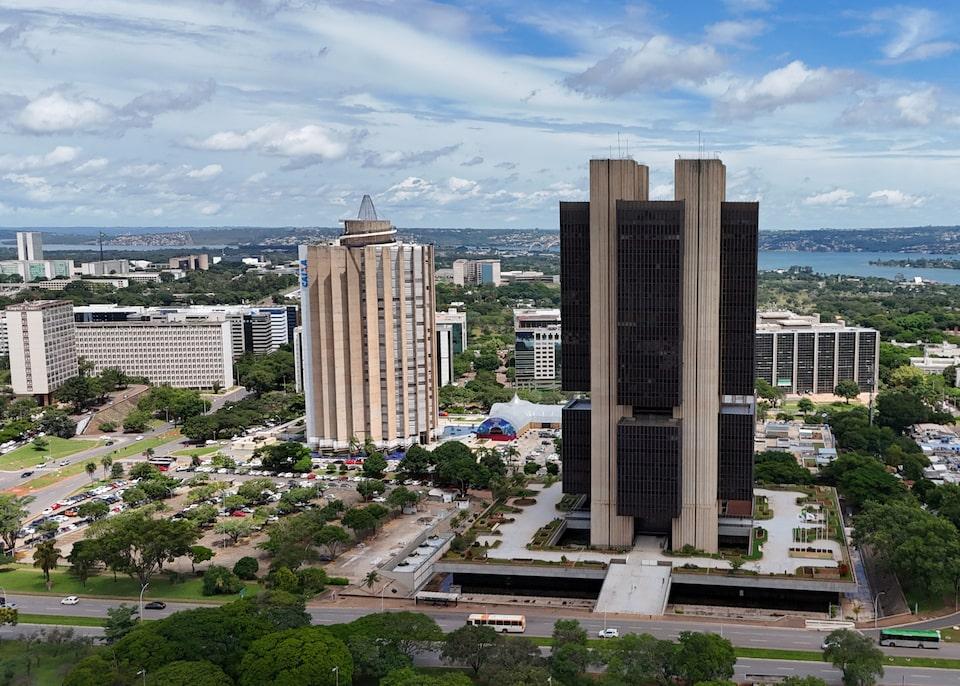
BRASILIA, Feb 4 (Reuters) - Brazil's Treasury on Tuesday estimated that federal public debt will rise up to 16% this year, as bonds linked to the benchmark interest rate potentially exceed half of total debt, exposing them to the central bank's aggressive push to tame inflation and making it costlier for the country to service its debts. The Treasury's annual financing plan sees debt ranging from 8.1 trillion reais to 8.5 trillion reais ($1.47 trillion) in 2025, up from the 7.316 trillion reais recorded in December. It also stressed the continued strategy of issuing conventional and sustainable bonds to provide a reference for the Brazilian sovereign yield curve, adding it "may use external liability management operations to enhance the efficiency of the yield curve." The Treasury estimated that the share of debt linked to the benchmark Selic interest rate will account for 48% to 52% of the total this year, after rising to 46.3% in 2024. These floating-rate bonds, known as LFTs, reached their highest share in 20 years last year, amid intense volatility from shifting interest rate expectations in the U.S. and concerns over Brazil's growing indebtedness. According to Treasury Secretary Rogerio Ceron, the strategy of increasing the share of floating-rate bonds aligns with market appetite. "There is no point in working against market demand," he said at the press conference. Such securities are typically more appealing to investors during periods of heightened risk perception but leave debt costs vulnerable to sharp increases when interest rates go up. Last week, Brazil's central bank raised rates by 100 basis points to reach 13.25% while signaling a matching hike in March to curb inflation. Prices in Latin America's largest economy are currently pressured by robust economic activity and a weaker currency amid lingering fiscal woes and a challenging global backdrop. Each rate increase is immediately passed on to servicing costs of almost half of Brazil's hefty debt burden. The gross debt of the South American nation closed 2024 at 76.1% of gross domestic product (GDP), a level deemed high among emerging market peers. The Treasury maintained its long-term goal of reducing the share of LFTs in total debt to 23% by 2035, but Daniel Leal, the Treasury's deputy secretary for public debt, said that reaching this optimal level within a ten-year horizon may not be feasible. "This may take a little longer," he said, adding he did not believe the increased share of these bonds in total debt was hindering the transmission of monetary policy. Leal also highlighted that the Treasury began the year with a much more balanced debt management approach, noting that January auctions were "quite successful," with volumes significantly higher than those seen immediately before. ($1 = 5.7669 reais) Sign up here. https://www.reuters.com/world/americas/brazil-2025-public-debt-seen-rising-by-double-digits-rate-linked-bonds-soar-2025-02-04/