2026-01-07 01:59
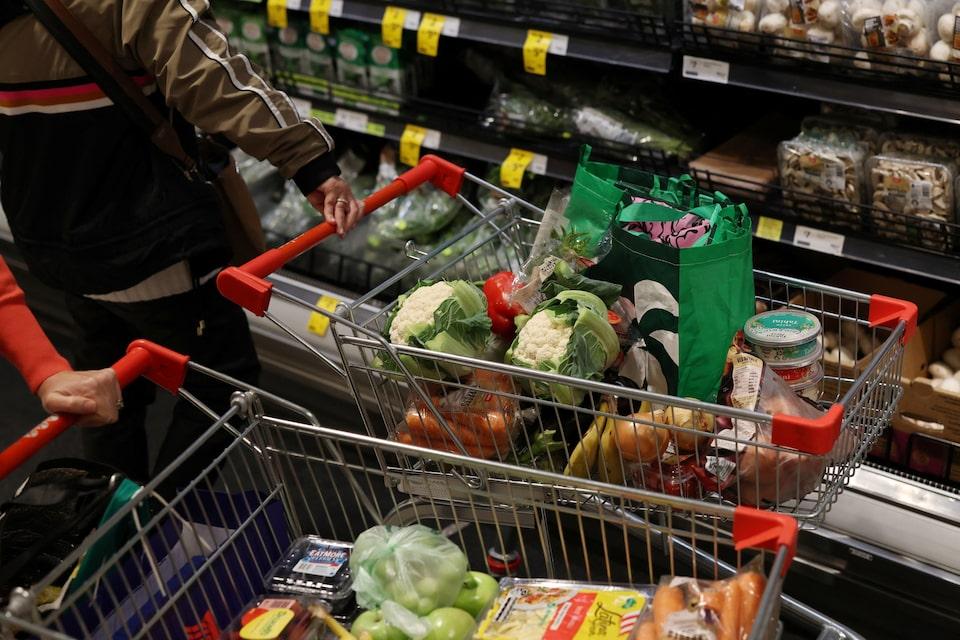
Headline CPI unchanged in Nov, +3.4% y/y Trimmed mean +0.3% m/m, +3.2% y/y Currency, bonds were last largely unchanged Investors still see risk of Feb hike at 33% SYDNEY, Jan 7 (Reuters) - Australian consumer prices rose by less than forecast in November, data showed on Wednesday, but core inflation showed enough stickiness that investors still saw a risk interest rates would have to be hiked as early as next month. The Australian dollar initially slipped but was back to where it was, at $0.6734. Three-year government bond futures rose 5 ticks before giving up gains to be slightly lower on the day at 95.78. Sign up here. Investors still see a 33% risk that the Reserve Bank of Australia will be forced to hike rates again in February. Data from the Australian Bureau of Statistics showed that its monthly consumer price index (CPI) was unchanged in November from the previous month, while the annual pace slowed to 3.4% from 3.8%. Median forecasts had been for rises of 0.3% and 3.7%, respectively. That was due to price falls in clothing, footwear, furnishings and household equipment, which had been affected by the Black Friday sales event. Costs for recreation and culture also fell in the month as demand for domestic travel fell back after the holiday season. However, the trimmed mean measure of core inflation increased by 0.3% in the month, taking that annual rate to 3.2%, compared to 3.3% in October. That was still above the RBA's target range of 2%-3%. Housing costs were up a solid 1.1% in November, driven by rents and new dwellings, suggesting some sticky inflationary pressures. "As the RBA digests the idiosyncrasies of the new monthly CPI measure, it continues to focus on the quarterly measure to inform rate movements," said Harry Murphy Cruise, Head of Economic Research at Oxford Economics Australia. "That data lands at the end of the month, with 3.2% being the magic number for trimmed mean inflation. Anything above that will warrant a hike when the RBA board next meets in early February." The RBA cut interest rates three times last year to 3.6% but has warned that the next move could be up given the pick-up in inflation. Headline inflation had accelerated in the third quarter to 3.2%, fuelling concerns that monetary policy might not be restrictive at all. The Commonwealth Bank of Australia and the National Australia Bank have tipped a quarter-point hike next month, arguing the economy is already at its capacity. The labour market also stayed resilient, with the jobless rate hovering at a historically low level of 4.3%. https://www.reuters.com/world/asia-pacific/australias-inflation-slows-november-core-sticky-2026-01-07/
2026-01-07 00:30
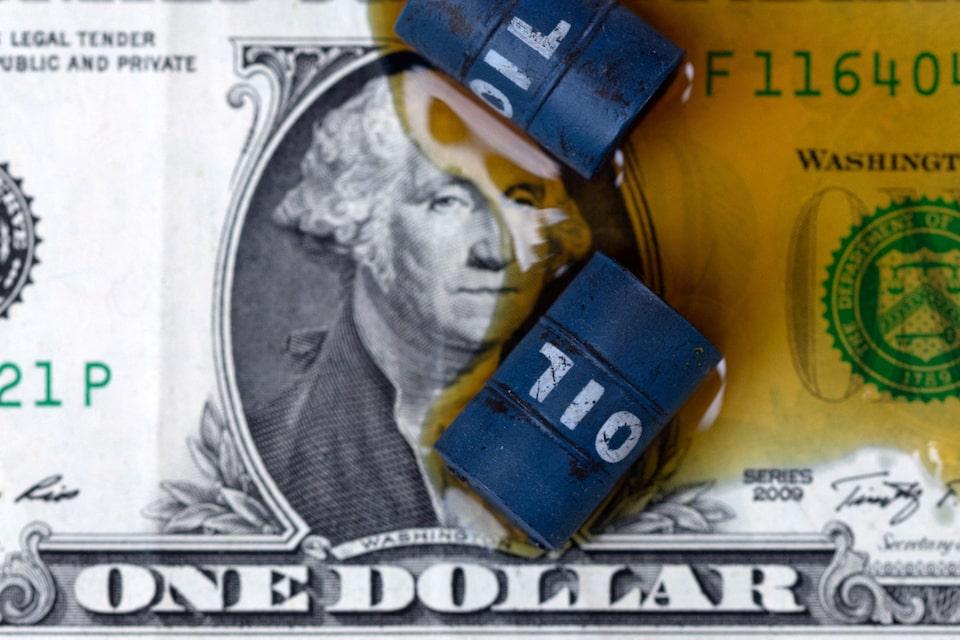
ORLANDO, Florida, Jan 6 (Reuters) - There were likely many motives behind America's capture and arrest of Venezuelan President Nicolas Maduro on Saturday, but one little-discussed factor could be the White House's concerns about the waning global prominence of the "petrodollar." Venezuela's oil output is currently modest at barely 1 million barrels per day, but its reported reserves of around 300 billion barrels - 17% of the global stock – are the world's largest. Sign up here. President Donald Trump has made it clear that the U.S. is interested in tapping this enormous potential, stating that he plans to have U.S. energy majors revitalize the Latin American country's flailing oil industry. Keeping all this future production within the U.S. orbit could impact more than just energy markets, however, as it would create a lot more petrodollars – a tool that has long helped the U.S. maintain its dominance in the global financial system. RISE AND FALL OF THE PETRODOLLAR The term "petrodollar" was coined in the mid-1970s when the U.S. and Saudi Arabia agreed that global oil sales would be denominated in dollars, creating a new source of demand for the greenback and cementing U.S. strategic, economic, and political power. The period between 2002 and mid-2008 - when oil almost reached $150 a barrel – potentially marked the peak of the petrodollar's powers. At that time, the U.S. was the world's largest importer of crude, enabling oil-producing countries to amass huge trade surpluses, much of which was recycled back into the vast U.S. Treasury market. This put downward pressure on U.S. and therefore, global, bond yields and interest rates. Fast forward to 2026, and the environment looks very different. Thanks to the shale oil revolution, the U.S. is now the world's largest oil producer and has been a net exporter since 2021. Meanwhile, many producer nations like Saudi Arabia now use their oil-driven trade surpluses to plug their own widening domestic budget deficits. Moreover, the rise of China's economic power and new geopolitical rifts have reduced the percentage of the global oil trade denominated in dollars. There are no official figures, but it is estimated that as much as 20% of the world's crude trade is now priced in currencies other than the dollar, such as the euro or Chinese yuan. The link between the dollar and oil has also shifted. Analysts at JP Morgan estimate that during the 2005-2013 period, a 1% appreciation of the U.S. trade-weighted dollar reduced the price of Brent crude by about 3%. In the 2014-2022 period, a 1% rise in the dollar reduced the price of Brent by just 0.2%. And last year, the dollar and oil both fell, rather than moving in opposite directions. So whether one is looking at oil producers' official holdings of Treasuries or oil revenues as a share of global capital flows, it is clear that the power of the petrodollar is on the decline. TRUMP PUSHES BACK This mirrors the dollar's slow but steady decline in global status over the past few decades. The greenback's share of foreign currency reserves is currently the lowest in 25 years, and while it remains the preeminent currency of global trade, that position is starting to fray also. The Trump administration is pushing back, however. While the White House may want the dollar's exchange rate to be lower, it is keen to maintain its dominance in global markets – and the recent events in Venezuela could be part of this wider effort. Until Trump returned to office almost a year ago, there appeared to be little appetite in Washington to push back against the global tide of geopolitically driven diversification away from the dollar. But the Trump administration has taken a stronger stance. It is promoting dollar-pegged "stablecoins" to strengthen the dollar's role in digital payments and global finance more broadly. It has also threatened to impose tariffs on countries seeking to develop alternatives to the dollar, most notably the BRICS group of developing nations. Gaining a degree of control over the world's largest proven oil reserves could be part of this effort, especially as it involves muscling out China and Russia – the Maduro regime's allies - in the process. "The dollar is still the key currency in the oil market, and the U.S. is trying to preserve this," says Hung Tran, nonresident senior fellow at the Atlantic Council. Richard Werner, professor of banking and economics at the University of Winchester, agrees that Washington's actions in Venezuela are likely aimed at bolstering the petrodollar system. Ultimately though, he believes these extreme actions could be seen as a sign of "desperation" that could accelerate the decline of the petrodollar if BRICS nations and others in the "Global South" baulk at Washington's use of military force to maintain currency dominance. That, of course, remains to be seen. (The opinions expressed here are those of the author, a columnist for Reuters) Enjoying this column? Check out Reuters Open Interest (ROI), your essential source for global financial commentary. ROI delivers thought-provoking, data-driven analysis of everything from swap rates to soybeans. Markets are moving faster than ever. ROI can help you keep up. Follow ROI on LinkedIn , opens new tab and X , opens new tab. https://www.reuters.com/markets/commodities/trumps-venezuela-oil-grab-revives-petrodollar-debate-2026-01-06/
2026-01-07 00:19
Jan 7 (Reuters) - Barclays (BARC.L) , opens new tab has bought a stake in U.S. stablecoin-settlement company Ubyx, its first such investment and part of its plans to explore "new forms of digital money", the British bank said on Wednesday. Ubyx, which launched in 2025, is a clearing system for stablecoins - cryptocurrencies pegged 1:1 to mainstream currencies - which aims to reconcile tokens created by different issuers. Sign up here. Various banks and other financial institutions have announced plans involving stablecoins in the past year, as soaring crypto prices and U.S. President Donald Trump's support for the sector revived interest in using blockchain in the mainstream financial system, for example by issuing stablecoins or creating blockchain-based tokens to represent financial assets. Still, many banks' blockchain-related projects remain in the early stages. Barclays said in a statement that it and Ubyx were committed to developing "tokenised money within the regulatory perimeter". Barclays was one of 10 banks, including Goldman Sachs and UBS, which in October said they had formed a group to explore the possibility of jointly issuing a stablecoin pegged to G7 currencies. “This investment aligns with Barclays’ approach to explore opportunities based on new forms of digital money, such as stablecoins," a spokesperson for the bank said. Barclays declined to make public the size of its investment or the valuation, but said that it was its first investment in a stablecoin-related company. The venture capital arms of U.S. crypto companies Coinbase and Galaxy Digital have also previously invested in Ubyx, according to PitchBook. The number of stablecoins has surged in recent years, led by El Salvador-based Tether with $187 billion worth of tokens in circulation. Stablecoins are mostly used for moving money within crypto markets. https://www.reuters.com/legal/transactional/barclays-buys-into-stablecoin-settlement-company-ubyx-2026-01-07/
2026-01-07 00:12
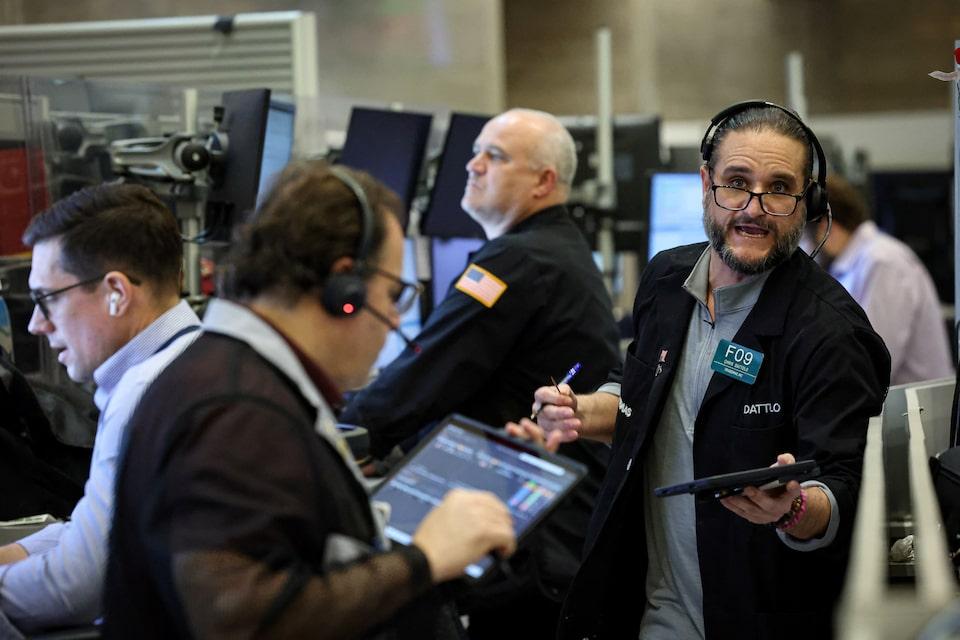
Cooling systems firms fall after Nvidia CEO's comments Memory and storage chipmakers hit record highs Stock valuations pricey ahead of earnings season S&P 500 +0.62%, Nasdaq +0.65%, Dow +0.99% Jan 6 (Reuters) - Wall Street ended higher on Tuesday, as chip stocks surged on renewed AI optimism, Moderna rallied and the Dow Jones Industrial Average reached a record high. Moderna (MRNA.O) , opens new tab jumped almost 11% after BofA Global Research raised its price target on the drugmaker, helping lift the S&P 500 healthcare index (.SPXHC) , opens new tab 1.96%. Sign up here. Memory and storage technology stocks rallied after Nvidia CEO Jensen Huang, speaking at the Consumer Electronics Show in Las Vegas, gave details that include a new layer of storage technology. SanDisk (SNDK.O) , opens new tab jumped over 27%, Western Digital (WDC.O) , opens new tab rallied 17%, Seagate Technology (STX.O) , opens new tab gained 14% and Micron Technology (MU.O) , opens new tab rose 10%, with all four stocks hitting record highs. The PHLX chip index (.SOX) , opens new tab also hit an all-time high, up 2.75% for the day and bringing its gain in the first three trading sessions of 2026 to about 8%. "I think we're going to have a very strong earnings season for Big Tech, and all those capex estimates that we hear about are going to be revised higher again," said Jed Ellerbroek, portfolio manager at Argent Capital in St. Louis. Investors are looking forward to reliable economic data as the effects of a record 43-day federal government shutdown wear off, and upcoming releases include the Job Openings and Labor Turnover Survey on Wednesday and Friday’s jobs report for December. Weaker-than-expected employment data could strengthen the case for central bank interest rate cuts. Heading into fourth-quarter earnings season in the next few weeks, valuations on Wall Street remain relatively pricey. The S&P 500 is trading at about 22 times expected earnings, down from 23 in November, but above the index's five-year average of 19, according to LSEG data. The S&P 500 climbed 0.62% to end the session at 6,944.82 points. The Nasdaq gained 0.65% to 23,547.17 points, while the Dow Jones Industrial Average rose 0.99% to 49,462.08 points, nearing the historic 50,000 mark. Volume on U.S. exchanges was relatively heavy, with 18.7 billion shares traded, compared with an average of 16.1 billion shares over the previous 20 sessions. Data on Tuesday showed S&P Global's final composite PMI slipped to 52.7 in December from 53.0 in the prior month, while the services PMI eased to 52.5 from 52.9. Markets also parsed comments from Richmond Federal Reserve President Tom Barkin, who reiterated the U.S. central bank's careful take on further cuts, in contrast to Governor Stephen Miran's call for aggressive cuts in a Fox Business interview. Investors brushed aside fears of broader geopolitical fallout after U.S. forces captured Venezuelan President Nicolas Maduro over the weekend, betting the move could pave the way for U.S. firms to gain access to Venezuela's oil reserves. Oil stocks dipped after robust gains in the prior session, with giants Exxon Mobil (XOM.N) , opens new tab and Chevron (CVX.N) , opens new tab losing 3.4% and 4.5%, respectively. Comments by Nvidia's Huang about the efficiency of the company's new chips raised concerns about demand for data center cooling systems. Shares of Johnson Controls (JCI.N) , opens new tab fell 6.2%, while Trane Technologies dropped 2.5%. AIG (AIG.N) , opens new tab shares tumbled 7.5% after the insurance giant said CEO Peter Zaffino would step down. Advancing issues outnumbered falling ones within the S&P 500 (.AD.SPX) , opens new tab by a 3.1-to-one ratio. The S&P 500 posted 62 new highs and 8 new lows; the Nasdaq recorded 126 new highs and 42 new lows. https://www.reuters.com/business/wall-street-futures-muted-investors-pause-after-rally-2026-01-06/
2026-01-07 00:02
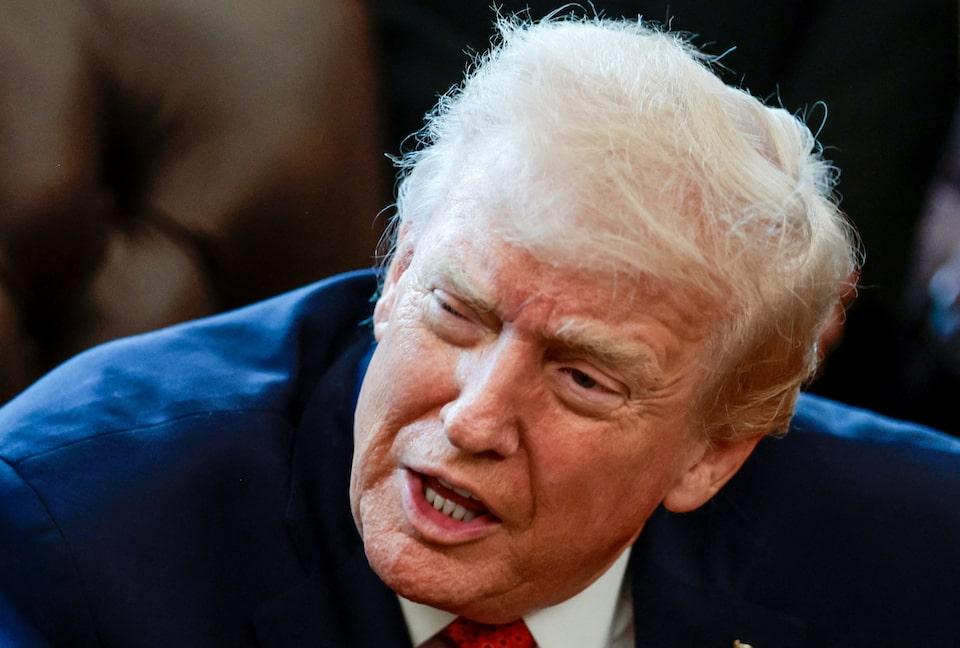
Jan 6 (Reuters) - Venezuela will be "turning over" 30 to 50 million barrels of sanctioned oil to the United States, President Donald Trump said on Tuesday in the aftermath of the toppling of Nicolas Maduro who was seized from his country by U.S. forces over the weekend. "This Oil will be sold at its Market Price, and that money will be controlled by me, as President of the United States of America, to ensure it is used to benefit the people of Venezuela and the United States!" Trump said in a social media post. Sign up here. https://www.reuters.com/business/energy/trump-says-venezuela-turn-over-30-50-million-barrels-oil-us-2026-01-06/
2026-01-06 23:47
SAO PAULO, Jan 6 (Reuters) - Brazilian planemaker Embraer (EMBJ3.SA) , opens new tab delivered 91 aircraft in the fourth quarter of 2025, up 21% from the same quarter a year earlier, the company said in a securities filing on Tuesday. The firm delivered 32 commercial jets and 53 executive jets during the three-month period, along with six defense aircraft. Sign up here. Embraer delivered 244 aircraft last year, an increase of 18% year-on-year, including 78 commercial jets and 155 executive jets. The numbers came within Embraer's annual delivery forecast range of 77 to 85 commercial jets and 145 to 155 executive jets. Citi analysts said Embraer's quarterly delivery results were "strong" and reinforced production upside into 2026, as the planemaker's output capacity had improved following investments in recent years. The company is expected to release its fourth-quarter earnings on March 6. https://www.reuters.com/business/aerospace-defense/brazils-embraer-delivers-91-planes-fourth-quarter-2026-01-06/