2025-02-04 11:24
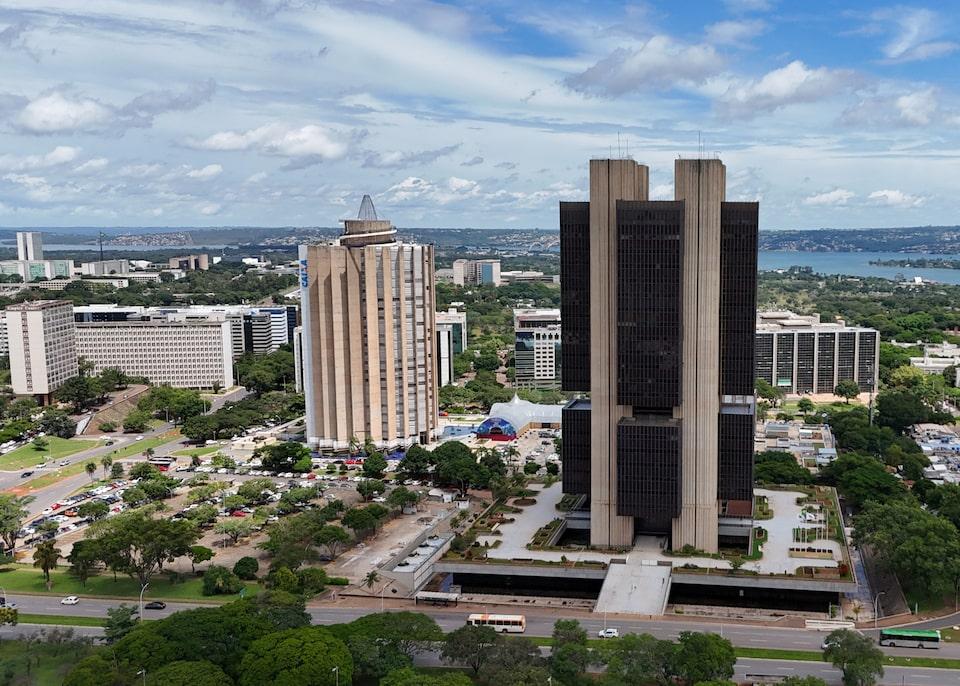
BRASILIA, Feb 4 (Reuters) - Brazil's central bank on Tuesday stressed that cooling economic activity is crucial for bringing inflation to target, while labeling the unanchoring of inflation expectations and an overheating economy as "highly relevant" inflationary risks. "The aggregate demand slowdown is an essential element of the supply-demand rebalancing process in the economy and inflation convergence to the target," it said in the minutes of its latest policy decision, referring to its 3% inflation goal. After raising rates last week by 100 basis points to 13.25% and signaling another matching hike in March, policymakers also noted in the minutes that market perceptions of the government's fiscal framework and debt sustainability continued to weigh "significantly" on asset prices and expectations. Looking ahead, the central bank said it will closely track economic activity, along with exchange rate pass-through following recent depreciation and volatility. It will also monitor inflation expectations, which have become further unanchored and remain crucial in driving future inflation trends, it said. Regarding economic growth, which the government expects to have reached around 3.5% in 2024, the central bank said recent data indicate early signs of moderation, particularly in goods and credit-sensitive sectors, aligning with its baseline scenario. However, policymakers warned that past slowdowns were later reversed due to volatility rather than a shift in growth trends, which have shown "remarkable resilience." "As the labor market remains heated, it is difficult to assess to what extent a possible slowdown would reflect weakening demand or supply pressures, with different impacts on inflation," the minutes said, after unemployment hit a historic low last year. The minutes also flagged inflationary risks from a weaker currency, noting that U.S. policies under President Donald Trump could weigh on domestic assets. After citing a downside inflation risk last week tied to potential disinflation from global trade or financial shocks - seen by many as a dovish signal - policymakers clarified that this would materialize if the baseline scenario failed to hold. Sign up here. https://www.reuters.com/markets/brazil-central-bank-sees-unanchored-inflation-expectations-overheating-economy-2025-02-04/
2025-02-04 11:19
Feb 4 (Reuters) - OMV faces impacts from U.S. tariffs in certain areas, though its exposure in North America is relatively low, CFO Reinhard Florey said on Tuesday, in a call following the Austrian oil and gas firm's results. "However, this exposure includes activities that are in the USA itself and...this means that tariffs go nowhere there because they operate directly in the domestic market," he added. U.S. President Donald Trump suspended his threat of steep tariffs on Mexico and Canada on Monday, agreeing to a 30-day pause, in return for concessions on border and crime enforcement with the two neighboring countries. He, however, enforced a 10% tariff on trade with China, threatening to take similar measures against the European Union. If tariffs are imposed on the EU, it could hit chemical products exported by OMV's subsidiary Borealis [RIC:RIC:BESGR.UL] to the U.S., although these shipments are quite limited, Florey noted. "In other words, it's more about seeing how tariffs fundamentally fuel the issue of inflation," he added, while noting that tariffs can increase prices through surcharges and hinder global trade. "We want energy to remain affordable, we have to make sure that macroeconomically sensible solutions are found," Florey said. Sign up here. https://www.reuters.com/business/energy/omv-sees-limited-impact-us-tariffs-cfo-2025-02-04/

2025-02-04 11:06
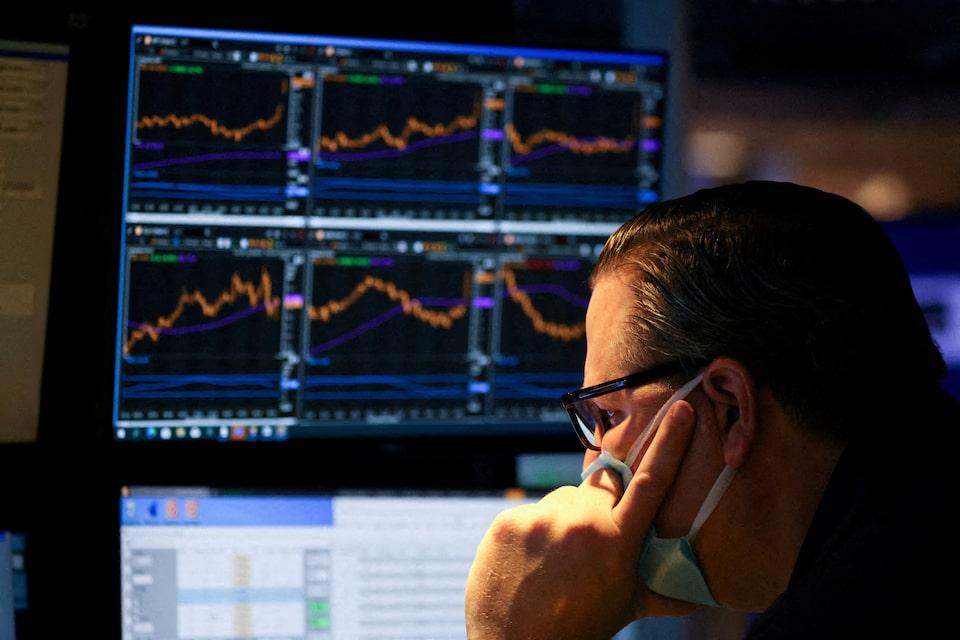
A look at the day ahead in U.S. and global markets from Mike Dolan After a four-day guessing game and much financial turbulence, the United States and China appear to have resumed a tit-for-tat trade war while Mexico and Canada get at least a month to breathe - leaving markets somewhat punchdrunk and wary of next steps. The upshot for currencies most violently disturbed by the process is Mexico peso's and Canada's dollar are both back higher than they were when the latest merry-go-round of threat, counter-threat and deferrals began on Friday - bouncing from respective two- and 22-year lows hit in the interim. Despite the deadline for 10% U.S. tariffs on China passing earlier on Tuesday and China's instant retaliation with plans for import taxes of up to 15% on a range of U.S. goods from next week, the yuan was firmer and also back where it was on Friday. That peculiar reaction suggests some hope remains that the negotiated delays and deferrals seen in Canada and Mexico would be replicated in China too. U.S. President Donald Trump's press secretary said Trump would speak with Chinese President Xi Jinping in the next couple of days. More broadly, the dollar index (.DXY) , opens new tab aped all those moves - completing a 1.5% round trip that took it to three-week highs and back since Friday. There was still no clarity on whether Trump planned tariffs against the European Union. Weightings of the yuan, peso and Canadian dollar in the Federal Reserve's broad trade-weighted dollar index come to some 41% - add the euro and that amounts to more than 60%. Complicating the market readout somewhat is the fact that mainland Chinese markets remained closed for the lunar new year holiday until tomorrow - although reopened Hong Kong (.HSI) , opens new tab saw shares there gain almost 3% to three-month highs even after the bilateral tariff salvos were delivered. Some analysts suggest the hopes of talks and delays encouraged the buying, with others saying there was relief the proposed U.S. tariffs were only 10% - compared to the 60% Trump touted before the election. Nevertheless Beijing announced its own levies of 15% on U.S. coal and LNG and 10% for crude oil, farm equipment and some autos from Feb. 10. China also started an anti-monopoly probe into Alphabet's (GOOGL.O) , opens new tab Google, while including both PVH (PVH.N) , opens new tab - the holding company for brands including Calvin Klein - and biotechnology firm Illumina (ILMN.O) , opens new tab on a list for potential sanctions. That comes as Alphabet tops the latest sweep of megacap quarterly earnings reports tonight on Wall Street, with Big Pharma companies also dominating the diary along with the likes of Omnicom and Advanced Micro Devices. Unlike currency markets, U.S. stock indexes (.SPX) , opens new tab, (.IXIC) , opens new tab, unnerved by the trade war threats, have not yet returned to Friday's square one. Even though the Mexico and Canada delays helped equities rally from Monday's worst levels, the S&P500 ended 0.8% lower and futures remain negative before Tuesday's bell after the overnight China developments. The VIX (.VIX) , opens new tab 'fear index' of Wall Street equity volatility probed above 20 again on Monday - though it has yet to close above that level so far this year. Aside from the multiple corporate headaches that tit-for-tat trade wars create for major exporting and importing companies, the other problem is how borrowing costs have been nudged higher due to widespread fears of the inflationary impact of sweeping tariffs. Benchmark 10-year U.S. Treasury yields remain higher on the week and expectations of Fed cuts this year have dialled back a touch, with both Fed officials and investors working out the extent to which the tariff moves aggravate the politically-toxic price outlook. While there's some debate about whether one-off price hikes of this kind would necessarily lift the inflation rate per se, there are reasonable concerns that the endless threats and even the drip-drip application of them lifts inflation expectations. And this is just part of a series of seeming contradictions in Washington's policy approach that markets are grappling with. If tariffs are applied, the dollar seems primed to go higher - in direct opposition to Trump's repeated claims about its overvaluation, while also helping overseas firms to absorb the tariffs and keep prices of their goods in U.S. stores down. Retaliatory tariffs on U.S. goods overseas, meantime, just hit U.S. exporters. What's more, the assumption of aggravated inflation, even at the margin, just keeps interest rates higher and stock markets under a cloud - again counter to the stated preferences of the new administration. Even its much-vaunted love of the crypto industry has been questioned, as Bitcoin and other tokens get whacked by the dollar rise on the trade spat. Back in the domestic economy, attention will quickly be drawn back to this week's multiple labor market updates later today as December job openings are due for release ahead of Friday's January payrolls report. Elsewhere, corporate earnings came thick and fast in Europe. Fourth-quarter profit at UBS (UBSG.S) , opens new tab exceeded forecasts but the lender's shares fell 5% as its buyback plans, contingent on no changes to Swiss capital rules, failed to impress investors. Infineon (IFXGn.DE) , opens new tab, however, jumped 11% after the German chipmaker's beat and slightly raised full-year revenue outlook. And French 10-year government debt premiums over Germany fell back to 70 bps for the first time in four months after French Prime Minister Francois Bayrou finally pushed through the 2025 budget bill through parliament - betting he has enough votes to survive a likely no-confidence motion. Key developments that should provide more direction to U.S. markets later on Tuesday: * US December factory goods orders, Dec JOLTS job openings data, * Federal Reserve Vice Chair Philip Jefferson, San Francisco Federal Reserve President Mary Daly and Atlanta Fed chief Raphael Bostic speak * US corporate earnings: Alphabet, Advanced Micro Devices, Texas Instruments, Omnicom, Pfizer, Amgen, Merck, Regeneron, Juniper, Amcor, Prudential Financial, Apollo, KKR, Fox, Estee Lauder, Pepsico, Pentair, Chipotle, Mondelez, Veralto, Match, FMC etc Sign up here. https://www.reuters.com/markets/us/global-markets-view-usa-2025-02-04/
2025-02-04 11:05
BUENOS AIRES, Feb 4 (Reuters) - Argentina's award-winning mare Polo Pureza will have her genes, or at least most of them, live on in five genetically edited horses designed to outrun the polo legend herself. Scientists at Argentine biotech firm Kheiron have produced the world's first genetically edited horses using a technique called CRISPR-Cas9. The horses were born last October and November. "We design their genome before they are born," said Gabriel Vichera, co-founder and scientific director of Kheiron. "We do this by using the so-called genetic scissors techniques, which are molecular tools that allow us to go to any region of the genome, make a precise cut and be able to make a change in that genome." Polo Pureza, whose name translates from Spanish as "Polo Purity," was inducted into the Argentine Association of Polo Horse Breeders Hall of Fame. Scientists took genes from Polo Pureza as the genetic base for the five horses, editing the genes to increase explosive speed while keeping the champion horse's other qualities. "There are certain muscle fibers that give it more explosiveness, a faster contraction, and the animal can have this greater explosive speed," Vichera said, adding that the goal was to incorporate these genes "into a single generation in a precise manner." Vichera said that this means the horses comply with current Argentine regulations and do not count as genetic doping or genetically modified organisms. "We are not inventing anything artificial, but rather we are taking that natural sequence and introducing it into another natural horse, which is what nature does, but we do it faster and more targeted," Vichera said. Vichera said this technique enables scientists to adjust the genome of any horse. Vichera said Kheiron is also working on modifying pigs so their organs can be compatible for transplants to humans, and on cows to give them more protein or shorter hair to withstand heat better. Sign up here. https://www.reuters.com/science/argentina-breeds-gene-edited-polo-super-ponies-2025-02-04/

2025-02-04 10:53
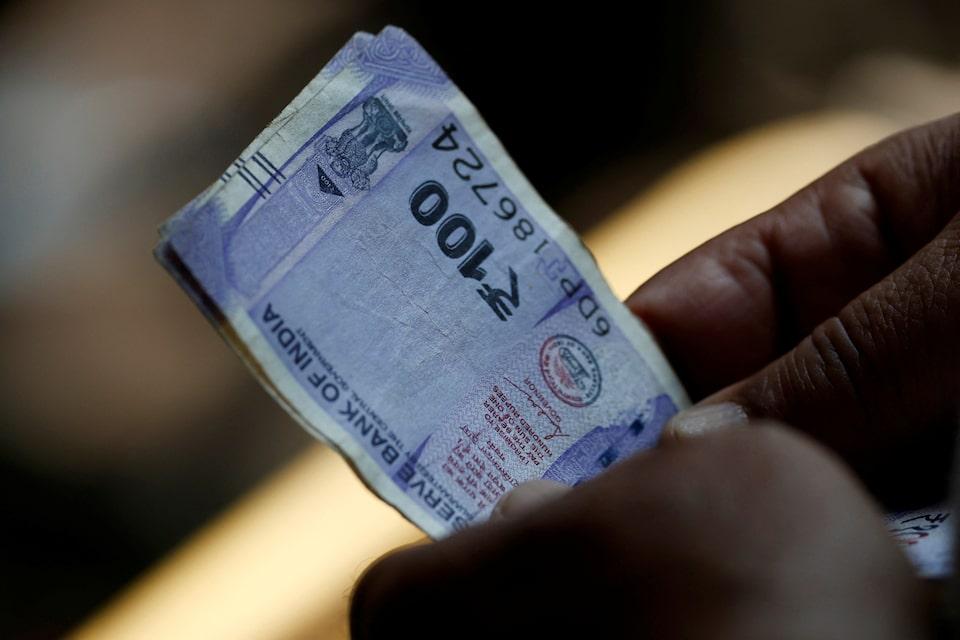
MUMBAI, Feb 4 (Reuters) - The Indian rupee ended higher in a choppy trading session on Tuesday, mirroring gains in regional currencies, but concerns over an escalating U.S.-China trade war kept investors on edge. The rupee ended at 87.0675 against the U.S. dollar, against a record closing low of 87.1850 in the previous session, when it also fell to an all-time low of 87.28. Most Asian currencies rose amid the ongoing tit-for-tat escalation of a global trade war between the world's two largest economies, the U.S. and China. China retaliated with a package of tariffs on a range of U.S. products in an immediate response to a 10% tariff on Chinese imports announced by U.S. President Donald Trump. Trump's press secretary said the president would speak with Chinese President Xi Jinping in the next couple of days. Meanwhile, Trump delayed 25% tariffs against Mexico and Canada, agreeing to a 30-day pause in return for concessions on border and crime enforcement with the two neighbouring countries. "The tit-for-tat tariff regime has left investors cautious, with concerns that the potential for a protracted tariff war could stoke inflationary pressures in the U.S.," said Jigar Trivedi, a senior analyst at Reliance Securities. Trivedi expects the rupee to fall to 87.30 as the trade war adds to market volatility. The dollar index , having rallied to nearly 110 on Monday, pulled back sharply to 108.48 on the day. The offshore Chinese yuan recovered to 7.29 to the U.S. dollar. From now on, markets could handle tariff threats even more cautiously, but "a new layer of unpredictability" argues against big dollar depreciation for now, ING Bank said in a note. "...markets need to follow a rationale, and we think the conclusion is that Trump is ready to bluff his way into transactional victories, whether on border security or trade," the bank said. Sign up here. https://www.reuters.com/markets/currencies/rupee-ends-higher-tracking-peers-us-china-trade-tensions-focus-2025-02-04/
2025-02-04 10:46
BANGKOK, Feb 4 (Reuters) - Thailand will increase U.S. ethane imports by at least 1 million tons starting from the second quarter of this year to try to reduce its trade surplus with the United States, a Thai official said on Tuesday. One million tons of ethane are worth $200 million, said Pongsarun Assawachaisophon, a deputy secretary-general to the prime minister. "The government has discussed with petrochemical companies to increase U.S. ethane imports which will also help with trade negotiations with the United States," he told Reuters, adding Commerce Minister Pichai Naripthaphan was travelling to the country from Feb. 4-8. Thailand had a trade surplus last year of $35.4 billion with the United States, according to the commerce ministry, which has cited challenges to growing Thai exports due to uncertain U.S. trade policies. The United States was Thailand's largest export market last year, accounting for 18.3% of total shipments, or $54.96 billion. President Donald Trump last month signed a broad trade memorandum ordering federal agencies to complete comprehensive reviews of a range of trade issues by April 1, including analyses of persistent U.S. trade deficits. He has imposed tariffs on China and signalled the 27-nation European Union would be his next target, but he has suspended his threat of 25% tariffs on Mexico and Canada, agreeing to a 30-day pause. "We'll see what we can import more from the U.S. and is a win-win for both sides," Thai official Pongsarun added. "The private sector already has demand for ethane imports," he said. Thai petrochemical firms will import at least 1 million tons more of U.S. ethane for both selling to other countries or using as a precursor, Pongsarun said. Sign up here. https://www.reuters.com/markets/commodities/thailand-import-more-us-ethane-reduce-trade-surplus-2025-02-04/