2025-02-04 09:58
KAMPALA, Feb 4 (Reuters) - The Ugandan shilling was steady on Tuesday, but it was expected to strengthen, helped by dollar inflows from gold and coffee exporters, traders said. At 0937 GMT, commercial banks quoted the shilling at 3,675/3,685, compared with Monday's closing rate of 3,680/3,690. Sign up here. https://www.reuters.com/markets/currencies/ugandan-shilling-stable-firm-due-gold-coffee-fx-flows-2025-02-04/

2025-02-04 09:55
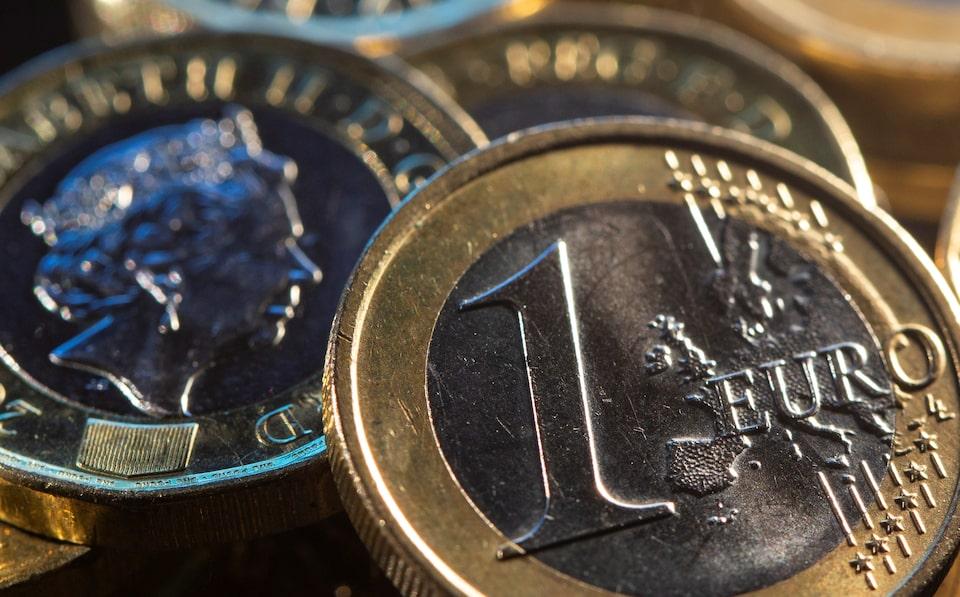
Feb 4 (Reuters) - The pound edged lower against the euro on Tuesday after recording its biggest daily rise in three months a day earlier as investors expect U.S. tariffs to hurt the economy more in Europe than in the UK. It dropped against a strengthening dollar as tariffs against China took effect. It was down 0.15% at $1.2433. Market participants also awaited the Bank of England's policy meeting later this week. The pound "seems to be retaining some solid footing after an American trade war was averted," said Francesco Pesole, forex strategist at ING. "The reason is simple: the UK has little to lose from U.S. tariffs. UK exports to the U.S. are less than 2% of GDP and those to China less than 1%," he added. The pound fell 0.1% to 83.18 pence per euro after being up 0.55% the day before in its biggest rise since early November. On Monday, it hit highest since Jan. 8 at 82.88 pence. The BoE, which is widely expected to cut rates by 25 basis points (bps) on Thursday, could nudge investors to expect faster rate reductions. "Looking ahead, we see room for deeper cuts than what financial markets expect. Trade uncertainty is rising, labour demand is falling, fiscal policy is tight, and the policy rate is well above our neutral estimate of 2-3%," said Peder Beck-Friis, economist at PIMCO. However, there is still uncertainty about BoE's possible suggestions about future rate cuts. "The economy is vibing 'stagflation'. We think the bank will lean dovish to these risks, as it has done throughout this cycle," said Shaan Raithatha, senior economist at Vanguard, adding Vanguard base case is for a 25-basis-point cut on Thursday to be followed by one cut every quarter thereafter. BofA said February was too early for a decisive dovish shift because inflation will likely pick up in the coming months. British Prime Minister Keir Starmer told European Union leaders on Monday that he wanted to work together to expand the continent's defences, including greater cooperation on missions and the cost of rearmament. "Markets may be double reading an intent by Starmer to gradually reconnect with the EU politically," said ING’s Pesole, adding that would be positive for sterling, which remains highly sensitive to developments that can affect the growth outlook. Sign up here. https://www.reuters.com/markets/currencies/sterling-drops-versus-euro-after-biggest-daily-rise-months-awaits-boe-2025-02-04/
2025-02-04 08:03
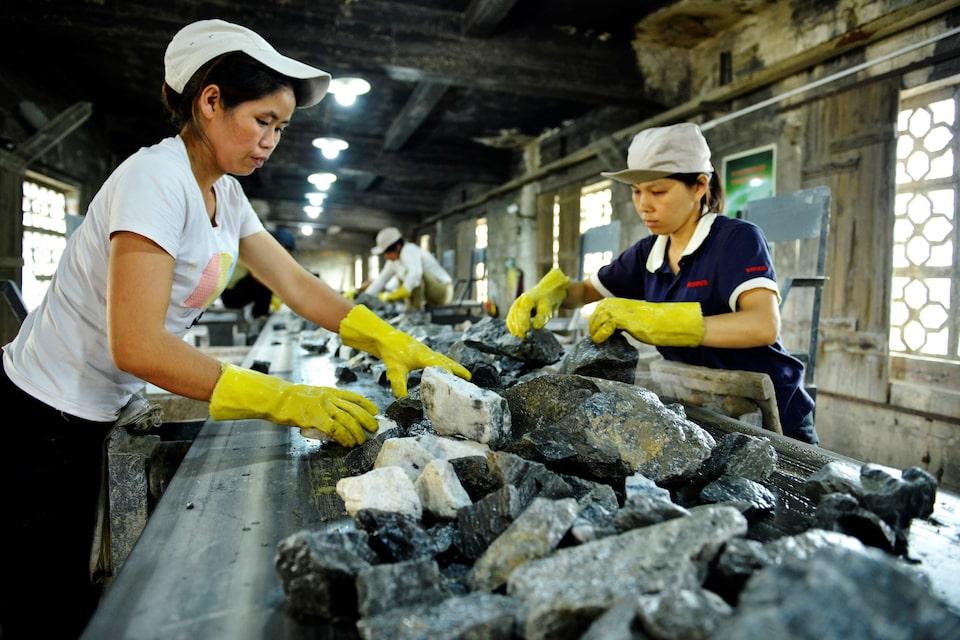
June 4 (Reuters) - Global automakers are sounding the alarm on an impending shortage of rare earth magnets as China's restrictions on the material vital for the automotive, defence and clean energy industries threaten production delays around the world. German automakers became the latest to warn that China's export restrictions threaten to shut down production and rattle their local economies, following a similar complaint from an Indian EV maker last week. U.S., Japanese and South Korean automakers warned President Donald Trump on May 9 car factories could close. Sign up here. The restricted rare earths joined an export control list with over a dozen minerals and related materials already listed, in each case forcing exporters to apply to Beijing for licenses before selling overseas. China has also separately banned exports of gallium, germanium and antimony to the United States. Below is a summary of all Beijing's mineral export restrictions since 2023: RARE EARTHS China placed some rare earth magnets and seven rare earth elements - samarium, gadolinium, terbium, dysprosium, lutetium, scandium and yttrium - along with related items on an export control list in April. While the announcement coincided with a broader package of retaliation against Washington's tariffs, the controls apply globally and the government's press release made no mention of the United States. China produces around 90% of the world's rare earths, a group of 17 elements used across the defense, electric vehicle, energy and electronics industries. The U.S. has only one rare earths mine and most of its supply is sent to China for refining. While common in the Earth's crust, China has mastered the technically difficult and environmentally harmful refining process. It produces almost 90% of global refined output. China has spent years tightening its control over the rare earths sector. In December 2023, Beijing banned the export of technology to make rare earth magnets, adding it to an existing ban on refining technology. Domestic production is tightly controlled by a system of quotas which are only granted to state-owned miners. TUNGSTEN, INDIUM, BISMUTH, TELLURIUM AND MOLYBDENUM China imposed export controls on the five metals used in defence, clean energy and other industries in early February, shortly after U.S. President Donald Trump's first 10% tariff on Chinese goods took effect. Licences are now required to export 20 tungsten, tellurium, bismuth, indium and molybdenum-related products. However the curbs stopped short of outright bans and were narrowly targeted in the cases of some metals, like molybdenum. BATTERY, LITHIUM AND GALLIUM PROCESSING TECHNOLOGY China in January proposed to restrict the export of some technology used to make cutting-edge battery components and process critical minerals lithium and gallium. The announcement did not say when the proposed changes, which were open for public comment until early February, could come into force. At least one company has stopped exporting products on the list since the proposal was floated. ANTIMONY, GALLIUM, GERMANIUM Last December, Beijing banned the export of the three critical minerals to the U.S. in response to a fresh crackdown on China's chip sector from Washington. The outright ban only applies to the U.S., however over the 18-months prior China had steadily introduced export licensing regimes for the three metals. In the case of antimony, a strategic metal used in flame retardants, solar power equipment and munitions, exports to big buyers like Japan, India and South Korea had barely restarted three months after export licenses were introduced. China dominates the supply chain for the three metals and mines or refines between half and 90% of global supply of those minerals. GRAPHITE In October 2023, China said it would require export permits for some graphite products to protect national security. China is the world's top graphite producer and exporter, and also refines more than 90% of the world's graphite into a material that is used in virtually all EV batteries. https://www.reuters.com/world/china/chinas-curbs-exports-strategic-minerals-2025-02-04/
2025-02-04 07:45
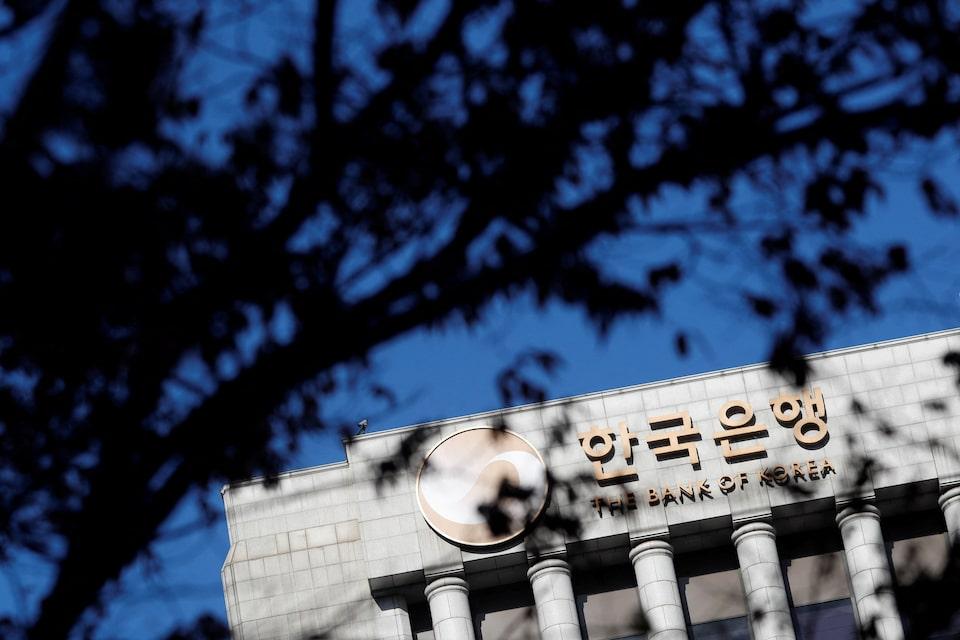
SEOUL, Feb 4 (Reuters) - A voting board member, Shin Sung-hwan, who dissented in the Bank of Korea's decision to keep policy rates unchanged in January, said the economy faces bigger risks due to domestic political turmoil and U.S. policy changes, minutes from the bank's meeting showed on Tuesday. The Bank of Korea on Jan. 16 unexpectedly voted 6-1 to keep its policy interest rate unchanged and signalled it needed to wait for the domestic political turmoil weighing on the currency to stabilise before it could make further rate cuts. Only Shin voted to cut interest rates by 25 basis points on Jan. 16, when the bank decided to keep its benchmark interest rate (KROCRT=ECI) , opens new tab unchanged at 3.00%. Most, including Shin, said the bank should be open to near-term policy easing in the face of increased political and external uncertainties as South Korea continues to grapple with the worst political turmoil in decades after impeached President Yoon Suk Yeol's brief imposition of martial law. They also cited uncertainties related to U.S. President Donald Trump's trade policies, describing this as clouds hanging over the trade-reliant nation. "It is desirable to cut the interest rate after examining the effect of the last two interest rate cuts and observing the policy direction of the new U.S. government, as well as the U.S. Federal Reserve's interest rate decision, and the political and economic situation at home and abroad," one of the board members said. Only dissenters were identified in the minutes. South Korea's exports fell in January for the first time in 16 months and at the sharpest pace in a year and a half due to U.S. tariff uncertainty and an unfavourable calendar effect, preliminary data released on Saturday showed. Sign up here. https://www.reuters.com/markets/rates-bonds/bank-korea-board-members-open-near-term-rate-cut-see-headwinds-us-policies-2025-02-04/
2025-02-04 07:31
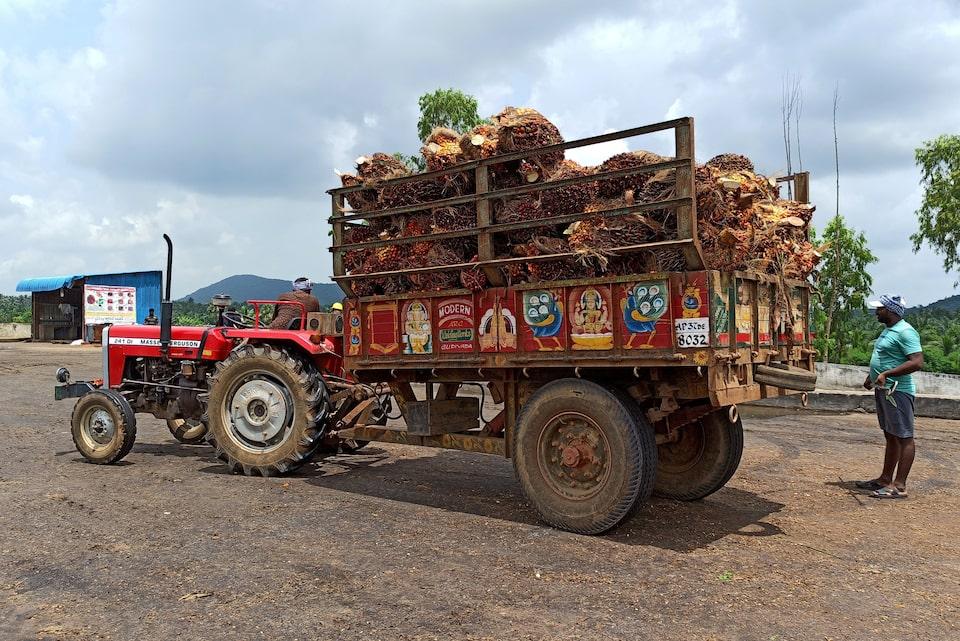
MUMBAI, Feb 4 (Reuters) - India's palm oil imports in January plunged to their lowest level in nearly 14 years as refiners replaced the tropical oil with cheaper rival soyoil because of negative refining margins for palm oil, five dealers said. Lower palm oil imports by India, the world's biggest buyer of vegetable oils, could weigh on benchmark Malaysian palm oil prices , but support U.S. soyoil futures . Palm oil imports plunged 46% in January from the previous month to 272,000 metric tons, the lowest since March 2011, according to estimates from dealers. India imported an average of more than 750,000 tons of palm oil every month in the marketing year that ended in October 2024, says trade body the Solvent Extractors' Association of India, which is set to publish its January import data by mid-February. Reuters reported last month that palm oil imports would sink to a multi-year low in January as refiners were shifting to soyoil. Soyoil imports in January rose 4% from a month earlier to 438,000 metric tons, the highest in seven months, while sunflower oil imports jumped 9.5% to 290,000 metric tons, dealers said. Lower shipments of palm oil brought down the country's total edible oil imports in January by 15.6% to 1 million tons, the lowest in 11 months, according to dealers' estimates. Negative margins for palm oil prevailed for Indian refiners last month, which discouraged them from making overseas purchases, said Rajesh Patel, managing partner at GGN Research, an edible oil trader. Palm oil usually trades at a discount to soyoil and sunflower oil, but falling stocks have lifted its prices above rival oils, whose supplies are abundant. Palm oil traditionally accounts for more than half of India's total edible oil imports, but its share fell below 30% for the first time in more than a decade, said Sandeep Bajoria, CEO of Sunvin Group, a vegetable oil brokerage. India buys palm oil mainly from Indonesia, Malaysia and Thailand, while it imports soyoil and sunflower oil from Argentina, Brazil, Russia and Ukraine. Sign up here. https://www.reuters.com/markets/commodities/indias-palm-oil-imports-hit-14-year-low-rival-oils-gain-dealers-say-2025-02-04/
2025-02-04 07:25
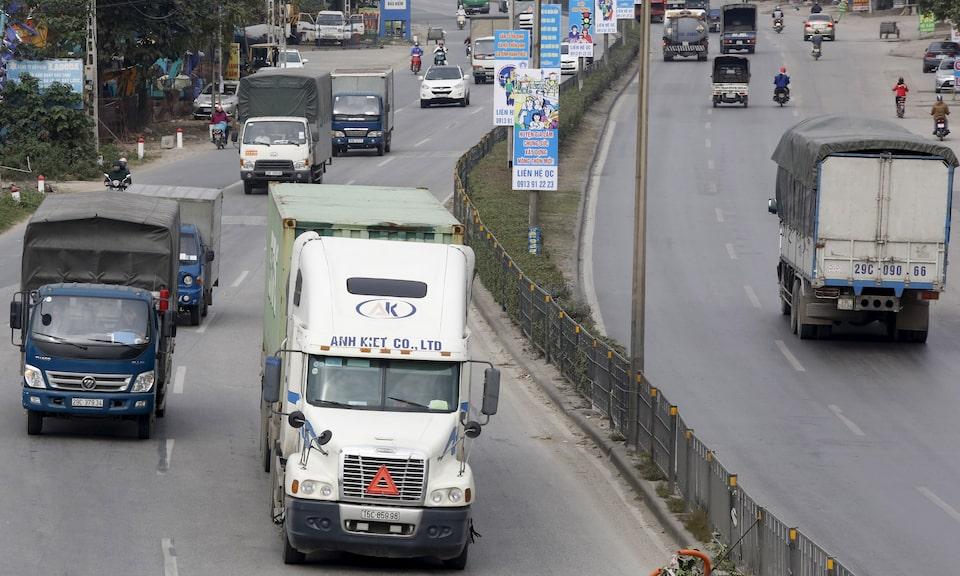
HANOI, Feb 4 (Reuters) - Transport and logistics businesses in Vietnam reported disruptions in their operations and mounting costs caused by stricter traffic rules in force since the start of the year, according to a survey released on Tuesday. The new road safety regulations have steeply increased fines for serious road offences, such as ignoring traffic lights. More significantly for the logistics sector in the Southeast Asian industrial and export hub, they also mandate truck drivers to rest for at least 15 minutes after every four hours of driving. "Approximately 80% of businesses reported moderate to severe disruptions, particularly in long-haul transport," supply chains consultancy CEL said in a survey of 460 executives and staffers primarily from the logistics and distribution sector. The new limits on driving hours are in line with international standards. In the European Union, truck drivers are obliged to take breaks of at least 45 minutes after 4.5 hours of continuous driving. To comply with the new regulations, businesses are expected to increase their workforce leading to a rise in operational costs of up 20%, the report said, noting that 70% of the surveyed companies already reported a significant rise in their costs due to reduced driving hours and higher penalties. Transport costs tend to increase at the start of the year in Vietnam as traffic intensifies before week-long holidays for the Lunar New Year which this year fell at the end of January. Vietnam's government office did not immediately reply to a request for comment. Officials have said the new rules were necessary to reduce road accidents. The Communist-run country is home to large export-driven manufacturing operations of big multinationals, including Samsung Electronics (005930.KS) , opens new tab, Apple (AAPL.O) , opens new tab and Nike (NKE.N) , opens new tab. Strategically located on the southern border of China with over 3,000 km (1,864 miles) of coastline, Vietnam has a large industrial base, with significant clusters for clothing, furniture and electronics. Sign up here. https://www.reuters.com/world/asia-pacific/supply-chain-firms-face-disruptions-vietnam-stricter-driving-rules-report-says-2025-02-04/