2025-02-04 06:28
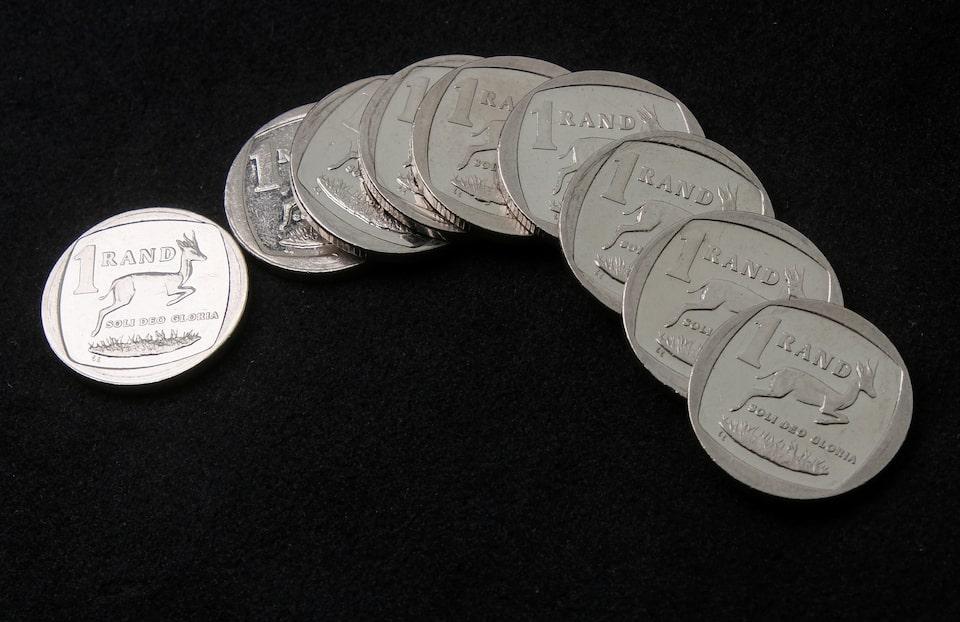
JOHANNESBURG, Feb 4 (Reuters) - South Africa's rand edged higher on Tuesday as markets digested U.S. President Donald Trump's changing tariff stance. At 1518 GMT, the rand traded at 18.68 against the dollar , about 0.2% stronger than Monday's close. The dollar last traded about 0.4% weaker against a basket of currencies. Trump on Monday suspended his threat of steep tariffs on Mexico and Canada, agreeing to a 30-day pause in return for concessions on border and crime enforcement with the two neighbouring countries. The U.S. imposed tariffs on Chinese imports on Tuesday and China quickly responded. The rand traded turbulently on Monday, slumping almost 2% in early trade on news that Trump would suspend funding to South Africa over land rights, but staged a recovery later to close roughly flat. "What we are seeing is that Trump is looking for concessions, while he negotiates," Adam Phillips, treasury specialist at Umkhulu Treasury, said about the tariffs turmoil. "What is clear is that a risk premium is being added into the foreign exchange market and this is going to be around for a while." On the stock market, the Top-40 (.JTOPI) , opens new tab index closed about 1.1% higher. South Africa's benchmark 2030 government bond was stronger, with the yield down 5.5 basis points to 9.09%. Sign up here. https://www.reuters.com/markets/currencies/south-african-rand-weaker-trumps-changing-tariff-stance-2025-02-04/
2025-02-04 06:25
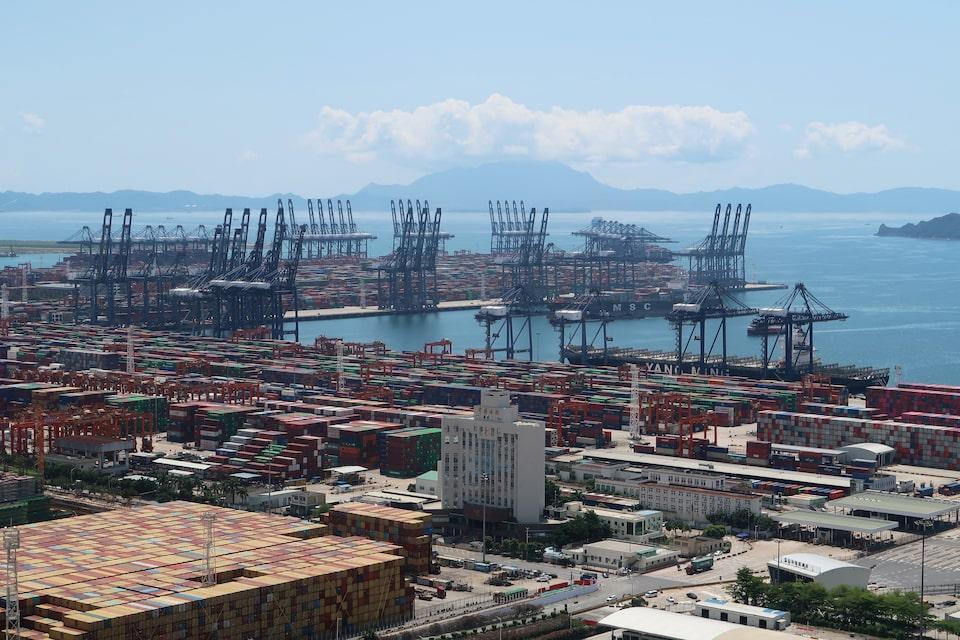
'That's fine,' Trump says of China's retaliatory duties Additional 10% tariff takes effect on China exports to US China imposes limited tariffs on smaller set of US imports China starts anti-monopoly investigation into Google Beijing imposes controls on metals exports WASHINGTON/BEIJING, Feb 4 (Reuters) - U.S. President Donald Trump said on Tuesday he is in no hurry to speak to Chinese President Xi Jinping to try to defuse a new trade war between the world's two largest economies sparked by his sweeping 10% tariffs on all Chinese imports. China imposed targeted tariffs on U.S. imports on Tuesday and put several companies, including Google, on notice for possible sanctions, in a measured response to Trump's tariffs. "That's fine," Trump said at the White House when asked about China's retaliatory duties. A conversation between Xi and Trump is seen as key to a potential easing or delay of tariffs, as conversations with Mexican and Canadian leaders did on Monday. White House spokeswoman Karoline Leavitt told reporters that a Trump-Xi call still needed to be scheduled. "President Xi did reach out to President Trump to speak about this, maybe to begin a negotiation. So we'll see how that call goes," Leavitt told Fox Business Network earlier on Tuesday. Beijing's limited reply to Trump's imposition of a 10% tariff on all Chinese imports underscored the attempt by Chinese policymakers to engage Trump in talks to avert an outright trade war between the world's two largest economies. Liu Pengyu, spokesperson for the Chinese embassy in Washington, said China hoped Washington would work with Beijing to ensure stable, healthy and sustainable ties between the two countries. The International Monetary Fund, which last month warned that a spike in protectionist policies could hit investment and disrupt supply chains, said it was "in the interests of all to find constructive ways to resolve disagreements and enable trade." Capital Economics, a UK-based research firm, estimated that China's additional tariffs would apply to about $20 billion of annual imports, compared with the $450 billion worth of Chinese goods subject to the Trump tariff that took effect at 12:01 a.m. ET on Tuesday (0501 GMT). "The measures are fairly modest, at least relative to U.S. moves, and have been calibrated to send a message to the U.S.," Julian Evans-Pritchard, the firm's head of China Economics, said in a note. Trump on Monday suspended his threat of 25% tariffs on Mexico and Canada, agreeing to a 30-day pause in return for concessions on border and crime enforcement. EUROPE NEXT? Trump suggested on Sunday that the European Union would be his next target for tariffs, but did not say when. Ursula von der Leyen, head of the EU's executive European Commission, said Brussels would be ready for tough negotiations but underlined the need to lay foundations for a stronger partnership with the EU's largest trade and investment partner. "We will be open and pragmatic in how to achieve that. But we will make it equally clear that we will always protect our own interests – however and whenever that is needed," she said in a speech. The European Commission and the new U.S. administration have been in contact at a technical level but von der Leyen and Trump have not spoken directly yet, a Commission spokesperson said. China's new measures, announced as the Trump tariffs took effect, include a 15% levy on U.S. coal and LNG and 10% for crude oil, farm equipment and a small number of trucks as well as big-engine sedans shipped to China from the United States. China said it was starting an anti-monopoly investigation into Alphabet's (GOOGL.O) , opens new tab Google. It put PVH Corp (PVH.N) , opens new tab, the holding company for brands including Calvin Klein, and U.S. biotechnology company Illumina (ILMN.O) , opens new tab, on a list for potential sanctions. PVH said in a statement it was surprised and "deeply disappointed" by China's decision, adding it maintains strict compliance with all relevant laws, regulations and standards. "Illumina has a long-standing presence in China ... Wherever Illumina operates, we comply with all laws and regulations," an Illumina spokesperson said in an email. Google declined to comment on the investigation. EXPORT CONTROLS ON SOME METALS China said it was imposing export controls on some metals, including tungsten, that are critical for electronics, military equipment and solar panels. The 10% duty China announced on electric trucks imported from the United States could apply to Elon Musk's Cybertruck, a niche offering Tesla (TSLA.O) , opens new tab has been promoting in China. Tesla had no immediate comment. China's new tariffs will not take effect until Monday, giving Washington and Beijing time to try to seek a deal that Chinese policymakers have indicated they hope to reach with Trump as China's domestic demand sputters. During his first presidential term, Trump initiated a two-year trade war with China over its U.S. trade surplus, with tit-for-tat tariffs upending global supply chains and damaging the world economy. "The trade war is in the early stages so the likelihood of further tariffs is high," Oxford Economics said in a note as it downgraded its China economic growth forecast. Trump said he might increase tariffs on China further unless Beijing stemmed the flow of fentanyl, a deadly opioid, into the United States. China has called fentanyl America's problem and said it would challenge the tariffs at the World Trade Organization and take other countermeasures, while leaving the door open for talks. The United States is a relatively small source of crude oil for China, accounting for 1.7% of its imports last year, worth about $6 billion. Just over 5% of China's LNG imports come from the United States. "Even if the two countries (the United States and China) can agree on some issues, it is possible to see tariffs being used as a recurrent tool, which can be a key source of market volatility this year," said Gary Ng, senior economist at Natixis in Hong Kong. There was relief in Ottawa and Mexico City after Canadian Prime Minister Justin Trudeau and Mexican President Claudia Sheinbaum said they had agreed to bolster border enforcement, pausing for 30 days 25% U.S. tariffs due to take effect on Tuesday. EU trade chief Maros Sefcovic said he wanted early talks with the United States to ward off potential tariffs. "We believe through constructive engagement and discussion we can resolve this problem," he said. Sign up here. https://www.reuters.com/world/china/chinas-finance-ministry-announces-tariffs-counter-trump-trade-moves-2025-02-04/
2025-02-04 06:19
TOKYO, Feb 4 (Reuters) - Japanese trading house Mitsui (8031.T) , opens new tab could consider studying a project to liquefy natural gas in the U.S. state of Alaska, but no decisions have been made yet, Chief Financial Officer Tetsuya Shigeta said on Tuesday. Japan is considering offering support for a $44-billion gas pipeline in Alaska as it seeks to court U.S. President Donald Trump and forestall potential trade friction, sources told Reuters last week. Shigeta said he hoped a meeting expected this week between Prime Minister Shigeru Ishiba and Trump would help enhance Japan's presence in the United States, reaffirming its role as the latter's largest source of investment. Asked about the reported LNG development in Alaska, Shigeta said it was a natural candidate for consideration, presenting a valuable opportunity because of its proximity to Japan and other Asian countries. "But we have nothing we can talk about now, including our policy," he added. Sign up here. https://www.reuters.com/business/energy/japans-mitsui-could-study-alaska-lng-project-no-decisions-made-cfo-says-2025-02-04/
2025-02-04 06:10
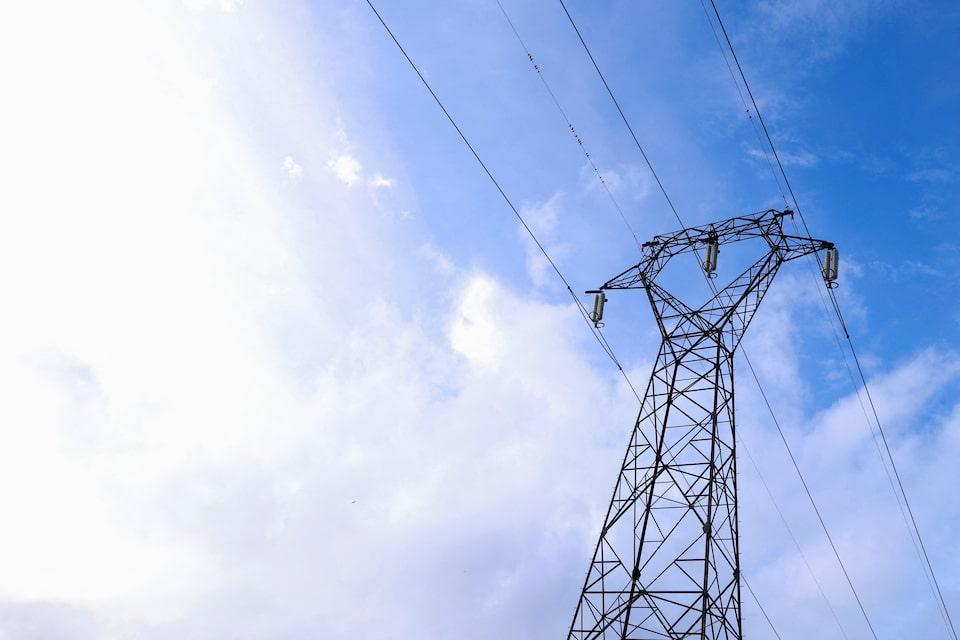
LITTLETON, Colorado, Feb 4 (Reuters) - Growing tension across Europe's electricity markets has sharpened focus on the region's most dependable and integrated exporter of clean power: France. France is the largest supplier of clean electricity to Europe's top electricity importers, and has played a critical role in helping to cap regional electricity costs in recent years by exporting record volumes of clean power. France's status as a key electricity supplier may now become even more important after the government of Norway - another major electricity exporter - lost a key coalition partner last week in a dispute over European Union (EU) energy policies. Norway's eurosceptic Centre Party, which held eight of Norway's 20 cabinet positions, quit the government over disagreements on the adoption of EU energy directives tied to greater output and use of renewable power. The coalition breakdown leaves Norway's Labour Party to rule alone until planned elections in September, and raises questions about whether Norway will remain a major clean power exporter. Labour trails in polls to more conservative parties that are against adopting strict energy export targets. That potential decline in Norway's power exports means that Europe's largest electricity importers - which include Germany, Italy and the United Kingdom - look set to become even more reliant on France for supplies. GROWING DEPENDENCE Electricity import needs across Europe have surged since 2022, when Russia's full-scale invasion of Ukraine snarled natural gas flows across the region and forced power firms to increase imports to replace lost local power output. Scores of households and offices across Europe have switched from gas boilers to electric heating systems, while the regional transportation fleet and industry are becoming increasingly electrified. Within mainland Europe, Germany has become particularly dependent on electricity imports, and in 2024 imported nearly six times more electricity than it averaged annually from 2015 to 2021, according to data portal energy-charts.info. Italy, which has been Europe's top power importer for years, increased electricity imports by around 20% from the 2015-2021 average to new highs in 2024. The United Kingdom also posted record electricity imports in 2024, which were roughly 100% above the 2015 to 2021 average. COMMON DENOMINATOR In 2024, France was the single largest electricity supplier to the United Kingdom and Germany, and the second-largest supplier to Italy after Switzerland. Norway was the second largest electricity supplier to the UK last year, and the fourth largest supplier to Germany. If Norway's power flows start to decline going forward, major importers will be forced to rely more on France and other suppliers. FRANCE AT FULL FLOW The key risk for Europe's top electricity importers is the potential downturn in output in France and in other large electricity exporters including Switzerland and Denmark. France started 2025 with the largest monthly power output total in more than three years, at 75,577 gigawatt hours (GWh), according to LSEG. That total was roughly 5% above January 2024, and 37% above the average monthly output from 2022 to 2024. The key driver behind this output surge has been France's nuclear network, which bumped production by 8% from January 2024 to the highest since at least the start of 2022. The completion of key plant maintenance and the start-up of a new reactor have been key factors behind the nuclear output gains, and should allow France's nuclear power stations to sustain relatively high production rates going forward. However, ongoing issues with corrosion at older plants mean that drops in overall production cannot be ruled out later in 2025, especially if the availability of cooling water from rivers is impeded by warm weather in the summer. Europe's total electricity supplies could also be affected by any downturn in hydro power output in Switzerland and Austria. Regional hydro output scaled record levels in 2024 following floods during the summer, and allowed for Switzerland and Austria to boost electricity exports from the year before. However, snow coverage across Europe's main alpine regions remains below the long-term average so far in 2025, and may limit hydro production later in the year. An extension to the current spell of below-normal wind speeds is another threat to regional electricity supplies. Germany, Europe's top wind power producer, is in the midst of a multi-month stretch of low wind speeds, while wind output in Denmark - one of Europe's top power exporters - dropped by 20% in January 2025 from January 2024 levels, LSEG data shows. Any further below-par wind output in northern Europe may not only reduce exportable supplies from Denmark but also increase the import needs of Germany, and place even greater pressure on France to sustain its high levels of electricity exports. The opinions expressed here are those of the author, a market analyst for Reuters. Sign up here. https://www.reuters.com/business/energy/france-focus-europes-electricity-import-needs-swell-maguire-2025-02-04/
2025-02-04 06:10
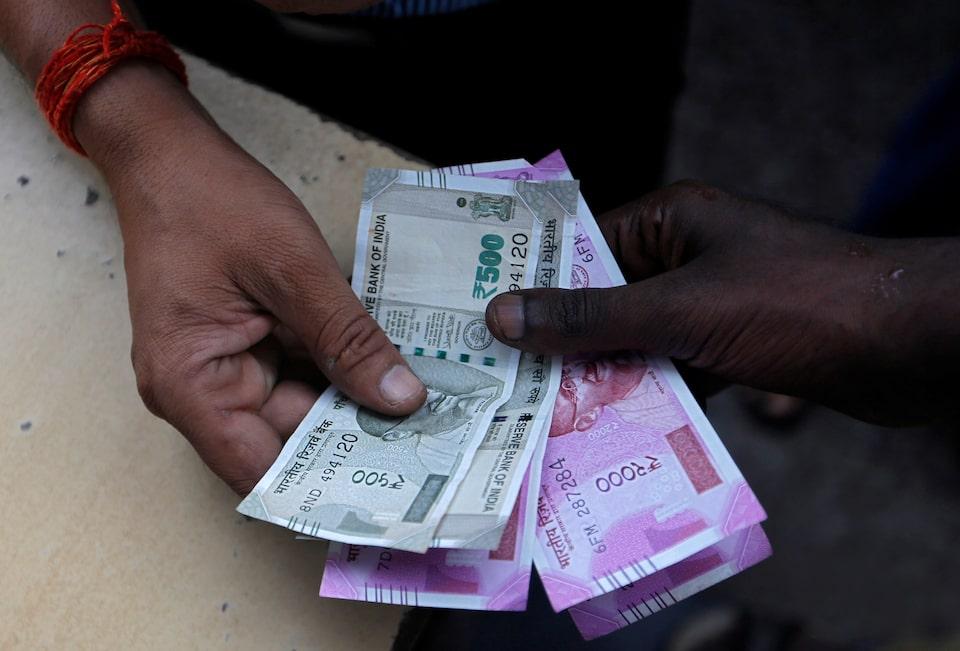
MUMBAI, Feb 4 (Reuters) - The Indian rupee struggled to hold gains on Tuesday after China said it will impose tariffs on U.S. goods in retaliation to U.S. President Donald Trump's levies. The rupee was at 87.1125 at 11:05 a.m. IST, after rising to 87.0150 earlier in the day. The local unit closed at 87.1850 in the previous session. China's finance ministry announced a package of tariffs on a range of U.S. products in an immediate response to a 10% tariff on Chinese imports announced by U.S. President Donald Trump that went into effect at 0501 GMT. The dollar rose against its major peers, U.S. equity futures declined, and the Chinese yuan dropped following China's announcement. Trump had suspended tariffs Canada and Mexico for 30 days, but not on China. Sign up here. https://www.reuters.com/markets/currencies/rupee-struggles-after-chinas-retaliates-us-tariffs-2025-02-04/
2025-02-04 06:06
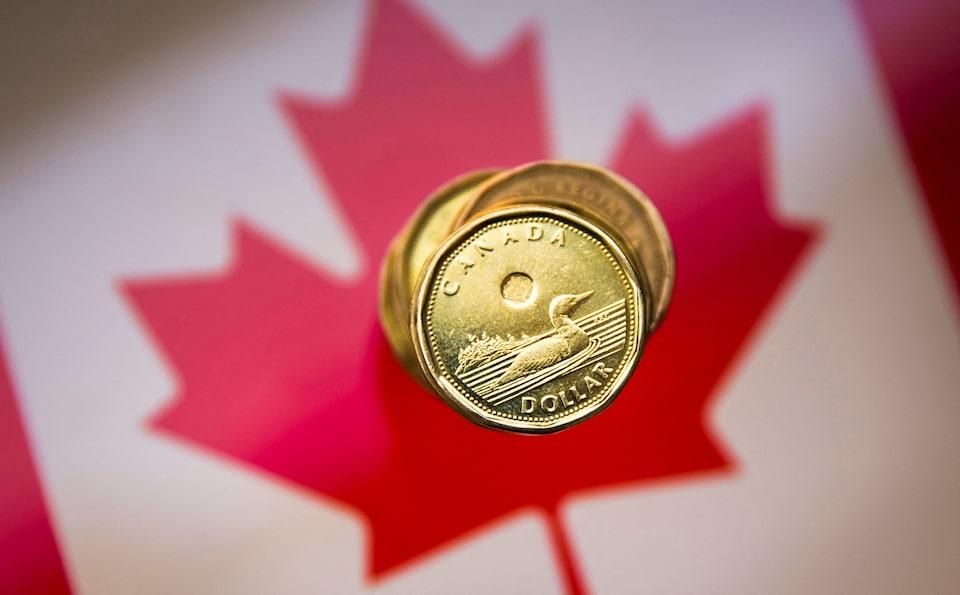
Markets see Trump's tariff threats as a negotiating tool U.S. dollar index down 0.56% amid tariff tensions China imposes tariffs on U.S. imports in response Euro and Australian dollar rise Canadian dollar down after Monday rebound NEW YORK, Feb 4 (Reuters) - The U.S. dollar edged lower on Tuesday as President Donald Trump's tariff threats were interpreted more as a negotiating tactic rather than an end goal, a day after he suspended planned measures against Mexico and Canada. However, the new Trump administration imposed additional 10% tariffs on imports from China effective from early Tuesday and currency analysts said they expected high sensitivity to tariff developments and volatility to persist. The U.S. dollar index , a measure of the value of the greenback relative to a weighted basket of six major foreign currencies, was down 0.56% at 107.97 while the Canadian dollar was weaker and the Mexican peso was stronger. "We're still looking at these 10% tariffs on China and China's retaliation, which is going to add some risk premium back into the market," said Helen Given, FX trader at Monex USA. "We'll see if there's any sort of negotiation on the back end that might tamp these down as we saw with Mexico and Canada. But as it looks right now, the trade war with China is back up and running." The euro rose slightly, with Washington warning that the European Union may be next in line for trade levies, which are widely expected to push up U.S. inflation, supporting the dollar by keeping U.S. interest rates higher for longer. Beijing on Tuesday imposed tariffs on some U.S. imports in a swift response to new U.S. duties on Chinese goods, raising the stakes in a showdown between the world's top two economies. "It suggests that China is wary of pushing back too hard against Trump's latest tariffs and is leaving the door open for future negotiations," said Lee Hardman, senior currency analyst at MUFG. The Chinese yuan edged up 0.23% to 7.287 per dollar in offshore trading . There is no official yuan trading until Wednesday, with mainland markets still closed for Lunar New Year festivities. The Australian dollar , which often acts as a liquid proxy for the yuan because the Australian economy is highly exposed to China, rose 0.5% to $0.626, well above Monday's low of $0.6085, the weakest level since April 2020. EURO LOWER The euro rose 0.37% to $1.038, with market participants watching parity. Several analysts recently said that U.S. tariffs would have a deflationary effect on the euro area. "While the prospects for wider across-the-board tariffs on the EU (are) now highly uncertain, to the extent that tariff back-and-forth continues, an environment of prolonged trade uncertainty should weigh on the Euro in and of itself," Goldman Sachs analysts said in a research note. The Canadian dollar lost 0.81% to C$1.43 against its U.S. counterpart, following a sharp rebound from a low of C$1.4792 on Monday, the weakest level since 2003. The Mexican peso rose 1.06% to 20.546, after jumping over 1.5% the day before. The U.S. dollar was nearly up 0.3% at 154.290 yen , with the Japanese currency seen as a safe-haven currency and the greenback less appealing after recent rises. Sign up here. https://www.reuters.com/markets/currencies/canadian-dollar-mexican-peso-steady-after-sharp-rebound-tariff-reprieves-2025-02-04/