2025-02-04 05:43
Cyclones hinder repair effort for previous cyclone damage RBC sees possible risk premium to iron ore price Rio may struggle to meet output guidance - analyst BEIJING/MELBOURNE, Feb 4 (Reuters) - Rio Tinto (RIO.AX) , opens new tab, (RIO.L) , opens new tab said on Tuesday it had begun clearing iron ore ships from two Western Australian ports as two tropical cyclones offshore swell seas and complicate its efforts to repair infrastructure damaged by a previous cyclone last month. "Safety is our priority. As is procedure, we began sending ships from Cape Lambert Port at the weekend and Dampier Port last night, out to sea, to avoid high sea swells and wave conditions created by Tropical Cyclone Taliah and Tropical Cyclone Vince," a Rio spokesperson said via email. Rio warned last month that its first-quarter iron ore shipments could be affected by disruptions to its rail operations following record rainfall along Western Australia's Pilbara coastline due to Tropical Cyclone Sean. "Clearing the ports is compounding system challenges and high stocks, as repair works continue on the East Intercourse dumper that was impacted by flood waters from Tropical Cyclone Sean during January," the miner said. Western Australian cyclone season typically occurs between November and April. Damage incurred from Tropical Cyclone Sean appears to have been pretty substantial if it required more than the usual one to two weeks to fix, said RBC Capital Markets analyst Kaan Peker. "If it's something a bit more meaningful, it will probably need specialty equipment to repair," he said. "If repairs took more than three to four weeks there is a real chance that they wouldn't be able to catch up in the second half, so we probably think there is some minor risk to Rio's guidance," he added. The world's largest iron ore producer has said it expects to produce between 323 million and 338 million metric tons of iron ore from its Pilbara operations this year, up from 328.6 million tons last year. A Rio spokesperson said on Tuesday that its production guidance remained unchanged. Rio said on Jan. 24 that it was working to mitigate impacts from Tropical Cyclone Sean and that it would provide an update at its full-year results on Feb. 19. News of Rio's port struggles could add a risk premium to the iron ore price, Peker said, given Chinese steelmakers did not build up large inventories ahead of the Lunar New Year, which is nearing an end and demand is set to pick up as industry returns after the break. Iron ore futures traded around $105 a ton on Tuesday, up from three-month lows of about $97 a month ago. Rio's export ports lie further south on the Western Australian coastline than the country's top iron ore export hub of Port Hedland, used by peers BHP (BHP.AX) , opens new tab, Fortescue (FMG.AX) , opens new tab and billionaire Gina Rinehart's Hancock Prospecting. Port Hedland has not been cleared due to the latest cyclones. Australia's weather bureau said Tropical Cyclone Taliah was likely to remain a severe tropical cyclone in the coming days, but it was confident it would remain "well away" from the Western Australian coast. Sign up here. https://www.reuters.com/business/environment/rio-tinto-clears-western-australia-ports-due-cyclones-2025-02-04/
2025-02-04 05:38
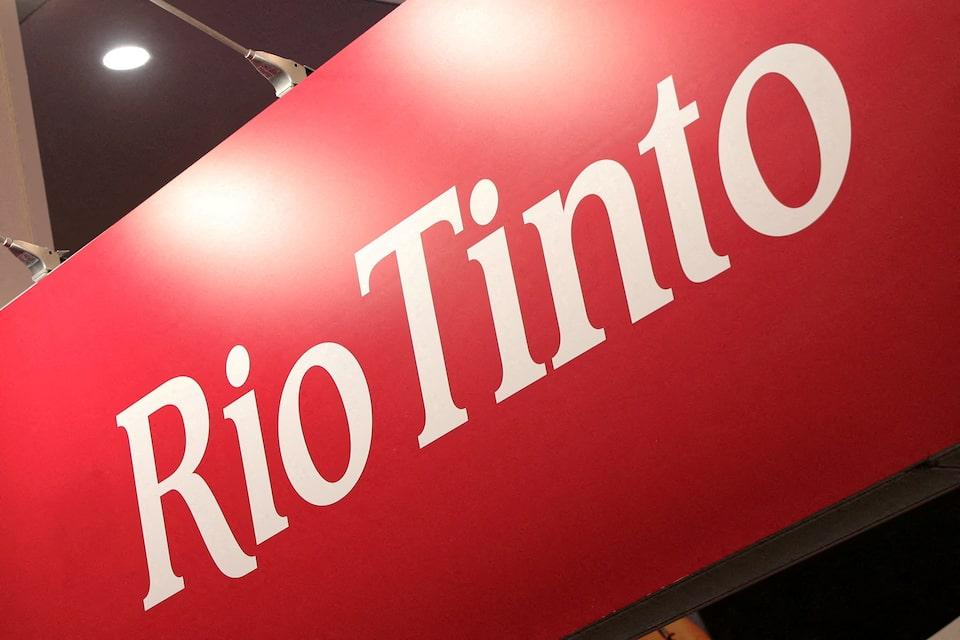
DeepSeek AI selloff sparks debate in Europe 'Jevons Paradox' suggests demand could increase as prices fall Tech stocks rebound, but energy needs for AI revolution in focus LONDON, Feb 4 (Reuters) - Artificial intelligence bulls in Europe are dusting off a 160-year-old economic theory to explain why the boom in the sector's stocks may have further to run, despite the emergence of China's cheap AI model DeepSeek. Tech stocks worldwide plunged on Jan. 27 after the launch of DeepSeek - apparently costing a fraction of rival AI models and requiring less sophisticated chips - raised questions over the West's huge investments in chipmakers and data centres. At the heart of the selloff was U.S. advanced chipmaker and AI poster-child Nvidia (NVDA.O) , opens new tab, which lost 17% of its value, or close to $600 billion, in the largest one-day drop in market capitalisation for any company on record. Since then, tech stocks have rebounded, with European markets hitting new highs, and a 19th century economic theory is suddenly on everyone's lips: the Jevons Paradox. Named after English economist William Stanley Jevons, it posits that when a resource becomes more efficient to use, demand can increase - rather than decrease - as the price to use the resource drops. "I hadn’t discussed it until Monday (last week), and then suddenly it’s everywhere," said Helen Jewell, Chief Investment Officer at BlackRock Fundamental Equities, EMEA. "This paradox highlights one of the uncertainties at the moment," said Jewell, flagging that a key question for European stock-pickers is whether data centres and their suppliers will be less in demand. "One of the big question marks from (last) Monday’s news is how much energy is going to be needed for the AI revolution?" The selloff hit direct and indirect AI plays alike. Dutch semiconductor equipment maker ASML (ASML.AS) , opens new tab, and sector peers ASMI (ASMI.AS) , opens new tab and BE Semi (BESI.AS) , opens new tab all fell 7%-12% on Jan. 27, before recouping losses later in the week, as did Siemens Energy (ENR1n.DE) , opens new tab, which provides hardware for AI infrastructure. "Jevons Paradox strikes again!" Microsoft chief executive Satya Nadella said in a post on X. "As AI gets more efficient and accessible, we will see its use skyrocket, turning it into a commodity we just can't get enough of." THE NEW BUZZWORD On Friday, Tomasz Godziek, portfolio manager of the Tech Disruptors fund at J. Safra Sarasin Sustainable Asset Management, said lower AI costs could exemplify the Jevons Paradox. "Ultimately, this could fuel a new wave of AI investment, creating fresh opportunities, particularly in software and inference technologies," Godziek said. Portfolio managers at Thematics Asset Management, an affiliate of Natixis IM, cited Jevons Paradox as one reason they believe demand for AI chips may remain healthy. Mark Hawtin, head of the Liontrust global equities team, also said his investment thesis on AI was reinforced by the news on Jan. 27, flagging the paradox. "Everyone has become an expert on Jevons Paradox," said Aviva Investors portfolio manager Kunal Kothari, who manages a UK equity income fund with around 2 billion pounds ($2.5 billion) in assets. "The falling cost of improved productivity through GenAI will likely benefit companies in the UK market generally, as they will predominantly be consumers of these technologies," he added, pointing to data and software names like RELX (REL.L) , opens new tab, LSEG (LSEG.L) , opens new tab, Experian (EXPN.L) , opens new tab and Sage as likely beneficiaries. DATA CENTRE NEEDS IN FOCUS The need for data centres and the vast amounts of power required to run them has driven a lot of AI investing in Europe already, given that there aren't any homegrown rivals to the likes of Nvidia, whose shares have rocketed by about 200% in under two years. "There is an implicit assumption that the adoption and usage of AI would require increasingly more chips, and more data centre capacity and power consumption," said Kasper Elmgreen, CIO of fixed income and equities at Nordea Asset Management. "What DeepSeek has done is to question what is required from that route and what can be delivered by making much better software." Not everyone is convinced of the new rationale, including Jordan Rochester, head of FICC strategy at Mizuho EMEA. "Whilst many Nvidia optimists pointed to Jevons Paradox to help them sleep better at night ... it was less convincing in the short term after what has been a meteoric rise in Nvidia shares," he wrote in a note. ($1 = 0.8122 pounds) Sign up here. https://www.reuters.com/technology/artificial-intelligence/europes-ai-bulls-pin-hopes-jevons-paradox-after-deepseek-rout-2025-02-04/

2025-02-04 05:34
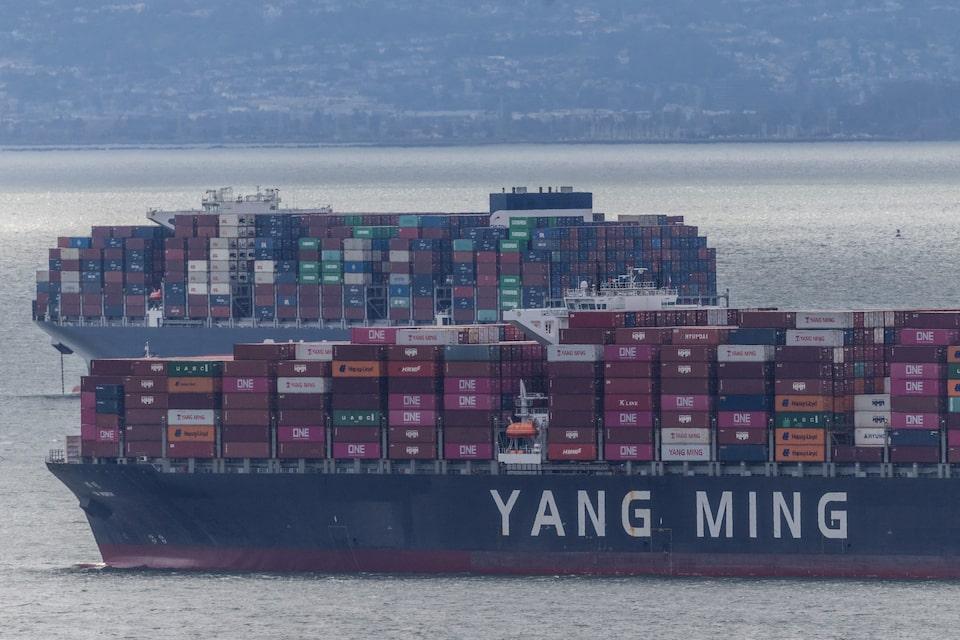
A look at the day ahead in European and global markets from Tom Westbrook Markets have taken the one-month delay in tariffs on Canada and Mexico as a signal that everything's negotiable. Even for China. Canada's Justin Trudeau and Mexico's Claudia Sheinbaum got on the phone to Donald Trump on Monday and told him they had agreed to bolster border enforcement efforts. Sheinbaum won plaudits from political analysts for her approach and investors seemed to relax - sort of. Hong Kong shares (.HSI) , opens new tab touched a two-month high, led by electric vehicle makers, as investors turned more hopeful that China - hit by a 10% tariff - will end up cutting a deal. The euro rebounded from a two-year low around $1.01 back to $1.03 in one of its biggest round-trips in recent years as fears of an imminent trade war seemed to subside. Crypto traders bought the big dip in bitcoin and ether . Yet, the wild ride has left so many things unclear. As J.P. Morgan's Michael Feroli points out, it has increased policy uncertainty in a way that is hard to reverse. European stock futures rose only 0.1% in Asia. Focus in the session may also fall on numerous results announcements spanning financials such as Amundi (AMUN.PA) , opens new tab, UBS (UBSG.S) , opens new tab and BNP Paribas (BNPP.PA) , opens new tab, as well as on businesses with exposure to tariffs such as Ferrari (RACE.MI) , opens new tab, Infineon (IFXGn.DE) , opens new tab and Diageo (DGE.L) , opens new tab. Google parent Alphabet (GOOGL.O) , opens new tab reports earnings after market close in New York. On China, Trump has said that tariffs "are going to go substantially higher" unless it stops "sending us fentanyl". China says it has already cracked down on the drug trade and that fentanyl - a synthetic drug that is 50 times stronger than heroin - is a problem for the U.S. to sort out. Trump's press secretary has said he will speak with Chinese President Xi Jinping in the next couple of days. The outcome of that conversation, as well as how Beijing handles its dollar exchange rate when Chinese markets return from a week-long holiday on Wednesday, will be in focus. Most expect the yuan's trading band fixing to be fairly steady. After Monday's rollercoaster, the offshore yuan - at around 7.31 per dollar - is still technically within the bounds of where the onshore trading band closed last week. It is not clear what sort of deal Europe could cut to avoid tariffs that Trump has threatened. Key developments that could influence markets on Tuesday: - Earnings: Amundi, BNP Paribas, Dassault Systemes, Diageo, Ferrari, Infineon Technologies, UBS, Alphabet Sign up here. https://www.reuters.com/markets/europe/global-markets-view-europe-2025-02-04/
2025-02-04 05:19
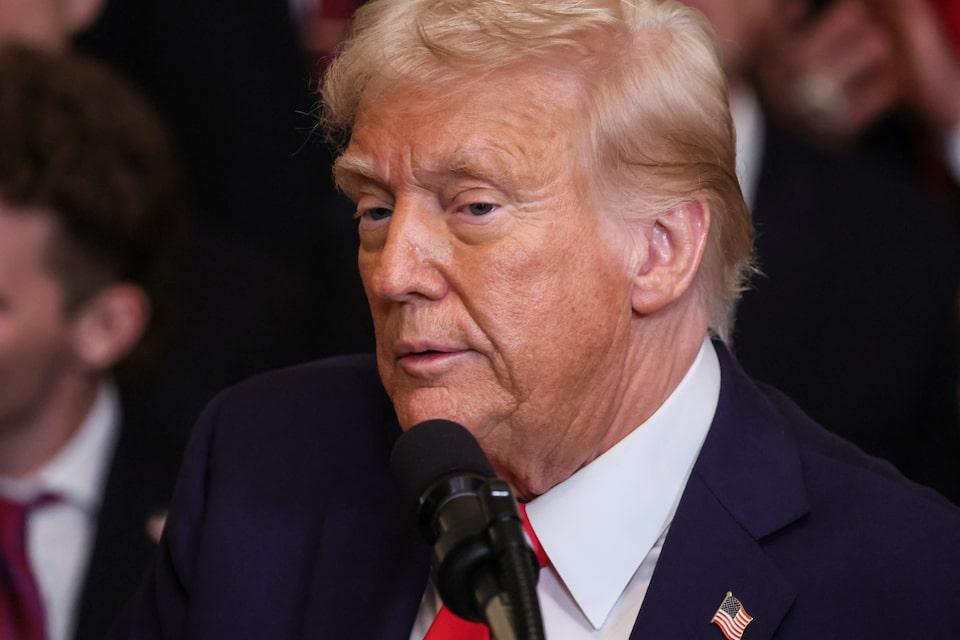
Funding mechanism unclear, but Trump previously mentioned tariffs as a source Biden administration reportedly explored a fund to boost global competitiveness Over 90 such funds across the world managing over $8 trillion in assets WASHINGTON, Feb 3 (Reuters) - U.S. President Donald Trump signed an executive order on Monday ordering the creation of a sovereign wealth fund within the next year, saying it could potentially buy the short video app TikTok. If created, the sovereign wealth fund could place the U.S. alongside numerous other countries, particularly in the Middle East and Asia, that have launched similar funds as a way to make direct investments with government dollars. The text of the executive order was sparse on details, and simply directed the Treasury and Commerce Departments to submit a plan for such a fund within 90 days, including recommendations on "funding mechanisms, investment strategies, fund structure, and a governance model." Typically such funds rely on a country's budget surplus to make investments, but the U.S. operates at a deficit. Its creation also would likely require approval from Congress. "We're going to create a lot of wealth for the fund," Trump told reporters. "And I think it's about time that this country had a sovereign wealth fund." Trump had previously floated such a government investment vehicle as a presidential candidate, saying it could fund "great national endeavors" like infrastructure projects such as highways and airports, manufacturing, and medical research. Administration officials did not say how the fund would operate or be financed, but Trump has previously said it could be funded by "tariffs and other intelligent things." Treasury Secretary Scott Bessent told reporters the fund would be set up within the next 12 months. "We're going to monetize the asset side of the U.S. balance sheet for the American people," Bessent said. "There'll be a combination of liquid assets, assets that we have in this country as we work to bring them out for the American people." One approach would be to convert the U.S. International Development Finance Corp (DFC) to function similar to a sovereign wealth fund, which the Trump administration reportedly considered in recent months, Bloomberg News reported. The DFC is a government agency that currently partners with private parties to finance projects in the developing world. Trump announced Friday he was nominating Benjamin Black to head that development agency. Black, a managing partner at investment firm Fortinbras Enterprises, is the son of Leon Black, the co-founder of asset management firm Apollo Global Management. The Biden administration also was considering establishing such a fund prior to Trump's election in November, according to The New York Times and Financial Times. But precisely how such a fund would be structured, and funded, remained unclear. Several experts said Congress would likely need to authorize new funding given the lack of an existing surplus to tap. The order directed officials to review any need for legislation. Clemence Landers, a former Treasury official who is now with the Center for Global Development, said there has been talk of repurposing the DFC but setting up such a fund would require Congress. “Obviously you can't establish an institution by executive order and more to the point is you can't fund an institution by executive order,” she said. Investors said the news came as a surprise. "Creating a sovereign wealth fund suggests that a country has savings that will go up and can be allocated to this," said Colin Graham, head of multi-asset strategies at Robeco in London. "The economic rules of thumb don't add up." There are over 90 such funds across the world managing over $8 trillion in assets, according to the International Forum of Sovereign Wealth Funds. Numerous U.S. states, including Alaska, Texas and New Mexico also have their own wealth funds, which help fund various priorities, including education and tax relief. They frequently rely on revenue raised by natural resources, like oil or land. In another surprise twist, Trump suggested the wealth fund could buy TikTok, whose fate has been up in the air since a law requiring its Chinese owner ByteDance to either sell it on national security grounds or face a ban took effect on Jan. 19. Trump, after taking office on Jan. 20, signed an executive order seeking to delay by 75 days the enforcement of the law. Trump has said that he was in talks with multiple people over TikTok's purchase and would likely have a decision on the app's future in February. The popular app has about 170 million American users. "We're going to be doing something, perhaps with TikTok, and perhaps not," Trump said. "If we make the right deal, we'll do it. Otherwise, we won't...we might put that in the sovereign wealth fund." Sign up here. https://www.reuters.com/markets/wealth/trump-signs-executive-order-create-sovereign-wealth-fund-2025-02-03/
2025-02-04 03:01
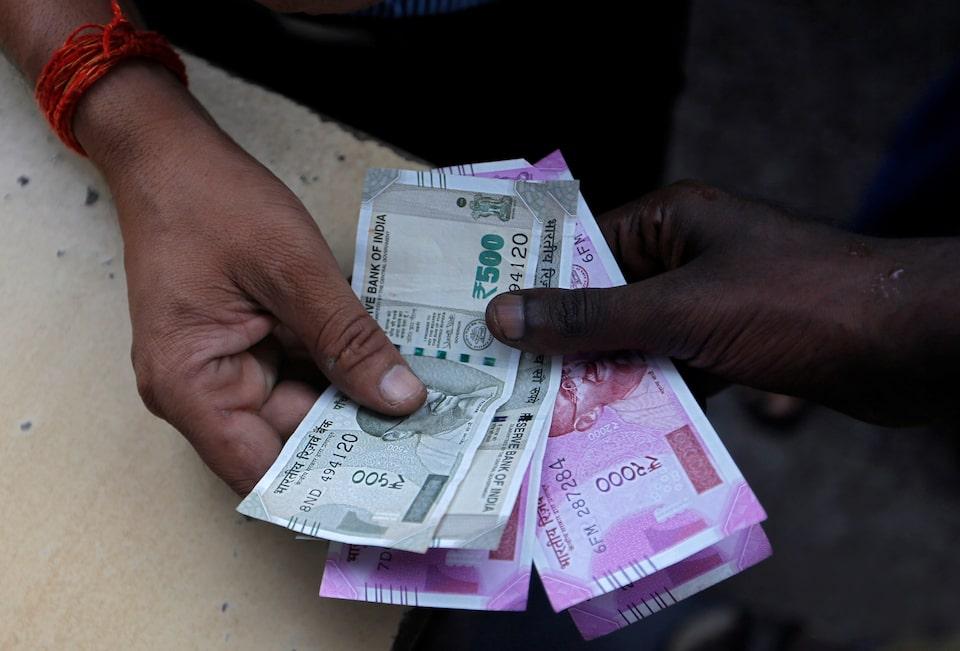
MUMBAI, Feb 4 (Reuters) - The Indian rupee is poised to recover on Tuesday, boosted by the dollar's decline after U.S. President Donald Trump delayed tariffs on Canada and Mexico by a month. The 1-month non-deliverable forward indicated that the rupee will open at 86.96-86.98 to the U.S. dollar, up from 87.1850 in the previous session. The Indian currency hit an all-time low of 87.28 on Monday after Trump levied tariffs on three of its major trading partners. Trump suspended tariffs on two of the three countries, Canada and Mexico, agreeing to a 30-day pause. The Canadian dollar and Mexican peso rallied, recovering from multi-year lows. "With Canada and Mexico making a deal to avoid tariffs at least for now, what happens to the China tariffs is important," a currency trader at a bank said. Tariffs on China are poised to come into effect from 0501 GMT on Tuesday. "If he (Trump) delays them, then you will probably see a much bigger fall in the dollar." The dollar index , having rallied to nearly 110 on Monday, had pulled back to 108.70 on the day. The offshore Chinese yuan recovered to 7.3110 to the U.S. dollar. Asian shares and U.S. equity futures advanced while U.S. Treasury yields inched up. However, analysts were unsure whether the current tariff relief would last. "We think it remains too early to tell, with tariffs likely to remain a significant tool moving forward in achieving Trump's policy agenda for both trade and non-trade purposes," MUFG Bank said in a note. The suspension of tariffs brings back the possibility that Trump would be using them to draw out concessions from his trading partners and likely wants to avoid imposing them, analysts said. Meanwhile, data released on Monday indicated that U.S. manufacturing activity expanded for the first time in two years, reinforcing expectations that the Federal Reserve will not cut rates at the March meeting. KEY INDICATORS: ** One-month non-deliverable rupee forward at 87.18; onshore one-month forward premium at 20.5 paise ** Dollar index at 108.70 ** Brent crude futures down 0.7% at $75.4 per barrel ** Ten-year U.S. note yield rises to 4.57% ** As per NSDL data, foreign investors sold a combined net $0.1mln worth of Indian shares last Friday and Saturday ** NSDL data shows foreign investors bought a net $33.8mln worth of Indian bonds on Feb. 3 Sign up here. https://www.reuters.com/markets/currencies/trumps-tariff-reprieve-bring-relief-rupee-focus-china-2025-02-04/
2025-02-04 00:31
Feb 3 (Reuters) - The U.S. Interior Department on Monday unveiled a suite of orders aimed at carrying out President Donald Trump's agenda to maximize domestic energy and minerals production and slash red tape. In a statement, the agency said Interior Secretary Doug Burgum, the former governor of North Dakota, signed six orders on his first day in office. The orders stem from a range of executive orders Trump issued in his first days in office. Those actions directed agencies to speed up permitting of energy projects and unwind environmental protections that his administration deems burdensome. The moves by Burgum signal a dramatic shift in Interior Department policies. Former President Joe Biden's administration sought for four years to slow new fossil fuel development on public lands and waters while encouraging renewable energy sectors like offshore wind and solar as part of a strategy to combat climate change. "Today marks the beginning of an exciting chapter for the Department of the Interior," Burgum said in a statement. "We are committed to working collaboratively to unlock America's full potential in energy dominance and economic development to make life more affordable for every American family while showing the world the power of America's natural resources and innovation." Burgum's orders directed agency staff to identify emergency and legal authorities to speed project development and permitting in line with Trump's energy emergency declaration and to eliminate burdensome regulations in part by reviewing appropriations under the Biden-era Inflation Reduction Act and Infrastructure Investment and Jobs Act laws. The statement said the agency would eliminate at least 10 regulations for every new one introduced. One of the orders revoked Biden's withdrawal of large areas of federal waters from new offshore oil and gas development, while another seeks to boost resource development on federal and state lands in Alaska. The Interior Department oversees millions of acres of lands and offshore waters stretching from the Arctic to the Gulf of Mexico, and leases out parcels for drilling operations that now produce around a quarter of the U.S. oil and gas output. Sign up here. https://www.reuters.com/world/us/us-interior-department-unveils-orders-carry-out-trump-energy-agenda-2025-02-04/