2025-02-04 00:13
Gas, heat, power being restored in separatist region Separatist president thanks EU, Moldavan specialists No arrangement yet for gas supplies beyond 10-day period CHISINAU, Feb 3 (Reuters) - Authorities in Moldova's separatist Transdniestria region ended month-long power cuts and began restoring heat to apartments in wintry conditions on Monday as flows of natural gas resumed, funded by the European Union. Transdniestria, which split from Moldova at the end of the Soviet era, had relied on Russian gas passing through Ukraine, but Kyiv refused to extend a transit deal beyond the New Year, saying it helped fund Moscow's nearly three-year-old invasion. Moldovan energy company Moldovagaz shipped the first batch of 3 million cubic metres (mcm) of natural gas on Saturday to the Russian-backed separatist enclave. "The priority now is starting up the heating system," Vadim Krasnoselsky, Transndniestria's self-styled president, told reporters. "We have to raise the temperature in the central heating system so that residents get heat in their homes. The rolling blackouts have been stopped." Krasnoselsky expressed gratitude to the head of the EU's Executive Commission, Ursula von der Leyen, for providing the 64 million euros ($65.9 million) in funding for the gas supplies. He also offered unusual thanks to Moldovan specialists for overseeing delivery of the gas to guard against the pipeline system losing pressure entirely. Residents expressed relief at a return to normal daily life in the region of 350,000, where Russian "peacekeepers" remain in place more than three decades after a brief conflict between the separatists and the newly independent Moldovan state. "Not everyone has hot water yet, but at least there is heat, gas and electricity," Olga, 38, told Reuters from the main regional city of Tiraspol. "I no longer have to run around the city to find power so I can work remotely. My older daughter goes back to school tomorrow, but they still have to get the heating going in my younger daughter's school." The EU funding is intended to provide gas for Transdniestria's needs for the first 10 days of February, with no arrangements yet in place beyond that. Krasnoselsky said the available gas had to be used "with the maximum efficiency". Energocom, the government gas distribution company, has been purchasing gas for Transdniestia on European markets - about 3 mcm per day - since Saturday. Some of the EU funds are to be used by government-controlled Moldova to provide electricity for its own residents. Moldova has relied on a thermal plant in the separatist region to provide cheap power, but determined it was more economical to buy power from suppliers in European countries. Gas supplies have long been a source of tension between Russia and Moldova, which lies between Ukraine and Romania. After Ukraine refused to renew the transit deal, Moldova asked Russian giant Gazprom (GAZP.MM) , opens new tab to provide gas through alternative routes, mainly Turkey. Gazprom said Moldova first had to settle arrears it estimated at $709 million, a figure contested by Chisinau. Sign up here. https://www.reuters.com/world/europe/eu-funded-gas-turns-lights-back-moldova-separatist-region-2025-02-04/

2025-02-03 23:47
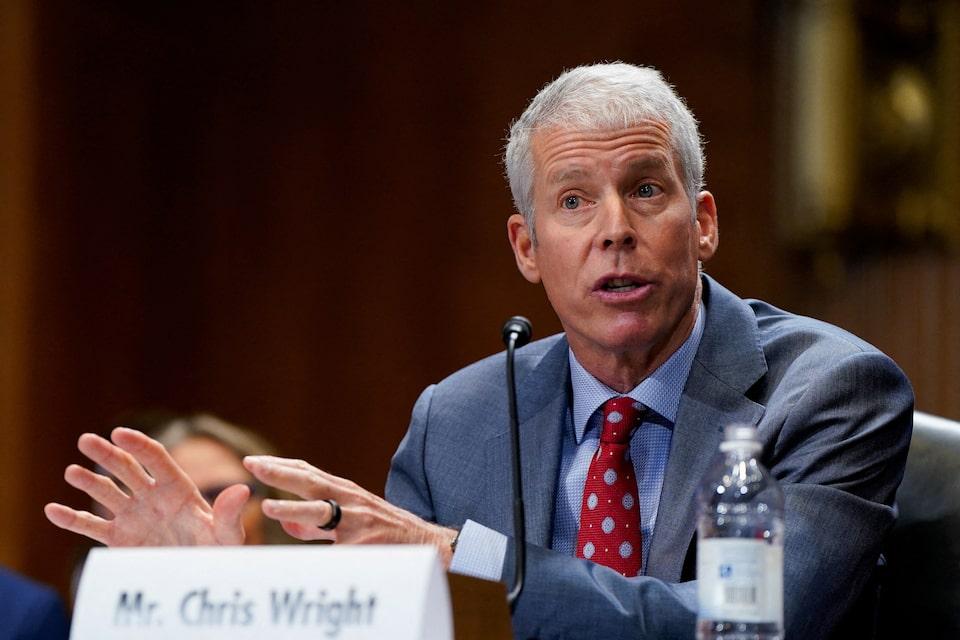
Wright confirmed with bipartisan support, 59-38 vote Wright prioritizes expanding domestic energy production Expected to dismantle Biden's climate policies, boost fossil fuel infrastructure WASHINGTON, Feb 3 (Reuters) - The U.S. Senate on Monday confirmed Chris Wright, a fracking executive, to be President Donald Trump's energy secretary. The vote was 59-38, with seven Democrats and one Independent, who caucuses with Democrats, crossing the aisle. Wright, 60, the CEO of Liberty Energy (LBRT.N) , opens new tab since 2011, has said he will step down from the company once confirmed. He wrote in a Liberty report last year he believes human-caused climate change is real, but that its hazards are "distant and uncertain." He has also said that top-down governmental policies to curb it are destined to fail. Wright will be in charge of an agency whose budget is around $50 billion, around half of which goes toward maintaining the country's nuclear weapons stockpile. He will also be in charge of the department's 17 national labs that cover everything from research fusion energy to supercomputing. In his nomination hearing, Wright said his first priority is to expand domestic energy production including liquefied natural gas, a super-chilled exportable form of the fuel, and nuclear energy. The U.S. became the world's top LNG exporter in 2023 and shipments could double before the end of the decade. Wright and Lee Zeldin, the head of the Environmental Protection Agency, are expected to dismantle aspects of former President Joe Biden's climate policies and push for more fossil fuel infrastructure including gas pipelines and power plants. Wright also said in his hearing that deadly wildfires that devastated Los Angeles are "heartbreaking," but he stood by his comments on social media in 2023 that "hype over wildfires is just hype to justify" policies to curb climate change. He is expected to play a big role in a new national energy dominance council, to be led by former North Dakota Governor Doug Burgum, who is expected to be confirmed by the Senate to head the Department of the Interior. The council is expected to seek policies to maximize output of oil and gas, though the U.S. is already the world's largest producer of both, and it is unclear how much more energy companies want to drill on federal lands. Wright will also be tasked with managing the Strategic Petroleum Reserve, the world's largest crude oil stockpile. Biden sold more than 180 million barrels, a record amount, from the reserve in 2022 to balance rising gasoline prices after Russia invaded Ukraine. The sale sank the reserve to its lowest level in 40 years. Trump has pledged to fill the SPR to the top, but doing so will require Congress to appropriate funds. Filling it quickly could lead to higher oil prices. Like his predecessor, Jennifer Granholm, Wright says he believes geothermal power has a lot of potential to provide the U.S. with emissions-free energy by tapping heat below the ground. Geothermal projects, however, will need greater access to power transmission lines. Congress has failed to pass permitting legislation to fund new transmission lines that are needed for geothermal and other renewable energy projects. Like Granholm, Wright also supports expanding nuclear power. He was a board member of small modular reactor startup Oklo (OKLO.N) , opens new tab, which has not yet built a commercial plant. Wright will likely also be tasked with helping the U.S. build out a uranium fuel supply chain, after Biden signed a ban on imports of enriched uranium from Russia. Sign up here. https://www.reuters.com/world/us/wright-draws-enough-senate-votes-become-us-energy-secretary-2025-02-03/
2025-02-03 23:33
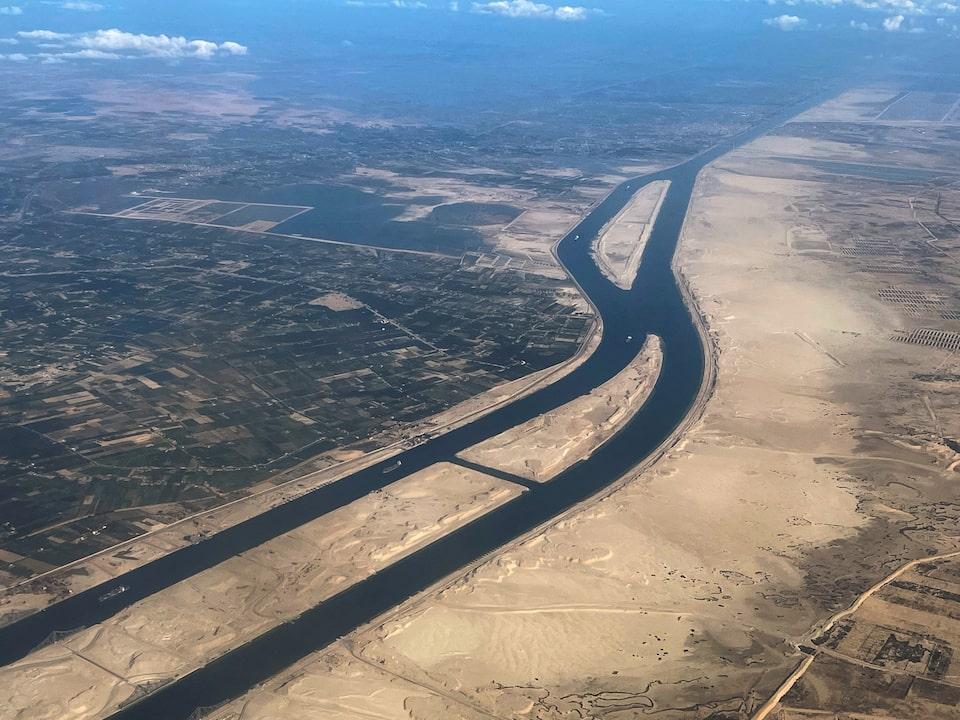
CAIRO, Feb 3 (Reuters) - Liberian-flagged crude oil tanker Chrysalis, which was attacked by Yemen's Houthis last year, sailed through the Red Sea this week, the Suez Canal said on Monday, in one of the first voyages since the militia announced a halt in attacks on ships not linked to Israel. Shipping companies, many of which have suspended Red Sea voyages and rerouted vessels around southern Africa to avoid potential Houthi attacks, have been anxiously waiting for confirmation of safe voyages through the Red Sea since the Gaza ceasefire. The Iran-aligned Houthis, which have carried out more than 100 attacks on ships since November 2023 and sunk two vessels, said on Jan. 20 after the Gaza ceasefire that they would limit their attacks on shipping lanes to Israel-linked vessels. Previously they had targeted ships linked to the UK and U.S. although other vessels with no connection have also been hit. "It is the vessel's first transit since it was attacked in the Red Sea last July," Egypt's Suez Canal Authority said on Monday, hailing the return of the Chrysalis. "The return of the tanker to transit through the Suez Canal is a strong message of reassurance regarding the positive developments towards the return of stability to the Red Sea region," Suez Canal Authority Chairman Osama Rabie said. The vessel sailed through the Bab al-Mandeb strait in recent days and then northwards through the Suez Canal, LSEG ship tracking data showed. Egyptian President Abdel Fattah al-Sisi said in December the disruption of the canal had cost Egypt around $7 billion in revenues in 2024. Sign up here. https://www.reuters.com/world/middle-east/oil-tanker-attacked-last-year-crosses-red-sea-houthi-ceasefire-holds-2025-02-03/
2025-02-03 23:29
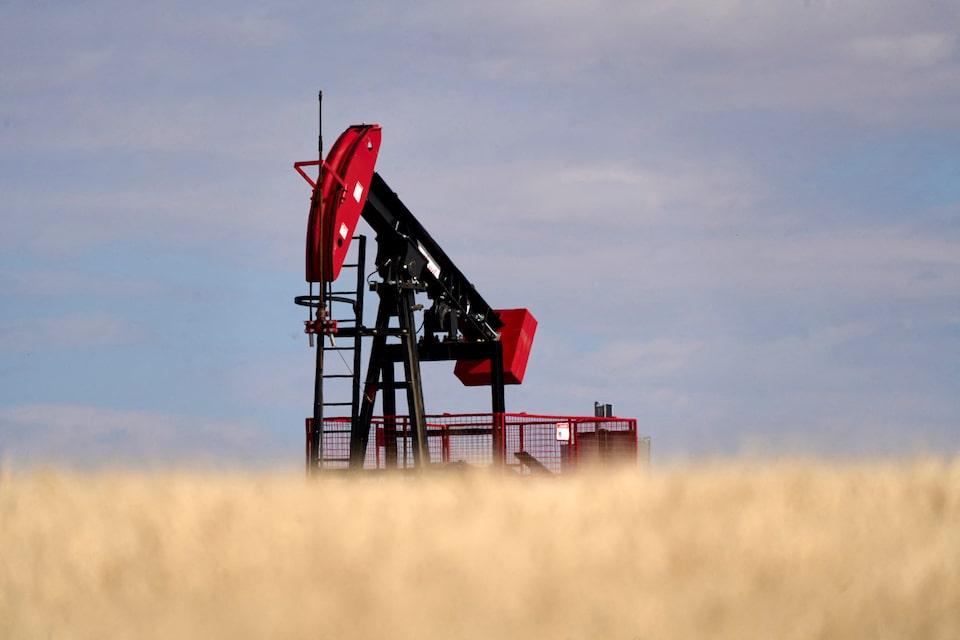
Trump reimposes 'maximum pressure' on Iran Trump in no hurry to speak with Chinese President Xi Jinping US tariffs on China take effect China counters with 10% tariffs on crude, coal and LNG Trump pauses tariffs on Mexico, Canada for a month HOUSTON, Feb 4 (Reuters) - Oil prices diverged at settlement on Tuesday amid tariff drama between Washington and Beijing, and after U.S. President Donald Trump restored his "maximum pressure" campaign on Iran, in a bid to drive Iranian oil exports to zero, per a U.S. official. Trump signed the presidential memorandum ahead of his meeting with Israeli Prime Minister Benjamin Netanyahu, ordering the U.S. Treasury secretary to impose "maximum economic pressure" on Iran, including sanctions and enforcement mechanisms. U.S. West Texas Intermediate crude settled down 46 cents, or 0.63%, at $72.70 a barrel. Global benchmark Brent crude futures settled up 24 cents, or 0.32%, to $76.20. Oil came under pressure early as new 10% U.S. tariffs on Chinese imports took effect on Tuesday, spurring retaliatory tariffs by Beijing. At its session low, U.S. crude was down more than 3%, the lowest since late December. Trump had driven Iran's oil exports to near zero during his first term after reimposing sanctions. They rose under former President Joe Biden's tenure as Iran succeeded in evading sanctions. Iran, the third-largest producer in the Organization of the Petroleum Exporting Countries, extracts about 3.3 million barrels of oil per day, or around 3% of global output. "The reason why oil was down near the lower end of the trading range was the China retaliation, and it went back up because of the 'maximum pressure' on Iran," said Phil Flynn, analyst at Price Futures Group. TARIFF DRAMA Traders had been eyeing efforts to schedule a call between Trump and Chinese President Xi Jinping, but the U.S. president said on Tuesday he was in no hurry to speak to his Chinese counterpart. Trump said "that’s fine" when asked about China's decision to issue retaliatory tariffs on U.S. imports. Earlier, Trump trade adviser Peter Navarro had said the two leaders would speak, suggesting to investors there was scope for China to receive a temporary reprieve like Trump granted to Mexico and Canada on Monday. "Oil was down on the China retaliation, I think it's the expected Trump-Xi call that brought us back up, and we kind of know how those go now, in terms of walking this all back," said John Kilduff, a partner at Again Capital in New York. On Monday, Trump suspended his threat of steep tariffs on Mexico and Canada, agreeing to a 30-day pause in return for concessions on border and crime enforcement. Ongoing trade tensions between the U.S. and China may dampen demand for oil, further pressuring prices. "The tit-for-tat measures out from China may not stop at just the 10% tariffs on crude oil from the U.S., which can also see a deliberate attempt to weaken the yuan if the U.S. fires back with more tariffs on China exports to the U.S.," said Kelvin Wong, senior market analyst at OANDA. "Overall such actions are likely to give rise to a stronger U.S. dollar that in turn weakens ... oil prices, given that OPEC+ members are still on track to increase oil supply gradually from April." China's 2024 crude oil imports from the U.S. accounted for 1.7% of its total crude imports, customs data shows. "The Chinese are smart targeting crude oil and liquefied natural gas, because that's effectively going to knock them out of the U.S. market as you're adding $5-$7 a barrel, depending on pricing and that's just not competitive," said Kilduff. Meanwhile, U.S. crude oil and gasoline stocks rose last week while distillate inventories fell, market sources said, citing American Petroleum Institute figures. Crude stocks rose by 5.03 million barrels in the week ended Jan. 31, the sources said on condition of anonymity. Gasoline inventories rose by 5.43 million barrels, and distillate stocks fell by 6.98 million barrels, they said. Sign up here. https://www.reuters.com/markets/commodities/wti-oil-prices-down-after-mexico-canada-say-trump-agrees-pause-tariffs-2025-02-03/
2025-02-03 23:11
Feb 4 (Reuters) - Shares of Australia's Predictive Discovery (PDI.AX) , opens new tab were set for their best session in nearly six months on Tuesday after the gold explorer said that China's Zijin Mining (601899.SS) , opens new tab will invest A$24.1 million ($15.00 million), while Lundin family will invest A$45.1 million in it, to acquire a 3.5% and a 6.5% stake, respectively. Shares of the company gained as much as 13.2% by 0020 GMT and were set for their biggest single-day rise since mid-August, 2024. Meanwhile, the broader benchmark S&P/ASX 200 index (.AXJO) , opens new tab was up 0.6%. Predictive said it received firmed commitments from both parties to raise a total of A$69.2 million at an issue price of A$0.265 per share, the same as the company's last close on Jan. 31. Proceeds from the placement will be used to accelerate the miner's key asset Bankan Gold Project in Guinea, it said. Lundin family is a majority shareholder in Lundin Group, which manages public companies, such as Canada's Lundin Mining Corp (LUN.TO) , opens new tab, that are focused on the minerals, metals, renewables and energy sectors. ($1 = 1.6069 Australian dollars) Sign up here. https://www.reuters.com/markets/commodities/canadas-lundin-family-chinas-zijin-mining-buy-stake-australias-predictive-2025-02-03/

2025-02-03 23:10
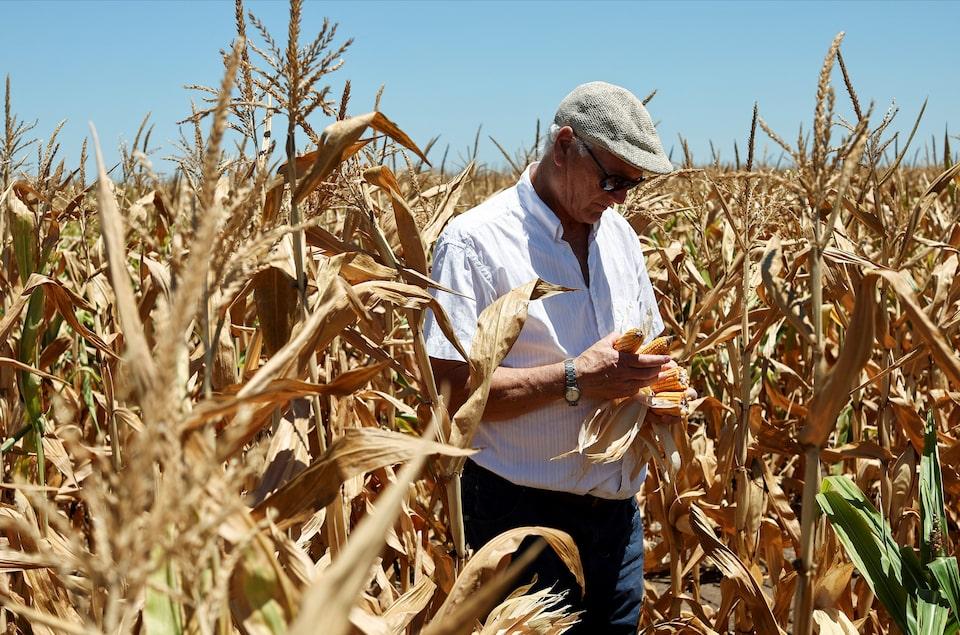
VEINTICINCO DE MAYO, Argentina, Feb 3 (Reuters) - Standing in his fields among tall, dry corn plants, farmer Dario Sabini inspects the smaller-than-usual corn cobs before taking the yellowing leaves of the crop that should be green at this time of the season, to crinkle them between his fingers. "We are seeing here corn that's already gone. The plant is already yellow, it will not come back," said the farmer from the town of Veinticinco de Mayo, some 200 kilometers (125 miles) west of Buenos Aires. The town has been hit by a recent drought. The dry weather has forced grains exchanges in Argentina, the world's top exporter of soy oil and meal and the No. 3 for corn, to cut their forecasts for the current crop, though farmers like Sabini say the reality is likely worse. "Their math does not add up," he said. Sabini, who produces soybeans, corn and beef on a ranch of more than 3,000 hectares (8,000 acres), is one of thousands of rural producers in Argentina affected by dry and hot weather since January amid the climate phenomenon La Niña. The arid climate has led to repeated cuts to harvest forecasts. The Buenos Aires grains exchange currently estimates 49.6 million tons of soybeans and 49 million tons for corn in the 2024/25 harvest - though this may well drop further. "It has to rain. Hopefully it will rain soon and we can improve to yields of 2,000 kilos (per hectare). With less than that, it's very complicated," said farmer Juan Gardey, standing next to soybean plants wilting in the dry heat in Veinticinco de Mayo. "You see a lot of aborted flowers and you can see that their development has stopped." The fall in the harvest could become a major problem for Argentina which relies heavily on grain exports for much-needed foreign currency to prop up its embattled economy. Those dollars help boost state coffers and support the local peso currency. However, agro-climatologist Eduardo Sierra, who advises the Buenos Aires grains exchange, said harvests of soy and corn would likely end up well below current forecasts - depending on when rains arrived. "If it started to rain now, you could have 45 million tons of each crop. Every week in February that goes by without rain, you lose 5 million tons more," he said, estimating that both soy and corn would end up closer to 40 million tons. The previous harvest produced about 50.2 million tons of soy and 49.5 million tons of corn. Most experts do predict rain to arrive in the next few weeks, but the amount and area of coverage are big unknowns. After a recent heat wave, the Buenos Aires exchange predicts uneven rainfall ahead that could improve the situation of crops over large parts of Argentina's farmland, but it warned that the showers "will leave some areas without relief." LESS TAXES, MORE SALES? With high costs of inputs and rent, compounded by international prices lower than in recent years, the situation has become critical for some farmers. "The outlook is pretty uncertain, yields are going to be low for both corn and soybeans. Basically, everything is complicated," farmer José Cozzi, from the Lobos region in Buenos Aires province, told Reuters. Concerned about the situation, the government of libertarian President Javier Milei last month cut taxes at least until the end of June on agricultural exports in order to speed up grain sales that generate the foreign currency the country needs. However, farmers said that the benefit they were seeing from higher local prices had not fully reflected the tax cuts to 26% from 33% for soybeans, to 24.5% from 31% for processed soy and to 9.5% from 12% for corn and wheat. Data from the major Rosario grains exchange shows the price of soybeans rose from 295,500 pesos before the tax cuts to around 315,000 pesos late last week, but with limited trading volume. "The price of soybeans hasn't changed much, an increase but not really significant," said Gardey. "I imagine that, like us, many producers also have very little stock to sell today." Javier Domínguez, who farms in the towns of Suipacha and Mercedes in Buenos Aires province, said the hit from the drought plus the limited benefit from the tax cuts would tamp down the impact on exports. "With crops with deficits like these, I think that the tax reduction will not have the desired effect," he said. Sign up here. https://www.reuters.com/markets/commodities/wilted-leaves-argentinas-farms-signal-bigger-hit-soy-corn-harvest-2025-02-03/