2025-02-03 21:44
Tariffs could lead to short-term economic overheating Long-term impact could be negative for stocks, credit NEW YORK, Feb 3 (Reuters) - U.S. President Donald Trump's willingness to calibrate economic policies based on market signals will be key for U.S. inflation and growth prospects, PIMCO's Chief Investment Officer Dan Ivascyn said on Monday, after tariffs on U.S. trade partners roiled markets. Investors on Monday scrambled to make sense of escalating trade tensions after Trump announced broad tariffs on Mexico, Canada, and China over the weekend. By Monday, he temporarily halted Mexico’s tariffs following a border security deal, while those on Canada and China remained on track. Markets were whipsawed by tariffs news, with stocks selling off initially but then paring some of their losses after news of a month-long tariff suspension with Mexico. "We're really trying to just understand the degree to which the Trump administration is willing to calibrate policy based on market signals and the actual data," said Ivascyn at PIMCO, a bond-focused investment firm with about $2 trillion in assets. "Even independent of the tariffs decision, we have an economy where inflation is still above target," he said in an interview. "Some of Trump's policies ... could be positive for growth long-term, but could lead to a little bit of inflationary pressure or risk of some overheating in the short term." Analysts estimate tariffs may fuel inflation while dampening economic growth and corporate earnings. The risk of an aggressive tariffs approach, in addition to stoking price pressures, could be retaliation from trading partners, which could lead to a "meaningful hit" on U.S. growth, said Ivascyn. "In the extreme form, it likely would be negative for risk assets and probably on the margin a little bit positive for bonds," he added. U.S. long-term Treasury yields declined on Monday as investors sought cover in the safety of government debt amid tariff volatility. Yields move inversely to prices. On the other hand, short-term Treasury yields, which more closely reflect expectations of monetary policy changes, rose as investors assessed whether price pressures could prompt a long pause on rate cuts from the Federal Reserve. Ivascyn said an environment of high interest rates for longer than anticipated due to elevated inflation could be bad for equities and corporate bonds, prompting him to add interest rate exposure through longer-dated Treasuries in recent months. "Inflation already continues to be elevated, and if you look at market pricing, there's just a lot of optimism embedded in risk asset valuations," he said. "This is a tricky environment." Sign up here. https://www.reuters.com/business/pimco-focuses-trumps-market-tuned-policy-tweaks-amid-inflation-risks-2025-02-03/
2025-02-03 21:44
PARIS, Feb 3 (Reuters) - French power group Engie (ENGIE.PA) , opens new tab still sees strong appetite in the U.S. for renewable energy projects and expects the country to remain an integral part of the company's portfolio, Executive Vice President Edouard Neviaski said on Monday. U.S. President Donald Trump has ordered a pause in spending for the Inflation Reduction Act and the Infrastructure Investment and Jobs Act, climate and infrastructure legislation that was signed into law by his predecessor Joe Biden. Engie won 4.3 gigawatts of power purchase agreement deals globally in 2024, up from 2.7 GW in 2023, with 1.5 GW signed in the U.S. spanning eight projects, a press release on Monday showed. "There is a strong appetite in the U.S. for this kind of contract," Neviaski said. "There are still some questions on the development of some renewable projects, but there is still quite a lot of interest from customers." "In the years to come we expect some other parts of the world to increase more than in the U.S., but we still think that the U.S. will be a decent proportion of PPAs." Trump has said previously he does not want to further facilitate the development of wind infrastructure in the U.S. Engie has 8 GW of wind and solar farm capacity in North America, with several projects still under development. Neviaski said it was still too early to tell what would happen in the wind segment, but said he expected to see more development of renewable projects such as solar with battery capacity to increase flexibility. He said he sees battery development growing more rapidly in 2025 as material costs have fallen and renewables have been built more quickly than expected. Sign up here. https://www.reuters.com/business/energy/engie-still-sees-strong-us-appetite-renewables-2025-02-03/
2025-02-03 21:42
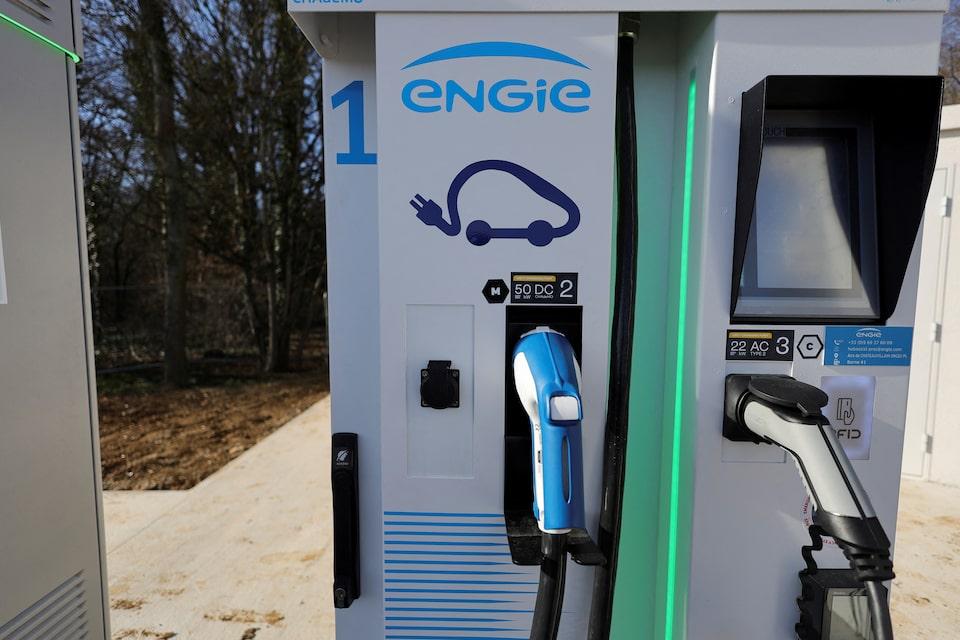
MUMBAI, Feb 3 (Reuters) - Global bullion banks are flying gold into the United States from trading hubs catering to Asian consumers, including Dubai and Hong Kong, to capitalize on the unusually high premium that U.S. gold futures are enjoying over spot prices. Traditionally, bullion banks transport gold eastward from the West to meet demand from China and India, the world's two largest consumers, accounting for almost half of global consumption. But alarm about U.S. import tariffs planned by President Donald Trump has driven Comex futures prices substantially above spot prices in recent months, creating a lucrative arbitrage opportunity. "Gold prices are skyrocketing, and in Asia, demand has pretty much disappeared," said a Singapore-based bullion dealer with a leading bullion supplying bank. Spot gold prices hit a record high on Monday. "Meanwhile, a sweet opportunity has popped up in the U.S., and naturally, almost every bank is jumping on it — moving gold over for Comex delivery to cash in on the arbitrage," he said. COMEX gold inventories have shot up almost 80% since late November, or 13.8 million troy ounces worth more than $38 billion at current prices, with supplies coming from London, Switzerland and now Asia-focused hubs. The premium on Comex futures over spot prices widened again to about $40 on Monday, compared with discounts as high as $15 in India and a discount of around $1 in China. The cost of moving gold from Asian hubs to the U.S. is fractional when compared with prevailing Comex premiums, said a Mumbai-based bullion dealer. A leading bullion bank even moved gold stored in a customs-free zone in India to the U.S. last week, he said. In normal situations, many banks bring gold into India and keep it in customs-free zones, clearing consignments by paying import taxes only after realizing demand. They can move the cargo back overseas without paying taxes. As retail demand in Asian markets was muted by high prices, bullion banks were even sourcing gold from refiners in Dubai, which usually serve as a major India-supplying hub, to cater their demand in the U.S, said a Dubai-based bullion dealer. "The U.S. is like a gold magnet right now, pulling in gold from all over the world," he said. Sign up here. https://www.reuters.com/markets/commodities/us-gold-magnet-banks-fly-bullion-asia-focused-hubs-benefit-premium-2025-02-03/
2025-02-03 21:08
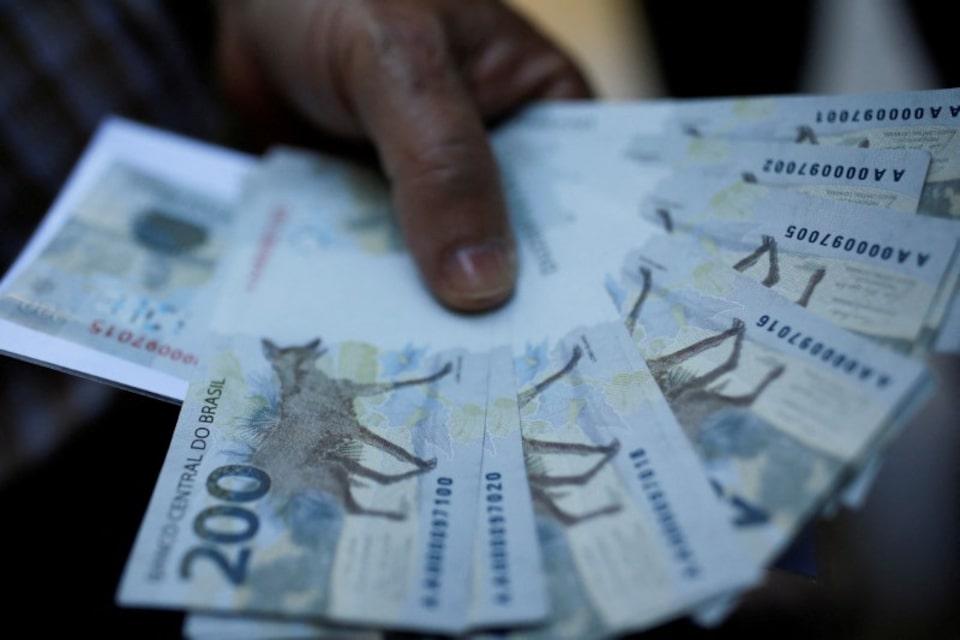
SAO PAULO, Feb 3 - Brazil's real closed trading on Monday stronger versus the U.S. dollar for the 11th consecutive session, marking its longest streak of gains since April 2005. The Brazilian currency closed at 5.8159 reais per greenback, the strongest since Nov. 26, when it closed at 5.8096 reais per dollar. It weakened more than 1% against the dollar in early morning trading on Monday before reversing those losses after U.S. President Donald Trump agreed to pause tariffs on Mexico for a month, with the real closing 0.3% stronger. Brazil's real weakened more than 20% last year against the U.S. dollar, after a sell-off in the final months of 2024 drove the Latin America currency to its weakest-ever amid investor distrust of the Brazilian government's fiscal policy and an outflow of resources. Year-to-date, the Brazilian real has strengthened by nearly 6%. Sign up here. https://www.reuters.com/markets/currencies/brazils-real-sets-longest-streak-gains-20-years-2025-02-03/
2025-02-03 21:01
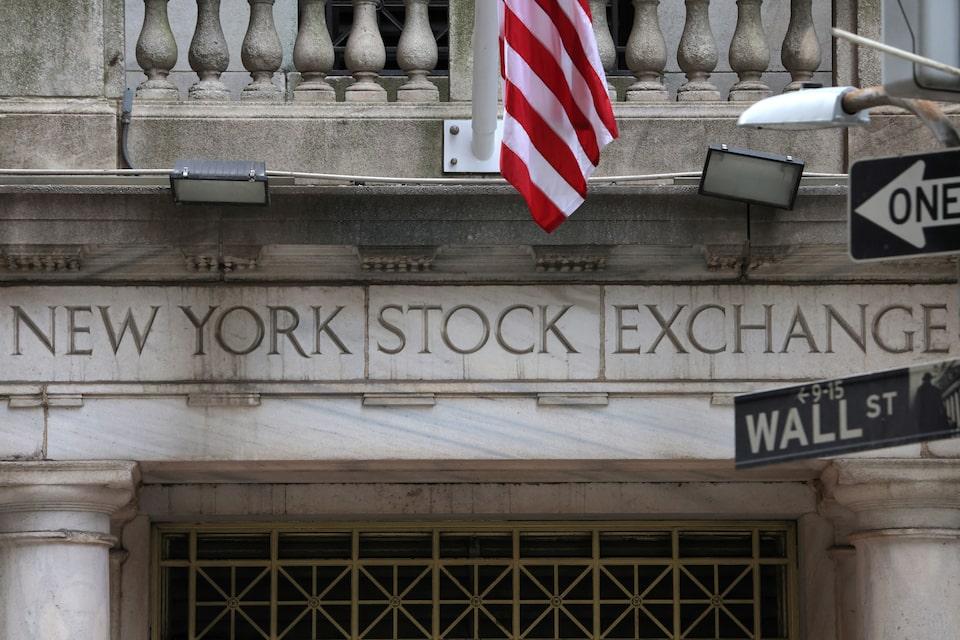
Automakers, software companies cut losses on Mexico tariff delay Wall Street's 'fear gauge' falls from one-week high Feb 3 (Reuters) - The major stock indexes closed lower on Monday, but partly recovered from initial steeper losses as U.S. President Donald Trump delayed tariffs on Mexico after his orders to levy tariffs on three countries sparked a global scramble to safe-haven assets earlier in the day. Trump said he has paused planned tariffs on Mexico for one month after the nation agreed to reinforce its northern border with 10,000 National Guard members to stem the flow of illegal drugs, particularly fentanyl. Over the weekend, Trump had announced hefty new tariffs of 25% on imports from Mexico and Canada, and 10% on China - which he said may cause short-term pain for Americans. "Trump has been really serious that tariffs are going to be a primary tool to achieve a number of different things," said Carol Schleif, chief investment officer at BMO Family Office. "They're not going away and the ride is likely to be bumpy in the short run. And it's clear the European Union is in his sights too." Analysts at Citi noted that "if tariffs persist, markets are likely to move further (down) and inflationary effects will emerge." According to preliminary data, the S&P 500 (.SPX) , opens new tab lost 45.45 points, or 0.75%, to end at 5,995.01 points, while the Nasdaq Composite (.IXIC) , opens new tab lost 235.21 points, or 1.20%, to 19,392.23. The Dow Jones Industrial Average (.DJI) , opens new tab fell 124.47 points, or 0.27%, to 44,420.19. The 11 major S&P sectors were mixed, with defensive ones such as healthcare (.SPXHC) , opens new tab and consumer staples (.SPLRCS) , opens new tab leading gains while information technology (.SPLRCT) , opens new tab and consumer discretionary (.SPLRCD) , opens new tab lost the most ground. Legacy automakers like Ford (F.N) , opens new tab and General Motors (GM.N) , opens new tab - which have been roiled by the impending tariffs - recouped some of their losses. The Cboe Volatility Index (.VIX) , opens new tab, known as Wall Street's fear gauge, touched its highest level in a week before falling. The stock market had already been pulling back last week after Chinese startup DeepSeek unveiled a breakthrough in cheap artificial intelligence models that sank tech stocks. Nvidia (NVDA.O) , opens new tab and a gauge of semiconductor stocks (.SOX) , opens new tab fell. "With the tariffs and the DeepSeek freak-out that you had last week, you’ve got the shift going from the picks and shovels of the technology buildout towards software. There’s some of that parsing going on with a focus on software," Schleif said. The economically sensitive Russell 2000 smallcaps index (.RUT) , opens new tab recovered from its three-week low. Treasury yields edged down as investors fled to safer assets such as bonds and gold. Spot gold scaled an all-time high. Several large companies report quarterly earnings this week, with Tyson Foods (TSN.N) , opens new tab shares gaining after the meatpacker raised its annual sales forecast, while IDEXX Laboratories (IDXX.O) , opens new tab jumped after the animal diagnostics maker beat fourth-quarter profit and revenue estimates. On the data front, U.S. manufacturing grew for the first time in more than two years in January, data from the Institute for Supply Management showed. Sign up here. https://www.reuters.com/markets/us/futures-tumble-trumps-tariffs-stoke-trade-war-risks-2025-02-03/
2025-02-03 21:00
Policymakers had identified trade shocks as a downside risk to inflation Central bank's communication raised concerns about dovish stance Clarifications are expected in the minutes of the policy decision on Tuesday BRASILIA, Feb 3 (Reuters) - Brazilian analysts say the tariffs announced by U.S. President Donald Trump against Canada, Mexico and China could cause a currency-related inflation surge in Latin America's largest economy, clouding the central bank's outlook for interest rates. Although Brazil's central bank emphasized that inflation risks remained tilted to the upside last week, when it raised its key interest rate by 100 basis points, it also introduced a downside risk for price pressures in the event of "a less inflationary scenario for emerging economies arising from shocks on international trade or global financial conditions." Two former Brazilian central bank directors, who requested anonymity to speak freely, said the policy statement, which was already seen as poorly worded last week, now looks even more off the mark in light of the potential for a widening trade war. "The scenario is clearly inflationary for Brazil, and it also raises risks that the country itself could be targeted (by tariffs), leading to further depreciation of the currency. The external environment has become significantly more adverse and risky," one of them said. A third former central bank director ventured that Trump's tariffs - he announced 25% duties on goods from Mexico and Canada and an additional 10% levy on imports from China on Saturday - could trigger a global economic downturn, with deflationary impacts. Brazil's central bank declined to comment. The minutes from last week's policy meeting will be released on Tuesday. Brazil's real currency , which depreciated more than 20% last year amid doubts about the government's fiscal discipline, has been a key driver of inflationary pressures. It fell more than 1% against the dollar early on Monday before reversing those losses after Trump agreed to pause the tariffs on Mexico for a month, ending the session some 0.3% stronger. Economic consultant Marcio Estrela, a former Brazilian central bank official, said recent developments have weakened the argument for a more dovish inflationary scenario for emerging markets. "If the tariffs are fully implemented, they will be inflationary in the U.S. and significantly reduce the chances of a Fed rate cut," he said. Carla Argenta, chief economist at CM Capital, fully agrees with the central bank on including this downside risk to prices, citing Trump's 2024 campaign pledge for a much more aggressive tariff policy, when he suggested new levies on China could range from 60% to 100%. According to Argenta, the fiery rhetoric seen last year had already translated into pressure on asset prices and the exchange rate in Brazil. "The fears regarding Trump's tariffs have been significantly alleviated," she said, adding that while Brazilian policymakers acknowledge this downside risk to inflation, they do not consider it anywhere near the institution's base scenario. Sign up here. https://www.reuters.com/world/americas/trumps-tariffs-raise-fears-brazils-central-bank-is-out-step-inflation-2025-02-03/