2025-02-03 12:19
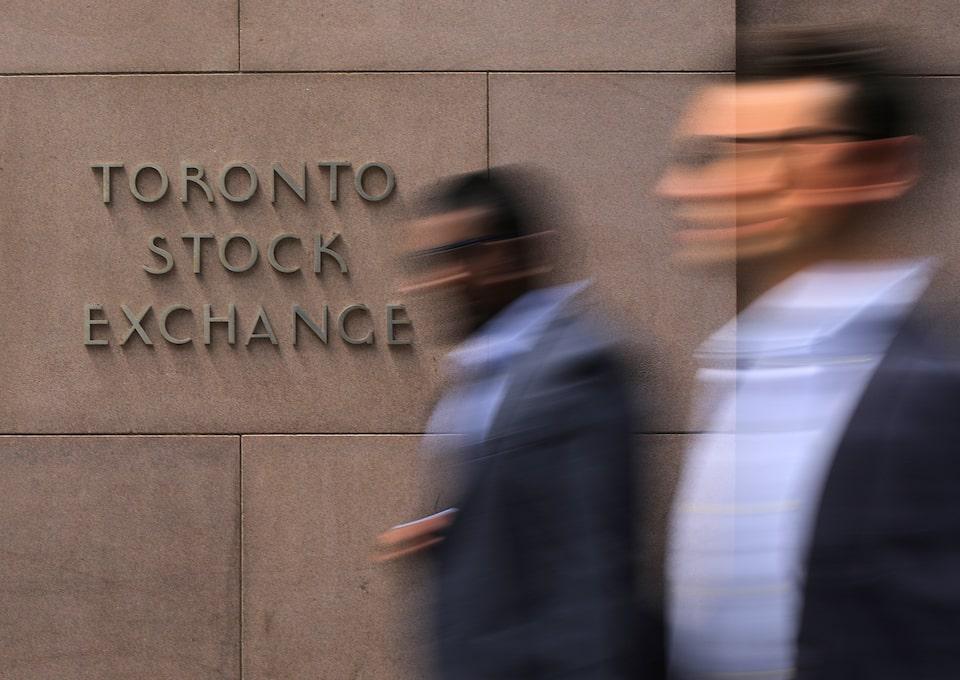
Feb 3 (Reuters) - Futures for Canada's main stock index fell sharply on Monday, part of a global market selloff after U.S. President Donald Trump announced tariffs on Canada, Mexico and China, starting on Tuesday. March futures on the S&P/TSX index were down 1.3% at 6:50 a.m. ET (1150 GMT). Futures for Wall Street's S&P 500 also dropped 1.3%. Trump slapped a 25% import tariff on all Canadian goods except energy products, which will carry a levy of 10%. Canada's Prime Minister Justin Trudeau immediately announced retaliatory tariffs on C$155 billion ($107 billion) of U.S. goods. Those on C$30 billion worth of goods will take effect on Tuesday, the same day as most of Trump's tariffs, and duties on the remaining will take effect in 21 days, Trudeau said. The developments compelled global investors to buy U.S. dollars and dump equities as they remained worried that the tariffs could fuel inflation, keeping interest rates higher for longer. In commodities, oil prices , rose on fears of supply disruption after the new tariffs, though gains were capped by concern over what could be an economically damaging trade war. Gold prices erased early losses to remain close to record highs on safe-haven demand. Copper prices hit a four-week low on worries that the tariffs would hurt growth and demand. The Toronto Stock Exchange's S&P/TSX composite index (.GSPTSE) , opens new tab fell on Friday, anticipating the start of U.S. trade tariffs, retreating from a record closing high the previous day. In corporate news, Brookfield Asset Management (BAM.TO) , opens new tab announced that it has completed the acquisition of electric heat trace systems maker Chemelex from nVent Electric Plc for $1.7 billion. FOR CANADIAN MARKETS NEWS, CLICK ON CODES: TSX market report Canadian dollar and bonds report CA/ Reuters global stocks poll for Canada , Canadian markets directory ($1 = 1.4675 Canadian dollars) Sign up here. https://www.reuters.com/markets/tsx-futures-join-global-selloff-after-trump-tariffs-2025-02-03/
2025-02-03 12:17
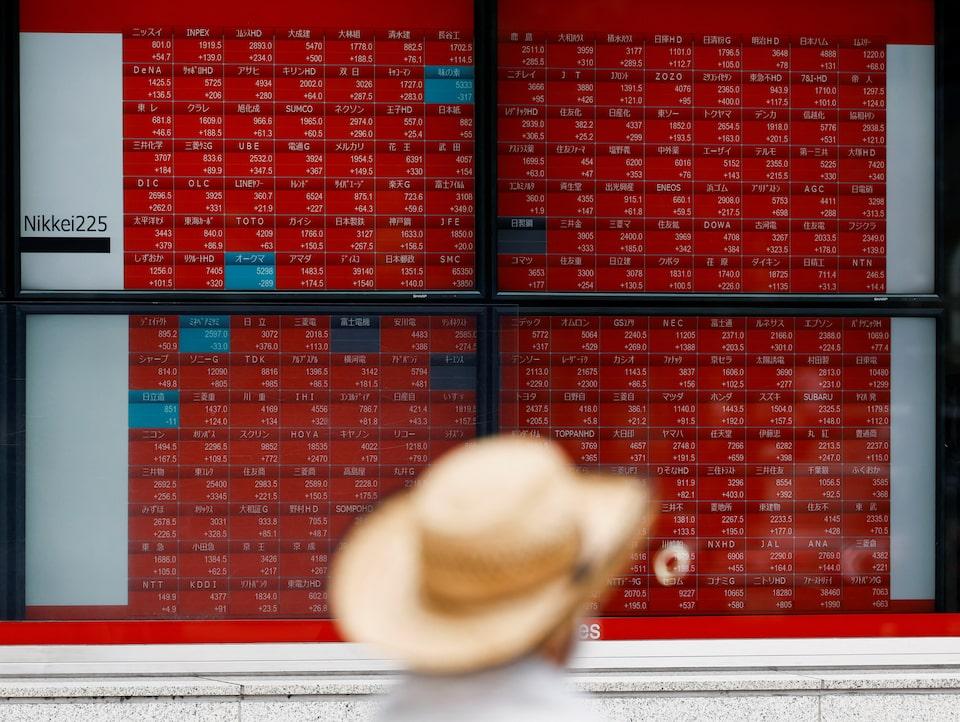
Global markets rattled by tariff threat Traders reduce Federal Reserve rate cut bets More pain in sight for currencies, euro rattled Tariffs on Mexico, Canada postponed for one month LONDON/SINGAPORE/NEW YORK, Feb 3 (Reuters) - Financial markets that had banked on avoiding trade wars are recalibrating the possibility of a sharp global slowdown, rekindled inflation and a pause to Federal Reserve rate cuts after Donald Trump declared tariffs on top U.S. trading partners. The U.S. president's weekend orders for additional levies of 25% on imports from Mexico and most goods from Canada, as well as 10% on goods from China, jolted markets that had assumed Trump was mostly bluff and bluster. The initial risk-off reaction abated after Trump on Monday said he would pause new tariffs on Mexico for one month and engage in further negotiations. Later in the day, the U.S. also postponed tariffs on Canadian imports. Trump, the self-declared "tariff man," had been telegraphing his intentions for months, so some of the news may have been priced in. Plus, he is a dealmaker with a history of changing tack when he gets what he wants from trading partners. With no one sure what is coming next, volatility should remain elevated. "So we're going to delay this for a month, which just leaves the tariff gun loaded but not fired," said Art Hogan, chief market strategist at B. Riley Wealth in Boston. "Because if he just went ahead and plowed this forward, you have a real opportunity for some sloppy markets." Trump and Canadian Prime Minister Justin Trudeau, who had announced retaliatory measures, spoke on Monday afternoon. Trudeau said in a post on X that Trump will postpone threatened tariffs on Canadian imports for at least 30 days, lifting the Canadian dollar to its high of the day against the greenback. China, where Monday was a holiday, said it would challenge Trump's tariffs at the World Trade Organization and take unspecified countermeasures, adding to the uncertainty. The Canadian dollar, which recorded its longest monthly losing streak since 2016 to the end of January, slid further to its lowest in over 20 years at almost 1.48 to the U.S. currency . The Canadian dollar ended up on the day at C$1.4428 per U.S. dollar. Mexico's peso hit its lowest in nearly three years but reversed after the tariff pause was announced and jumped 1.35% versus the dollar at 20.406. Pramol Dhawan, Head of EM Portfolio Management at Pimco, said Mexico is poised to emerge as a net winner in the longer term, despite the turbulence. He highlighted the Mexican government's decisive move to align with the U.S. by restricting Chinese textile imports and its intensified operations to tackle migration, fentanyl and drug trafficking. "Unlike with the first Trump administration, there’s no longer an element of surprise; Mexican authorities are ready to negotiate and collaborate with the US," Dhawan said. The euro, which briefly slid over 2% , was last off 0.49% and China's offshore yuan rose 0.05% against the greenback. Stock markets from Tokyo to London slumped, although U.S. and European markets pared declines after the tariff pause was announced, with the Dow Industrials (.DJI) , opens new tab briefly moving into positive territory. U.S. and European stocks had hit record highs last month. "Markets were a little complacent in wanting to believe that some of the threats wouldn't be carried through," said Mark Dowding, BlueBay chief investment officer at RBC Global Asset Management. He noted that while currencies are moving sharply, they are still trading within recent ranges, leaving room for downside. Canada's and Mexico's economies are at risk of recession, according to some analysts, while the euro zone economy could see further stagnation should Trump aim tariffs at the region. Investors are also rethinking the monetary policy outlook as tariffs risk raising U.S. inflation. Boston Federal Reserve President Susan Collins said on Monday the type of tariffs announced by the administration may drive up inflation, while Atlanta Fed President Raphael Bostic said , opens new tab the high degree of uncertainty around tariffs and other policies has made a cautious approach to further rate cuts appropriate. Market expectations for a cut of at least 25 basis points at the Federal Reserve's June meeting were scaled back to 60.6% from 66.9% in the prior session and 76.9% from a week ago. With Europe still firmly in the firing line, traders slightly increased bets on European Central Bank rate cuts, now pricing in around 86 bps of easing by December. Trump has said tariffs will "definitely happen" with the European Union, but not when. "It's one of the things that we're going to have to live with, these swings back and forth," said Keith Lerner, co-chief investment officer at Truist Advisory Services in Atlanta. "Some of these will go deeper and longer because in order for people to take these tariffs seriously, at some point you have to apply some of them, otherwise they are going to call your bluff." Deutsche Bank's global head of FX research George Saravelos said tariffs on Canada and Mexico would put American manufacturers at a severe competitive disadvantage, raising the pressure to apply tariffs on Europe. "The economic pressure for the U.S. to extend its tariff wall to other non-American producers still benefiting from integrated supply chains will be very high." Florian Ielpo, head of macro at Lombard Odier, said a 10% tariff would curb growth by 0.3 percentage points over a year unless the euro declines by as much, while a 20% tariff could halve euro zone growth from around 1% expected for this year. On the debt capital markets side, an executive who asked not to be named said deals closed on Monday with no change to terms, as markets considered the risk of tariffs being enacted for a long time as very low. “If they last for weeks or for days, there will be no effect. But if tariffs last consistently for eight, nine months (they) would have a much larger impact and even create a recession," the person said. Markets have become much more used to working with higher levels of volatility, the executive said, without shutting down as in past crises. 'TIT-FOR-TAT' The outlook for currencies other than the U.S. dollar was also seen as dire, with Nomura analysts warning "tit-for-tat" responses to the tariffs would only risk further depreciation. Deutsche Bank's Saravelos added that if the trade risks priced in during Trump's first presidential term are taken into consideration, the euro could fall to $1, from around $1.025 on Monday. If markets move to price in the ECB cutting interest rates to 1.5%, compared to current expectations of roughly 1.85%, the euro could fall to $0.98-$0.99 if Fed rates stay unchanged, he added. Analysts also anticipated further weakness in China's yuan, though the Wall Street Journal reported on Monday that China has pledged not to devalue its currency. The yuan briefly slid to a record low in offshore markets on Monday. Stocks, particularly U.S. equities (.SPX) , opens new tab, also looked vulnerable as analysts expect a drag on U.S. company earnings while the benchmark S&P 500 index sits at a high valuation. Morgan Stanley Chief U.S. Equity Strategist Michael Wilson said the tariffs reinforce the firm's preference for service industries, citing financials, software, media, entertainment and consumer services in particular. The S&P 500 closed down 0.76%, after falling as much as 1.9% during the session. Even with the brief tariff reprieve, investors were bracing for further volatility. "They don't have a playbook where they can react so quickly to all these changes in policy implementation," said Olivier d’Assier, head of applied research for Asia Pacific at investment consultant Simcorp. "By the time you figure out what you want to buy and sell he (Trump) may (have) changed things again." Sign up here. https://www.reuters.com/markets/trumps-trade-war-salvo-jolts-markets-2025-02-03/
2025-02-03 12:14
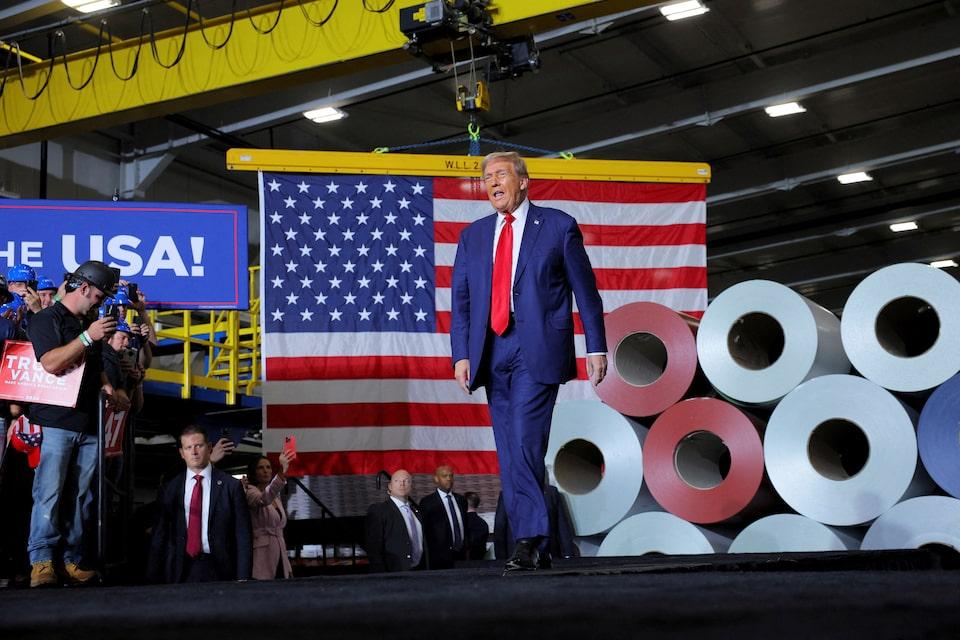
Canada accounted for over 50% of U.S. aluminium imports in 2023 Producers include Alcoa and Rio Tinto Canada and Mexico also key silver, copper suppliers UAE, Bahrain, Peru and Chile seen as possible alternative suppliers MELBOURNE, Feb 3 (Reuters) - U.S. companies will look to the Middle East and India for more aluminium and to Chile and Peru for copper as they seek to circumvent sweeping tariffs imposed by U.S. President Donald Trump, according to industry sources. Trump's orders for additional levies of 25% on imports from Mexico and most goods from Canada, as well as 10% on goods from China, have been light on detail. But they are scheduled to kick in on Tuesday and have jolted markets. U.S. users depend on aluminium producers in Canada such as Alcoa (AA.N) , opens new tab and Rio Tinto (RIO.L) , opens new tab for more than half of their imported needs and will look for alternative supply, analysts said. Important for the transport, packaging and construction sectors, the United States imported 5.46 million metric tons of aluminium products in 2023, U.S. Commerce Department data shows. Canada accounted for 3.08 million tons, or 56% of that, the data showed. "Canada will divert some aluminium from (going to) the U.S. to other regions, so for the U.S. to encourage aluminium from other regions, they are going to have to pay a bit more," said analyst Glyn Lawcock from Sydney investment bank Barrenjoey. That will be reflected in physical premiums, which include costs, such as handling and shipping, which are paid on top of exchange prices to receive delivery of physical metal. The imposition of tariffs represent a "significant upside risk to the U.S. Midwest premium this year," ING analysts wrote in a note. Prices of primary aluminium in the United States are based on the London Metal Exchange benchmark plus the Midwest premium, which jumped 17% to 28 cents a lb or $617 a metric ton on Friday. The theoretical impact of a 25% tariff on Canada would be a spike in the premium to 50 cents or more, Jorge Vazquez, founder of U.S. consultancy Harbor Aluminum, said recently. Rio Tinto declined to comment. Alcoa's William Oplinger said on an earnings call last month that Alcoa could reroute its Canadian material to Europe, and he expected more Middle Eastern metal and potentially Indian metal to come into the U.S. market. The United Arab Emirates and Bahrain are both major aluminium producers. Sources at two aluminium producers said that they were waiting and monitoring Trump's announcements with one adding they had "no intention to change yet". A lawyer said he would advise clients to be cautious in case the tariffs were withdrawn and to prepare to sell into markets beyond the United States, in case Trump expands tariffs to other jurisdictions. Across other metals, redirection of trade flows could soften the impact of the tariffs, with greater U.S. imports from alternative key sources including Peru and Chile for copper and silver, and Switzerland for gold, Citi analysts wrote in a note. Combined, Canada and Mexico represent around half of U.S. domestic silver consumption and around 10% of U.S. copper consumption, equivalent to some 147,000 metric tons of copper, it said. "This announcement also raises the likelihood of further tariff measures ...while lowering expectations for exemptions for U.S. free-trade partners," the Citi analysts said, citing the potential for a universal U.S. import tariff on specific metals such as copper, aluminium or steel. Sign up here. https://www.reuters.com/markets/commodities/us-metal-buyers-likely-turn-mideast-chile-tariffs-bite-2025-02-03/
2025-02-03 12:13
MOSCOW, Feb 3 (Reuters) - A Russian court has ruled to grant the lawsuit filed by the General Prosecutor's Office to transfer all assets of Rodnie Polya, once the country's leading grain trader, to the state, sources close to the company told Reuters. The hearing was held behind closed doors on Jan. 31, and the decision has not yet been published. Published materials cited the foreign citizenship of a former owner as a key reason for the move, aimed at preventing foreign control over strategic assets. Rodnie Polya, formerly TD RIF, controls an important grain loading terminal in the Black Sea area, listed as a strategic asset, which cannot be controlled by foreigners according to the law. It also owns 17 grain-transporting vessels. Rodnie Polya declined to comment. The decision creates an important precedent since some grain sector assets in Russia are still controlled by foreign-registered firms. The trading house was created from scratch by businessman Pyotr Khodykin to become the top Russian grain trader, exporting over 14% of all Russian grain in the 2023/24 season. Khodykin held a majority stake in the firm. The court said Khodykin holds a Saint Kitts and Nevis passport while permanently residing in the United Arab Emirates, which violates the law on strategic enterprises. The company reported problems in obtaining phytosanitary certificates since mid-March 2024 and was stripped of its export quota in May. In April 2024, it halted operations at its Azov River terminal, which leads to the Azov Sea and can handle some 4 million metric tons of grain annually. The terminal was the sixth largest in the Black Sea area by volume in the 2023/24 exporting season. The demise of Rodnie Polya has reshaped Russia's grain trading industry, with other traders, such as Grain Gates, taking Rodnie Polya's market share. Russia exported grain at a record pace in the second half of 2024. Sign up here. https://www.reuters.com/world/europe/russian-court-grants-transfer-grain-traders-assets-state-2025-02-03/

2025-02-03 12:01
FRANKFURT, Feb 3 (Reuters) - German mineral mining group K+S (SDFGn.DE) , opens new tab, which also produces potash fertilisers in Canada, said that import tariffs to be imposed by the United States would greatly challenge U.S. farmers. "The Unites States, one of the largest users of potash fertilisers, does not have any noteworthy potash fertiliser production of its own and therefore relies on larger import quantities," the company said in a statement, when asked to comment on the tariffs. "The decision that was just taken therefore poses a great challenge for the domestic agriculture sector," it added. The group ships about 300,000 tonnes of potash from its Bethune site in the Canadian province of Saskatchewan into the U.S. per year, which compares with about 10 million tonnes of total U.S. potash imports. The impact on its business was therefore "relatively minor". K+S added that it could redirect volumes from Canada elsewhere on short notice and that it was considering expanding exports from its German mines into the United Sates. Sign up here. https://www.reuters.com/markets/commodities/fertiliser-group-ks-says-tariffs-will-challenge-us-farmers-2025-02-03/

2025-02-03 11:58
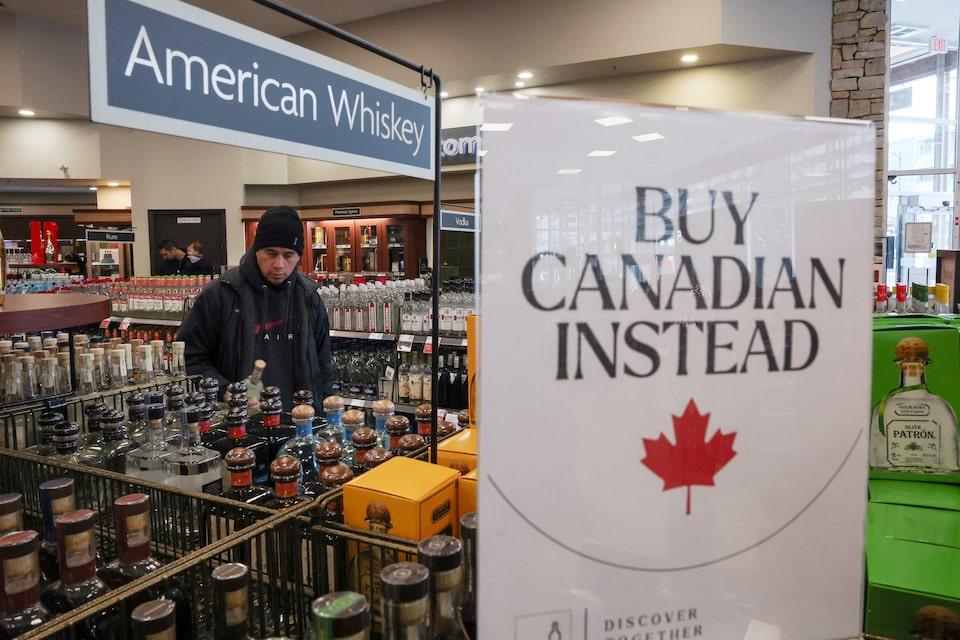
Trump tariffs spur Canadians to shun American products Provincial liquor stores ban American alcohol Booing heard at hockey, basketball game TORONTO/CALGARY/WINNIPEG, Feb 3 (Reuters) - Canadians have canceled trips south of the border, boycotted U.S. alcohol and other products and even booed at sporting events after U.S. President Donald Trump announced 25% tariffs on most of Canada's goods on Saturday. Though Trump had pledged to put tariffs on Canada and Mexico before taking office, the perceived act of economic warfare on a country that is so close to the United States culturally and geographically still came as a shock to many Canadians. "It feels like Trump wants to restructure the world order," Drew Dilkens, mayor of the Canadian border city of Windsor, said in an interview. "He's willing to start with his closest ally… If he's willing to do this to Canada, what's he willing to do to everybody else?" Dilkens said about C$400 million ($272 million) in trade crosses the Ambassador Bridge linking Detroit and Windsor every day. For his 240,000-person community, the fallout from Trump's tariffs will be immediate. He hopes residents will support local wineries and distilleries. Calgary resident Ken Lima-Coelho said the tariff news spurred a surge of Canadian pride in his household. His 19-year-old son is now making plans to sew a small Canadian flag to his backpack for an upcoming trip to Europe, while his daughter spent Saturday night making an inventory of Canadian food products in the family's kitchen. "There's nothing I can do about this quagmire that we now find ourselves in politically with the regime next door," Lima-Coelho said. "But I can change which toothpaste I buy... and that gives us something to do while hopefully our political and business leaders sort this out." Trump slapped a 25% import tariff on all Canadian goods, except energy products, which will carry a levy of 10% while entering the United States. Canada's Prime Minister Justin Trudeau immediately announced retaliatory tariffs on C$155 billion ($107 billion) of U.S. goods. Those on C$30 billion will take effect on Tuesday, the same day as most of Trump's tariffs, and duties on the remaining C$125 billion in 21 days, Trudeau said. Trudeau also encouraged Canadians to buy local and vacation in Canada, a sentiment echoed by many local officials. Ontario Premier Doug Ford ordered American-made liquor to be off the shelves of the provincially controlled Liquor Control Board of Ontario, the only alcohol wholesaler in Canada's most populous province, by Tuesday. "Every year, LCBO sells nearly $1 billion worth of American wine, beer, spirits and seltzers. Not anymore," Ford wrote on X. After attending church in Winnipeg, Loraine MacKenzie Shepherd said her grocery shopping habits will change, and she hoped to support Mexican products as well as Canadian. "There will be job losses in this country... we know that's going to happen," she said. "We need to find ways to be in solidarity with others who will be suffering the brunt of some irrational ire." In Ottawa on Saturday night, Canadians reacted more angrily at a hockey game: booing the U.S. national anthem before the Ottawa Senators played the Minnesota Wild. TV footage showed basketball fans booing the anthem again on Sunday before the Toronto Raptors played the LA Clippers. Manitoba Premier Wab Kinew urged calm. "I think we have to recognize our quarrel is not with the American people... for many of our families, our relatives on the other side of the 49th parallel are still our friends and relatives," he told a news conference. "We still share a history of our veterans fighting shoulder to shoulder . . . We defeated fascism together." But British Columbia resident Mike Davies, 64, has been angry since Trump started posting comments on social media about absorbing Canada as the 51st state. "To have Americans insult Canada has got my back up. … I think every Canadian is just disgusted, right? I just think (the tariffs are) treachery,” said Davies, a resident of White Rock, near the U.S. border. Davies started a Facebook group encouraging people to boycott American goods. He cancelled Netflix and is trying not to use Amazon. He also ditched plans to visit a friend in North Carolina. "We're not going to America at all," he said. Sign up here. https://www.reuters.com/world/americas/canadians-cancel-trips-ban-american-booze-after-trumps-tariffs-2025-02-03/