2025-02-03 11:42
US tariffs on Mexican, Canadian products delayed a month Analysts predict Mexico recession if tariffs persist NEW YORK/LONDON, Feb 3 (Reuters) - The Mexican peso rallied out of a selloff on Monday after 25% U.S. tariffs on Mexican products, expected to be imposed Tuesday, were delayed by a month as Mexico agreed to reinforce its northern border. "Our teams will start working today in two areas: security and commerce," Mexican President Claudia Sheinbaum wrote in a social media post that announced the pause in tariffs and collaboration between both countries and triggered the peso rally. The peso rose as much as 1.9% after earlier falling 2.9% to 21.2882 per dollar, its lowest in nearly three years. It closed the Monday session up 1.7% at 20.33 and was last trading at 20.317. "It looks like a very positive outcome for Mexico," said Graham Stock, senior sovereign strategist for emerging markets at RBC Global Asset Management, adding the outcome shows that there is an opportunity to negotiate. "We're going to be back here in a month's time, so it is a temporary reprieve, but certainly a better outcome for Mexico than just plowing on into 25% tariffs as of tomorrow." Wall Street analysts had said a full 25% tariff on Mexican imports to the U.S. would sharply weaken the peso and likely tip the economy into recession. "While the peso might appreciate further if tariffs are ultimately avoided, the persistent threat of tariffs is expected to limit any significant rally," said Pedro Quintanilla-Dieck, senior emerging markets Strategist at UBS Global Wealth Management. The announced tariffs had been seen as the first salvo in a new trade war. Sheinbaum had ordered retaliatory tariffs, as did Canada which was also hit with levies that were as well paused for a month. The Canadian dollar initially sank to a 22-year low of C$1.4793 per U.S. dollar and closed the session up 0.7% at C$1.4428. Sign up here. https://www.reuters.com/markets/currencies/mexican-peso-tumbles-near-three-year-low-after-tariff-blow-2025-02-03/

2025-02-03 11:38
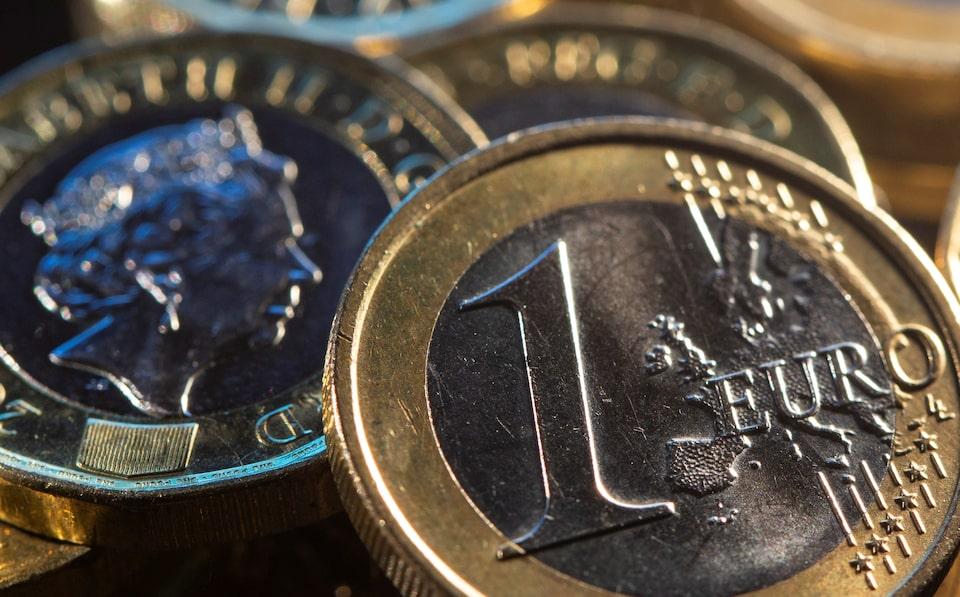
Feb 3 (Reuters) - Sterling slid against the dollar but rose against the euro on Monday as the greenback rallied after the U.S. imposed tariffs on Canada, Mexico and China, while comments from President Donald Trump fuelled hopes Britain may be able to avoid levies. The pound slid 0.66% against the dollar to $1.23135 , but was up nearly 0.5% against the euro at 83.225 pence. Trump imposed duties of 25% on Canada and Mexico and 10% on China at the weekend, calling them necessary to combat the flow of migrants and the illegal drug fentanyl into the United States. Analysts said currency markets were still trading under the notion that tariffs would be inflationary, and in turn leave U.S. interest rates higher for longer, which lent support to the dollar. Markets also mulled how a broad trade war could affect global economic growth, as Canada and Mexico already promised retaliatory measures, while bracing for more volatility from tariff-related headlines in the days to come. "[Tariffs] are likely to harm the U.S. economy the least, by extension leading to a continuation of the long-running 'US exceptionalism' theme, and leaving the greenback as the cleanest dirty shirt in the laundry once again," said Michael Brown, senior research strategist at Pepperstone. Trump said on Sunday that although Britain was "out of line" when it came to trade he thought it may be able to avoid tariffs, adding of the imbalance: "I think that one can be worked out". Conversely, Trump said that tariffs on the European Union would go ahead, but did not say when. Also in investors' focus this week, money markets price in a 94% likelihood that the Bank of England will cut rates on Thursday. Kirstine Kundby-Nielsen, FX analyst at Danske Bank, anticipated a muted market reaction to an "expected" cut. "More broadly, we expect EUR/GBP to move lower in the coming quarters driven by a relatively hawkish BoE, and a growth pickup in the UK relative to the euro area in 2025," Kundby-Nielsen added. Sign up here. https://www.reuters.com/markets/currencies/pound-rises-against-euro-after-trump-hints-uk-may-avoid-tariffs-2025-02-03/
2025-02-03 11:36
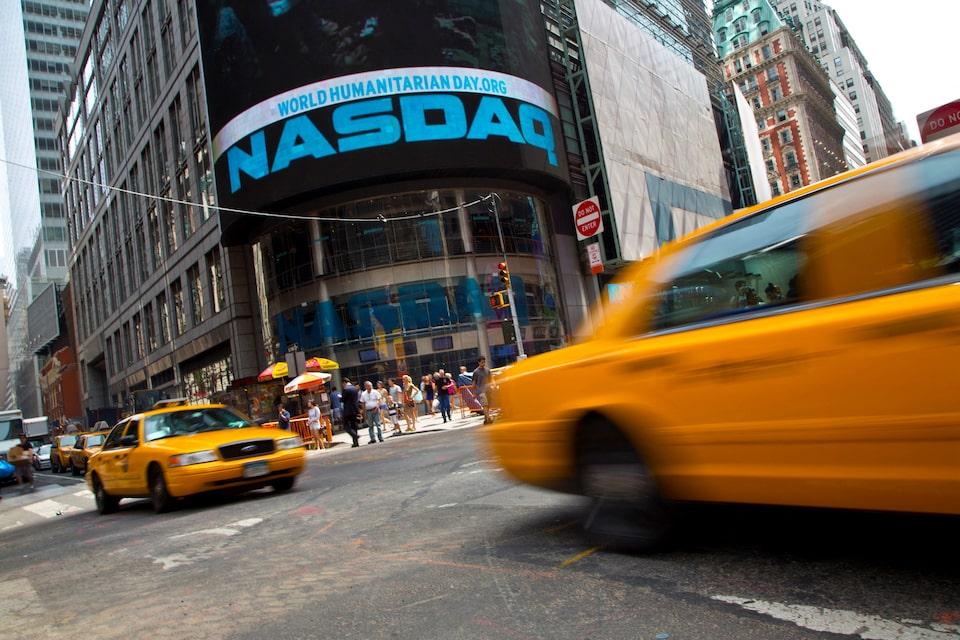
LONDON, Feb 3 (Reuters) - Hedge funds last week jettisoned global stocks and added bets they would decline, said Goldman Sachs (GS.N) , opens new tab, just before U.S. President Trump announced tariffs that sent global markets tumbling. Global shares slid on Monday after U.S. President Donald Trump announced sweeping tariffs on Canada, Mexico and China at the weekend, kicking off a trade war that could curb economic growth internationally. Hedge funds in the week to Friday sold their stock holdings in every geographical region apart from developed markets in Asia, a Goldman Sachs note published Friday and seen by Reuters on Monday showed. The selling was the largest since August, when a stock market meltdown that started with the unwinding of yen carry trades rippled through to U.S. tech stocks, said the bank. Hedge funds bet against all sectors, but industrials, consumer discretionary, energy and communications services equities bore the brunt of the selling. The number of short positions, betting on falling industrial stocks, approached almost twice the number of longs that wagered this sector would rise, said Goldman data. Real estate stocks were the only sectors where hedge funds bet that values would rise, said Goldman Sachs. Here, hedge funds bought stocks for the fourth straight week and at the fastest pace in two months, said the bank. All kinds of listed real estate stock have been popular with hedge funds including residential, retail and health care, it said. "Real estate often performs well in inflationary environments, as property values and rents tend to rise with inflation," said Bruno Schneller, managing director at Erlen Capital Management. "If trade wars lead to higher import costs and broader inflationary pressures (via tariffs), real estate becomes an even more attractive hedge against eroding purchasing power." Sign up here. https://www.reuters.com/markets/global-hedge-funds-dump-everything-real-estate-stocks-says-goldman-sachs-2025-02-03/

2025-02-03 11:22
LONDON, Feb 3 (Reuters) - A look at the day ahead in U.S. and global markets by Alun John, EMEA breaking news correspondent, finance and markets. Investors fled from stocks and rushed to dollars in Monday trading in Europe and Asia, as they scrambled to process the consequences of President Donald Trump putting larger-than-expected tariffs on top U.S. trading partners. In three executive orders, Trump imposed 25% tariffs on Mexican and most Canadian imports and 10% on goods from China, starting on Tuesday. U.S. S&P 500 futures were down 1.7% and Nasdaq futures were off 2.2% in the European mid-morning, while the reaction in currency markets has been more dramatic. Pretty much everything is getting sold against the dollar, with the Canadian dollar, euro, Mexican peso and China's yuan all in particular focus. The loonie depreciated to as much as C$1.4792 per dollar, its weakest in over 20 years, while the peso is down over 2%. But why the strong reaction? It's not as if investors didn't know that Trump, the self-proclaimed "tariff man", liked the idea of imposing tariffs. It's partly a reversal of some - in hindsight, misconceived - optimism that a lack of focus on tariffs in Trump's remarks at his inauguration on Jan. 20 meant that he would hone in on other issues in the early months of his presidency. The last couple of weeks have seen a small weakening in the dollar on the back of that. But that reversal has now, in turn, been reversed. More importantly long term, the other reason for the large reaction is that the scale of the tariffs is larger than expected. George Sarevlos, head of currency research at Deutsche Bank, said the announcements were at the 'most hawkish end" of the spectrum they could have envisaged and that if they went ahead the tariffs would cause a massive shock to global trade policy. "We see immediate recessionary consequences for some of the economies involved and broad-based negative read-across to the world economy," he said. The tariffs are also large compared to those imposed during the first Trump presidency in 2017-2021. Barclays analysts have done some sums. "In Trump's first term, the administration put tariffs on $380 billion worth of imports, mainly focused on China. The tariffs proposed this weekend by Trump would cover $1.4 trillion of imports, focused mainly on Canada and Mexico," they said. "The tariffs in Trump's first term phased in over years. These new tariffs would be implemented all at one time." Auto stocks in Asia and Europe have seen the most dramatic fall. Many have shifted some production to Mexico to ensure easy access to the U.S. market. Another reason for the optimism seen among investors in January had been that a large market selloff might cause Trump to reassess his position. There is no sign yet of that happening, however, and Trump has said the tariffs may cause "short term" pain for Americans. As to what happens next, optimists will point to Trump saying he'll talk to the leaders of Canada and Mexico to see whether there is scope for negotiation, but hopes seem pretty limited for now. "I don't expect anything dramatic," Trump told reporters as he returned to Washington from his Mar-a-Lago estate in Florida. "They owe us a lot of money, and I'm sure they're going to pay." The pessimists have got plenty to point to, particularly in the European Union, which is bracing for tariffs. Accusing the EU on Sunday of not buying enough U.S. exports, Trump said of the 27-nation bloc that it was "an atrocity, what they've done." Key developments that should provide more direction to U.S. markets later on Monday: * Tariff news and negotiations * US earnings: Tyson Foods, Cabot * Fed’s Bostic speaks on economy Sign up here. https://www.reuters.com/markets/us/global-markets-view-usa-2025-02-03/
2025-02-03 11:14
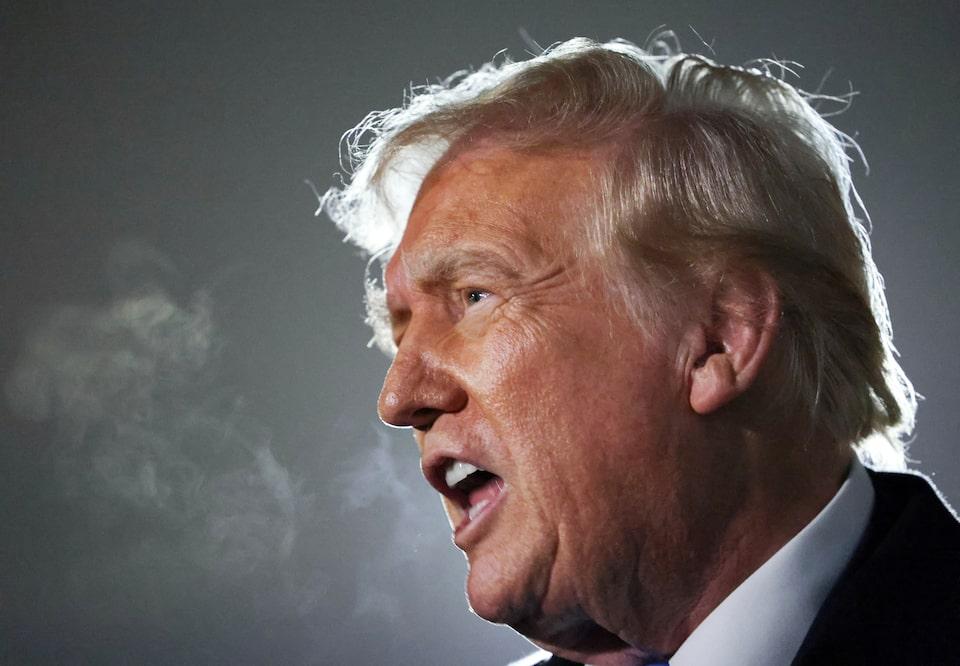
Small traders lost money as $Trump coin slumped in value by two-thirds CIC Digital, a Trump affiliate, among entities receiving trading fees from coin Some ethics experts criticize Trump's potential conflict of interest in crypto NEW YORK, Feb 3 - Entities behind President Donald Trump’s crypto coin have accumulated close to $100 million in trading fees in less than two weeks, according to estimates from three blockchain analysis firms, a large windfall from a venture that has seen tens of thousands of small traders lose money. The meme coin, known as $Trump, was launched by the president on Jan. 17 and quickly surged, reaching a peak of over $14.5 billion in overall market value by Jan. 19, the day before his inauguration. It has since slumped by two-thirds. Three crypto data firms, including Merkle Science and Chainalysis, analyzed the blockchain, a publicly available ledger that shows all transactions involving $Trump, for Reuters. They estimated that the $Trump token had generated between $86 million and $100 million in trading fees by Jan. 30. The estimates far exceed what has been previously reported. One of the entities behind the crypto coin is a company owned by Trump, called CIC Digital. The official website for $Trump says CIC Digital will “receive trading revenue derived from trading activities” of the meme coin. Reuters could not determine what portion of the fees so far, if any, had accrued to Trump personally, nor the ownership of the other entities behind the coin. The creators of the meme coin receive a share of the trading fees from Meteora, a little-known crypto exchange where the $Trump coins were first sold, the blockchain analyses showed. At least fifty of the largest investors in the coin have made profits in excess of $10 million each on the $Trump coin, according to Chainalysis. At the same time, some 200,000 crypto wallets, most with small holdings, lost money on $Trump on the exchange, it said. Trump has pledged to put his assets in a trust managed by his children on entering the White House. His son, Eric Trump, speaking on behalf of the Trump Organization, told Reuters in response to questions about the fees that he is proud of what “we continue to accomplish in crypto. $Trump is currently the hottest digital meme on earth.” “We are just getting started,” he added. The White House responded to a list of questions from Reuters with a two-page fact sheet describing Trump’s executive order earlier this month on digital financial technology. It did not address questions about the trading fees. Trump has promised to become the first “crypto president” and make America the “crypto capital of the planet” by overhauling regulations and promoting ownership of digital assets. Several key figures in his administration, cabinet and circles hold crypto or have ties to the crypto industry. But the combination of large dollar amounts around his crypto ventures and their opaque nature has also sparked criticism from ethics experts and Trump’s political opponents in the Democratic party. "There's an ethical concern that in effect he has the power to regulate his own business," said Richard Briffault, a law professor at Columbia University. Reuters was unable to determine how much of Trump’s own wealth comes from this newest crypto business because precise details of his ownership are not public. Trump’s other crypto investments include two decentralized finance (DeFi) projects – a type of platform that connects buyers and sellers without the need for traditional intermediaries like banks – and a series of non-fungible tokens, a type of digital asset. OPAQUE OWNERSHIP Meme coins are crypto tokens that feature branding or names referencing memes or internet trends. They are usually highly volatile and have scant practical use. Trump’s coin, for example, is intended as an expression of support for the president’s call to ‘fight, fight, fight’ after he was shot at a campaign rally last year. The exact ownership of Trump’s meme coins is hidden behind opaque limited liability companies. Fight Fight Fight, a Delaware-registered company, is the owner of the official website for the coin, gettrumpmemes.com. William Zanker, a Trump business associate who in 2022 collaborated with him on digital assets, is listed as the primary contact for Fight Fight Fight in registration documents. He did not respond to a request for comment. Fight Fight Fight is owned by Trump’s CIC Digital and Celebration Cards, according to the meme coin’s website. Reuters could not ascertain the identity of the people behind Celebration Cards, which also receives revenue from the trading activities of the meme coin. The official $Trump website says up to 1 billion $Trump coins will be sold over the next 36 months. Initially, a tranche of 200 million $Trump coins was released to the market, when the coin’s creators transferred them to three crypto wallets, the blockchain analysis shows. The meme coin’s website says Fight Fight Fight and CIC Digital own the remaining 800 million coins, worth around $16 billion at the coin’s current price of about $20. Merkle Science said the three crypto wallets were the earliest holders of the $Trump tokens and received the coins directly from their creators without purchasing them. Chainalysis said that, based on its assessment, the three wallet addresses “belong to creators of the $Trump coin.” Blockchain analysis firms track the movement of crypto coins on the public ledger that underpins most digital assets. They connect digital wallets - which are anonymous - with known individuals or entities via proprietary research and investigations. TRADING FEES The wallets began trading the tokens on Meteora, a DeFi exchange, the blockchain analyses show. Traders on Meteora pay a fee to the coin creators for providing liquidity, a function that enables buyers and sellers to trade an asset smoothly. The creators do so by putting some of their assets in so-called “liquidity pools”, which then stand ready to enable trading on the exchange. Meteora says it allows creators to “mint a meme coin and earn fees for life.” The exchange also receives fees. Ben Chow, the Meteora co-founder, said in a Telegram chat that he did not know anything about the team behind the Trump token. In response to a question on how Meteora was involved with the launch of the $Trump token, Chow said: "I didn't connect with the team precisely." He added that "the team reached out" to his co-founder, who is known only as Meow. Reuters could not reach Meow. The fees on Meteora vary during spells of market volatility, its website says, with "surge pricing" in place, where fees rise with higher demand. Between Jan.17 and Jan. 30, the three wallets earned fees of $86 million through these activities on Meteora, Merkle Science estimated. Chainalysis assessed that the three had earned about $94 million in trading fees over the same period. A third blockchain analytics firm, whose founder requested that it not be identified, said by Jan. 29 it calculated the meme coin had garnered roughly $100 million in fees. Sign up here. https://www.reuters.com/markets/currencies/trumps-meme-coin-made-nearly-100-million-trading-fees-small-traders-lost-money-2025-02-03/
2025-02-03 10:57
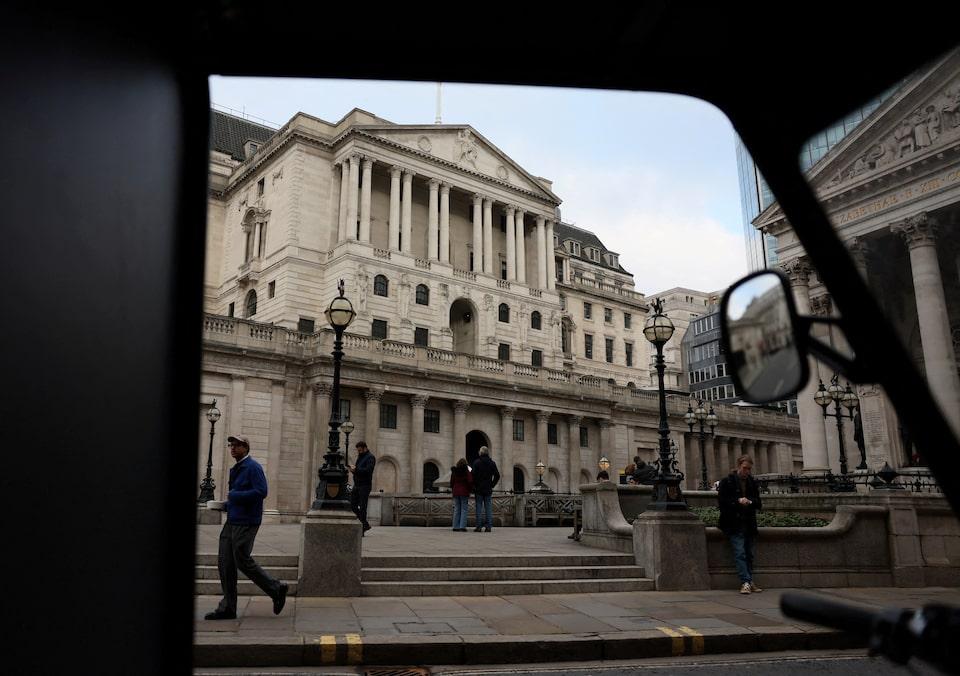
LONDON, Feb 3 (Reuters) - Investors added to bets on the Bank of England cutting interest rates and short-term government bond yields hit a three-month low as global markets braced for a hit to economic growth caused by U.S. President Donald Trump's plans for import tariffs. Interest rate futures pointed to about 81 basis points of reductions to the BoE's Bank Rate by December this year, compared with 75 bps on Friday which represented a full pricing of three quarter-point rate cuts. The chance of a quarter-point rate cut on Thursday, after this week's BoE Monetary Policy Committee meeting, was seen as a 94% probability, also up from Friday. Hetal Mehta, head of economic research at wealth management firm St. James’s Place, said Trump's announcement of tariffs on goods from Canada, Mexico and China could add to concerns among some MPC members about the risk of an economic slowdown. "Any further weakness in the euro area economy will likely spillover to the UK," Mehta said. "For some MPC members, the case for a pre-emptive cut may be enhanced." Yields on short-term British government bonds hit their lowest since just before finance minister Rachel Reeves' budget announcement on Oct. 30 which included extra borrowing and tax increases for businesses that have weighed on corporate hiring. Two-year gilt yields fell to 4.113%, the lowest since Oct. 25 and down about 8 basis points on the day while 10-year yields touched their lowest since Dec. 16 at 4.448%. Yields reversed some of their losses after Trump paused the introduction of import tariffs on goods from Mexico for a month. Despite the jump in UK bond prices from their mid-January low, when they were hit hard by a global government debt selloff ahead of Trump's inauguration, Peder Beck-Friis, an economist at asset manager PIMCO, said gilts remained attractive. "While inflation will likely rise in the coming quarters, the main driver — the national insurance hike — is a one-time tax shock that central banks typically look through," he said, referring to Reeves' decision to raise social security contributions for employers. "If wage growth falls and the labour market weakens, we expect the Monetary Policy Committee (MPC) to look through any short-term price pressures and instead focus on the medium-term outlook," Beck-Friis said. Sign up here. https://www.reuters.com/markets/rates-bonds/investors-add-bets-boe-rate-cuts-after-trump-tariff-move-2025-02-03/