2025-02-03 06:48
Ukraine launches "massive attack" with drones - Russia defence ministry Fire triggered at Volgograd oil refinery - governor Ukraine says it targeted Astrakhan gas processing plant Fire in Astrakhan region - governor Damage to the Astrakhan refinery is being assessed MOSCOW, Feb 3 (Reuters) - Ukraine struck energy facilities in southern Russia with dozens of drones launched on Monday, triggering fires at a major oil refinery and gas processing plant and disrupting flights from the Volga to the Caucasus Mountains, Russian and Ukrainian officials said. Russia's defence ministry said that its air defence units intercepted and destroyed 70 Ukrainian drones over Russian territory overnight, including 25 over the Volgograd region, 27 over the Rostov region and seven over the Astrakhan region. "The air defence forces of the defence ministry repelled a massive attack by aircraft-type drones on the territory of the Volgograd region," Volgograd Governor Andrei Bocharov said. Falling drone debris sparked several fires at an oil refinery, he said, though he did not say which refinery was on fire. Since Russia sent thousands of troops into Ukraine in 2022, Kyiv has tried to fight back against its much bigger neighbour by striking deep into Russia with drones and missiles, and even killing a senior military commander in Moscow. Russia says the attacks amount to terrorism, are an escalation of the war and that the West aids the attacks with weapons and targeting information. Ukrainian officials say they have a right to hit back at Russia, as Russia's energy, transport and military infrastructure is key to Moscow's war effort. Baza, a Russian news Telegram channel that is close to Russia's security services, said a series of explosions were heard in the area around a refinery operated by Russia's second-largest oil producer Lukoil (LKOH.MM) , opens new tab in Volgograd. The 300,000 barrel-per-day refinery is the largest in southern Russia. In 2023, it processed 13.508 million metric tons of oil, or 4.9% of the total refining volume at Russian refineries. In the neighbouring region of Astrakhan, Governor Igor Babushkin said Ukrainian drones tried to strike energy facilities and a fire had broken out. Baza and other Russian Telegram channels said Ukraine attacked a gas processing plant near Astrakhan. "Ukrainian armed forces attempted a drone attack on objects located in the region, including fuel and energy facilities," Babushkin said on Telegram. "There were no casualties." DAMAGE ASSESSED Russia's Interfax news agency, citing local authorities, reported that the fire at the plant has been contained, while the governor said the plant had suspended operations before coming under attack. The governor put out a video on Telegram of him inspecting the plant and a manager telling him that the damage to a condensate processing unit was being assessed. "The situation is under control, there is no danger to the staff," the manager said. Ukrainian Lieutenant Andriy Kovalenko, who heads the Center for Countering Disinformation, part of the National Security and Defense Council, said the Astrakhan gas processing plant had been hit. The plant, controlled by gas giant Gazprom (GAZP.MM) , opens new tab, is capable of processing around 8,340 metric tons of gas condensate per day. The Astrakhan plant produced 703,000 tons of gasoline, or 1.6% of Russia's total, as well as 492,000 tons of diesel (0.6%) and 299,000 tons of fuel oil (0.7%) in 2023. Unverified videos on social media showed giant flames and black smoke leaping into the night sky above a processing plant, as bystanders expressed shock at the size of the fire. Reuters could not independently verify battlefield reports from either side. Gazprom and Lukoil did not immediately respond to requests for comment on whether their facilities had been attacked. Russia's aviation watchdog Rosaviatsia temporarily suspended flights from the Astrakhan and Volgograd airports, as well as from Kazan, Nizhnekamsk, Saratov and Ulyanovsk to ensure air safety. Flights were later restored at most of the airports, Rosaviatsia said on Telegram. Sign up here. https://www.reuters.com/world/europe/ukraines-drone-attack-sparks-fire-forces-flight-suspensions-several-russian-2025-02-03/

2025-02-03 06:40
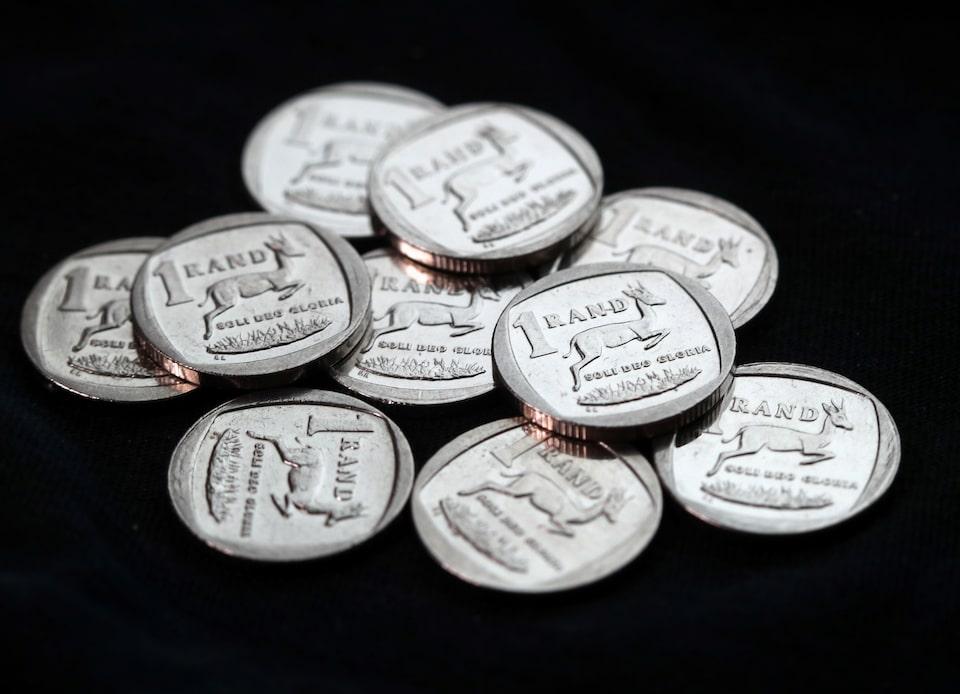
JOHANNESBURG, Feb 3 (Reuters) - South Africa's rand, stocks and government bonds fell on Monday after U.S. President Donald Trump said he would cut off funding to the country. Trump said on Sunday, without citing evidence, that "certain classes of people" in South Africa were being treated "very badly" and he would suspend aid until the matter was investigated. He said South Africa was confiscating land, 10 days after President Cyril Ramaphosa signed into law legislation that allows the state to expropriate land in the public interest under certain circumstances. Trump's comments, made in a Truth Social post, did not directly name the expropriation act. At 1035 GMT, the rand traded at 18.94 against the U.S. dollar , about 1.2% weaker than its closing level on Friday. Earlier in the day it was down almost 2%. On the Johannesburg Stock Exchange, the Top-40 index last traded down about 1% (.JTOPI) , opens new tab, while the benchmark 2030 government bond tumbled as the yield rose 15.5 basis points to 9.21%. "South Africa has found itself in Trump's crosshairs," said Danny Greeff, co-head of Africa at ETM Analytics. "Whether it is because of the land expropriation act, as President Trump says, or a warning shot over South Africa's contrarian positions on issues related to Russia and Palestine, President Ramaphosa has a fine line to walk to appease Washington," Greeff added. South Africa's foreign ministry responded to Trump on Monday by saying its expropriation act was not exceptional, while Ramaphosa said he would engage with Trump. Except for PEPFAR aid, which constitutes 17% of South Africa's HIV/Aids programme, Ramaphosa said the United States did not provide any other significant funding. South Africa's expropriation law aims to address racial disparities in land ownership, and special conditions have to be met before land is seized. Trump imposed tariffs on Canada, China and Mexico at the weekend, sending global currencies to multi-year lows on Monday. Sign up here. https://www.reuters.com/markets/currencies/rand-slumps-after-trump-says-he-will-cut-funding-south-africa-2025-02-03/
2025-02-03 06:09
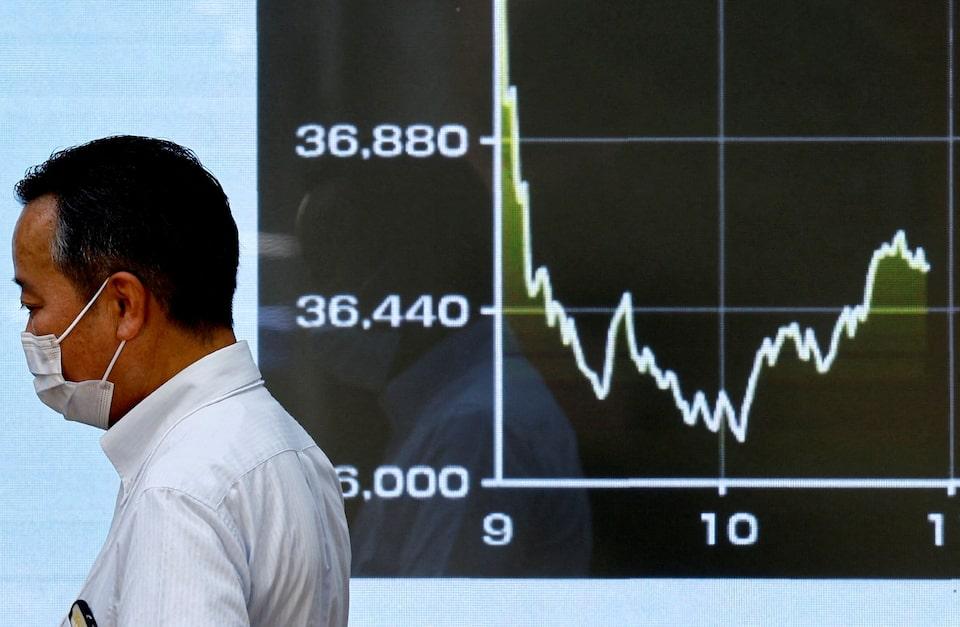
Asian stocks, U.S. and European futures drop as Canada, Mexico retaliate Trump slaps 25% tariffs on Canada, Mexico; 10% levy on China US dollar hits record high vs yuan Mexican peso, Canadian dollar tumble Hang Seng drops 1% on return from holiday; mainland markets shut TOKYO, Feb 3 (Reuters) - Asian stock markets slumped on Monday and European and U.S. equity futures pointed sharply lower after President Donald Trump's tariffs on Canada, Mexico and China triggered fears of a broad trade war and a hit to global growth. The U.S. dollar shot to a record peak against the Chinese yuan in offshore trading, its highest against Canada's currency since 2003 and the strongest against the Mexican peso since 2022. Japan's Nikkei share average (.N225) , opens new tab tumbled 2.9% and Australia's benchmark (.AXJO) , opens new tab - often a proxy trade for Chinese markets - dropped 1.8%. Stocks in Hong Kong, which include listings of Chinese companies, fell 1.1% upon reopening from Lunar New Year holidays. Mainland Chinese markets resume trading following the holidays on Wednesday. Pan-European STOXX 50 futures sank 2.7%, and U.S. S&P 500 futures dropped 2%. Trump slapped Canada and Mexico with duties of 25% and China with a 10% levy at the weekend, calling them necessary to combat the flow of migrants and fentanyl into the U.S.. Canada and Mexico immediately vowed retaliatory measures, and China said it would challenge Trump's levies at the World Trade Organization. The tariffs, outlined in three executive orders, are due to take effect at 12:01 a.m. ET (0501 GMT) on Tuesday. Trump's move was the first strike in what could usher in a destructive global trade war and drive a surge in U.S. inflation that would "come even faster and be larger than we initially expected," said Paul Ashworth of Capital Economics. A model gauging the economic impact of Trump's tariff plan from EY chief economist Greg Daco suggests it would reduce U.S. economic growth by 1.5 percentage points this year, throw Canada and Mexico into recession and usher in "stagflation" at home. Barclays strategists previously estimated that the tariffs could create a 2.8% drag on S&P 500 company earnings, including the projected fallout from retaliatory measures from the targeted countries. The U.S. dollar rose as much as 0.8% to reach an all-time high of 7.3765 yuan in the offshore market . Onshore trading remains shut for holidays. The U.S. currency climbed as much as 2.8% to 21.2547 Mexican pesos , the highest since March 2022, and rose as much as 1.4% to C$1.4755 , a level not seen since 2003. The euro dropped as much as 2.3% to $1.0125 - the lowest level since November 2022. Trump said at the weekend that tariffs on Europe will "definitely happen". U.S. two-year Treasury yields rose as much as 3.6 basis points to 4.274%, a one-week high, on concerns tariffs will stoke U.S. inflation and delay Federal Reserve interest-rate cuts. Two-year Japanese government bond yields rose in sympathy, reaching their highest levels since October 2008. Leading cryptocurrency bitcoin tumbled to as low as $91,439.89, a three-week trough. Oil prices rose, with U.S. Texas Intermediate crude up 1.9% at $73.89 a barrel and Brent crude futures adding 1% to $76.39 a barrel as investors tried to guage the impact of Trump's tariffs on world energy. Sign up here. https://www.reuters.com/markets/global-markets-wrapup-1pixtv-2025-02-03/
2025-02-03 06:08
Tariffs on Canada, China to take effect on Tuesday Gold hit record high of $2,830.49/oz Mexico tariffs to be paused for a month Feb 3 (Reuters) - Gold prices hit an all-time high on Monday, bolstered by safe-haven inflows after U.S. President Donald Trump's tariffs on Canada, China and Mexico added to concerns of inflation that would dent economic growth. Spot gold rose 0.8% to $2,818.99 per ounce by 01:45 p.m. ET (1845 GMT), after hitting a record of $2,830.49 earlier in the session. U.S. gold futures settled 0.8% higher at $2,857.10. Despite the usual dampening effect of a strong dollar on the gold market, prices have been rallying due to the safe-haven demand driven by uncertainty surrounding Trump's tariffs, said David Meger, director of metals trading at High Ridge Futures. The 25% tariffs imposed by Trump on Canadian and Mexican imports from Tuesday, along with a 10% charge on Chinese goods, fuelled fears of a trade war that could slow global growth and feed inflation. Canada and Mexico ordered retaliatory measures while China said it would challenge the tariffs at the World Trade Organization and take unspecified countermeasures. However, Trump announced a month-long pause on tariffs the U.S. had slapped on Mexico. The market is not fully convinced about the extent of the trade war, Bart Melek, head of commodity strategies at TD Securities, said. "We haven't seen a complete response from gold and if this trade war continues for a considerable period, it could lead to significantly higher gold prices down the road," Melek added. Gold is often considered as a safe-haven investment during periods of economic or geopolitical instability. J.P. Morgan said bearish contagion from equities could weigh on gold in the near term, but disruptive tariffs were a medium-term bull case for bullion. Investors await data this week on U.S. job openings, the ADP employment report and the U.S. employment report to gauge the health of the U.S. economy. Meanwhile, bullion banks are transporting gold from Asian trading hubs like Dubai and Hong Kong to the U.S. to profit from the unusually high U.S. gold futures premium over spot prices. Spot silver rose by 0.8% to $31.56 an ounce, platinum lost 1.5% to $963.40 and palladium rose 0.5% at $1,012.85. Sign up here. https://www.reuters.com/markets/commodities/gold-dips-dollar-strengthens-trump-tariffs-2025-02-03/

2025-02-03 06:05
DUBAI, Feb 3 (Reuters) - Abu Dhabi's TA'ZIZ said on Monday it has awarded a $1.7 billion contract to Samsung E&A (028050.KS) , opens new tab to build the UAE's first methanol plant, which is expected to produce 1.8 million tons of methanol every year upon completion in 2028. TA'ZIZ, a joint venture between Abu Dhabi state oil giant ADNOC and sovereign fund ADQ, was launched in 2020 to foster the development of new chemical industries in the country. "The plant will enhance the UAE's position as a leader in sustainable chemicals production and strengthen TA'ZIZ's role in enabling ADNOC's global ambition to lead the chemicals sector," TA'ZIZ CEO Mashal Saoud Al-Kindi said in a statement. ADNOC views chemicals, alongside natural gas and renewable energy, as a key pillar for its growth. Last year, it struck a deal to acquire German chemicals maker Covestro for 14.7 billion euros ($15.05 billion), including debt. ADNOC has also been in talks with Austria's OMV since at least mid-2023 to combine their polyolefin businesses, Borouge and Borealis, which would create a group with more than $20 billion in annual sales. They disclosed last week that they are considering acquiring Nova Chemicals from Mubadala, another Abu Dhabi wealth fund, as part of the deal. ($1 = 0.9769 euros) Sign up here. https://www.reuters.com/markets/deals/taziz-awards-17-billion-contract-samsung-ea-uaes-first-methanol-plant-2025-02-03/

2025-02-03 05:52
Taiwan tech stocks fall after U.S. tariffs announcement Taiwan to help companies wishing to invest in U.S. Taiwan president pledges policy support at home TAIPEI, Feb 3 (Reuters) - Taiwan will support companies that plan to relocate to the United States, including helping them find partners, the economy ministry said on Monday, outlining assistance it will offer after U.S. President Donald Trump's new tariffs. Trump's orders for additional levies of 25% on imports from Mexico and most goods from Canada, as well as 10% on goods from China, were light on detail. But they kick in on Tuesday and have jolted markets as investors feared a broader trade war could severely hurt global growth. Taiwan, whose companies are key producers of tech products such as semiconductors and electronics parts, is vulnerable given that many have factories in both Mexico and China and because Trump has also threatened tariffs on imported chips. Taiwan's economy ministry, in a statement detailing measures to help companies affected by the new U.S. tariffs, said it will provide information for firms that want to relocate, such as possible U.S. states to invest in, local laws and assistance in finding partners. The government's Industrial Technology Research Institute branches in North America will also actively promote research and development and manufacturing cooperation between Taiwanese and U.S. companies, it added. The ministry said it will continue to pay close attention to changes in international trade and maintain communication with companies to provide them with "the most timely support and assistance to ensure that they find the best strategies to cope with the changes". Taiwan's marquee investment in the United States is $65 billion from chipmaker TSMC (2330.TW) , opens new tab to build factories in Arizona, a plan begun in 2020 under Trump's first administration. Shares in Taiwanese tech companies with factories in Mexico fell heavily on Monday, with Foxconn (2317.TW) , opens new tab closing down 8.1%, Quanta (2382.TW) , opens new tab down 9.8% and Inventec (2356.TW) , opens new tab off 6.7%. Taiwan's benchmark index (.TWII) , opens new tab ended down 3.5%. Financial markets in Taiwan re-opened on Monday after the week-long Lunar New Year holiday. Taiwan is also eager to ensure its companies continue moving away from China, which has ramped up military and political threats to assert its sovereignty claims over the island. Taiwan President Lai Ching-te, speaking in Taipei on Monday to Taiwanese companies who have invested in China, said the government will maintain friendly policies to support those firms who wish to invest instead in Taiwan. Interest rates will be kept under control to help manage company costs, as will the foreign exchange rate and inflation, he added. Sign up here. https://www.reuters.com/markets/asia/taiwan-help-companies-relocate-us-following-trump-tariffs-2025-02-03/