2026-01-06 20:13
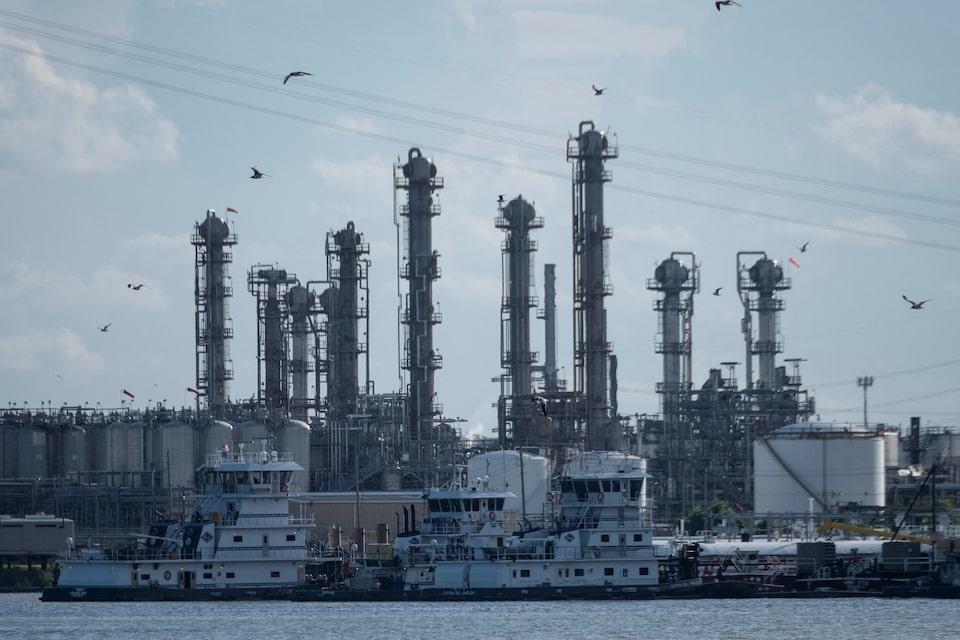
US Gulf Coast refiners set to benefit if Venezuelan sanctions end Canadian crude will lose pricing power if Venezuelan oil flows freely Chinese independent refineries will seek alternatives if Venezuelan crude is redirected HOUSTON, Jan 6 (Reuters) - A full-scale resumption of Venezuelan oil exports would benefit refiners in the United States and lower their fuel production costs, with the refineries capable of absorbing most of the roughly 1 million barrels per day of crude if U.S. sanctions on the South American country are removed. The U.S. and Venezuela have been discussing exporting crude from the South American country to the United States, Reuters reported on Tuesday. U.S. oil executives are expected to visit the White House on Thursday to discuss Venezuela, sources said. Sign up here. A boost in Venezuelan exports could hurt Canadian companies that sell a similar heavy oil, and small Chinese refiners, which would face higher costs if Venezuelan crude diverts to the United States. U.S. President Donald Trump wants U.S. oil companies to spend billions of dollars to rebuild Venezuela's oil industry, which is dilapidated and producing well below its potential after decades of mismanagement and underinvestment. Trump has said the U.S. would run Venezuela and its oil sector after U.S. troops snatched President Nicolas Maduro from Caracas on Saturday and transported him to New York to stand trial on drug charges. U.S. GULF REFINERIES BUILT FOR HEAVY CRUDE It would take years of work for oil companies to pump a lot more oil from Venezuela. The country's existing exports could, however, quickly redirect to the United States from China if the U.S. lifted a blockade on Venezuelan exports that Trump imposed in December, and removed sanctions on doing business with Venezuela. Before sanctions were imposed in 2019, several large U.S. Gulf Coast refineries bought and processed about 800,000 bpd of Venezuela's heavy oil, according to U.S. government data, and some were designed to process this type of crude rather than U.S. light oil. Those refineries would be first to benefit, analysts said. "If sanctions are lifted in the short term, the Gulf Coast can absorb a substantial portion of that 1 million bpd operationally, but the barrels would clear by pushing out other heavy crudes and competing aggressively on price," said Rommel Oates, founder of refining software company Refinery Calculator. Valero (VLO.N) , opens new tab, PBF Energy (PBF.N) , opens new tab and Phillips 66 (PSX.N) , opens new tab already buy Venezuelan crude from Chevron, and could take more, analysts and trading sources said. Valero alone, the largest Gulf Coast refiner, can process an incremental 300,000 to 400,000 bpd, Barclays analyst Theresa Chen said. U.S. Gulf Coast refineries can run 3 million to 4 million bpd of heavy crude, analysts noted. Phillips 66 on Tuesday said its two U.S. Gulf Coast refineries could run up to a couple of hundred thousand bpd of Venezuelan crude. EXXON, OTHERS, COULD BUY FROM VENEZUELA Chevron (CVX.N) , opens new tab imports about 150,000 bpd of Venezuelan crude to the United States. It is the only U.S. oil major operating in Venezuela under a license from Washington that exempts it from sanctions. Marathon Petroleum (MPC.N) , opens new tab, Motiva Enterprises, owned by Saudi Aramco, TotalEnergies (TTEF.PA) , opens new tab and ExxonMobil (XOM.N) , opens new tab purchased Venezuelan crude before sanctions and could buy more if it were available. "Gulf Coast refiners are structurally advantaged to receive Venezuelan barrels due to waterborne access and historical familiarity with these grades prior to the 2019 sanctions," said Barclays' Chen. The availability of cheaper crude to U.S. refiners could provide some price relief for motorists, Chen added. U.S. refiners' shares rose between 3% and 10% on Monday, compared to a 3% increase in the broader S&P Energy Index. The refining companies did not immediately respond or declined to comment. Chevron did not immediately reply to requests for comment on whether the company would sell more crude to U.S. refiners. REDIRECTING FLOWS U.S. refiners have imported more crude from Canada, Mexico, Colombia, Brazil and the Middle East since sanctions were imposed on Venezuela. Greater U.S. imports from Venezuela would displace those crudes, most notably Canadian. Canada boosted output to record levels in 2025, exporting about 90% of its crude to the U.S. Shares of Canadian oil producers Canadian Natural Resources (CNQ.TO) , opens new tab and Cenovus Energy (CVE.TO) , opens new tab fell between 5% and 6% on Monday. "Canadian heavy crude had picked up the slack while Venezuela was struggling. The grades will compete, which is good for U.S. refining but also bad for Canada," a refining source, who was not authorized to speak on the record, said. A long-term increase in Venezuelan output would pressure Canadian oil prices and strengthen the case for a new Canadian export pipeline to the Pacific coast, said Randy Ollenberger, a managing director at BMO Capital Markets. Prime Minister Mark Carney said he expects Canadian crude to stay competitive. CHINESE REFINERS' DILEMMA Chinese independent refiners, known as teapots, are the biggest buyers of Venezuelan crude, and would seek alternatives if those supplies are redirected long-term. The teapots would likely turn to Canadian and Middle Eastern crudes, sources said. Switching to Canadian oil would drive up Chinese refiners' costs, as Venezuelan Merey crude is the cheapest among their supplies. Chinese teapot refineries would still have access to discounted Russian and Iranian crude. Indian refiners Reliance Industries (RELI.NS) , opens new tab and Indian Oil Corp also buy Venezuelan oil and would do so again if terms were attractive, sources said. https://www.reuters.com/business/energy/venezuelan-oil-would-boost-us-refiners-hurt-canadian-producers-2026-01-06/
2026-01-06 20:00
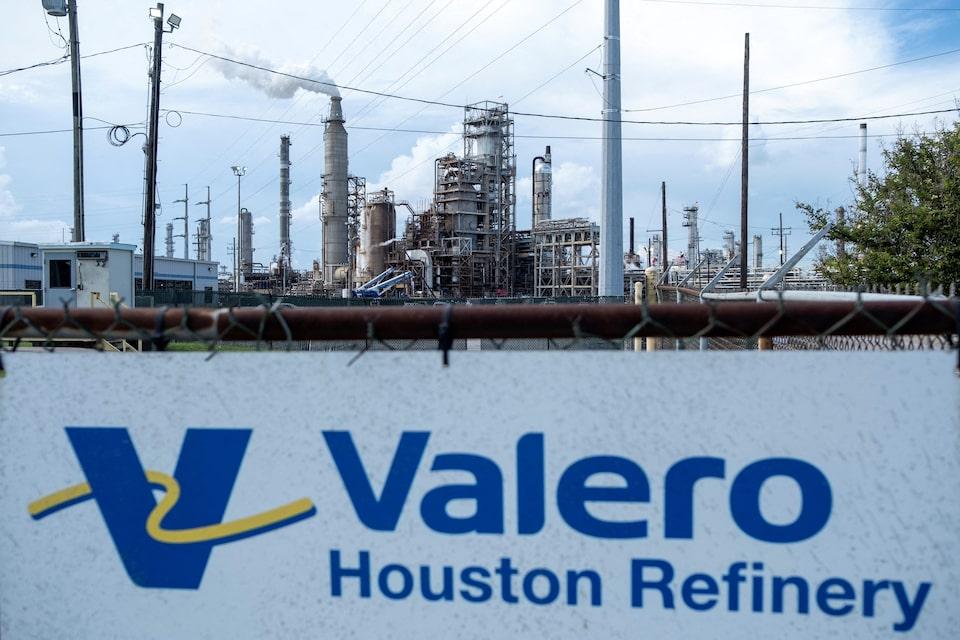
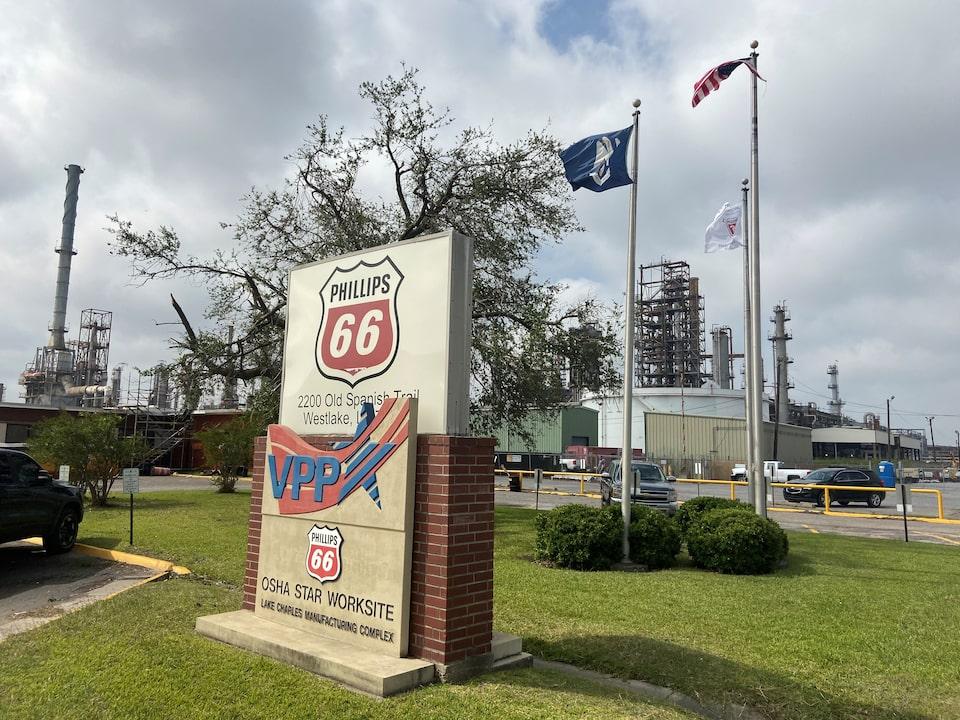
Jan 6 (Reuters) - Refiner Phillips 66 (PSX.N) , opens new tab can run Venezuelan crude at two U.S. Gulf Coast refineries as production ramps up, Chief Financial Officer Kevin Mitchell said on a conference call on Tuesday. Speaking at the Goldman Sachs Energy, CleanTech & Utilities Conference, Mitchell said its Lake Charles and Sweeny refineries in Texas have the capacity to process a couple of hundred thousand barrels per day of Venezuelan crudes. Sign up here. Over the weekend, President Donald Trump said the U.S. would "take control" of Venezuela after U.S. forces ousted Venezuelan President Nicolás Maduro, a step that could give U.S. energy companies access to the country's vast oil reserves. The Trump administration plans to meet with executives from U.S. oil companies later this week to discuss boosting Venezuelan oil production, Reuters reported citing a source. The country sits atop the world's largest oil reserves but accounts only for about 1% of global supply. Mismanagement and limited foreign investment following the nationalization of Venezuela's oil industry and sanctions led to a huge drop in annual production, which averaged about 1.1 million bpd last year. Phillips 66 CEO Mark Lashier said he sees a longer-term potential for growth as Venezuela - which was producing as much as 3.5 million bpd in the 1970s - ramps up production. "We've got refineries designed for the long term to process that crude," Lashier said. He, however, added that it would take "years, if not decades" of investment by upstream companies to realize the full potential. "This is an opportunity for Venezuela to return back into the capitalist folds, to bring their economy and to benefit their people over the long term," he said. Venezuelan crude is a heavy sour grade with high sulfur content, making it suitable for producing diesel and heavier fuels, albeit at lower margins compared with other grades, particularly those from the Middle East. Analysts have noted U.S. refiners such as Phillips 66, Valero Energy (VLO.N) , opens new tab and Marathon Petroleum (MPC.N) , opens new tab stand to benefit from increased Venezuelan production as the U.S. Gulf Coast refineries were designed to process such grades. (This story has been corrected to 'a couple of hundred thousand' instead of '100,000,' in paragraph 2) https://www.reuters.com/business/energy/phillips-66-says-two-gulf-coast-refineries-can-run-100000-bpd-venezuelan-crude-2026-01-06/
2026-01-06 19:54
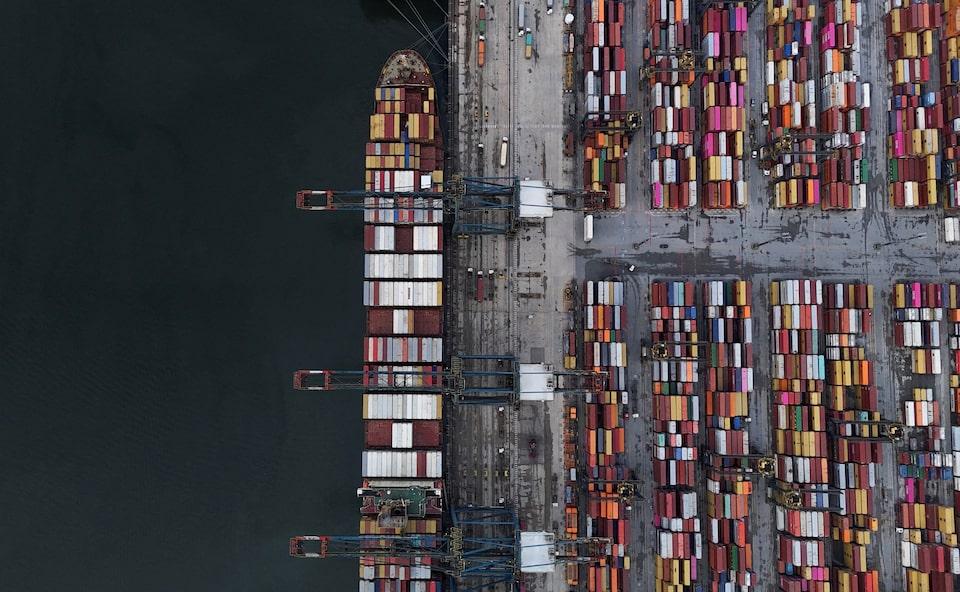
BRASILIA, Jan 6 (Reuters) - Brazil expects a trade surplus of $70 billion to $90 billion in 2026, after last year's result topped government projections, the Ministry of Development, Industry, Trade and Services said on Tuesday. Latin America's largest economy posted a $68.3 billion surplus in 2025, down from $74.2 billion in 2024 as imports grew faster than exports, underscoring economic resilience despite high borrowing costs to curb inflation. Sign up here. The figure beat the ministry's most recent forecast of a $61 billion trade surplus, and followed a surplus of $9.6 billion for December. "We are optimistic that even in a scenario of greater geopolitical instability, foreign trade will grow," Vice President Geraldo Alckmin told a press conference. BRAZIL HOPEFUL OF TRADE DEALS Alckmin, who also heads the ministry, said the government remains hopeful of concluding a trade deal between Mercosur and the European Union and expects the South American bloc to seal a free trade agreement with the United Arab Emirates. He added Brazil aims to expand preferential tariffs with India, Mexico and Canada. Last year, imports jumped 6.7%, while exports rose 3.5%, even after the imposition of steeper U.S. tariffs on several goods, later partly reversed. Alckmin said Brazil also expects to advance talks with the U.S. and address non-tariff issues involving rare earths, big tech and data centers. "The limiting factor for artificial intelligence in the world will be energy, and Brazil has abundant and renewable energy," he said. Asked about the potential impact of increased Venezuelan oil output following the capture of Venezuela's leader by the U.S., Alckmin acknowledged oil is Brazil's top export but noted any market effect would not be immediate. "Venezuela has large oil reserves, but things are not done overnight; investment is needed," he said. BY THE NUMBERS In 2025, Brazilian export gains were driven by higher shipments, by value, of soybeans, beef, coffee and corn, offsetting annual declines in crude oil and iron ore amid falling commodity prices. China remained Brazil's top trading partner, with exports up 6% at $100 billion, nearly 30% of total overseas sales. Brazilian shipments to the United States, the second-largest destination, fell 6.6% to $37.7 billion. https://www.reuters.com/world/americas/brazil-sees-bigger-trade-surplus-2026-after-beating-own-forecasts-last-year-2026-01-06/
2026-01-06 14:53
Jan 6 (Reuters) - Federal Reserve Governor Stephen Miran, whose term at the U.S. central bank ends later this month, said on Tuesday aggressive U.S. interest rate cuts are needed this year to keep the economy moving forward. "I think policy is clearly restrictive and holding the economy back," Miran said in an interview with the Fox Business channel. "I think that, you know, well over 100 basis points of cuts are going to be justified this year," he said. Miran's term as a Fed governor ends on January 31. Sign up here. Miran said underlying inflation is basically at the Fed's 2% target and he expects the economy to grow robustly this year, arguing that a failure by the Fed to lower short-term borrowing costs could upend that outlook. He is controversially serving at the Fed while on leave from his role as a top economic advisor to President Donald Trump, who has repeatedly pressed the central bank to deliver big rate cuts. The Fed lowered its benchmark overnight interest rate by three quarters of a percentage point last year, including a 25-basis-point cut in December that left the rate in the 3.50%-3.75% range. Miran dissented against that move in favor of a 50-basis-point cut. He has used his time at the Fed to argue that huge changes in immigration related to the Trump administration's crackdown on immigrants will help lower inflation, and that the Fed needs to get ahead of that development by cutting rates. The Fed lowered rates three times last year to help offset rising job market weakness. Many of its policymakers, however, are still wary of inflation that remains well above the 2% target, largely due to Trump's aggressive tariff hikes. Fed officials have currently penciled in one rate cut for this year. Philadelphia Fed President Anna Paulson, who is a voting member of the rate-setting Federal Open Market Committee this year, said on Saturday that "some modest further adjustments to the policy rate would likely be appropriate later in the year" if her economic expectations are realized. In the Fox Business interview, Miran said he did not believe he was a contender to succeed Fed Chair Jerome Powell, whose term as central bank chief ends in May. "It's not something I put myself forward for. I think the president has a slate of extremely qualified candidates in front of him," Miran said. https://www.reuters.com/sustainability/boards-policy-regulation/fed-should-deliver-big-rate-cuts-this-year-miran-tells-fox-business-2026-01-06/

2026-01-06 12:37
Jan 6 (Reuters) - Morgan Stanley forecast gold would hit $4,800 per ounce by the fourth quarter of this year, exceeding last year's records, citing falling interest rates, a change in leadership at the Federal Reserve, and buying by central banks and funds. In a note dated January 5, it also said events in Venezuela over the weekend were likely to attract buyers to gold as a safe haven, but did not specify this as a reason for its $4,800/oz forecast. Sign up here. Bullion touched a record high of $4,549.71/oz on December 26, and ended 2025 with a gain of 64%, its best annual performance since 1979. SAFE HAVENS IN TIMES OF UPHEAVAL Traders view gold as a safe store of value during times of economic and geopolitical turmoil that also performs well in low-interest-rate environments when its non-yielding nature is less of a disadvantage financially. For silver, the bank said 2025 marked peak deficit, adding China's export licence requirements, which have taken effect from the start of this year, added to the "upside risk for silver". Silver recorded its strongest annual gain in 2025, surging 147%, on rising industrial and investor appetite and a structural market deficit. Of the base metals complex, the bank said it favoured aluminum and copper, both of which face supply challenges and increasing demand. "Aluminium supply is constrained everywhere except Indonesia, while the rising Midwest Premium suggests some U.S. buying may be returning," the note said. It added that U.S. copper imports have risen, keeping other markets tight and that 2025's high level of copper supply disruptions were continuing into 2026. The benchmark three-month copper on the London Metal Exchange hit a peak of $13,387.50 on Tuesday. The bank also flagged the strength of the nickel market, which is driven by supply disruption risk in Indonesia, although it said much of this could be priced in. Nickel gained 5.8% to $17,980 a ton on Tuesday, hitting its highest since October 8, 2024. https://www.reuters.com/world/americas/morgan-stanley-forecasts-gold-4800-by-fourth-quarter-2026-2026-01-06/

2026-01-06 12:34
Jan 6 (Reuters) - Pipeline company Energy Transfer (ET.N) , opens new tab said on Tuesday it expects to invest $5.0 billion to $5.5 billion in growth capital in 2026, primarily on projects enhancing its natural gas network. The company expects several projects to ramp up or come online in 2026, including the Nederland Flexport NGL expansion, Mustang Draw I and Mustang Draw II processing plants in the Permian Basin, as well as natural gas pipeline projects serving data center facilities in Texas. Sign up here. Energy Transfer said last month it would increase the transportation capacity of its Transwestern pipeline's planned expansion project in Desert Southwest region to meet additional customer demand. The pipeline company added on Tuesday it expects adjusted earnings before interest, taxes, depreciation and amortization to range between $17.3 billion and $17.7 billion in 2026. https://www.reuters.com/business/energy/energy-transfer-expects-capex-55-billion-2026-2026-01-06/