2025-02-02 23:28
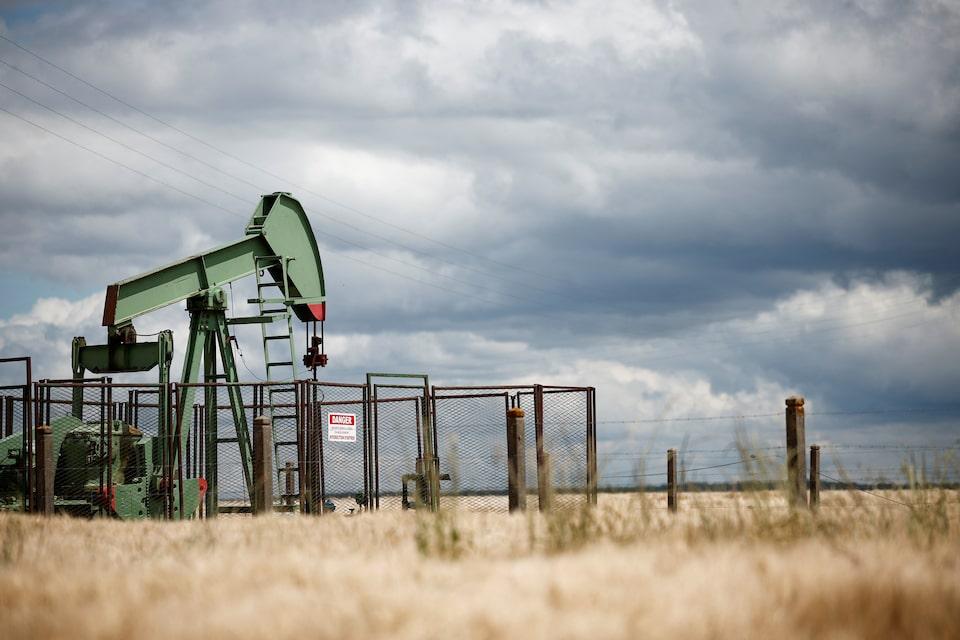
US to tax oil imports from Canada at 10% US tariffs on imports from Mexico paused for a month Canada, Mexico supply quarter of crude used in US refineries OPEC+ sticks to policy of gradual increases in output NEW YORK, Feb 3 (Reuters) - Oil prices edged up in volatile trade on Monday but closed at a one-month low on the expiration of a higher-priced contract, as the market digested U.S. President Donald Trump's planned imposition of tariffs on Canada, Mexico and China. Concerns over imports from two of the main crude suppliers to the U.S. boosted prices by over $1 a barrel earlier in the session before Trump paused the new tariffs on Mexico for one month as Mexico agreed to reinforce its northern border to stem the flow of illegal drugs, particularly fentanyl. Brent futures for April delivery rose 29 cents, or 0.4%, from where that contract closed on Friday to settle at $75.96 a barrel, while U.S. West Texas Intermediate (WTI) crude rose 63 cents, or 0.9%, to settle at $73.16. That was the lowest close for Brent since Jan. 2 now that the lower-priced April contract is the front-month after the expiration of the higher-priced March future on Friday. Trump's sweeping tariffs on goods from Mexico, Canada and China on Tuesday had threatened to kick off a trade war that could dent global growth and reignite inflation. The proposed tariffs included a 25% levy on most goods from Mexico and Canada, with a 10% tariff on energy imports from Canada and a 10% tariff on Chinese imports. "Tariffs on Canadian energy imports would likely be more disruptive for domestic energy markets than those on Mexican imports and might even be counterproductive to one of the president's key objectives - lowering energy costs," Barclays analyst Amarpreet Singh said in a note. Canada and Mexico together account for about a quarter of the oil U.S. refiners process into fuels such as gasoline and heating oil, according to the U.S. Department of Energy. U.S. manufacturing grew for the first time in more than two years in January, but recovery was likely to be short-lived due to Trump's tariffs, which will potentially further raise raw material prices and snarl supply chains. Boston Federal Reserve President Susan Collins said the type of tariffs announced by the Trump administration may drive up inflation, while noting there's a lot of uncertainty and no urgency on the part of the U.S. central bank to change the direction of monetary policy. Higher inflation could prompt the Fed to raise interest rates to combat rising prices. That could reduce demand for energy by boosting borrowing costs and slowing economic growth. Tariffs will raise costs for the heavier crude grades that U.S. refineries need for optimum production, industry sources said. Gasoline pump prices in the U.S. are certainly expected to rise with the loss of crude for refineries and the loss of imported products, said Mukesh Sahdev at Rystad Energy. Trump has already warned that the tariffs could cause "short-term" pain for Americans. U.S. gasoline futures climbed up about 3% to a two-week high, helping to boost the 3:2:1- crack spread, which measures refining profit margins, to its highest since August 2024. The Organization of the Petroleum Exporting Countries and their allies like Russia, collectively known as OPEC+, agreed to stick to its policy of gradually raising oil output from April and removed the U.S. government's Energy Information Administration from the sources used to monitor its production and adherence to supply pacts. Russia's Deputy Prime Minister Alexander Novak said the Joint Ministerial Monitoring Committee (JMMC) of the OPEC+ group discussed Trump's call to raise oil production. Global oil demand will likely be close to current levels in 2040, energy and commodities trader Vitol said in its long-term demand outlook, with rising consumption later this decade offset by a decline through the late 2030s. Sign up here. https://www.reuters.com/markets/commodities/oil-prices-jump-after-trump-imposes-tariffs-canada-mexico-china-2025-02-02/
2025-02-02 22:41
SINGAPORE/PARIS, Feb 3 (Reuters) - Cryptocurrency prices slid on Monday, with bitcoin at a three-week low, as the risk of a trade war spooked investors and caused a selloff across financial markets. Bitcoin , the world's biggest cryptocurrency, hit a three-week low of $91,441.89 overnight and stood at $95,730.35 at 0941 GMT, down 6.2% on the day. Smaller cryptocurrency ether has lost nearly 25% in value since Friday, marking its biggest three-day loss since November 2022. It last fetched $2,592.14. Over the weekend, U.S. President Donald Trump imposed 25% tariffs on Mexican and most Canadian imports, and 10% on goods from China, starting on Tuesday. Canada and Mexico, the top two U.S. trading partners, immediately vowed retaliatory measures, and China said it would challenge Trump's levies at the World Trade Organization. Almost a quarter of the 100 largest cryptocurrencies have lost 20% or more in value over the last 24 hours, according to CoinGecko data. Shares in U.S. crypto exchange Coinbase were down 5.5% in pre-market trading (COIN.O) , opens new tab. Trump's own cryptocurrency $TRUMP slid below $20, according to CoinGecko. Launched shortly before Trump's inauguration, the cryptocurrency had initially surged, reaching highs above $73 on Jan. 19. Cryptocurrencies trade around the clock, including at weekends, and have lately been sensitive to markets' broader sentiment. Investors worry that tariffs can hurt growth and company earnings as well as be inflationary. "Crypto is really the only way to express risk over the weekend, and on news like this crypto resorts to a risk proxy," said Chris Weston, head of research at Pepperstone. Bitcoin has fallen less sharply than ether partly because some buyers consider it a "risk-off asset" like gold, and partly because it is easier to sell ether quickly at times of market stress, according to Joseph Edwards, head of research at Enigma Securities. "What we've been seeing isn't so much that ether is being uniquely hard-hit (most of the market is down similarly or worse) but rather that bitcoin is holding up uniquely well," Edwards said. DISAPPOINTMENT There is added downward pressure on crypto after a strong rally in the wake of Trump's election, as some investors have felt disappointed at the lack of immediate moves to boost crypto or loosen regulations since he took office. Bitcoin touched a record high of $107,071.86 on Jan. 20, when Trump was sworn in as the 47th U.S. President and is up 40% since the election in early November in the hopes of crypto-friendly regulations from the Trump administration. Trump - who once labelled crypto a scam - embraced digital assets during his campaign, promising to make the United States the "crypto capital of the planet." Days after becoming president, Trump ordered the creation of a cryptocurrency working group tasked with proposing new digital asset regulations and exploring the creation of a national cryptocurrency stockpile. Paul Howard, senior director at crypto market-maker Wincent, said that some of Trump's moves have fallen short of what people bullish on crypto were expecting, with some having hoped that the government would announce plans to buy bitcoin. Still, Howard said, "the organic growth we anticipate over the coming years in part due to the friendlier U.S. administration will likely outweigh the short term volatility and macro economic (tariff) news the next few weeks." Sign up here. https://www.reuters.com/markets/currencies/bitcoin-slides-below-100000-tariffs-rattle-markets-2025-02-02/

2025-02-02 21:50
Feb 3 (Reuters) - A look at the day ahead in Asian markets. Asia kicks off what is likely to be a volatile day in global markets on Monday after President Donald Trump followed through on his threat to hit Mexico, Canada and China with tariffs on imports into the United States. It will be fascinating to see how investors react to something they have known was coming and which is almost universally seen as damaging for economic growth and financial assets. They won't be surprised, but they will still be shocked. A wave of 'risk off' sentiment sweeping over markets would bode ill for Asia, although Japanese government bonds might fare better. Australian, Japanese and South Korean stock futures all pointed to lower opens on Monday, and bitcoin was last down 3%. The U.S. dollar is firmer across the board, leaping to a 22-year high against the Canadian dollar and dragging the euro closer to parity. Gold is poised to push to new record highs, but U.S. Treasuries may be caught between the whoosh of safe-haven demand and worries about the inflationary effect of the tariffs. The White House said the 25% duties on imports from Mexico and Canada, and 10% levy on Chinese goods, will come into effect February 2. It is unclear how long they will remain in place or what will see them lifted. Canada has already retaliated, so all eyes are now on how China responds when the country reopens after the Lunar New Year holidays. An early indication of Beijing's intent and scale of market pressure could be the yuan's next fixing - it was last fixed on Jan. 27 at 7.17 per dollar, around its strongest in two and a half months. Investors have broadly cheered Trump's agenda, betting that slashing taxes, government spending and regulation will juice the U.S. economy and stock markets. But most think his immigration and trade policies will hamper growth. The tariffs on Mexico and Canada are particularly galling to many observers as these are two of America's strongest allies. The total duties coming into effect on Tuesday are on $1.3 trillion of goods, over 40% of all U.S. imports, and around three times the volume - mainly from China - targeted in his first presidency. Deutsche Bank's George Saravelos says investors must "structurally and significantly" reprice the trade war risk premium, and analysts at Capital Economics warn that Canada and Mexico could plunge into recession, and U.S. inflation is going to rise sharply and quickly. If so, "the window for the Fed to resume cutting interest rates at any point over the next 12 to 18 months just slammed shut." A more hawkish Fed and tighter U.S. monetary policy would be bad news for Asia and emerging markets. Time to buckle up. Here are key developments that could provide more direction to markets on Monday: - Reaction to U.S. tariffs - China "unofficial" manufacturing PMI (January) - Indonesia inflation (January) Sign up here. https://www.reuters.com/markets/asia/global-markets-view-asia-2025-02-02/

2025-02-02 19:59
NAPERVILLE, Illinois, Feb 2 (Reuters) - The recent buildup of speculators’ massively bullish Chicago corn bets has been well publicized. But the growing and now unparalleled rift between investors’ corn and wheat positions may have been less apparent. In the week ended Jan. 28, money managers increased their net long position in CBOT corn futures and options to 350,721 contracts from 311,678 in the prior week, establishing their most bullish view since May 2022. The move stemmed primarily from new gross long positions and came despite a 1% decline in most-active CBOT corn futures during the week. CBOT wheat futures fell 2.4% in the week ended Jan. 28, and money managers expanded their net short in CBOT wheat futures and options to a 14-month high of 110,782 contracts. That was up about 19,000 on the week, a good portion owing to new gross shorts. There has never been such a disparity between money managers’ corn and wheat positions since records began in 2006, and this has become increasingly distinct over the last five weeks. The closest examples where funds were super bullish corn and super bearish wheat are from early 2023 and mid-2016. Interestingly, some of the largest ever weekly corn selloffs occurred directly following these two periods. However, the current situation deviates so significantly that these past examples may not be relevant. Also, the time of year plus the size of funds’ corn position might favor the maintenance of bullish corn bets in the near term. Corn and wheat’s sometimes interchangeable use means that their prices can move in tandem, though wheat’s premium to corn is already relatively low at 77-1/2 cents per bushel as of Friday. That is in the lowest 14% of all data within the past five years. CBOT corn futures over the past few months have been supported by strong U.S. demand and shrinking global supplies, and more recently by weather concerns for South American crops. However, dominant Russian supplies have held down wheat prices. But grain bulls now face potentially severe headwinds from the United States’ fresh trade war against Mexico, Canada and China, which in 2023 accounted for half of all U.S. agricultural and related product exports. U.S. President Donald Trump on Saturday imposed 25% tariffs on Mexican and most Canadian imports and 10% on goods from China, starting on Tuesday. SOYBEANS, CATTLE, COTTON Most-active CBOT soybeans lost 2.1% in the week ended Jan. 28, but money managers increased their net long position to a 14-month high of 56,496 futures and options contracts from 40,330 a week earlier. Short covering was the primary feature of the week across the soy complex. Money managers extended their net long in CBOT soybean oil futures and options to a 10-week high of 39,768 futures and options contracts versus 24,214 in the prior week. They also cut their large net short position in CBOT soybean meal futures and options through Jan. 28 to 52,291 contracts, down about 9,000 on the week. Both soyoil and soymeal futures had posted losses during the period. CME live cattle futures soared again to all-time highs last week, and money managers established a record net long position as of Jan. 28 totaling 156,909 futures and options contracts. However, they forged a record net short in ICE No. 2 cotton futures and options of 53,574 contracts, up more than 5,000 on the week. Cotton futures hit nearly six-month lows on Friday as China’s relatively light purchases of U.S. cotton as well as impending tariff fears weighed on prices. The United States on Saturday reopened the door for Mexican cattle imports, which have been blocked since November due to screwworm cases. This is among factors that have recently supported cattle futures, though it is unclear how the tariffs may impact this trade flow. Karen Braun is a market analyst for Reuters. Views expressed above are her own. Sign up here. https://www.reuters.com/markets/commodities/unprecedented-clash-forms-between-funds-cbot-corn-wheat-views-braun-2025-02-02/

2025-02-02 17:59
BAGHDAD, Feb 2 (Reuters) - A drone attack targeted the Khor Mor gas field in Iraq's Kurdistan region on Sunday, two security sources told Reuters. There was no damage to the field or Dana Gas company and production is normal, the Kurdish Regional Government's Ministry of Natural Resources reported. The Pearl Consortium, United Arab Emirates energy firm Dana Gas (DANA.AD), and its affiliate, Crescent Petroleum, have the rights to exploit Khor Mor. No group has claimed responsibility for the attack. Sign up here. https://www.reuters.com/world/middle-east/drone-attack-targets-iraqs-northern-khor-mor-gas-field-security-sources-say-2025-02-02/

2025-02-02 14:17
Amendment raises subsidy to $16 per barrel for Kurdistan oil Aims to unblock exports of of Kurdistan oil International consultant to assess transport, production costs BAGHDAD, Feb 2 (Reuters) - Iraq’s parliament on Sunday approved a budget amendment to subsidise production costs for international oil companies operating in the semi-autonomous Kurdistan region in a move aimed at unblocking northern oil exports, lawmakers said. The amendment sets the rate at $16 a barrel, up from an earlier proposal for $7.9 a barrel for transport and production costs, which was rejected as too low by the Kurdistan Regional Government (KRG). The parliamentary approval marks a key step in resolving a nearly two-year dispute over Kurdish oil exports and in improving ties between Baghdad and Erbil. The resumption of exports is also expected to ease economic pressures in the Kurdistan region, where the halt has led to salary delays for public sector workers and cuts to essential services. "Parliament's approval is very significant to resolve oil dispute between Baghdad and Erbil and it will help expedite the resumption of Kurdistan oil exports to boost the country's revenues", said Kurdish lawmaker Rebwar Orhaman. Iraq’s oil ministry, in coordination with the KRG’s Ministry of Natural Resources, will appoint an international consultant within 60 days to assess fair production and transportation costs, lawmakers and oil ministry officials said. If no agreement is reached, the Iraqi cabinet will select a consultancy without input from Kurdish authorities. The budget amendment was put forward by Iraq's cabinet in November 2024. It also demanded that the KRG transfer its oil output to the state-run State Oil Marketing Organization (SOMO). Oil flows through the KRG's pipeline were halted by Turkey in March 2023 after the International Chamber of Commerce ordered Ankara to pay Baghdad damages of $1.5 billion for unauthorised exports by the KRG between 2014 and 2018. Negotiations to restart exports have stalled amid conflicting demands from the KRG and Iraq’s federal government. Sign up here. https://www.reuters.com/world/middle-east/iraq-parliament-approves-compensation-plan-resolve-kurdistan-oil-dispute-2025-02-02/