2025-01-31 22:44
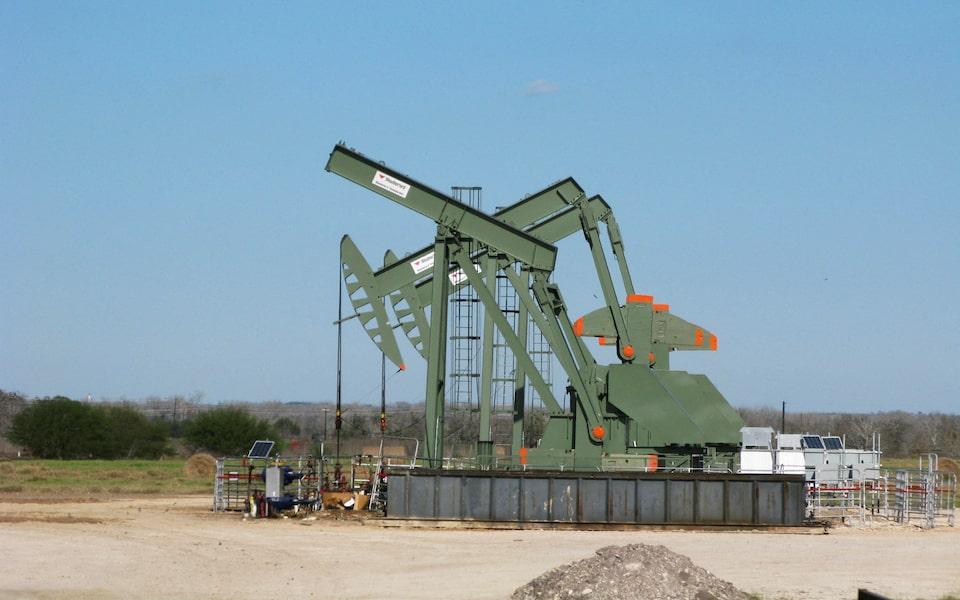
NEW YORK, Jan 31 (Reuters) - Many U.S. oil refiners rely heavily on imported crude because their facilities are configured to run heavier grades, such as those coming in from Mexico and Canada. Refiners are awaiting clarity and preparing for U.S. President Donald Trump's threatened tariffs on crude imports from Canada and Mexico. Trump said on Friday that he would lower threatened tariffs on Canadian oil to 10% and that tariffs on oil and gas are likely to take effect on Feb. 18. A tariff on oil imports could drive up the cost of crude, pushing refiners to cut the amount of oil their facilities process. Refineries in the Midwest process about 70% of the 4 million barrels per day (bpd) of crude imported from Canada. Phillips 66 (PSX.N) , opens new tab said there could be production cuts in the U.S. Midwest and Rocky Mountain region where alternative crude supplies are limited if tariffs take effect. The refiner expects the 457,000 bpd of Mexican crude that comes into the U.S. could be displaced and move to Europe or Asia. "We would expect to see the heavy crudes firm a bit just on the inefficiency of logistics," said Brian Mandell, executive vice president of marketing and commercial at Phillips 66. "As the year goes on and OPEC puts more barrels back onto the market, we would expect those differentials to widen back out." Phillips 66, along with HF Sinclair and Par Pacific Holdings (PARR.N) , opens new tab, has elevated exposure to Canadian crude, data from TD Cowen shows. "Our commercial and optimization teams have been working hard to develop every possible scenario we can think of and how we would respond," said Gary Simmons, chief operating officer of Valero Energy (VLO.N) , opens new tab, during a call with analysts on Thursday. "You might see at a 10% change in throughput. A lot depends on how far it goes and how deep you have to back off on some of those heavy barrels." Valero is the second-largest U.S. refiner by capacity. HF Sinclair, Par Pacific and Marathon did not immediately respond to requests for comment. Below is the latest available data on the volume of crude oil top U.S. independent refiners imported from Canada and Mexico in November 2024. Source: Data from U.S. Energy Information Administration Note: Data released on Jan 31, 2025 Sign up here. https://www.reuters.com/business/energy/us-imports-canadian-mexican-crude-oil-by-company-2025-01-31/
2025-01-31 22:14
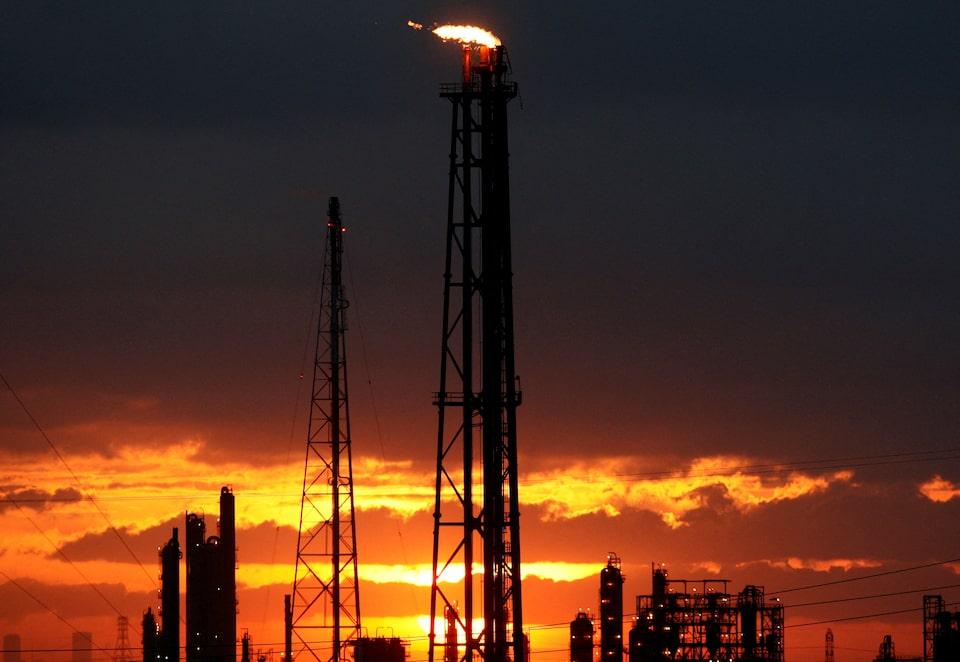
Oil executives offer little optimism that refining business will improve in 2025 Exxon, Chevron Q4 profits hurt by weak refining sector Independent refiners face challenges as fuel demand falters in US and China HOUSTON, Jan 31 - Big Oil executives this week saw little prospect of a near-term improvement in refinery profits after Chevron (CVX.N) , opens new tab, Exxon Mobil (XOM.N) , opens new tab and Shell (SHEL.L) , opens new tab all reported fourth-quarter earnings that were hit hard by a downturn in the margins for producing fuel. An increase in global refining capacity in 2024, combined with sputtering demand growth has hurt refining margins. Chevron's shares declined 4% after it reported a loss in its refining business for the first time since 2020, causing the No. 2 U.S. oil producer to miss Wall Street's profit estimate. "This trend we have seen of margins softening through 2024 is something you can expect to continue to see, to extend into 2025," Chevron CEO Mike Wirth said in an interview. "It was a weak fourth-quarter, there's no doubt about it," he said on a post-earnings conference call in response to a question from an analyst about the refining downturn. "I'm not going to call it a perfect storm, but it was a quarter in which everything went one way and it was negative." Wirth said Chevron would focus on what it can control in order to bounce back, including lighter scheduled maintenance for refineries over the next year. Exxon Mobil's shares fell 2.5% after it reported a 75% plunge in adjusted earnings from refining compared with the third quarter. The broader S&P 500 Energy Sector index was down 2.8% on Friday. The refining business remains under pressure from additional fuel supply entering the market after new refineries opened in different countries around the world, said Exxon's Chief Financial Officer Kathryn Mikells in an interview. "That's really what we're watching as we look ahead to 2025," she said. The No. 1 U.S. oil producer still beat profit estimates with higher production from the Permian basin, the top U.S. oilfield, and Guyana, the latest oil hotspot. UK-based Shell said on Thursday that while it had no plans to exit the refining business, it did not plan to expand either. The company's fourth-quarter earnings nearly halved from the previous year to $3.66 billion, partly due to weaker refining margins. Shell sold its refining and chemicals hub in Singapore last year and plans to shut down another plant in Wesseling, Germany. HIT TO INDEPENDENT REFINERS While higher oil and gas production helped cushion oil majors from the impact of lower refining profits, the pure-play refiners took a hit as fuel demand faltered in the U.S. and China, the two largest oil consumers. Phillips 66's (PSX.N) , opens new tab fourth quarter profit plummeted to $8 million from $1.26 billion in the year-ago quarter. Valero's VLO.N refining profit dropped 73% in the fourth quarter. Two U.S. refineries are set to close this year and limited capacity additions beyond 2025 will help support refining margins over the long term, said Valero CEO Lane Riggs on Thursday. Investors were also worried about U.S. President Donald Trump's threats to impose tariffs on crude imports from Canada and Mexico on Feb. 1, which could raise costs for U.S. refiners. French oil major TotalEnergies (TTEF.PA) , opens new tab will report fourth quarter results on Feb. 5 and British oil producer BP (BP.L) , opens new tab reports on Feb. 11. BP has warned that a drop in refining margins and the impact of turnaround and maintenance activity would result in an up to $300 million decrease in profit quarter-on-quarter. Sign up here. https://www.reuters.com/business/energy/wrapup-big-oil-bleak-refining-profits-going-into-2025-2025-01-31/
2025-01-31 21:53
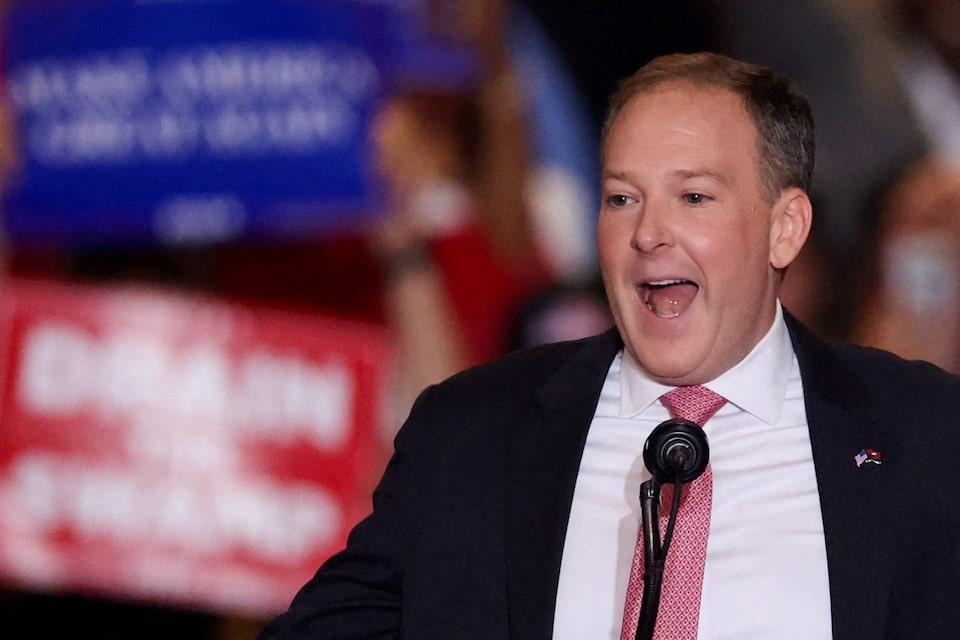
Democrats write to EPA, Energy Department about funding concerns EPA paused funding actions related to IRA, infrastructure act WASHINGTON, Jan 31 (Reuters) - U.S. Democratic lawmakers Friday sent letters to two federal agencies asking them to explain why they froze federal funds on clean energy and investments that lower energy costs for American consumers, saying the agencies have violated federal laws. Senate Democrats on Friday asked newly-confirmed Environmental Protection Agency Administrator Lee Zeldin to explain why his agency froze federal funds that were already obligated to grantees, saying the agency has violated federal laws. Democrats on the Senate environment committee asked Zeldin why the agency has "clawed back" funds that were already committed after hearing from their constituents about being unable to access funds for solar energy and other projects already under way. "Federal law and regulations require that obligated funds be provided to grantees absent proof of misuse of funds,” wrote Senators Sheldon Whitehouse, Bernie Sanders, Angela Alsobrooks and others. Republican President Donald Trump has prioritized unleashing U.S. fossil fuel production. During his first two weeks in office, the administration threw the energy industry into confusion after pausing certain funding for clean energy mandated by the Inflation Reduction Act and Bipartisan Infrastructure Law - two laws signed by his Democratic predecessor former President Joe Biden. The administration had also ordered a freeze on hundreds of billions of dollars in federal grants on Wednesday in the face of legal setbacks and widespread opposition but appeared to abandon the proposed freeze by Wednesday after public outcry. Senator Patty Murray and Representative Marcy Kaptur sent a letter to Ingrid Kolb, the acting secretary of the Department of Energy, saying it took action to halt programs key to ensuring the security and prosperity of Americans. "The Department’s actions to halt these programs will immediately contribute to rising energy costs for families and businesses, and they are a dereliction of the Department’s responsibility to carry out duly enacted spending laws," the letter said. The DOE did not immediately respond to a request for comment. An EPA spokesperson told Reuters that the agency "has paused all funding actions related to the Inflation Reduction Act and the Infrastructure Investment and Jobs Act at this time" despite the White House backtracking on its freeze. "The agency is continuing to work diligently to implement President Trump’s Unleashing American Energy Executive Order issued on January 20 in coordination with the Office of Management and Budget," the spokesperson said, adding that the agency is reviewing the senators' letter "and will respond through appropriate channels." The senators asked for the agency to send them a legal justification for blocking access to the $7 billion Solar for All program, which has 60 grant recipients that will build out low-income solar programs, as well as other climate-related programs. Sign up here. https://www.reuters.com/world/us/senate-democrats-question-epa-blockage-committed-federal-grants-2025-01-31/
2025-01-31 21:33
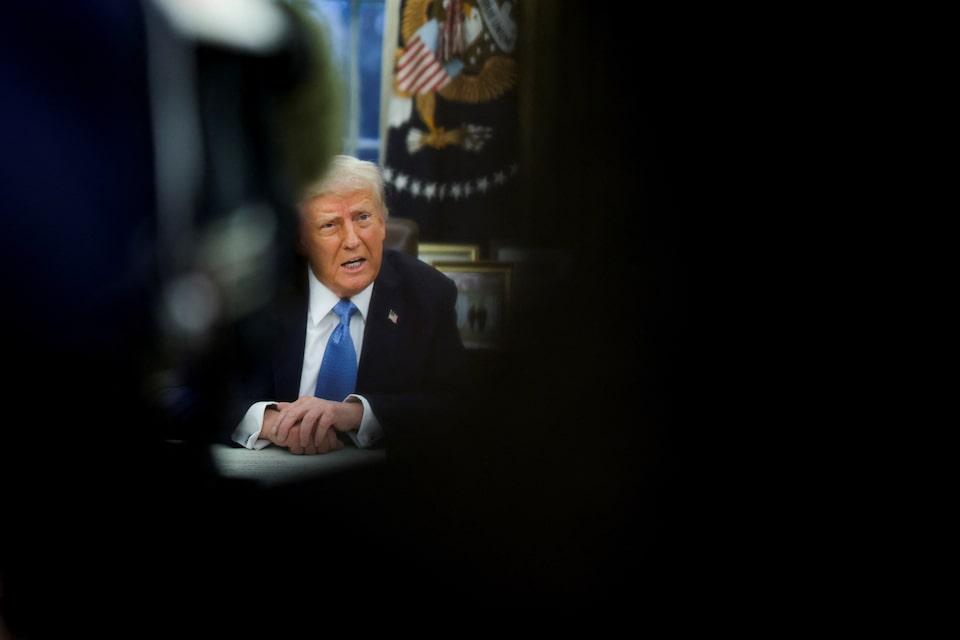
WASHINGTON, Jan 31 (Reuters) - U.S. President Donald Trump on Friday acknowledged that tariff costs are sometimes passed along to consumers, and said his plans to impose tariffs may cause a short-term disruption. But the Republican president told reporters in the Oval Office that he was not concerned about the reaction of financial markets to his plans to impose tariffs on Feb. 1. Sign up here. https://www.reuters.com/world/trump-says-tariff-may-cause-short-term-disruption-2025-01-31/
2025-01-31 21:02
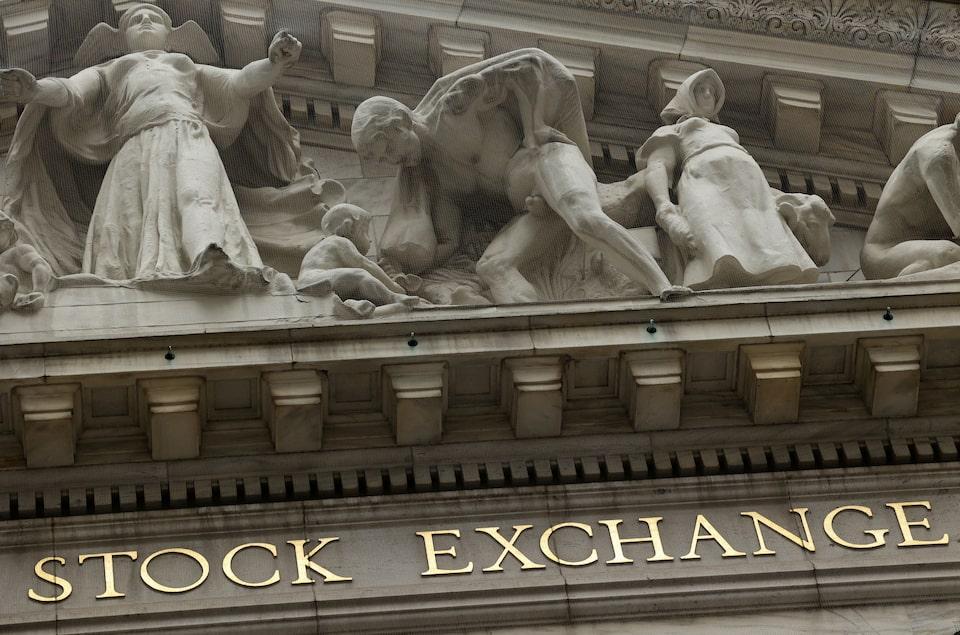
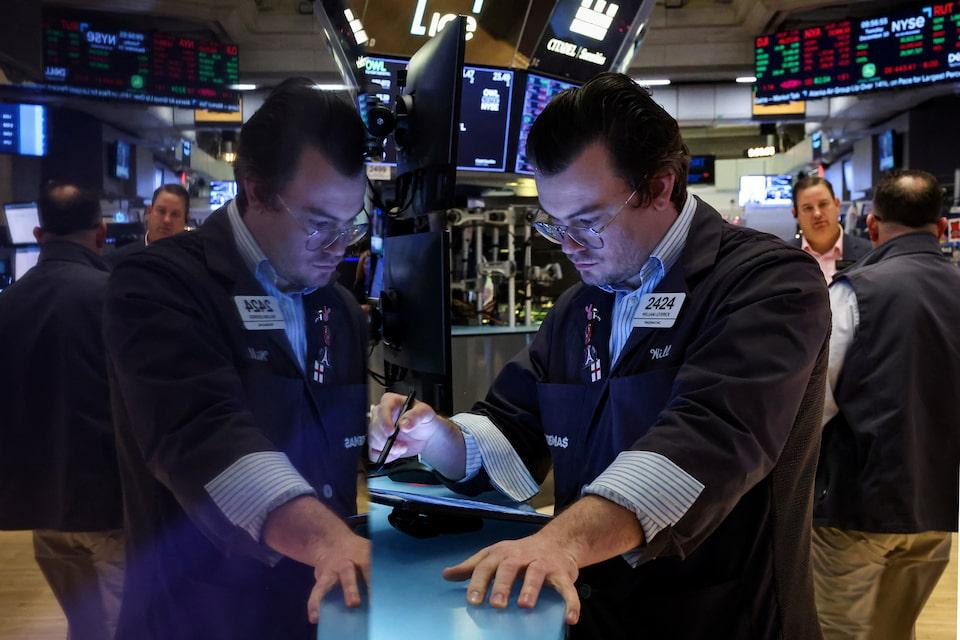
Apple ends slightly lower a day after reporting results Chevron falls after missing Q4 results estimates Tariff announcement hits stocks Indexes: Dow down 0.8%, S&P 500 down 0.5%, Nasdaq down 0.3% NEW YORK, Jan 31 (Reuters) - U.S. stocks ended lower on Friday, with indexes losing ground after the White House said U.S. President Donald Trump will implement on Saturday tariffs of 25% on Canadian and Mexican imports and 10% on Chinese goods. Investors have been bracing for further tariff news after Trump has repeatedly warned about using the measure. Uncertainty over the impact of tariffs has muddled the outlook for the economy and inflation. "I would have thought the market would be down more," said Rick Meckler, partner at Cherry Lane Investments, a family investment office in New Vernon, New Jersey. "It's not just the announcement itself, which I think probably impacts a select number of industries. It's whatever retaliation moves are taken." Stocks turned lower on Friday afternoon after the White House said the tariffs against Canada, Mexico and China would take effect on Saturday. Friday capped a heavy week of quarterly results from U.S. companies as well. Apple (AAPL.O) , opens new tab shares ended down 0.7%. They were higher early in the session after the company gave upbeat executive comments in its earnings on Thursday, in a sign it expects to recover from a dip in iPhone sales as it rolls out artificial intelligence features. Energy (.SPNY) , opens new tab led declines among S&P 500 sectors on Friday, with Chevron (CVX.N) , opens new tab shares falling 4.6% after the company reported fourth-quarter earnings below estimates and Exxon Mobil (XOM.N) , opens new tab easing 2.5% after its quarterly results. The Dow Jones Industrial Average (.DJI) , opens new tab fell 337.47 points, or 0.75%, to 44,544.66, the S&P 500 (.SPX) , opens new tab lost 30.64 points, or 0.50%, to 6,040.53 and the Nasdaq Composite (.IXIC) , opens new tab lost 54.31 points, or 0.28%, to 19,627.44. Indexes registered gains for the month of January, with the Dow up 4.7%, the S&P 500 up 2.7% and the Nasdaq up 1.6%. For the week, the Dow was up 0.3%, but the S&P 500 declined 1% and the Nasdaq fell 1.6%. Tech shares sold off on Monday after Chinese startup DeepSeek unveiled a breakthrough in cheap AI models. Early in Friday's session, economic data reinforced expectations that the Federal Reserve would keep interest rates unchanged for longer. Reports showed strong U.S. consumer spending and a moderate increase in inflation in December. "Clearly, it makes total sense that the Fed didn't do anything this week, and it makes sense (Fed Chair) Jay Powell would say they're not in a hurry to lower rates," said Scott Wren, senior global market strategist at Wells Fargo Investment Institute in St. Louis, Missouri. The Fed left rates unchanged in its policy announcement on Wednesday, and Powell said the U.S. central bank wants to see further progress in inflation before cutting rates. After the closing bell, Trump said he expects his administration to impose tariffs related to oil and gas around Feb. 18. But he did not name a specific country to which the tariffs would apply or specify any more details about the plans. Declining issues outnumbered advancers by a 2.3-to-1 ratio on the NYSE. There were 231 new highs and 54 new lows on the NYSE. On the Nasdaq, 1,491 stocks rose and 2,913 fell as declining issues outnumbered advancers by a 1.95-to-1 ratio. Volume on U.S. exchanges was 15.78 billion shares, compared with the 15.5 billion average for the full session over the last 20 trading days. Sign up here. https://www.reuters.com/markets/us/apple-lifts-us-stock-index-futures-crucial-inflation-test-looms-2025-01-31/
2025-01-31 20:32
US stocks dip after tariff plans confirmed US dollar gains versus euro, yen, Canadian dollar 10-year Treasury yields jump Oil prices ease after choppy trading Safe haven gold hits record BOSTON/LONDON, Jan 31 (Reuters) - Wall Street stocks slipped and the dollar gained on Friday after President Donald Trump announced tariffs on Canada, Mexico and China, capping a volatile week for markets. The U.S. will impose 25% tariffs on Canada and Mexico, along with 10% on China, White House spokeswoman Karoline Leavitt said on Friday, but she declined to say whether there will be exemptions. Reuters earlier quoted sources saying that Trump would delay collection of the duties until March 1 and offer a limited process for certain imports to be exempted. Wall Street shares reversed on Friday to finish in negative territory. The Dow Jones Industrial Average (.DJI) , opens new tab ended down 0.75%, the U.S. S&P 500 stock index (.SPX) , opens new tab lost 0.5%, and the tech-heavy Nasdaq (.NDX) , opens new tab dropped 0.3%. "As was the case for Monday’s AI news, it remains to be seen how the markets will absorb this development on a longer-term basis," Daniel Skelly, head of Morgan Stanley's Wealth Management Market Research & Strategy Team, said in an email. "This week has been a reminder of how unexpected events can quickly shift market perceptions." The Nasdaq had lost 2.9% on Monday as the surging popularity of cheap Chinese AI model DeepSeek shook investor confidence in U.S. tech stocks and sent chipmaker Nvidia (NVDA.O) , opens new tab plunging 17%. But earnings reports and forecasts this week from Meta (META.O) , opens new tab and Tesla (TSLA.O) , opens new tab helped sentiment recover somewhat. Apple (AAPL.O) , opens new tab initially added to the cautiously optimistic mood late on Thursday when it forecast relatively strong sales growth, but its stock fell about 0.7% Friday. European shares closed at a record high, led by technology stocks, as earnings from companies such as Novartis (NOVN.S) , opens new tab and Hexagon (HEXAb.ST) , opens new tab overshadowed concerns over economic recovery. TARIFFS LOOM In currency markets, the dollar index , which measures the greenback against a basket of currencies including the yen and the euro, rose 0.25% The Canadian dollar lost 0.26% and the peso was 0.24% higher in choppy trading , . Trump is threatening punitive duties if Canada and Mexico do not take stronger action to halt the flow of the deadly opioid fentanyl and precursor chemicals into the U.S., as well as illegal migration. Goldman Sachs economists have estimated that across-the-board tariffs on Canada and Mexico would imply a 0.7% increase in core inflation and a 0.4% hit to gross domestic product. "There is big market complacency in terms of the manner that the market could digest the tariffs," Michael Nizard, multi-asset chief investment officer at Edmond de Rothschild, said earlier on Friday. The euro and sterling both declined about 0.1% versus the dollar , . Data on Friday showed the U.S. personal consumption expenditures price index rose 0.3% last month after an unrevised 0.1% gain in November, in line with economists' expectations. “Disinflation continues, and should continue given underlying trends," David Alcaly, lead macroeconomic strategist at Lazard Asset Management, said in an email. "Concerns about recent bumpiness are overblown and have more to do with the potential for inflationary policy change like tariffs than with current conditions." Benchmark 10-year Treasury yields jumped following the Trump tariff plans and were last up 3.7 basis points to 4.549% . Data on Thursday showed U.S. economic growth slowed in the fourth quarter, but remained robust enough for investors to expect the Federal Reserve - which held interest rates on Wednesday - to lower borrowing costs only gradually this year. Euro zone short-dated government bond yields were on track to record their biggest weekly drop in months, after a raft of weak economic data led traders to ramp up their bets on future rate cuts from the European Central Bank. The ECB cut rates on Thursday and signaled more easing was coming. Oil prices eased on Friday and closed the week lower. Brent crude futures Gold prices surpassed the key $2,800 mark for the first time on Friday, fuelled by a rush to safety. Sign up here. https://www.reuters.com/markets/global-markets-wrapup-1-2025-01-31/