2026-01-06 12:19
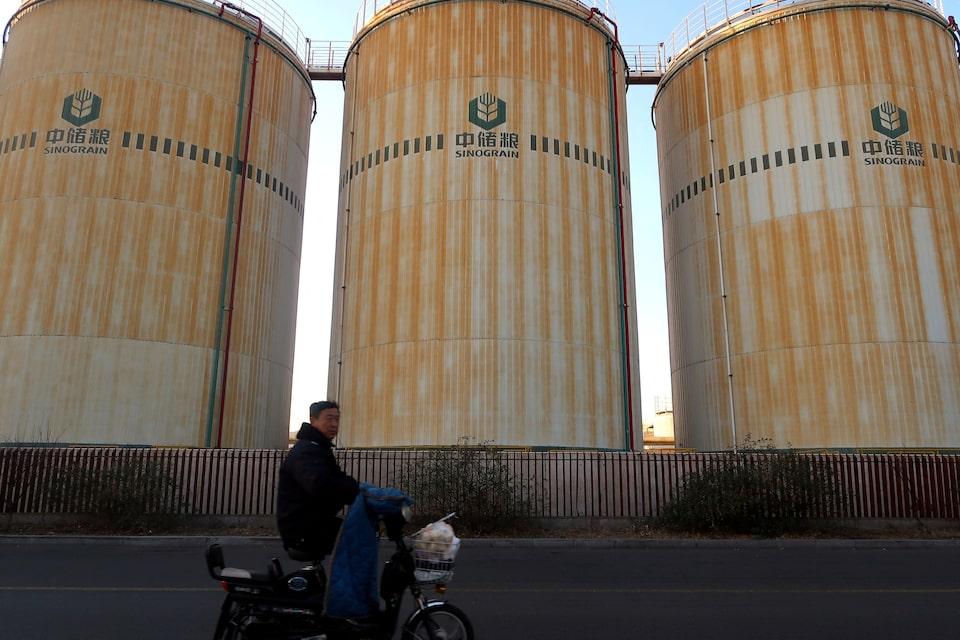
USDA reports 336,000 tons sold to China for 2025/26 Latest sales to ship March to May during peak Brazil shipping period China's total US purchases estimated at 8.5 million to nearly 10 million tons SINGAPORE/BEIJING, Jan 6 (Reuters) - China's state stockpiler Sinograin bought 10 U.S. soybean cargoes this week, three traders told Reuters on Tuesday, as the world's top buyer continues purchasing from the United States following a late October trade truce. The cargoes, totalling around 600,000 metric tons, are for shipment between March and May, the traders said, which is the peak shipping season for rival supplier Brazil. Sign up here. China's total purchases from the latest U.S. crop were now estimated at 8.5 million to nearly 10 million tons, according to traders and analysts, representing up to 80% of the 12 million metric tons that U.S. Treasury Secretary Scott Bessent said China pledged to buy by the end of February. "There were more U.S. cargoes bought by Sinograin and total purchases are very close to 10 million tons," said one of the traders with direct knowledge of the deals. "We think China will buy a couple of million tons more to meet the target." On Tuesday morning, the U.S. Department of Agriculture reported private sales of 336,000 metric tons of soybeans to China for shipment in the 2025/26 season that ends on August 31, bringing China's total confirmed purchases since October to nearly 6.9 million tons. In addition, a sizeable share of the roughly 3 million tons in sales confirmed by the USDA to undisclosed buyers is thought to be to China. China's buying has underpinned Chicago soybean futures in recent weeks, helping the market end 2025 on a positive note. Futures prices have recovered from the resumption of imports from the United States following a thaw in Beijing–Washington relations. However, many farmers are still suffering even with trade aid payments. The Chicago Board of Trade's most-active soybean contract settled 5-3/4 cents lower at $10.56-3/4 per bushel on Tuesday, compared with closer to $10 a year ago. Beijing has stepped up U.S. soybean purchases despite a domestic supply glut driven by record South American arrivals and weak demand. Sinograin held three public auctions last month to make room for U.S. shipments. U.S. soybeans remain costlier than newly harvested Brazilian soybeans, although their premium has narrowed due to a strengthening Brazilian real and weaker U.S. dollar, analysts said. "Even though Brazil is harvesting, the U.S. is not out of line with Brazil prices," said Karl Setzer, partner at Consus Ag Marketing. https://www.reuters.com/world/china/china-buys-more-us-soybeans-total-purchases-near-10-million-tons-2026-01-06/
2026-01-06 11:56
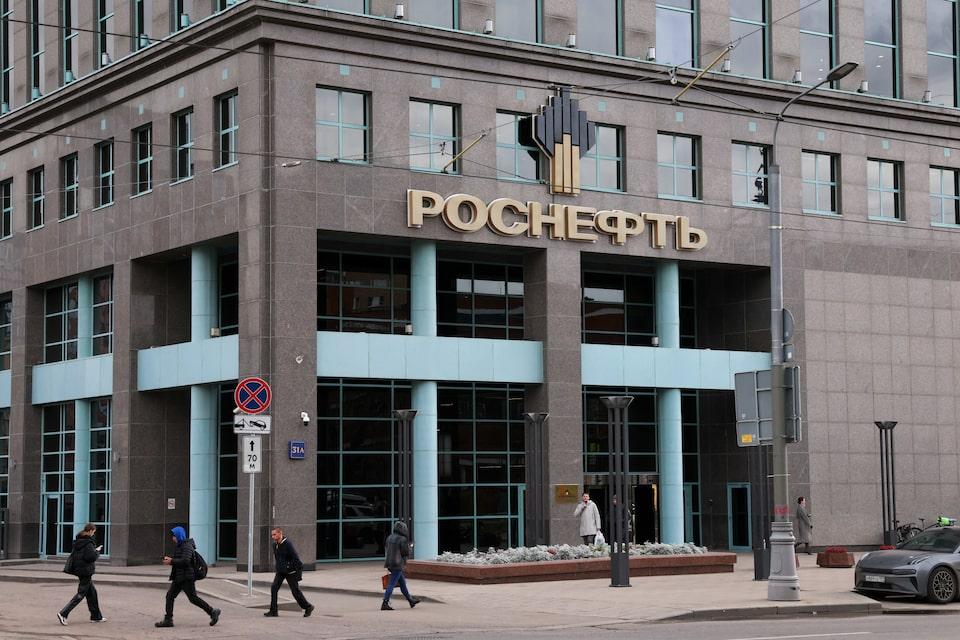
BERLIN/FRANKFURT, Jan 6 (Reuters) - Germany's energy regulator on Tuesday said it has appointed Andreas Goss as the second managing director of Rosneft's German operations, which it controls under a trusteeship set up in 2022 in the wake of Europe's energy crisis. Goss, who was CEO of Thyssenkrupp's (TKAG.DE) , opens new tab steelmaking division until 2019, will serve as the finance chief of Rosneft's German division alongside CEO Johannes Bremer, the regulator, Bundesnetzagentur, said in a statement. Sign up here. "He has more than three decades of comprehensive international management and financial expertise, which he has acquired in large global corporations and in challenging transformation and restructuring situations," it said. Under Goss' leadership, Thyssenkrupp Steel Europe came close to forming a European joint venture with Tata Steel (TISC.NS) , opens new tab, a planned landmark deal that collapsed in 2019 after Brussels vetoed the transaction. Before his time at Thyssenkrupp, Goss held various management roles at Siemens AG (SIEGn.DE) , opens new tab. "He also has extensive industry knowledge in the field of oil and gas supply through various supervisory board mandates," the regulator said. Subsidiaries of Russian oil company Rosneft (ROSN.MM) , opens new tab affected by the appointment are Rosneft Deutschland and RN Refining & Marketing, which include stakes in the Schwedt (C}RO7309414219) , opens new tab, MiRo (C}RO7309414342) , opens new tab and Bayernoil (C}RO7309414220) , opens new tab refineries. While remaining the legal owner, Rosneft was stripped of control of its German assets following Russia's full-scale invasion of Ukraine in 2022 via a so-called trusteeship that has since been extended six times. Sources told Reuters in October that U.S. sanctions on Rosneft rekindled discussions in Germany about nationalising the company's business there. https://www.reuters.com/sustainability/boards-policy-regulation/ex-thyssenkrupp-exec-named-managing-director-rosnefts-german-operations-2026-01-06/
2026-01-06 11:49
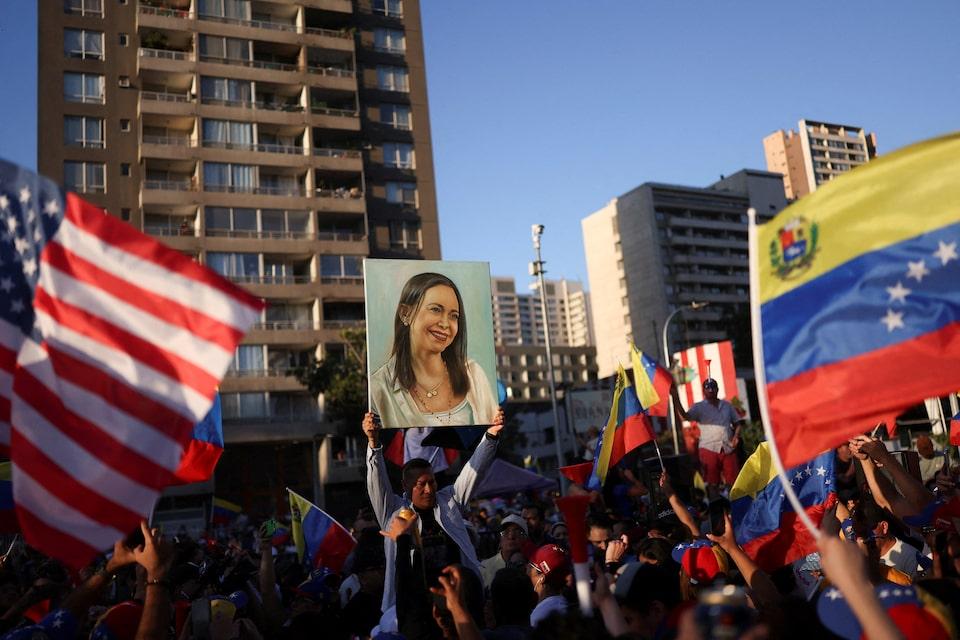
Trump announces plan to sell Venezuelan oil Death toll from military operation was 75 - Washington Post US warns interior minister to support interim president - sources Toppled Maduro in New York jail on drug charges WASHINGTON, Jan 6 (Reuters) - President Donald Trump on Tuesday unveiled a plan to refine and sell up to 50 million barrels of Venezuelan oil that had been stuck in Venezuela under U.S. blockade, in a further sign that Washington is coordinating with the Venezuelan government since capturing President Nicolas Maduro. Maduro is in a New York jail awaiting drug charges after the Saturday morning raid that the U.S. estimates killed about 75 people, according to a Washington Post report citing officials familiar with the matter. Sign up here. The U.S. has yet to report a death toll from an operation that reasserted U.S. willingness to intervene in Latin America with perhaps its most dramatic military operation since the 1989 invasion of Panama that seized Panamanian leader Manuel Noriega. Nor has Caracas given a number for those killed, but the army posted a list of 23 names of its dead. Venezuelan officials have said a large part of Maduro's security contingent was killed "in cold blood," and Cuba has said 32 members of its military and intelligence services in Venezuela were killed. Venezuela's interim President Delcy Rodriguez on Tuesday declared a week of mourning for members of the military killed in the raid. The operation brought condemnation from Russia, China and Venezuela's leftist allies, while allies of the United States have urged adherence to international law. Maduro, 63, pleaded not guilty on Monday to narcotics charges. He said he was a "decent man" and still president of Venezuela, while standing in a Manhattan court shackled at the ankles and wearing orange and beige prison garb. US TO TAKE VENEZUELAN OIL While Venezuela's political future remains uncertain amid U.S. claims that it will be running the South American country, for now Trump appears to be working with Rodriguez and other senior officials from Maduro's government, disappointing the opposition that had hoped to play a larger role. Trump on social media announced that Venezuela would sell 30 million to 50 million barrels of sanctioned oil that would be shipped directly to the United States under a plan to be executed immediately by Energy Secretary Chris Wright. "This Oil will be sold at its Market Price, and that money will be controlled by me, as President of the United States of America, to ensure it is used to benefit the people of Venezuela and the United States!" Trump said. Based on recent prices for Venezuelan oil, the deal could be worth up to $1.9 billion. U.S. officials have yet to outline a legal framework for seizing Venezuelan oil, though the U.S. has accused Venezuelan tankers of breaking U.S. sanctions to ship Iranian and Venezuelan oil. Trump has also suggested the U.S. would help rebuild the country's oil infrastructure to benefit oil majors such as Exxon Mobil (XOM.N) , opens new tab and ConocoPhillips (COP.N) , opens new tab, which were affected by a Venezuelan oil nationalization by former President Hugo Chavez, and Chevron Corp (CVX.N) , opens new tab, which has continued to operate there. U.S. oil chief executives are expected to visit the White House as early as Thursday to discuss investments in Venezuela, according to three sources familiar with the planning. VENEZUELA OPPOSITION SEEKS ROLE With the U.S. as its main ally, Venezuela would become the energy hub of the Americas, restore the rule of law, open markets and bring home exiles, opposition leader and Nobel Peace Prize winner Maria Corina Machado said in an interview on Monday with Fox News. Trump has, however, been told by the CIA that Rodriguez and other senior officials from Maduro's government are the best bet to maintain stability, sources said. The classified assessment was one reason why Trump decided to back Rodriguez instead of opposition leader Machado, the sources said. Machado, who said she wants to return to Venezuela to lead the country, said Rodriguez was "nothing like a moderate," and had been one of the main architects of Venezuelan repression. "I think it's evident the United States has instructed her to take certain actions regarding further dismantling of the criminal structure as a path forward towards a complete transition to democracy in Venezuela,” Machado told CBS News in a separate interview on Tuesday. The Trump administration has put hardline Interior Minister Diosdado Cabello on notice that he could be at the top of its target list unless he helps Rodriguez meet U.S. demands and keep order, according to three people familiar with the matter. Cabello, who controls security forces accused of widespread human rights abuses, is one of a handful of Maduro loyalists that Trump has decided to rely on as temporary rulers to maintain stability during a transition period, said one source briefed on the administration’s thinking. Cabello has been on the streets of Venezuela, patrolling with security forces. "Always loyal, never traitors. Doubt is betrayal!" they chanted in one of several overnight social media posts by the Venezuelan government. The U.S. is also pressuring the interim Venezuelan government to expel official advisers from China, Russia, Cuba and Iran, the New York Times reported, citing anonymous U.S. officials. Secretary of State Marco Rubio listed the Trump administration’s demands in a classified meeting on Monday with senior congressional leaders, the Times said. Reuters could not immediately verify the report. Since the seizure of Maduro, Venezuelan authorities have ordered the arrest of anyone who collaborated. Fourteen media workers were briefly detained covering events in Caracas on Monday, and shots were fired on Monday night into the sky above the city, which a Venezuelan official said came from police to deter unauthorized drones. "There was no confrontation, the entire country remains completely calm," Vice Minister of Communications Simon Arrechider told reporters. https://www.reuters.com/world/americas/maduro-opponent-machado-vows-return-venezuela-wants-election-2026-01-06/
2026-01-06 11:39
Jan 6 (Reuters) - Morgan Stanley (MS.N) , opens new tab is seeking regulatory approval to launch exchange-traded funds tied to the price of cryptocurrency tokens, according to filings with the U.S. Securities and Exchange Commission on Tuesday, the first such move by a big U.S. bank. The bank is looking to launch ETFs tied to the price of cryptocurrencies bitcoin and solana, according to the filings, aiming to deepen its presence in the cryptocurrency space. Sign up here. Regulatory clarity under U.S. President Donald Trump has encouraged mainstream finance companies to embrace digital assets, which were once considered merely speculative instruments. In December, the Office of the Comptroller of the Currency also allowed banks to act as intermediaries on crypto transactions, narrowing the gap between the traditional sector and digital assets. Several investors prefer holding crypto via ETFs, which provide greater liquidity and security, and simplified regulatory compliance compared to managing the underlying asset directly. "It's interesting to see Morgan Stanley move into a commoditized market, and I suspect that means they want to move clients that invest in bitcoin into their ETFs which could give them a fast start despite their late entrance," said Bryan Armour, ETF analyst at Morningstar. "A bank entering the crypto ETF market adds legitimacy to it, and others could follow." In the two years since the SEC approved the first U.S.-listed spot bitcoin ETF, a wide array of financial institutions - mostly asset managers - have stepped up to issue such funds. U.S. banks, which have mostly only acted as custodians of client investments, are looking to evolve from cautious facilitators to active advisers. In October, Morgan Stanley expanded access to crypto investments to include all clients and types of accounts, according to media reports. Bank of America (BAC.N) , opens new tab followed suit, allowing its wealth advisers to recommend allocations to crypto in client portfolios from January, without any asset threshold. https://www.reuters.com/business/morgan-stanley-files-bitcoin-etf-2026-01-06/
2026-01-06 11:23
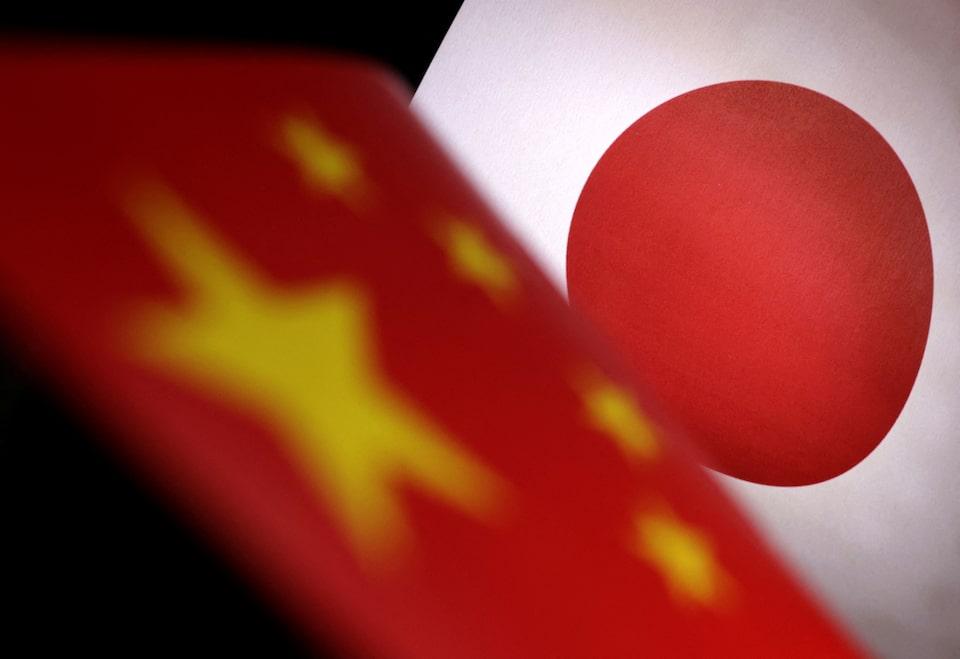
China bans dual-use item exports to Japan for military use Move follows Japan PM's Taiwan remarks Japan calls the measures 'absolutely unacceptable' Diplomatic disputes trigger rare earth curb fears BEIJING, Jan 6 (Reuters) - China has banned exports of dual-use items to Japan that can be used for military purposes, according to a commerce ministry statement on Tuesday, Beijing's latest move in reaction to an early November remark by Japanese Prime Minister Sanae Takaichi about Taiwan. Dual-use items are goods, software or technologies that have both civilian and military applications, including certain rare earth elements that are essential for making drones and chips. Sign up here. Exports of such items to military users or for any purposes that contribute to Japan's military strength are banned, effective immediately, the statement said, adding that organisations or individuals from any country or region that violated the ban would be held legally liable. Japan's foreign ministry said it strongly protested the measures and demanded that China withdraw them. It called the move "absolutely unacceptable and deeply regrettable." It said the measures targeted only Japan and that they "deviate significantly from international practice." 'PROVOCATIVE' REMARKS Ties between Beijing and Tokyo have deteriorated since Takaichi said a Chinese attack on the democratically governed island of Taiwan could be deemed an existential threat to Japan, in a remark that Beijing said was "provocative." China regards Taiwan as part of its territory, a claim that Taipei rejects. The Chinese foreign ministry later questioned Japan's motives around Taiwan, saying its "provocations" could be a pretext for building up its military forces and overseas missions. In late December, the Japanese cabinet approved a record spending package for the fiscal year starting in April, including a 3.8% increase in the annual military budget to 9 trillion yen ($58 billion). In a commentary in December, China's state-run Xinhua news agency said it had been "alarming" in recent years that Japan had "drastically" readjusted its security policy, increased its defence spending year after year, relaxed restrictions on arms exports, sought to develop offensive weapons and planned to abandon its three non-nuclear principles. China's own annual defence budget has more than doubled over the last decade. Japan reaffirmed its non-nuclear pledge in mid-December. Beijing's statement on Tuesday did not specify which items fall under its new curbs. Around 1,100 items are on China's export control list for dual-use goods and technologies, covering at least seven categories of medium and heavy rare earths such as samarium, gadolinium, terbium, dysprosium and lutetium. Despite Japan's efforts to diversify, China still supplies around 60% of its imports of rare earths, macroeconomic research firm Capital Economics estimates. "China has not provided a list of restricted items so at this stage it is impossible to say what impact the export curbs will have," an official at the Japan External Trade Organization told Reuters, asking not to be identified because they are not authorised to talk to the media. A Japanese government source who spoke on condition that they were not identified called the move "symbolic," adding: "Until now, China has avoided doing things that would seriously hurt Japan's business community. By taking this step and causing trouble for Japanese industry, they may be aiming to fuel domestic criticism of Takaichi." China throttled exports of rare earths to Japan during a previous diplomatic dispute more than a decade ago. So far, China Customs data has shown no sign of a decline in rare earth exports to Japan, though the data is released with some delay. In November, the latest month for which there was data, exports grew 35% to 305 metric tons, the highest tally last year. FEARS OF RETALIATION A Chinese state-affiliated social media blog wrote earlier on Tuesday that China was considering tightening approvals of rare earth export licences to Japan due to Tokyo's "recent egregious behaviour", citing sources with knowledge of the matter. Some analysts and Japanese firms had feared that China would retaliate by restricting exports of rare earths, essential for Japan's automotive sector, soon after the diplomatic dispute broke out in November. One Japanese private sector source in Beijing told Reuters on condition of anonymity that it still took a "considerable amount of time" to obtain rare earth export license approvals as of late November, and that many other Japanese firms were in similar positions. But it was unclear whether that was a direct consequence of the diplomatic dispute, they cautioned. https://www.reuters.com/world/asia-pacific/china-bans-exports-dual-use-items-military-purposes-japan-2026-01-06/
2026-01-06 11:13
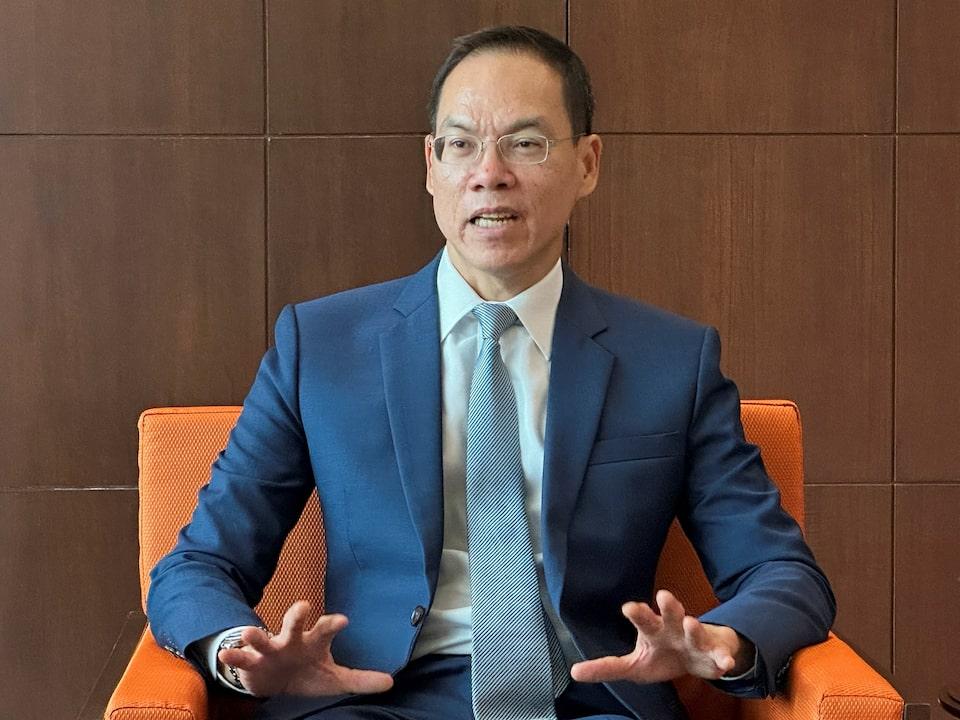
Jan 6 (Reuters) - (This Jan 6 story has been refiled to fix the hyperlinks in paragraphs 5, 6, 9, 10 and 12) Bank of Thailand (BOT) Deputy Governor Piti Disyatat on Tuesday said the nation's economic growth was expected to turn positive in the fourth quarter of 2025, though he added that policymakers need to be judicious about making further rate cuts. Sign up here. "We expect the fourth quarter (gross domestic product) to be positive quarter-on-quarter ... it (better) tells you its near-term momentum," Piti told the Reuters Global Markets Forum , opens new tab, adding that he expected Thailand to meet its annual growth forecast of 2.2% for 2025. If Piti's fourth-quarter prediction came to fruition, Southeast Asia's second-largest economy would avoid a technical recession after the economy shrank by 0.6% in the third quarter, its first contraction in 11 quarters. The BOT expects growth momentum to moderate to 1.5% this year before picking up to 2.3% in 2027. Piti also said he expected headline inflation to rebound into positive territory by March or April this year. Thailand's December annual inflation print, due on Wednesday, is expected at minus 0.34%, according to a Reuters poll. Annual headline inflation was negative for the eighth month in a row in November, as the central bank forecast a negative 0.1% print for 2025, before a pick-up to 0.3% in 2026. In December, the BOT lowered rates for the fifth time since October 2024 to 1.25%, a total reduction of 125 basis points. Market participants expect at least one more reduction in February, according to LSEG data. Piti said the BOT would robustly use its "remaining ammunition" to address shocks to the economy that could come from tightening global financial conditions, a deterioration in global markets or a further slowdown in domestic demand. "We are already running low on the policy space (and) have to be very judicious in using that room when the impact is most needed," he added. A volatile Thai baht , which emerged as Asia's second-best-performing currency with an 8% surge in 2025, has added to the headwinds, which have come from U.S. tariffs, Thailand's high household debt, a border conflict with Cambodia and political uncertainty ahead of a February election. That volatility prompted the central bank to intervene heavily in the currency market in the second half of 2025, but Piti said the BOT has not targeted specific baht levels. "Our main focus is to make sure (baht) volatility is not excessive and doesn't get too driven by non-fundamental factors," he said. In addition, the finance ministry is considering a tax on online gold transactions along with measures to limit trading volumes by the biggest players to contain the currency's rapid moves. Traders have opposed these measures, which they believe will reduce Thailand's appeal as a gold trading hub. "It's not like we're trying to kill off all gold trade. We just try to reduce the amount of gold trading that is excessive in baht," Piti said, adding that the central bank would instead encourage dollar-denominated gold trading to reduce the impact on the local currency. The BOT expects gold transactions by large traders to equal 50% of the country's 2025 GDP. Gold rallied 64% in 2025, its biggest annual rise in 46 years, boosted by geopolitical tensions and U.S. rate cut expectations. Markets now expect the precious metal to hit $5,000 per ounce in 2026, implying an upside of nearly 16% from its December 31 close. (Join GMF on LSEG Messenger for live interviews: https://lseg.group/4oClBxC , opens new tab) https://www.reuters.com/world/asia-pacific/bank-thailand-deputy-governor-expects-gdp-rebound-q4-limited-policy-space-2026-01-06/