2025-01-31 11:45
Russia stopped gas supply to Moldova's separatist enclave EU issued 30 million euros to help the region Transdniestria will receive European gas CHISINAU, Jan 31 (Reuters) - Moldova on Saturday will send 3 million cubic metres (mcm) of gas to its separatist enclave Transdniestria, the first fuel supply to the area since end-December, when gas transit through Ukraine was halted, a Moldovan industry official said on Friday. The delivery will start in the morning and it is intended to fill the Transdniestrian gas system, which is already experiencing a shortage of gas to maintain pressure. "According to the contract between Moldovagaz and Tiraspoltransgaz, this volume of gas is provided as a debt to be repaid by March 1, 2025," Moldovagaz CEO Vadim Ceban told Reuters. Tens of thousands of people in the region have been without gas or winter heating since Jan. 1, when Russia's Gazprom (GAZP.MM) , opens new tab suspended gas exports to the region, citing an unpaid Moldovan debt of $709 million that Chisinau does not recognise as valid. Moscow blames the suspension of gas supplies on pro-Western Moldova and Ukraine, which refused to extend a five-year gas transit deal that expired on Dec. 31, on the grounds that the proceeds help fund Russia's invasion. Moldova's authorities have said that despite a valid contract and the option of an alternative transit route, Gazprom is refusing to supply gas in order to destabilise its government ahead of this year's parliamentary elections. MORE SUPPLY This 3 million cubic metres will precede a larger gas supply, paid for by the European Union, which issued 30 million euros ($31.14 million) to provide Transdniestria and Moldova with both heat and electricity. Alexandru Slusar, a member of the Administrative Board of the Moldovan state-owned Energocom company, told Reuters that 20 million euros would be used to buy gas for Transdniestria and 10 million euros will be spent by Chisinau to buy electricity on the exchange in Romania. A Moldovan industry source said that Tiraspol would buy gas from the Moldova's Energocom at an average rate of 3 mcm per day in February 1-10 and Moldovagaz would deliver this gas to the Transdniestrian company Tiraspoltransgaz. It is not clear how the separatist region, which has been receiving free gas from Russia for decades, will ensure gas supply after Feb. 10. ($1 = 0.9633 euros) Sign up here. https://www.reuters.com/business/energy/moldova-ship-first-3-mcm-gas-breakaway-region-saturday-company-says-2025-01-31/

2025-01-31 11:32
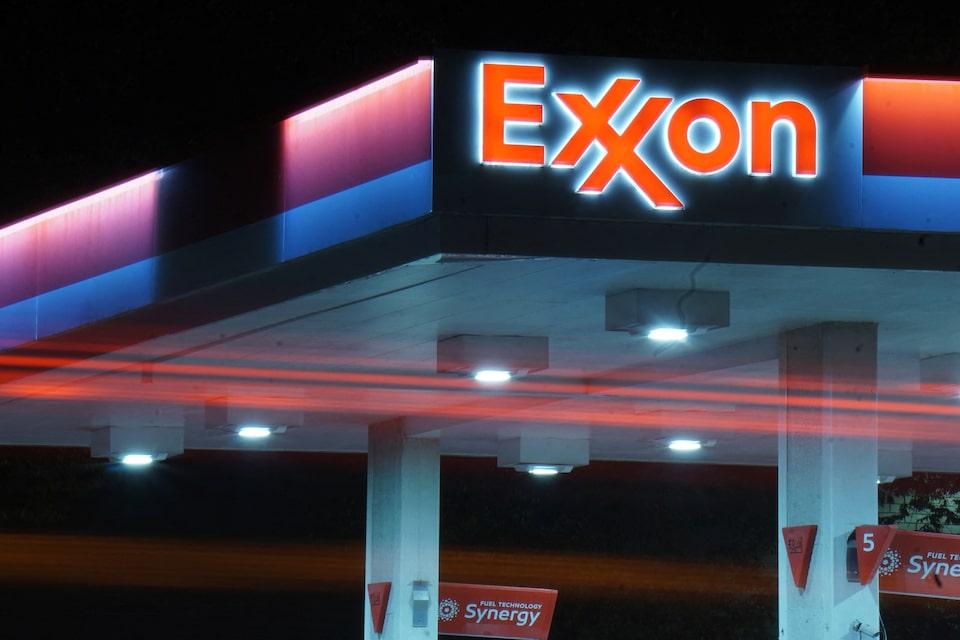
HOUSTON, Jan 31 (Reuters) - Exxon Mobil (XOM.N) , opens new tab on Friday beat Wall Street's estimate for fourth-quarter profit as higher oil and gas production offset lower oil prices and weaker refining margins. Its profit was $7.39 billion or $1.67 per share, beating analyst estimates of $1.56, LSEG data showed. Exxon's low production costs in the basin and its lucrative and prolific projects in Guyana have bolstered the company's profits despite lower oil prices and a decline in profits on making fuel. The No. 1 U.S. oil producer reported earnings of $33.46 billion for 2024, down from $38.57 billion the year earlier. Exxon shares were unchanged in trading before the bell on Friday. The company became the largest oil producer in the Permian basin in 2024, the biggest U.S. oilfield, after closing its acquisition of Pioneer Natural Resources in May. Its fourth-quarter adjusted earnings from oil and gas production was $6.28 billion, up from $4.15 billion in the same quarter last year. Production reached 4.6 million barrels of oil equivalent per day. Earnings from producing gasoline and diesel was $323 million, down from $3.2 billion a year earlier. Exxon signaled earlier this month that sharply lower oil refining margins would cut earnings by between $300 million and $700 million compared to the third quarter. The startup of new oil refineries by other companies in Asia and Africa led to higher global fuel supply, even as demand for gasoline and diesel lagged expectations. The refining business remains under pressure as the additional supply enters the market, Chief Financial Officer Kathryn Mikells said in an interview. "That's really what we're watching as we look ahead to 2025," she said. The company said impairments across the business cost $608 million in the fourth quarter. The charges come from selling assets, including a joint venture in Nigeria, Mikells said. Exxon continues to expect a decision by September in its arbitration challenge to Chevron's acquisition of oil producer Hess, she said. If Chevron proceeds, it would gain a foothold in Guyana's oil projects. While the deal has been approved by U.S. regulators, Exxon and China's CNOOC, which are Hess' partners in the Guyana oil joint venture, say they have a contractual first right to buy Hess’ stake. Shareholder returns via buybacks and dividends totaled $36 billion in 2024, up from $32 billion. The shareholder distributions, a cornerstone of Big Oil's strategy to court investors, were covered by Exxon's free cash flow of $36.2 billion. Sign up here. https://www.reuters.com/business/energy/exxon-beats-q4-estimates-with-higher-permian-guyana-output-2025-01-31/
2025-01-31 11:28
PARIS, Jan 31 (Reuters) - China's Envision AESC on Friday secured EU approval for 48 million euros ($50 million) worth of French state aid for a new factory to produce lithium-ion batteries for electric vehicles. The European Commission said the French aid will contribute to Europe's strategic goals and green objectives. The site in Douai, northern France, is expected to create around 1,000 direct jobs, as the European Union tries to make the region's auto sector more competitive against Chinese and U.S rivals. The project also forms part of Renault's (RENA.PA) , opens new tab plans to strengthen its electric vehicles business. ($1 = 0.9633 euros) Sign up here. https://www.reuters.com/business/autos-transportation/envision-aesc-france-gains-eu-nod-50-mln-french-aid-ev-batteries-plant-2025-01-31/

2025-01-31 11:23
Jan 31 (Reuters) - Global policymakers and Wall Street analysts have been bracing for massive trade barriers from the new Trump administration. But it focused more on the domestic front in the first week in power, leaving the global trade landscape largely unchanged. President Donald Trump's tariff threats range from universal levy on imported goods to ones tailor-made for specific sectors as well as countries, and have the potential to dictate the path of inflation, economic growth and stock market performance. He has plans to impose 25% tariff on Mexico and Canada, largest trade partners of the U.S., on Feb 1, saying they may be necessary as retaliation for migration and fentanyl trafficking. Canada mainly exports crude oil and other energy products along with cars and car parts as part of the North American auto manufacturing chain. Mexico exports various goods in the industrial and auto sectors. Here is what top Wall Street brokerages say on the likely impact of U.S. tariffs on inflation, economic growth and earnings: U.S. COMPANIES AND PROFITS Analysts said surcharges on imports into the U.S. could hit sectors relying on supply chains spread across North America and China. - Trump's tariff threats against Canada, Mexico and China could amount to a 2.8% drag on the S&P 500's (.SPX) , opens new tab profit, if fully enacted, with the materials and discretionary sector most at risk, Barclays analysts said. - Targeted tariffs may have a less impact on equity markets compared with more broader surcharges, Citigroup said. A small import price shock in a narrow tariff scenario is likely to result in a 50 basis points compression in S&P 500 gross margin, while a broader tariffs could see margins shrink by 250 bps. - Tariffs on Mexico could hurt appliance distributors such as Whirlpool (WHR.N) , opens new tab, BofA Global Research said. About 40% of the U.S. appliance industry's sales are imports compared with 20% for Whirlpool, with a bulk of it from Mexico. Construction products companies Masco (MAS.N) , opens new tab and Fortune Brands (FBIN.N) , opens new tab have some sourcing exposure to China. But they also have dual suppliers for many products and could offset some the tariff hurdles with price hikes, BofA said. Builders FirstSource (BLDR.N) , opens new tab could benefit in the short-term from tariffs on Canadian lumber imports, but that would likely be offset by lower starts from homebuilders. - Automakers Ford (F.N) , opens new tab and Tesla (TSLA.O) , opens new tab are expected to take a big hit if tariffs are imposed on Canada and Mexico as the two countries account for nearly one-fifth of the value of U.S. vehicle consumption and production, Goldman Sachs said. The brokerage expects a greater chance of tariffs on China than on Canada and Mexico, while Royal Bank of Canada (RBC) thinks any tariff hike could exclude automakers. - RBC expects surcharges imposed on Mexican imports could prove to be a problem for General Motors (GM.N) , opens new tab, adding that production could shift to the U.S. - Profit margins of exporters could be hit, according to BlackRock, if inflation causes elevated interest rates and sets off a dollar rally to its 2022 peak. INFLATION Analysts expect inflation pressure from tariffs to keep the Federal Reserve hawkish on monetary policy, making it more expensive for companies to borrow and causing high inflation. - Barclays strategists said the proposed tariffs could lift the personal consumption expenditure index, the Fed's preferred inflation gauge, by 35-40 basis points on a yearly basis over a 12-month period. - Goldman Sachs estimates the proposed tariffs, if implemented, would boost the U.S PCE index, excluding volatile items such as food and energy, by 0.9%. - Capital Economics said the universal tariff of 10% and a China tariff of 60% will add about 1 percentage point to U.S. consumer price index. If Trump followed through on his threats of additional country-specific tariffs, inflation might rise by about 2 percentage points. Sign up here. https://www.reuters.com/markets/us/wall-st-gears-up-fallout-likely-tariffs-canada-mexico-2025-01-31/

2025-01-31 11:21
BRUSSELS, Jan 31 (Reuters) - The gas price cap introduced by the European Union during its 2022 Russian gas crisis will expire on Friday, having not been triggered since its inception. The cap would have applied if gas prices surged to unusually high levels, responding to months of soaring energy prices caused by Russia cutting gas supplies after its invasion of Ukraine. The cap was designed to kick in if European gas prices hit 180 euros per megawatt hour - a level the benchmark EU price has not reached since the depths of Europe's energy crisis in 2022, when it surpassed 300 euros/MWh. The benchmark front-month gas contract at the Dutch TTF hub was trading above 52 euros/MWh on Friday - its highest since late 2023, but still far below prices during the 2022 energy crisis. The European Commission's decision to let the price cap expire signals that the worst of Europe's energy crisis has passed. Despite cold snaps this winter, EU gas storage is relatively full and countries have ramped up their non-Russian gas supplies. "Luckily, we never again got into the situation in which we could find out if the instrument was effective or not," one EU diplomat said. The cap had split opinion among EU countries and industry, with Germany among those concerned it would disrupt the functioning of energy markets or hamper Europe's ability to attract gas supplies in price-competitive global markets. Industry association Eurogas said on Friday that it supported the phasing out of emergency measures introduced during the energy crisis. "It is difficult to assess the real effectiveness of these measures and they might create market distortions," said Eurogas head Andreas Guth. Other countries, including Italy, had wanted the EU to keep the price cap and redesign it to limit prices at far lower levels. Sign up here. https://www.reuters.com/business/energy/eu-removes-energy-crisis-gas-price-cap-2025-01-31/

2025-01-31 11:21
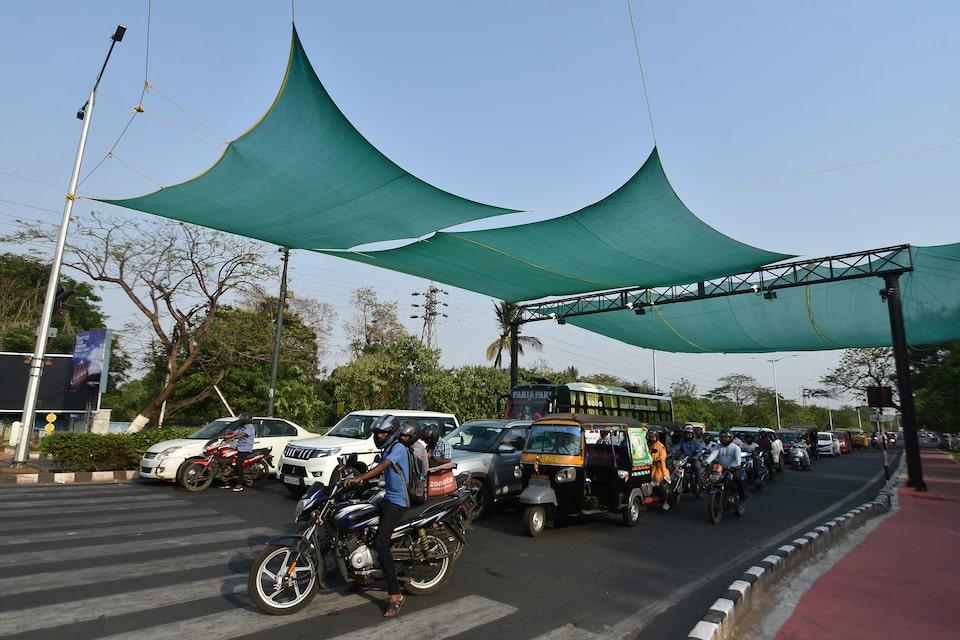
India faces above-average temperatures in Feb - weather office Rainfall seen below average, with fewer cold wave days 'Significant adverse impact' on crops possible, office says MUMBAI, Jan 31 (Reuters) - India is set to see above-average temperatures in February after a warmer than normal January, the weather office said on Friday, posing a risk to key winter-sown crops such as wheat, rapeseed and chickpeas. Maximum and minimum temperatures in most parts of the country will be above-average in the month, Mrutyunjay Mohapatra, director-general of the India Meteorological Department, told a virtual news conference. The country is likely to receive below-average rainfall in February and could see fewer cold days than normal in the month, he said. "Below normal rainfall, along with higher temperatures over the plains of northwest India, would have a significant adverse impact on standing crops like wheat at flowering and grain filling stages. Crops like mustard and chickpea may also experience early maturity," Mohapatra said. India's Punjab, Haryana, and Uttar Pradesh states in the north, along with Madhya Pradesh in central India, form the country's top wheat-growing regions. Winter-sown crops such as wheat, rapeseed, and chickpeas are planted from October to December and require cold weather conditions during their growth and maturity stages for optimal yields. Reuters reported on Thursday that temperatures in February were likely to remain above average, especially in the northern states where wheat and rapeseed are grown. In January, minimum and maximum temperatures were above average as the country received lower than normal rainfall, Mohapatra said. Hot and unseasonably warm weather leads to lower wheat production and sharp drawdowns in state reserves. As a result, wheat prices hit a record 33,250 rupees ($384.05) per metric ton earlier this month. Any drop in the rapeseed crop could force India, the world's biggest vegetable oil importer, to step up its cooking oil imports, dealers said. India buys palm oil mainly from Indonesia, Malaysia and Thailand, while it imports soyoil and sunflower oil from Argentina, Brazil, Russia and Ukraine. Sign up here. https://www.reuters.com/world/india/india-will-have-above-average-maximum-temperatures-february-weather-office-says-2025-01-31/