2025-01-31 11:18
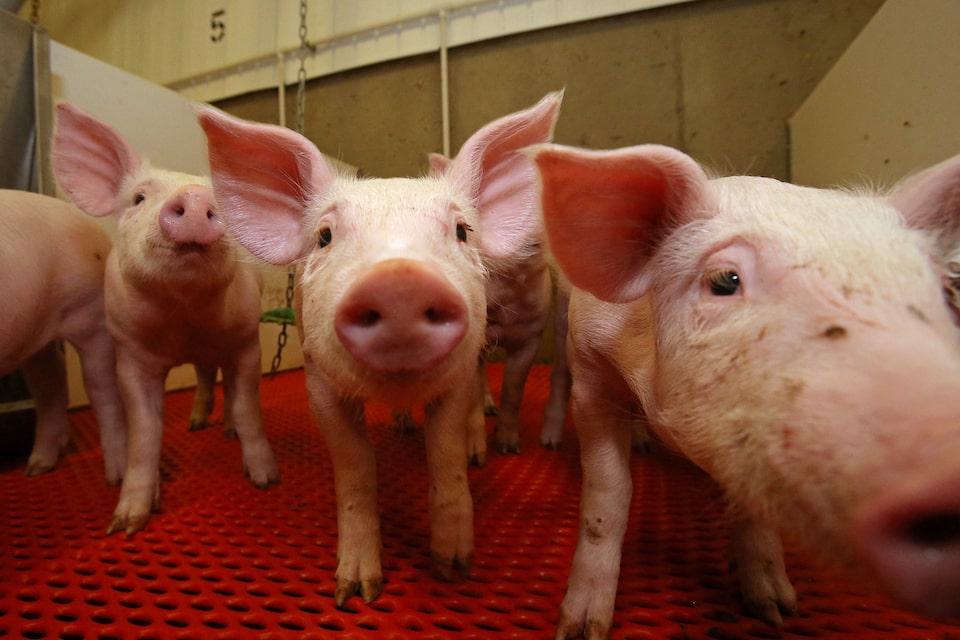
Canadian farmers renegotiate contracts to avoid tariff costs US tariffs threaten Canada's export-dependent economy Piglet trade likely to continue despite tariff concerns WINNIPEG, Manitoba, Jan 31 (Reuters) - Canadian farmers are renegotiating livestock contracts with U.S. buyers and finding local markets for crops they previously planned to sell south of the border to minimize the economic hit from potential new U.S. tariffs. U.S. President Donald Trump's threat to impose 25% tariffs on Canada and Mexico as soon as Saturday would hurt Canada's export-dependent economy and raise prices for goods on both sides of the border. Canadian farm exports to the United States include millions of piglets, as well as meat and crops such as wheat, oats and soybeans. Ontario hog farmer Stewart Skinner, who sells 95% of his 40,000 pigs per year to U.S. buyers, said he has renegotiated some sales agreements so U.S. buyers take delivery of the pigs in Canada and pay the tariffs themselves when they cross the border. "It's the uncertainty of not knowing that forces you to completely rethink that (business) model," said Skinner, who produces specialty hogs that have humane treatment certification required by high-end pork sellers such as Whole Foods. "The market for our pigs is in the USA, not here in Canada." If the U.S. imposes tariffs for the long term, he plans to stop feeding pigs to slaughter weight and to instead ship all his piglets to the U.S. Piglets sell for much less than fattened hogs, so the tariff hit is lower. Canadian farmers and companies that sell livestock, crops and food products into the U.S. are trying to tariff-proof their businesses. Nobody wants to make a sale and be required or pressured to pay a hefty tariff, or to find U.S. buyers backing out of deals. Canada, the world's eighth-largest beef exporter and third-biggest pork shipper, exported C$3.5 billion ($2.43 billion) of beef and C$1.65 billion ($1.14 billion) of pork to U.S. buyers from January through November last year. About 2.6 million pigs are shipped annually from Manitoba alone to U.S. hog feeding operations, mostly in Iowa and Minnesota. Canadian and U.S. cattle pass back and forth across the border at various ages. Manitoba piglet producers are now having uncomfortable conversations with U.S. buyers about who picks up the tariff bill. "These pigs can't stop flowing," said Manitoba Pork Council Chair Rick Prejet, adding that there are not enough Canadian farms to fatten piglets to slaughter weight. SHARING TARIFF COSTS Prejet said American farmers need Canadian piglets because there are not enough born in the U.S. That means the piglet trade will likely continue in the short term even if tariffs are imposed. "There will have to be a negotiation between buyer and seller," said Prejet. The U.S. National Pork Producers Council did not respond to a question about renegotiating contracts. The council said the U.S. pork industry, which exported $875 million worth of pork to Canada in 2023, worked hard to establish mutually beneficial trade between the countries. Some U.S. buyers have already pulled back from buying Canadian farm products. In December, Manitoba farmer David Laudin sold soybeans to a U.S. buyer for delivery in March. The next day, his broker told him there would be no further sales to that buyer because he was worried about tariffs. "He completely cut it off the day Trump announced (possible tariffs)," said Laudin. The rest of his crop will be sold to buyers north of the border. ($1 = 1.4425 Canadian dollars) Sign up here. https://www.reuters.com/markets/commodities/facing-trump-tariffs-piglets-crops-canadian-farmers-revise-sales-plans-2025-01-31/
2025-01-31 11:18
NEW YORK, Jan 31 (Reuters) - U.S. investors rattled by this week's sharp tech sell-off will closely watch upcoming jobs data for signs of continued economic resilience, which could fuel inflationary concerns already stoked by President Donald Trump's policies. The January nonfarm payrolls report due next week will signal whether the labor market remains buoyant despite high borrowing costs. The Federal Reserve left interest rates unchanged on Wednesday, citing a strong economy and inflation still above its 2% target. Markets will also be on alert for hints of economic overheating, which could exacerbate fears that Trump's trade and immigration policies could reignite inflation. Earlier this month stocks sold off after a December jobs report reinforced bets the Fed would ease rates slowly this year. "The employment report will be key to determining whether we are still on track with a labor market that's solid but is not driving inflationary pressures through to the service economy," said Tony Rodriguez, head of fixed income strategy at Nuveen. Stocks tumbled earlier this week as Chinese startup DeepSeek's budget-friendly artificial intelligence model fueled fears that U.S. tech giants might be overpriced. While stocks have clawed back some ground, the sell-off dampened recent optimism about the U.S. economy. "Investors have been confused by a wave of disparate data this week, including news on AI, Trump administration policies, the FOMC meeting, and earnings," Mark Hackett, chief market strategist at Nationwide said in a note. "The gyrations in the large technology space provide further evidence that the risk/reward balance in that space is stretched, and it is susceptible to a sell-off," he said. Quarterly financial results from Alphabet (GOOGL.O) , opens new tab and Amazon (AMZN.O) , opens new tab are on deck next week, following a mixed bag of earnings reports from other members of the so-called Magnificent Seven megacap tech stocks. Economic policy uncertainty under the new administration, including Trump's threat of punitive tariffs on large U.S. trade partners, will likely continue to keep investors on edge. That is partly why the markets are honing in on next week's economic data, said Byron Anderson, head of fixed income at Laffer Tengler Investments. "Uncertainty in markets is making market participants focus on these data points so intently," he said. "When markets have no long-term vision ... the data moving forward will get all the attention." Sign up here. https://www.reuters.com/markets/us/wall-st-week-ahead-tech-sell-off-jolts-investors-jobs-data-looms-2025-01-31/

2025-01-31 11:16
All 6 regional grid operators to miss July deadline to upgrade equipment Delays could extend 1-2 years past deadline Grid operators cite complexity of project, lack of software vendors BOSTON, Jan 31 (Reuters) - U.S. grid operators are asking regulators for more time to meet a federal order to upgrade existing transmission lines with equipment that can boost their capacity up to 40%, according to a Reuters review of regulatory documents. The delays represent a potentially years-long setback for efforts to reinforce the nation’s rickety power infrastructure, at a time newly sworn-in President Donald Trump has declared a national energy emergency over soaring U.S. electricity demand from data centers. The Federal Energy Regulatory Commission in late 2021 had ordered all six major regional grid operators outside of Texas to establish systems that regularly update the capacity ratings on transmission lines, based on weather conditions, by a deadline of July 2025. High-voltage transmission lines currently rely mainly on static settings that do not factor in real-time temperature drops or cooling breezes that could boost their capacity, meaning less power is often delivered than could be. Meeting the FERC order requires technology that factors in hourly power line temperatures. All six regional grid operators, however, have indicated they will not meet the July deadline, according to the Reuters survey. Some, including the Midcontinent Independent System Operator (MISO), which oversees the wholesale electricity market in 15 states, cited a lack of available software vendors needed to accomplish the work. MISO told Reuters on Thursday it plans to file a deadline extension with FERC in March, but has not determined how long of an extension it would need. California's CAISO, whose members are now embroiled in probes and lawsuits relating to devastating wildfires in Los Angeles, told FERC this week it may need until late 2027 to fully implement the agency’s order. “Getting this done by the July 2025 time frame is too large an effort for us and our participating transmission owners,” Andrew Ulmer, a lawyer for CAISO, said last month during a meeting with stakeholders, when explaining the rationale for a deadline extension. PJM, which operates in 13 states that include the southern and eastern part of the country, told Reuters it plans to discuss an extension to the FERC deadline during a meeting with transmission owners next week. The Southwest Power Pool, whose territory extends from North Dakota to Louisiana, told stakeholders earlier this month it would seek an extension for as late as December 2026. In early 2024, FERC approved a deadline reprieve for New York's grid operator that could extend into late 2028. New England's grid operator, ISO New England, told Reuters it plans to request a deadline extension in the fourth quarter, but did not say how long it would need. The delays are emblematic of decades of underinvestment in the U.S. electric grid, said Julia Selker, executive director of WATT Coalition, an advocacy group for more grid technology. “You need utilities clamoring for this technology to get the regional grid operators moving,” Selker said. Trump described the electric grid as “increasingly unreliable” in a Jan. 20 National Energy Emergency declaration, which is intended to help him fast-track permitting for new energy infrastructure projects. FERC told Reuters it is reviewing the president's executive orders and whether they will factor into decisions on deadline extensions. The White House did not respond to a message seeking comment. Transmission line congestion cost U.S. electric customers an estimated $11.5 billion in 2023, according to a report from Grid Strategies, a power sector consulting firm. It has been a major obstacle for new power generation projects, which require transmission capacity to access markets. Utilities that have already installed sensors based on the FERC order have seen some benefits. For example, during 2022’s Winter Storm Elliott that knocked out power for more than 1.5 million homes and businesses across the U.S., PPL Corp's (PPL.N) , opens new tab power lines with advanced sensors boosted their capacity beyond standard settings, which PJM said was critical in avoiding rotating power outages. Sign up here. https://www.reuters.com/business/energy/power-boosting-project-us-grid-miss-july-deadline-2025-01-31/

2025-01-31 11:10
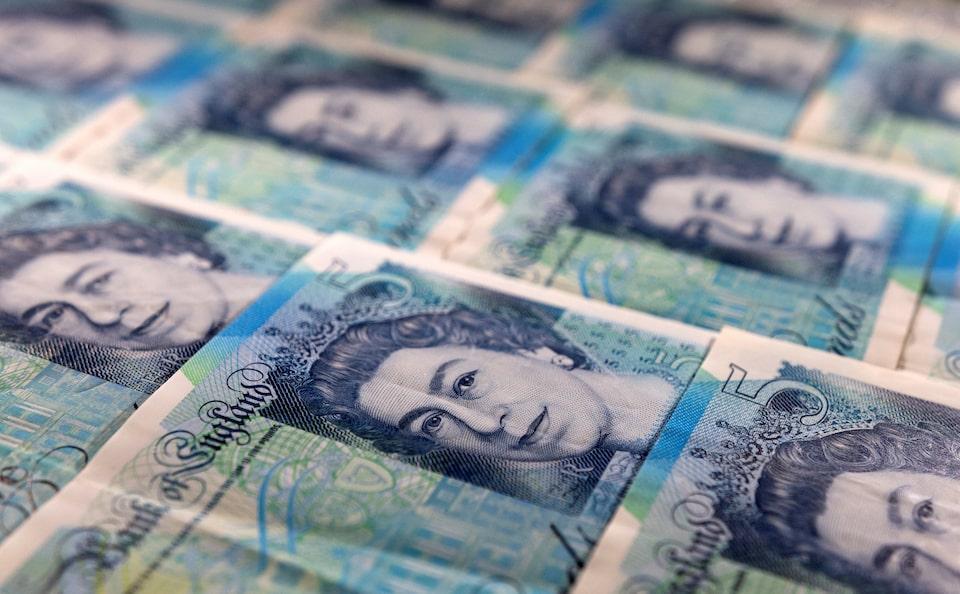
LONDON, Jan 31 (Reuters) - The pound headed for a fourth monthly loss on Friday, increasingly under pressure from investor concern about the outlook for the British economy, following January's bond market turmoil and in light of weakening UK data. Sterling has fallen 0.7% in January, bringing losses since September's 2-1/2-year high to more than 7.5%. Earlier this month, a selloff in global government bonds hit the UK market particularly hard, sending long-term gilt yields to their highest in decades, heaping pressure on finance minister Rachel Reeves. Yields have since retreated and sterling has recovered some stability, but a recent run of macro data has pointed to an economy that is slowing rapidly, with unemployment rising, falling consumer spending and weakening business activity. Mortgage lender Nationwide said on Friday showed the UK housing market lost some momentum in January, as prices rose by just 0.1% compared with December, but otherwise remained resilient. By Friday, the pound was set for a 0.4% weekly decline against the dollar, but a 0.5% gain versus the euro . "With nothing else on the docket, and no central bank speakers of note, we expect sterling to track euro moves through today’s trading, skewing risks in favour of further downside against the dollar," Monex Europe strategists said in a note. The pound was last flat on the day against the dollar at $1.242 and up 0.12% against the euro at 83.57 pence. The Bank of England is expected to deliver another quarter-point rate cut next week and may indicate it has room to lower borrowing costs further, if inflation continues to moderate. Adding to the sense of tension in the currency market was a deadline on Saturday from President Donald Trump for Canada and Mexico to stop the flow of illegal migrants and the drug fentanyl into the United States, or face tariffs of 25% on their imports. He also warned BRICS member countries from replacing the dollar as a reserve currency or face 100% tariffs on their U.S.-bound exports. The risk of a full-blown trade war has curbed some investor enthusiasm over the strength of quarterly corporate earnings so far. Sign up here. https://www.reuters.com/markets/currencies/sterling-set-fourth-monthly-loss-uk-economy-softens-2025-01-31/
2025-01-31 11:08
Global currency markets braced for increased volatility US set Feb. 1 deadline to impose tariffs on Mexico, Canada Mexican peso, Canadian dollar fall on latest Trump comments LONDON, Jan 31 (Reuters) - A deadline for U.S. tariff hikes on two of its top trading partners has global currency markets braced for increased volatility, FX options signal, with the Canadian dollar in the crosshairs. President Donald Trump set the Saturday deadline to impose 25% tariffs on imports from Mexico and Canada in an effort to push them to halt illegal migrants and fentanyl from entering the U.S. Trump reiterated on Thursday that he would impose tariffs and that oil imports "may or may not" be excluded. Implied single-week Canadian-dollar volatility covering the period over the weekend has jumped to its highest since October 2022. For the Mexican peso, it is at its highest since last November's U.S. election. Higher implied volatility shows traders are positioning for a sharp move in a currency pair, without specifying a direction. Sagar Sambrani, a senior FX options trader at Nomura, said there had been significant demand for one-volatility options in the U.S. dollar/Canadian dollar currency pair. The options market, where investors and companies typically hedge risk, shows increasing jitters in spot currency markets. The dollar jumped by more than 1% on the Canadian dollar in a matter of minutes after Trump's latest comments, hitting a nearly five-year high of C$1.4596 , before retreating. It was trading around 1.4484 in London on Friday. Mexico's peso has also been choppy. After weakening by more than 1% against the greenback on Thursday, it was trading around 20.68 per dollar on Friday. Mexico's exports to the U.S. account for roughly 27% of gross domestic product, and 83% of total exports. The peso has tumbled more than 1% against the dollar on at least seven occasions since Trump's election win last year. With Trump's focus firmly on the Americas, volatility in other currencies vulnerable to trade tensions such as the euro and Chinese yuan has fallen. "USD/CAD and USD/MXN are at the forefront of discussions because the threat of near-term tariffs from President Trump still hangs over both countries," said Sambrani, referring to the Canadian and Mexican currencies versus the U.S. dollar. "Since the Presidential inauguration, we’ve observed future implied volatility in most FX pairs diminish significantly but both these pairs have one-month volatility close to their highs over the past two months". ING currency strategist Francesco Pesole added that traders would treat the U.S.-Canada-Mexico situation as "a benchmark for Trump’s trade policy moving ahead." "If Trump doesn’t deliver on his threat by tomorrow, we should see the dollar depreciate not just against the Canadian dollar and Mexican peso but also with other currencies that are embedding tariff risks (like the euro, Australian dollar and New Zealand dollar)," he added. Sign up here. https://www.reuters.com/markets/currencies/forex-markets-brace-canada-mexico-swings-us-tariff-deadline-looms-2025-01-31/

2025-01-31 11:01
A look at the day ahead in U.S. and global markets from Mike Dolan As a hectic January ends, world markets continue to brace for U.S. import tariff rises as soon as this weekend - lifting the dollar in anticipation as interest rates in Europe tumble. Despite the currency market anxiety, stocks pushed higher - with index futures adding to Thursday's Wall Street gains as the world's most valuable company Apple rallied 4% ahead of today's bell. Apple's upbeat outlook overnight impressed even in the face of a slight quarterly earnings miss. But U.S. President Donald Trump stole the show again late yesterday as he kept markets guessing about the extent of promised 25% import tariffs on Canada and Mexico on Saturday. "We may or may not. We're going to make that determination probably tonight," Trump said, when asked whether the tariffs would cover Canadian and Mexican oil. Aiming to push the two largest U.S. trading partners to take action to halt illegal migrants and shipments of fentanyl, Trump said the level of North American duties "may or may not rise with time." The Canadian dollar hit near five-year lows after losing 1% in a week of another Bank of Canada rate cut. The Mexican peso steadied from its steep fall from the previous session but remained on track for its worst weekly performance since October with a drop of almost 2%. The dollar (.DXY) , opens new tab was higher more broadly, with the euro hitting 10-day lows following the European Central Bank's expected quarter-point interest rate cut on Thursday. Even as the Federal Reserve paused its rate cut campaign this week, the rationale for ECB easing was underlined by news of a contraction in German and French economies in the final quarter of last year, and January inflation readings from France and the main German states were also below forecasts. ECB sources said another rate cut is likely to go through in March without much resistance among policymakers before the debate between them on further easing becomes more heated. Other reports said the central bank may stop describing its monetary policy stance as "restrictive" after the March decision. European stocks (.STOXX) , opens new tab, however, continued to push higher to new records in the thick of the earnings season there - with Novartis (NOVN.S) , opens new tab up 2.4% after the drugmaker posted a hefty quarterly income beat. Euro zone stocks' (.STOXXE) , opens new tab near 8% gain for January in dollar terms is more than twice that of the S&P500. Back on Wall Street, the earnings deluge and this week's curve ball from China on the DeepSeek artificial intelligence model have distracted from the macro and political picture to some degree. Alongside the positive reception to Apple's update overnight, Intel also rallied overnight after its report. Even though Microsoft lost 6% on Thursday amid cloud computing worries, another standout earnings-day gain was the 13% jump in IBM (IBM.N) , opens new tab - its biggest daily percentage gain since 1999. Big Oil tops Friday's corporate updates. Chevron (CVX.N) , opens new tab reported earnings below estimates as weak margins pushed its refining business into a loss for the first time since 2020. With the Fed on hold, there was a mixed economic data picture. Fourth-quarter gross domestic product growth slowed to 2.25%, broadly as expected after the prior day's trade report, but weekly jobless claims fell more than forecast too. Friday brings a December readout on the Fed's favored personal consumption expenditures (PCE) inflation gauge. The annual 'core' PCE inflation rate is expected to have held steady at 2.8%. Elsewhere, Treasury yields were a touch higher above 4.5%. Gold hit a record high - and was set for its best month since March 2024 as investors sought the safe-haven metal due to heightened U.S. tariff concerns. Key developments that should provide more direction to U.S. markets later on Friday: * US December personal consumption expenditures (PCE) inflation gauge, personal income and spending, Q4 employment costs, January Chicago business survey * Federal Reserve Board Governor Michelle Bowman speaks * US corporate earnings: AbbVie, Exxon, Chevron, Colgate Palmolive, Aon, Franklin Resources, WW Grainger, LyondellBasell, Revvity, Broadridge, Church & Dwight, Phillips 66, Charter Communications Sign up here. https://www.reuters.com/markets/us/global-markets-view-usa-2025-01-31/