2025-01-31 06:16
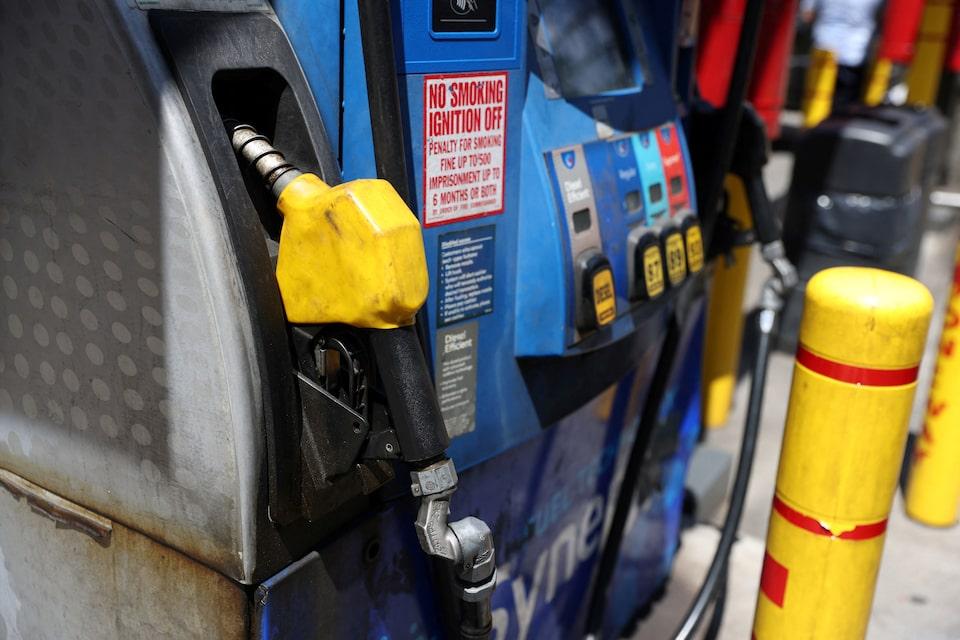
Major central banks are cutting while Fed moves to the sidelines Policy divergence could mean an even stronger dollar Dollar strength could weigh on Trump's trade goals WASHINGTON, Jan 31 (Reuters) - U.S. President Donald Trump is getting his wish that interest rates drop across the world, just not at home where a strong economy and uncertainty over his own policies have set the stage for the Federal Reserve to diverge from its central bank peers. The European Central Bank cut rates on Thursday, the Bank of Canada did as well on Wednesday, and the Bank of England is likely to do so next week – steps that, with the Fed in a holding pattern on rates, could strengthen the value of the dollar and further complicate Trump's trade goals by making imports cheaper and U.S. exports more expensive. ECB President Christine Lagarde noted on Thursday that renewed trade tensions could even put more pressure on lagging euro zone growth, a potential argument for even lower rates in the 20-nation bloc. "The risks to economic growth remain tilted to the downside," Lagarde said of the tariffs threatened by Trump on a broad set of countries. "All we know for sure is that it will have a global negative impact." For European interest rates, "we know the direction of travel" will be lower, Lagarde said after the ECB's Governing Council shaved another quarter of a percentage point from its main policy rates. "At which pace, in what sequence, in what magnitude, will be informed by the data we collect." Bank of Canada Governor Tiff Macklem on Wednesday also bemoaned Trump's tariff threats as the Canadian central bank delivered its sixth rate cut in a row and cut growth forecasts for the U.S. neighbor. "A long-lasting and broad-based trade conflict would badly hurt economic activity in Canada," he said. Next up is the BoE, which is expected to lower rates next Thursday, with a possibility that it could steer toward a faster pace of cuts ahead than currently expected. DIVERGENCE That leaves the Fed, for now, standing alone. While U.S. central bank policymakers anticipate rate reductions later this year if inflation eases as expected, Fed Chair Jerome Powell said on Wednesday there was no reason to rush the next move. "We see things as in a really good place for policy and for the economy, and so we feel like we don't need to be in a hurry to make any adjustments," Powell told reporters after the Fed decided to keep rates on hold. It was not the outcome Trump said a week earlier he would "demand" from a Fed chief he appointed in his first term, soured on over differences about rate policy, and is expected to replace when Powell's current four-year term ends in May of 2026. "I'll demand that interest rates drop immediately. And likewise, they should be dropping all over the world," Trump said in video remarks last week to the World Economic Forum in Davos, Switzerland. Indeed, getting only half his wish may be worse than nothing, with the policy divergence between the Fed and its peers putting possible upward pressure on the dollar, something that would keep imports cheaper at a time when Trump wants a "rebalancing" of global trade in favor of the U.S. That is already a tall task following the record U.S. goods trade deficit that was recorded as 2024 ended. In the case of Europe, "policy divergence between the Fed and ECB was very likely to trigger a stronger USD this week. Looking forward, it will take clarity on European politics, an end to the (Ukraine) war, clarity on the absence of U.S. import tariffs and the nature of European 'concession,' and a more stable GDP trend," for pressure on the dollar to ease, Macquarie global strategists Thierry Wizman and Gareth Berry wrote ahead of the ECB's policy decision on Thursday. The dollar (.DXY) , opens new tab has appreciated about 7% against a global basket of currencies since September despite Fed rate cuts totaling a full percentage point last year. 'POLICY PURGATORY' The difference in tone between the Fed and its central bank peers highlights the different path the U.S. economy took as the world emerged from a deep, but short COVID-19 pandemic recession in 2020. High inflation was a global phenomenon, given tangled supply chains, and central banks launched a uniform response of rapid rate increases to try to control it. But the roots of the price increases differed, with events like Russia's 2022 invasion of Ukraine leading to more energy price inflation in the euro zone, and more aggressive fiscal spending in the U.S. creating more demand-driven price increases. Inflation also has fallen across the board. But in the U.S. that has happened with the economy maintaining above-trend economic growth, while Europe has been on the doorstep of recession. That situation has left Trump with a potential dilemma: How to improve on the economic results of the Biden administration in an economy that is arguably operating at full employment with output and rates of growth near or beyond the limits of its potential. U.S. output grew 2.8% in 2024, the fourth consecutive year where gross domestic product expanded at well above the 1.8% considered to be the economy's long-run potential. Inflation is nearly contained, but the Fed sees enough uncertainty and risk on the horizon that it has moved to the sidelines, at least for now. "The Federal Reserve is really in a sort of policy purgatory," said Diane Swonk, chief economist at KPMG, noting that Powell's replies to reporters' questions on Wednesday were "peppered with the phrases 'wait-and-see,' 'waiting to see,' 'on hold,' 'not in a hurry,' and 'will patiently watch,'" With the economy now being shaped by an administration that has launched dozens of executive orders and with tariff announcements perhaps coming soon, "the Fed doesn't know what is next," Swonk said. Sign up here. https://www.reuters.com/markets/rates-bonds/trump-is-getting-lower-interest-rates-he-demanded-everyone-fed-2025-01-31/
2025-01-31 06:13
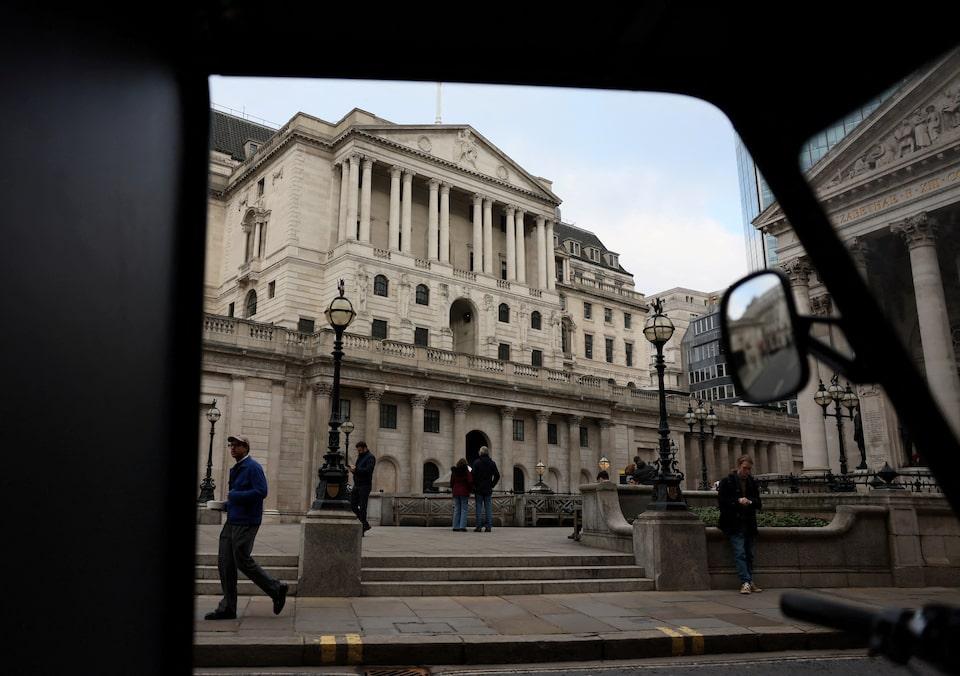
Bullion up over 6% this month Gold rally could hold if uncertainty prevails, analyst says US PCE due at 1330 GMT Platinum, palladium head for monthly gain Jan 31 (Reuters) - Gold prices scaled an all-time high on Friday, briefly touching the $2,800 mark, as market participants rushed to the safe-haven asset after U.S. President Donald Trump reiterated his tariff threats. Spot gold steadied at $2,795.52 per ounce by 11:18 GMT, after hitting a record peak of $2,800.99 earlier in the session. Prices rose more than 6% for the month and 1% for the week. U.S. gold futures were little changed at $2,820.10. "The rally could hold for as long as there is uncertainty in the market. A lot of today's uncertainty stems from not knowing whether and how tariffs will be applied," said WisdomTree commodities strategist Nitesh Shah. Trump reiterated on Thursday that the United States would impose a 25% duty on imports from Mexico and Canada and said he was still considering new tariffs on Chinese goods. Bullion is a preferred asset during times of economic and geopolitical turmoil. "We see central bank buying as the strongest structural force in the gold market, underpinning our long-term constructive view," said Carsten Menke, analyst at Julius Baer. Market focus will now switch to the December U.S. personal consumption expenditures price index report due at 1330 GMT, the Federal Reserve's favoured gauge of inflation, due later in the day. Earlier this week, Fed Chair Jerome Powell said inflation and jobs data would determine when easing would be appropriate. Data on Thursday showed U.S. economic growth slowed in the fourth quarter but consumer spending increased at its fastest pace in nearly two years. If the combination of high inflation and sluggish growth unfolds, then the $3,000 level will appear increasingly plausible, said Ricardo Evangelista, senior analyst at ActivTrades. On the physical front, high prices kept Indian gold demand subdued and potential buyers were awaiting the federal budget on Feb. 1. Among other metals, spot silver fell 0.2% to $31.62 after hitting an over one-month high on Thursday. Platinum firmed 1.2% to $978.55, while palladium fell 0.3% to $986.50. Sign up here. https://www.reuters.com/markets/commodities/gold-hits-record-high-trump-tariff-worries-mount-2025-01-31/

2025-01-31 06:11
Japan considers support for Alaska gas project to forestall trade tensions with US, sources say Japan doubts pipeline viability but may explore deal if asked by Trump, sources say Trump and Japan PM Ishiba expected to meet as soon as next week, sources say TOKYO, Jan 31 (Reuters) - Japan is considering offering support for a $44 billion gas pipeline in Alaska as it seeks to court U.S. President Donald Trump and forestall potential trade friction, according to three officials familiar with the matter. Officials in Tokyo expect Trump may raise the project, which he has said is key for U.S. prosperity and security, when he meets Japanese Prime Minister Shigeru Ishiba for the first time in Washington as soon as next week, the sources said. Japan has doubts about the viability of the proposed 800-mile pipeline – intended to link fields in Alaska's north to a port in the south, where gas would be liquefied and shipped to Asian customers – because of the overall costs of the gas relative to other sources. But it is prepared to offer to explore a deal if asked, the officials said. Tokyo may include such a commitment among other concessions, such as buying more U.S. gas and increasing defence spending and manufacturing investment in the U.S., to reduce the $56 billion bilateral trade deficit and stave off the threat of tariffs, one of the people said. The White House did not immediately respond to a request for comment about the meeting. Japan's foreign ministry said it was premature to discuss the matter. Details of Japan's possible interest in the Alaska project have not been previously reported. The officials spoke on the condition of anonymity because they were not authorised to talk to the media. Among the executive orders Trump signed when he took office on Jan. 20 was one promising to unleash Alaska's resource potential, "including the sale and transportation of Alaskan LNG to other regions of the United States and allied nations within the Pacific region". Trump has framed the gas project as a win for Alaska and U.S. allies in Asia seeking a stable source of energy. But Japan already has plentiful access to LNG, and its companies traded some 38 million tonnes last year, more than half its domestic consumption. Still, the Alaska pipeline could help Japan diversify supplies away from riskier sources like Russia, which accounts for about one-tenth of its gas imports, and the Middle East. Ishiba said in parliament on Friday that while Japan needed to reduce reliance on fossil fuels, "there are things that we should request from the U.S. in terms of stable energy supply". He did not give specifics nor mention the Alaska project. The officials cautioned that Ishiba will not be able to make firm commitments on LNG, including investing in the Alaska project, when he meets Trump. Any deal would have to offer reasonable pricing and flexibility, including allowing Japanese buyers to resell LNG they purchase, a fourth official said. TARIFF THREAT Trump has mooted a range of tariffs on foreign goods but revealed little about his approach to economic and security ties with Japan since his return to the White House. But the subject has dominated political discourse in Japan, a key U.S. ally and top foreign investor, which was rattled during Trump's first term by his tariffs on steel imports and his demands for Tokyo to pay more to host American troops. Media attention in Tokyo has centered on whether Ishiba, who became prime minister last year and heads a minority government, can replicate the bond that former Japanese leader Shinzo Abe forged with Trump during his first term. Abe, who was assassinated in 2022, was the first foreign leader to meet Trump after his 2016 election win, and the pair became close confidants and golfing partners. Without such familiarity with Trump's inner circle, Ishiba's administration has sought counsel from U.S. lawmakers and policy experts with ties to both Japan and Trump. They include Senator Bill Hagerty of Tennessee, a former U.S. ambassador to Tokyo, and Kenneth Weinstein, the Japan chair at the Hudson Institute, a conservative think tank. Weinstein told Reuters he had encouraged Japan to deepen energy partnerships with the U.S. and that the Alaska project warranted serious consideration. Hagerty's office did not respond to questions. Ado Machida, a Tokyo-based businessman who served on Trump's transition team after his 2016 election victory, said an offer by Japan to buy more LNG and support the Alaska LNG pipeline would be "probably the easiest" way to win over Trump. "Trump's going to want to know what Japan will do for him," said Machida, adding that he had spoken to Japanese government officials about the proposal. State banks such as the Japan Bank for International Cooperation (JBIC) could provide financing for the Alaska project to trading firms such as Mitsubishi Corp (8058.T) , opens new tab and Mitsui & Co (8031.T) , opens new tab, which Japan relies on to secure oil, gas and coal reserves overseas, one of the officials said. In 2022, Mitsubishi reached an agreement with Alaska Gasline Development Corporation (AGDC), the state-owned company overseeing the LNG proposal, to assess the feasibility of producing ammonia there. Mitsubishi has not committed to the project beyond an assessment. Mitsubishi and Mitsui declined to comment on potential investments and discussions about the Alaska LNG project. JBIC said it would consider providing support on a case-by-case basis, taking into account factors such as any involvement by Japanese companies. In a statement to Reuters, a spokesperson for AGDC said it had held talks with Japanese energy leaders about the project, without offering specifics. First approved during Trump's earlier term, the project received Federal Energy Regulatory Commission authorisation in 2020 and final legal approval in 2022, despite opposition from environmental groups. This month, AGDC said it had entered into an agreement with developer Glenfarne to advance the pipeline. Sign up here. https://www.reuters.com/markets/commodities/japan-weighs-alaska-lng-pipeline-pledge-win-trumps-favour-2025-01-31/

2025-01-31 06:10
LITTLETON, Colorado, Jan 31 (Reuters) - India lowered imports of thermal coal by over 5.5 million tons in 2024 from the year before, according to data from Kpler, which may seem like good news to climate trackers monitoring trends in the world's second-largest coal consumer. But total coal-fired power generation hit new highs in India last year, so lower imports mean that higher volumes of domestic coal were burned for power instead, and that's bad news for emissions levels. India's domestically-mined coal is generally of lower quality and can contain over twice as much ash as most imported coal. That combination means that power plants need to burn greater volumes of Indian coal than imported coal to generate the same amount of power, and can generate more ash and toxic emissions when burning local coal compared to imported coal. The trend of using more local coal and reducing coal imports looks set to continue as the government aims to become more self reliant in terms of energy supplies and ensure support for the local mining industry, which is a major employer. And that means India's coal use and power emissions look set to keep climbing even as the country also boosts renewable energy capacity and faces growing international pressure to curb coal consumption. NEW HIGHS India's power producers generated a record 1,221 terawatt hours of (TWh) of coal-fired electricity in January to November of 2024, according to Ember. That total was 5.1% more than during the same months in 2023, and marks the fourth straight year of coal-fired expansion. Coal-fired plants accounted for 73.4% of total electricity generation over the first eleven months of 2024, which is slightly down from 2023's record of 74.2% but remains the highest coal share among all large economies. Emissions for coal-fired generation also climbed to a new record of 1.1 billion tons of carbon dioxide (CO2), and were also up by around 5% from 2023. WIDER USE India's consumption of coal for power also expanded geographically in 2024, with a growing share of coal use taking place outside the traditional largest coal-burning states . Chhattisgarh, Uttar Pradesh, Madhya Pradesh and Maharashtra - with a combined population of 475 million - are the top coal-burning states in the country, and have historically accounted for roughly half of India's total coal-fired generation. In January to November 2024, the share of coal-fired output in those four states dropped to around 45% and the lowest in five years, as growth in other states accelerated. The collective coal-fired output of the top four coal states was around 552 TWh in January to November of 2024, which is up around 2% from the same months in 2023. All other Indian states generated 669 TWh of coal-fired electricity in the first eleven months of 2024, which was up 8% from 2023 and the highest on record. States including Odisha, Andhra Pradesh, Punjab, Bihar and West Bengal all lifted coal-fired output to new highs last year, and rely on coal for over 75% of electricity generation. Each of those states also saw coal-fired power emissions climb to fresh highs in 2024, and are likely to see further rises in both coal generation and pollution as the country steps up use of locally-sourced coal for power. And with the ash content of local coal typically around 25% or more, per the Observer Research Foundation, compared to around 10% for imported coal, greater coal use will yield higher emissions. That in turn will further elevate India's total power sector pollution loads, even as the country tries to roll out growing volumes of clean power capacity. The opinions expressed here are those of the author, a market analyst for Reuters. Sign up here. https://www.reuters.com/markets/commodities/indias-lower-coal-imports-mean-bad-news-power-emissions-maguire-2025-01-31/
2025-01-31 05:34
A look at the day ahead in European and global markets from Rae Wee Markets in Europe will likely tread cautiously at the start of trade on Friday with just one more day until U.S. President Donald Trump's tariff decision day, when he is expected to make good on his threat of import duties on Mexico and Canada. The Mexican peso and Canadian dollar were headed for weekly losses ahead of the impending weekend jolt, while shares in Europe looked set to open on a dour note. EUROSTOXX 50 futures were down 0.15% in the Asian session. The yen, however, was on track for its best January performance in seven years, buoyed by expectations that the Bank of Japan will deliver further rate hikes this year, swimming against the global tide of policy easing. Technology companies will also be looking to end Friday on a high, after a rout at the start of the week triggered by the emergence of Chinese startup DeepSeek's low-cost artificial intelligence model. The CEOs of Microsoft and Meta defended their massive AI-related spending, saying it was crucial to staying competitive in the new field. Nasdaq futures were up 0.5% , after Apple (AAPL.O) , opens new tab executives forecast relatively strong sales growth. But the big story for the markets on Friday was what may be looming from Trump on Saturday. The president on Thursday repeated a 100% tariff threat against BRICS member countries to warn them off replacing the U.S. dollar as a reserve currency, and is still "very much" considering fresh tariffs on China for Saturday. That could put a damper on Lunar New Year celebrations in the world's second-largest economy. Tariffs aside, markets will have preliminary inflation readings from Germany and France to chew on later in the day. The European Central Bank on Thursday left the door open to further rate cuts, citing progress against inflation and worries about a weak euro zone economy. After that comes the release of December's core PCE price index in the United States - the Federal Reserve's preferred measure of inflation - which could provide further clues on the central bank's rate outlook. Barring a significant downside surprise, however, Fed officials are likely to keep to their patient approach in easing rates, as they had signalled earlier this week. The diverging policy paths of global central banks has emerged as a theme in recent weeks, suggesting policymakers are likely to chart their own course in 2025. Key developments that could influence markets on Friday: - France preliminary CPI (January) - Germany preliminary CPI (January) - U.S. core PCE price index (December) Sign up here. https://www.reuters.com/markets/europe/global-markets-view-europe-2025-01-31/

2025-01-31 04:49
Trump says oil and gas tariffs will come around Feb 18 Trump says he will probably bring tariffs down to 10% on Canadian oil Russian sanctions dampen supply prospects OPEC+ to discuss US output plans on Monday HOUSTON, Jan 31 (Reuters) - Oil prices rose in aftermarket trading on Friday as U.S. President Donald Trump said he expects his administration to decrease proposed tariffs on Canadian oil from 25% to 10%, and to impose duties on oil and gas around Feb. 18, later than initially feared. U.S. West Texas Intermediate crude rose 73 cents, or 1%, to $73.48 a barrel after closing down 20 cents, or 0.3%, at $72.53. Brent crude futures for April rose 54 cents, or 0.7%, to $76.54 a barrel in extended trading after settling 22 cents lower on Friday. The March contract, which expired on Friday, had settled down 11 cents at $76.76 a barrel. For the week, the Brent and WTI benchmarks had settled 2.1% and 2.9% lower, respectively, and marked the second straight week of losses as the markets expect the proposed tariffs would drive up fuel prices for Americans and hit global economic growth and demand for energy. "We're going to put tariffs on oil and gas," Trump told reporters in the White House's Oval Office. "That'll happen fairly soon, I think around the 18th of February." Asked if tomorrow's tariffs would be inclusive of Canadian crude, Trump said: "I'm probably going to reduce the tariff a little bit on that. We think we're going to bring it down to 10% for the oil." Trump had previously threatened a 25% tariff on Canadian and Mexican exports to the United States on Feb. 1 and had not clarified if oil and gas would be exempt. "It's uncertainty that is starting to push prices up," said John Kilduff, a partner at Again Capital in New York. The Trump administration is doubling down and there is more potential for retaliatory measures from Canada and/or Mexico, and also the potential for escalation of these tariffs, he added. Canada and Mexico are the two largest crude oil exporters to the United States. Canadian crude in particular is used by many U.S. Midwest refineries and a curtailed flow will likely push up fuel prices, analysts have said. Tariffs would likely result in large U.S. refinery run cuts, said Energy Aspects analyst Livia Gallarati. "Our base case has been that, if tariffs are announced, they will include a grace period for negotiations and that oil is likely eventually to be carved out from any tariffs," Gallarati added. Canada will respond immediately and forcefully if the United States imposes tariffs, Prime Minister Justin Trudeau said on Friday, warning Canadians that they could be facing tough times. The market is also awaiting an OPEC+ meeting scheduled for Monday. OPEC+ is unlikely to alter plans to raise output gradually when it meets on Monday, delegates from the producer group told Reuters, despite Trump urging OPEC and its de facto leader, Saudi Arabia, to lower prices. Meanwhile, the U.S. oil rig count, an indicator of future production, rose by seven to 479 this week. Money managers cut their net long U.S. crude futures and options positions in the week to Jan. 28, the U.S. Commodity Futures Trading Commission (CFTC) said on Friday. Sign up here. https://www.reuters.com/markets/commodities/oil-prices-rise-amid-us-tariff-threat-still-set-weekly-loss-2025-01-31/