2025-01-31 04:20
BENGALURU, Jan 31 (Reuters) - The Reserve Bank of India (RBI) is set to cut its main policy rate on Feb. 7 followed by just one more cut next quarter, according to economists polled by Reuters, who have kept their views largely unchanged from a month ago. The steady outlook comes despite recent data showing economic growth slowed to an annual 5.4% in the July-September quarter, well below the 8.2% seen in the last fiscal year. In its Feb. 1 budget, the government is not expected to increase infrastructure spending, a main driver of growth in past years, leaving the onus on the RBI to revive the $4 trillion economy. The central bank has injected massive liquidity into the banking system in recent days, which some economists take to mean a rate cut is imminent, despite relatively high inflation. Over 70% of respondents, 45 of 62, in a Jan. 22-30 poll, forecast the RBI would cut its key repo rate by 25 basis points to 6.25% at the conclusion of its Feb. 5-7 meeting, the first chaired by Governor Sanjay Malhotra, a former civil servant appointed late last year. It would be the first rate cut in more than four years, since early in the COVID-19 pandemic. "The new governor's take on growth and currency, unlike his predecessor's, suggests monetary policy is likely to tilt towards supporting growth rather than continuing to be fearful of inflation," said Kunal Kundu, India economist at Societe Generale. "A rate cut is unlikely to lead to a discernible recovery in economic activity...For that to materialise, there would need to be a coordinated approach between monetary (and) fiscal policies." Seventeen respondents expected the repo rate to remain at 6.50%, where it has sat for nearly two years, mostly because of above-target inflation. While poll medians reflected expectations that the RBI would cut rates once more to 6.00% next quarter, there was no majority among economists on when such a move would come. SLOWER GROWTH, STICKY INFLATION Growth in Asia's third-largest economy for the fiscal year ending in March is forecast to average 6.4%, before accelerating to 6.5% and 6.6% in the next two years, respectively. No one in the poll expected growth to touch 8%, a rate most economists say is required for India to create well-paying jobs in the world's most populous country, at any point in the two-year forecast horizon. Inflation has stayed above the central bank's medium-term target of 4% for most of the past year. At the same time, the rupee has been steadily weakening, despite substantial intervention from the RBI selling tens of billions of dollars in reserves. Inflation is not expected to fall to or below the mid-point of the RBI's 2-6% target range until at least the middle of next year, according to poll medians. The rupee, which fell nearly 3% against the U.S. dollar last year, remains a risk as sharp rate cuts could fuel more inflation through imports. "The biggest near-term hurdle for the RBI appears to be...the pressure on the exchange rate, reducing the degrees of freedom the RBI has in running an independent monetary policy," wrote Rahul Bajoria, India & ASEAN economist at Bank of America. Sign up here. https://www.reuters.com/world/india/rbi-cut-rates-625-february-followed-by-one-more-cut-next-quarter-2025-01-31/
2025-01-31 04:19
MUMBAI, Jan 31 (Reuters) - The Indian rupee slipped to an all-time low on Friday, as the threat of U.S. trade tariffs under President Donald Trump weighed on most Asian currencies, while the Reserve Bank of India likely stepped in to support the local unit, traders said. The rupee dipped to 86.65 per dollar, eclipsing its previous record low of 86.6475 hit earlier in the month. The dollar index was higher at 108.2 while most Asian currencies declined after Trump said he is planning to impose tariffs on Canada and Mexico on Saturday and is also considering fresh levies on China. State-run banks were spotted offering dollars, most likely on behalf of the RBI, which helped limit the rupee's losses, four traders said. In addition to the risk from Trump's likely tariff policies, the rupee has also been pressured by persistent foreign portfolio outflows. Foreign investors have net sold nearly $9 billion of local stocks and bonds in January so far. In the face of multiple headwinds, including expectations that the RBI will cut rates at its policy meeting next week, the rupee has declined about 1.2% over January and is on track to underperform its regional peers. In the near term, India's federal budget announcement on Feb. 1 and developments related to U.S. trade tariffs and their impact on the dollar, is likely to shape the rupee's trajectory. The rupee is "likely to stay volatile between the range of 86.20-86.80" ahead of key events, Amit Pabari, managing director at FX advisory firm CR Forex said. Meanwhile, dollar-rupee forward premiums nudged higher ahead of the RBI's $5 billion 6-month dollar/rupee buy-sell swap auction on Friday. The 6-month forward premium was up slightly at 96.50 paisa. Bankers expect the swap to see strong interest from lenders and corporate treasuries, with most expecting that the premium cut-off for the auction would be near current levels. Sign up here. https://www.reuters.com/markets/currencies/rupee-hits-record-low-amid-worries-about-us-tariffs-rbi-likely-steps-2025-01-31/
2025-01-31 02:52
MUMBAI, Jan 31 (Reuters) - The Indian rupee is expected to open weaker on Friday, possibly dipping to a lifetime low on U.S. President Donald Trump's tariff threat, while traders wait for the federal budget to be presented over the weekend. The 1-month non-deliverable forward indicated that the rupee will open at 86.64-86.65 to the U.S. dollar compared with 86.6250 in the previous session and flirting with the record low of 86.6475 hit about two weeks back. The rupee was forming a range "around 86.50 and thereabouts" and whether it can shake that range "is entirely dependent on how Trump tariff agenda plays out", said Srinivas Puni, managing director at QuantArt Market Solutions. "The Indian budget in Feb is unlikely to disrupt this view." Trump is planning to impose tariffs on Canada and Mexico on Saturday and is considering fresh tariffs on China. Trump said on Thursday he would soon decide whether to exclude Canadian and Mexican oil imports from the 25% tariffs that he has vowed to impose. With both Mexico and Canada pledging to retaliate to any trade levies it would notably raise the risk of tit-for-tat tariffs and weigh on world growth and trade, MUFG Bank said in a note. Asian currencies were down on Friday. The offshore Chinese yuan was at 7.29 to the U.S. dollar. INDIA BUDGET Finance Minister Nirmala Sitharaman will present the federal budget on Saturday, aiming to stimulate economic growth through measures such as income tax cuts. India equity markets are open on Saturday, while the forex and money markets' reaction to the budget will be seen on Monday. "U.S. tariffs and what happens to the dollar will be the main drivers (for the rupee)," a currency trader at a bank said. Indian equities reaction, if it is "sizeable", may have a temporary impact on the rupee at Monday's open, the trader said. KEY INDICATORS: ** One-month non-deliverable rupee forward at 86.81; onshore one-month forward premium at 17 paise ** Dollar index up at 108.11 ** Brent crude futures up 0.6% at $77.3 per barrel ** Ten-year U.S. note yield at 4.53% ** As per NSDL data, foreign investors sold a net $207.5mln worth of Indian shares on Jan. 29 ** NSDL data shows foreign investors bought a net $13.5mln worth of Indian bonds on Jan. 29 Sign up here. https://www.reuters.com/markets/currencies/us-tariff-worries-may-push-rupee-all-time-low-before-india-budget-2025-01-31/
2025-01-31 02:48
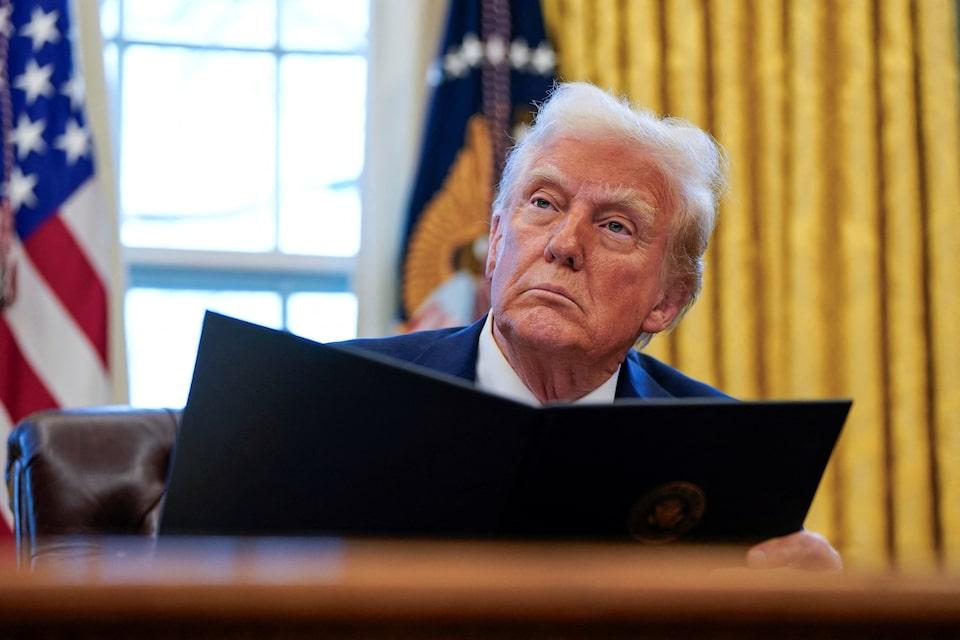
Trump warns BRICS against replacing U.S. dollar with tariffs threat BRICS discussions on new currency gain momentum post-Russia sanctions U.S. dollar remains primary reserve currency, study shows Jan 30 (Reuters) - President Donald Trump on Thursday warned off BRICS member countries from replacing the U.S. dollar as a reserve currency by repeating a 100%-tariffs threat he had made weeks after winning the November presidential elections. "We are going to require a commitment from these seemingly hostile Countries that they will neither create a new BRICS Currency, nor back any other Currency to replace the mighty U.S. Dollar or, they will face 100% Tariffs," Trump said on Truth Social in a statement nearly identical to one he posted on Nov. 30. At the time, Russia said that any U.S. attempt to compel countries to use the dollar would backfire. The BRICS grouping includes Brazil, Russia, India, China, and South Africa and a few other countries that joined in the past couple of year. The grouping does not have a common currency, but long-running discussions on the subject have gained some momentum after the West imposed sanctions on Russia over the war in Ukraine. "There is no chance that BRICS will replace the U.S. Dollar in International Trade, or anywhere else, and any Country that tries should say hello to Tariffs, and goodbye to America!," he said. Trump posted his warning to the BRICS as Canada and Mexico await for his decision to follow through on a pledge to impose 25% tariffs on the United States' North American trading partner from Feb. 1. Trump wants to use tariffs as a tool to get Mexico and Canada to help stem the flow of illegal drugs into the United States, particularly the deadly opioid fentanyl, and also migrants crossing illegally into the U.S. Dollar dominance — the outsized role of the U.S. dollar in the world economy — has strengthened of late, thanks to the robust U.S. economy, tighter monetary policy and heightened geopolitical risks, even as economic fragmentation has boosted a push by BRICS countries to shift away from the dollar into other currencies. A study by the Atlantic Council's GeoEconomics Center last year showed that the U.S. dollar remains the world's primary reserve currency, and neither the euro nor the so-called BRICS countries have been able to reduce global reliance on the dollar. The acronym BRIC, which did not initially include South Africa, was coined in 2001 by then Goldman Sachs chief economist Jim O'Neill in a research paper that underlined the growth potential of Brazil, Russia, India and China. The bloc was founded as an informal club in 2009 to provide a platform for its members to challenge a world order dominated by the United States and its Western allies. South Africa was the first beneficiary of an expansion of the bloc in 2010 when the grouping became known as BRICS. The group added Egypt, Ethiopia, Iran and the United Arab Emirates in 2023, and Indonesia became member earlier this month. Sign up here. https://www.reuters.com/markets/currencies/trump-repeats-tariffs-threat-dissuade-brics-nations-replacing-us-dollar-2025-01-31/
2025-01-31 00:03
Jan 30 (Reuters) - Colombia's Grupo Argos (ARG.CN) , opens new tab reported a 221% increase in net profit in 2024 to 2.53 trillion pesos ($609 million), the conglomerate announced in a statement on Thursday. Argos, with units in the energy, cement and airport operations, saw revenue last year grow 148% to total 2.53 trillion pesos. The company's earnings before interest, taxes, depreciation, and amortization soared 241% from a year earlier to reach 3.22 trillion pesos. Last year, Grupo Argos divested its stake in Grupo Nutresa (NCH.CN) , opens new tab, signed a spin-off agreement with Grupo SURA (SIS.CN) , opens new tab to simplify its organizational structure, and finalized the sale of a 31% stake in its subsidiary Cementos Argos (CCB.CN) , opens new tab to Summit Materials (SUM.N) , opens new tab. The conglomerate has called for an extraordinary shareholders' meeting on March 27 to seek approval for the spin-off with Grupo SURA. ($1 = 4,153.59 Colombian pesos) Sign up here. https://www.reuters.com/business/colombias-grupo-argos-more-than-triples-profit-2024-2025-01-30/
2025-01-30 23:59
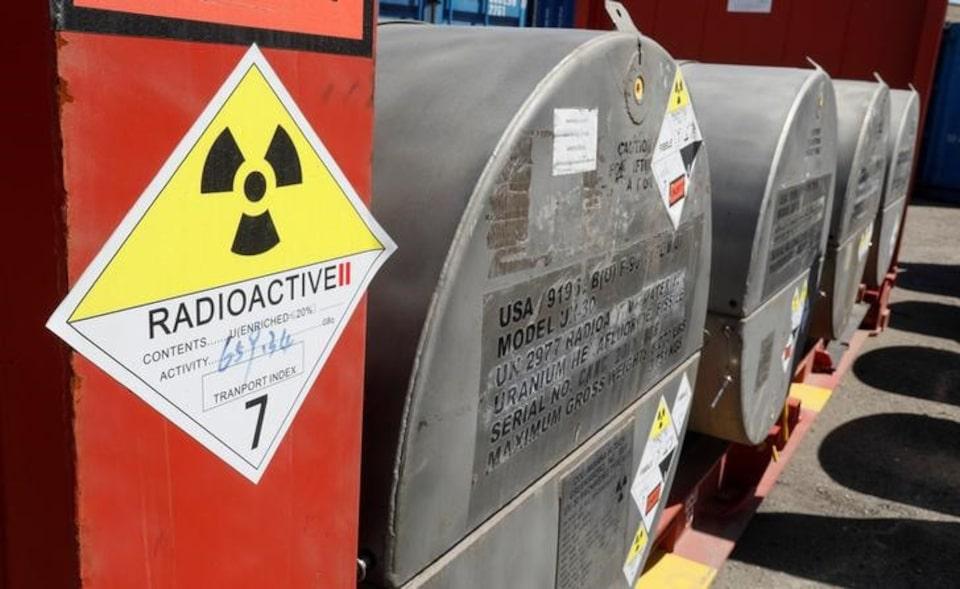
LONDON, Jan 30 (Reuters) - Is uranium a critical mineral? Not according to the U.S. Geological Survey (USGS), which dropped it from its critical minerals list in 2022 on the grounds it didn't qualify because it was a "fuel mineral" , opens new tab. U.S. President Donald Trump wants it to think again. One of Trump's many "Unleashing American Energy" , opens new tab directives requires the Secretary of the Interior to instruct the director of the USGS to "consider updating the survey's list of critical minerals, including for the potential of including uranium." Inclusion on the list would open up federal funds and fast-track permitting for domestic uranium projects. It seems curious that uranium has slipped through a legal gap in the Energy Act of 2020, which stipulates only a "non-fuel mineral" can be considered a critical mineral. Uranium ticks many of the criticality boxes. It's experiencing a step-change in demand, global supply is heavily concentrated and the United States is almost totally import dependent. The uranium price reflects these changing dynamics. Last year's frothy rally to a 16-year high of $106 per lb has dissipated. But at a current price of $71 per lb, uranium is still higher than at any point in the decade that followed the 2011 Fukushima disaster in Japan. NUCLEAR COMEBACK Fukushima caused many countries to rethink the role of nuclear in their energy mix but the threat of global warming has brought nuclear power in from the cold. The affirmation came at the COP28 summit in December 2023, when more than 20 countries launched the "Declaration to Triple Nuclear Power". It was official recognition , opens new tab of "the key role of nuclear energy in achieving global net-zero greenhouse gas emissions by 2050 and keeping the 1.5-degree goal within reach." Such green credentials likely don't count for much with the Trump administration but Republicans view nuclear energy as a core component of national security, meaning it enjoys bipartisan support in the United States, albeit for different reasons. Big tech is also enthusiastic as it searches for ever more power to feed its data centers. Microsoft (MSFT.O) , opens new tab signed a deal with Constellation Energy (CEG.O) , opens new tab in September to help resurrect a unit of the Three Mile Island nuclear plant in Pennsylvania. The re-embrace of nuclear power is a global trend. Generation from the world's fleet of nearly 420 reactors is on track to reach new heights in 2025, according to the International Energy Agency (IEA). Some 63 reactors are currently under construction, one of the highest levels since 1990, and the lifetimes of over 60 reactors will be extended, the IEA said. SUPPLY STRESS The resurgence of nuclear power means the world is going to need a lot more uranium and supply is already struggling to match demand. A decade of low prices has taken its toll, particularly in the United States, where production fell from almost five million lb in 2014 to just 21,000 lb in 2021, according to the IEA. Global uranium production is now heavily concentrated. Kazakhstan, Canada and Australia accounted for around two-thirds of global output in 2022, according to the World Nuclear Association. Indeed, one of the triggers for the January 2024 price spike was a warning from Kazakhstan's Kazatomprom (KZAP.KZ) , opens new tab, the world's largest producer, it might not achieve production targets due to a shortage of sulphuric acid. Market stress is compounded by political stress. The United States is trying to break its dependence on Russia for enriched uranium. Russian material accounted for 27% of the enriched uranium supplied to U.S. commercial reactors in 2023. The Joe Biden administration banned Russian imports, albeit with waivers through 2027. Russia has responded by imposing restrictions on shipments to the United States, also with waivers. Complicating things further is Trump's threat to impose tariffs on Canada, which is the largest supplier of uranium to the U.S. market. GOING CRITICAL The uranium market is recharged after a decade in hibernation. There was a lot of speculative froth in last year's price spike with both institutional investors such as Goldman Sachs and retail investment vehicles such as Sprott Physical Uranium Trust (U_u.TO) , opens new tab chasing the rally. But the uranium price remains historically high. The market is pricing in a supply shortfall relative to demand from a growing global fleet of nuclear reactors. The United States has plenty of potential new supply projects, many of them using leach technology, with which to fill the gap. How quickly they can be activated depends on the difference between a critical mineral and a "fuel mineral" that is increasingly critical. The opinions expressed here are those of the author, a columnist for Reuters Sign up here. https://www.reuters.com/markets/commodities/nuclear-revival-puts-uranium-back-critical-spotlight-andy-home-2025-01-30/