2026-02-09 17:38
CSA Copper mine faces infrastructure issues, says CEO Beyers Nel Harmony to update copper outlook in March New asset requires recapitalisation and strategic rethink - CEO CAPE TOWN, Feb 9 (Reuters) - South African miner Harmony Gold's (HARJ.J) , opens new tab recently acquired CSA Copper Mine in Australia requires a capital injection and a strategic rethink which could take two years, Chief Executive Beyers Nel said on Monday. Harmony, South Africa's top gold producer by volume, is diversifying into copper - a metal critical to electric vehicles and power grid infrastructure - as gold mining in South Africa becomes more costly and geologically challenging due to the depth of the country's mines. Sign up here. Harmony officially took over the CSA mine in New South Wales last October after acquiring it from Australian miner Mac Copper Ltd in a deal worth $1.03 billion. Under Mac Copper the mine was producing 40,000 metric tons a year of copper, but Harmony has yet to say whether it can maintain or increase that output. Nel said the operation requires significant work. "It could be up to two years or even more potentially to de-risk and de-bottleneck the mine," he told Reuters on the sidelines of the Africa Mining Indaba conference. "It is a mine that is constrained at the moment. It is a mine that requires a bit of a rethink and recapitalisation." The two core issues that need fixing are insufficient ventilation and limited mining flexibility due to inadequate insulation, he said. Harmony is reviewing short‑term projects to improve ventilation and enable deeper mining. The company plans to give the first formal production outlook for the mine when it reports half‑year results in March, covering the six months from January to June. "We're not expecting it to shoot the lights out. I mean, the mine is constrained," Nel said. Harmony also wholly owns the Eva copper project in Queensland, Australia, and is joint owner with Newmont (NEM.N) , opens new tab of Wafi-Golpu, a gold-copper project in Papua New Guinea, which is in the process of permitting for a special mining licence. "We haven't got a definitive timeline on when it would happen (issuing of licence), but we are confident that we are slowly progressing towards getting that outcome that we want," Nel said. https://www.reuters.com/world/africa/harmony-gold-says-newly-acquired-australian-copper-mine-requires-two-year-revamp-2026-02-09/

2026-02-09 16:59
Proposals part of EU's 20th sanctions package over Ukraine war Would be first time EU targets ports in third countries BRUSSELS, Feb 9 (Reuters) - The European Union has proposed extending its sanctions against Russia to include ports in Georgia and Indonesia that handle Russian oil, the first time the bloc would target ports in third countries, a proposal document showed on Monday. The proposal, reviewed by Reuters, would add Kulevi in Georgia and Karimun in Indonesia to the sanctions list, barring EU companies and individuals from conducting transactions with either port. Sign up here. The measures form part of the EU's 20th sanctions package over Russia’s war in Ukraine. The package was jointly drafted by the EU's diplomatic service, the EEAS, and the European Commission, and was presented to EU countries on Monday. EU sanctions require unanimity in order to be adopted into law. On Friday, Commission President Ursula von der Leyen said the package included sector-wide restrictions, and a shift from the Group of Seven nations' price cap to a full maritime-services ban on Russian crude. The package also adds new import bans on metals such as nickel bars, iron ores and concentrates, unrefined and processed copper, and various scrap metals including aluminium. It would also prohibit imports of salt, ammonia, pebbles, silicon and furskins. The proposal includes the use of an anti-circumvention tool against a third country for the first time. The new restrictions would ban sales of metal cutting machines and communications machines for voice, image and data transmissions like modems and routers to Kyrgyzstan. The EU also proposed adding two Kyrgyz banks - Keremet and OJSC Capital Bank of Central Asia - to its sanctions list for providing crypto asset services to Russia, as well as banks in Laos and Tajikistan, while removing two Chinese lenders. If approved, the listed banks would be barred from transactions with EU individuals and companies. To its sanctions framework that includes asset freezes and travel bans, the EEAS proposed adding 30 individuals and 64 companies. These include Bashneft, a listed subsidiary of Russia's oil behemoth Rosneft, as well as eight Russian refineries, among them two major Rosneft-controlled plants - Tuapse and Syzran. The proposal stops short of listing Rosneft or Lukoil, already hit by U.S. sanctions. https://www.reuters.com/world/eu-proposes-add-two-third-country-oil-ports-new-sanctions-package-2026-02-09/
2026-02-09 16:50
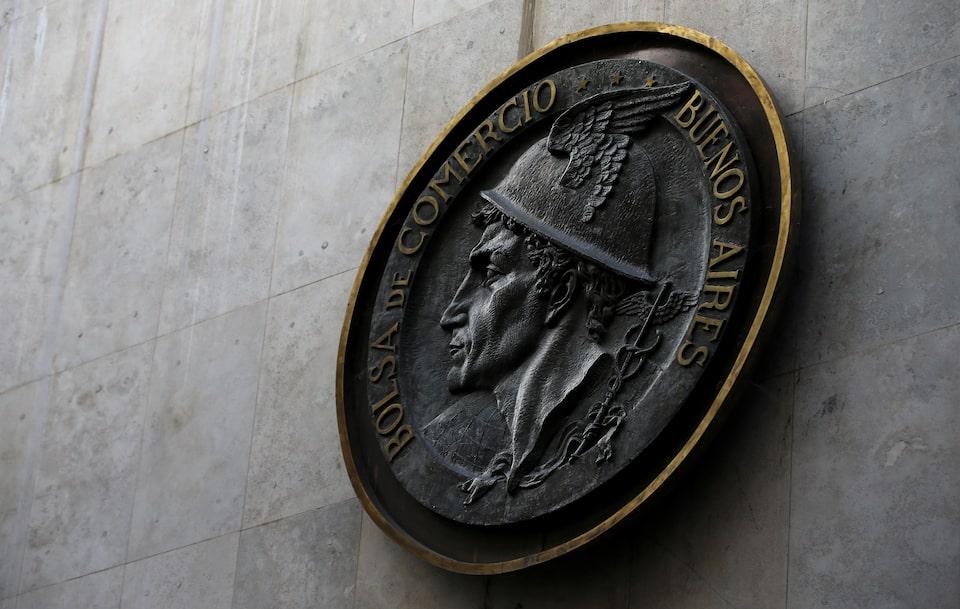
BUENOS AIRES, Feb 9 (Reuters) - Argentine financial markets traded cautiously on Monday as political developments increasingly weighed on short- and medium-term investment decisions. Investors are closely watching this week’s Senate debate over a labor reform bill promoted by libertarian President Javier Milei, as well as new regulations aimed at encouraging undeclared U.S. dollars held outside the financial system —commonly known as “mattress dollars” — to enter the formal economy. Sign up here. The benchmark S&P Merval stock index dipped 2% after an initial gain, following a plunge of 6.95% last week amid a global environment unfavorable to risk assets. “While sovereign bonds and regional equity markets got off to a strong start this year, the Merval is down about 3% in dollar terms so far in 2026,” said Roberto Geretto of brokerage firm Adcap. Uneven economic recovery across sectors and delays in implementing reforms help explain the underperformance, he added. Sovereign bonds traded in the local over-the-counter market were slightly higher in early dealings, according to traders. On Monday, the government issued regulations establishing a new framework to bring undeclared "mattress dollars" into the financial system without reviewing past assets, in an effort to attract part of an estimated $170 billion that Argentines hold outside the banking system. “The new framework is not a tax amnesty, but it establishes a scheme under which annual transactions below 100 million pesos can be carried out with greater freedom,” Max Capital said in a note. “In principle, the government is focusing on facilitating the use of undeclared dollars, which could be incorporated into the formal economy up to certain thresholds—around $65,000—without requiring proof of origin,” the firm added. In the foreign exchange market, the peso remained steady at 1,432 per dollar, while the central bank continued to buy dollars to bolster international reserves. The central bank purchased $317 million in foreign currency last week, bringing total net purchases so far in 2026 to $1.476 billion. https://www.reuters.com/world/americas/argentine-markets-swayed-by-politics-new-fiscal-regularization-scheme-2026-02-09/
2026-02-09 16:43
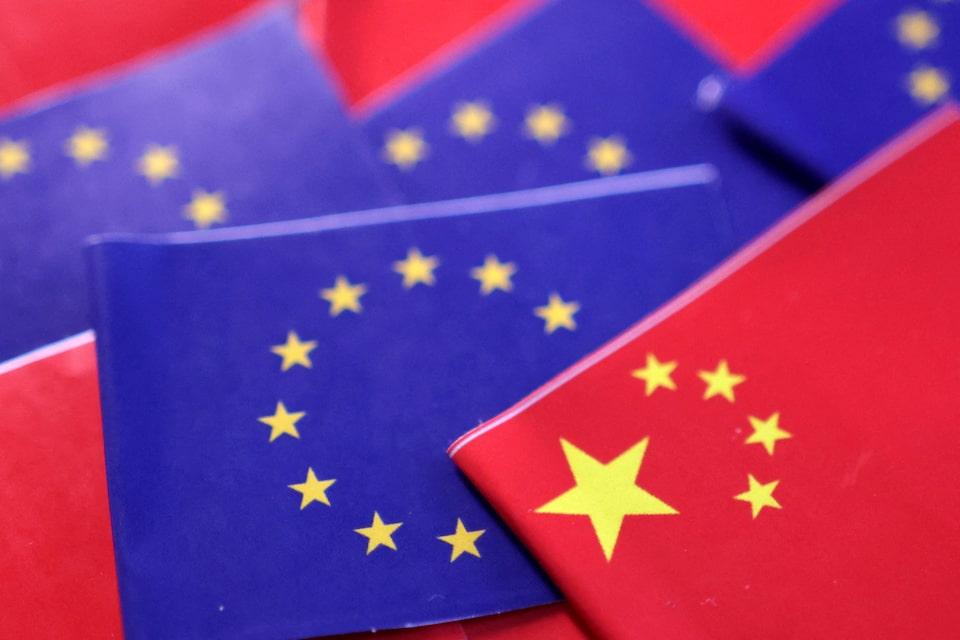
Report calls for 30% tariffs or 20–30% euro depreciation Warns rising Chinese competition threatens EU industrial core Current EU trade-defence tools fall short of the challenge PARIS, Feb 9 (Reuters) - The European Union should consider either an unprecedented 30% across-the-board tariff on Chinese goods or a 30% depreciation of the euro against the renminbi to counter a flood of cheap imports, a French government strategy report said on Monday. Europe is facing a surge in Chinese competitive pressure, with Chinese firms gaining market share, including in industries once dominated by European countries, the report said, while acknowledging that its proposals would be hard to implement. Sign up here. It was prepared by the Haut-Commissariat à la Stratégie et au Plan, a French government advisory body that reports directly to the prime minister and guides long-term public policy. The analysis found that sectors central to Europe's industrial base, including cars, machine tools, chemicals and batteries, are now under direct threat, with a quarter of French exports and up to two-thirds of German production exposed to Chinese competition. The surge is being driven by higher-quality Chinese products and sustained cost advantages of 30% to 40%, according to consultations with European manufacturers. Combined with an "undervalued" Chinese currency, Beijing's industrial advance risks pushing Europe into a cycle of "destructive destruction" if no action is taken, the head of the institution, Clément Beaune, said. He said existing EU trade-defence tools - which have often included lengthy anti-dumping investigations - were now insufficient and called for a "massive and vital" policy shift. Beaune acknowledged that engineering a euro depreciation - or a renminbi appreciation - would be more difficult than imposing tariffs, though tariffs would also be far from simple and require qualified majority backing among EU states. French Finance Minister Roland Lescure said last week he could put currency-market volatility on the agenda of France's presidency of the Group of Seven economic powers this year if needed. France aims to use its year-long G7 presidency to focus on global macroeconomic imbalances Lescure described as driven by credit-fuelled over-consumption in the U.S., under-investment in Europe and export-led growth in China. https://www.reuters.com/world/china/french-advisers-urges-eu-tariffs-or-weaker-euro-counter-china-2026-02-09/
2026-02-09 16:39
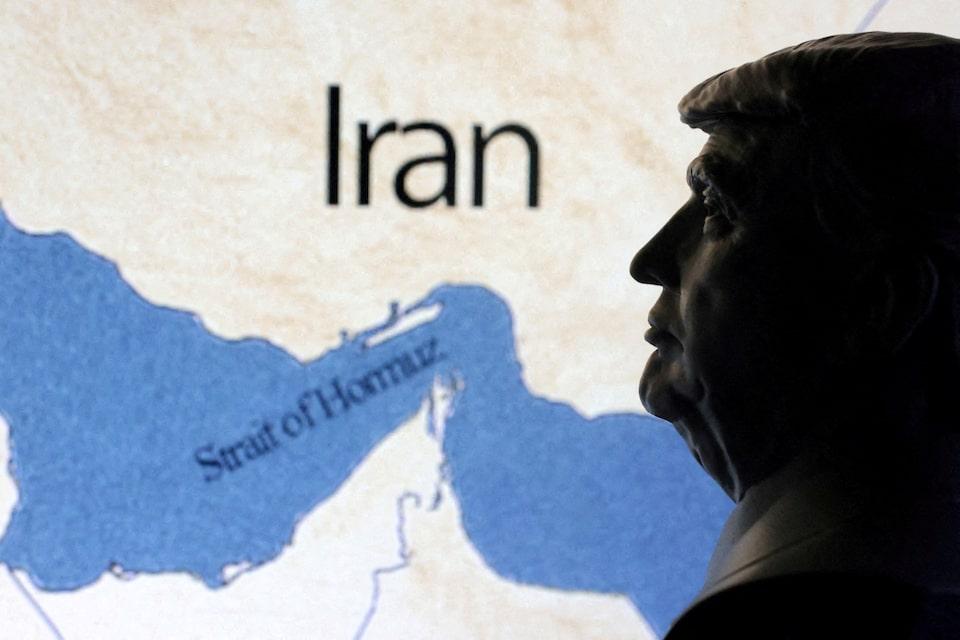
Feb 9 (Reuters) - The United States issued fresh guidance on Monday to commercial vessels transiting the Strait of Hormuz, a key shipping lane for Middle East oil supplies, as tensions simmered between Washington and Tehran over Iran’s nuclear program. Iran has in the past threatened to close down the Strait of Hormuz, a portion of which lies within its territorial waters, and has at times seized commercial ships and oil tankers moving through the area alleging smuggling. Sign up here. The U.S. Department of Transportation’s Maritime Administration advised U.S.-flagged commercial vessels to stay as far from Iran’s territorial waters as possible and to verbally decline Iranian forces permission to board if asked, according to the guidance , opens new tab. "It is recommended that U.S.-flagged commercial vessels transiting these waters remain as far as possible from Iran’s territorial sea without compromising navigational safety," according to the guidance posted on its web site. It also said crews should not forcibly resist Iranian forces if they board. "If Iranian forces board a U.S.-flagged commercial vessel, the crew should not forcibly resist the boarding party," it said. Iran's top diplomat said on Friday that nuclear talks with the U.S. mediated by Oman were off to a good start and set to continue, in remarks that could help allay concern that failure to reach a deal might nudge the Middle East closer to war. While both sides have indicated readiness to revive diplomacy over Tehran's long-running nuclear dispute with the West, Washington has said it also wants the talks to cover Iran's ballistic missiles, support for armed groups around the region, and human rights. President Donald Trump ratcheted up the pressure on Iran on Friday with an executive order imposing a 25% tariff on imports from any country that "directly or indirectly" purchases goods from Iran, following through on a threat he made last month. https://www.reuters.com/world/middle-east/us-issues-fresh-guidance-vessels-transiting-strait-hormuz-iran-tensions-simmer-2026-02-09/
2026-02-09 16:31
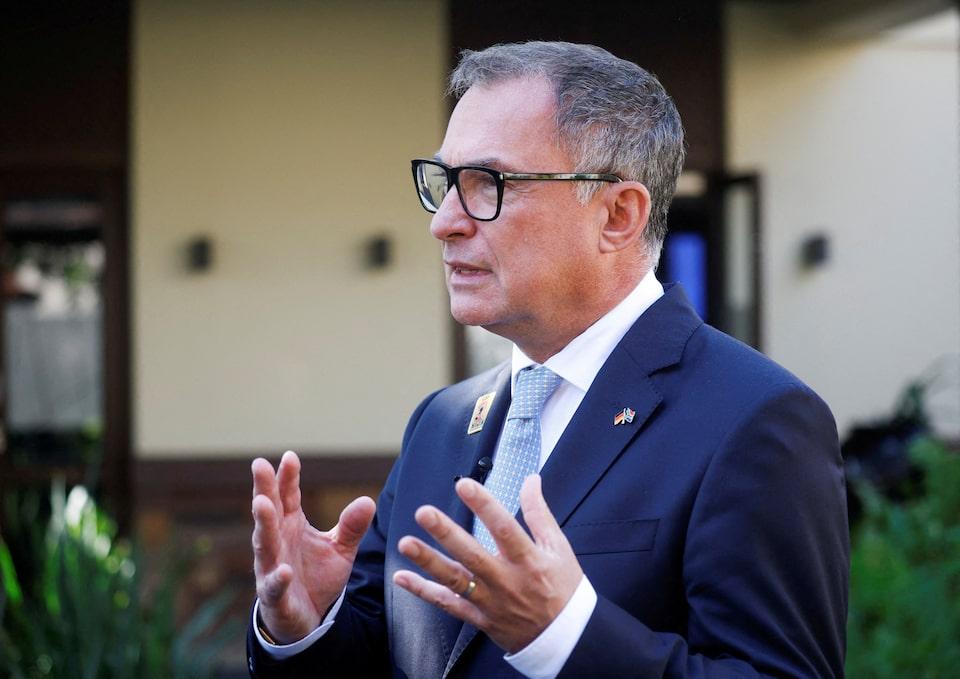
FRANKFURT, Feb 9 (Reuters) - The European Central Bank's policy rate is at the right level as inflation is likely to settle at its 2% goal after a short-lived dip, ECB policymaker Joachim Nagel said on Monday. The ECB unanimously kept its main interest rate unchanged at 2% last week, but some policymakers remain concerned that price growth, which eased to 1.7% last month, might weaken too much, forcing the euro zone's central bank to react. Sign up here. Bundesbank President Nagel said the ECB would only act if its medium-term inflation expectations deviated "sustainably and noticeably" from target, but this did not appear to be the case. "Many factors suggest that the current interest rate level is appropriate," he said. "First, the (inflation) shortfall is short-term and small and, in the medium term, inflation is at our target." He added that long-term inflation expectations were "firmly anchored", and measures of core prices, which strip out volatile items such as energy and food, also supported this view, as did an update of the ECB's December projections. Data published last week showed much of January's drop in inflation was due to lower energy costs although services also saw a moderation in price increases. "Small, temporary deviations – especially in volatile components such as energy prices – do not ... require a change of course if inflation expectations are firmly established," Nagel said. He said this applied both when "the inflation target might be undershot" and when inflation risked running too high. https://www.reuters.com/business/finance/ecbs-nagel-says-rates-are-right-despite-inflation-dip-2026-02-09/