2026-01-06 11:09
LONDON, Jan 6 (Reuters) - What matters in U.S. and global markets today Global stocks’ march to ever-higher peaks undefined is still going strong, although both Wall Street futures and the dollar look a tad groggy this morning. Perhaps there's a bit of a delayed hangover kicking in this morning after all the new year’s excitement. Sign up here. I’ll get into all the market news below. But first check out the latest episode of the Morning Bid podcast , opens new tab and remember to subscribe to hear top Reuters journalists discuss the biggest news in markets and finance seven days a week. Today's Market Minute SWIFTLY MOVING ON Wall Street is expecting a nice quiet start. There is little on the U.S. data calendar other than the normally non-market moving 'final' PMIs for December, although traders only have to wait until Friday for the first nonfarm payrolls of the year and whether they need to adjust their thinking on how many interest rate cuts the Federal Reserve might deliver this year. Otherwise, markets will continue to watch Donald Trump's evolving plans to “run” Venezuela - and try and gauge just how much that could end up costing (or earning) the U.S. A little over 72 hours since the removal of Venezuelan President Nicolas Maduro, few marks have been left on the currency market. Monday’s initial bolt for dollar safety has proved very short-lived, as signs of dialogue between the White House and Maduro’s successor, Delcy Rodríguez, suggest further U.S. military action is unlikely for now. December ISM manufacturing index data also played a role. It dropped below 48 on Monday, a fourth consecutive monthly decline and to the lowest level since October 2024. The backlog of orders also continued to shrink, suggesting a risk of inventory build-up and a potential hit to employment in the months ahead - Fed official Neel Kashkari also happened to point out. Back to today and oil is ticking up again too. All the talk of a glut of Venezuelan crude driving down prices looks to have been clipped by the reality that it will take years - and billions of dollars - that the U.S. oil majors might not jump at forking out. Gold and silver have continued to nudge up, however, as has Wall Street's so-called fear gauge the VIX , although that really is from rock-bottom levels. As for Venezuela's Maduro, his situation appears pretty clear. He is expected to be convicted by the Southern District of New York on at least one of the four charges - narco-terrorism, cocaine importation conspiracy and possession of machine guns and destructive devices - levied against him, and will likely spend the rest of his life in jail. Chart of the day One of the things that has been most striking about Maduro's shock weekend capture is that barring Venezuela's default-stricken government bonds and some of the share prices of the oil majors, it barely seems to have registered for broader global markets. The dollar, which would normally expect a safe-haven bid, is back on the ropes this morning, crude prices are almost exactly where they were this time last week and with MSCI's main world stocks benchmark (.MIWD00000PUS) , opens new tab already at its second record high of the year, volatility is threatening to go extinct. Today's events to watch Final S&P U.S. PMIs for December Richmond Federal Reserve President Thomas Barkin speaks U.S. Federal Reserve Governor Stephen Miran speaks Opinions expressed are those of the author. They do not reflect the views of Reuters News, which, under the Trust Principles , opens new tab, is committed to integrity, independence, and freedom from bias. Want to receive the Morning Bid in your inbox every weekday morning? Sign up for the newsletter here. https://www.reuters.com/business/finance/global-markets-view-usa-2026-01-06/

2026-01-06 10:47
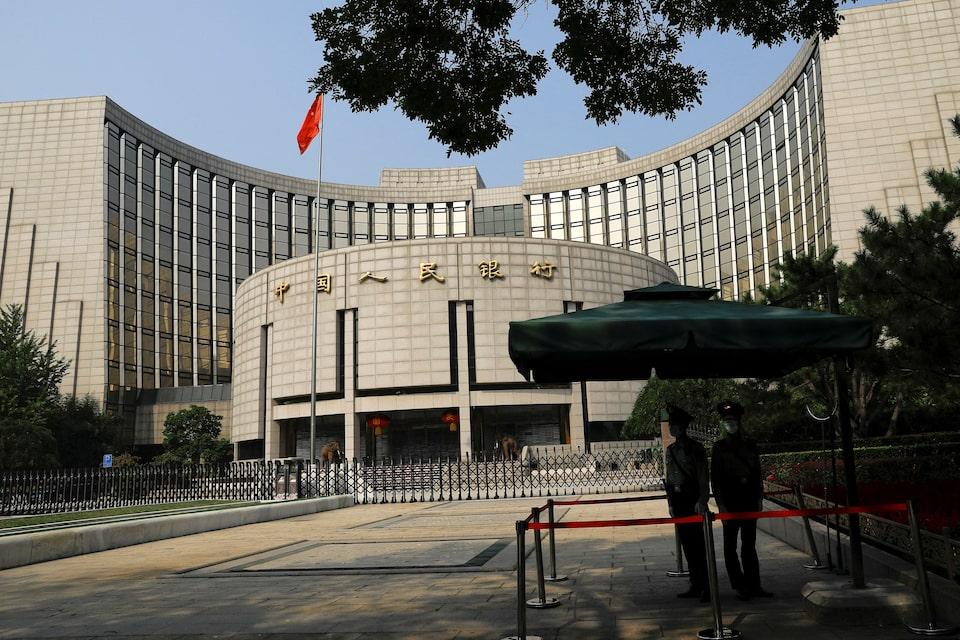
BEIJING, Jan 6 (Reuters) - China's central bank said on Tuesday it will cut the reserve requirement ratio and interest rates in 2026 to keep liquidity ample, and continue to implement appropriately loose monetary policy. The central bank said it will intensify counter-cyclical and cross-cyclical adjustments, boost domestic demand, improve supply, and defuse financial risks to support steady growth, giving the new five‑year plan a solid start. Sign up here. The central bank will "make flexible and efficient use of multiple monetary policy tools such as reserve requirement ratio cuts and interest‑rate cuts, maintain ample liquidity, keep overall financing conditions relatively accommodative, and guide reasonable growth in total credit as well as balanced loan issuance,” it said in a statement on its website, following a 2026 work meeting. The central bank’s comment echoed a pledge made by top leaders at a key meeting in December. In December, the central bank kept benchmark loan prime rates (LPRs) unchanged for the seventh consecutive month, in line with market expectations. It would also keep yuan exchange rate basically stable "at a reasonable and balanced level," the central bank said. https://www.reuters.com/world/asia-pacific/chinas-central-bank-pledges-cut-rrr-interest-rate-2026-2026-01-06/
2026-01-06 10:42
LONDON, Jan 6 (Reuters) - Sterling hit its highest in nearly four months against both the dollar and euro on Tuesday, buoyed by improved global investor sentiment, easing worries about Britain's fiscal position and hints of Britain pursuing a closer relationship with Europe. The pound hit its highest since mid-September on the dollar, and was last flat on the day at $1.3536, while the euro dropped as low as 86.44 pence again, its lowest in nearly four months, extending the previous day's 0.57% fall. , Sign up here. The move in euro/sterling was particularly notable as British and euro zone interest rates have largely moved in unison - relative changes in interest rates are often major factors in currency moves. Instead, analysts pointed to a melange of factors behind sterling's strength. Lee Hardman, senior currency analyst at MUFG, noted the pound typically outperforms when investor sentiment is positive - world stocks are at record highs - and that as the pound had now recovered all its losses in the run-up to last year's budget, it seemed to be benefiting "from the reduction in UK fiscal and political risks in the near-term." British finance minister Rachel Reeves, in November, raised taxes to a post-war high, giving her greater room to meet her deficit-reduction targets. On top of that, currency volatility is fairly low, making carry trades attractive - these see investors borrow in low-yielding currencies to buy higher-yielding ones, and British rates remain higher than many peers. As well, Hardman said, "the stronger pound could have been encouraged by recent comments from government officials indicating a desire to return to a closer trading relationship with the EU." Britain should seek closer alignment with the European single market on an "issue-by-issue" basis when it is in the national interest, Prime Minister Keir Starmer said on Sunday. Also in the mix, but having little effect on the pound, was data showing Britain's dominant services sector ended 2025 on a weaker footing than previously thought. https://www.reuters.com/world/uk/sterling-highest-since-mid-september-dollar-euro-2026-01-06/
2026-01-06 07:32
India's biggest buyer of Russian oil cuts those imports Trump warns India to stop buying Russian oil or face higher tariffs India's imports of Russian oil expected to drop below 1 mln bpd in January NEW DELHI, Jan 6 (Reuters) - Reliance Industries (RELI.NS) , opens new tab said on Tuesday it is not expecting any Russian crude oil deliveries in January, a move that could sharply cut India's Russian oil imports during the month to the lowest in years. The statement by Reliance, operator of the world's largest refining complex and the biggest Indian buyer of Russian crude last year, came after U.S. President Donald Trump on Sunday warned that the U.S. could further raise import tariffs on India over its Russian oil purchases. Sign up here. "Reliance Industries’s Jamnagar refinery has not received any cargo of Russian oil at its refinery in the past three weeks approx. and is not expecting any Russian crude oil deliveries in January," it said in a statement posted on X. The statement denied a media report from last week that said three vessels laden with Russian oil were heading toward Reliance's Jamnagar refinery. India emerged as the biggest buyer of discounted Russian seaborne crude following the start of the Ukraine war in 2022. The purchases have fuelled a backlash from Western nations, which have targeted Russia's energy sector with sanctions, arguing that oil revenues help fund Moscow's war effort. The U.S. doubled import tariffs on Indian goods to 50% last year as punishment for its heavy purchasing of Russian oil. The two countries are currently negotiating a potential trade deal in talks that have been fraught at times. Indian authorities asked refiners for weekly disclosures of Russian and U.S. oil purchases, people familiar with the matter said, Reuters reported last week. The people said India's imports of Russian crude are likely to dip below 1 million barrels per day as New Delhi seeks to clinch a trade deal with Washington. Stricter U.S. and EU sanctions have slowed Russian oil flows to India, which fell to a three-year low of about 1.2 million bpd in December, according to sources and analytics firm Kpler. That marks a roughly 40% drop from a June peak of around 2 million bpd. With Reliance halting buying, deliveries of Russian oil to India in January are likely to be limited to Russia-backed Nayara Energy and state-run refiners Indian Oil Corp (IOC.NS) , opens new tab and Bharat Petroleum Corp (BPCL.NS) , opens new tab, according to preliminary data from LSEG. IOC, BPCL and Nayara did not immediately respond to emails seeking comment. Nayara Energy, which operates a 400,000-bpd refinery, is likely to be the main Indian buyer of Russian crude as its supplies are otherwise constrained by EU sanctions after other suppliers backed out, government sources have told Reuters. https://www.reuters.com/business/energy/indias-reliance-says-it-is-not-expecting-any-russian-crude-oil-deliveries-2026-01-06/
2026-01-06 07:10
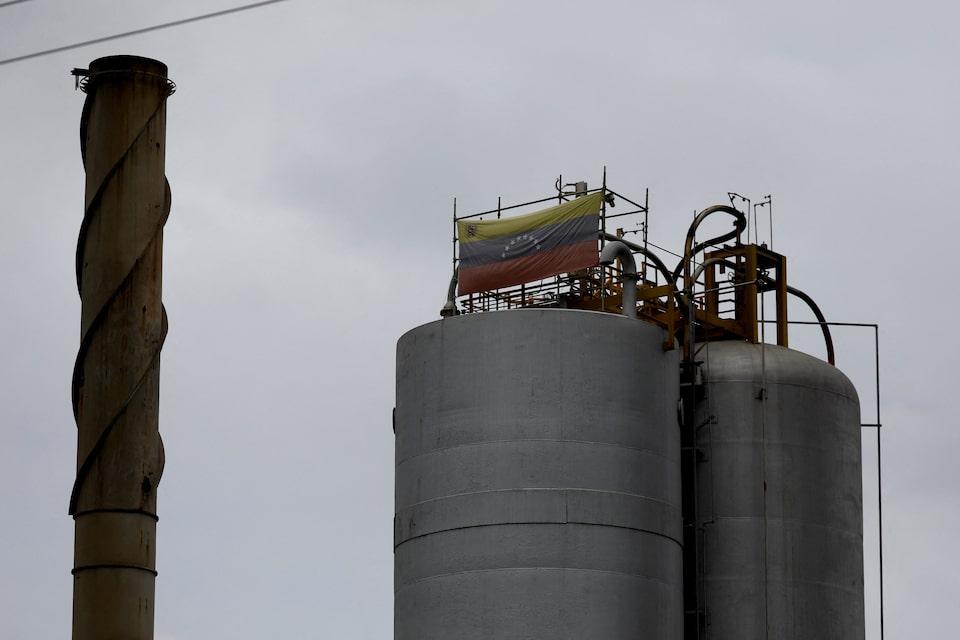
LONDON, Jan 6 (Reuters) - U.S. President Donald Trump is giving U.S. energy companies the opportunity to revive Venezuela’s massive, derelict oil industry. It’s an offer they may want to refuse. After the U.S. military’s ouster of Venezuelan President Nicolas Maduro at the weekend, representatives of the Trump administration plan to meet with oil executives later this week to discuss boosting Venezuelan oil production, Reuters reported on Monday. Sign up here. Tapping Venezuela's vast oil reserves - the world's largest at over 300 billion barrels, or roughly one-fifth of the global stock – may be a tempting prospect for Exxon Mobil (XOM.N) , opens new tab, Chevron (CVX.N) , opens new tab and ConocoPhillips (COP.N) , opens new tab. The potential to increase Venezuela's oil production is enormous. Following years of mismanagement and U.S. sanctions, the Latin American country’s production has slumped from a record of over 3.5 million barrels per day (bpd) in the 1970s, when it made up around 8% of global supplies, to below 1 million bpd last year, less than 1% of today's supply. An opportunity approaching this scale has only been seen on a handful of occasions in recent decades, including following the collapse of the Soviet Union in the early 1990s, when Western oil majors scrambled to acquire cheap oil and gas assets, and after the fall of Saddam Hussein in Iraq the following decade when energy companies did much the same. It could be particularly appealing now, as company boards have been green-lighting billions in investment to locate new resources around the world in a rush to increase market share. But Trump’s proposal is far from a slam-dunk. BELOW-GROUND RISKS To start, most of Venezuela’s oil reserves, located in the Orinoco belt, are classified as heavy and extra‑heavy. These highly viscous grades must be blended with diluent and upgraded into lighter oil to be extracted, transported and processed. All this raises the production costs. The energy-intensive upgrading process also increases the carbon footprint of these heavy grades, which could push up costs further if more governments start taxing emissions or raising existing levies. Breakeven costs for key grades in the Orinoco belt already average more than $80 a barrel, according to estimates by consultancy Wood Mackenzie. That places Venezuelan oil at the higher end of the global cost scale for new production. By comparison, heavy oil produced in Canada has an average breakeven cost of around $55 a barrel. Exxon’s breakeven target for its global oil production by 2030 is $30 a barrel, driven by low-cost fields in Guyana and the U.S. Permian shale basin. Chevron has a similar target, while Conoco has a long-term plan to generate free cash flow even if oil prices fall to $35 a barrel. Oil , currently trades at around $60. While energy boards have increasingly supported greater exploration in recent years, they are insisting that this be done with spending discipline in mind in the face of rising global supplies and uncertainty over the energy transition. Convincing U.S. majors to invest billions to extract pricey Venezuelan barrels may therefore be a rather hard sell. "The opportunity must be compelling enough to offset the substantial political risk that will persist in the years ahead," according to Carlos Bellorin, an analyst at consultancy Welligence Energy. As it stands, Venezuela doesn’t seem to fit the bill. Of course, that could change if a new industry-friendly Venezuelan government were to make changes to taxation and royalty policies, greatly reducing the average cost. But that remains a big “if.” ABOVE-GROUND RISKS Oil companies are no strangers to political risk, of course. Over the past few decades, they have often had to navigate abrupt regime change, social unrest and conflicts in hotspots such as Libya, Iraq, Angola and Venezuela, just to name a few. But even by these standards, the current situation in Venezuela – with its highly uncertain power transition – looks like more trouble than it’s worth. Until Caracas has a new government capable of gaining the confidence of international investors and banks, oil companies will be reluctant to make any major commitments. Buying assets for pennies on the dollar may be tempting, but it’s a lot less attractive if you can’t trust the contract. What's more, U.S. majors have in recent decades gone to great lengths to distance themselves from American foreign policy, emphasizing their independence to convince investors that they are focused solely on shareholder returns. They will thus be loath to be seen as doing the U.S. president’s bidding. Trump claimed on Sunday that he had spoken to all of the major U.S. energy firms about his plans for investing in Venezuela "before and after" Maduro’s capture, a claim company executives refuted. Contradicting Trump also carries risks for companies, however, potentially very large ones at a time when government involvement in the economy is increasing rapidly. The U.S. oil giants will thus likely acquiesce to the White House’s plan, at least in part, by signalling a willingness to explore opportunities in Venezuela. But will they agree to pour billions of dollars into a country long considered the poster child for corruption and economic mismanagement? That might be hard to swallow. Want to receive my column in your inbox every Monday and Thursday, along with additional energy insights and links to trending stories? Sign up for my Power Up newsletter here. Enjoying this column? Check out Reuters Open Interest (ROI), , opens new tabyour essential new source for global financial commentary. ROI delivers thought-provoking, data-driven analysis. Markets are moving faster than ever. ROI , opens new tab can help you keep up. Follow ROI on LinkedIn , opens new tab and X. , opens new tab https://www.reuters.com/markets/commodities/trump-offers-us-oil-companies-poisoned-chalice-venezuela-2026-01-06/
2026-01-06 06:22
Hundreds of flights cancelled in the Netherlands Five killed in accidents in France on icy roads UK warns winter hazards will continue this week More disruption expected Wednesday AMSTERDAM, Jan 6 (Reuters) - More flights will be cancelled, trains will run late and roads will be blocked by snow across Europe in coming days as a cold snap is forecast to worsen, bringing even more heavy snowfall after several days of travel disruption. Authorities in the Netherlands told people to plan to stay at home if at all possible on Wednesday, with a fresh blizzard expected to arrive overnight. Sign up here. French Transportation Minister Philippe Tabarot said on Tuesday that airlines had already been ordered to cancel at least 40% of flights at Paris' main Charles de Gaulle airport the following morning, and a quarter of flights at smaller Orly. Public transportation in the Paris region will probably also be disrupted by the snow, he added. As snowfalls are expected again, Dutch airline KLM (AIRF.PA) , opens new tab said it had protectively cancelled 600 flights on Wednesday to avoid last-minute cancellations that could leave travellers stranded at Schiphol airport, one of Europe's main hubs. KLM had already cancelled 400 flights at Schiphol on Tuesday and told travellers whose flights had been called off to stay away from the airport to prevent overcrowding. "We haven't experienced such extreme weather conditions in years," spokesperson Anoesjka Aspeslagh said. A BIRTHDAY IN TRANSIT Stranded at Schiphol, Simiao Sun said she feared she would spend her 40th birthday in transit. She had been told she would have to wait three days for a rescheduled flight to Britain where she lives. "My child would miss school and we would both miss work, so I'm queuing here...hoping to get a slightly earlier flight." KLM said it was offering alternative flights where possible and doing everything to help travellers, but was "overwhelmed with inquiries". On top of that, all domestic rail services in the Netherlands were suspended early on Tuesday after an IT outage hit the rail network. Trains began running in parts of the country after 0900 GMT, but problems persisted around Amsterdam, with high-speed Eurostar services from Amsterdam to Paris either cancelled or late. Roads in France were gradually clearing on Tuesday after snow caused severe accidents all over the country, killing at least five people, according to BFMTV news station. Traffic in the Paris area hit a record 1,000 kilometres of jams on Monday evening. SNOW FALLS OVER LARGE PARTS OF EUROPE In Germany, temperatures fell well below minus 10 degrees Celsius (14 degrees Fahrenheit) in the south and east early on Tuesday. Much of the country was covered in snow. In Britain, the Meteorological Office said winter weather hazards could continue throughout the week for most of the country. Temperatures overnight to Tuesday had fallen as low as -12.5 degrees Celsius in Marham, Norfolk, in eastern England, marking the coldest night of the winter so far. Heavy snow and rain have also caused havoc across the Western Balkans, closing roads, cutting power and causing rivers to flood. A woman died in the Bosnian capital Sarajevo on Monday after a tree overburdened with wet snow fell on her. https://www.reuters.com/business/environment/dutch-train-traffic-halted-due-snow-ice-2026-01-06/