2025-01-30 14:37
Euro zone, Canada, Sweden cut rates in Jan Fed holds steady, says no rush for more easing Australia, Norway move closer to first cut Japan hikes, with likely more to come LONDON, Jan 30 (Reuters) - The first central bank meetings of 2025 suggest it will be a year in which policymakers go their own way as economic paths diverge, as the United States holds interest rates steady, the euro zone cuts, and outlier Japan is firmly in hiking mode. That's a change from last year where the global consensus was for cautious rate cuts, with seven of the world's 10 major, developed-market central banks easing policy. Here's a look at where they currently stand: 1/ SWITZERLAND The Swiss National Bank has been at the forefront of monetary easing and, in 2024, took its benchmark rate from 1.75% down to 0.5%. With inflation well within the SNB's 0-2% target range, and the central bank concerned about a strong franc, investors see a further 25 basis points cut at its March meeting as likely. Chairman Martin Schlegel has not ruled out taking rates back into negative territory. 2/ CANADA The Bank of Canada on Wednesday trimmed its key policy rate by 25 bps to 3%, cut growth forecasts and warned that a tariff war triggered by the United States could cause major economic damage. U.S. President Donald Trump has promised to impose a 25% tariff on all imports from Canada on Saturday. BoC chief Tiff Macklem said while monetary policy "can't offset the effects of higher tariffs ... It can sort of smooth that adjustment." Market pricing indicates at least one more rate cut this cycle, though more likely in April after a pause in March. 3/ SWEDEN Sweden's Riksbank also cut rates by 25 bps on Wednesday, to 2.25%, to boost sluggish growth. Governor Erik Thedeen said the Riksbank is probably finished with rate cuts, but the outlook is uncertain and it stands ready to act if the outlook for inflation or the economy changes. 4/ NEW ZEALAND The Reserve Bank of New Zealand has cut the official cash rate by 125 bps since August as inflation eased but economic activity also contracted, pushing New Zealand into recession in the third quarter. It has indicated it could cut by a further 50 bps when it meets next month, though its chief economist said on Wednesday the RBNZ needs to "feel our way as the (official cash rate) gets closer to neutral." 5/ EURO ZONE The European Central Bank cut interest rates by 25 bps as expected on Thursday and kept more easing on the table, sticking to its view that euro area inflation is increasingly under control. That is the fifth ECB rate cut since June 2024, and traders are fully pricing three further 25 bps cuts this year. 6/ UNITED STATES The Federal Reserve held interest rates steady on Wednesday and Chair Jerome Powell said there would be no rush to cut them again until inflation and jobs data make it appropriate. This was the Fed's first meeting since U.S. President Donald Trump returned to office. Powell said officials are "waiting to see what policies are enacted" before judging their effects on inflation, employment and overall economic activity. 7/ BRITAIN The Bank of England has been more cautious than some of its peers, but is expected to cut rates by 25 bps next week, its third such move this cycle. The BoE has to manage conflicting signals from stubborn inflation, particularly services, on the one hand and a slowing economy on the other. Traders expect two further cuts this year, roughly once a quarter, in addition to a move next week. 8/ NORWAY Norway's central bank has yet to cut rates this cycle, and held them at a 17-year high of 4.5% last week. Still, Norges Bank plans to cut rates three times this year, according to its latest forecasts, expectations with which current market pricing is broadly aligned. 9/ AUSTRALIA The Reserve Bank of Australia is also getting closer to its first rate cut this cycle after Wednesday data showed consumer inflation cooled to 2.4% in the December quarter, its slowest in almost four years. Markets now see around an 80% chance of a 25 bps cut in February, and are fully pricing a total of three such moves across this year. 10/ JAPAN The Bank of Japan, the only G10 central bank in a hiking cycle, last week raised rates to 0.5%, their highest since the 2008 global financial crisis. It also revised up its inflation forecasts, underscoring its confidence that rising wages will keep inflation stable around its 2% target. A former policymaker said on Tuesday it will likely raise rates again in June or July, and seek to lift rates to at least 1.5% in the next two years. Sign up here. https://www.reuters.com/markets/rates-bonds/global-markets-central-banks-graphic-2025-01-30/

2025-01-30 13:41
Jan 30 (Reuters) - Mexico's economy shrank more than expected in the fourth quarter on a sequential basis, preliminary data from national statistics agency INEGI showed on Thursday, marking its first quarter-on-quarter contraction in over three years. The negative figure comes as Mexico braces for potential U.S. import tariffs that could further hit its economy, already facing the effects of tight monetary conditions, and ahead of a key interest rate decision by the central bank next week. INEGI said Latin America's second-largest economy was down 0.6% in the fourth quarter from the previous three-month period, slipping into negative territory for the first time since the third quarter of 2021. It also undershot the 0.2% decline forecast in a Reuters poll of economists. The economy was dragged down by an 8.9% quarter-on-quarter decline in the primary sector, which includes farming, fishing and mining, INEGI said. Secondary or manufacturing activities were down 1.2%. "This is a terrible report, consistent with the overall story of slowing growth as the effect of tighter financial conditions hits harder and external conditions become less friendly," Pantheon Macroeconomics economist Andres Abadia said. On a yearly basis, Mexico's gross domestic product (GDP) rose 0.6% in the October-December period, the slowest pace since the first quarter of 2021 and well below the 1.2% increase forecast in a Reuters poll. Markets are now closely watching for potential U.S. tariffs on Mexico and Canada, which could heavily hit the Mexican economy and the local currency given the country's huge trade ties with the United States. The latest gross domestic product data may strengthen the case for the Bank of Mexico to speed up its pace of monetary easing next week, Capital Economics economist William Jackson said, but that would be contingent on avoiding U.S. tariffs. The central bank lowered its benchmark interest rate by 25 basis points to 10% in December and signaled larger rate cuts could be considered in future meetings given progress on inflation. "Banxico has tended to see weak GDP outturns as justification to cut rates," Jackson said. A 50-basis-point cut "now seems the most likely outcome, with the big if being that U.S. import tariffs aren't imposed in the coming days." Mexico's GDP in the full-year was up 1.5% in real terms, with seasonally adjusted growth standing at 1.3%, INEGI added. Sign up here. https://www.reuters.com/world/americas/mexicos-economy-down-06-q4-preliminary-estimate-shows-2025-01-30/

2025-01-30 12:50
First comments from Heidelberg since Trump took office US is major market for Heidelberg Sells and produces in US Aims for more US deals this year FRANKFURT, Jan 30 (Reuters) - Heidelberg Materials (HEIG.DE) , opens new tab, the world's second-largest cement maker, wants to do more deals in the U.S. in 2025 and is confident the policies of President Donald Trump will boost its business. In his first comments since Trump took office last week, the CEO of German-listed Heidelberg Materials said the new administration had a clear growth agenda. "It wants to create industrial jobs and significantly improve the infrastructure. These are all measures that tend to support our business and to which we can make a major contribution," said Dominik von Achten, who led the Heidelberg Materials' U.S. business for nearly eight years. Heidelberg Materials, which competes with Holcim (HOLN.S) , opens new tab, makes around a quarter of its sales in the North American region, where it employs around 9,000, or around 18% of its total staff. "The USA is a key region for our growth," von Achten said. Companies around the globe are positioning as they anticipate tougher U.S. trade policy, dominated by tariffs and pressure on foreign companies to expand their U.S. presence. "We produce locally in North America, we sell locally there, we have local employees. These are all things that I believe the new U.S. president considers important," von Achten said. The group spent around 500 million euros ($520 million), or half of its M&A budget, on deals in the U.S. last year, something von Achten said could be repeated in 2025 with further "interesting deals". The group felt most comfortable with transactions of up to 1 billion euros, he added. The company wants to expand its market position in the southeastern part of the United States, where it last year agreed to buy Giant Cement Holding, he said. Heidelberg Materials, like some rivals, has considered listing in the United States, where construction materials assets can command higher valuations. Larger rival Holcim said last year it would spin off its North American business into a separate U.S.-listed entity, while Belgium's Titan Cement International (TITC.BR) , opens new tab has similar plans for its U.S. division. Von Achten, under whose tenure shares more than doubled, was sceptical about following suit, saying there had been no change in valuations as a result of the announced strategies by rivals. ($1 = 0.9609 euros) Sign up here. https://www.reuters.com/markets/commodities/heidelberg-materials-bets-us-market-under-trump-2025-01-30/

2025-01-30 12:31
Jan 30 (Reuters) - Indian steelmaker Jindal Steel and Power (JNSP.NS) , opens new tab reported a drop third-quarter profit on Thursday, hurt by muted demand and weak steel prices. The company reported consolidated net profit after tax of 9.51 billion rupees (nearly $110 million), down nearly 51% from a year ago. Revenue from operations was largely flat at 117.51 billion rupees, while expenses rose 8% to 105.77 billion rupees. For more details, click KEY CONTEXT Domestic demand remained muted due to lower construction activity and project delays after government spending cooled off following the national elections last year, analysts said. Domestic steel mills have also been battling increasing imports of discounted steel, with shipments of finished steel from China hitting a seven-year high in April-December. China, South Korea and Japan accounted for 79% of India's overall finished steel imports. Chinese steel sells for $25 to $50 per metric ton cheaper than domestic steel and is sometimes as much as $70 lower, Reuters reported last month. The company also registered a net tax expense of 2.48 billion rupees during the quarter, compared to a gain of around 10 million rupees a year ago. PEER COMPARISON * The mean of analyst ratings standardised to a scale of Strong Buy, Buy, Hold, Sell, and Strong Sell ** The ratio of the stock's last close to analysts' mean price target; a ratio above 1 means the stock is trading above the PT OCTOBER-DECEMBER STOCK PERFORMANCE -- All data from LSEG -- $1 = 86.6020 Indian rupees Sign up here. https://www.reuters.com/markets/commodities/indias-jindal-steel-power-q3-profit-slumps-weak-demand-2025-01-30/

2025-01-30 12:29
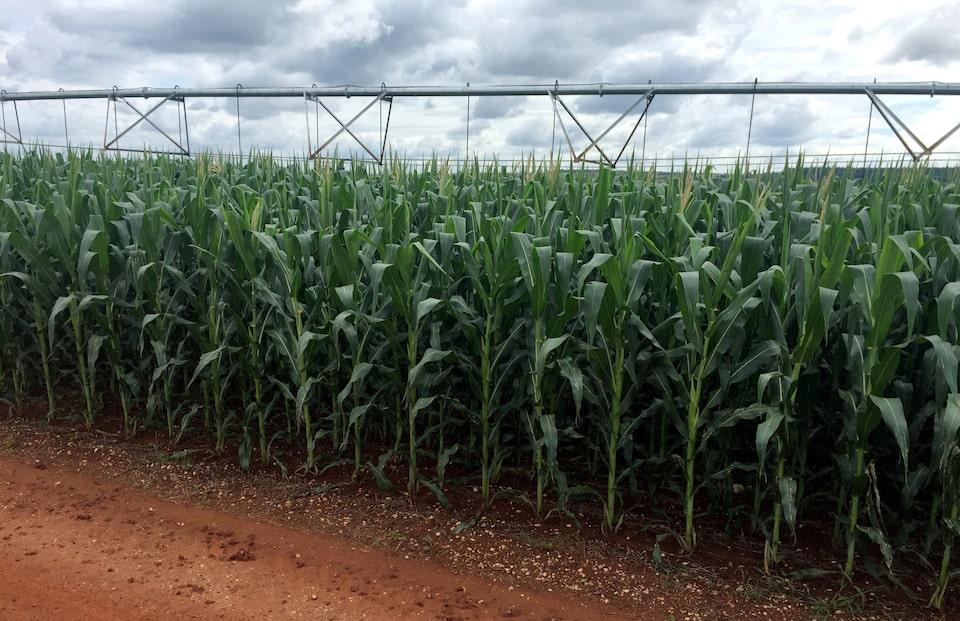
NAPERVILLE, Illinois, Jan 29 (Reuters) - With global corn supplies set for decade lows later this year, Brazil’s corn harvest cannot afford a mishap. Brazilian corn stocks are particularly tight heading into 2024-25, and planting of the second corn crop, which accounts for almost 80% of the country’s corn production, is off to a slow start. Brazil’s second corn output is predicted to rise modestly this year versus last, though if that fails, it could spell opportunity for the United States. Second corn in top growing state Mato Grosso was just 1% planted as of last Friday, the date’s slowest pace since 2011 but nearly identical to 2021. Both of those years plus 2016, another slow year, coincided with some of the state’s poorest corn yields. Untimely rains have delayed Mato Grosso’s soybean harvest, which also delays corn planting. This shifts the corn yield formation window to potentially overlap with the onset of dry season. Farmers in Mato Grosso, on average, plant about 11% of their corn crop this week, so planting efforts should be at least 12% complete by Friday to maintain a somewhat comfortable pace. The last week has been favorably drier, though rains could resume over the next several days. Brazil’s No. 2 corn grower Parana has planted 9% of its second corn as of this week, a relatively normal pace. Late corn planting in the southern state presents frost damage risks late in the season, which were prominent four years ago. Brazil has just as much to lose when things go wrong in Parana versus Mato Grosso, since yields tend to fluctuate more in Parana. That state’s 2020-21 second corn yield fell 50% below the long-term trend, while Mato Grosso’s 2015-16 result was about one-third below. The two states account for two-thirds of Brazil’s second corn harvest. Southern neighbor and fellow exporter Argentina is battling dryness this season due to La Nina, the cool phase of the equatorial Pacific Ocean. Brazil’s second corn yields do not correlate as well with La Nina or El Nino as do Argentina’s crops, but Brazil’s best outcomes typically do not coincide with stronger La Ninas. La Nina affects Brazil’s southernmost state of Rio Grande do Sul in a similar way as it does for Argentina, but the state does not raise second corn. TIGHT STOCKS In mid-2024, Brazil harvested its second-largest second corn crop, some 12% smaller than in the prior record year. However, Brazilian corn exports since July are down around 29% on the year. Shipments to China, which was the destination for 29% of Brazilian corn cargoes in calendar year 2023, are down more than 90% on the year for the July–January period. The lighter shipments have not loosened Brazilian corn inventory since domestic consumption has been strong. The U.S. Department of Agriculture pegs 2024-25 Brazilian corn stocks-to-use at 2.1%, a 42-year low and down from 7.1% in the prior year. USDA’s Brazilian counterpart Conab has a slightly different take as 2.8% stocks-to-use in 2024-25 would be up from 2.1% in the prior year but well below the near-15% levels of 2020-21. For comparison, USDA predicts 2024-25 U.S. corn stocks-to-use at 10.2%. The lowest reading so far this century was 7.4% in 2012-13. This suggests Brazil’s corn crop has little room for error, and any shortfall could result in a loss of global export share. This may help extend the winning streak for U.S. corn exporters, who have enjoyed above-average sales in recent months. Together, the United States and Brazil account for about 57% of global corn exports. Both suppliers are lamenting the loss of Chinese business, which could theoretically resurface at any time. If China pops back into the Brazilian corn market, that could feel like a loss for the United States. But with thin Brazilian stocks, Chinese purchases could indirectly push other Brazilian customers to U.S. supplies, especially later this year if the U.S. corn crop rebounds as expected. Karen Braun is a market analyst for Reuters. Views expressed above are her own. Sign up here. https://www.reuters.com/markets/commodities/brazils-slow-corn-planting-may-further-squeeze-tight-world-stocks-braun-2025-01-29/
2025-01-30 12:18
OSLO, Jan 30 (Reuters) - Norway's $1.8 trillion wealth fund, the world's largest, remains committed to investments in renewable assets despite recent market setbacks and will seek opportunities in both the listed and private markets, a senior fund official said on Thursday. Renewable energy assets have significantly underperformed in the market in 2024, with some previous investor favourites such as Danish offshore wind developer Orsted (ORSTED.CO) , opens new tab taking big hits to their valuations. The fund's own investments in unlisted renewable energy infrastructure, which includes stakes in offshore wind farms with Orsted and in Spanish utility Iberdrola's (IBE.MC) , opens new tab renewables portfolio, posted on Wednesday a negative return of -10% for 2024. Despite the negative returns recently, the fund remains committed to renewables, saying it makes sense in the long-term. "We think that's smart also for a very, very long-term investor ... All of our investments are dependent on an orderly energy transition," Harald von Heyden, the fund's global head of energy and infrastructure told a conference in Oslo. "You can probably buy renewable assets much cheaper now if you buy them as shares," he added. Meanwhile, the volatility in the private market was smaller, and being active in both the public and in the private markets should offer some good deals going forward, he added. The fund plans to do this and has recently restructured to merge its unlisted and listed renewable energy investment teams. Since 2020, the fund is allowed by the Norwegian parliament to invest in unlisted renewable projects, as long as they are in Europe or in the United States. "It's been a slow start. We've held back. We've not been sure that we've been in the right place in (the) cycle," von Heyden said, but added the fund was seeing more opportunities now, while the team has grown from 15 to 20 people. The fund sees offshore wind as still the best strategic target, as it is Europe-based and offers a large series of partners. "But we also want to do deals in the other renewable energy infrastructure technologies. And enabling technologies such as grid and storage," von Heyden said. Sign up here. https://www.reuters.com/sustainability/sustainable-finance-reporting/norways-wealth-fund-sticks-investments-renewables-despite-market-setbacks-2025-01-30/