2025-01-30 06:43
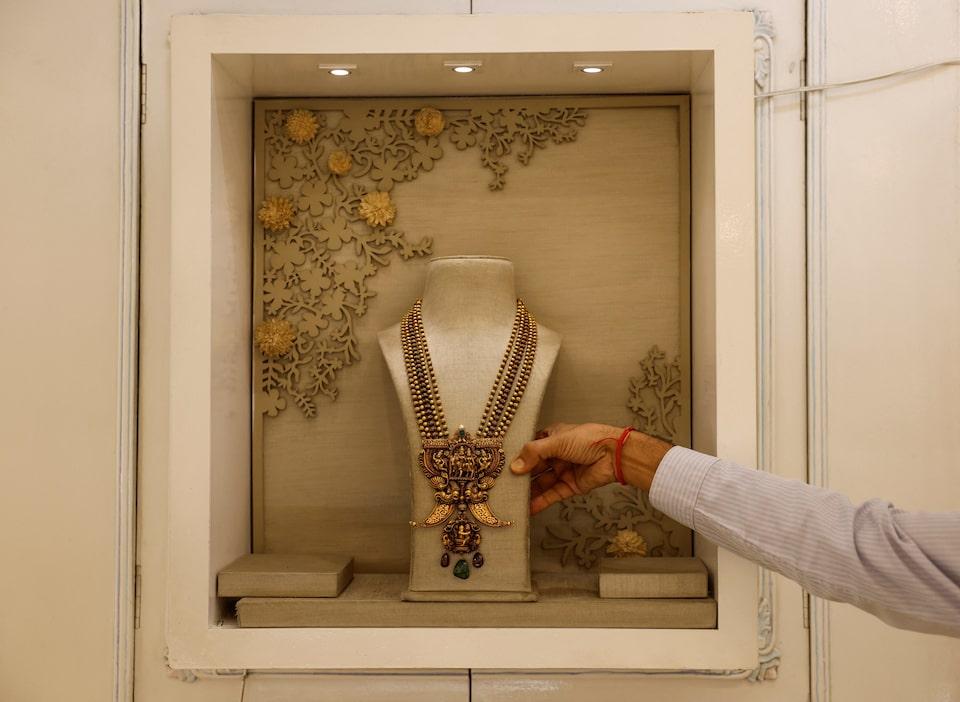
Gold hits record high at $2798.24 US economy slows in the fourth quarter U.S. December PCE due on Friday Silver, platinum, palladium up over 2% Jan 30 (Reuters) - Gold prices rose to hit a lifetime high on Thursday, sparked by safe-haven demand due to U.S. tariff threats, while the focus was also on a crucial inflation report for clues on the Federal Reserve's policy path. Spot gold was up 1.3% at $2,794.42 per ounce, as of 1:57 p.m. ET (1857 GMT), hitting its record high level at $2798.24 earlier in the session. U.S. gold futures settled 1.8% higher at $2,845.20. "We are seeing keener uncertainty and anxiety about the Trump administration's new policies on trade and foreign policy ... fresh technical buying coming in as prices are trending higher now in both gold and silver," said Jim Wyckoff, a senior market analyst at Kitco Metals. Earlier this week, the White House said U.S. President Donald Trump planned to hit Mexico and Canada with steep tariffs on Saturday and was also considering some on China. The dollar fell 0.2%, making gold less expensive for other currency holders, while 10-year U.S. Treasury yields fell to their lowest level in over a month. "Gold is shining as a safe haven asset, with investors seeking shelter to weather the storm of unpredictability," said Susannah Streeter, head of money and markets, Hargreaves Lansdown. The Fed held rates steady on Wednesday, in line with expectations, with Chair Jerome Powell saying there would be no rush to cut them again. Data showed that U.S. economic growth slowed in the fourth quarter, but analysts reckon robust domestic demand will probably keep the Fed on a slow interest rate cut path. Investors now await the December U.S. personal consumption expenditures (PCE) price index report on Friday. The U.S. gold market has been trading at a premium since the recent presidential election, the London Bullion Market Association said on Thursday, adding that the association has been closely liaising with the CME Group and U.S. authorities to monitor this trend. Spot silver was up 2.5% at $31.56 per ounce. "The Platinum and Palladium market I think are seeing spillover buying interest from the rallying gold and silver markets and that's mainly what's driving those markets higher," Wyckoff added. Platinum added 2.5% to $970.15, and palladium gained 2.6% to $987.25. Sign up here. https://www.reuters.com/markets/commodities/gold-tight-range-with-focus-trump-policies-inflation-data-2025-01-30/
2025-01-30 06:40
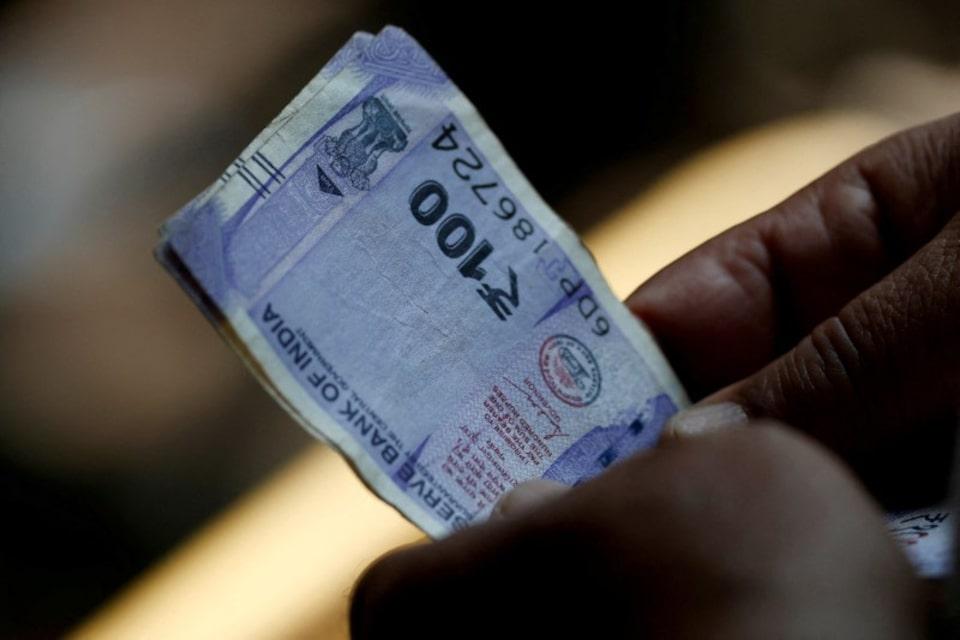
MUMBAI, Jan 30 (Reuters) - The Reserve Bank of India's $5 billion dollar/rupee buy-sell swap auction on Friday is likely to see strong demand from lenders and corporate treasuries, six bankers said. The central bank will conduct a 6-month dollar/rupee buy-sell swap, one of its many planned measures aimed at injecting liquidity worth about 1.5 trillion rupees ($17.33 billion) into the banking system. The RBI's interventions to cushion the rupee's plummet to all-time lows have pushed up dollar liquidity in the banking system. A part of the central bank's dollar sales has been taken up by banks that were involved in arbitrage activity, leaving them with excess dollars, a person familiar with RBI's thinking said. The FX swap will involve the RBI buying spot dollars, which would both inject rupee liquidity and drain some dollars. The transaction will be reversed in six months. Corporate treasuries, meanwhile, may participate to secure forward dollars, bankers said. "We expect strong demand with oversubscription in the RBI FX swap auction considering the surplus USD in the system currently," said Sameer Karyatt, executive director for treasury and markets at DBS Bank India. Banks will submit bids in terms of the premium they are willing to pay for the tenor of the swap. The six-month dollar-rupee forward premium was last at 94.50 paisa, having declined about 10 paisa since the liquidity measures were announced on Monday. While there was unanimity among bankers that the swap would see heavy interest, opinions varied on the premium cut-off. Most reckoned that it would be near current market levels, which one banker said could sway corporate treasuries to hedge their exposure directly with banks, rather than enter the auction. However, one banker said the cut-off would be lower than the market rate and another said it would be slightly higher. "Given the fact that the auction is a multiple-price auction, the participants are likely to put in multiple bids at different prices," Karyatt said. But the RBI's "regular sterilisation and interventions are likely to cap any significant deviation in auction cut-off levels from the prevailing market levels." ($1 = 86.5800 Indian rupees) Sign up here. https://www.reuters.com/markets/currencies/banks-importers-seen-lapping-up-india-central-banks-5-bln-fx-swap-2025-01-30/
2025-01-30 06:22
Jan 30 (Reuters) - Renewable energy platform Blueleaf Energy, owned by a Macquarie Asset Management managed fund, will invest $400 million in 1 gigawatt (GW) of solar projects of India's Jakson Green in the northwestern state of Rajasthan, the companies said on Thursday. The investment will be made in three solar projects, which are expected to be commissioned in 2025-2026 and will be funded through a combination of debt and equity, the companies said. There is a growing interest in renewable energy assets in India as the country aims to increase its non-fossil fuel capacity to 500 GW by 2030 from about 162 GW at present and is still short of its much-publicised pledge to add 175 GW by 2022. In December, Indian billionaire Sajjan Jindal led JSW Energy (JSWE.NS) , opens new tab acquired renewable energy platform O2 Power's subsidiaries in a deal worth $1.47 billion. Blueleaf Energy and Jakson Green are also targeting setting up more than 5 GW of renewable capacity in India by 2030, they said. Singapore-headquartered Blueleaf Energy has more than 7 GW of solar, wind and storage projects in the development pipeline, while Jakson Green has more than 1 GW of renewable energy assets under development. Sign up here. https://www.reuters.com/business/energy/macquarie-asset-owned-blueleaf-invest-400-mln-jakson-greens-india-solar-assets-2025-01-30/

2025-01-30 06:11
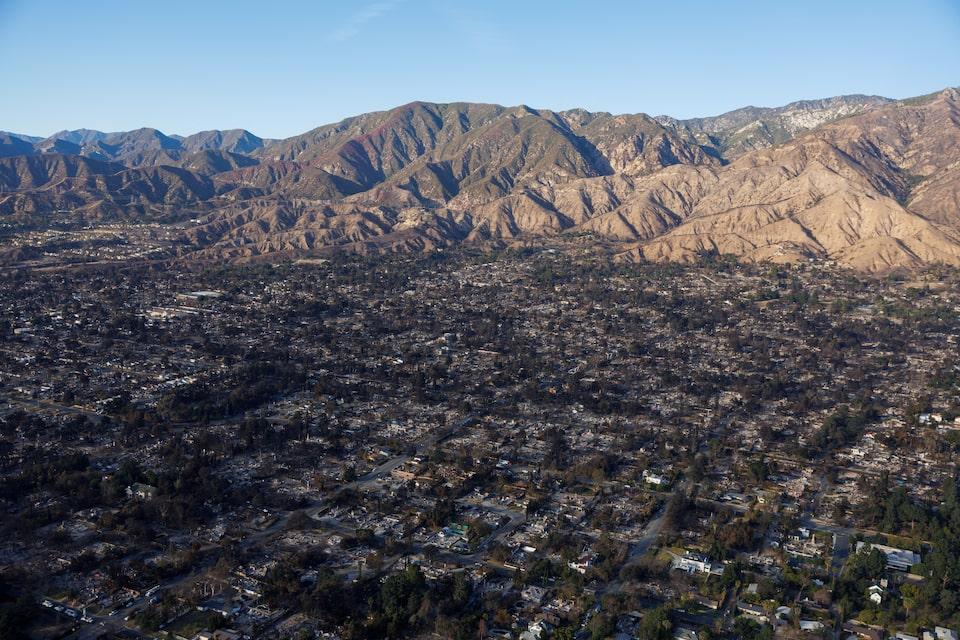
New images show burnt, exposed wires near SCE equipment Wildfires could be most costly disaster in U.S. history NEW YORK, Jan 29 (Reuters) - A law firm representing victims of the Eaton Fire in Los Angeles has submitted photos with a legal filing on Wednesday that appear to show exposed wire at the base of a Southern California Edison tower that the firm alleges may have contributed to the deadly blaze. The Eaton Fire was among the biggest of multiple wildfires that erupted on Jan. 7 and spread quickly in powerful Santa Ana Winds across the Los Angeles area. The wildfires are potentially the most costly disaster in U.S. history. Photographs and video show sparks or flames near the utility's transmission equipment have already been submitted in court cases against SCE, but the new images may be the first to show burnt and exposed, or unburied, wire. During potential arcing at the transmission towers, the exposed wires leading up to the bottom of the infrastructure may have heated to the point of igniting nearby vegetation, said plaintiff's attorney Alexander Robertson. The arcing could have sent a shower of sparks and molten metal down to the ground, triggering a fire, the law firm said. "The exposed grounding wire is charred on the photos and likely acted like a wick on a candle to ignite the brush at the base of the tower," attorney Robertson said. "We don't yet know if this was the sole or contributing ignition source, but the physical evidence suggests it was at least a contributing cause," said Robertson. The fire's cause is still under investigation, including by official government agencies and Southern California Edison. An SCE spokesperson criticized law firms for sharing details, such as potential evidence, with the media "when they should be sharing the information with authorities." "Our investigation into all possible involvement of SCE's equipment continues," Southern California Edison spokesperson Kathleen Dunleavy said. Robertson and experts with his firm captured the images of SCE's equipment by hiking to SCE towers along the ridge of foothills near Altadena and deploying drones earlier this month. Earlier in the week, SCE said a preliminary review of its data for transmission lines that run through towers, including the one scrutinized by Robertson, showed no indication of faults on the lines until more than an hour after the reported start time of the blaze. Electrical faults can sometimes lead to arcing, which is essentially a spark that jumps between two conductors. The Robertson and Associates' images were captured near the ARCO station where surveillance footage showed two short arcs at the top of an SCE tower. That surveillance video was reported earlier in the week by the New York Times and other news outlets and has since been cited in legal filings. SCE said in a statement on Monday that it was reviewing the footage. Sign up here. https://www.reuters.com/world/us/exposed-utility-wires-may-have-contributed-las-eaton-fire-law-firm-says-2025-01-30/
2025-01-30 05:44
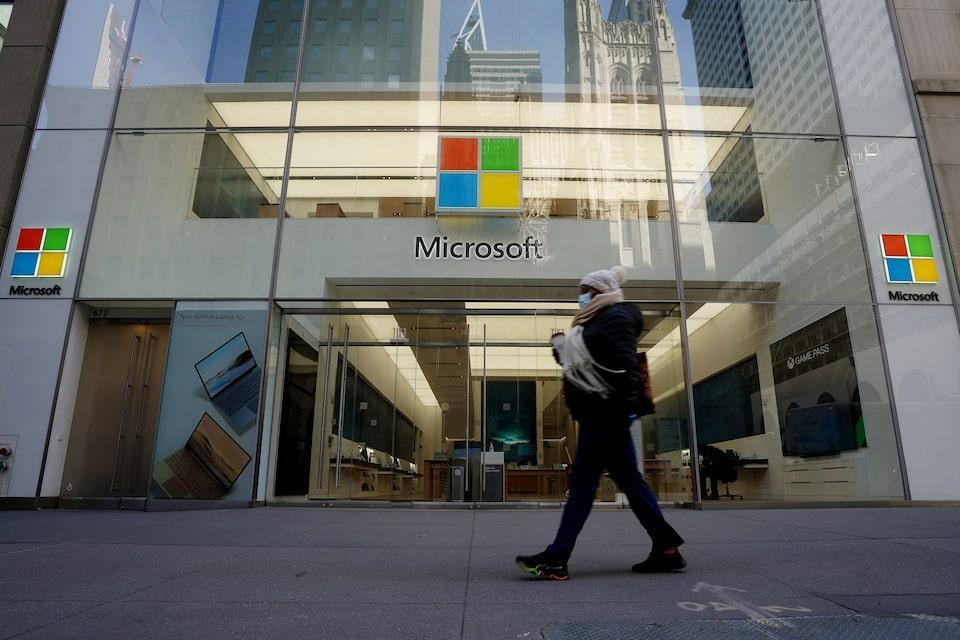
Azure growth forecast below Wall Street expectations, causing investor concern Chinese AI models increase competition, sparking fears of a price war Microsoft's capital expenditures exceed analyst estimates, impacting investor sentiment Jan 29 (Reuters) - Microsoft (MSFT.O) , opens new tab on Wednesday forecast disappointing growth in its cloud computing business, sending its shares down 4.5% in after-hours trading as investors worry about big spending, elusive artificial intelligence revenue and competition from cheaper AI models from China. Azure results for the fiscal second quarter also fell below Wall Street expectations. Despite beating quarterly overall sales estimates, investors want better results from the hundreds of billions of dollars that Wall Street heavyweights have been spending to build AI data centers and infuse their products with the emerging technology. Chinese rivals have recently claimed to produce competing AI technologies at lower costs than U.S. rivals, sparking fears of a price war. For more than a year, Microsoft and its Big Tech peers have tested Wall Street's patience by plunking down huge amounts of cash in pursuit of profits from AI that have yet to satisfy investors. "It's OK if that is a few years out, three to five years into the future," said Brian Mulberry, portfolio manager at Zacks Investment Management. "But we really want to start to see a clear road map to what that monetization model looks like for all of the capital that's been invested." On a conference call with investors, Chief Executive Satya Nadella said costs were coming down, with models showing 10 times better performance for the price as Microsoft irons out the algorithms. "As AI becomes more efficient and accessible, we will see exponentially more demand," Nadella said. Microsoft Chief Financial Officer Amy Hood said Azure would grow between 31% and 32% in the current fiscal third quarter, below the 33% Wall Street expects, according to data from Visible Alpha. Microsoft's Azure unit reported revenue growth of 31% in the quarter, missing Visible Alpha estimates of 31.8%. Microsoft's capital expenditures hit $22.6 billion, above analysts' consensus estimate of $20.95 billion, according to data from Visible Alpha. DeepSeek's meteoric rise in the past three weeks has sparked worries of stiff competition that could force leading U.S. AI providers to slash prices. Microsoft said earlier on Wednesday it had added DeepSeek, the breakout Chinese AI model, to its offerings on Azure. Microsoft said AI contributed 13 percentage points of Azure's growth in its fiscal second quarter, up from 12 percentage points the previous quarter. Responding to questions from analysts, Nadella said Microsoft was spending to build out data centers to develop AI models and offer them to customers. Microsoft is working to make those services more cost efficient, he added. "We are working super hard on all the software optimizations - not just the optimizations that have come because of what DeepSeek has done, but all the work we have done to reduce the prices of GPT models over the years in partnership with OpenAI," Nadella said. "In fact, we did a lot of the work on the inference optimizations on it, and that's been key to driving it." Overall, investors still appear to view Microsoft as a leading bet on AI. Its stock has gained about 8% over the past year, trailing a 29% rally in Alphabet and a 50% surge in Amazon. It is trading at about 32 times expected earnings, slightly above its five-year average of 30, according to LSEG. Microsoft also posted 67% growth in what it calls commercial bookings, a measure of new contracts signed with large customers. Brett Iversen, Microsoft's vice president of investor relations, said that figure was mostly driven by large new Azure contracts with OpenAI. While OpenAI announced a new data center deal with Oracle last week, Microsoft still retains the rights to most of the hosting of OpenAI's models for commercial purposes. At the company's Intelligent Cloud unit, which includes the Azure platform, revenue rose to $25.54 billion, missing expectations of $25.76 billion. Total revenue rose 12% to $69.6 billion in the fiscal second quarter ended December, compared with analysts' average estimate of $68.78 billion, according to data compiled by LSEG. Redmond, Washington-based Microsoft reported a profit of $3.23 per share, beating expectations of $3.11 per share. Sign up here. https://www.reuters.com/technology/microsoft-beats-quarterly-revenue-estimates-2025-01-29/
2025-01-30 05:39
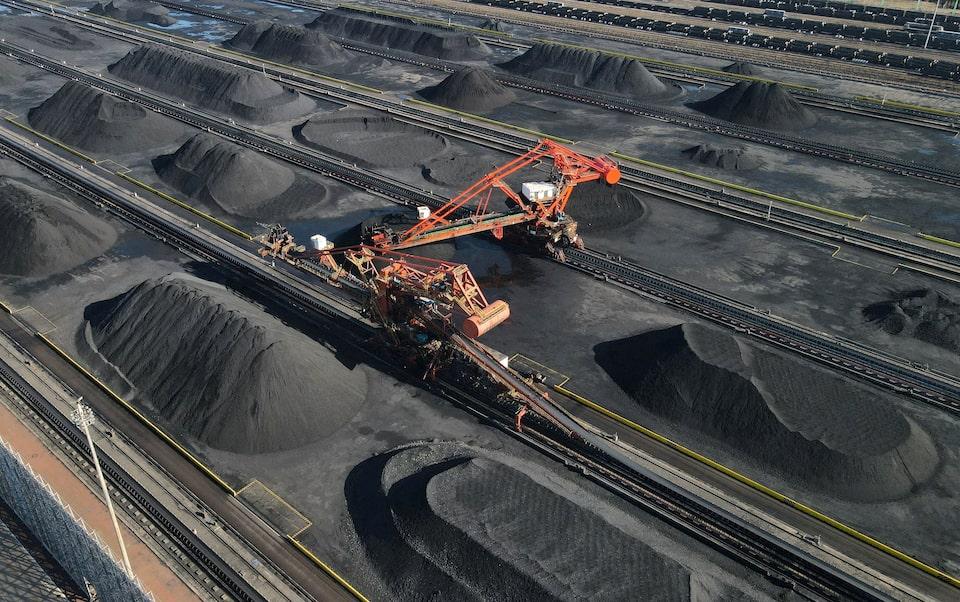
LAUNCESTON, Australia, Jan 30 (Reuters) - China's imports of iron ore and seaborne coal are on track for a soft start to the year, with January arrivals declining to multi-month lows. However, the price trends for the two key bulk commodities are divergent, with iron ore holding up while thermal coal slides to the weakest in nearly four years. China, the world's biggest iron ore buyer, is expected to import 99.5 million metric tons of the key steel raw material in January, according to commodity analysts Kpler. That would be down from the official customs figure of 112.5 million tons in December, and would be the lowest monthly total since June's 97.61 million. There is a note of caution around January's iron ore imports, due to the week-long Lunar New Year holidays which this year fell at the end of this month and into early February. This may result in some cargoes being pushed from January into February. For coal, China's seaborne imports of all grades are estimated by Kpler at 27.97 million tons in January, down 26% from December's 37.59 million. Customs data showed coal imports of 52.35 million tons in December, but this includes overland arrivals from neighbouring countries such as Mongolia and Russia. Coal imports have in the past tended to soften in January and February as peak winter demand passes, but the decline in January this year from December is far larger than the 9% recorded in January 2024 and the 10.9% from January 2023. China, the world's largest producer, consumer and importer of coal, may need less from the seaborne market as domestic supplies increase. December coal production was 439 million tons, up 4.2% from the same month a year earlier, while annual output was up 1.3% to 4.76 billion tons, according to official data released on Jan. 17. The robust increase in coal output has led to weaker domestic prices, with consultants SteelHome assessing thermal coal at Qinhuangdao at 765 yuan ($106) a ton this week, down 12.6% from the 2024 high of 875 yuan in September, and the weakest since April 2021. The slump in China's domestic coal prices is feeding through to seaborne grades, with key grades from top exporters Indonesia and Australia dropping. Indonesian coal with an energy content of 4,200 kilocalories per kilogram (kcal/kg) was assessed by commodity price reporting agency Argus at $48.76 a ton in the week to Jan. 24, the lowest since April 2021 and down 16.2% from the 2024 peak of $58.17 in March. Australian coal with an energy content of 5,500 kcal/kg, a grade popular with Chinese buyers, was at $80.12 a ton in the week to Jan. 24, down 17.1% from its 2024 high of $96.66 in March and the lowest since July 2021. RESILIENT IRON ORE While coal prices are reflecting China's domestic market dynamics, iron ore is taking a slightly different path. Despite the likely decline in January imports, the price of futures traded on the Singapore Exchange has remained stable in recent weeks. The contract ended at $101.55 a ton on Wednesday and has climbed 4.4% from the recent low of $97.31 on Jan. 6. The price has held above $100 a ton since October, apart from a period of five trading days earlier this month. The price reflects that iron ore imports by China have held up in recent months despite the small decline in steel output in 2024. But unlike coal, there may also be support for iron ore from a sentiment perspective, with some market participants optimistic that Beijing's stimulus efforts will bear fruit in 2025 by stabilising the beleaguered property sector and boosting consumer demand for manufactured goods. The iron ore market is also so far shrugging off the threat of a trade war by the administration of new U.S. President Donald Trump, who has said that he may impose tariffs of up to 60% on imports from China. The views expressed here are those of the author, a columnist for Reuters. Sign up here. https://www.reuters.com/markets/commodities/chinas-iron-ore-coal-imports-ease-january-prices-diverge-russell-2025-01-30/