2025-01-30 00:02
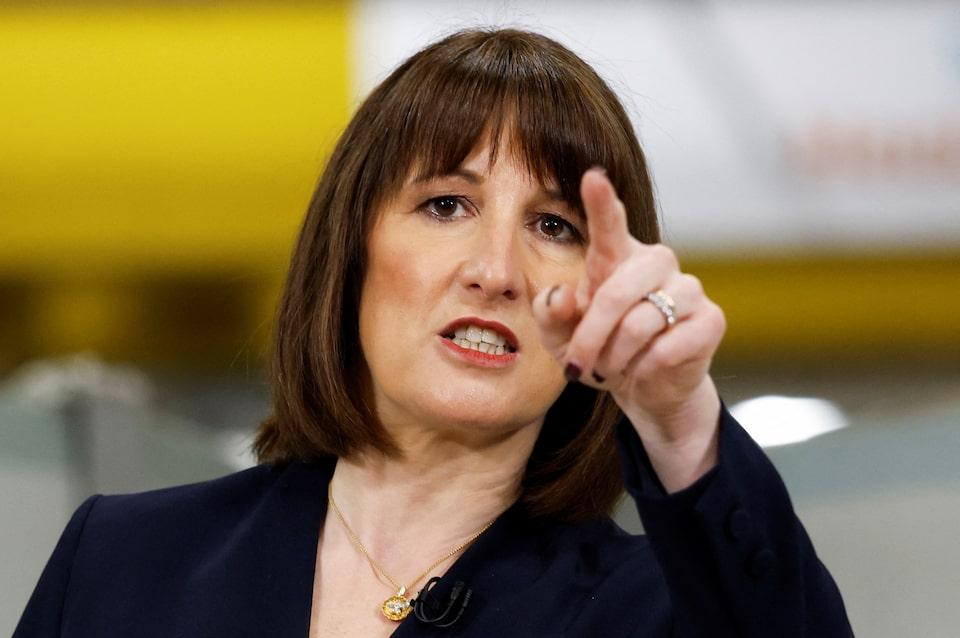
LONDON, Jan 30 (Reuters) - British finance minister Rachel Reeves might yet have to make changes to her fiscal plans in March, despite a fall in borrowing costs in financial markets from their peak earlier this month, a leading think tank said on Thursday. The Resolution Foundation said the risk of Reeves missing her budget rule was "on a knife edge" because borrowing costs and expectations about Bank of England interest remained higher than forecast by the government's fiscal watchdog in November. "In her budget last autumn, the chancellor set out new fiscal rules but left herself very little wiggle room against breaking them," James Smith, Research Director at the Resolution Foundation, said. Higher government bond yields were on course to add 7 billion pounds ($8.7 billion) a year to debt servicing costs, eating up most of the 9 billion pounds of fiscal headroom that Reeves gave herself in November to meet her rules. "While other factors will also affect the OBR’s forecast, the chance of the Chancellor falling foul of her fiscal rules remains on a knife edge," Smith said, adding Reeves might have to announce tax increases or spending cuts to get back on track. Reeves has said she will act if needed when the Office for Budget Responsibility delivers its half-yearly update on the public finances on March 26. On Wednesday, Reeves spelt out her plans to speed up economic growth in Britain which she hopes will make it easier to meet her rules including a requirement to balance day-to-day public spending with tax revenues by the end of the decade. ($1 = 0.8058 pounds) Sign up here. https://www.reuters.com/world/uk/uks-reeves-budget-rule-outlook-is-knife-edge-think-tank-says-2025-01-30/
2025-01-29 23:52
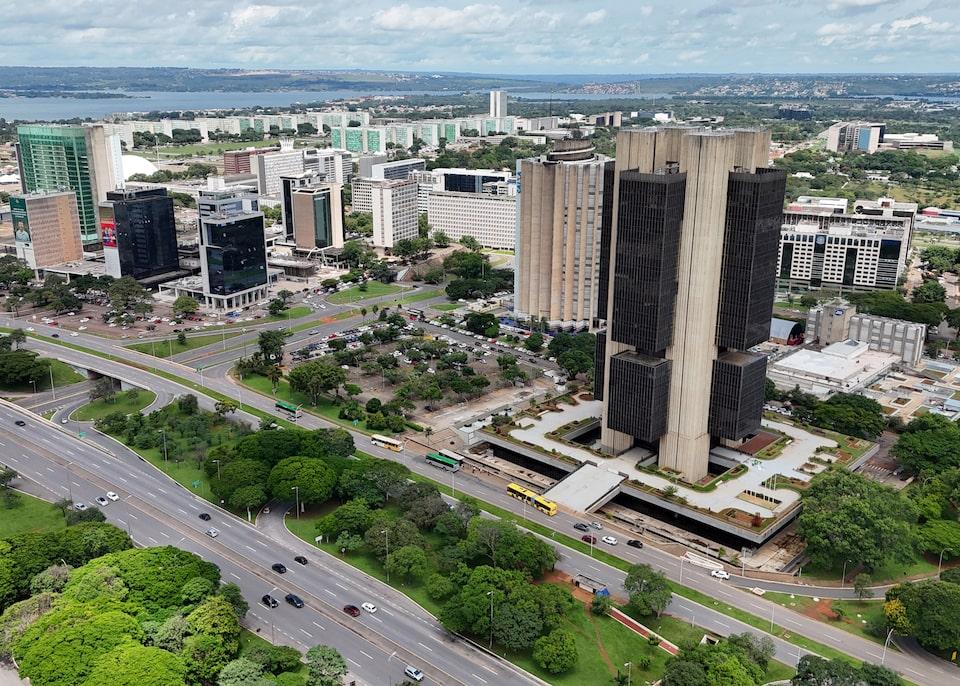
Policymakers leave the door open for further action after Q1 Economists see need for additional hikes ahead Central bank projects inflation at 4% in its relevant horizon, above its 3% target BRASILIA, Jan 29 (Reuters) - Brazil's central bank raised its benchmark interest rate by 100 basis points for the second straight meeting on Wednesday and signaled another hike of that size in March, leaving the door open for subsequent moves amid mounting inflationary pressures. The bank's rate-setting committee, known as Copom, lifted the Selic policy rate to 13.25% in a unanimous decision - the first under the new central bank chief Gabriel Galipolo, who was appointed by President Luiz Inacio Lula da Silva. "Beyond the next meeting, the committee reinforces that the total magnitude of the tightening cycle will be determined by the firm commitment of reaching the inflation target," said the bank's statement. The central bank raised its inflation forecast for 2025 to 5.2%, up from 4.5% previously, well above its target of 3%. Policymakers highlighted a "significant" rise in private inflation expectations for this year and next, resilient economic growth and labor market pressures, all contributing to the need for "a more contractionary monetary policy." The rate increase, in line with the expectations of all 38 economists polled by Reuters, came after the U.S. Federal Reserve held rates steady on Wednesday after a string of cuts, widening the interest rate gap between the world's largest economy and the biggest in Latin America. To ease concerns about its leadership transition and show its commitment to taming inflation, Brazil's central bank had already signaled in December that it would start 2025 with hikes, raising its policy rate by two full percentage points. The rate increase forecast for March would bring the Selic to 14.25%, its highest level in more than eight years. "The central bank delivered on its promise and left the meeting after March open. Clearly, it will remain data-dependent," said Daniel Xavier, chief economist at ABC Brasil bank, who forecast rates peaking at 15% in May. So far, the bank's aggressive stance has not been enough to anchor inflation expectations, which have continued drifting further from the official target of 3% with a tolerance interval of plus or minus 1.5 percentage points. Marcos Moreira, partner at WMS Capital, said that deanchored inflation expectations would require the policy rate to hit 15.50% this year, part of a growing chorus of economists predicting the Selic above 15% by year-end. "The only factor capable of changing this scenario would be the government implementing structural adjustments that would allow for a rebalancing of public accounts," he said. Adding to the central bank's challenge, Brazil's currency slipped to a record low last month on concerns about growing public debt, punctuated by turmoil in financial markets after the government's proposed spending cuts disappointed investors. While market stress has subsided since its December peak, interest rate futures remain elevated. The Brazilian real has regained some ground to start the year but remains under pressure, trading around 5.86 per U.S. dollar compared to 4.95 a year ago, which has added to inflationary pressure by increasing the cost of imports. Reflecting the challenging inflation outlook, for the third quarter of 2026, the horizon most influenced by current monetary policy decisions, the central bank projected 12-month inflation of 4.0%. Sign up here. https://www.reuters.com/markets/rates-bonds/brazil-central-bank-hikes-rates-by-100-bps-confirms-same-march-2025-01-29/
2025-01-29 23:51
Expects wholesale revenue to be flat in 2025 Taking a prudent approach, executives say Holiday quarter beats on strong demand Jan 29 (Reuters) - Levi Strauss (LEVI.N) , opens new tab forecast annual profit well below analysts' estimates, taking a cautious stance despite a strong holiday quarter and sending its shares down about 8% in extended trading on Wednesday. The company's struggling U.S. wholesale business returned to revenue growth after six quarters of decline, as newness in its collections, including men's apparel, attracted demand from retailers. Still, executives on a post-earnings call said they expect the channel to be flat in 2025. "We recognize there continues to be a lot of uncertainty related to the macro environment, potential changes in tariffs, as well as worsening foreign exchange... the best approach for us is to plan prudently," finance head Harmit Singh said. The company projected annual adjusted profit per share of $1.20 to $1.25, compared with expectations of $1.37, according to data compiled by LSEG. The forecast "underscores the uncertainty facing many retailers as they struggle to navigate President Trump's tariff threats and a more unpredictable environment - although Levi's limited exposure to China, Mexico, and Canada means it is better equipped than most to navigate those headwinds," said Rachel Wolff, analyst at EMarketer. Levi introduced an organic revenue growth target of 3.5% to 4.5% for fiscal 2025, excluding the impact of divested business and foreign exchange rates. It expects reported net revenue to fall between 1% and 2%. Analysts had estimated 2025 revenue to rise 3.7%. In the holiday quarter, customers bought Levi's trendy denim dress collection and wide-legged bottoms, lifting net revenue 8% to $1.84 billion and beating estimates of $1.73 billion. Under Michelle Gass, who completed one year at the top in January, Levi has trimmed its portfolio and focused on its direct-to-consumer channel. Excluding items, the company earned 50 cents per share in the reported quarter, topping estimates by 2 cents. Sign up here. https://www.reuters.com/business/retail-consumer/levi-strauss-beats-quarterly-revenue-estimates-2025-01-29/

2025-01-29 23:09
MUKRAN, Germany, Jan 30 (Reuters) - Private German liquefied natural gas (LNG) terminal operator Deutsche ReGas says the potentially lower prices offered by state-owned Deutsche Energy Terminal to attract buyers are a threat to its business. Germany's quest to increase LNG capacity for regasification on its shores has intensified as it seeks to replace pipeline gas no longer coming from Russia, its former main supplier. Floating storage and regasification units (FSRUs) were built at various coastal locations in record time. But with underground gas caverns well filled in Europe, and with LNG terminal overcapacity, it is getting tougher to attract cargoes to the new infrastructure. "Since Christmas 2024, we have been facing unequal competition with DET," ReGas Chief Executive Ingo Wagner said to reporters, adding that state rules entail that DET must not offer slots at prices below costs. ReGas complains that state-subsidised DET can afford to go below the price that would be considered the minimal level to recover costs. As a private company, ReGas says it cannot match the levels. ReGas's Deutsche Ostsee terminal is the only facility in the Baltic Sea and is crucial for shipping gas to countries such as the Czech Republic and Slovakia in the future, which are reversing pipeline directions after Russian supplies dried up. A pipeline deal between Russia and Ukraine ended on Jan. 1 and U.S. President Donald Trump is targeting Europe to export more LNG. DET will hold short-term auctions for regasification capacity at Wilhelmshaven and Brunsbuettel in the North Sea on Feb. 4, 5 and 6. Its operations were approved under European Commission state aid rules last December. Germany rushed through building Wilhelmshaven, Brunsbuettel and Lubmin, near Mukran and its forerunner, from the winter of 2022 onwards and leased ships as part of its emergency responses to the reduction of Russian gas after the war in Ukraine. DET told Reuters that short-term auctions in December had helped ensure supply security at all times, amid muted booking interest. "We are complying with the regulatory requirements for the marketing of regas capacity for our terminals," a DET spokesperson said. The auctions are for services around unloading regasification, send-out and storage. Sign up here. https://www.reuters.com/business/energy/germanys-private-lng-terminal-fears-state-operator-may-undercut-it-2025-01-29/

2025-01-29 23:09
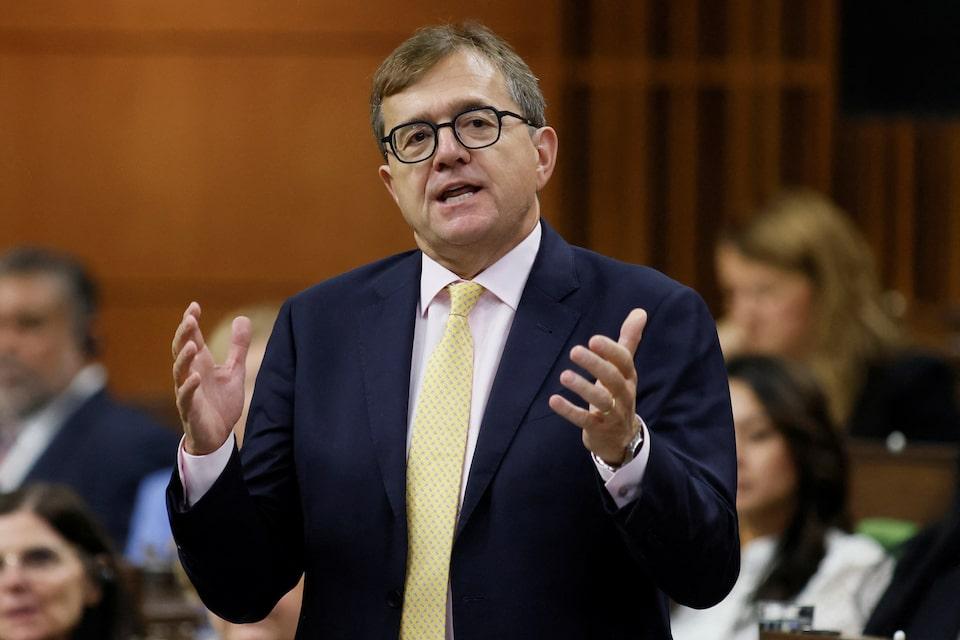
CALGARY, Jan 29 (Reuters) - Any Canadian response to U.S. tariffs will be regionally fair and equitable and not single out Alberta, Canada's main oil-producing province, Canada's Energy and Natural Resources Minister Jonathan Wilkinson said on Wednesday. Wilkinson told reporters Canada's response would focus on products in a way that hurts Americans more than Canadians. U.S. President Donald Trump has threatened to impose 25% tariffs on all Canadian exports to the U.S. as soon as Saturday. Canada plans to respond with counter-tariffs on U.S. goods, and concerns the federal government could also restrict oil exports or impose export tariffs have caused tensions with Alberta Premier Danielle Smith. Wilkinson later said in an interview he believes Canada could still avoid being hit by tariffs entirely, adding Canada has already taken steps to address border security concerns raised by the U.S. Canada sends 75% of all goods and services exports to the United States. Canada has been the top source of U.S. oil imports for many years, and supplied more than half of total U.S. crude imports in 2023. Wilkinson told reporters that Canada must not respond in a way that damages its own long-term interests or hits one single sector or region disproportionately. "You cannot single out the west. It has to be something that is going to be fair," he said. "If there is pain, Quebec will feel it, Ontario will feel it, the west will feel it, Atlantic Canada will feel it." He told Reuters if tariffs were implemented, Canada's first response would be to retaliate against American goods sold in Canada, for which Canadian consumers can find alternatives. But he added that while Canada's response to U.S. tariffs would be "thoughtful," he stopped short of ruling out oil export tariffs entirely. "At this stage, you don't take any tools off the table . . . even if some of those tools are things that it's unlikely that you're going to use, at least in the early-term." Sign up here. https://www.reuters.com/business/energy/canada-minister-says-any-us-tariff-response-would-not-single-out-alberta-2025-01-29/
2025-01-29 23:03
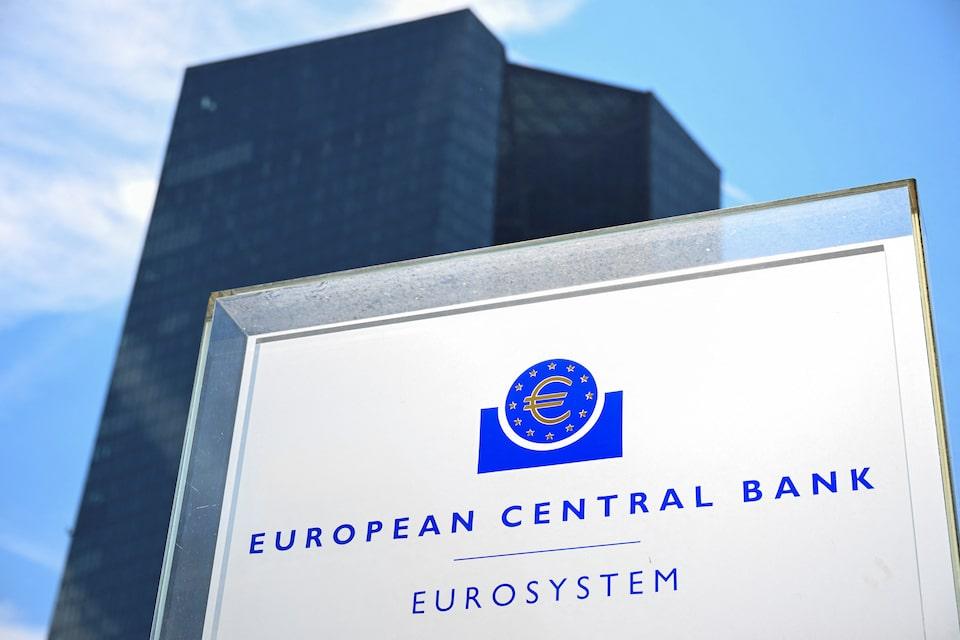
Deposit rate cut by 25 bps to 2.75% March rate cut seen as likely Economy is weak and could take a hit from a trade war FRANKFURT, Jan 30 (Reuters) - The European Central Bank cut interest rates on Thursday and policymakers guided for a further reduction in March as concerns over lacklustre economic growth supersede worries about persistent inflation. It was the fifth ECB rate cut since June and markets expect two or three more this year, driven by arguments that the biggest inflation surge in generations is nearly defeated and the flagging economy needs relief. "We know the direction of travel," ECB President Christine Lagarde told a press conference after the decision. "At which pace, with what sequence, what magnitude, will be informed by the data that we will collect in the coming weeks and months and by the analysis that our staff will conduct." Three ECB policymakers who spoke to Reuters on Thursday said they thought a further rate cut was likely to go through in March without much resistance before debate within the Governing Council on further easing becomes more heated. With the euro zone economy stagnating in the last quarter due to an industrial recession and weak consumption, the ECB is seen sticking to its easing path even after the U.S. Federal Reserve kept rates unchanged and hinted at a lengthy pause. ECB policymakers are likely to have breathed a sigh of relief after new U.S. President Donald Trump's administration did not impose blanket trade tariffs as feared, although his threats to do so have cast a shadow on the outlook. Lagarde said tariffs would have a "global negative impact" on growth but their potential effect on inflation was "far more complicated" due to possible retaliation and market adjustments. DOMESTIC WEAKNESS A rate cut in March would take the ECB's deposit rate to 2.5% - the upper end of the so-called neutral range, which neither spurs nor stifles economic activity, according to ECB staff estimates. The three policymakers who spoke to Reuters after the meeting said they expected a broader, deeper discussion about whether borrowing costs should fall below that level, as already suggested by board member Isabel Schnabel. On the one hand, wage growth across the 20 countries that share the euro currency is easing, the labour market is softening, oil prices have come off early-year highs and the dollar's relentless firming seems to have stopped for now. But inflation is still above the ECB's target and poor productivity growth along with labour shortages could keep up price pressures, likely limiting just how far the bank can go. Perhaps laying the ground for this debate, Lagarde said ECB staff would publish a new estimate of the neutral rate on Feb. 7. Last week, she trimmed her own range to 1.75%-2.25%. "We are not at neutral rate. This is a debate that is entirely premature," she said. "When we get closer to that, we will operate on the basis of a staff research paper, on the basis of the analysis provided by staff, and then that will help us determine how close we are and what our monetary policy stance should be." Economists generally expect the ECB to cut rates further. "We maintain our view that the ECB will cut rates to below the neutral rate in order to support the economy," Nomura said in a note to clients. "We expect a terminal rate of 1.75% by September 2025, and we see risks of further cuts should U.S. tariffs prove more punitive than we have pencilled in." Sign up here. https://www.reuters.com/markets/rates-bonds/ecb-cut-interest-rates-keep-door-open-further-easing-2025-01-29/