2026-01-06 06:06
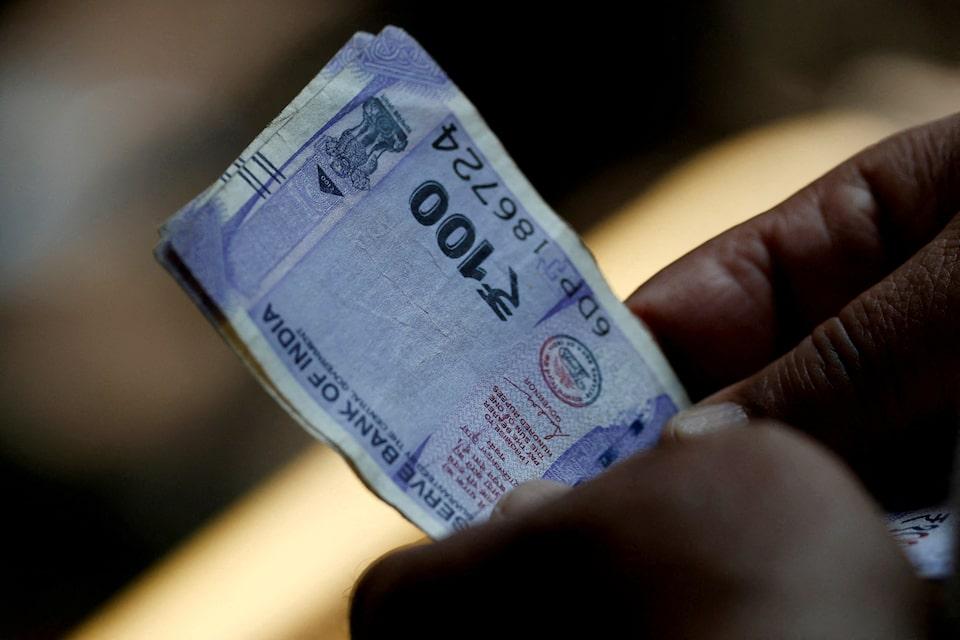
MUMBAI, Jan 6 (Reuters) - The Indian rupee ended marginally higher on Tuesday, breaking its four-day losing streak as state-run banks and foreign lenders sold dollars. However, importers used the move to step up hedging and that capped the gains, according to bankers. Sign up here. The local currency opened at 90.2150 and rose to an intraday high of 90.09, supported by dollar offers from state-run banks and a change in the way the daily fixing was quoted. The rupee ended 0.1% higher at 90.1650, up from 90.2750 on Monday. The fixing reflects the premium or discount bankers are willing to pay to buy or sell dollars at the Reserve Bank of India's reference rate. This was quoted at a discount on the day, compared with a premium during most recent sessions. A discount typically signals heavier interest in selling dollars at the RBI reference rate. The rupee's recent recovery is largely a tactical bounce driven by foreign bank dollar supply and a tentative return of foreign inflows, said Dilip Parmar, forex research analyst at HDFC Securities. However, the currency remains fragile as the structural mismatch between dollar demand from importers and limited supply persists. The trend remains neutral-to-bullish for the spot rate as long as it remains above 89.90. Dollar demand from importers at any dip limited the rise in the local currency, despite dollar sales from state-run and foreign banks, traders said. Asian cues were mixed for the rupee, with the dollar index extending the pullback from Monday, while Asian currencies were rangebound. The focus this week is on a raft of U.S. economic data, particularly the U.S. jobs report due on Friday, for clues on how many times the Federal Reserve is likely to cut interest rates in 2026. https://www.reuters.com/world/india/rupee-may-see-marginal-relief-dollar-pullback-lower-us-yields-2026-01-06/
2026-01-06 05:42
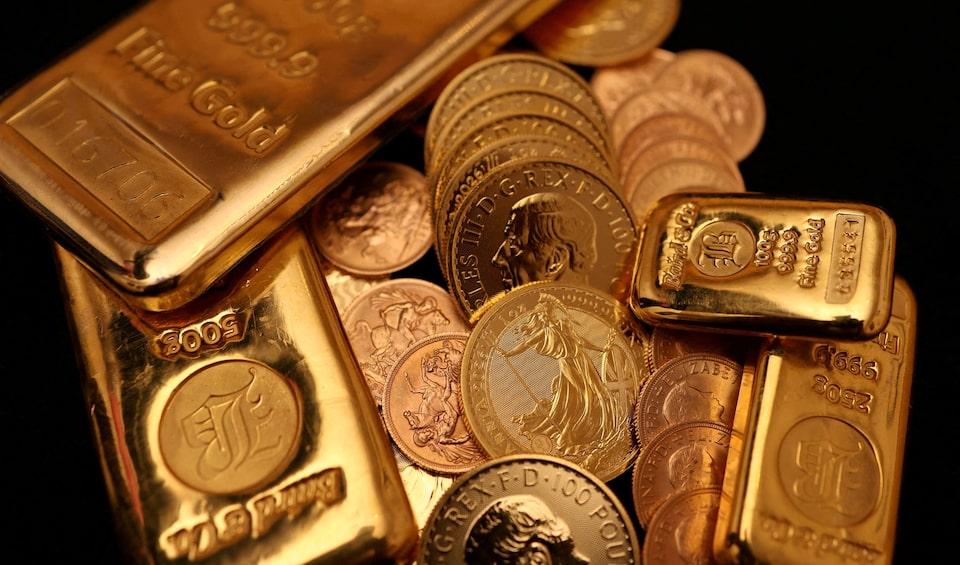
Venezuela's Maduro pleads not guilty to drug charges Markets pricing in two Federal Reserve rate cuts this year Morgan Stanley forecasts gold at $4,800 by fourth quarter Jan 6 (Reuters) - Gold extended gains on Tuesday, buoyed by safe-haven demand after the U.S. capture of Venezuela's president fueled global tensions, while investors awaited U.S. payroll data for insights into the Federal Reserve's interest rate policy. Spot gold was up 0.8% at $4,485.39 per ounce by 01:40 p.m. ET (1840 GMT), after a nearly 3% gain in the previous session, bringing prices closer to the record high of $4,549.71 hit on December 24. Sign up here. U.S. gold futures for February delivery settled 1% higher at $4,496.10. "Precious metals traders see more risk on the horizon than stock and bond traders do at present," said Jim Wyckoff, senior analyst at Kitco Metals, adding that the weekend U.S. raid on Venezuela has fueled continued safe-haven demand for gold and silver. Toppled Venezuelan President Nicolas Maduro pleaded not guilty on Monday to narcotics charges, after the U.S. seized him and took him to New York over the weekend. Gold, considered a traditional safe haven, climbed 64.4% last year, logging its best annual performance since 1979. Market participants are also looking to Friday's U.S. monthly employment report, which is anticipated to show 60,000 jobs added in December, a slight drop from 64,000 the previous month. Traders are pricing in two Federal Reserve rate cuts this year, according to LSEG data. Meanwhile, Richmond Fed President Tom Barkin stated that further rate changes must be "finely tuned" to balance both unemployment and inflation risks. Non-yielding gold tends to benefit from low-interest-rate environments. Morgan Stanley projected gold prices could surge to $4,800 by the fourth quarter of this year, citing falling interest rates, Federal Reserve leadership changes and robust central bank and fund purchases. Spot silver , which hit an all-time high of $83.62 on December 29, gained 5.4% to $80.68 per ounce. Silver recorded its strongest annual gain in 2025, surging 147% on rising industrial and investor appetite. Spot platinum was up 7.2% at $2,435.20 per ounce, while palladium traded 5.9% higher at $1,821.68 per ounce. https://www.reuters.com/world/india/gold-hits-one-week-high-fed-rate-cut-bets-venezuela-turmoil-2026-01-06/
2026-01-06 05:31
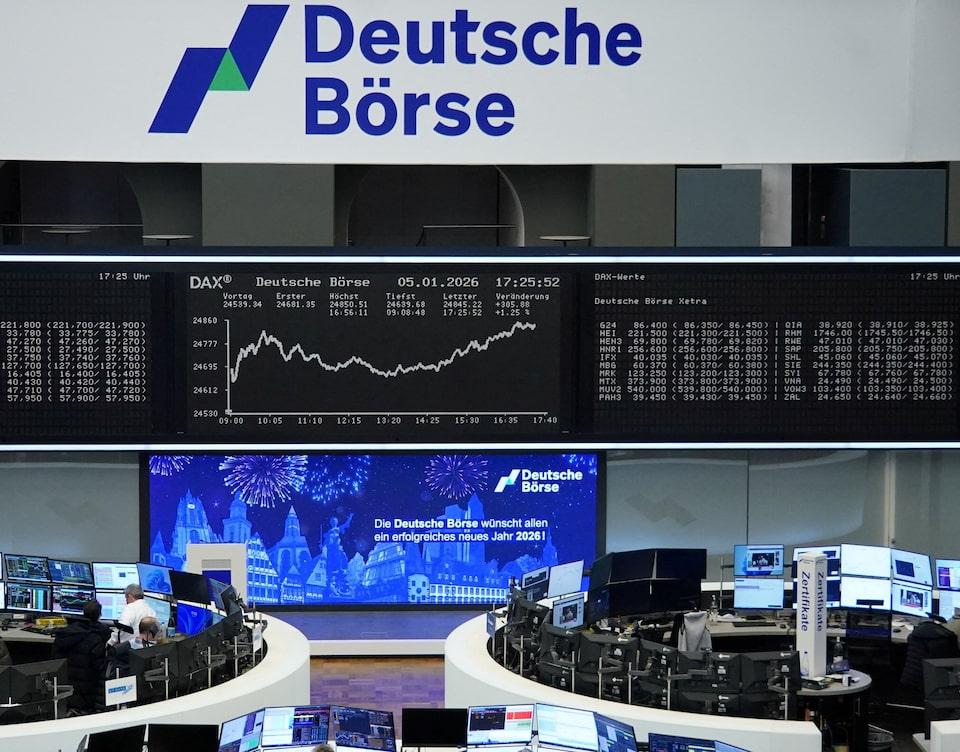
A look at the day ahead in European and global markets from Kevin Buckland The march to ever-higher peaks for global stocks is showing no signs of letting up, with Tokyo, Taipei and Seoul among the markets bounding to new highs on Tuesday, after the Dow did the same overnight on Wall Street. Sign up here. And signs point to the FTSE, DAX and STOXX 600 extending their own record runs once trading gets under way. Whatever it is that could shake the market's momentum, it hasn't been the political upheaval in Venezuela. Quite the contrary, investors have been scooping up oil and defence shares, with risk sentiment entirely unscathed. Crude oil traders, though, still haven't made up their minds as to what it all means. The initial $1 a barrel gains from Monday have not sustained. A U.S. oil embargo on Venezuela remains in place, and the country has had to curb production because it's running out of storage space. Reuters reported that President Trump will meet U.S. oil executives this week to discuss boosting Venezuelan crude output, but analysts say meaningful capacity increases would be years away. Currencies have largely had their eyes elsewhere - with the exception maybe of the oil-linked Canadian dollar and Norwegian krone. It's a big week for macroeconomic indicators, and after some consumer inflation readings from around Europe today, the focus shifts squarely to a run of U.S. jobs data, culminating with Friday's non-farm payrolls report. The U.S. dollar made a round-trip on Monday, rising to a four-week high and back down again after weaker-than-expected manufacturing data and a warning from Fed official Neel Kashkari that the unemployment rate could "pop" higher. That all serves to show how sensitive the market continues to be to the outlook for U.S. monetary policy. Key developments that could influence markets on Tuesday: - German, French CPI (both Dec) - German, French, Italian, British, US PMIs (all December) https://www.reuters.com/world/china/global-markets-view-europe-2026-01-06/
2026-01-06 05:20
Analysts predict rising supply in 2026 despite uncertainties US to meet oil executives to discuss Venezuelan production boost US crude stocks fell last week, sources say citing API data NEW YORK, Jan 6 (Reuters) - Oil prices fell on Tuesday as the market weighed expectations of ample global supply this year against uncertainty around Venezuelan crude output after the U.S. capture of Nicolas Maduro, the South American country's leader. Brent crude futures fell $1.06, or 1.7%, to settle at $60.70 a barrel, while U.S. West Texas Intermediate crude fell $1.19, or 2%, to $57.13 a barrel. Sign up here. "It is premature to evaluate the impact of Nicolas Maduro's capture on the oil balance. What seems obvious, nonetheless, is that oil supply will be sufficient in 2026, with or without an increase in production from the OPEC member," said Tamas Varga, an analyst at PVM Oil. Global oil demand likely grew by around 900,000 barrels per day last year, compared to a historical trend rate of 1.2 million bpd, Morgan Stanley analysts said in a note on Tuesday. OPEC supply grew 1.6 million bpd and non-OPEC supply grew about 2.4 million bpd between the fourth quarters of 2024 and 2025, the Morgan Stanley analysts said. "This means both sources of supply enter 2026 at a very strong level," they said, adding that could put oil markets in a surplus of as much as 3 million bpd in the first half of 2026. Market participants polled by Reuters in December also said they expected oil prices to be under pressure in 2026 because of rising supply and weak demand. "As the evolving global oil surplus becomes more transparent, the stage for a renewed downturn by next week will be set," oil trading advisor Ritterbusch and Associates said. POSSIBILITY OF MORE PRICE PRESSURE AFTER CAPTURE OF MADURO Price pressure could be exacerbated by the U.S. capture of Maduro on Saturday and its potential to hasten an end to a U.S. embargo on Venezuelan oil, leading to higher output. Market participants were also debating the future trajectory of Venezuelan supply after U.S. President Donald Trump claimed U.S. oil companies were ready to invest in the South American country to boost its production and exports. U.S. oil company CEOs are expected to visit the White House as early as Thursday to discuss investments in Venezuela, according to three sources familiar with the planning. Venezuela's oil sector has long been in decline, due in part to underinvestment and U.S. sanctions. Oil production from the country averaged 1.1 million bpd last year. "We estimate only 300,000 barrels per day of additional supply within the next two to three years on limited incremental spending," said Janiv Shah, an analyst at Rystad Energy. "Some of this can be financed organically by (state-run oil company) PDVSA but international capital would need to be committed to make 3 million bpd by 2040 possible," Shah said. Meanwhile, U.S. crude inventories fell last week while fuel stocks rose, market sources said, citing American Petroleum Institute figures on Tuesday. The API figures showed a 2.77 million barrel decline in U.S. crude oil stocks. Official U.S. government statistics on the country's oil inventories are due at 10:30 a.m. EST on Wednesday. Eight analysts polled by Reuters ahead of the report estimated on average that crude inventories rose by about 500,000 barrels in the week ending January 2. https://www.reuters.com/business/energy/oil-falls-prospect-higher-venezuelan-output-ample-supply-outlook-2026-01-06/

2026-01-06 05:09
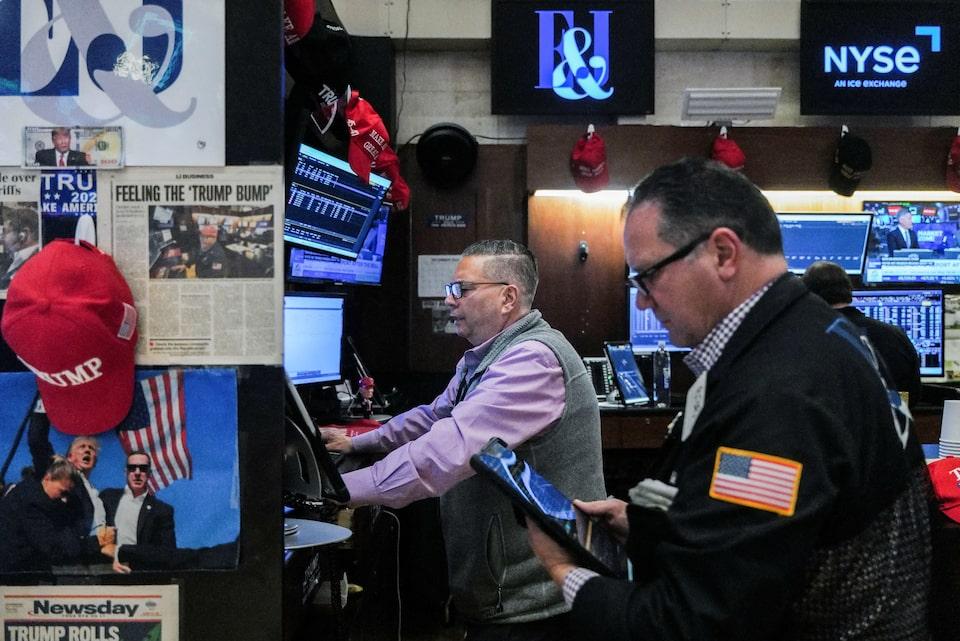
Dow hits record high again Oil prices fall Traders focus on US jobs data later in week NEW YORK, Jan 6 (Reuters) - Major stock indexes including the Dow Jones Industrial Average and European shares rose to record highs on Tuesday, while the dollar edged higher as investors focused on key market data this week that could help gauge the outlook for Federal Reserve policy. Oil prices fell as investors assessed expectations of ample global supply this year against uncertainty around Venezuelan crude output. Sign up here. Venezuela's main opposition leader, Maria Corina Machado, has vowed to return home quickly, praising U.S. President Donald Trump for toppling her enemy, Nicolas Maduro, and declaring her movement ready to win a free election. The White House said on Tuesday that Trump and his team are discussing options for acquiring Greenland and the use of the U.S. military in furtherance of the goal is "always an option." "The market's reaction to the geopolitical situation in Venezuela was well taken, but (reports that) the White House was thinking about taking Greenland with force... could cause a bit of a roadblock," said Peter Cardillo, chief market economist at Spartan Capital Securities in New York. "We had new record highs today, and the momentum keeps building in the marketplace. It's roughly due to the January effect," he said, referring to an early-year buying pattern in stocks. If labor data later this week is weaker than expected, that could help expectations for U.S. rate cuts, he added. STOCK INDEXES CLIMB On Wall Street, chip stocks rose on renewed artificial intelligence optimism. Shares of Exxon Mobil (XOM.N) , opens new tab were down 3.4% on Tuesday. On Monday, the raid on Venezuela had provided a boost to big U.S. oil companies' stock as investors bet Washington would give U.S. firms access to Venezuela's oil reserves. Trump's administration plans to meet executives from oil companies later this week to discuss boosting production in Venezuela. The Dow Jones Industrial Average (.DJI) , opens new tab rose 484.90 points, or 0.99%, to 49,462.08, the S&P 500 (.SPX) , opens new tab rose 42.77 points, or 0.62%, to 6,944.82 and the Nasdaq Composite (.IXIC) , opens new tab rose 151.35 points, or 0.65%, to 23,547.17. MSCI's gauge of stocks across the globe (.MIWD00000PUS) , opens new tab was last up 7.13 points, or 0.69%, at 1,035.15 and reached a record high during the session. The pan-European STOXX 600 (.STOXX) , opens new tab index ended up 0.58% and hit a record high. Indexes in Germany and Spain hit record highs, as investors remained confident in the economic outlook despite escalating geopolitical tensions. The dollar index , which measures the greenback against a basket of currencies including the yen and the euro, rose 0.17% to 98.56. U.S. ECONOMIC DATA TO SET MARKET TONE The upbeat mood in markets was driven by expectations for U.S. interest rate cuts. Traders were focused on a U.S. monthly employment report, due on Friday, which will influence the market's monetary policy expectations. Financial markets are pricing in two Fed rate cuts this year, according to LSEG data. Fed Governor Stephen Miran, whose term at the U.S. central bank ends later this month, said aggressive U.S. interest rate cuts are needed this year to keep the economy moving forward. The yield on benchmark U.S. 10-year notes rose 1.2 basis points to 4.175%, from 4.163% late on Monday. U.S. crude fell $1.19 to settle at $57.13 a barrel and Brent declined $1.06 to settle at $60.70. Gold was last down slightly after rising sharply in the previous session. Spot gold fell 0.12% to $4,491.77 an ounce. Copper soared to an all-time high and nickel leapt more than 9% to an 18-month peak as supply concerns fueled an early-year rally in industrial metals. https://www.reuters.com/world/china/global-markets-global-markets-2026-01-06/
2026-01-06 05:03
Analysts see risks from US midterms and rate cuts Stock markets to rise, albeit at slower pace than in 2025 Borrowing costs in key markets to remain high Dollar expected to fall, yen to strengthen GDANSK, Jan 6 (Reuters) - Geopolitics, U.S. midterm elections and diverging monetary policies are among key drivers for world markets in 2026, alongside an artificial intelligence boom that has raised concerns about a tech share bubble. "The true black swan, then, could lie elsewhere," said Swissquote Bank senior analyst Ipek Ozkardeskaya, referring to a rare, high-impact event that jolts markets. Sign up here. "It may emerge from an overlooked corner of the market: an unexpected macro shock or a sudden policy shift." Here's how some key market themes are taking shape for 2026. PLENTY OF RISKS LINING UP The nomination of a new Federal Reserve chair in early January is a key event. Incumbent Jerome Powell's term expires in May. U.S. President Donald Trump has pressured the Fed to cut rates, bringing central bank independence into question. "The most under-appreciated tail risk for 2026 is that the Fed eases monetary policy more than economic conditions justify, inadvertently reigniting inflation," said eToro global market strategist Lale Akoner. He said further rate cuts could lead to aggressive easing, pushing up inflation and forcing a disruptive policy reversal. The U.S. Supreme Court is poised to rule on the legality of Trump's sweeping emergency tariffs, while U.S. midterm elections take place in November. Geopolitics is also taking centre stage after the U.S. captured Venezuelan President Nicolas Maduro. Trump warned of possible military action in Colombia and Mexico and said Cuba's communist regime "looks ready to fall". Canada and Greenland, targets of Trump rhetoric, are likely watching how developments in Venezuela unfold. It's a big year for emerging market elections from Hungary to Brazil and Colombia, a potential headwind after a strong 2025. Hungary's Viktor Orban faces a race against time before April's election to turn the stagnating economy around enough to extend his grip on power. Latin American elections will fall under the shadow of events in Venezuela, but wins by conservatives in Brazil and Colombia could bring the tighter budget policies and streamlined regulations that investors want. CHECKING IN ON STOCKS Stock markets in the U.S. (.SPX) , opens new tab, Japan (.N225) , opens new tab and Europe (.STOXX) , opens new tab should rally this year, but will struggle to match 2025's blistering gains, a recent Reuters poll suggests. It showed 56% of those surveyed forecasting a correction in the coming months. A potential sell-off in AI-related shares could also hurt broader sentiment. AI excitement has boosted valuations, feeding expectations for massive spending on infrastructure. But doubts about the returns from AI investments and levels of debt some firms are taking on are starting to creep in. Analysts see the S&P 500 at 7,490 points by end-2026 and Europe's STOXX 600 at 623, implying gains of just over 9% and 5% respectively from end-2025. eToro's Akoner said he expected markets to be less concentrated in U.S. mega caps as rotation continues. CENTRAL BANKS WALK A TIGHTROPE Central banks start 2026 on differing paths, having broadly been on an easing trend. The Fed cut rates three times last year and markets forecast two more 25-basis-point reductions by year-end. The European Central Bank is seen on hold, while traders price in a rate hike in Australia and Japan is expected to lift rates to 1% this year. "The ECB has a single mandate – inflation. Therefore, it will continue to prioritize price stability. The Fed, however, has a dual mandate and political pressure for easier policy, giving it more flexibility - but inflation above 3.5% would be a clear barrier," said Swissquote Bank's Ozkardeskaya. STICKY DEBT While Trump hopes rate cuts will lower mortgage rates, longer-term borrowing indicators, such as 30-year Treasury yields , more sensitive to long-term government finances, ended 2025 little changed. Bond yields and debt levels across major economies are expected to remain elevated given fiscal stimulus. Analysts polled by Reuters forecast 10-year Treasury yields to rise to 4.25% by end-2026 from around 4.17% . German Bund yields are forecast to rise to 2.97% from 2.89%. British and Japanese yields, by contrast, are expected to fall. FORECASTING CURRENCIES The consensus trade for a weaker dollar this year contrasts with a year ago, when stronger dollar expectations faded following the April 2 tariff turmoil. The dollar index, which just had its worst year since 2017, is forecast in a Reuters poll to weaken to 95.7 by year-end, implying a 2.5% fall from current levels . "The dollar's dominance is intact, but no longer unquestioned," said Akoner. The yen is expected to strengthen, leaving the dollar at 145 yen from around 157 over that period, according to a Reuters poll. Sterling and the euro are seen broadly stable. Cryptocurrencies remain a high-risk segment and a strong correlation with tech shares should keep volatility elevated, said Ozkardeskaya. Bitcoin hit a record high above $125,000 in October before sliding. It ended 2025 down over 6%. Institutional adoption, exchange-traded funds, and integration with energy and AI markets could bolster long-term demand, added Akoner. https://www.reuters.com/business/global-markets-outlook-graphic-2026-01-06/