2025-01-28 21:46
A look at the day ahead in Asian markets. Wall Street steadied after Monday's freak out over AI-linked mega cap valuations, with Nvidia NVDA.O recouping some of its historic market cap loss while, upon a day's reflection, China's budget startup DeepSeek looked less threatening to U.S. tech leadership. Nvidia gained almost 8% after a 17% slump wiped almost $600 billion off its value on Monday, a record for any company. The tech-centric Nasdaq was up 2% and the S&P 500 about one percent. Monday's slide in companies exposed to artificial intelligence collectively reduced the size of the market by more than $1 trillion. Twenty-four hours later, it looks more like an overdue reset from a record run dominated by the largest companies. The S&P 500 equal weight index (.SPXEW) , opens new tab fell slightly on Tuesday after actually closing up a smidge during the tech-led meltdown on Monday. Nvidia short sellers raked in over $6 billion in profits on Monday, data analytics firm Ortex said. Short bets also paid off big time on chip-maker Broadcom (AVGO.O) , opens new tab, and other AI-linked stocks. Options traders were quick to pile back into Nvidia contracts after Monday's slide. Call options, typically bought to express a bullish view on a stock, outnumbered put options 1.6-to-1, nearly in line with the 1-year average, after dipping to a more than two-month low of 1.36-to-1 on Monday. More than half of the Magnificent 7 companies are reporting earnings this week, with Meta (META.O) , opens new tab, Tesla (TSLA.O) , opens new tab and Microsoft (MSFT.O) , opens new tab releasing Wednesday after the bell and Apple (AAPL.O) , opens new tab post-close on Thursday. This will provide a glimpse of how their AI investments are faring so far and a chance for executives to comment on how much DeepSeek has changed the competitive landscape. While there is scepticism over DeepSeek's cost claims, it clearly introduces competition to the AI game from China. Hedge fund manager Bridgewater Associates said Tuesday DeepSeek's launch of its latest artificial intelligence (AI) models could lead to a short-term correction in many tech companies' share prices but is positive for the industry as an incentive to invest more in efficiency gains. Japan's Nikkei 225 share average (.N225) , opens new tab could take its cue from the U.S. bounce, as it did with a 1.4% slide overnight. Otherwise many Asian centers are closed on Wednesday for the Chinese New Year. The Federal Reserve opened its two-day meeting on Tuesday and is expected to keep rates steady after 100 basis points of easing from September to December. U.S. rate futures are pricing in almost 50 basis points of cuts this year, or two 25 bp reductions starting in June. Until this week, it had factored in just one cut. The European Central Bank meets on Thursday and is expected to lower rates, which would widen the dollar's interest rate advantage. The dollar turned higher against the euro and yen, buoyed by U.S. President Donald Trump's promise to impose tariffs on imported computer chips, pharmaceuticals and steel in an effort to persuade the producers to make them in the United States. Dollar/yen rose 0.7% to 155.63, snapping three straight down sessions magnified by Monday's drop in Treasury yields as investors sought the safety of U.S. government debt. Yields firmed on Tuesday. Here are key developments that could provide more direction to markets on Wednesday: - Australia CPI (Dec & Q4) - Japan Consumer Confidence (Jan) - Federal Reserve rate decision - Meta, Tesla, Microsoft report earnings Sign up here. https://www.reuters.com/markets/asia/global-markets-view-asia-2025-01-28/

2025-01-28 21:44
Trump's crypto czar says intellectual property theft may be at play US officials looking at national security implications of DeepSeek Trump had said DeepSeek should be wake-up call for US firms WASHINGTON, Jan 28 (Reuters) - U.S. officials are looking at the national security implications of the Chinese artificial intelligence app DeepSeek, White House press secretary Karoline Leavitt said on Tuesday, while President Donald Trump's crypto czar said it was possible that intellectual property theft could have been at play. The National Security Council is reviewing the app's implications, Leavitt said. "This is a wake-up call to the American AI industry," she added, echoing Trump's comments from a day earlier while also saying the White House was working to "ensure American AI dominance." Investors sold technology stocks across the globe on Monday over concerns the emergence of a low-cost Chinese AI model would threaten market dominance of U.S.-based AI leaders such as OpenAI and Alphabet's (GOOGL.O) , opens new tab Google. White House artificial intelligence and crypto czar David Sacks was asked on Fox News if there was intellectual property theft involved in the rise of DeepSeek. "Well, it's possible. There's a technique in AI called distillation, which you're going to hear a lot about, and it's when one model learns from another model," Sacks said in the interview. "I think one of the things you're going to see over the next few months is our leading AI companies taking steps to try and prevent distillation ... That would definitely slow down some of these copycat models," he added. During his administration, former President Joe Biden placed a wide range of export restrictions on AI chips and the equipment used to make them, hoping to hamper AI development in China. Trump said on Monday the Chinese app should act as a spur for American companies and added it was good that companies in China have come up with a cheaper, faster method of artificial intelligence. "The release of DeepSeek AI from a Chinese company should be a wake-up call for our industries that we need to be laser-focused on competing to win," Trump said. Sacks told Fox News on Tuesday that American AI companies had "got a little distracted" and "maybe got a little bit complacent." Trump said Chinese leaders had told him the U.S. had the world's most brilliant scientists, and he indicated that if Chinese industry could come up with cheaper AI technology, U.S. companies would follow. "We always have the ideas. We're always first. So I would say that's a positive that could be very much a positive development. So instead of spending billions and billions, you'll spend less, and you'll come up with, hopefully, the same solution," Trump said. Efforts to stop the flow of AI chips to China from U.S. companies such as Nvidia (NVDA.O) , opens new tab and Advanced Micro Devices (AMD.O) , opens new tab were spearheaded by the Commerce Department. Trump's choice to lead that agency, Wall Street banker Howard Lutnick, is scheduled to appear in his nomination hearing on Wednesday. Sign up here. https://www.reuters.com/technology/artificial-intelligence/white-house-evaluates-china-ai-app-deepseeks-affect-national-security-official-2025-01-28/

2025-01-28 21:44
GM posts strong results, better outlook for 2025 than expected Shares slump as tariffs become likely Automaker has brought inventory in early due to tariff threats GM sold 2.7 mln vehicles in 2024 DETROIT, Jan 28 (Reuters) - General Motors (GM.N) , opens new tab earnings exceeded Wall Street's forecasts on Tuesday, but investors still dumped the stock broadly on fears of tariffs that will make it hard for the automaker to hit its 2025 targets. Shares dropped 8.9% on Tuesday to $50.04 a share, as investors and analysts said GM's outlook is clouded by President Donald Trump's threats of tariffs and reduced support for electric vehicles. Trump on Monday evening again threatened tariffs on a broad array of goods, including steel, aluminum and copper, all materials critical to building automobiles. He has also threatened heavy levies on allies Mexico and Canada, which are key to the U.S. automotive supply chain. The automaker projected net income of $11.2 billion to $12.5 billion for 2025. That's ahead of expectations for $10.8 billion as calculated by LSEG, and numerous analysts termed that outlook optimistic. "There's just a lot of uncertainty between tariffs as well as the rules and regulations around EVs and tax incentives. With that uncertainty, that really isn't baked into GM's guidance at this point," said Jeff Windau, financial analyst at Edward Jones. GM CEO Mary Barra told investors on a conference call Tuesday that she believes Trump "wants to use policy and regulations in ways that will strengthen not harm domestic manufacturers like GM." Trump has said he wants to use tariffs to push companies to move operations back to the United States - but such moves can take years. In the meantime, GM has an "extensive playbook" pulled together in the event tariffs are imposed, GM's CFO Paul Jacobson told reporters on Monday prior to Trump's statements. The company had already started to bring vehicles in its international inventory in Mexico and Canada to the United States, Jacobson said. "Every delivery that we can make before a tariff is instituted, it's that much better, rather than sitting on inventory," he said. He did say, however, that they would not be able to make some decisions until they understand what the tariff environment will look like. "There's things that we can do to balance plants, etc, and then there are things that cost a lot more money going forward," he said. GM's fourth-quarter revenue of $47.7 billion surpassed analyst expectations of $43.9 billion. Adjusted earnings per share of $1.92 also exceeded analyst forecasts of $1.89 per share. It earlier had said it sold 2.7 million vehicles for the year, up 4% from 2023. GM reported pre-tax profit of $2.5 billion in the quarter but reported a $3 billion net loss, mostly because of $4 billion in restructuring charges in China where it lost $4.4 billion in the year. The China business did return to profitability before restructuring charges in the fourth quarter, Jacobson said. GM sold vehicles at an average price of $50,000 in 2024, and executives see a 1% to 1.5% drop in North American pricing power and a modest decline in gas-powered vehicle volume in 2025. The company expects losses will narrow with its battery-powered vehicles, reorganization of its China business, and the end of robotaxi development at Cruise, its autonomous vehicle unit. The Detroit carmaker does not break down its EV losses, but said in 2024 that revenue was higher than fixed costs including labor and material costs, a metric that it calls positive variable profitability. The figure does not include costs such as building assembly lines, but indicates financial progress in the EV rollout. GM did not meet its goal of producing and wholesaling 200,000 EVs in North America in the year, instead ending up at 189,000 units wholesale, Jacobson said. EV inventory fell from 100 days at the end of the third quarter to 70 days. GM previously had forecast EV operating losses would narrow by between $2 billion and $4 billion this year from undisclosed levels, although Jacobson said the decline in losses was likely to be closer to $2 billion. GM reported pre-tax profit of $2.5 billion in the quarter but reported a $3 billion net loss, mostly because of $4 billion in restructuring charges in China where it lost $4.4 billion in the year. The China business did return to profitability before restructuring charges in the fourth quarter, Jacobson said. Sign up here. https://www.reuters.com/business/autos-transportation/gm-results-forecast-top-wall-street-targets-thanks-gas-powered-trucks-suvs-2025-01-28/

2025-01-28 21:43
Starbucks shares rise 0.5% after smaller-than-expected sales fall CEO aims to simplify menu, cut wait times, expand U.S. stores Union tensions rise with ongoing contract negotiations Jan 28 (Reuters) - Starbucks (SBUX.O) , opens new tab reported a smaller-than-expected fall in first-quarter comparable sales on Tuesday, in early signs of the struggling coffee chain benefiting from CEO Brian Niccol's efforts to revive demand. The company's shares rose 0.5% in extended trading. They have gained nearly 30% since his appointment in August last year. "It's a critical year in front of us, and we have a lot of work to do to get back to Starbucks," Niccol said. Niccol is credited with reviving the burrito chain Chipotle Mexican Grill (CMG.N) , opens new tab in his last CEO role. He aims to return Starbucks to its coffee house roots in the U.S. by rolling out a simpler menu, ceramic cups, refills and condiment bars, and cutting wait times at the cafes to under four minutes. He said Starbucks' current system of mobile ordering, which handles orders on a first-in, first-out basis, is a "chokepoint" that can overwhelm baristas and the primary obstacle to achieving shorter wait times. A more efficient mobile order system "frees us up to another degree that we haven't totally comprehended," he said. Doing so could help realize the company's potential to eventually double its store count in the U.S., Niccol said. Niccol has also cut back on the company's deals and discounts and instead sought to broaden its marketing beyond loyalty program members. Starbucks' global same-store sales fell 4% in the three months ended Dec. 29, Niccol's first full quarter at the helm, compared with analysts' expectations of a 4.6% fall, according to data compiled by LSEG. "Investors are looking for early indicators that the transformation is in place. The results were broadly in line with expectations," said Danilo Gargiulo, senior analyst at Bernstein. The company has also shuffled its top brass. Earlier on Tuesday, Starbucks said its North America president Sara Trilling and chief supply chain officer Arthur Valdez would leave. Trilling's role will be split, with former Taco Bell executives Mike Grams and Meredith Sandland becoming North America chief stores officer and chief store development officer, respectively. Niccol was a former top boss at Taco Bell before joining Chipotle. "Brian is being surrounded by people he trusts. The appointments are paramount to ensure execution of in-store revisions," Gargiulo said. Starbucks, which suspended its forecasts for 2025 late last year to give Niccol freedom to pursue his restructuring, has ceded ground to rivals such as Luckin Coffee in China, where comparable sales fell for the fourth straight quarter. Meanwhile, tensions have increased with the union seeking to organize the chain's U.S. baristas, as contract negotiations drag on longer than expected since beginning last February. In December, one of Starbucks' busiest times, around 300 stores went on strike across the U.S. to demand a contract, according to Workers United, the union representing Starbucks workers. The union said it has filed more than 90 unfair labor practices in recent weeks and alleges the company has backtracked on the "path forward" it jointly announced with the union last year. Excluding items, Starbucks reported earnings per share of 69 cents, beating estimates of 67 cents. Sign up here. https://www.reuters.com/business/retail-consumer/starbucks-posts-smaller-than-expected-comparable-sales-decline-turnaround-takes-2025-01-28/
2025-01-28 21:23
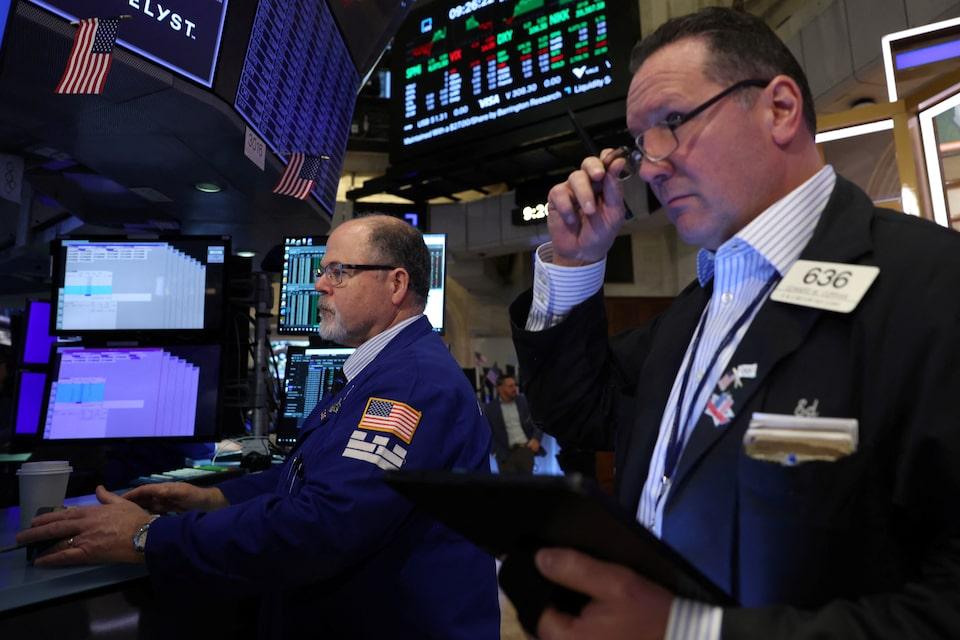
Investors avoid long end of yield curve, stay neutral More volatility expected due to uncertainty of Trump policies High US fiscal deficit dampening long-end appetite Bond market more focused on fiscal policy NEW YORK, Jan 28 (Reuters) - U.S. bond investors are gearing up for increased volatility and staying defensive in their portfolios amid uncertainty about the impact of the Trump administration's policies and signs that the Federal Reserve's interest rate cuts may be on a lengthy pause. Portfolio managers continued to shy away from the long end of the U.S. Treasuries curve - from 10-year notes to 30-year bonds - ahead of a Fed policy decision this week. Many investors have also remained neutral relative to their benchmarks because of the cloudier interest rate path in 2025. The U.S. central bank's policy-setting Federal Open Market Committee is widely anticipated to keep its benchmark overnight interest rate in the 4.25%-4.50% range at the end of its two-day policy meeting on Wednesday. Fed Chair Jerome Powell will likely strike a cautious tone in his post-meeting press conference and keep the central bank's options open to allow policymakers time to assess how President Donald Trump's administration will reshape the fiscal landscape. There is little urgency for the Fed to ease policy given the relative strength of the U.S. economy and the labor market. There is a risk that inflation, while showing signs of slowing, could reaccelerate due to broad tariffs that could be slapped on a slew of imported products along with deportations of undocumented aliens that could cause a spike in wage pressures. "I would think that adding duration into the unknown is probably a bad idea, especially as we have no clue what's going to happen over the next year," said Byron Anderson, head of fixed income at Laffer Tengler Investments in Scottsdale, Arizona. Investors were quick to extend duration, or buy longer-dated assets, last year when they thought the Fed had embarked on a deeper rate-cutting cycle. Longer-dated notes and bonds have historically outperformed shorter-duration assets like cash and Treasury bills in easing periods. But in the last quarter of 2024, there was a retreat from long-duration positioning, analysts said. This month, however, as the 10-year yield hit a 14-month high of 4.809%, active investors have added duration, according to the latest JP Morgan's Treasury Client Survey, which showed the most net long positions since Dec. 2. MORE NEUTRAL The survey also showed that the number of bond investors with neutral positioning relative to their benchmark has also increased by three percentage points since the first week of January. Overall, the survey showed more neutral positioning than long. "We are pretty close to neutral duration. A lot of our overweights are in that three- to five-year part of the curve, less in 10s," said Mike Sanders, portfolio manager and head of fixed income at Madison Investments in Madison, Wisconsin. "I don't see the Fed being able to aggressively cut more than twice this year ... unless there is a pretty bad slowdown, which we don't think is the case right now." A selloff in technology stocks on Monday rattled the bond market, leading to a multi-week decline in Treasury yields and caused the U.S. rate futures market to price in two rate cuts of 25 basis points (bps) this year. The market had factored in just one rate reduction all month until Monday. The Fed's own rate forecast, which was released in December, called for two quarter-percentage-point cuts next year, with the benchmark lending rate ending 2025 in the 3.75%-4.00% range. A burgeoning U.S. fiscal deficit has further dampened the appetite for the long end of the yield curve. The U.S. deficit has doubled, from 3.1% of gross domestic product in 2016, just before Trump first took office, to more than 6% of GDP in 2024. "We have much less conviction and are underweight on the long end of the curve because that is where the risk on fiscal policy is, especially with the amount of issuance," said Brian Ellis, portfolio manager on the Broad Markets Fixed Income team at Morgan Stanley Investment Management in Boston. "And this issuance has to be taken by price-sensitive buyers." Laffer Tengler's Anderson estimated about $14.6 trillion in Treasuries, in both short and long maturities, will come into the market in the next two years. Yet, the biggest bond buyer in the market - the Fed - is not there to absorb the bulk. That could push Treasury yields even higher, analysts said. "The market has been more focused on fiscal policy. It's front and center, and the reaction to monetary policy is a residual piece of the puzzle," said Guneet Dhingra, head of U.S. rates strategy at BNP Paribas in New York. "It's a good time to be neutral in the Treasury market right now because the uncertainty level is extremely high. I don't think there is much to fall back on to have conviction." Sign up here. https://www.reuters.com/markets/rates-bonds/us-bond-investors-seek-safety-amid-uncertainty-about-trump-policies-fed-outlook-2025-01-28/
2025-01-28 21:20
Iron ore production up 2% to nearly 328 million metric tons in 2024 In Q4, iron ore production down 4.6% and sales down 10% Vale prioritized production of higher-margin iron ore products in Q4 SAO PAULO/RIO DE JANEIRO, Jan 28 (Reuters) - Brazilian miner Vale (VALE3.SA) , opens new tab posted on Tuesday its highest annual iron ore production since 2018, even after a decline in output in the fourth quarter when the company prioritized higher-margin products. One of the world's largest iron ore suppliers, Vale's production of the steel ingredient reached almost 328 million metric tons in 2024, up 2% from a year earlier. It expects to produce between 325 million and 335 million tons of iron ore in 2025. "Vale's performance in 2024 was marked by greater operational stability and the start-up of key projects," the miner said in a statement. In the fourth quarter, iron ore production fell 4.6% from the same period a year earlier to 85.3 million tons. Vale said the decline followed its decision to prioritize the output of higher-margin iron ore products, which led to lower production from its Southern System operations in Brazil, which produce iron ore with lower ferrous content than its other mining assets. Iron ore sales fell about 10% in the fourth quarter from a year earlier to 81.2 million tons, as Vale decided to reduce sales of high-silica products in the period to improve all-in pricing premiums. BTG Pactual analysts said weaker iron ore sales were the main highlight of the report. "Vale is making a sensible decision to protect iron ore price realizations and product mix," Leonardo Correa and Marcelo Arazi wrote in a note to clients. They added that going forward the market will need further clarity on the strategy ahead in order to understand the extent of the gap between the company's shipments and production. The average realized price of Vale's iron ore fines was about $93 per ton in the quarter, falling about 21% year-on-year, but up nearly 3% from the third quarter. BASE METALS Vale's copper production increased nearly 3% year-on-year to 101,800 tons in the fourth quarter, helped by Brazil's Salobo and Canada's Sudbury operations, and the ramp-up of underground mines in Canada's Voisey's Bay, the report said. Copper sales rose 1.5% to 99,000 tons in the same period. "As the company works to turn around the base metals division and stabilise operations, the outperformance at copper is a good sign of things to come, in our view," RBC Capital Markets analysts said in a note. The company also produced 45,500 tons of nickel in the fourth quarter, up around 1% from a year earlier, due to a stronger performance at its Onca Puma, Sudbury and Voisey’s Bay operations. It sold 47,100 tons of nickel, down nearly 2% from the same period a year earlier. Sign up here. https://www.reuters.com/business/iron-ore-output-brazils-vale-slid-46-fourth-quarter-2025-01-28/