2025-01-28 19:20
Jan 28 (Reuters) - Nutrition programs that deliver food assistance to millions of U.S. families will not be affected by a White House pause on federal grants and loans, a senior official said on Tuesday. The White House's Office of Management and Budget said in a memo on Monday that federal grants and loans would be put on hold for review to ensure the programs were aligned with President Donald Trump's priorities, such as ending diversity and inclusion efforts. The pause, which could disrupt housing assistance, disaster relief, health care, and scores of other programs that rely on federal dollars, is set to go into effect on Tuesday evening. Payments to individuals, including the Supplementary Nutrition Assistance program (SNAP) and the Special Supplemental Nutrition Program for Women, Infants, and Children (WIC) would not be affected, the senior administration official said. About 42 million Americans receive SNAP benefits, which provides cash assistance for food to low-income households, and about 6 million receive WIC benefits, which provides food and nutrition education to low-income pregnant and postpartum women and their infants and young children, according to the U.S. Department of Agriculture. However, Ali Hard, policy director at the National WIC Association, said agencies that implement WIC, which is a federal grant program administered by state and local entities, had not yet been given guidance on implementation of the memo. "For now, WIC remains open and families should continue to come in for appointments and redeem their benefits as usual," Hard said. "Any policy that would put this program at risk would be catastrophic," Hard said. Sign up here. https://www.reuters.com/world/us/nutrition-programs-unaffected-by-trump-funding-freeze-white-house-says-2025-01-28/

2025-01-28 18:43
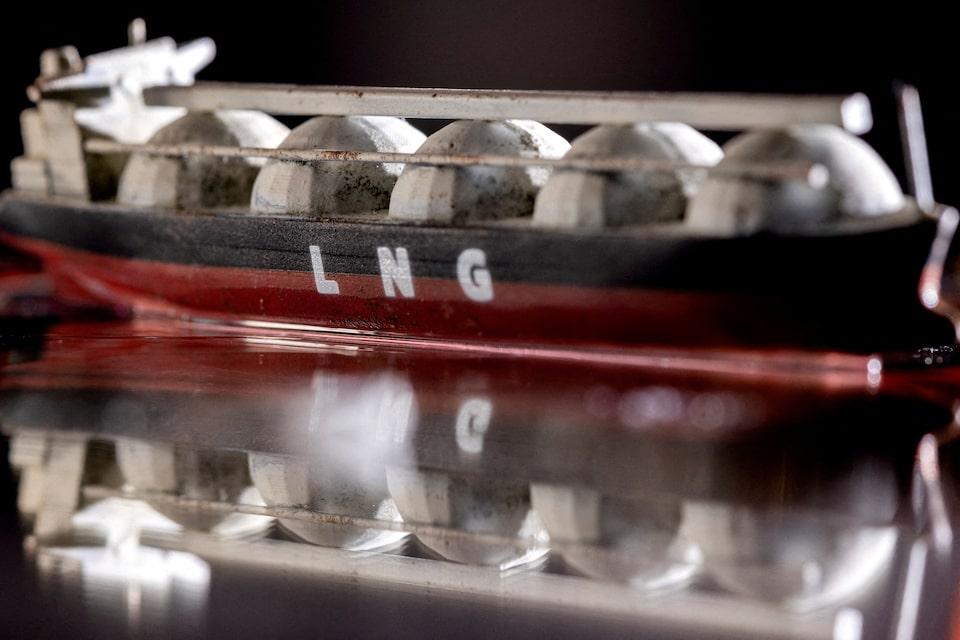
HOUSTON, Jan 28 (Reuters) - Federal regulators on Tuesday gave Venture Global LNG (VG.N) , opens new tab permission to introduce natural gas into the seventh block of its Plaquemines plant in Louisiana as the company continues to ramp up production of the superchilled gas. The Arlington, Virginia-based company is the second-largest U.S. liquefied natural gas (LNG) exporter and has been quickly increasing production from its second LNG plant, Plaquemines. On Tuesday the facility was on track to pull 1.1 billion cubic feet (bcf) of gas, down from a high of 1.3 bcf last Wednesday, and just short of its Calcasieu Pass plant's 1.5 bcfd nameplate capacity, according to data from financial firm LSEG. Venture Global last Thursday became the U.S. most valuable pure LNG company when it raised $1.75 billion in the first big initial public offering of President Donald Trump's second term. That pushed the company's valuation above rival Cheniere Energy (LNG.N) , opens new tab. At peak production, the Plaquemines facility could produce over 27 million metric tonnes per annum (MTPA), according to the company. The entire facility will not be fully commissioned until 2027, it said. Venture Global has said its strategy is to have extended commissioning periods so that it can maximize its profits through sales on the spot market at higher prices than it can get under long term contracts. It will then produce well above its name plate capacity so that it can sell those additional non-contracted cargoes. Venture Global is involved in contract arbitration cases brought by some of the world's top oil and gas producers, including BP (BP.L) , opens new tab, Shell (SHEL.L) , opens new tab, Edison (EDNn.MI) , opens new tab, Orlen (PKN.WA) , opens new tab and Repsol (REP.MC) , opens new tab for cargoes exported from the company's first project, the Calcasieu Pass plant, which they say should have been sold to them under long-term contracts. Shell, Orlen and Edison confirmed that the arbitration is ongoing and could not comment. Venture Global was not immediately available for comment. Venture Global's shares were trading at $19.26 in afternoon trading on Tuesday. It's shares were down 23% from its IPO price. Sign up here. https://www.reuters.com/business/energy/venture-global-given-ok-introduce-natgas-another-lng-plant-output-ramps-up-2025-01-28/
2025-01-28 18:00
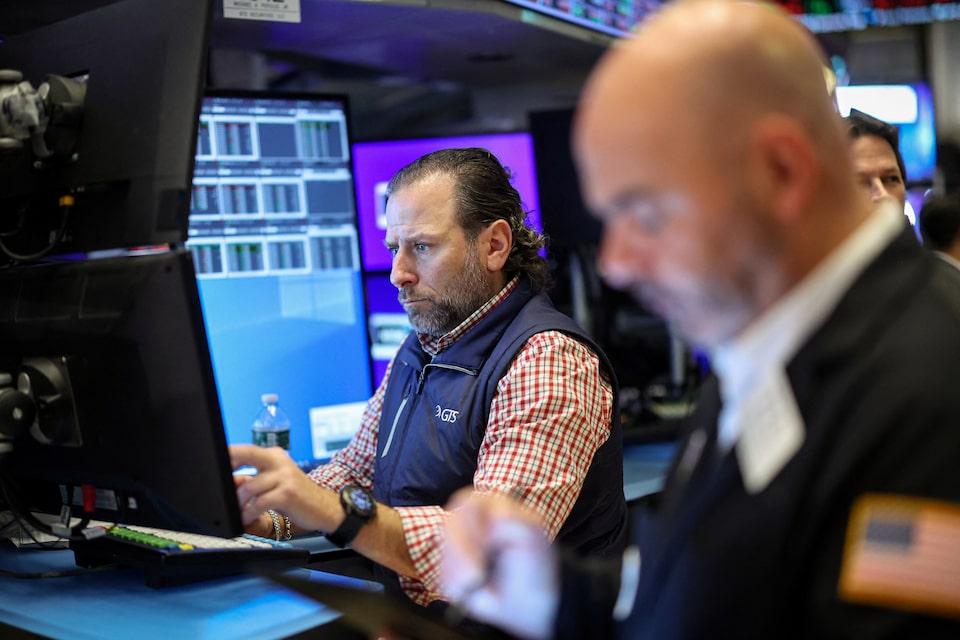
Nasdaq adds 2%, Nvidia shares rebound Safe-haven currencies retreat, tariff talk also boosts dollar 10-year Treasury yields little changed Brent crude prices advance 0.6% BOSTON/LONDON, Jan 28 (Reuters) - Technology stocks regained ground on Tuesday, a day after a low-cost Chinese AI model rattled markets, while traders rotated back into the dollar from safe-haven currencies. The tech rebound boosted Wall Street's main stock indices, with Nasdaq (.IXIC) , opens new tab adding about 2% and chip giant Nvidia up 9%. The S&P 500 (.SPX) , opens new tab gained about 0.9% and the Dow Jones Industrial Average (.DJI) , opens new tab rose 0.3%. Nasdaq shares tumbled on Monday as Nvidia (NVDA.O) , opens new tab fell 17%, losing nearly $593 billion of its value in the biggest one-day market capitalization loss in history. Behind the rout was the emergence of a low-cost Chinese artificial intelligence model, DeepSeek, which made investors question the dominance of AI bellwethers and their suppliers. "The market's initial response has been ‘sell first, understand later,'" said Stuart Dunbar, a partner at investment firm Baillie Gifford. "Short-term news flow and price moves don’t invalidate the potentially profound impact AI will have on the world. The advent of a much cheaper lightbulb didn’t signal bad news for lightbulb manufacturers or electricity companies." Investors' reassessment of developments in the AI sector will also heighten investor interest in this week's earnings at Microsoft (MSFT.O) , opens new tab, Tesla (TSLA.O) , opens new tab and Meta (META.O) , opens new tab. Executives can expect to be asked whether they still plan to spend so much on computing power. Tuesday's earnings highlights included Boeing (BA.N) , opens new tab, whose shares rose about 1.5% even after the plane maker reported its biggest annual loss since 2020. Shares in General Motors European tech stocks stabilized on Tuesday (.SX8P) , opens new tab and the broad STOXX 600 (.STOXX) , opens new tab share benchmark hit a new intraday high, a sign of how strongly shares have been performing in recent weeks. Japan's Nikkei share average fell more than 1% on Tuesday as heavyweight chip-related stocks tracked an overnight drop in the Nasdaq index, but gains in bank shares helped the Topix trim early losses. DON'T FORGET TARIFFS Trade tensions over U.S. President Donald Trump's policies remained in the mix, supporting the dollar and driving investors back out of Treasuries. Trump still plans to make good on his promise to issue tariffs on Canada and Mexico on Saturday, a White House spokesperson told reporters on Tuesday. The spokesperson said Trump is also still weighing fresh tariffs on China for Saturday. Trump said last week he would announce 25% tariffs on Mexico and Canada on Feb. 1 unless the countries help tackle the twin issues of U.S. fentanyl trafficking and immigration. The euro was down about 0.6%, while safe-haven currencies, which had appreciated Monday, gave back their gains. The dollar was last up 0.6% on the Japanese yen and up 0.2% on the Swiss franc. U.S. Treasuries, which rallied on Monday as part of the risk-off move, were little changed, with benchmark 10-year yields last trading at 4.538%. Of note in European rates markets was the spread between French and German 10-year yields, which blew out last year on French political uncertainty. The spread narrowed to 72 bps, its tightest since mid November, as investors hope the current government may be able to pass a budget. There are also central bank meetings for bond and currency investors to grapple with. The Federal Reserve is expected to keep rates steady at its meeting which concludes on Wednesday, and the European Central Bank is expected to cut rates by 25 bps on Thursday. U.S. consumer confidence weakened for a second straight month in January amid renewed concerns about the labor market and inflation, while a new report from the U.S. Commerce Department suggested business investment in equipment was poised to pick up in the first quarter. Oil prices settled up on Tuesday, bouncing back from multi-week lows, after the White House reiterated its tariff plans for Canadian and Mexican imports. Gold , which had slipped as investors liquidated bullion to cover losses, added 0.8% to $2,762 an ounce. Sign up here. https://www.reuters.com/markets/global-markets-global-markets-2025-01-28/
2025-01-28 17:55
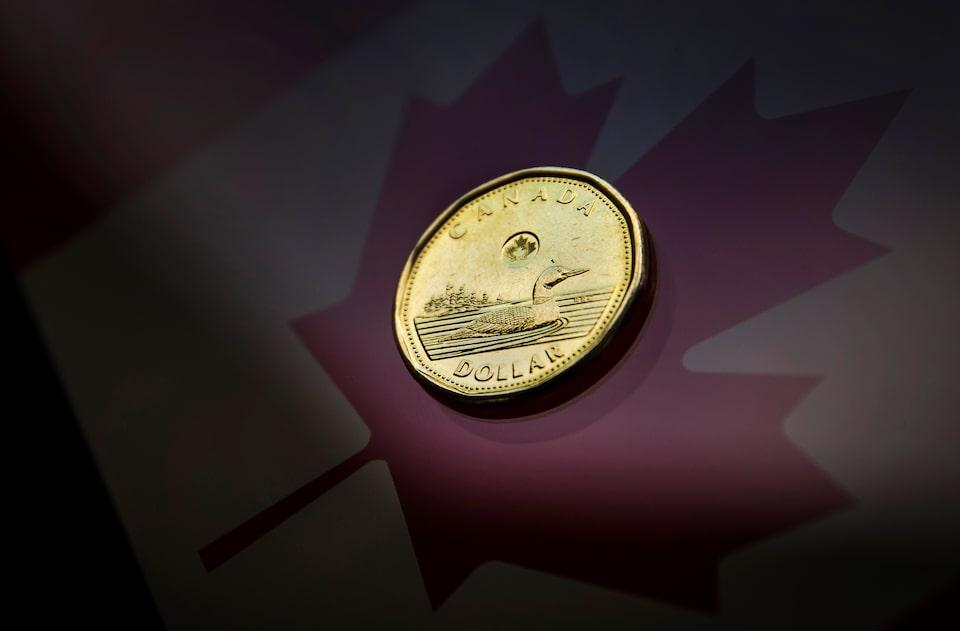
Canadian dollar falls 0.2% against the greenback Trades in a range of 1.4369 to 1.4420 Oil holds near multi-week low Bond yields rise across the curve Jan 28 (Reuters) - The Canadian dollar edged lower against its U.S. counterpart on Tuesday ahead of an expected interest rate cut by the Bank of Canada and as the threat of U.S. trade tariffs drew renewed focus, leading to broad-based gains for the American currency. The loonie was trading 0.2% lower at 1.4395 per U.S. dollar, or 69.47 U.S. cents, after moving in a range of 1.4369 to 1.4420. Last Tuesday, the currency touched a near five-year low at 1.4515. "The loonie continues to trade in limbo, awaiting the crystallization of US tariff risks," said Nick Rees, senior FX market analyst at Monex Europe Ltd. The U.S. dollar (.DXY) , opens new tab rallied against a basket of major currencies after U.S. President Donald Trump said on Monday he planned to impose tariffs on computer chips, pharmaceuticals and steel, aiming to persuade producers to make them in the United States. Trump has flagged possible 25% duties on imports from Canada and Mexico on Feb. 1. "We continue to think that the president will follow through on his tariff threats, which should see a sharp loonie selloff come Monday," Rees said. The Bank of Canada is expected on Wednesday to offer an analysis on the impact of potential U.S. tariffs on the Canadian economy and to cut its benchmark interest rate by 25 basis points to 3%. That would likely widen the gap between Canadian and U.S. interest rates. The Federal Reserve is expected to leave its key rate steady in the 4.25% to 4.50% range on Wednesday. The price of oil , one of Canada's major exports, rose 0.1% to $73.25 a barrel but was holding near a multi-week low hit on Monday. Canadian bond yields moved higher across a steeper curve, tracking moves in U.S. Treasuries. The 10-year was up 3.2 basis points at 3.230%. Sign up here. https://www.reuters.com/markets/currencies/canadian-dollar-dips-us-trade-tariff-risk-2025-01-28/
2025-01-28 17:09
Trump executive order last week banned 'digital dollar' With world reserve currency AWOL, China and Europe can fill void U.S. ban adds to geopolitical divide over digital currencies LONDON, Jan 28 (Reuters) - Donald Trump's rapid move to ban a "digital dollar" has left the field wide open, observers say, for China and Europe to make their already-advanced central bank digital currency (CBDC) prototypes into global standard-setters. While the United States has long seemed reluctant to turn the world's number one reserve currency digital, the fact that it is now the only country to impose a presidential ban on such an asset is hard to ignore. Until last week the U.S. was one of the more than 130 countries, representing 98% of the global economy, exploring a CBDC to try to take advantage of - or at least keep up with - the rapid pace of technological change. Supporters say digital currencies could make 24/7, real-time, cross-currency payments a reality and are a natural alternative to physical cash, which seems in terminal decline. Opponents argue the touted advances can be achieved with existing systems, and protests around the world have focused on one of Trump's main criticisms - denied by central bankers - that CBDCs could become a tool for government snooping. Clear leaders in the CBDC drive have been emerging. Pioneers like China, the Bahamas and Nigeria are seeing usage of their e-currencies pick up, while later this year, despite some growing resistance in Brussels, the European Central Bank will lay out the key features of a future digital euro. Josh Lipsky, who runs international affairs think-tank the Atlantic Council's global CBDC tracker, says that though Trump's ban will have little impact domestically given the Federal Reserve has never shown real appetite for a "retail" digital dollar, it is still a blow. "The most significant impact from the executive order is the signal it sends to the rest of the world," Lipsky said. "It tells Europe that they have the playing field to themselves to set privacy and cybersecurity standards through the digital euro." Dollar-backed "stablecoins" will probably now become de facto digital dollars for the foreseeable future, he added. Meanwhile, "China can go to other countries and say the U.S. is not involved in this technology you're interested in, but we are and we are leading". DIVIDE OPENS The anti-digital dollar signal from Trump, who instead favours cryptocurrencies and wants a national crypto stockpile, comes at the exact time that a geopolitical divide appears to be opening up over CBDCs. There was shock in October when the Bank for International Settlements (BIS), the central bank body overseeing much of their global development work, suddenly quit the flagship "mBridge" project it had been collaborating on with China, Hong Kong and a number of other developing economies. As well as the privacy issue, Trump's new executive order , opens new tab cites threats a digital dollar could pose to U.S. sovereignty and financial system stability. It now prohibits U.S. agencies from "undertaking any action to establish, issue, or promote central bank digital currencies". Lewis McLellan at the London-based Official Monetary and Financial Institutions Forum (OMFIF) said it effectively "hammers a final nail into the coffin of a U.S. central bank digital currency". It also feeds into the narrative of "de-dollarization". Marcos Viriato, whose Parfin firm is helping develop Brazil's DREX CBDC, thinks the U.S. move won't stop others pushing ahead with their own plans. But it will add to long-standing questions about how freely CBDCs will interact. Many are now waiting to see what happens with another BIS project called Agora. Unlike mBridge, it is dominated by Western G7 central banks, including the New York Fed. Neither the NY Fed, the BIS or top U.S. commercial banks involved in Agora like JPMorgan and Citi have commented on their plans. But given Trump's fierce stance, OMFIF's McLellan wondered how things would play out. "This risks seriously devaluing these projects since the dollar holds such an enormously important role in financial markets," he said. The only way for Agora and its ilk to proceed without a Fed presence would be to heavily incorporate "stablecoins", which are pegged one-to-one to the dollar. That, however, McLellan said "would require a major pivot". Sign up here. https://www.reuters.com/markets/currencies/trumps-digital-dollar-ban-gives-china-europes-cbdcs-free-rein-2025-01-28/
2025-01-28 15:09
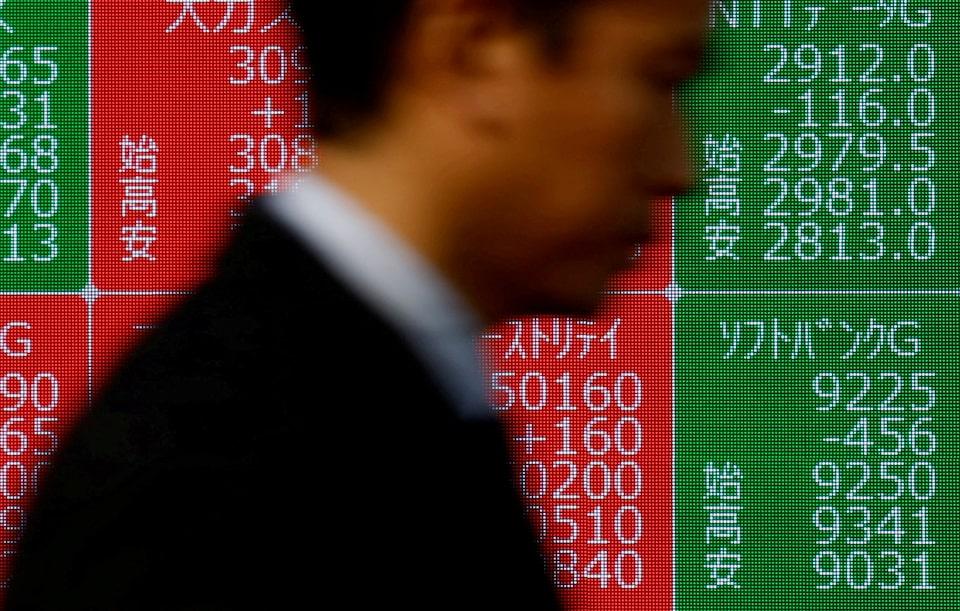
Wall Street tech shocks and tariff uncertainty boost Europe Japan's battered yen viewed as a buffer trade European credit now a good 'place to hide' - investors LONDON, Jan 28 (Reuters) - As a tech stock rout and U.S. dollar swings driven by President Donald Trump's tariff threats send markets into a tailspin, investors are piling into assets from Japan's yen to European credit that could act as a buffer to the turbulence. Markets that cheered Trump's pro-growth agenda have turned bumpy, with oil prices and Canada and Mexico's currencies gyrating, muddled inflation forecasts shaking Treasuries and investors starting to view the new White House as a source of risk. "There will likely be more volatility in the U.S. dollar and across many other assets," said Amelie Derambure, senior multi-asset manager at Europe's biggest investor Amundi. She said she had limited her funds' exposure to sudden shifts in the U.S. outlook by investing in inflation-linked bonds that would be insulated from tariff-induced consumer price rises and European corporate debt that may gain on further euro zone rate cuts. Monday's deep slump in artificial intelligence chipmaker Nvidia (.NVDA.O) , opens new tab, driven by panic over low-cost Chinese competition in AI, has also thrown a fresh curveball at febrile U.S. markets with investors expecting more turmoil ahead. BUFFER TRADES Trump kicked off his presidency by leaving markets guessing about when he might impose his heavily trailed import duties, floating a China trade deal, calling for lower oil prices, and rate cuts and urging multinationals to manufacture in the United States. That has already driven a rush into assets that investors perceive are less sensitive to U.S. policy uncertainty and AI anxiety. Since the Nov. 5 U.S. election, U.S. inflation index-linked bonds have returned roughly 1.5% (.MERG0QI) , opens new tab, while an index of U.S. Treasuries is down around 0.4% (.MERG0Q0) , opens new tab. Japan's yen hit its highest in more than five weeks against the dollar on Monday, after the Bank of Japan last Friday raised interest rates to their highest since the 2008 global financial crisis and revised up its inflation forecasts. It has firmed over 2% to around 155 per dollar since hitting six-month lows on Jan. 10. Russell Investments head of currency and fixed income solutions strategy Van Luu said the yen could be a strong buffer against tariff shocks because while all exporter nations' currencies would suffer from trade wars, the euro and Swiss franc were being weakened by rate cuts "The yen has obviously done really poorly since 2022 so I think the time for a turnaround could be relatively close," he said. Societe Generale asset allocation head Alain Bokobza said he was recommending clients buy the yen, which has taken the brunt of the dollar's ascent but was now supported by Bank of Japan rate hikes. He added the yen could also rise if Wall Street ructions prompted Japanese investors to move cash back home. HUNT FOR COVER European credit also stood out, investors said. According to Bank of America, investors have moved money into funds invested in high-quality European corporate credit for 23 consecutive weeks. Other less fashionable assets might also get a look in as they could be more insulated against rapid policy pivots and market shocks. Legal & General global equity strategist Robert Griffiths said that in the case of a prolonged U.S. tech slump, assets that had been "disliked and under-owned" during the long Wall Street rally, such as European stocks and the UK's FTSE 100, would do well. The UK asset manager, which runs about $2 trillion of client assets, had also in recent weeks increased its euro holdings in case the dollar drops further. TwentyFour Asset Management co-head of investment grade Gordon Shannon said the impossibility of predicting Trump's policies had prompted him to favour bonds issued by domestically focused European banks, utilities providers and telecoms groups whose interest payments were reliable. While Trump's return to the White House has not yet led to tariff hikes, as had been anticipated, uncertainty remains high. "There's a scenario where Trump just does what he feels like and I can't model the effects of that," said Shannon, adding it was equally possible the new U.S. president delayed tariffs or used them as a negotiating tool. "You want to be in names that are well covered (by cashflows) and well understood," he said. "European telecoms and utilities are good places to hide." Amundi's Derambure added that she was staying invested in Wall Street stocks but hedging this exposure with derivatives that would pay out if prices fell. "It's important to build some resiliency into your portfolio, because we know that there will be ups and downs depending on what the market (decides to) believe the most likely (tariff) scenario is." "But at the end of the day everything is exposed to some degree and there is no one asset that is completely safe." Sign up here. https://www.reuters.com/markets/global-markets-trump-investors-analysis-2025-01-28/