2025-01-28 12:15
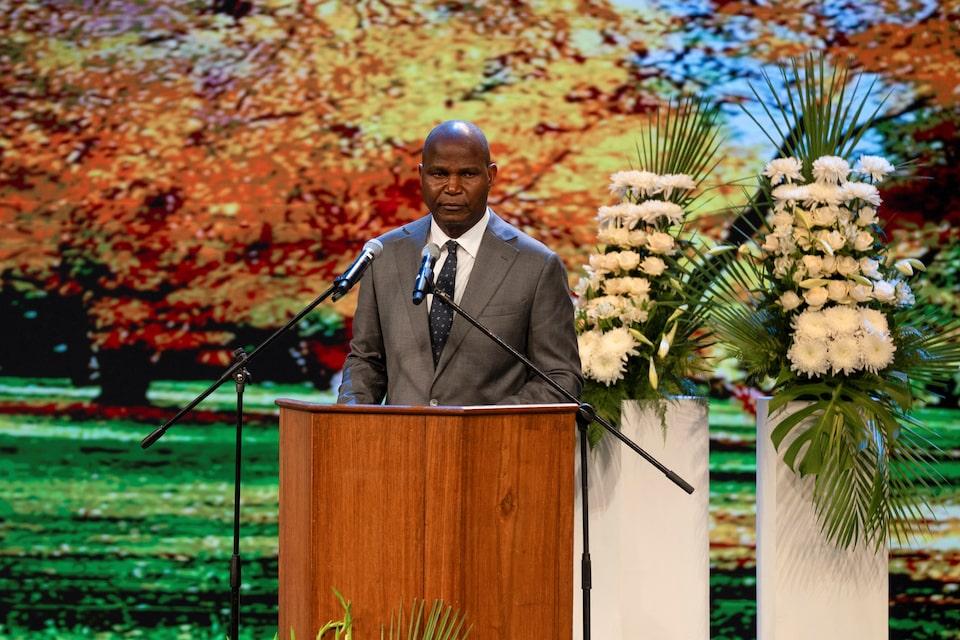
Mozambique, Total both committed to $20 LNG project Gas-to-power projects for local population being discussed $5 billion EDF-led hydropower project facing bottlenecks CAPE TOWN/PARIS, Jan 28 (Reuters) - Mozambique's President Daniel Chapo met with Patrick Pouyanne, the chief executive of TotalEnergies (TTEF.PA) , opens new tab, on Monday to discuss several of the company's projects in the southern African country, including a long-delayed $20 billion liquefied natural gas development. Mozambique LNG, which had been slated to restart construction by the end of 2024 and begin producing gas in 2029, saw that deadline slip when the French oil major last week confirmed , opens new tab that force majeure had yet to be lifted on the project. "During the conversation, Pouyanne reaffirmed TotalEnergies' commitment to resuming the project, currently suspended since 2021, due to security challenges in the region," Chapo said in a post on X on Monday. Chapo said Mozambique, reeling from months of post-election unrest, acknowledged the importance of the Cabo Delgado project for the country's growth prospects. "Efforts are therefore being made to ensure the necessary stability for its implementation," Chapo said. The meeting took place on the sidelines of a two-day energy summit in Tanzania. Pouyanne, speaking Tuesday at the summit, added that they also discussed potential gas-to-power projects for the local population, as well as progress on a $5 billion hydropower dam and plant Total is developing alongside EDF and Sumitomo. The hydroelectricity project can't get underway if Mozambique doesn't also build the expensive power lines that are crucial to transporting the energy to paying customers, the CEO said in a panel on barriers to private investment. "I was discussing the issue yesterday with the president of Mozambique, where we have a hydropower project, and I told him we cannot start the hydro because we don't see the transmission line behind it," Pouyanne said. "It's difficult in terms of huge capital to attract ... You could attract international and private investors on infrastructure (projects), like transmission lines, but it has to be managed ... otherwise I'm afraid this bottleneck will remain," Pouyanne said. Sign up here. https://www.reuters.com/business/energy/mozambique-president-discussed-lng-project-with-totalenergies-ceo-2025-01-28/
2025-01-28 11:34
MILAN, Jan 28 (Reuters) - Italian gas grid operator Snam (SRG.MI) , opens new tab will sell its minority stake indirectly held in ADNOC Gas Pipelines to Abu Dhabi-based investment fund Lunate, Snam said on Tuesday. The deal is in line with the Italian group's long-term strategy to strengthen its role in Europe and reduce exposure to assets not located along Europe's major energy corridors. "The sale of the stake in ADNOC Gas Pipelines is consistent with the recently presented strategic plan, which focuses on the development of a pan-European multi-molecule infrastructure," Snam's CEO Stefano Venier said in a statement. ADNOC Gas Pipelines, a subsidiary of Abu Dhabi National Oil Company (ADNOC), has lease rights to 38 pipelines covering a total of 982 kilometres (610 miles) across the United Arab Emirates. "We are pleased to strengthen our partnership with ADNOC through this investment and deliver on Lunate's mandate to offer investors access to high-quality assets," Lunate's Managing Partner Murtaza Hussain said. Last year Lunate bought a 40% stake from private equity firms BlackRock (BLK.N) , opens new tab and KKR (KKR.N) , opens new tab in the entity that leases Abu Dhabi National Oil Company's (ADNOC) oil pipelines. Snam acquired an indirect stake of almost 6% in the company in 2020, along with other consortium partners, including international funds GIP, GIC, Brookfield Asset Management, Ontario Teachers' Pension Plan Board and NH Investment & Securities, through Galaxy Pipeline Assets HoldCo Limited. The Italian group did not provide any figure for the financial value of the transaction. "Snam currently holds a 5.88% indirect stake in ADNOC, and our model includes a value for Snam's stake of 200 million euros, while the book value is at 135 million euros," Italian investment bank Mediobanca said in a client note. According to a source, the deal will result in a capital gain for Snam compared with the book value. Sign up here. https://www.reuters.com/markets/deals/snam-sell-stake-adnoc-gas-pipelines-abu-dhabis-lunate-2025-01-28/
2025-01-28 11:33
Jan 28 (Reuters) - JSW Infrastructure (JSWN.NS) , opens new tab, India's second-largest private port operator, missed the third-quarter profit view on Tuesday, as growth in cargo volumes decelerated amid a broader slowdown in the world's fifth-largest economy. The company, which operates ten ports and terminals along the country's coastline, reported a consolidated net profit of 3.30 billion rupees ($38.1 million) for the October-December period. Analysts, on average, expected profit of 3.40 billion rupees, per data compiled by LSEG. Coal imports dropped in the quarter due to higher domestic production and a slide in power demand, while weak demand for iron ore from top consumer China hit exports. India's slowing economic growth has also curbed cargo volumes at port operators including JSW Infra and its bigger rival Adani Ports (APSE.NS) , opens new tab, ElaraCapital analysts said in a note. JSW Infrastructure said lower volumes at its Paradip iron ore terminal in the state of Odisha capped volume growth at 5% in the reported quarter. The company reported 9% and 16% volume growth in the first two quarters of the current fiscal year and a 17% increase in the year-ago third quarter. ElaraCapital had expected 6% volume growth in the reporting quarter. The third-quarter results are not comparable with the year-ago figures as the company completed the acquisition of logistics firm Navkar Corporation in October, JSW Infrastructure said. The company said it gained 1.19 billion rupees in revenue and 55.1 million rupees in profit in the reporting quarter from the acquisition. The company's shares ended little changed after the results. ($1 = 86.5430 Indian rupees) Sign up here. https://www.reuters.com/markets/commodities/indias-jsw-infrastructure-misses-q3-profit-view-sluggish-cargo-volume-growth-2025-01-28/
2025-01-28 11:17
A look at the day ahead in U.S. and global markets from Mike Dolan Markets took a deep breath on Tuesday after Wall Street's shock start to the week, with the emergence of cheap Chinese artificial intelligence rival DeepSeek lopping more than half a trillion dollars off what had been America's most valuable firm Nvidia. The tech swoon clocked some impressive milestones and the long-standing concentration of megacap stocks in S&P500 at large dragged broader indexes down sharply. Nvidia's (NVDA.O) , opens new tab 17% one-day drop marked the biggest loss in market capitalisation for a single stock ever, outstripping its own record from last September. The 9% drop in US chipmakers (.SOX) , opens new tab was the biggest in almost four years and the Nasdaq's 3% was its biggest loss of the year so far. Perhaps most curiously, power companies, which are expected to see higher demand from energy-intensive data centers needed to develop AI, also fell sharply. Vistra (VST.N) , opens new tab dropped 28.3% and Constellation Energy (CEG.O) , opens new tab fell 20%. Keeping it all in context, however, Nvidia's relegation from biggest to third most valuable firm merely brought its stock back to October levels - still 94% higher than it was a year ago. Even though the S&P500 (.SPX) , opens new tab had its biggest daily loss in a couple of weeks, the equal-weighted version of the index (.EWGSPC) , opens new tab that evens out distortions of the handful of megacaps actually edged higher on the day and 70% of the index's stocks rose on Monday. Apple (AAPL.O) , opens new tab, which retook the top valued firm slot from Nvidia and which reports quarterly earnings on Thursday, was up 3% on Monday. So, an unnerving day for what has been the dominant AI theme around the world over the past 18 months - but not all as terrible as it seemed. U.S. AI developers welcomed the DeepSeek readout and model and even U.S. President Donald Trump merely characterised it as a wakeup call to U.S. tech firms. That said, the DeepSeek development reintroduces obvious questions from last summer about whether the scale of the investment spend was warranted and that will now be looked at forensically again through the unfolding earnings season. Before Apple tees up on Thursday, Microsoft, Tesla and Meta report earnings tomorrow. With mainland Chinese markets closed from today for the lunar new year holiday, fresh news on the saga is likely to be thin for a bit. Ahead of Tuesday's bell, U.S. stock futures appeared to find their feet, with Nasdaq up 0.7% and S&P futures up 0.4%. Nvidia bounced about 6% out of hours. The ripples overseas were limited too - with Japan's Nikkei (.N225) , opens new tab caught in Monday's tech slipstream and underperforming with a loss of 1%. European stocks (.STOXX) , opens new tab, by contrast, were up 0.7% to a new intraday record and Hong Kong (.HSI) , opens new tab was also marginally higher. One eye-catching aspect of Monday's shakeout was the degree to which it hit U.S. Treasury yields and Federal Reserve futures. With the Fed kicking off its latest two-day policy meeting today and widely expected to stand pat as it assesses the policies of the new Trump administration, rate futures reacted to tech wobble by moving to fully price two rate cuts this year. January consumer confidence readings top today's economic data diary. Two-year Treasury yields followed suit, plunging back below 4.2% for the first time in more than a month and 10-year yields dipped below 4.5% for the first time this year. Both have ticked back higher early on Tuesday as equity markets stabilised. The dollar (.DXY) , opens new tab reacted likewise, falling to new year lows during Monday's upheaval but regaining ground today. Helping that dollar bounceback was a re-boot of Trump tariff fears. Even though newly confirmed U.S. treasury Secretary Scott Bessent was reported to be pushing for a modest universal tariff hike of just 2.5%, Trump responded to that by further sweeping tariff threats on copper and aluminium imports. And in what seemed like another night of seemingly endless Trump commentary, the new President told reporters he thought Microsoft (MSFT.O) , opens new tab was in talks to acquire TikTok and that he would like to see a bidding war over the app. Elsewhere, HSBC's stock (HSBA.L) , opens new tab slipped as the bank said it would wind down its M&A and equities businesses in Europe, Britain and the Americas - signalling its biggest retrenchment from investment banking in decades and an acceleration of its shift to Asia. Key developments that should provide more direction to U.S. markets later on Tuesday: * US January consumer confidence, December durable goods orders, November house prices, Richmond Federal Reserve Jan business surveys, Dallas Fed service firms survey * US Federal Reserve's Federal Open Market Committee starts two-day meeting * US corporate earnings: Boeing, Starbucks, Kimberly-Clark, Sysco, Lockheed Martin, General Motors, Invesco, Stryker, Chubb, Packaging Corp of America, Royal Caribbean Cruises, Paccar, Synchrony, RTX, BXP, F5 * US Treasury sells $44 bln of 7-year notes, $30 bln 2-year floating rate notes Sign up here. https://www.reuters.com/markets/us/global-markets-view-usa-2025-01-28/
2025-01-28 11:05
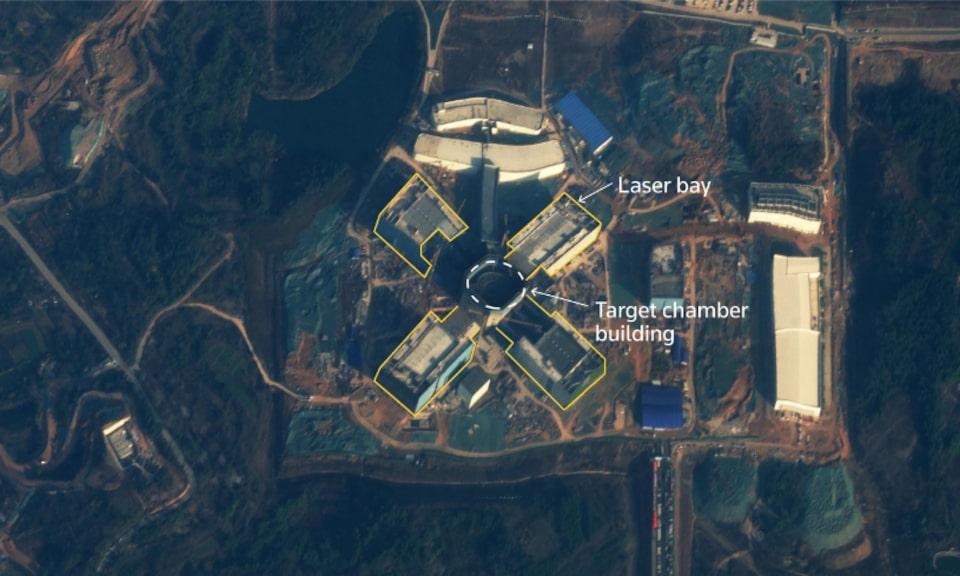
New Chinese facility could aid nuclear weapons design and power generation Laser fusion research important since full nuclear testing banned Experiment bay at facility in Mianyang is 50% larger than U.S. NIF, researcher says SINGAPORE, Jan 28 (Reuters) - China appears to be building a large laser-ignited fusion research centre in the southwestern city of Mianyang, experts at two analytical organisations say, a development that could aid nuclear weapons design and work exploring power generation. Satellite photos show four outlying "arms" that will house laser bays, and a central experiment bay that will hold a target chamber containing hydrogen isotopes the powerful lasers will fuse together, producing energy, said Decker Eveleth, a researcher at U.S.-based independent research organisation CNA Corp. It is a similar layout to the $3.5 billion U.S. National Ignition Facility (NIF) in Northern California, which in 2022 generated more energy from a fusion reaction than the lasers pumped into the target - "scientific breakeven". Eveleth, who is working with analysts at the James Martin Center for Nonproliferation Studies (CNS), estimates the experiment bay at the Chinese facility is about 50% bigger than the one at NIF, currently the world's largest. The development has not been previously reported. "Any country with an NIF-type facility can and probably will be increasing their confidence and improving existing weapons designs, and facilitating the design of future bomb designs without testing" the weapons themselves, said William Alberque, a nuclear policy analyst at the Henry L. Stimson Centre. China's foreign ministry referred Reuters questions to the "competent authority". China's Science and Technology Ministry did not respond to a request for comment. The U.S. Office of the Director of National Intelligence declined to comment. In November 2020, U.S. arms control envoy Marshall Billingslea released satellite images he said showed China's buildup of nuclear weapons support facilities. It included images of Mianyang showing a cleared plot of land labeled "new research or production areas since 2010". That plot is the site of the fusion research centre, called the Laser Fusion Major Device Laboratory, according to construction documents that Eveleth shared with Reuters. NUCLEAR TESTING Igniting fusion fuel allows researchers to study how such reactions work and how they might one day create a clean power source using the universe's most plentiful resource, hydrogen. It also enables them to examine nuances of detonation that would otherwise require an explosive test. The Comprehensive Nuclear Test Ban Treaty, of which both China and the United States are signatories, prohibits nuclear explosions in all environments. Countries are allowed "subcritical" explosive tests, which do not create nuclear reactions. Laser fusion research, known as inertial confinement fusion, is also allowed. Siegfried Hecker, a senior fellow at the Freeman Spogli Institute for International Studies and the former director of Los Alamos National Laboratory, another key U.S. nuclear weapons research facility, said that with testing banned, subcritical and laser fusion experiments were crucial to maintaining the safety and reliability of the U.S. nuclear arsenal. But for countries that have not done many test detonations, he said - China has tested 45 nuclear weapons, compared with 1,054 for the United States - such experiments would be less valuable because they do not have a large data set as a base. "I don't think it would make an enormous difference," Hecker said. "And so ... I'm not concerned about China getting ahead of us in terms of their nuclear facilities." Other nuclear powers, such as France, the United Kingdom and Russia, also operate inertial confinement fusion facilities. The size of those facilities reflects the amount of power designers estimate is needed to apply to the target to achieve ignition, said Omar Hurricane, chief scientist for the inertial confinement fusion programme at Lawrence Livermore National Laboratory, which operates NIF. "These days, I think you probably can build a facility that's of equal energy or even more energetic (than NIF) and a smaller footprint," Hurricane said. But, he added, at too small a scale, experimental fusion does not appear possible. That other countries operate laser-driven fusion research centres is not a cause for alarm in itself, Hurricane said. "It's kind of hard to stop scientific progress and hold information back," he said. "People can use science for different means and different ends, and that's a complicated question." Sign up here. https://www.reuters.com/world/china/images-show-china-building-huge-fusion-research-facility-analysts-say-2025-01-28/
2025-01-28 11:00
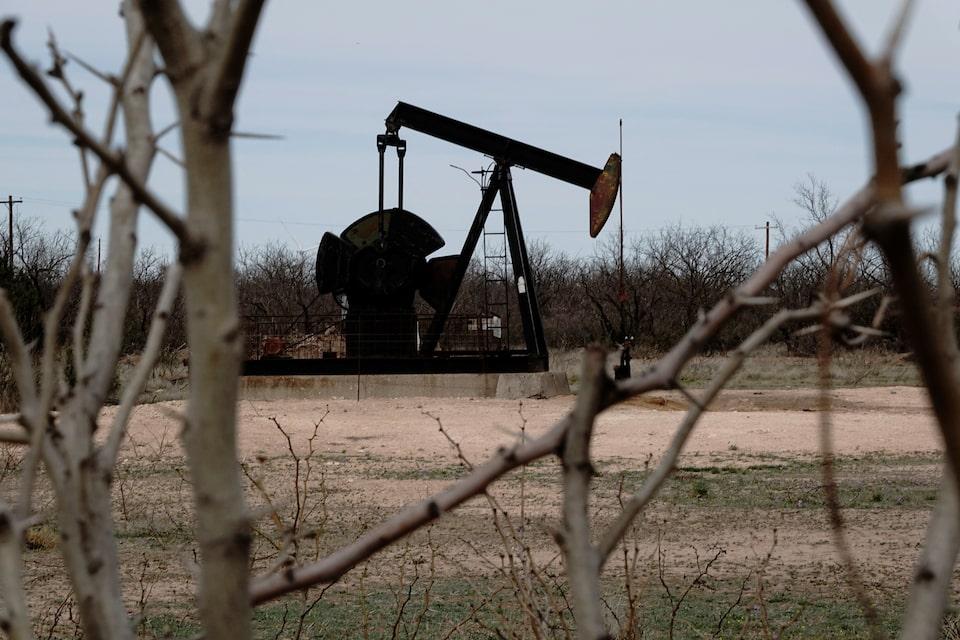
US crude output hits record highs as rig count, frac fleets slip WTI to average $63/bbl in 2025, oil executives planning for $70-75 Quarterly land rig day rates to end 2025 at lowest since Q2 2022 Bankruptcies on the rise as service firms face lower prices, less work HOUSTON, Jan 28 (Reuters) - Top U.S. oilfield services firms are facing weaker pricing and revenue this year as oil producers become increasingly efficient and keep a cap on spending, according to oilfield executives and analysts. U.S. producers, mainly shale companies which led a fracking revolution that unlocked vast new supplies of crude from rock, are pumping record amounts of oil, but using fewer rigs to do it after the COVID-19 pandemic crushed prices and spurred a boom in company mergers and new efficiencies. The number of oil rigs has dropped to its lowest since December 2021, according to oil service provider Baker Hughes . In the Permian basin, the top U.S. oilfield located in West Texas and eastern New Mexico, the rig count is at its lowest since February 2022. The number of active frac fleets totaled 183 in the week to Jan. 23, its lowest since March 2021, according to data from consultancy Primary Vision. This year, the oilfield services sector is set to be squeezed again as operators eye weaker crude price forecasts due to oversupply. U.S. benchmark West Texas Intermediate crude futures , which ended last year largely flat at just below $72 a barrel, will average around $63 in 2025, according to Citi. Roughly half the Texas and New Mexico-based oil executives surveyed by the Dallas Fed in December said they were using $70-$75 a barrel for capital planning. Amid softer demand, land rig day rates are set to end the year at their lowest level since the second quarter of 2022, according to consultancy, Rystad Energy. "Day rates are not great," said Jasen Gast, CEO of Houston-based Oilfield Service Professionals (OSP). Halliburton (HAL.N) , opens new tab, one of the top U.S. fracking firms, saw its revenue fall 9% to $2.2 billion in the fourth quarter and is anticipating a low to mid-single digit decrease from 2024 levels due to lower negotiated prices for some of its equipment. "We're not immune to pricing," said CEO Jeff Miller. Rivals are also feeling the pinch. JP Morgan expects Liberty Energy (LBRT.N) , opens new tab will see its EBITDA per frac fleet decline to $19.9 million in 2025, from $24.7 million in 2024 as pricing pressures hit margins. "The combination of significant improvements in shale completion efficiency and a softer macro picture is leading to further weakness in the frac market," the analysts said. LESS WORK, MORE DEBT The U.S. rig count peaked at 2,031 in September 2008, according to Baker Hughes , when U.S. oil production was around 4 million barrels per day (bpd), data from the U.S. Energy Information Administration showed. That compares with just 585 rigs operating when production hit a record high at 13.46 million bpd in October 2024, the data showed. "In 2023 we were thinking the 2024 (rig count) would likely be down 1-2% compared with 2023, but it was actually down 10-11%, so we did overestimate how resilient some of these companies could be," said Rystad Energy's senior vice president, Thomas Jacob. "Across the board, any E&P that we talk with, any OFS company, pressure pumper that we've spoken with, they all agreed that the amount of work this year could be slightly down, and pricing is definitely down," Jacob added. As oilfield firms face lower prices and less work, their debt is rising and more are filing for bankruptcy, according to Hal Wallace, president of Texas-based debt collector Ryan and Jacobs. Energy companies in hot water would usually owe between $20,000 and $250,000, but that has spiked since November 2023, with some companies' debt mounting to $5 million-$8 million, Wallace said. In the first two weeks of 2025, energy companies owed a collective $9.59 million, compared with $75.78 million for all of 2024, and $45.55 million for 2023, according to Wallace. "I've seen more bankruptcies in the last 18 months than I have in a long time. A lot of them seem to be the service companies," Wallace said. Sign up here. https://www.reuters.com/business/energy/us-oilfield-firms-face-pricing-squeeze-fracking-demand-slumps-2025-01-28/