2025-01-28 07:22
BENGHAZI/LONDON, Jan 28 (Reuters) - Local protesters blocked crude oil loadings at the Es Sider and Ras Lanuf ports in Libya on Tuesday, five engineers and a shipping source told Reuters, putting about 450,000 barrels per day of exports at risk. In a statement addressed to the country's state-run National Oil Corporation (NOC) dated Jan. 5, the protesters demanded the relocation of several oil company headquarters to the Oil Crescent region, calling for fair development of their coastal area to improve living conditions. An NOC spokesperson did not immediately reply to a Reuters request for comment. The company said on its official X account on Tuesday that its crude production had reached more than 1.4 million bpd, about 200,000 bpd short of its pre-civil war high. It was not immediately clear if the blockade had had an impact on production so far. A loading programme seen by Reuters showed that Es Sider was on track to export about 340,000 bpd of crude in January, with another 110,000 bpd slated to ship from Ras Lanuf. Brent crude prices were up 41 cents at $77.49 a barrel by 1119 GMT, with analysts citing the Libya outage as one of the reasons for the rise. Protests have previously disrupted oil operations in Libya, forcing the shutdown in August , opens new tab last year of about 700,000 bpd of production in a dispute over the position of the central bank governor. The shutdowns lasted for more than a month, with production gradually resuming from early October. Sign up here. https://www.reuters.com/business/energy/protesters-libya-call-halt-oil-loading-es-sidra-port-2025-01-28/

2025-01-28 07:03
Ukrainian hospitals have adjusted to wartime realities Some procedures continue even during air strikes Hundreds of clinics and hospitals have been damaged KYIV, Jan 28 (Reuters) - Six months ago, doctors were performing an operation at Ukraine's Center for Pediatric Cardiology and Cardiac Surgery when a missile struck the adjacent building inside the Kyiv compound of Ukraine's biggest children's hospital. "I remember the ceiling falling down on me," recalled Vadym Tkachuk, head of the center's intensive care unit. "But then the first thoughts are always about patients." Today, he and his team of specialists are performing complicated operations on some of the country's tiniest and most vulnerable patients at a temporary location while the damaged hospital undergoes repairs. For babies like Veronika, born nearly four months prematurely, Ukraine's ability to reopen the children's heart surgery center may have meant the difference between life and death. "If it weren't for centers and doctors like these, I think many children would have died," the baby's mother Anhelina Shevchuk, 21, told Reuters after Veronika underwent a lifesaving operation at the center's temporary location. The new location has only half the space and is missing some equipment specially designed for pediatric treatment, "but we keep working in those more difficult conditions without turning away any patients," said Illia Yemets, the center's general director. When air raid sirens go off and others across the capital move to shelter, staff at the hospital often stay at their posts to look after their seriously ill pediatric patients. More than 1,900 medical facilities at 715 hospitals and clinics have been damaged during the war, Ukraine's health ministry said last month. The authorities have installed 12,000 generators at medical institutions to protect them from losing power during Russian attacks that have relentlessly targeted Ukraine's energy grid. Despite the conditions, Shevchuk said she was confident in the doctors treating baby Veronika. "She's getting better now," she said with a faint smile. "She's gaining weight." Sign up here. https://www.reuters.com/world/europe/ukrainian-doctors-save-lives-childrens-heart-surgery-center-relocated-after-2025-01-28/

2025-01-28 06:44
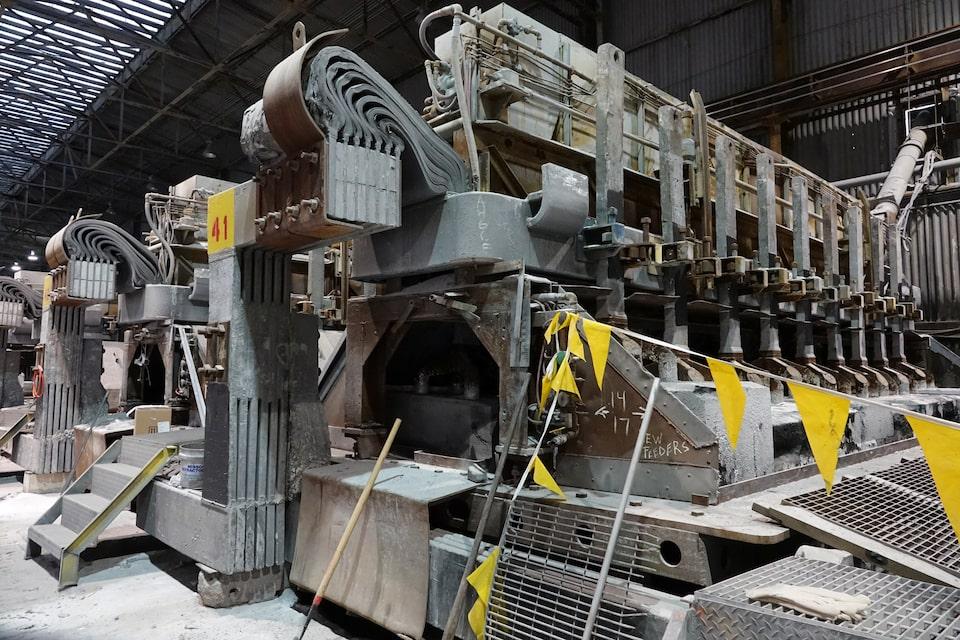
Trump made fresh remarks about imposing tariffs on Monday US copper consumers seen impacted since US is net importer US aluminium, copper smelting industries to take time to restart MELBOURNE, Jan 28 (Reuters) - President Donald Trump's vow of tariffs on U.S. copper and aluminium imports would result in higher costs for local consumers because of a shortfall of domestic production and the length of time it would take to renew the industry, analysts and industry participants said on Tuesday. In a speech to Republican lawmakers on Monday, Trump said he would impose the tariffs on aluminium and copper - metals that are needed to produce U.S. military hardware - as well as steel, to entice producers to make them in the United States. "We have to bring production back to our country," he said. Trump won the U.S. presidency in November vowing to lower costs for consumers still smarting from an inflation surge in the first half of his predecessor Joe Biden's term. However, analysts argue his plan for tariffs on imports to bolster the country's manufacturing sector, another of his promises, may undercut his price-cutting pledge. It was not clear how broadly the tariffs could be applied, but several mining CEOs have previously said they are preparing for different scenarios as markets brace for a potential change to trade flows. "There’s a few unknowns here. Will these tariffs be enacted, and at what scale, and who will pay? Ultimately they generally get paid by the consumer particularly in the case where there’s no domestic substitute," said analyst Daniel Morgan at Sydney investment bank Barrenjoey. U.S. aluminium and copper smelters have been closing and would need new infrastructure and power contracts to restart, among other measures, all of which take time, he said. Aluminium producers in Canada such as Rio Tinto (RIO.AX) , opens new tab and Alcoa (AA.N) , opens new tab would be unlikely to take revenue hits, instead the costs would likely be rolled to automakers who would then pass them to U.S. consumers, he added. Rio Tinto declined to comment. An Alcoa spokesperson pointed to comments from CEO William Oplinger from a results call last week that flagged the potential for "wide ranging effects on supply, demand and trade flows". He estimated that a 25% tariff on current Canadian export volumes to the U.S. could represent $1.5 billion to $2 billion of additional annual costs for U.S. customers. An executive at India's top mining lobby group noted the U.S. is the biggest export market for its aluminium, and it expects India's government to take action by convincing Trump not to issue any levies. "If Trump imposes tariffs, it will have an adverse impact particularly on aluminium because Europe is already on path to impose a carbon tax and the UK might do it too," said B.K. Bhatia, additional secretary general at the Federation of Indian Mineral Industries. On copper, John Fennell, CEO of the International Copper Association Australia said any tariff on imports to the U.S. would impact its industry given the country is a net copper importer, although it may speed the development of new mines such as Rio Tinto's Resolution in Arizona. "This could be good for new mines like Resolution but that is many years off, and the pain would be felt by local manufacturers paying the tariffs in the interim," he said. Freeport-McMoRan (FCX.N) , opens new tab CEO Kathleen Quirk said last week that the miner would not be affected by any copper tariffs as they sell all their U.S. copper domestically and their Indonesian metal goes to Asia. But she worried about any potential inflationary effects of copper tariffs. In Japan, the world's third-largest steel maker, steel and aluminium tariffs during Trump’s previous term had a limited impact, noted Tomomichi Akuta, senior economist at Mitsubishi UFJ Research and Consulting. "The majority of Japan's steel exports are value-added specialty products. And since value-added products were excluded, we expect a similar approach this time. These value-added products are difficult to substitute, making them less likely to be targeted," Akuta said. Sign up here. https://www.reuters.com/markets/commodities/trumps-copper-aluminium-tariffs-may-raise-costs-us-consumers-2025-01-28/
2025-01-28 05:50
Jan 29 (Reuters) - Due to lunar new year holidays in several regional markets on Wednesday, Jan. 29, there will be no global currencies report during Asian hours. Sign up here. https://www.reuters.com/markets/currencies/currency-markets-jittery-traders-assess-deepseek-tariff-concerns-2025-01-28/
2025-01-28 05:46
Jan 28 (Reuters) - Indian budget carrier SpiceJet (SPJT.BO) , opens new tab said on Tuesday that the first of four grounded Boeing 737 MAX aircraft would resume operations on Wednesday, Jan. 29. SpiceJet aims to restart the other three 737 MAXs and 10 aircraft in total by mid-April, it said in a statement. Several SpiceJet aircraft have been grounded or deregistered due to unpaid dues to lessors. As of November, the airline had a fleet of 60 aircraft. The carrier has done a series of fund raises to settle its dues and bring its grounded jets back to operation. Sign up here. https://www.reuters.com/business/aerospace-defense/indias-spicejet-says-first-grounded-boeing-planes-restart-jan-29-2025-01-28/

2025-01-28 05:35
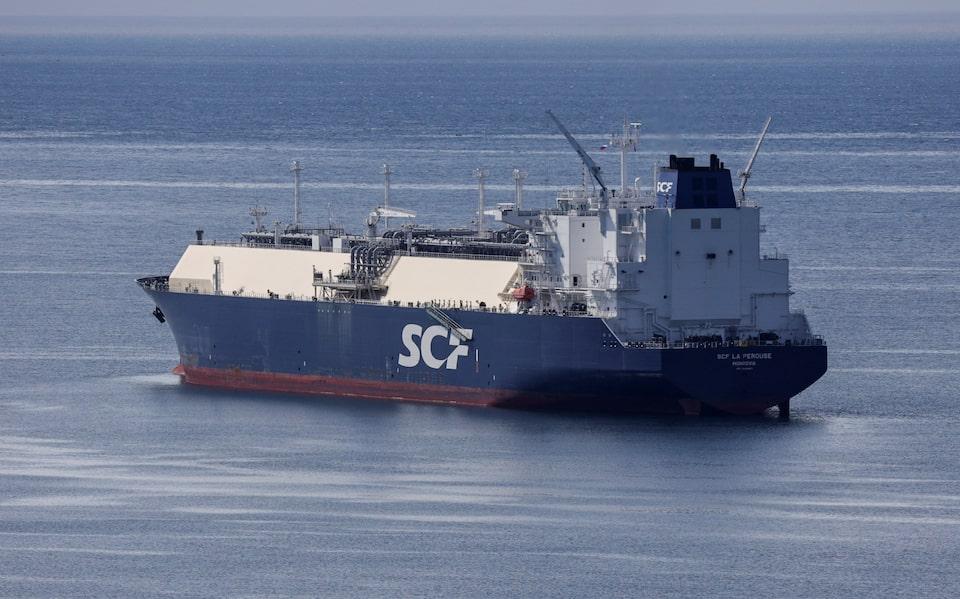
LAUNCESTON, Australia, Jan 28 (Reuters) - The world's imports of liquefied natural gas are set to jump to the highest in a year in January as Europe's winter demand draws cargoes away from top-consuming region Asia. A total of 38.12 million metric tons of the super-chilled fuel is on track to be imported in January, up from 37.69 million in December and the most since January 2024's 38.73 million, according to data compiled by commodity analysts Kpler. The January volume is also the third-highest on record, underscoring the strong growth in LNG imports as new supply comes online and as Europe seeks to replace pipeline natural gas from Russia. Europe's imports are expected by Kpler to rise to 11.82 million tons in January, up from 10.87 million in December and the highest since April 2023. The January volume for Europe is also on track to be the fourth-highest monthly total, eclipsed only by three months in 2022 and 2023 when the continent was scrabbling for gas after the shutdown of pipeline supplies from Russia in the wake of Moscow's invasion of Ukraine in February 2022. It's also worth noting that while Europe's LNG imports are likely to rise 8.7% in January from the month before, arrivals from Russia are expected to drop to 1.60 million tons, down 11.6% from December's 1.81 million. The outlook for Europe's LNG imports from Russia is increasingly uncertain, especially with the return of Donald Trump as U.S. president. Trump is unabashedly in favour of boosting U.S. energy exports, and LNG shipments to Europe offer one of the best opportunities to do so. If European countries agreed to phase out imports from Russia in favour of U.S. cargoes it would help meet several objectives. These include putting further pressure on Russian President Vladimir Putin to end the war in Ukraine, as well as giving Trump a "win" that may help ease the threat of new tariffs on Europe's exports to the United States. The United States is already the world's largest exporter of LNG, and the commissioning of new plants in 2025 will cement that position. But the global LNG market may move into surplus by the end of this year, making it in the interests of both Trump and U.S. LNG exporters to try and limit markets for Russian exports. Europe's imports of U.S. LNG are expected to rise to a record high of 6.70 million tons in January, up from 5.20 million in December and 11.7% above the previous peak of 6.0 million in January last year. SOFT ASIA In contrast, Asia's imports of U.S. LNG are expected to drop to 1.81 million tons in January, down from 2.2 million in December and the lowest since February 2024, according to Kpler. Asia's total LNG imports are also set for a decline in January, dropping to 24.48 million tons from a 10-month high of 25.50 million in December. The decline is largely due to a milder-than-usual winter, which has trimmed demand in China, Japan and South Korea, the world's top three importers. Relatively high spot prices have also cut demand, especially in China, with January arrivals slated to come in at 6.29 million tons, down from December's 7.58 million and almost 20% below the 7.83 million of January 2024. The spot price for LNG for delivery to North Asia ended last week at $14.00 per million British thermal units (mmBtu), up slightly from the $13.90 in the prior week. The price peaked last year at $15.10 in the week to Nov. 29, a period when January-arriving cargoes would have been secured. European natural gas prices have also remained elevated, with the TTF benchmark ending at 47.90 euros per megawatt hour, which is equivalent to $14.73 mmBtu. This is a high enough price to draw U.S. LNG to Europe and away from Asia, especially when the shorter shipping times and costs are factored in. With Europe needing to replenish natural gas inventories and move away from Russian LNG, it's likely that it will have prices higher than those in Asia. This in turn may limit the usual seasonal decline in Asian spot prices in the shoulder season between the winter and summer demand peaks. The views expressed here are those of the author, a columnist for Reuters. Sign up here. https://www.reuters.com/business/energy/lng-imports-jump-europe-draws-cargoes-asia-russell-2025-01-28/