2025-01-28 05:32
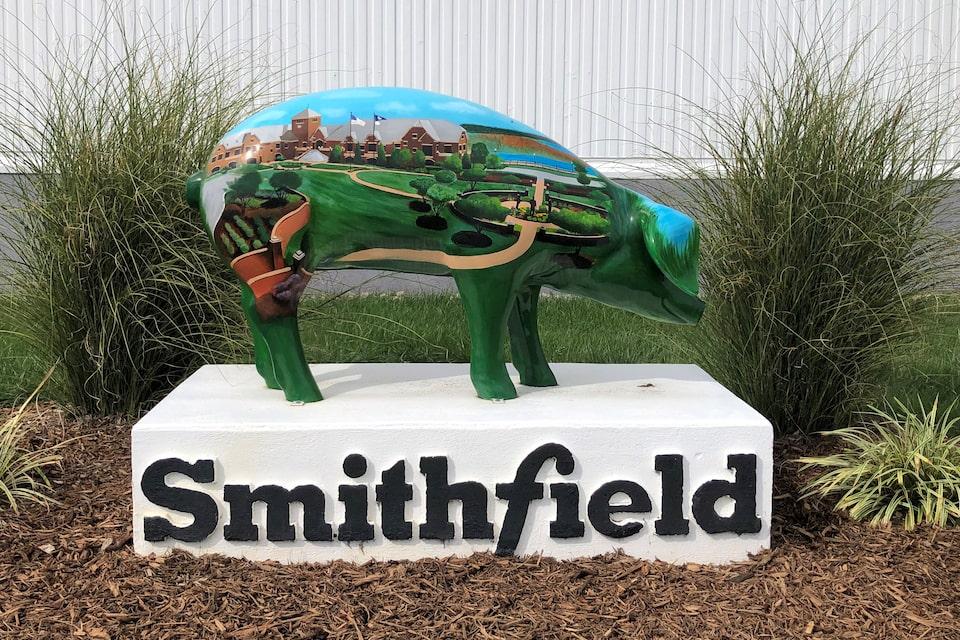
Jan 27 (Reuters) - Smithfield Foods, the largest pork processor in the U.S., said it priced its initial public offering well below its forecast range, raising $521.7 million for the company and the selling stockholder. The IPO valued the pork producer at $7.95 billion, ahead of a market debut that will see the company return to a U.S. exchange after more than a decade. The offering was priced at $20 per share, Smithfield said, below the $23-$27 per share range that would have raised as much as $939.6 million. Smithfield raised $260.9 million in the offering, while the rest was raised by the selling stockholder, a unit of its parent company WH Group (0288.HK) , opens new tab. Part of the proceeds from the IPO will go to Hong Kong-based WH Group, which is expected to remain a majority shareholder. Coming close on the heels of Venture Global's (VG.N) , opens new tab mega IPO that failed to meet lofty expectations last week, Smithfield's debut could set the tone for other candidates mulling a listing in the coming months. It may also offer some insight into how investors are factoring in risks from tariffs proposed by President Donald Trump. The company employs around 2,500 people in Mexico, and has identified tariffs as a risk factor in its IPO prospectus. However, its long history and profitability may boost its appeal as investors have leaned towards backing tried-and-tested companies over riskier startups over the past two years. Its shares will start trading on the Nasdaq under the symbol "SFD" on Tuesday. Founded in 1936, Smithfield began as a pork processing operation named The Smithfield Packing Company. Its portfolio of brands include Eckrich and Nathan's Famous. The company was listed in New York from 1999 until 2013, when WH Group acquired it for $4.7 billion, in what was the biggest Chinese takeover of a U.S. firm at the time. Morgan Stanley, BofA Securities and Goldman Sachs are the lead underwriters for the offering. Sign up here. https://www.reuters.com/markets/deals/smithfield-foods-prices-ipo-below-range-us-market-comeback-2025-01-28/
2025-01-28 05:32
A look at the day ahead in European and global markets from Tom Westbrook The exceptionalism that drove Wall Street to record highs on the back of America's peerless technology firms suddenly has it looking vulnerable and maybe not so peerless after all. Chinese startup DeepSeek's shoestring AI model wiped nearly $600 billion from the value of chipmaking market darling Nvidia (NVDA.O) , opens new tab on Monday, as the assumptions behind a two-year rally in everything to do with AI suddenly looked fragile. Never has a single company lost so much value in a day. DeepSeek says it was able to match U.S. AI performance with much less data and computing power. Cue a vicious unwind of all the positions in data centres, cable-makers, electricity sellers and all sorts of AI-ancillary businesses. For once, the absence of many such businesses or any colossal technology names from Europe's markets has a silver lining, allowing the broad markets in London and the continent to escape the worst of the thrashing. German software giant SAP (SAPG.DE) , opens new tab, which held up fairly well on Monday, beat earnings forecasts and expects accelerating cloud growth, it said early on Tuesday, though traders may scrutinise how much of that growth it expects AI to deliver. Chip manufacturing equipment maker ASML (ASML.AS) , opens new tab, which fell 7% on Monday, may come in for further pressure as selling extended in Tokyo on Tuesday. French consumer confidence and full-year results at LVMH (LVMH.PA) , opens new tab and Christian Dior (DIOR.PA) , opens new tab are also on the calendar. In the Asia day, Nasdaq futures steadied as did shares in Nvidia in after-hours trade, as well as equity futures for the FTSE and Europe . Markets in China, Taiwan and South Korea were shut for a holiday, while Hong Kong trade was shortened on the eve of Lunar New Year, leaving the attention concentrated on Japan. Shares in Nvidia supplier Advantest (6857.T) , opens new tab fell 11%, leaving the two-day drop near 20%. Furukawa Electric (5801.T) , opens new tab, which makes optic fibres for data centres and tripled in value last year, has notched a similar drop this week. Boeing (BA.N) , opens new tab, General Motors (GM.N) , opens new tab and Starbucks report in the U.S. day. Later in the week, fragile markets face earnings at Meta (META.O) , opens new tab, Microsoft (MSFT.O) , opens new tab and Tesla (TSLA.O) , opens new tab - all reporting on Wednesday. Analysts say DeepSeek's pricing blows away anything from the competition and may have some of these companies dialling down their AI spending plans. Policy meetings are also due later in the week in the U.S. and Europe. Monday's market rout had traders pricing in about an extra 9 basis points of Federal Reserve easing. A rate cut in Europe on Thursday is all but priced in. Key developments that could influence markets on Tuesday: - Earnings: SAP, Dior, LVMH, Boeing, Starbucks, Lockheed Martin, General Motors - Economics: French consumer confidence, ECB bank lending survey Sign up here. https://www.reuters.com/markets/europe/global-markets-view-europe-2025-01-28/
2025-01-28 05:28
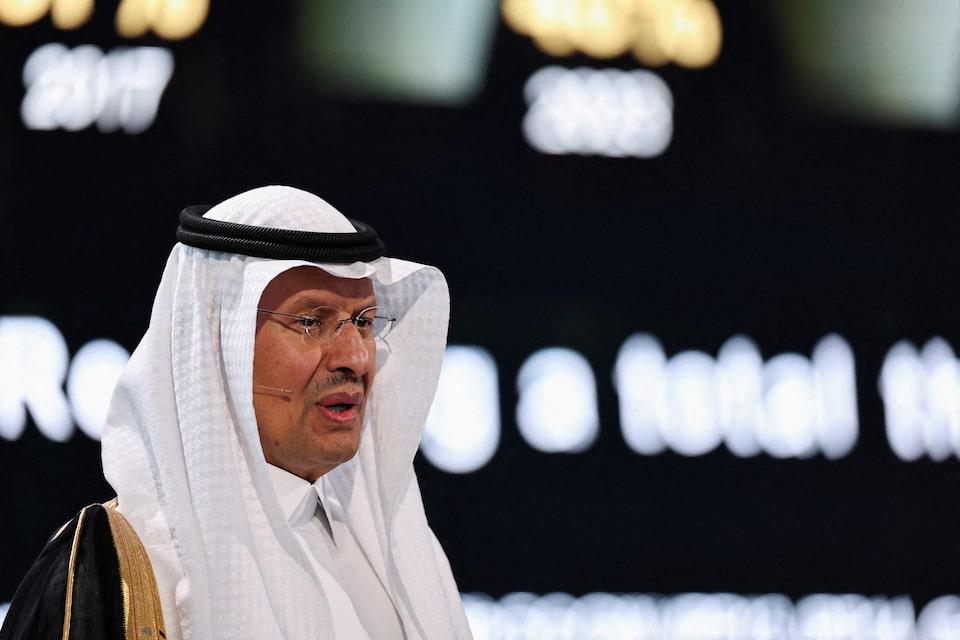
OPEC+ already planning to raise output in April Oil prices have risen above $80 a barrel this year OPEC+ panel meets on Feb. 3, sources say policy changes unlikely DUBAI, Jan 28 (Reuters) - Saudi Arabia's energy minister and several of his OPEC+ counterparts have held talks following U.S. President Donald Trump's call for lower oil prices and ahead of a meeting next week of OPEC+ oil-producing countries, according to official statements and sources. Trump last week called on Saudi Arabia and OPEC to lower oil prices. OPEC+ has yet to respond, but five OPEC+ delegates said a meeting of the group's top ministers on Feb. 3 is unlikely to adjust its current plan to start raising output from April. On Monday, Saudi Energy Minister Prince Abdulaziz bin Salman held talks with Iraq's Hayan Abdel-Ghani and Libya's Khalifa Abdulsadek in Riyadh, the Saudi Press Agency (SPA) reported. The Saudi minister and his Libyan counterpart discussed "strengthening joint efforts to support the stability of global energy markets" to serve their mutual interests, SPA reported. He also discussed cooperation to achieve mutual interests with his Iraqi counterpart, SPA reported. The Saudi minister also met with UAE Energy Minister Suhail al-Mazrouei in Riyadh for informal talks, two sources with knowledge of the matter said. The Saudi government communications office, UAE energy ministry and OPEC did not immediately respond to emailed requests for comment. Oil prices have risen this year, with Brent crude reaching almost $83 a barrel on Jan. 15, its highest level since August, supported by concern about the supply impact of U.S. sanctions on Russia. Prices have since eased, trading below $78 on Tuesday. OPEC+ groups members of the Organization of the Petroleum Exporting Countries (OPEC) and allies including Russia. On Feb. 3, its Joint Ministerial Monitoring Committee (JMMC), a group of top ministers which can recommend policy changes, is scheduled to meet. The ministers will likely make no changes at the meeting to their existing plan to start raising production from April, five OPEC+ delegates, who declined to be identified, have told Reuters since Trump's comments last week. Two others said it was too early to say. OPEC+ members are currently holding back 5.86 million barrels per day of production, or about 5.7% of global demand, after making a series of cuts since 2022 to support the market. April's planned increase follows several delays due to weak demand. Asked about Trump's comments, Saudi Economy Minister Faisal al-Ibrahim told a panel at the World Economic Forum in Davos on Friday that Saudi Arabia and OPEC were seeking long-term oil market stability. Sign up here. https://www.reuters.com/business/energy/energy-ministers-saudi-arabia-iraq-libya-discuss-market-stability-2025-01-28/
2025-01-28 04:50
Tariff uncertainties fuel safe-heaven demand Fed policy meeting begins later on Tuesday Trump's second term sets bullish path for gold in 2025-poll Analysts cut 2025 platinum, palladium forecasts-poll Jan 28 (Reuters) - Gold prices rebounded on Tuesday from a dip in the previous session triggered by tech-led wider market sell-off, as increasing uncertainties over U.S. President Donald Trump's proposed tariffs kept investor interest in the safe-haven asset. Spot gold rose 0.8% to $2,762.02 per ounce by 01:41 p.m. ET (1841 GMT). Gold dropped over 1% to mark its steepest drop since Dec. 18 in the previous session spurred by DeepSeek's low-cost, low-power AI model. U.S. gold futures settled 1.1% higher at $2,767.50. "I think some of the biggest factors are Trump's comments yesterday in regards to tariffs ... and right now, the correlation with gold is, a basket of geopolitics, inflation expectations," said Daniel Pavilonis, senior market strategist at RJO Futures. Trump said on Monday he plans to impose tariffs on imported computer chips, pharmaceuticals and steel in an effort to get the producers to make them in the U.S. Trump's policies, in addition to being perceived as inflationary, could potentially trigger trade wars, increasing safe-haven demand for bullion. Investors' focus is now set upon the Federal Reserve's first policy meeting this year, scheduled to start later in the day. Policymakers are expected to leave interest rates unchanged at the end of the two-day meeting. However, Trump saying he wants borrowing costs to be lowered casts some doubt over the independence of the Fed's decision. "We're not even that far away from all-time highs, so the upward momentum is there, we just need some kind of trigger to get it going," said Phillip Streible, chief market strategist at Blue Line Futures. Gold prices look set for a record-breaking year due to heightened economic uncertainty and inflation concerns, a Reuters poll showed. However, analysts downgraded their 2025 price forecasts for platinum and palladium as demand struggles to improve significantly. Spot silver rose 0.8% to $30.43 per ounce, palladium was down by 0.8% to $952.84 and platinum also shed 0.7% to $940.77. Sign up here. https://www.reuters.com/markets/commodities/gold-holds-steady-traders-focus-fed-2025-01-28/

2025-01-28 00:13
LONDON, Jan 28 (Reuters) - Advertised rents in Britain outside London have fallen on a quarterly basis for the first time since 2019 due mostly to a drop in demand from tenants, according to data published on Tuesday by property website Rightmove. The average advertised rent for new private-sector tenancies outside London fell by 0.2% in the final quarter of 2024 to 1,341 pounds ($1,672) per month. That was 4.7% higher than a year earlier, the smallest annual increase since 2021. Rents in London rose for a 13th quarter in a row but only by a marginal 0.1% to 2,695 pounds a month, 2.4% more than the year before. Rents and house prices have been driven up by a lack of available property in Britain's housing market, something the government of Prime Minister Keir Starmer is aiming to address by relaxing planning rules for new construction. Rightmove said the number of available rental properties on the market rose by 13% compared with a year earlier, helped by a 16% drop in the number of prospective tenants. However, applications stood at a still elevated 10 per rental property, double the number before the pandemic. "Agents report that some tenants are choosing to stay put rather than move due to costs, and while there is evidence of some landlords choosing to exit the market, there are also signs that other, perhaps larger landlords are continuing to invest," Rightmove said. Falling mortgage rates and rising wages were also allowing some tenants to buy their first home, Rightmove added. ($1 = 0.8021 pounds) Sign up here. https://www.reuters.com/world/uk/uk-rents-outside-london-fall-first-time-since-pandemic-rightmove-says-2025-01-28/
2025-01-28 00:00
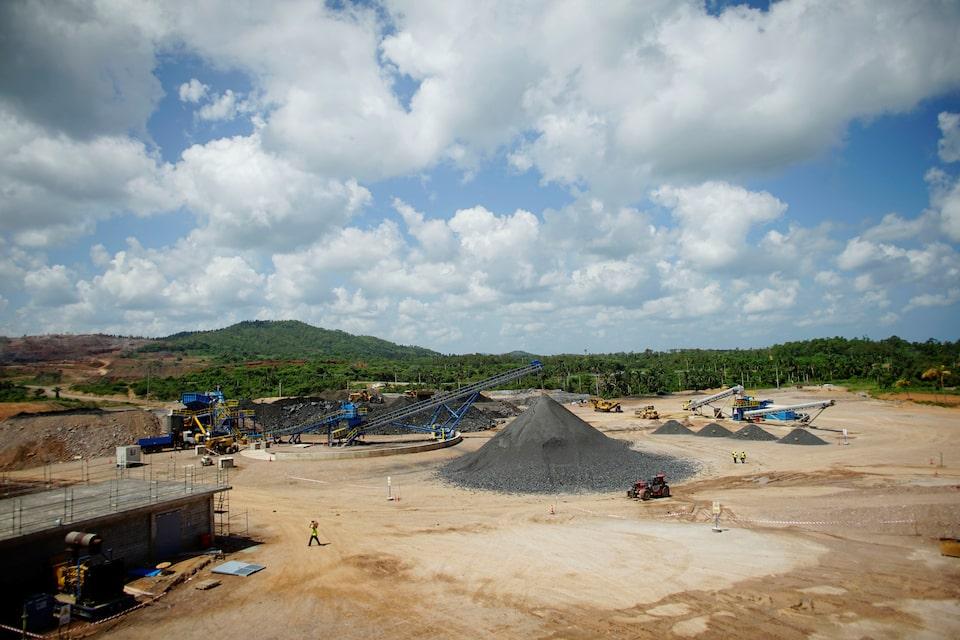
LONDON, Jan 27 (Reuters) - Lead and zinc may be geological sister metals but their market fortunes have been very different in recent months. London Metal Exchange (LME) three-month zinc rallied to a 20-month high of $3,284 per metric ton in October on the back of an acutely tight raw materials market. LME lead , by contrast, headed in the opposite direction, weighed down by a mountain of exchange stocks. Zinc's premium to lead stretched to over $1,000 per ton during the fourth quarter of 2024, the widest gap since February 2023. Although the two metals mostly come from the same mines, divergent narratives of under-supply in zinc and oversupply in lead have caused funds to position accordingly and cement the price disparity. Both metals are down on the start of January but zinc has fallen harder and the premium to lead contracted to $888.50 at the Friday close. What happens next to the sisterly trade may be an ugly contest as zinc's mine supply recovers and the lead glut grows. ZINC SUPPLY STRESS Zinc's October rally contained an element of positional poker , opens new tab on the London market. The outright price high coincided with a sharp contraction in time-spreads, the cash-to-three months period flaring out to a backwardation of $63.50 per ton. But that's not to say that price move wasn't underpinned by genuine tightness in the zinc concentrates. Indeed, the rally was partly triggered by another supply hit , opens new tab after fires at South African producer Sibanye Stillwater's (SSWJ.J) , opens new tab Century mine in Australia. Global zinc mine production fell for the third straight year in 2024, forcing smelters to accept ever lower fees for processing concentrate into refined metal. Chinese metal production was sliding even before a group of the country's top 14 operators agreed in August to adjust operating rates in a bid to preserve margins. The country's refined zinc output tumbled by almost 7% year-on-year in 2024, according to local data provider Shanghai Metal Market. Lower Chinese run-rates dragged the global zinc market into a supply-demand deficit of 33,000 tons in the first 11 months of the year, according to the latest assessment from the International Lead and Zinc Study Group (ILZSG). LME zinc stocks, both registered and off-warrant, peaked at 367,000 tons in August and fell to 324,000 at the end of November. LEAD GLUT LME lead stocks have grown exponentially over the last two years. Combined on- and off-warrant inventory rose from just 29,000 tons at the start of 2023 to 305,000 tons at the end of November 2024. The relentless inventory build was only briefly interrupted in August 2024, when China imported significant amounts of metal for the first time since 2019. Indian brand metal has accounted for much of the increase, its share of registered LME stocks rising from zero at the start of 2023 to 52% at the end of 2024. Who knew there was so much lead around? The scale of stocks increase is puzzling, given the ILZSG assesses global supply and demand to have been almost balanced in the first 11 months of 2024. Moreover, primary lead smelters are suffering from the same margin squeeze as zinc producers because of the overlap in the two metals' mine production profile. The most likely cause of the stocks surge is the opaque secondary production sector, which accounts for a much higher ratio of supply in the lead market than any other industrial metal. Whatever the origin, the bearish optics of high and rising inventory has encouraged funds to take massive bets on still lower prices. Investment players are holding a record net long on the LME lead contract. MINDING THE GAP By contrast, funds are sticking with zinc's bull narrative and are still significantly net long on the LME zinc contract. However, the narrative is starting to shift. Zinc mine supply is turning a corner and is forecast by ILZSG to recover strongly this year thanks to a combination of new mines and restarts of idled facilities. Although global mine production was 370,000 tons lower in the first 11 months of 2024, monthly production started rising over the back end of the year. If concentrates availability improves, zinc smelter output growth will regain momentum and zinc's relative scarcity premium over sister metal lead should recede. That is, if lead market optics don't deteriorate even further. More zinc mine supply will inevitably mean more lead mine supply with the potential for further exchange stocks build. Neither metal is blessed with particularly strong demand dynamics at the moment. Lead usage is dominated by demand for batteries in the automotive sector, where lithium-powered electric vehicles are driving sales growth. Around half of all zinc is used in the construction sector, which is weak just about everywhere, particularly in China. ILZSG estimates that global zinc usage rose by a modest 0.7% year-on-year in January-November 2024, while lead usage fell by 1.3%. With little excitement on the demand side, supply narratives will continue to play the dominant role in the relative value trade between the two metals. But the geological link between lead and zinc means they will both be impacted by a recovery in mine production this year. It's just a matter of which proves most resilient in price. The opinions expressed here are those of the author, a columnist for Reuters. Sign up here. https://www.reuters.com/markets/commodities/zincs-high-premium-sister-metal-lead-may-not-last-andy-home-2025-01-27/