2025-01-27 23:48
Crypto exchange to exit US market for two years US says lax programs allowed suspicious transactions KuCoin CEO focused on strengthening compliance NEW YORK, Jan 27 (Reuters) - KuCoin, one of the world's largest cryptocurrency exchanges, pleaded guilty on Monday to operating an unlicensed money transmitting business, and agreed to more than $297 million in fines and forfeiture, the U.S. Department of Justice said. Peken Global Ltd, which operates as KuCoin, entered its plea before U.S. District Judge Andrew Carter in Manhattan. The plea includes a $112.9 million criminal fine and $184.5 million forfeiture, and calls for KuCoin to exit the U.S. market for at least two years. Two KuCoin founders -- Chun Gan, known as Michael; and Ke Tang, known as Eric -- each agreed to enter two-year deferred prosecution agreements, forfeit $2.7 million, and cede any role in KuCoin's management and operations, the Justice Department said. Prosecutors said Seychelles-based KuCoin had been used to facilitate billions of dollars of suspicious transactions, and to transmit potential criminal proceeds including from darknet markets and malware, ransomware and fraud. This resulted from KuCoin's alleged failure to implement effective anti-money laundering and know-your-customer programs. KuCoin also failed to report suspicious transactions or register with the U.S. Department of the Treasury's Financial Crimes Enforcement Network, or FinCEN, prosecutors said. Founded in 2017, KuCoin had more than 30 million registered users in at least 207 countries and territories as of March 2024, court papers show. "This resolution signifies a new chapter for KuCoin, one that reaffirms our dedication to compliance, security and innovation," BC Wong, who was named KuCoin chief executive last week after serving as chief legal officer, said in a statement. "We are focusing on strengthening our global compliance practices and exploring opportunities to reenter the market with the necessary licenses," Wong added. Alexander Wilson, a lawyer for Gan, in a statement said the resolution reflected his client's lack of intent to violate U.S. law or be involved in money laundering, fraud and similar criminal activity. David Meister, a lawyer for Tang, declined to comment. In December 2023, KuCoin agreed to block New York users and pay $22 million to settle that state's lawsuit accusing it of failing to register. KuCoin is the world's eighth-largest cryptocurrency spot exchange based on factors including traffic, liquidity and trading volumes, according to data company CoinMarketCap. Binance and Coinbase are among higher-ranking exchanges. Sign up here. https://www.reuters.com/technology/kucoin-pleads-guilty-agrees-pay-nearly-300-million-us-crypto-case-2025-01-27/
2025-01-27 23:41
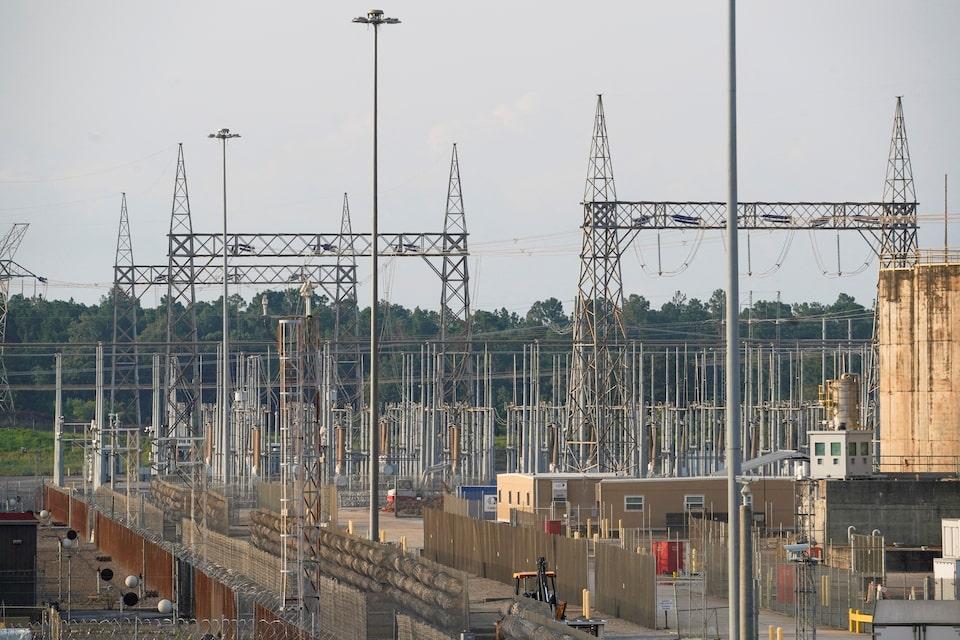
DeepSeek model could slow power demand growth, analysts say Constellation Energy shares slump 20%, Vistra down 30% Natural gas producers, pipeline operators drop, too NEW YORK/HOUSTON, Jan 27 (Reuters) - Shares of U.S. power, utility and natural gas companies sold off on Monday in some of the biggest recorded one-day drops, as new AI technology from Chinese start-up DeepSeek cast doubt on a projected surge in U.S. electricity demand and tech spending. Power producers were among the biggest winners in the S&P 500 last year on expectations of ballooning demand from the energy-guzzling data centers needed to scale Big Tech's artificial intelligence technologies. The wider adoption of AI models like the one developed by DeepSeek, which it says it built in under two months and is cheaper than models currently used by U.S. companies, could result in less electricity demand overall and result in a smaller power build-out, analysts and economists said. "If proven true, the efficiencies used within DeepSeek's open-source model can be applied by the hyperscalers to their models, which would result in a more moderated demand," analysts with Evercore ISI said in a note. Big Tech firms, which are also known as hyperscaling data center developers, have devoted tens of billions of dollars in AI data center development over the last year. In the U.S., data centers consumed roughly 4.4% of electricity in 2023 but are anticipated to use 6.7% to 12% of all power by 2028, according to a report produced by the Lawrence Berkeley National Laboratory. Independent power provider Constellation Energy (CEG.O) , opens new tab, whose shares had shot up about 100% in 2024 largely on its ability to sell nuclear and gas-fired power to U.S. data centers, sunk by about 20% in trading on Monday after news of DeepSeek's advancements. Vistra (VST.N) , opens new tab was down 30% and rival Talen Energy Corp (TLN.O) , opens new tab was down 22%. DeepSeek AI could also threaten the dominance of current AI leaders, which are based in Silicon Valley, and slow their deployment of data centers. DeepSeek's AI assistance had overtaken U.S. rival ChatGPT in downloads from Apple's app store on Monday. But with the wider adoption of AI, even with more energy-efficient models, power demand could surge everywhere, said Ed Hirs, an energy economist at the University of Houston. He cautioned that a sell-off of power stocks could be short-sighted and short-lived. "In this instance, if DeepSeek turns out to be what everybody wants, and they sell to U.S. companies, and the U.S. companies change their algorithms to adopt to it, it just means a greater, faster broader development," Hirs said. Still, electricity companies, and even producers of feedstocks related to power generation, were under pressure. Earlier this month, Constellation acquired private natural gas producer Calpine Energy for $16.4 billion in one of the largest U.S. power industry deals ever, a sign of rising expectations that demand for gas will grow as a generation source for AI. Shares of publicly-traded producers of natural gas, which makes up the biggest share of fuels used to generate electricity in the United States, also slumped. EQT Corp (EQT.N) , opens new tab was off 9%. Midstream operator Energy Transfer (ET.N) , opens new tab, which said it has received connection requests from dozens of data centers, was down about 7%. Sign up here. https://www.reuters.com/business/energy/us-power-stocks-plummet-deepseek-raises-data-center-demand-doubts-2025-01-27/
2025-01-27 23:23
SAO PAULO/RIO DE JANEIRO, Jan 27 (Reuters) - The chief executive of Brazilian state-run oil firm Petrobras (PETR4.SA) , opens new tab told Brazilian President Luiz Inacio Lula da Silva during a meeting on Monday that the company will adjust diesel prices, newspaper Folha de S. Paulo reported. CEO Magda Chambriard told Lula the percentage of the adjustment was still being calculated, Folha reported without naming sources, adding the price change is expected to happen in the next few weeks. Petrobras did not immediately reply to a request for comment. The newspaper was not clear on weather the move would raise diesel prices or reduce them. Analysts have said Petrobras fuel prices are lower than current international prices. Sign up here. https://www.reuters.com/markets/commodities/petrobras-ceo-told-brazil-president-it-will-adjust-diesel-prices-local-media-2025-01-27/
2025-01-27 22:41
Jan 27 (Reuters) - U.S. steelmaker Nucor Corp (NUE.N) , opens new tab reported a drop in fourth-quarter revenue and profit on Monday, as selling prices declined in its mills and products segments. The industry has been struggling as distributors have refrained from purchasing material in excess of their inventory amid a supply glut fueled by domestic production and imports. Nucor CEO Leon Topalian said steel demand softened throughout 2024 but noted that market conditions were starting to improve. Average sales price per ton fell 10% in 2024, from a year ago. The Charlotte, North Carolina-based company reported a quarterly profit of $287 million, or $1.22 per share, compared with $785 million, or $3.16 a year, earlier. Total quarterly revenue fell about 8.2% to about $7.08 billion. Sign up here. https://www.reuters.com/markets/commodities/nucor-posts-lower-fourth-quarter-results-sees-steel-market-improving-2025-01-27/
2025-01-27 22:25
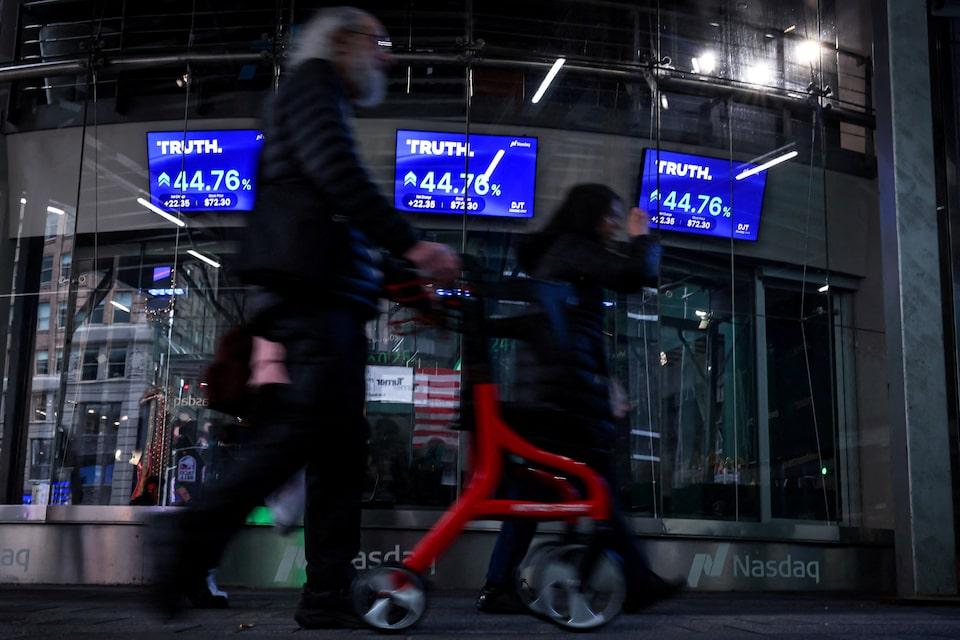
Wall Street's 'fear gauge' jumps Nvidia falls after China's DeepSeek sparks AI market rout Indexes: Dow up 0.7%; S&P 500 down 1.5%; Nasdaq down 3.1% NEW YORK, Jan 27 (Reuters) - Nasdaq posted its biggest one-day percentage drop since Dec. 18 on Monday as a low-cost Chinese artificial intelligence model prompted a steep selloff in U.S. chipmakers. AI leader Nvidia (NVDA.O) , opens new tab sank 17%, and it erased about $593 billion in stock market value, the deepest ever one-day loss for a company on Wall Street, according to LSEG data. It was more than double the previous one-day record loss, set by Nvidia last September. An index of semiconductor stocks (.SOX) , opens new tab dropped 9.2% in its biggest single-day percentage fall since March 2020. Chinese startup DeepSeek has rolled out a free assistant it says uses cheaper chips and less data, raising questions about investor expectations that AI will drive demand along a supply chain from chipmakers to data centers. DeepSeek's AI Assistant by Monday had overtaken U.S. rival ChatGPT in downloads from Apple's (AAPL.O) , opens new tab App Store. Kim Forrest, chief investment officer at Bokeh Capital Partners in Pittsburgh, said there are still many questions about the DeepSeek model and its impact. "Today is a drubbing for these (AI leader) stocks, but I don't necessarily think whatever's going to happen in the short while here - the next couple of days - is where they are ultimately valued," she said. Optimism over AI and gains in Nvidia and other big technology-related shares helped to drive the stock market's sharp gains in 2024. The Dow Jones Industrial Average (.DJI) , opens new tab rose 289.33 points, or 0.65%, to 44,713.58, the S&P 500 (.SPX) , opens new tab lost 88.96 points, or 1.46%, to 6,012.28 and the Nasdaq Composite (.IXIC) , opens new tab lost 612.47 points, or 3.07%, to 19,341.83. The S&P 500 registered its biggest one-day percentage fall since Jan. 10. The Cboe Volatility Index (.VIX) , opens new tab, known as Wall Street's "fear gauge", rose. Among other big tech-related companies, Microsoft (MSFT.O) , opens new tab shares fell 2.1% and Google-parent Alphabet (GOOGL.O) , opens new tab dropped 4.2%, while AI server maker Dell Technologies (DELL.N) , opens new tab declined 8.7%. Data center operators also tanked, including Digital Realty (DLR.N) , opens new tab, which fell 8.7%. Power companies, which are expected to see higher demand from energy-intensive data centers needed to develop AI technology, also fell. Vistra (VST.N) , opens new tab dropped 28.3%. Tech stocks are likely to stay in focus this week, with some big technology names, including Microsoft, due to post-quarterly results. Investors are keen to hear from the Federal Reserve, which is widely expected to hold its lending rate steady in its first interest-rate decision of the year due on Wednesday. Market watchers also were digesting news that the U.S. and Colombia pulled back from the brink of a trade war on Sunday after the White House said the South American nation had agreed to accept military aircraft carrying deported migrants. Volume on U.S. exchanges was 17.39 billion shares, compared with the 14.90 billion average for the full session over the last 20 trading days. Advancing issues outnumbered decliners by a 1.1-to-1 ratio on the NYSE. There were 109 new highs and 56 new lows on the NYSE. On the Nasdaq, 1,839 stocks rose and 2,641 fell as declining issues outnumbered advancers by a 1.44-to-1 ratio. Sign up here. https://www.reuters.com/markets/us/nasdaq-futures-tumble-chinas-ai-push-rattles-big-tech-2025-01-27/
2025-01-27 22:05
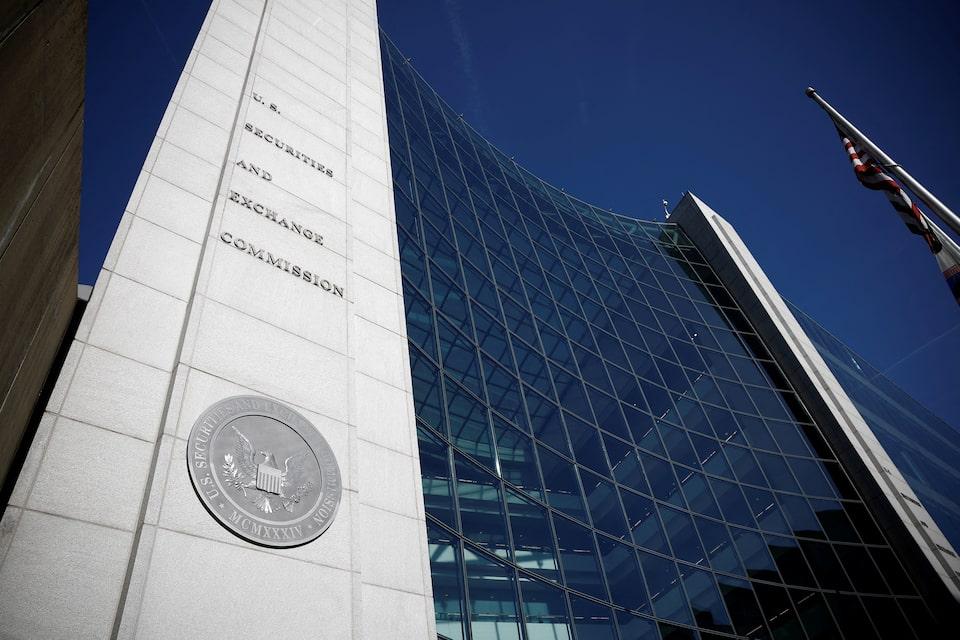
SEC's new rules aim to reduce systemic risk in Treasury market SIFMA and others request one-year extension for clearing deadlines Market participants concerned over transition disruptions NEW YORK, Jan 27 (Reuters) - Wall Street is asking regulators for more time to implement a rule requiring centralized Treasury clearing as banks and funds trading U.S. government bonds face a 2026 deadline. The Securities and Exchange Commission adopted in December 2023 new rules aimed at reducing systemic risk in the $28 trillion Treasury market, the world's biggest bond market, by forcing more trades through clearing houses. The rules, which will give the agency greater visibility into the market, will be implemented in phases by June 2026. The Securities Industry and Financial Markets Association (SIFMA) together with other trade associations sent a letter to the SEC on Friday requesting that the implementation timeline be extended by at least one year for the cash and repo clearing deadlines. The repo market is where banks and funds exchange short-term loans backed by Treasuries. "We believe final implementation of the Clearing Rule will provide improvements for this market," SIFMA and the other signatories of the letter said. "However, the importance of the Treasury market to the financial system and the economy, along with the expected significant issuance of Treasury securities in the coming years, argues for an implementation timeline for the Clearing Rule that allows for a smooth transition so as not to disrupt this market," the letter said. The SEC declined to comment. Other signatories include MFA, which represents hedge funds and other private funds, the Alternative Investment Management Association, FIA Principal Traders Group and the International Swaps and Derivatives Association. "Association members are concerned that, without an extension, the success of the transition to central clearing will be seriously compromised and will inevitably lead to disruptions in the cash and repo markets in Treasury securities to the detriment of the financial system," said the letter. Reuters reported last year that a request for a timeline extension was being considered, as crucial details on how mandatory central clearing would work had not been yet defined and market participants feared the remaining two years might not be sufficient to transition. The rule originally said clearing houses would have until March 2025 to comply with provisions on risk management, protection of customer assets and access to clearance and settlement services. Their members would have until December 2025 to begin central clearing of cash market Treasury transactions and until June 30, 2026, for repo transactions. The central clearing rule is the key reform of a broader government effort to fix structural issues that regulators believe have caused market volatility and liquidity problems in the Treasury market. U.S. President Donald Trump last week tapped Mark Uyeda, a Republican member of the SEC, to be acting chair of the agency. Trump has said he will nominate former SEC Commissioner Paul Atkins to run the agency on a permanent basis. Uyeda replaces Gary Gensler, former President Joe Biden's hard-charging SEC chair whose ambitious agenda led him to clash with Wall Street and the crypto industry. Sign up here. https://www.reuters.com/markets/us/wall-street-asks-sec-extend-timeline-us-treasury-market-overhaul-2025-01-27/