2025-01-27 21:46
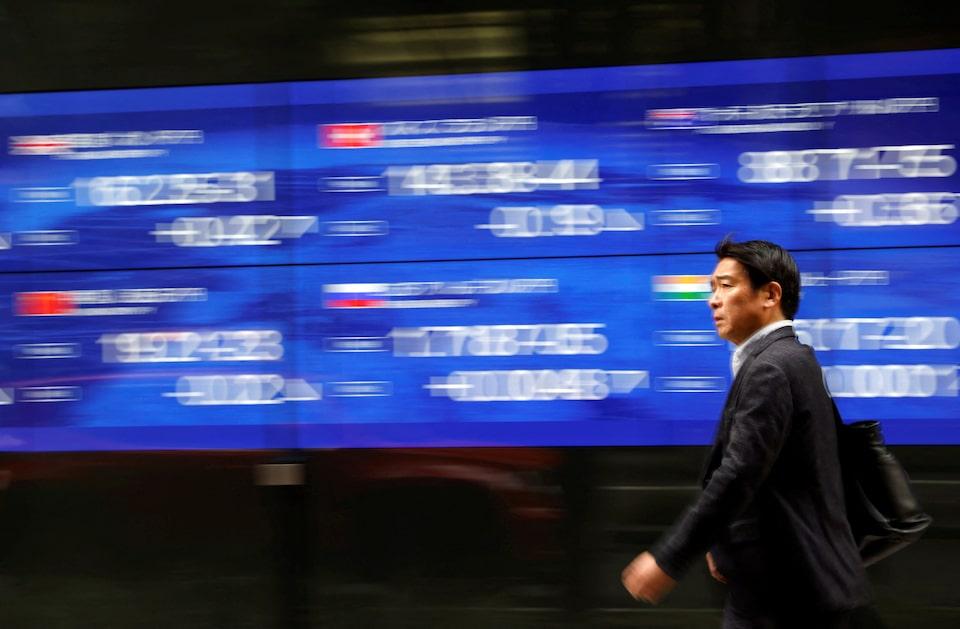
Jan 28 (Reuters) - A look at the day ahead in Asian markets. The U.S. tech juggernaut suffered a sharp setback on Monday, setting global markets up for a volatile ride this week, with mega-cap earnings on deck, the Fed’s meeting, and lingering uncertainty over U.S. President Donald Trump’s trade policies. U.S. stocks tumbled on Monday, led by tech shares, as the growing buzz around Chinese startup DeepSeek's low-cost AI model sparked concerns about the sector's high valuations. Selling on Asian exchanges outside China spilled over into U.S. stock futures. The S&P 500 dropped about 1.5% after hitting an all-time high last week and the Nasdaq swooned more than 3%, while Nvidia (NVDA.O) , opens new tab, whose chips are the top choice for powering AI applications, dropped about 17%. Investors meanwhile flocked to U.S. Treasuries in a flight to safety, pushing benchmark 10-year yields down 10 basis points to 4.53%. The dollar index fell 0.1% to its lowest since Dec. 18. Foreign competition to the U.S. dominance in artificial intelligence has sparked broader concerns over valuations in U.S. equities, where Big Tech shares have led stocks higher over the past couple of years. This means all eyes will be on a wave of earnings reports this week, with megacap tech giants Tesla (TSLA.O) , opens new tab, Meta (META.O) , opens new tab, Microsoft (MSFT.O) , opens new tab, and Apple (AAPL.O) , opens new tab set to take center stage. Investors will be hunting for clues on when the hefty bets on artificial intelligence will begin to pay off in a meaningful way. Meanwhile U.S. trade policies remain a key market theme. China, Mexico, and Canada remain on edge as Trump last week marked Feb. 1 as the date for imposing additional tariffs on the major U.S. trading partners. And while so far he has refrained from implementing broad trade levies, on Sunday Trump threatened Colombia with tariffs and sanctions to punish it for refusing to accept military flights carrying deportees. Colombia later said it would accept the military aircraft and the U.S. sanctions threat was put on hold, but investors got a taste of how Trump's trade decisions could surprise markets. Later this week, the Fed's first meeting of 2025 will be a major focus for investors trying to decipher how Trump's economic policies will impact the U.S. central bank's views on growth and inflation. U.S. policymakers are expected to leave interest rates unchanged at their rate-setting meeting, which starts on Tuesday and ends on Wednesday, but Trump may complicate the Fed's job going forward, after he said last week he wants the Fed to lower borrowing costs. The European Central Bank meanwhile will meet on Thursday for the first time since Trump returned to office. It is largely expected to cut the key deposit rate by another 25 basis points, but investors will look for hints on the path ahead as the threat of U.S. tariffs clouds the European economic outlook. The economic data calendar in Asia is light on Tuesday, and many bourses have extended holidays this week for the Lunar New Year. Markets in mainland China are shut from Tuesday and do not reopen until Feb. 5, while Singapore's financial markets will be closed for a half day on Tuesday and closed for all of Wednesday and Thursday, for national holidays. Here are key developments that could provide more direction to markets on Tuesday: - Japan service PPI (Dec) - Australia Business Confidence Index - U.S. durable goods (Dec) - U.S. 7-year Treasury auction Sign up here. https://www.reuters.com/markets/asia/global-markets-view-asia-2025-01-27/
2025-01-27 21:40
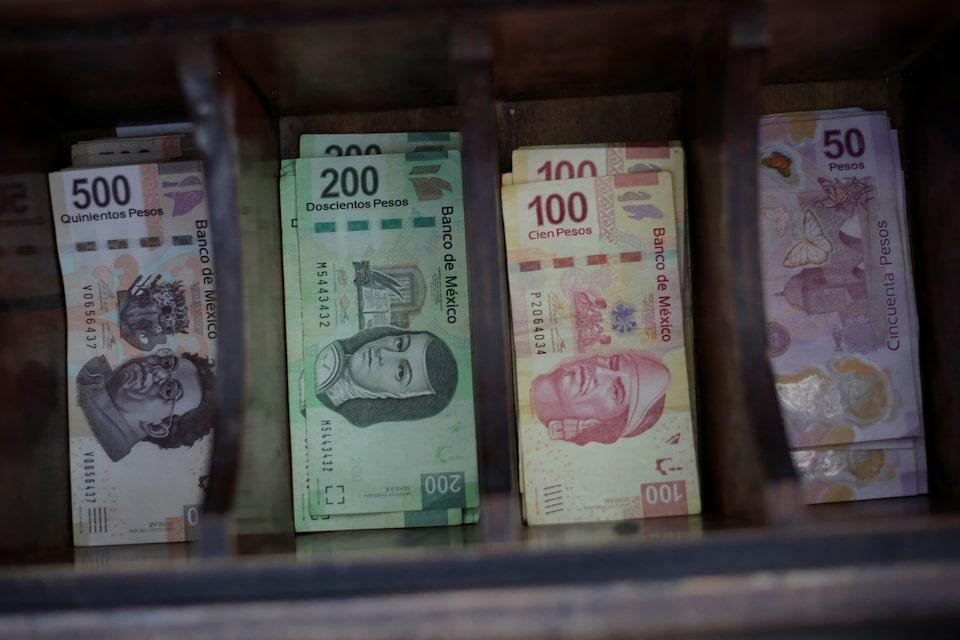
NEW YORK, Jan 27 (Reuters) - The Mexican peso tumbled on Monday as investors worried that trade disputes would again whipsaw markets after U.S. President Donald Trump’s overnight threat to impose steep tariffs on Colombia. On Sunday, Trump said the White House would levy 25% tariffs on Colombia imports, mainly crude oil, coffee and flowers. His threat came after Bogota rejected U.S. military planes carrying deportees. In a late night deal, Colombian and U.S. diplomats worked out an agreement for Bogota to accept the deportees without incurring tariffs. "The market, over the last couple of weeks, had become complacent to the threat of tariffs, with the hope that the (U.S.) administration will take a more gradual approach," said Arif Joshi, co-head of emerging markets debt at Lazard Asset Management. "Not only do this weekend's events lower the probability of that theory, but also remind of how quickly the Trump Administration can turn on trade threats," he added. "Everything else being equal, that increases volatility, increases risk and decreases currency valuations versus the U.S. dollar." The Colombian peso fell as much as 1.8% on Monday but pared most losses and was recently down 0.65% near 4,200 per dollar. Yet analysts at Wells Fargo recommended shorting the currency with a target of 4,600 per dollar, nearly 9% weaker. Investors are jittery about how combustible things can get between Washington and its trading partners. The Mexican peso fell as much as 2.3% on Monday, giving back almost all its year-to-date gains. The currency fell almost 20% to the dollar in 2024. Mexico and Canada face a Feb. 1 deadline to meet Trump's demands on border security and other issues or Washington will slap tariffs of 25% on imports from their countries. "The risk of those tariffs happening is perceived to have gone up," said Graham Stock, senior sovereign strategist for emerging markets at RBC Global Asset Management. "The reason why the Colombian peso has recovered a lot of its ground is because it is clear that if you back down, things go back to their original settings," he said. He said the Mexican peso was hit hardest as the country has a lot of work to do to address Trump's demands which concern not just immigration but drug cartel violence, a trade deal and illegal fentanyl shipments to the U.S. Trump's targeting of Colombia came as a surprise given the long-standing relationship between the two countries and the relatively small scale of the Colombian economy. President Gustavo Petro's leftist ideology may have been a factor, and in addition he escalated the spat with Trump with dueling posts on social media. "Trump likely thought it was politically expedient to go after Colombia ... given that the country means little for the U.S. in terms of trade, and the leverage that Trump would likely gain over more important trading partners by making Colombia an example," said Aaron Gifford, senior EM sovereign analyst at T. Rowe Price. "We've already seen the market trying to sniff out the next area of conflict, with the Mexican peso depreciating far beyond the Colombian peso on the day. There will be a bit of a guessing game going on as investors try to steer clear of any countries directly or indirectly in the line of fire." Other investors remained cautiously optimistic on emerging market debt as long as threatened tariffs do not materialize. "We continue to like EM hard currency debt which we think will be resilient in the face of headline risk around tariffs," said Shamaila Khan, head of fixed income for Emerging Markets and Asia Pacific at UBS Asset Management. "I do want to emphasize that there have been only headlines around tariffs so far, so the base case is that they are a means to an end rather than a desired outcome." Sign up here. https://www.reuters.com/markets/mexican-peso-tumbles-investors-jittery-after-trumps-colombia-tariff-scare-2025-01-27/
2025-01-27 21:14
SANTIAGO, Jan 27 (Reuters) - Climate variability and extreme weather events stalk at least 20 Latin American countries and increase the risk of hunger and malnutrition in the region, according to a multi-agency United Nations study published on Monday. WHY IT'S IMPORTANT The economies of Latin America and the Caribbean are heavily dependent on farming, ranching, forestry and fishing, agricultural sectors directly linked to food security that are particularly vulnerable to droughts, floods and storms. Scientists have cautioned that extreme weather will intensify due to climate change. As the world's second-most exposed region, after Asia, Latin America could struggle to feed itself. BY THE NUMBERS Extreme weather events impacted 74% of the countries in Latin America and the Caribbean, according to the study, with half of the countries analyzed considered likeable to face increased malnourishment as a result. The report entitled "Regional Overview of Food Security and Nutrition 2024," highlighted that hunger affected 41 million people, or 6.2 percent of the population , opens new tab, in the region in 2023. The study documented some recent progress; the number of hungry people across the region in 2023 was 2.9 million fewer than in 2022, and down 4.3 million compared to 2021. But the study cautioned that the downward trend could be thwarted by climate threats. KEY QUOTES "Climate variability and extreme weather events are reducing agricultural productivity, disrupting food supply chains, increasing prices, impacting food environments and threatening progress in reducing hunger and malnutrition in the region," the study stated. CONTEXT The report was conducted by five United Nations agencies; the United Nations Food and Agriculture Organization, the International Fund for Agricultural Development, the Pan American Health Organization, the World Food Program and the United Nations Children's Fund. Sign up here. https://www.reuters.com/world/americas/extreme-weather-raises-hunger-risk-latin-america-un-says-2025-01-27/

2025-01-27 20:42
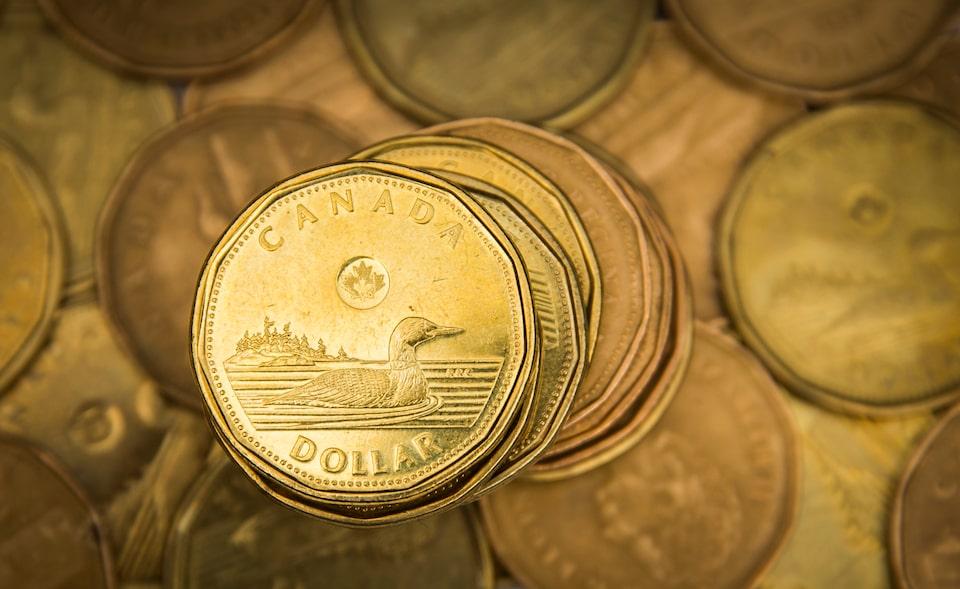
OTTAWA, Jan 27 (Reuters) - The Canadian currency weakened against the U.S. dollar on Monday as uncertainty around international trade exacerbated the impact of investors selling local equities to switch to the safe-haven U.S. dollar, making the greenback stronger. The loonie was trading 0.27% weaker at 1.4381 per U.S. dollar, or 69.54 U.S. cents, but continued to be in the range of 1.4316 to 1.4383 where it traded mostly last week. "A lot of what has been driving the loonie lately has been the noise out of the White House," said Étienne Bordeleau-Labrecque, Portfolio Manager at Ninepoint Partners. While Monday's weakening of the loonie was also due to dumping of Canadian shares by investors who moved into the U.S. dollar, trade uncertainty and the threat of tariffs will continue to keep the Canadian dollar under stress, he said. Earlier this month as U.S. President Donald Trump's inauguration approached, the loonie fell to its weakest closing this year to 1.4485 against the greenback. Market analysts and economists have said that the current weakness of the Canadian dollar is also because investors are factoring in the interest rate differential between the two countries. The Bank of Canada is likely to announce a 25 basis point cut in its benchmark interest rate on Wednesday while the U.S. Federal Reserve, on the same day, is expected to hold its rates still. Trump has threatened to slap a unilateral 25% tariff on all goods imported from Canada from Feb. 1, which has also impacted the loonie due to its heavy dependence on the U.S. trade. The U.S. is Canada's biggest trading partner and consumes over three-fourths of all its exports. The sell-off in shares and impending trade tensions with the U.S. pushed bond yields down, with the 10-year government bond yield falling 7.5 basis points to 3.189%. Sign up here. https://www.reuters.com/markets/currencies/canadin-dollar-falls-equity-sell-off-trade-tensions-2025-01-27/
2025-01-27 20:08
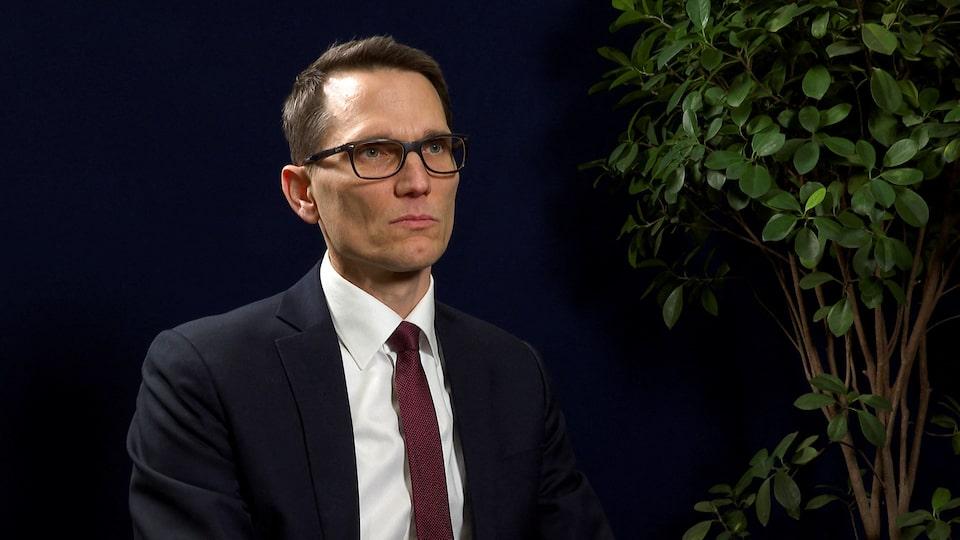
ZURICH, Jan 27 (Reuters) - Swiss National Bank Chairman Martin Schlegel has not ruled out taking the central bank's policy rate into negative territory if necessary, he said on Monday, although such a step would not be taken lightly. "The SNB doesn't like negative interest rates, at the same time we can't rule negative interest rates out," Schlegel told broadcaster SRF in an interview. Negative interest rates had been effective when previously used by the SNB, Schlegel said, although the central bank would only return to the policy if it was "really necessary." "We have seen that negative interest rates have served their purpose," Schlegel said. "But is not something the SNB would do lightly." Schlegel has frequently mentioned the possibility of negative rates in recent weeks, especially as Swiss inflation has ebbed lower, reaching 0.6% in December and raising concerns of negative inflation. Markets currently give a 64% chance the SNB will respond by cutting borrowing costs from the current 0.5% level to 0.25% in March, with a 27% likelihood that rates will reach 0% after the central bank's decision in June. Schlegel declined to comment on future interest rate moves, adding that low inflation was not a problem for the central bank. "It is possible that we will be individual months with negative inflation, but that is not a problem," Schlegel said. "Our concept is price stability over the mid term," added Schlegel, referring to the SNB's goal of inflation in the range of 0%-2%. Sign up here. https://www.reuters.com/markets/rates-bonds/swiss-national-bank-cannot-exclude-negative-interest-rates-future-2025-01-27/
2025-01-27 19:37
Mali demands $199 million, new mining code compliance Barrick suspends operations after Mali seizes $250 million gold Mali issues arrest warrant for Barrick CEO Mark Bristow TORONTO, Jan 27 (Reuters) - Mali's government and Barrick Gold (ABX.TO) , opens new tab will start a new round of negotiations on Tuesday to resolve a deepening dispute over the alleged nonpayment of taxes by the Canadian miner and the seizure of its gold stocks by authorities in the country, two sources familiar with the matter told Reuters. Barrick, the world's second-largest gold miner by production, has temporarily suspended its mining operations in Mali after the government seized close to 3 metric tons of gold, worth $250 million from the company's Loulo-Gounkoto complex. The issues at stake in the new round of negotiations are Mali's demanding $199 million, Barrick's agreeing to the new mining code and the release of the seized gold, according to people aware of the development who did not wish to be quoted as they are not authorized to speak about the issue. Shares of Barrick closed at C$23, down by 0.2% at the Toronto Stock Exchange on Monday. Barrick declined to comment and the Mali government did not respond to requests for comment by Reuters. Governments in Mali, Burkina Faso and Niger -- all led by juntas -- are all seeking to renegotiate new terms with gold miners to gain a bigger share of mining revenue at a time when gold prices have hit record highs. The dispute between Mali and Barrick is over the country's new mining code that came into effect in 2023. The mining code gives the state a bigger share of mining revenues and removes tax exemptions for mining companies. Mali had previously demanded about $500 million in unpaid taxes from Barrick, sources told Reuters. Mali has also issued an arrest warrant against Mark Bristow, CEO of Barrick Gold. Barrick denies any wrongdoing. Jefferies analysts have estimated that suspending production at the mine could cut Barrick's earnings before interest, taxes and amortization by 11% in 2025. Sign up here. https://www.reuters.com/markets/commodities/barrick-mali-govt-start-new-negotiations-tuesday-2025-01-27/