2025-01-27 12:16
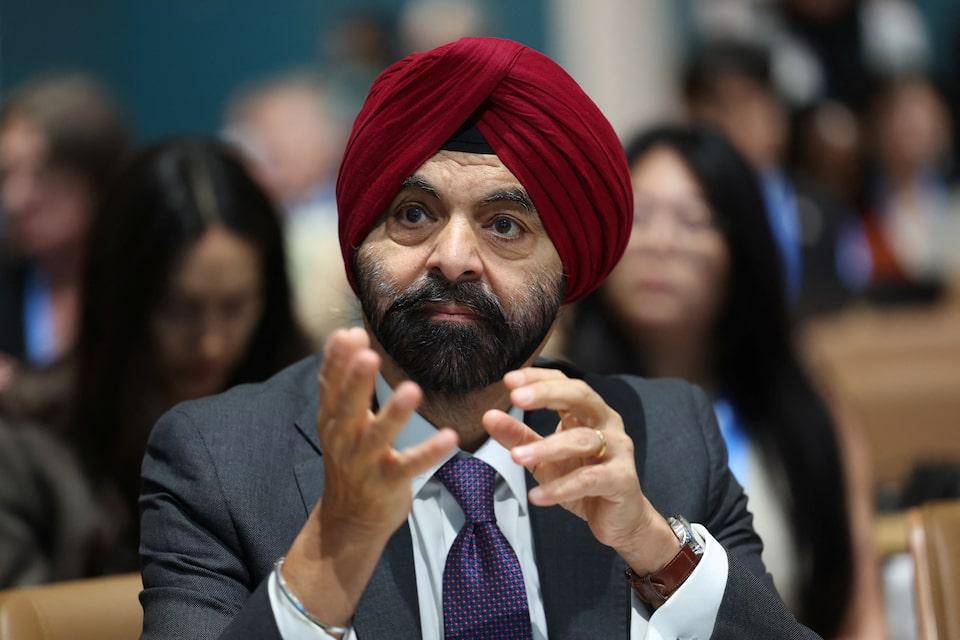
DAR ES SALAAM, Jan 27 (Reuters) - Policymakers around the globe should not react in haste to announcements by U.S. President Donald Trump's administration, and be prepared to argue their case, World Bank President Ajay Banga told Reuters. Trump's first week in office has seen a flurry of executive orders and policy plans, ranging from tariffs on Canada, Mexico and China to a review on all existing foreign assistance. "My only advice to everyone is don't be in too much of a hurry to respond or judge," Banga told Reuters in an interview on the sidelines of the Mission 300 Africa Energy Summit in Tanzania's commercial capital of Dar Es Salaam. Policymakers should wait to see what policies are actually executed, Banga added. "I have dealt with him (Trump) in the past. He is a very practical man, he understands numbers, he understands leverage and he understands advantage. You have to go to him and explain to him what you bring." The U.S. and Colombia pulled back from the brink of a trade , opens new tab war on Sunday after the White House said its third-largest U.S. trading partner in Latin America had agreed to accept military aircraft carrying deported migrants. Washington's draft measures - now on hold - had included imposing steep and rising tariffs on all Colombian imports, a travel ban and visa revocations on Colombia government officials. The World Bank could feel the effects of any travel restrictions. "If their visas don't work, that's a problem," said Banga. Asked about Friday's "stop-work" order issued by the U.S. State Department on all existing and future foreign assistance, Banga said the Washington-based lender was "not yet" affected as it operated differently to bilateral aid. Asked about return to office plans for World Bank staff, Banga said he had no plans to change the mandate beyond the current four days a week. "I expect World Bank employees to be back four days a week...There's no plan to increase that to five." Trump has ordered federal workers to return to the office five days a week. Sign up here. https://www.reuters.com/world/world-bank-president-cautions-against-hasty-reaction-trump-policies-2025-01-27/
2025-01-27 12:02
SAO PAULO, Jan 27 (Reuters) - Brazilian meatpacker JBS (JBSS3.SA) , opens new tab has agreed to buy a stake in Mantiqueira Alimentos, it said on Monday, marking the food giant's entry into the egg sector in a deal that valued Mantiqueira at 1.9 billion reais ($321 million). JBS said in a securities filing it had agreed to purchase shares representing 48.5% of the total capital stock and 50% of the voting shares of Mantiqueira, meaning it would share control of the company with its founder Leandro Pinto. Mantiqueira currently produces around 4 billion eggs per year and has plants in six Brazilian states, JBS said, adding it also exports eggs to countries in South America, Asia, Africa and the Middle East. "This agreement will allow JBS to enter the egg sector and reinforce its global platform diversified by geography and protein, which has allowed the company to continue growing with solid results," JBS said. JBS currently operates in the beef, chicken and pork segments, in addition to producing salmon and "alternative", such as plant-based, proteins. The Mantiqueira deal still requires regulatory approval. ($1 = 5.9109 reais) Sign up here. https://www.reuters.com/markets/deals/brazils-jbs-buys-stake-mantiqueira-enter-egg-sector-2025-01-27/
2025-01-27 11:58
MANILA, Jan 27 (Reuters) - The Philippines' sovereign wealth fund Maharlika Investment Corp is buying a 20% stake in the operator of the country's power grid, the government said on Monday, a first major investment that tightens its grip on critical infrastructure. National Grid Corp of the Philippines holds a 25-year concession to run the country's sole power transmission operator since winning the contract in 2007. Amid escalating tensions between Manila and Beijing over disputes in the South China Sea, NGCP is currently the subject of a congressional probe into its compliance with franchise obligations and its ownership, with China's State Grid Corp holding a 40% stake. "The maiden investment represents a vital opportunity for the government to regain greater influence over the nation's critical power infrastructure to ensure that every Filipino has access to reliable and affordable power," Philippine President Ferdinand Marcos Jr.'s office said in a statement without giving financial details. The deal allows Maharlika to subscribe to preferred shares offered by Synergy Grid & Development Philippines (SGP), which would give the wealth fund two seats each at NGCP and SGP. SGP effectively controls 60% of NGCP through a common corporate structure of the latter's two largest Filipino shareholders, tycoons Henry Sy Jr. and Roberto Coyiuto Jr. "Government investment in transmission would make additional capital available for NGCP to deploy in the pursuit of completing transmission projects on time," the Department of Energy (DOE) said in a separate statement. "Maharlika can pave the way for better coordination between the DOE and the NGCP to help...speed up the interconnection of our power grid across the archipelago," the DOE added. The DOE said 98% of NGCP projects between 2016 and 2024 were delayed, some by more than nine years. Sign up here. https://www.reuters.com/markets/asia/philippines-wealth-fund-buys-into-china-backed-national-grid-operator-2025-01-27/

2025-01-27 11:47
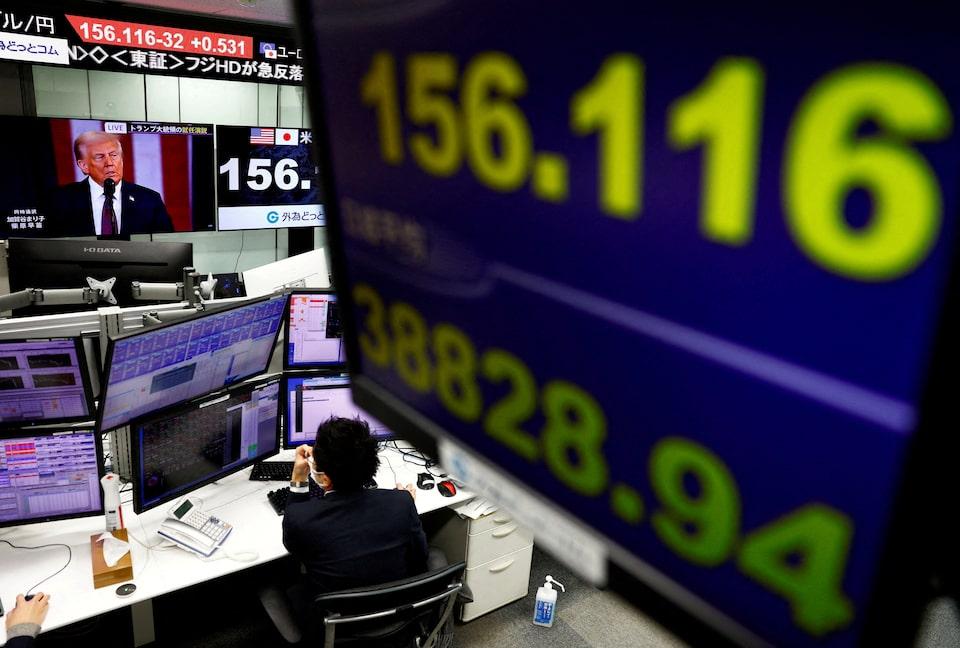
Markets calmed by Trump's relative restraint on trade ECB, Bank of Canada, Bank of England seen easing policy Fed likely to stay on hold, irking Trump Policymakers see hopeful signs for dialogue in trade disputes FRANKFURT, Jan 27 (Reuters) - Global economic policymakers had been braced for an economic firestorm from the new U.S. administration but instead got a surprisingly restrained start from Donald Trump, who remains big on rhetoric but more cautious on action - for now. Trump had hinted at sweeping trade barriers from the very beginning of his term. But instead his first week in office focused on his domestic agenda and left the global trade landscape little changed. The threat of sweeping tariffs, a central plank of his campaign promises, had raised concerns of a resurgence in inflation. Although Trump has warned he may impose a 25% levy on imports from Canada and Mexico from Feb. 1, the restraint so far has allowed cautious confidence in the global outlook. The European Central Bank, the Bank of Canada along with the Bank of England could all cut interest rates in coming days and weeks as policymakers bet inflation will keep slowing. The U.S. Federal Reserve meanwhile is still expected to hold off on further easing on Wednesday, arguing inflation may only come down slowly given a still-hot economy and the continued risk of tariffs. That will likely irk Trump, who is already putting pressure on the bank to lower borrowing costs. After threatening China with tariffs of up to 60%, Trump even said he could cut a deal with Beijing after a conversation with Chinese President Xi Jinping he described in glowing tones. "It was a good, friendly conversation," Trump said of the early contact, adding he would "rather not have to use" tariffs against China. A Chinese Commerce Ministry official said Beijing was willing to work with Washington to maintain stable trade ties. Such comments have bolstered market bets that inflation could keep on easing, giving central banks around the world the room to lower interest rates further and to return to some sense of normalcy after the biggest price surge in generations. Markets were relieved. Stocks rallied, oil prices dipped, rate cut expectations have been bolstered. Some of the dollar's exceptional gains since November's election were reversed. The Bank of Japan went ahead with a well telegraphed rate hike on Friday, Singapore eased policy as expected and a rate cut in Sweden on Wednesday remains fully priced in, suggesting Trump's first week for now has left future rate paths largely intact. "Pronouncements, including the inauguration speech were not taken at face value," Paul Gruenwald, global chief economist at S&P Global Ratings, said. "Rather, they were interpreted as some combination of policy intent, negotiation tactics and political rhetoric," he said, adding the likely volatility and uncertainty around Trump 2.0 were being "internalised" by investors. 'TOO MANY MOVING PARTS' While many believe that relief could prove temporary, some leaders pointed to Trump's tone shift on China as substantial. "It suggested a desire for a new understanding and a desire to avoid a continuous unravelling of a relationship that is still profoundly important for the global world economy," Tharman Shanmugaratnam, Singapore's president told the World Economic Forum in Davos. Such is the uncertainty, however, that policy-makers will be treading carefully. Some analysts were expecting the People's Bank of China to cut interest rates or inject liquidity this month. But so far it has held fire, showing signs of concern over the yuan's recent depreciation, which could quicken if trade tensions ratchet up. While other emerging market central banks are not expected to turn hawkish – with the exception of Brazil which has restarted a rate hike cycle – Trump-induced volatility and ever-present inflation risks limits room for them to pursue rate cuts. South African Reserve Bank (SARB) Governor Lesetja Kganyago told Reuters in Davos there were "too many moving parts" to have a clear view on price pressures for now. This week's Fed meeting is the immediate centre of focus. The irony is that the main reason U.S. inflation is only coming down slowly is that the economy is proving more robust than anybody had thought - which should be a boon for Trump. "It's basically soft-landed," Dario Perkins at TS Lombard said. "Inflation is back down to the sorts of levels that they want, the labour market is completely rebalanced, there are no sort of underlying macro financial imbalances. "So really, you just have to not destroy that." Sign up here. https://www.reuters.com/markets/global-economy-takes-trump-guessing-game-stride-2025-01-27/
2025-01-27 11:46
BRUSSELS, Jan 27 (Reuters) - U.S. President Donald Trump's order to pause spending from the country's climate and infrastructure laws is a chance for Europe to attract clean tech investments, Poland's deputy climate minister told Reuters. Trump last week ordered a pause on funds from the Inflation Reduction Act (IRA) and the Infrastructure Investment and Jobs Act - Biden-era schemes for spending and tax credits in clean industries. The White House said the pause targets programmes that discourage fossil fuel development or support electric vehicles. "I think this is our moment. This is our window of opportunity, because many companies I've had conversations with, they were complaining about the IRA," said Krzysztof Bolesta, Poland's State Secretary for climate. Bolesta said companies had warned they would move investments to the United States to avoid burdensome European regulations and benefit from IRA subsidies, which initially aimed at providing some $400 billion of support. "Now I think the money will be harder to get in America, and we have our chance, so I just very much hope we will not blow it," he said in an interview. It is unclear how much funding will be directly affected by Trump's IRA order. The Biden administration had said the vast majority of grants for clean energy programmes, for example, had already been awarded in contracts signed off by the Biden government. But the U.S. government's U-turn on support for clean industrial investments coincides with Brussels preparing a new European Union industrial policy, due to be published next month, aimed at supporting industry as it decarbonises. Leaked draft documents and EU officials suggest this "Clean Industrial Deal" package will include simpler, faster rules for state aid investments in industry and public procurement rules that give preference to locally-made versions of certain technologies. Bolesta said a priority is to simplify complex EU rules, including the carbon border tariff (CBAM), which will impose CO2 emissions costs on imported goods from 2026. "We hear encouraging voices that CBAM will be simplified as part of the Clean Industrial Deal," he said. "Because we see when working on the implementation that it could create a lot of red tape, especially for smaller companies." Sign up here. https://www.reuters.com/sustainability/sustainable-finance-reporting/trump-pause-clean-funding-is-window-opportunity-europe-poland-says-2025-01-27/
2025-01-27 11:43
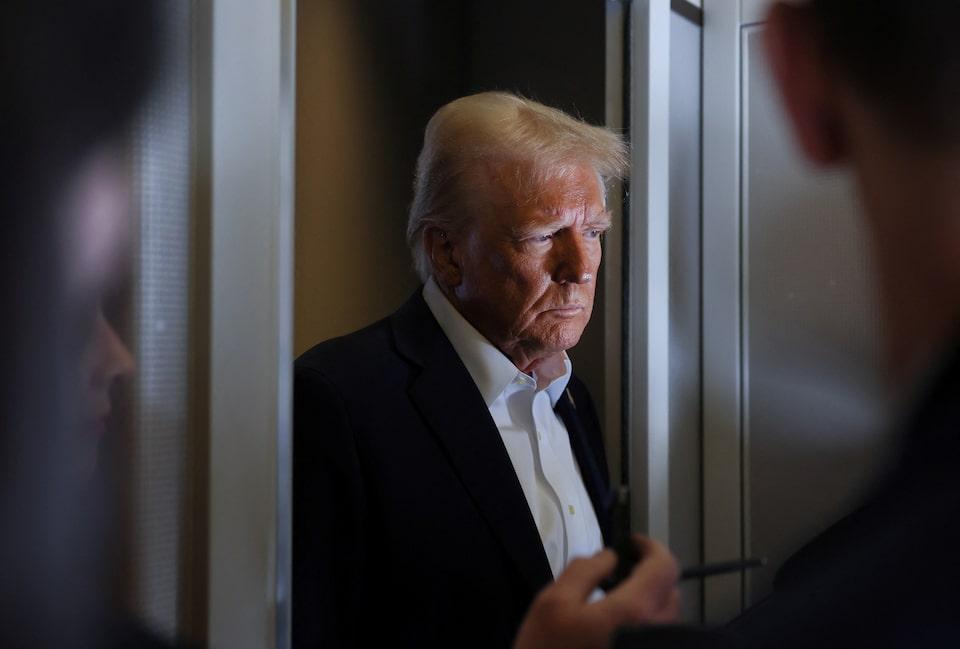
MOSCOW, Jan 27 (Reuters) - Oil production in Kazakhstan reached a daily record high of 278,499 metric tons on Sunday just after it embarked on an expansion of its largest oilfield, Chevron-led (CVX.N) , opens new tab Tengiz, according to official data. Kazakhstan - which relies on Tengiz and two other major fields, Karachaganak and Kashagan, for most of its production - is subject to output targets as a member of OPEC+, an alliance of OPEC and other top producers led by Russia OPEC+ has named top 10 global oil producer Kazakhstan along with Iraq and Russia as countries that have repeatedly failed to comply with pledges to curb oil production. Sunday's record high Kazakh output equates to around 2 million barrels per day (bpd) if a barrels per ton ratio of 7.5 is applied. According to the Situational and Analytical Center for the Fuel and Energy Complex, this was 10.5% more than on the same day of 2024. The expansion at Tengiz is expected to reach full capacity of 260,000 bpd by June, lifting overall production at the project to around 1 million barrels of oil equivalent per day. Tengiz is one of the world's deepest and most complex fields due to high levels of sulphur and harsh weather conditions. Kazakhstan plans to boost its oil and gas condensate production this year to 96.2 million tons from 87.56 million tons in 2024. Sign up here. https://www.reuters.com/markets/commodities/kazakhstans-daily-oil-output-record-high-amid-chevron-led-expansion-2025-01-27/