2025-01-27 11:30
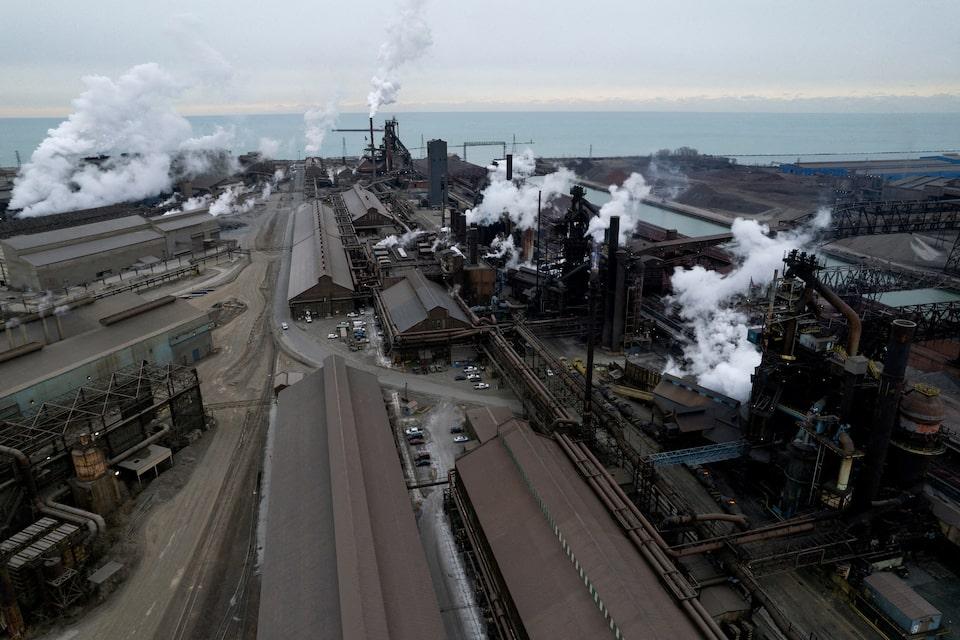
Jan 27 (Reuters) - Activist investor Ancora has nominated nine candidates to U.S. Steel's (X.N) , opens new tab board of directors after reporting a 0.18% stake in the steelmaker, the company said on Monday. On Sunday, the Wall Street Journal reported that Ancora intends to rally shareholders to oust U.S. Steel's CEO David Burritt. It also plans to pressure the company to drop its merger agreement with Japan's Nippon Steel (5401.T) , opens new tab. Ancora's interests are not aligned with all U.S. Steel stockholders, the Pittsburgh-based company said in a statement. Sign up here. https://www.reuters.com/markets/commodities/ancora-nominates-nine-candidates-us-steel-board-company-says-2025-01-27/
2025-01-27 11:18
SINGAPORE/NEW DELHI, Jan 27 (Reuters) - Indian Oil Corp (IOC.NS) , opens new tab has bought another 6 million barrels of sweet crude via a tender for April delivery, trade sources said on Monday, as the country's top refiner seek to replace Russian oil after U.S. sanctions disrupted supply. The purchases come after Washington announced earlier this month sweeping sanctions targeting Russian producers and tankers, disrupting shipments from the world's No. 2 producer. IOC bought in the latest tender 2 million barrels of Nigerian Okwuibome crude from Vitol and 1 million barrels each of Nigerian Akpo and Angolan Mostarda grades from Shell, the sources said. The refiner also purchased 2 million barrels of U.S. West Texas Intermediate (WTI) Midland crude from Equinor, they added. Just a week earlier, IOC bought 7 million barrels of spot Middle Eastern and African crude oil via tenders, including a rare purchase of Abu Dhabi's Murban. Separately, another refiner Mangalore Refinery and Petrochemical Ltd (MRPL) (MRPL.NS) , opens new tab which issued its first crude import tender in more than a year, did not award the tender, traders said. Sign up here. https://www.reuters.com/markets/commodities/indias-ioc-buys-more-sweet-crude-replace-russian-oil-sources-say-2025-01-27/

2025-01-27 11:11
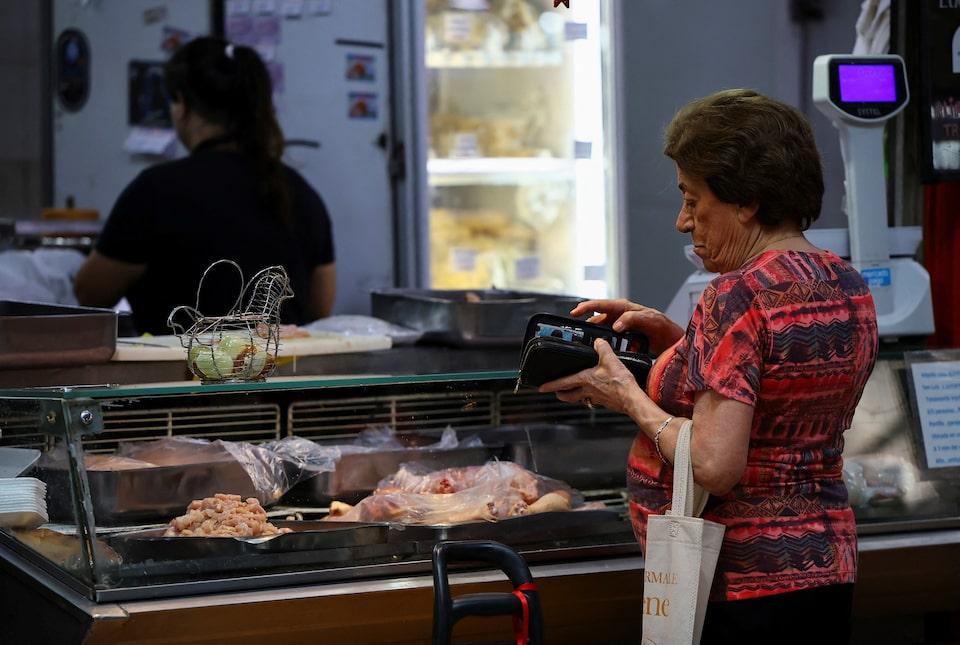
Argentines eat more chicken due to beef's high cost amid inflation Milei's austerity measures push over half into poverty BUENOS AIRES, Jan 27 (Reuters) - In Argentina, land of cattle ranches known for its succulent beef steaks and barbecue grills, chicken now rules supreme. The South American country's 45 million people ate more poultry per capita than beef last year for the first time on record, official data shows, as consumption of pricier red meat slid amid triple-digit inflation and austerity under libertarian President Javier Milei. The shift, while part of a longer trend, underscores how Argentines are tightening their belts and adapting diets. Milei's spending cuts have stabilized the rocky economy, but in the short term pushed over half the population into poverty. "The reality is that I eat more chicken because meat is much more expensive. Chicken just goes a lot further," said Araceli Porres, 45, who works three jobs in Buenos Aires to support her family and who puts chicken into sauces and breaded milanesa. Data from the Rosario grains exchange showed that chicken consumption jumped in 2024 to 49.3 kg per capita, topping beef, which fell to 48.5 kg, still the highest in the world ahead of Uruguay and Brazil. Pork climbed to 17.7 kg per capita. "Chicken consumption has grown and that's driven by price," said butcher Daniel Lopez on the outskirts of Buenos Aires, explaining that the cheapest price for a kg of minced beef was 5,000-6,000 pesos ($5-$6) versus half that for chicken. "That's the difference and today people are taking great care of their wallets," Lopez said. "Salaries remain flat, inflation is still being felt, so people always ask about offers and we end up offering them chicken, which is the best budget option." Argentines have an almost religious fervor about beef, usually the centerpiece of traditional asado barbecues with family in the garden, in street-corner parrilla chophouses, or even makeshift grills on construction sites or roadsides. Argentina is South America's second-biggest beef and chicken producer after Brazil, according to the U.S. Department of Agriculture. Beef is such an important staple that prices and affordability can become politically sensitive, which could put pressure on Milei as he looks to deepen his reforms this year. Growth is showing signs of returning and inflation has dropped sharply, gaining him plaudits and breathing space with voters. Miguel Schiariti, head of Argentina's CICCRA meat industry chamber, said raising cattle was more costly than pork or chicken per kg of meat, which meant the sticker price of beef had to rise. "Today for the average price of a kilo of beef you can buy three kilos of chicken, or almost two kilos of pork," he said. He added that as the economy picked up this year, prices could keep rising, though farmers may also start to produce more. ($1 = 1,047 Argentine pesos) Sign up here. https://www.reuters.com/world/americas/chicken-rules-roost-pinched-argentines-eat-less-pricey-beef-2025-01-27/
2025-01-27 11:09
HAMBURG, Jan 27 (Reuters) - The Mosel river in western Germany could reopen to cargo shipping later this week as repairs to a damaged lock are making fast progress, navigation authorities said on Monday. The river, an important transit route for grains and rapeseed between Germany and France, was closed to inland waterways shipping in December after an accident which damaged a lock at Mueden south of Koblenz. New lock gates have now been installed and are being prepared for the first test vessel transits expected on Thursday to Friday, said a spokesperson for inland navigation agency WSA. If all goes well, the river could be reopened to commercial shipping on Friday or Saturday, the spokesperson said. European rapeseed futures rose in December after trading platform Euronext said it will suspend physical delivery to river ports in eastern France for the February contract, following the blockage of the Mosel. Sign up here. https://www.reuters.com/world/europe/mosel-river-germany-set-reopen-after-lock-repairs-2025-01-27/

2025-01-27 11:07
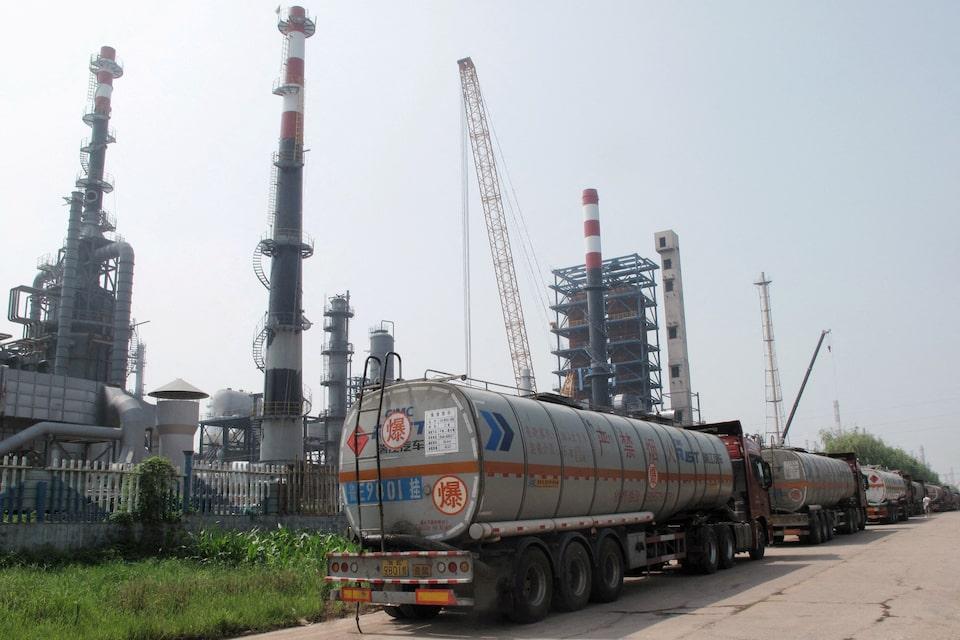
Four plants totalling about 320,000-bpd halting operation New Chinese tax policy causes deeper refining losses Plants rely on processing straight-run fuel oil, bitumen blend China's imports of Russian and Venezuelan fuel to be affected SINGAPORE, Jan 27 (Reuters) - Several independent oil refineries in eastern China have halted operations, or plan to do so, for indefinite maintenance periods as new Chinese tariff and tax policies plunge them deeper into losses, refinery and trade sources said. The rare outages come at a time of nascent consolidation in the world's second-largest oil refining industry as an earlier-than-expected peak in Chinese fuel demand and Beijing's drive to wring out inefficiency starts to squeeze out the weakest of the small independent plants, known as teapots. At least four plants with a combined annual processing capacity of approximately 18 million metric tons, or 320,000 barrels per day, either closed crude oil distillation units (CDUs) this month or plan to in February after Beijing cut rebates on consumption tax paid for feedstock imports, the sources said. The plants, all situated in the refining hub of Shandong province, include facilities operated by Shandong Shangneng Group, Kelida Petrochemical, Wonfull Petrochemical and China Overseas Energy Technology (Shandong), according to sources familiar with the situation. None of the companies have government-granted crude import quotas, limiting their feedstock options and making them less competitive than rivals. Instead, they process straight-run fuel oil, a semi-refined product, or a tar-like heavy residue called bitumen blend, into transportation fuels or asphalt. At the start of 2025, China raised import tariffs for fuel oil and enforced changes to tax rebates. "Under the new policy, it's very hard for plants to sustain production," said one manager, declining to be named due to company policy. His plant, which had been operating at 20% capacity since November after running at a loss for 18 months, has no date to resume operations, the manager added. The other plants operated at about 50% capacity on average before the policy changes, one industry source estimated. None of the four responded to requests for comment. Under the new tax regime, refiners receive rebates at roughly 50%-80% of the 1,218 yuan ($167.18) per metric ton consumption tax paid for feedstock imports, compared with full rebates previously. That effectively raised feedstock costs by $33-$83 per ton, or $5, to $12.8 per barrel, causing losses of 300 to 600 yuan per ton, as estimated by three industry trading managers. The stoppages are dampening demand for straight-run fuel oil, leading to lower premiums of Russia's straight-run fuel oil blend M100, which traders last pegged at around $50 per ton over benchmark Singapore 380-cst quotes on delivered basis, down more than $10 from December. Prices for bitumen blend, mostly sourced from Venezuela and trans-shipped near Malaysia, however, have held relatively stable at benchmark ICE Brent oil minus $7 per barrel for March arrivals into Shandong, supported by enquires from plants with crude quota but wary of increasingly costly Iranian or Russian oil due to tighter U.S. sanctions, several traders said. (1 ton = 6.5 barrels for fuel oil, bitumen blend conversion) ($1 = 7.2857 Chinese yuan renminbi) Sign up here. https://www.reuters.com/world/china/china-teapot-refiners-halt-plants-new-fuel-tax-bites-sources-say-2025-01-27/
2025-01-27 11:04
Jan 27(Reuters) - A look at the day ahead in U.S. and global markets by Amanda Cooper, Finance and Markets Breaking News Editor, Europe. Stocks are getting hammered on Monday, with hefty declines in the technology sector as artificial intelligence big guns like Nvidia, Qualcomm and Intel took a dive. The trigger was a burst of hype around the launch last week of Chinese startup DeepSeek's AI rival to ChatGPT. Not only is DeepSeek's app now top of the leaderboard on the Apple Store in terms of downloads, online searches for "DeepSeek" have exploded in the last 7 days, while those for its larger competitor have remained stagnant. With four out of the so-called "Magnificent Seven" due to report earnings this week, the rise of DeepSeek as a possible alternative to Western-led AI has served as a dose of reality. Investors have been willing to shell out for these stocks' sky-high valuations on their promises to deliver juicy returns with their investments in AI. The Magnificent Seven, a group comprising Wall Street's biggest companies by market capitalisation that includes Apple, Microsoft, Nvidia and Facebook parent Meta, now account for a third of global market value, compared with around a fifth two years ago, according to asset manager Federated Hermes. DeepSeek rolled out an open-source reasoning model called DeepSeek-R1 on Monday that it said rivalled OpenAI's o1 on several performance benchmarks. Tests last month on its V3 large language model outperformed those of OpenAI and Meta, with a smaller development budget and plans to charge users a lot less. OpenAI kicked off the race in AI development after it launched ChatGPT in November 2022. But it was Nvidia, whose supercomputing chips power a lot of AI applications, that really ignited the rally in the stock market when it delivered bumper earnings in May 2023 that sent its valuation soaring above $1 trillion. Since then, Nvidia shares have risen by 250%. Investors have been happy to let its Mag-7 companions ride higher on its coattails, but only to a point. Apple shares are up just 26% in that time, while Microsoft is up 34%. Meta has been a bigger winner since then, up 145%. U.S. President Donald Trump last week unveiled a plan for private-sector investment of $500 billion in AI infrastructure aimed at outpacing rival nations. Oracle, one of the companies involved in the joint venture, along with Japan's SoftBank and OpenAI, saw its shares jump 7% and the second-biggest daily traded volume in its stock in a year. Slower roll-outs of AI applications, higher costs and other hiccups have tested investors' faith in Wall Street's dominant players in the sector, but have not curbed their enthusiasm. Now, competitors are starting to snap at their heels. China's ByteDance, the owner of TikTok, last week released an update to its flagship AI model - a direct challenger to OpenAI - while in the world of smartphones, Samsung last week unveiled its newest Galaxy S25 smartphones, powered by Qualcomm's chips and Google's AI model, which it hopes can help pump up sales and fend off both Apple and Chinese rivals. Apple, Microsoft and Meta will report quarterly results this week, along with electric car maker Tesla. Key developments that should provide more direction to U.S. markets later on Monday: * Super Micro Computer Q2 earnings * 2- and 5-year U.S. Treasury auctions Sign up here. https://www.reuters.com/markets/us/global-markets-view-usa-2025-01-27/