2025-01-27 11:02
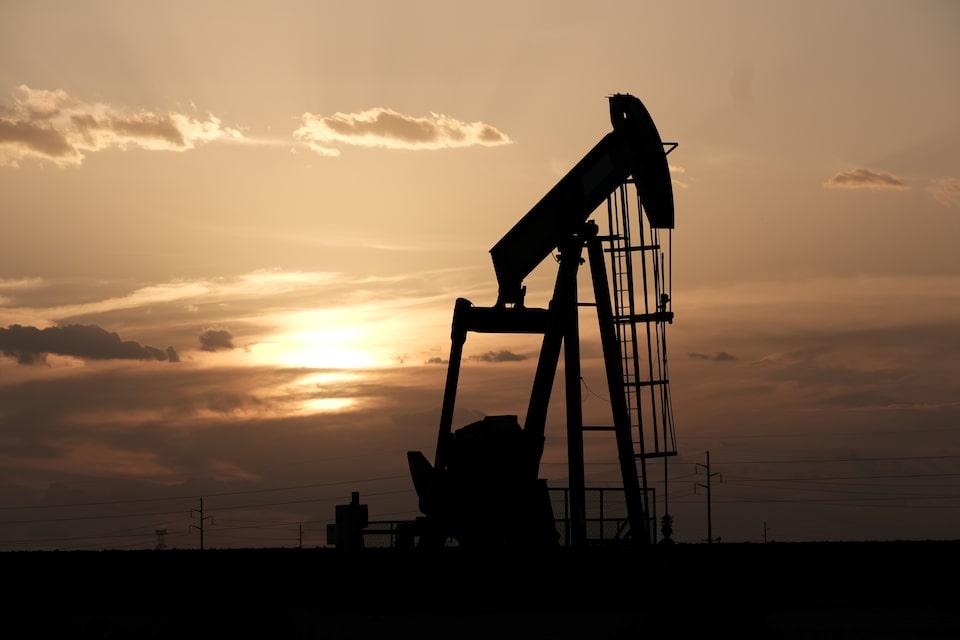
Oil companies seen prioritizing returns over drilling growth Overall oil and gas production expected to grow 5% this year Chevron, Exxon expected to report fourth-quarter profit declines HOUSTON, Jan 27 - Wall Street expects U.S. oil and gas companies to keep a lid on spending in 2025 and keep their focus on generating shareholder returns, despite calls by President Donald Trump to "drill, baby, drill." Big Oil begins reporting fourth-quarter results this week, and outlooks for the coming year should reflect the dissonance between Trump's oil and gas-maximizing agenda and investor expectations. The industry has pushed in recent years to drive down costs and increase production by using more efficient technology rather than drilling many new wells. Producers also must contend with lower global oil prices as the post-pandemic demand rebound runs its course and as China's economy struggles. Benchmark Brent crude oil prices are projected to average $74 per barrel in 2025, down from $81 in 2024, according to the U.S. Energy Information Administration. Overall, for the U.S. exploration and production sector, analysts at Scotiabank expect companies to target up to 5% production growth this year, and flat to slightly lower year-over-year capital expenditures. The exception is Exxon Mobil, which plans a large increase in production. The largest U.S. oil company intends to more than triple its production in the Permian, the top U.S. shale field, and pump 1.3 million barrels per day from its lucrative operations in Guyana by 2030. "We expect most oil and gas producers to remain disciplined with capital expenditures," said Rob Thummel, senior portfolio manager at Tortoise Capital. "However, less regulation will make it easier to increase drilling activity if commodity prices reach levels that are too high." Chevron (CVX.N) , opens new tab, which reports results on Friday, is expected to grow production by about 3% this year and in the mid-single digit percentage in 2026, said Barclays analysts in a research note. The company has followed a conservative strategy, moving out of a phase of heavy investment in new projects, and is now generating cash, said analysts from RBC Capital Markets in a note. Chevron could also announce a dividend increase of at least 5% over the previous year, Thummel added, as dividend increases have been between 6% to 8% previously. Chevron is expected to report $3.87 billion in profit, according to data compiled by LSEG, which would be a decline from $6.45 billion in the year-ago quarter. Exxon Mobil, meanwhile, is expected to report $6.85 billion in profit, down from $9.96 billion in the same quarter last year. The company signaled last month that lower oil refining profits and weakness across its business would reduce earnings by about $1.75 billion compared to the third quarter. An arbitration panel will decide in May on Exxon's challenge to Chevron's acquisition of Hess - a purchase that would give Chevron a rival stake in Guyana's rich offshore reserves. Exxon has claimed a contractual right to buy Hess' stake in the field. Producer ConocoPhillips (COP.N) , opens new tab could also grow oil and gas production in the low single-digit percentage this year to focus on returning cash to shareholders, Barclays said. The company in December completed its $22.5 billion buyout of smaller peer Marathon Oil, which had been under a Federal Trade Commission review. This could, according to Scotiabank analysts, swing its performance up. Occidental (OXY.N) , opens new tab, meanwhile, is expected to report $730.9 million in adjusted profit for the fourth quarter, up from $710 million in the same quarter last year. The oil producer closed its acquisition of CrownRock in August and its capex this year is expected to total $7.44 billion, up from $6.9 billion last year, Barclays said. For Diamondback Energy (FANG.O) , opens new tab, Raymond James analysts expect the company to choose free cash flow over growth after its acquisition of Endeavor. Profit is expected to come in at $977 million, up from $854 million in the same quarter last year. Production growth is expected to be flat with lesser spending in 2025, they added. Sign up here. https://www.reuters.com/business/energy/big-oil-no-rush-drill-baby-drill-this-year-despite-trump-agenda-2025-01-27/
2025-01-27 11:00
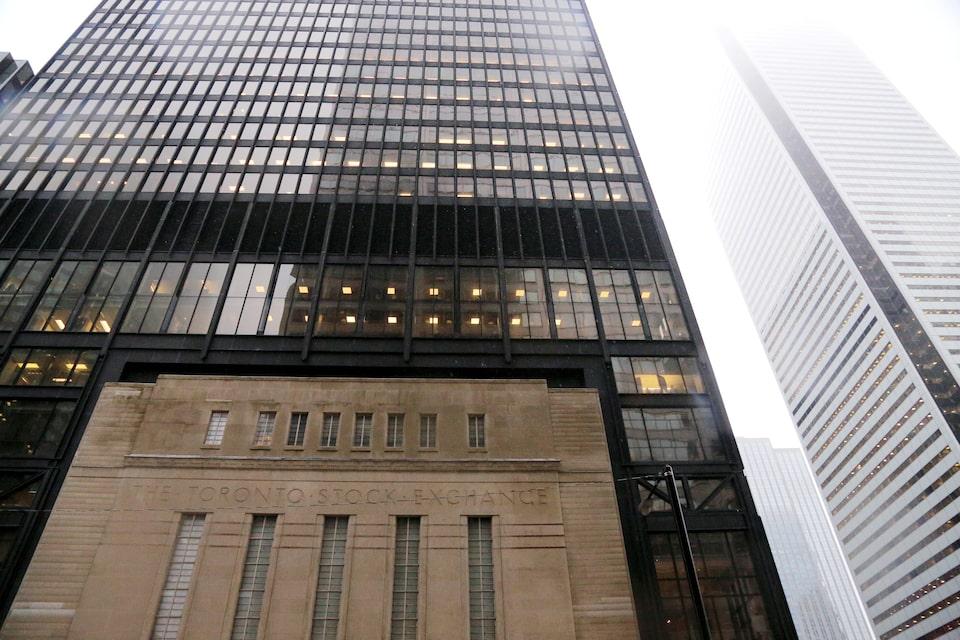
Conservative Party expected to win, signaling economic shift Trudeau's tenure marked by green initiatives, borrowing, strained relations with Trump Poilievre promises to reverse capital gains tax increase, scrap energy emissions cap TORONTO, Jan 27 (Reuters) - The Canadian stock market stands to benefit from the expected election this year of a Conservative government that favors business-friendly economic policies and that could help reduce trade uncertainty with the United States, some investors say. Polls show the Conservative Party, led by Pierre Poilievre, handily winning Canada's next federal election, which by law must be held by Oct. 20 but will likely happen sooner. A change in government would signal a shift in economic priorities for Canada after nine years in power for the Liberal Party of Prime Minister Justin Trudeau, investors said. It could spark an upward reassessment by investors of valuations on the TSX (.GSPTSE) , opens new tab, Canada's commodity-linked main stock market. Trudeau plans to resign after a new party leader is chosen on March 9. His tenure saw the launch of green initiatives and new social programs, such as child and dental care, but was marked by a surge in government borrowing and weak productivity growth, as well as a strained relationship with Donald Trump during the Republican's first term as U.S. president. Trump's threat to impose a 25% tariff on Canadian goods is a major economic uncertainty but investors say the impact on the TSX could be lessened if some products, such as energy, are excluded from the import tax, or if the measures are short-lived. The TSX has added 2.99% this month after climbing nearly 18% in 2024. That was the index's biggest advance since 2021 but trailed gains for the U.S. benchmark S&P 500 (.SPX) , opens new tab, which has a heavier weighting in high-flying technology shares. "The whole Canadian economy and stock market stands to benefit" from a more pro-business policy stance, including lower taxes, less red tape and greater focus on capital investment, said Brian Madden, chief investment officer at First Avenue Investment Counsel. Poilievre has offered few detailed policies but has promised to reverse a capital gains tax increase that is unpopular with investors and to scrap a proposed emissions cap on the energy sector. The main contenders to lead the Liberal Party, former Bank of Canada Governor Mark Carney and former Finance Minister Chrystia Freeland, are also distancing themselves from Trudeau's spending policies - though Freeland was the architect of many of them as a longtime cabinet member. A move to pro-growth policies could lift the multiple that investors are willing to pay for the earnings of TSX-listed companies, closing the gap with the U.S. market, investors said. The TSX's price to earnings ratio of 15 trails the 22 multiple for the S&P 500. The gap was less than two when Trudeau came to power in 2015. A Conservative government would broadly cut taxes and encourage mining and liquefied natural gas exports, Conservative legislator Jasraj Singh Hallan said in a statement. A spokesperson for Trudeau did not immediately respond to requests for comment. "The expectation is if the Conservatives were to get in they'd reverse a lot of the roadblocks that had been put up (by Trudeau) for energy companies," said Steve Palmer, chief investment officer at AlphaNorth Asset Management, citing the emissions cap. "It's just a total shift in sentiment because the companies are cheap and instead of having headwinds you've got tailwinds." Investors have already seized on Trump's proposals to boost oil drilling, lower taxes and loosen regulations. The possible boon for corporate earnings helps Canadian businesses, such as banks, that have major U.S. operations, say investors, but the expectation that the U.S. will impose tariffs and renegotiate a continental trade pact among the U.S., Mexico and Canada has hurt the Canadian dollar . The currency tumbled last week to a five-year low at 1.4515 per U.S. dollar, or 68.89 U.S. cents. "The Conservative Party is a little more aligned with the Republican Party in the United States, which would make negotiations much easier," said Matt Skipp, president of SW8 Asset Management. "Our currency would firm up and the market would rip higher if there was an election announced tomorrow." Sign up here. https://www.reuters.com/world/americas/canadas-looming-election-cheers-equity-investors-hoping-increased-returns-2025-01-27/
2025-01-27 10:55
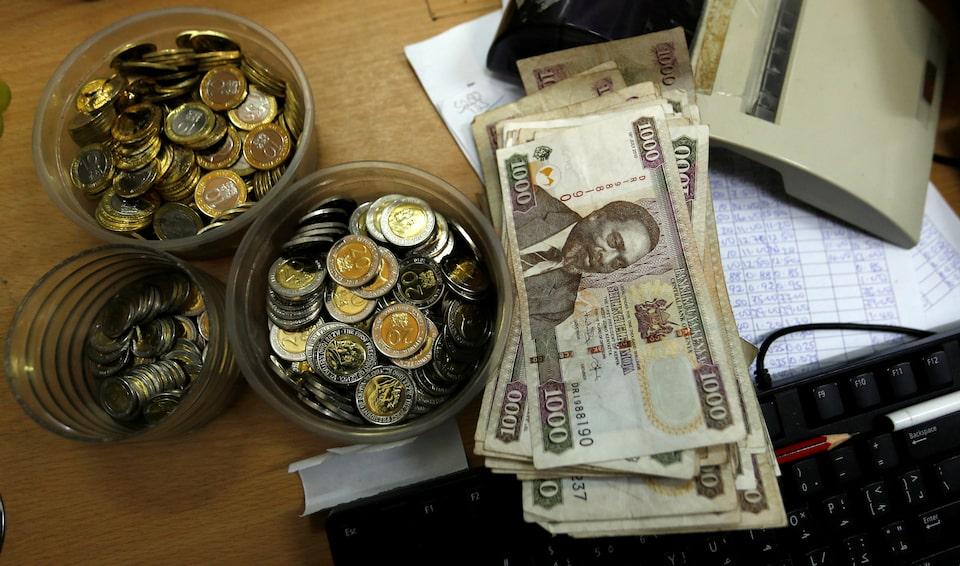
NAIROBI, Jan 27 (Reuters) - Kenya's shilling was unchanged against the dollar on Monday, data from the London Stock Exchange Group showed. At 1045 GMT, the shilling traded at 129.00/129.40 per dollar, the same as at the close of trading on Friday. Sign up here. https://www.reuters.com/markets/currencies/kenyan-shilling-even-against-dollar-lseg-data-shows-2025-01-27/
2025-01-27 10:36
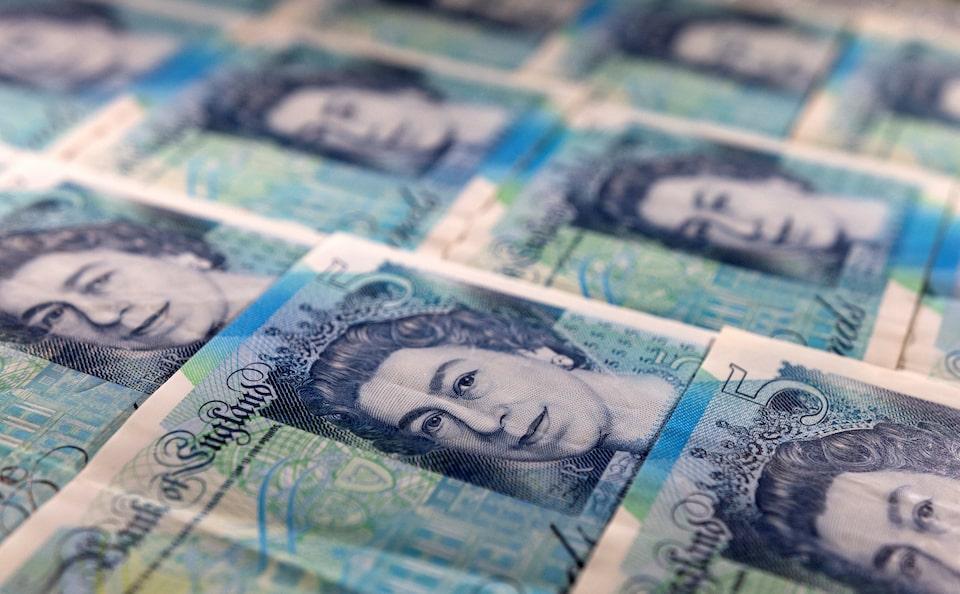
Jan 27 (Reuters) - Sterling edged up against the dollar and fell sharply against the yen as investors rushed into safe-haven assets while shifting their focus to economic data and central bank policy meetings later this week. The yen and Swiss franc jumped after tech stocks plunged, with investors weighing the implications of a Chinese startup launching a free open-source artificial intelligence model. The pound had rallied against the dollar on Friday as U.S. President Donald Trump suggested a potentially softer tariff stance. However, concerns about U.S. policy on trade resurfaced on Monday after the U.S. and Colombia pulled back from the brink of a trade war. Analysts expect investors to turn their attention, at least temporarily, towards monetary policy before a raft of central bank policy meetings. Federal Reserve and European Central Bank rate decisions are due on Wednesday and Thursday, respectively. Analysts said the Fed staying on hold and the ECB cutting by 25 basis points are well priced in, but traders will focus on any suggestions for the rate outlook. In contrast, Bank of Japan Governor Kazuo Ueda said last week that the BoJ would keep raising interest rates as wage and price increases broaden, while other central banks worldwide, including the Bank of England, are easing. Some analysts argued that the BoJ's hawkish tone might reflect policymakers' desire not to weaken the yen and thus potentially upset Trump. Sterling was down 1% to 192.71 versus the yen , after hitting 192.51. It had risen 1.03% on Friday. It dropped 0.6% to 1.1230 against the Swiss franc. Inflation figures from Japan, Germany and France will be released on Friday, while the Fed's favourite inflation gauge is due in the U.S. BofA forex strategists said the market had been guilty of a "glass-half-empty approach" to the UK vis-a-vis the dollar and euro. "We are still constructive on sterling as we believe that sentiment is asymmetrically skewed, and a lot of the bad news is now priced in, though we concede risks to the downside have risen," they said in a note to clients. The pound was up 0.24% at $1.2511 after touching its highest since Jan. 7 at $1.2523 earlier in the session. As recently as Jan. 13 it had stood at $1.2097, after a selloff that also included UK bonds. The euro was flat at 84.04 pence , after hitting a fresh 2-week low at 83.93. It had reached 84.73 on Jan. 21, its highest level in around five months. Sign up here. https://www.reuters.com/markets/currencies/sterling-drops-versus-yen-mixed-against-euro-dollar-2025-01-27/
2025-01-27 09:47
KAMPALA, Jan 27 (Reuters) - The Ugandan shilling weakened on Monday, undercut by strong hard currency demand by merchandise and fuel importers, traders said. At 0856 GMT commercial banks quoted the shilling at 3,691/3,701, compared to Friday's close of 3,685/3,695. Sign up here. https://www.reuters.com/markets/currencies/ugandan-shilling-weakens-energy-sector-fx-demand-2025-01-27/

2025-01-27 08:51
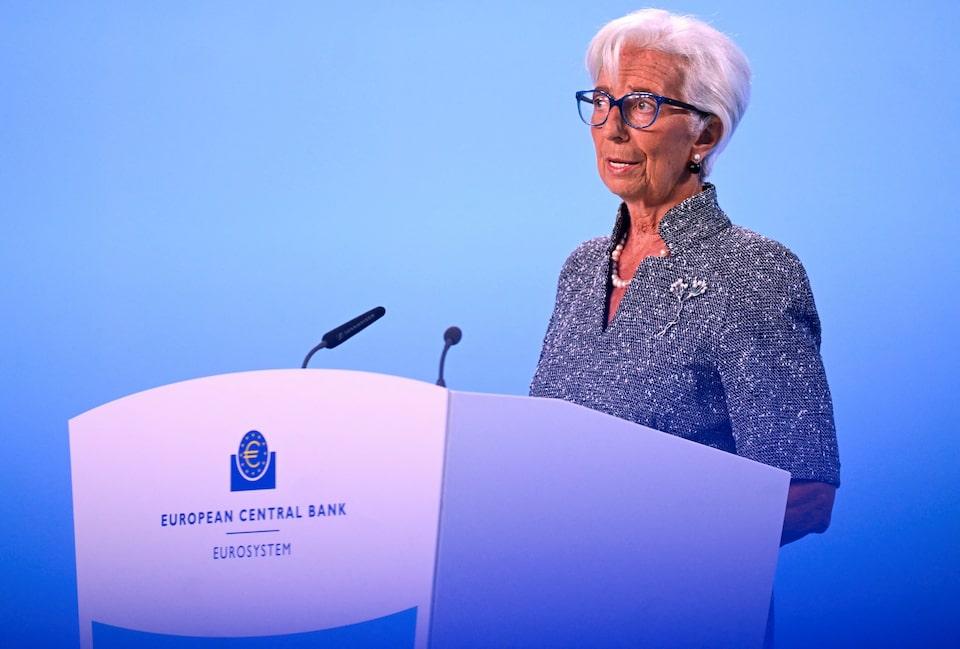
Central bank independence questioned, Lagarde says High debt, high inflation make independence tricky Governments want to blame central banks for difficulties, policymaker says BUDAPEST, Jan 27 (Reuters) - Central bank independence is being challenged in parts of the world and greater political influence could undermined banks' ability to keep inflation down, risking economic volatility, European Central Bank President Christine Lagarde said on Monday. U.S. President Donald Trump said last week he would demand that the Federal Reserve lower borrowing costs, claiming that he knew interest rates much better than people in charge of making that decision. While the comment is considered more rhetoric than a plan to curtail the Fed's independence, politicians have been encroaching into an area that has generally been off limits to them for decades. "While recent research suggests that de jure central bank independence has never been more prevalent than it is today, there is no doubt that the de facto independence of central banks is being called into question in several parts of the world," Lagarde told a Hungarian central bank conference. The Fed is expected to keep interest rates on hold this week even as the ECB is likely to cut, arguing that inflation is coming down only slowly and that some policy proposals of the Trump administration could actually increase price pressures, likely drawing criticism from the White House. Jean Boivin, head of BlackRock Investment Institute, speaking after Lagarde, said independence is not a given and managing it will be tricky. "We haven’t been in a situation where we have to deal with inflation at such a high debt level," Boivin said. "The conflict that’s going to create to me is real." "That independence is not something you just assert, it’s something you need to manage and that management is going to get really tricky now going forward," he argued. Most central bank raised interest rates quickly in recent years to fight off inflation, limiting government's ability to spend just as rapid price growth eroded real incomes. Peter Kazimir, Slovakia's central bank chief and an ECB policymaker, foreshadowed more conflict with governments over this inflation response. "Finance ministers and central bank governors are not in the same boat, this temptation to play the blame game is pretty high, especially when inflation is so high," Kazimir said in Budapest. "We were the best friend of finance ministers with very low rates. But we are not anymore." Lagarde meanwhile warned that political interference could lead to a "vicious circle" that might result in central bank independence being undermined. "Political influence on central bank decisions can also contribute substantially to macroeconomic volatility," Lagarde said in a video address to Hungary, where Prime Minister Viktor Orban's political ally, former Finance Minister Mihaly Varga, was appointed as the bank's next governor from March. Gyorgy Matolcsy, Hungary's outgoing central bank chief, who clashed with Orban at times, also backed independence. "Sometimes there will be fights, skirmishes, debates, but you have to be adamant for keeping your central bank independent," Matolcsy said. Lagarde said that persistent political pressure on a central bank increases exchange rate volatility, and raises bond yields and the risk premia. This sort of volatility could make it more difficult to keep inflation down, raising concerns that independent central banks are failing to deliver on their mandates, Lagarde said. Such a sequence of events, she said, could then undermine the social consensus and further amplify volatility in the economy. Sign up here. https://www.reuters.com/markets/europe/ecb-president-warns-over-loss-central-bank-independence-2025-01-27/