2025-01-27 05:20
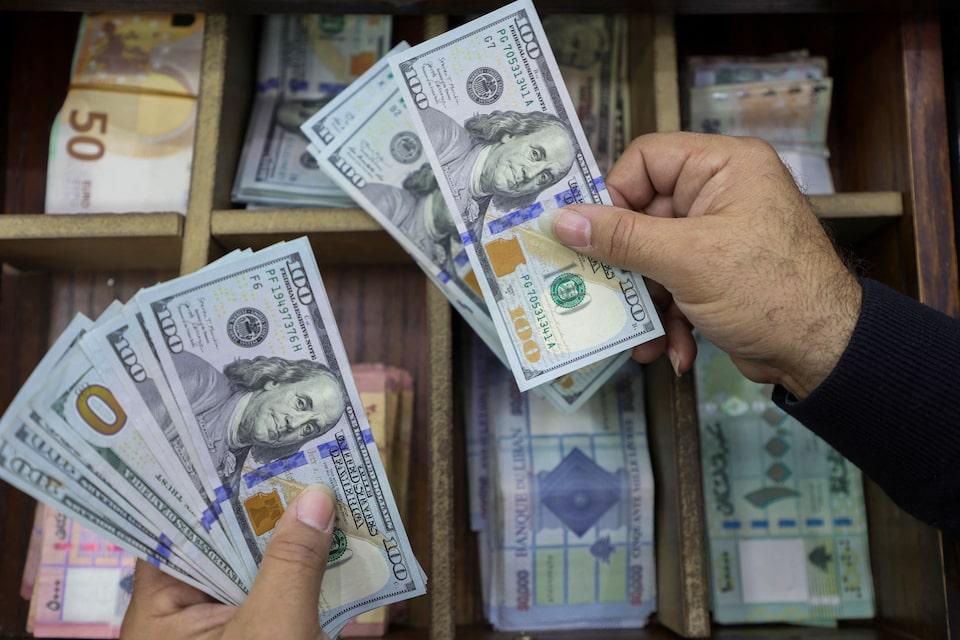
U.S. dollar index falls Yen and Swiss franc jump as investors seek safety Tech selloff pushes U.S. stocks lower Central bank policy meetings and economic data in focus NEW YORK, Jan 27 (Reuters) - The Japanese yen and the Swiss franc gained while the U.S. dollar fell against major currencies on Monday amid a selloff in technology stocks as markets weighed the implications of a Chinese startup launching a free open-source artificial intelligence model. China's DeepSeek rolled out a free AI assistant that it says uses lower-cost chips and less data, seemingly challenging a widespread AI bet that in the past has lifted shares of U.S. technology stocks, especially chipmaker Nvidia (NVDA.O) , opens new tab. The dollar came under pressure whereas the yield on the benchmark 10-year Treasury note dropped 6 basis points to a one-month low of 4.561% as investors rushed into safe-haven assets and government bonds. The benchmark S&P 500 (.SPX) , opens new tab lost 1.46% to close at 6,012.28, dragged down by technology stocks. Nvidia (NVDA.O) , opens new tab plunged 17% to $118.42, hitting a nearly four-month low. "A lot of people seem to be taking a pretty large leap here that DeepSeek is unsettling the major tech names that's going to lead to a rout in equities, and a rout in equities is going to cause the Fed to be supportive," said Eugene Epstein, head of structuring for North America at Moneycorp in New Jersey. "I think it's a number of steps too far but given the fact that all these different asset classes are moving in the same classical safe haven direction, it seems that's the current rationale. Whether that rationale makes sense or not is, I think it's highly debatable. But that's at least how the market seems to be reacting at the moment." The Japanese yen rose 0.87% to 154.63 against the dollar after tightening up to 153.71, its strongest level since mid-December. The Swiss franc rose 0.50% against the greenback to $0.90155. The dollar index , which measures the greenback against a basket of currencies including the yen and the euro, fell 0.29% to 107.36, after dropping to its lowest level since mid-December. The euro was up 0.02% at $1.0491. The dollar recorded its biggest weekly loss in more than a year last week on expectations that tariffs enacted by U.S. President Donald Trump will be lower than previously feared. But concerns have resurfaced as the U.S. and Colombia pulled back from the brink of a trade war. "U.S. equity markets are selling off hard and foreigners were large record buyers of U.S. stocks in December. That is a contrarian indicator," said Marc Chandler, chief market strategist at Bannockburn Global Forex in New York. "Many people were concerned already that U.S. stocks were overvalued. DeepSeek exposes these concerns," he said. "And what it did was the U.S. 10-year yield is down. That is why the yen and the Swiss franc have done relatively well." The Mexican peso , a barometer of tariff worries, weakened 2% to 20.693 per dollar. The Canadian dollar was down 0.22% versus the greenback at 1.44 per dollar. Trump said last week he may impose duties on products from Canada and Mexico from Feb. 1. "The Mexican peso is the weakest of the emerging market currencies today. I think it suffered in sympathy with Colombia and the threat of tariffs," Chandler said. "While the Canadian dollar is down, it is doing a little bit better than the other dollar block currencies like the Aussie and kiwi." The Australian dollar weakened 0.41% versus the greenback to $0.6283. The kiwi weakened 0.35% versus the greenback to $0.5689. Major central banks, including the Federal Reserve and the European Central Bank, will meet this week after the Bank of Japan raised its rates and Governor Kazuo Ueda said last week the BoJ would keep tightening its policy as wage and price increases broaden. The personal consumption expenditures (PCE) price index - the Fed's favourite inflation gauge - is due on Friday, while inflation data will be released from Germany, France and Japan on Friday as well. "I think the market's going to turn cautious now ahead of Wednesday when both the Federal Reserve and the Bank of Canada meet," Chandler added. Bitcoin fell 4.38% to $100,497.28, but still traded near the record high of $109,071.86 touched last week. Ethereum declined 6.51% to $3,112.97. Sign up here. https://www.reuters.com/markets/currencies/dollar-rises-tariff-worries-after-trumps-colombian-threat-2025-01-27/
2025-01-27 05:13
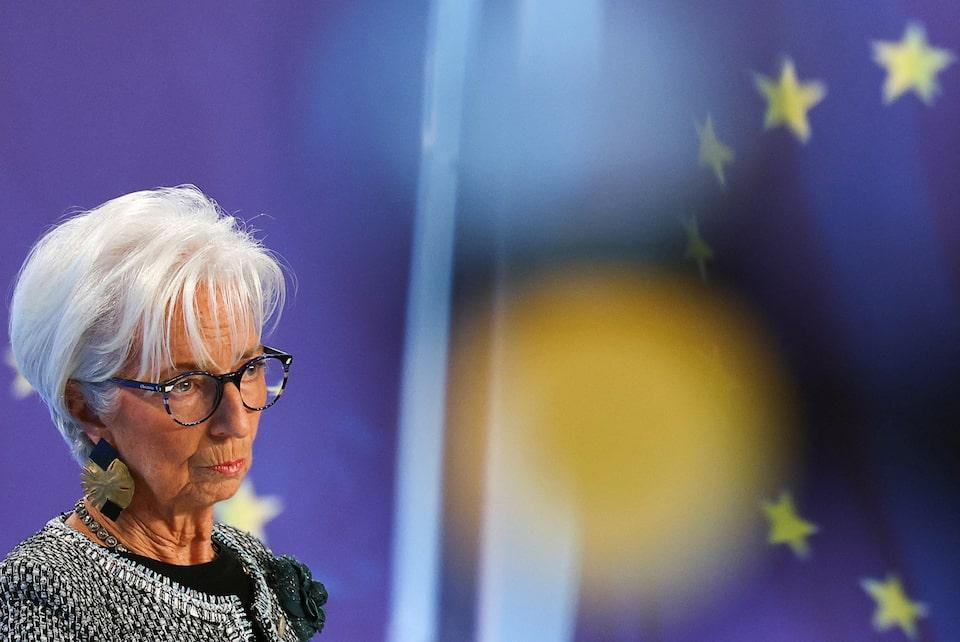
ECB expected to cut rates on Thursday Meets for first time since Trump's return U.S. tariff risks loom large LONDON, Jan 27 (Reuters) - The European Central Bank meets on Thursday for the first time since Donald Trump returned to office, leaving U.S. tariff threats looming over the euro zone's sluggish economy and potentially complicating the economic outlook. Traders reckon further rate cuts are a done deal, so the question is whether the ECB drops any new hints on the path ahead. "They expect President (Christine) Lagarde to say the door to further rate cuts is open," said Bruno Cavalier, chief economist at Oddo. Here are five key questions for markets: 1/ What will the ECB do on Thursday? Most likely, cut the key deposit rate by another 25 basis points to 2.75%. Markets fully price the move and the ECB removed language from its guidance in December that had pledged to keep rates restrictive. "There has been no change to the outlook since December," said Pictet Wealth Management's head of macroeconomic research Frederik Ducrozet. 2/ How does Trump's return change ECB thinking on tariff risks? It doesn't so far, economists reckon. U.S. President Trump did not impose day-one tariffs and said the U.S. is not ready for universal ones. However, he put Canada, Mexico and China in the firing line and complained about the terms of trade with the European Union. Trump told the World Economic Forum in Davos via video last week that other economies will face tariffs if they make their products anywhere but the U.S. While some analysts take comfort in the initial approach being more measured than expected, that could change. For the ECB, it's all about how tariffs impact euro zone inflation, whether directly or through their impact on demand. Lagarde said last week the bank is not "overly concerned" about Trump's policies exporting inflation to Europe -- comments ABN AMRO economists took to signal the ECB would see tariffs as mainly being negative for growth. 3/ How far does the ECB need to cut rates? Traders expect almost four rate cuts from the ECB this year and some policymakers have explicitly agreed, pointing to rates falling towards 2%. That would put rates within estimates of the so-called neutral rate, which neither restricts nor accommodates growth. But some hawks sound more cautious on the pace, with top hawk Isabel Schnabel recently warning that the bank needs to have a "deep think" on how far and quickly to cut. Once rates reach 2.5% "they will have to think a bit harder to decide where to go", said PIMCO portfolio manager Konstantin Veit. But given a weak economy, the risk is skewed towards rates falling to 1.75%, he added. Lagarde said last week the neutral level was anywhere between 1.75% and 2.25%. 4/ How worrying is the uptick in inflation for the ECB? Not very, economists reckon. Inflation rose to the highest since July at 2.4% in December, driven by higher energy prices and costs in services, where inflation isn't budging from 4%. Yet the rise is in line with the bank's expectations and chief economist Philip Lane is confident wage growth is slowing and will quickly pull services inflation lower. He has also warned keeping rates too high for too long could push inflation below target. While the ECB only targets inflation, as it nears 2%, "it's not as simple as just being a single mandate because after all, growth is important if you want to see where inflation is going to go," said Danske Bank chief analyst Piet Christiansen. 5/ What if the Fed stops cutting rates? The ECB could slow its cuts, but it depends on the reason. Traders' Fed rate cut bets have swung in January given uncertainty around the U.S. inflation outlook. BofA and BNP Paribas expect the Fed to stay on hold this year. "If they don't cut because the economy is strong in the U.S., it's also good news for Europe.... the ECB could actually be tempted to cut a little bit less," Pictet's Ducrozet said. "If they don't cut because of a stagflation kind of scenario, then it's a different story and I don't think it makes a big difference for the ECB," he said, noting a fall in the euro to parity, from almost $1.05 at present, would not be a big focus . Sign up here. https://www.reuters.com/markets/europe/trumps-shadow-five-questions-ecb-2025-01-27/
2025-01-27 04:48
Jan 26 (Reuters) - Activist investor Ancora Holdings has built a stake in U.S. Steel (X.N) , opens new tab and wants the steelmaker to drop its merger agreement with Japan's Nippon Steel (5401.T) , opens new tab, the Wall Street Journal reported on Sunday, citing sources. The exact size of Ancora's stake in U.S. Steel could not be determined. The activist investor also intends to rally shareholders around a plan to oust U.S. Steel's top boss David Burritt, the report said. Ancora is not interested in pursuing a sale of the American steelmaker to another party, the WSJ reported, adding that it has nominated nine director candidates to the company's 12-person board, including Stelco's former chief Alan Kestenbaum. Bloomberg News reported that the hedge fund also wants Kestenbaum to replace Burritt as the CEO. Ancora, U.S. Steel and Nippon Steel did not immediately respond to Reuters' request for a comment outside regular business hours. Earlier this month, former U.S. President Joe Biden blocked Nippon Steel's $14.9 billion deal for U.S Steel on national security grounds and delayed an order until June for Nippon to abandon the bid. The companies have sued the Biden administration for blocking the acquisition. U.S President Donald Trump had also voiced opposition to Nippon Steel acquiring U.S. Steel. "I will block this deal from happening," Trump wrote on social-media platform Truth Social in December. Reuters reported earlier this month that rival steelmaker Cleveland-Cliffs (CLF.N) , opens new tab was partnering with peer Nucor (NUE.N) , opens new tab for a potential all-cash bid for U.S. Steel. Cliffs had previously proposed acquiring U.S. Steel, but the American steelmaker raised concerns about antitrust issues and the consolidation of steel supply to U.S. automakers. A potential deal could result in up to 95% of U.S. iron ore production being controlled by a single company. Previously, Ancora pushed for changes in other companies including C.H. Robinson (CHRW.O) , opens new tab, Norfolk Southern (NSC.N) , opens new tab, and Forward Air Corp (FWRD.O) , opens new tab. Sign up here. https://www.reuters.com/markets/deals/activist-ancora-push-us-steel-drop-nippon-merger-oust-ceo-wsj-reports-2025-01-27/

2025-01-27 04:38
BEIJING, Jan 27 (Reuters) - China has prohibited imports of sheep, goat, poultry and even-toed ungulates from African, Asian and European countries due to outbreaks of livestock diseases such as sheep pox, goat pox and foot-and-mouth-disease. The ban, which also includes processed and unprocessed products, comes after the World Health Organization released information of disease outbreaks in various countries, according to a series of announcements by China's General Administration of Customs dated Jan. 21. The ban from the world's largest meat importer affects Ghana, Somalia, Qatar, Congo (DRC), Nigeria, and Tanzania, Egypt, Bulgaria, East Timor and Eritrea. China also said it has stopped imports of sheep, goat and related products from Palestine, Pakistan, Afghanistan, Nepal and Bangladesh due to sheep pox and goat pox outbreaks. It also blocked the imports of even-toed ungulates and related products from Germany following an outbreak of foot-and-mouth disease, it said. Sign up here. https://www.reuters.com/world/china/china-blocks-imports-livestock-products-many-countries-due-disease-outbreaks-2025-01-27/

2025-01-27 04:33
Chinese DeepSeek's AI model overtakes ChatGPT in Apple App Store US puts Colombia sanctions threat on hold Trump policies keep markets nervous OPEC+ yet to react to Trump call for lower prices NEW YORK, Jan 27 (Reuters) - Oil prices fell about 2% to a two-week low on Monday as news of surging interest in Chinese startup DeepSeek's low-cost artificial intelligence (AI) model prompted concerns over energy demand to power data centers. Before the news of DeepSeek broke, oil was already trading lower on weak economic data from China and worries that U.S. President Donald Trump's proposed tariffs could further pressure economic growth and energy demand. Brent futures fell $1.42, or 1.8%, to settle at $77.08 a barrel, while U.S. West Texas Intermediate (WTI) crude ended $1.49, or 2.0%, lower at $73.17. Brent closed at its lowest since Jan. 9 and WTI at its lowest since Jan. 2. Chinese startup DeepSeek's AI Assistant overtook U.S. rival ChatGPT to become the top-rated free application available on Apple's App Store in the U.S. That fed doubts among investors who have poured money into U.S. energy firms hoping AI would drive demand for energy to power data centers. "The DeepSeek model is (reported to be) more energy and capital efficient, which calls into question the significant electric demand projections for the U.S.," analysts at Jefferies, an investment bank, said in a report, noting AI represents about 75% of overall U.S. demand forecasts through 2030-2035 in most projections. "It is still early to draw conclusions on the outlook in the immediate aftermath of DeepSeek, but the 20%(-plus) YTD (year-to-date) rally in power companies looks exposed," Jefferies said. In other news from China, the world's second biggest economy behind the U.S., manufacturing data was weaker than expected, adding fresh concerns over energy demand. "The weak readings highlight the need for more policy efforts to stabilize economic growth," analysts at Citibank said in a report. TRUMP ON TARIFFS AND OPEC Analysts said oil prices have been depressed in recent days following President Trump's call last week for the Organization of the Petroleum Exporting Countries to reduce oil prices. "President Trump continued to put the pressure on OPEC ... calling on the producer group to lower prices to help end the Russian war in Ukraine," Bob Yawger, director of energy futures at Mizuho, said in a report. OPEC and its allies including Russia in the OPEC+ group have yet to react to Trump's call, with OPEC+ delegates pointing to an existing plan to start raising oil output from April. Trump's tariff threats have also mostly pressured oil prices, feeding worries that a trade war could hurt global economic growth and oil demand. Over the weekend, the U.S. threatened and then swiftly reversed plans to impose sanctions and tariffs on Colombia after the South American nation agreed to accept deported migrants from the U.S. Colombia last year sent about 41% of its seaborne crude exports to the U.S., data from analytics firm Kpler shows. The agreement will allow that oil to continue to flow, another factor pressuring crude prices on Monday. Sign up here. https://www.reuters.com/business/energy/oil-slips-trump-repeats-call-opec-reduce-prices-2025-01-27/

2025-01-27 03:31
KARACHI, Jan 27 (Reuters) - At least five people were killed and 31 injured in an LPG tanker truck blast in Pakistan's Multan region, Geo news reported on Monday. Sign up here. https://www.reuters.com/world/asia-pacific/least-5-killed-lpg-tanker-truck-blast-pakistans-multan-geo-news-says-2025-01-27/