2025-01-27 02:56
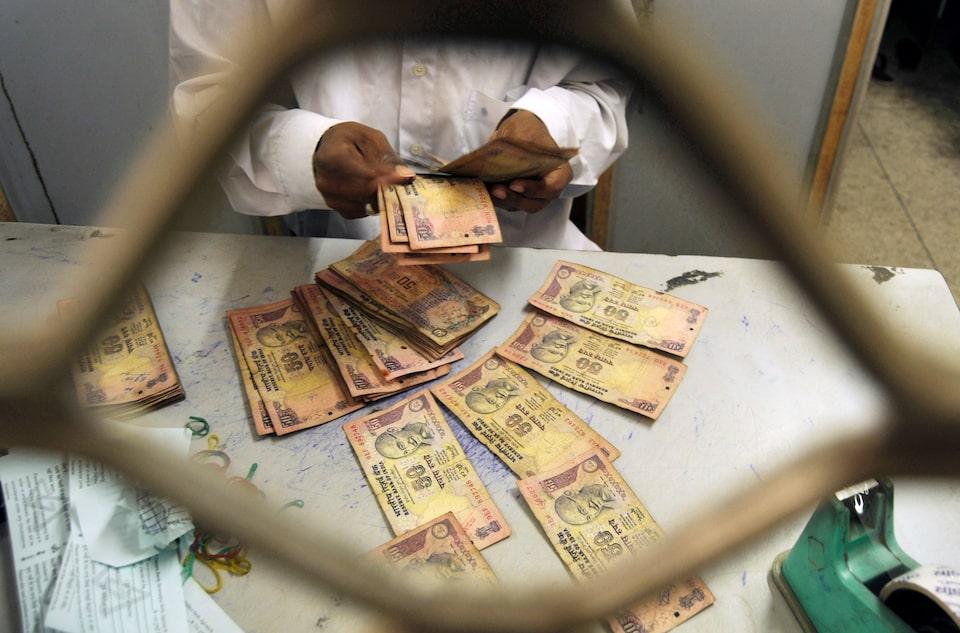
MUMBAI, Jan 27 (Reuters) - The Indian rupee, following last week's relief rally, is expected to decline on Monday, weighed by the dip in the Chinese yuan and persisting worries over U.S. President Donald Trump's trade policies. The 1-month non-deliverable forward indicated that the rupee will open at near 86.30 to the U.S. dollar compared with Friday's close at 86.2050. The Indian currency climbed 0.5% last week, its best weekly performance in nearly one-and-a-half years, on relief that Trump did not impose tariffs immediately on taking office. Last week, Trump talked of imposing tariffs on China, the European Union, Mexico and Canada. That he did not impose tariffs was a relief for Asian currencies. "With Trump, we just do not know what to expect. While last week brought no concrete news on the tariffs, it could very well be different this week," a currency trader at a bank said, referring to the incident with Colombia. On Sunday, Trump said he would impose sweeping retaliatory measures on Colombia, including tariffs and sanctions, after the South American country turned away two U.S. military aircraft with migrants being deported. The dollar index inched higher on Monday. The offshore Chinese yuan dropped to 7.2650 to the U.S. dollar. FED MEETING The rupee and Asian currencies will be eyeing the Federal Reserve policy decision, due Wednesday. While the U.S. central bank is not expected to make any changes to the policy rate, the focus will be on any comments by Fed Chair Jerome Powell on the likely impact Trump's policies will have on the interest rate path. "Trump's low taxes, less regulation policies should be good news for growth, while immigration controls and trade tariffs provide upside risk for prices, suggesting we could have a long wait for the Fed's next cut," ING Bank said in a note. KEY INDICATORS: ** One-month non-deliverable rupee forward at 86.50; onshore one-month forward premium at 20.5 paise ** Dollar index up at 107.71 ** Brent crude futures down 0.9% at $77.8 per barrel ** Ten-year U.S. note yield at 4.59% ** As per NSDL data, foreign investors sold a net $354.1mln worth of Indian shares on Jan. 23 ** NSDL data shows foreign investors sold a net $34.8mln worth of Indian bonds on Jan. 23 Sign up here. https://www.reuters.com/markets/currencies/rupee-recovery-fade-yuan-weakness-trump-worries-2025-01-27/
2025-01-27 00:48
SYDNEY, Jan 27 (Reuters) - Australia's southeast sweltered in a heatwave on Monday, raising the bushfire risk and prompting authorities to issue fire bans for several parts of Victoria state. The extreme temperatures brought back memories of the catastrophic 2019-2020 "Black Summer" that saw fires destroy an area the size of Turkey, killing 33 people and billions of animals. On Monday, the nation's weather forecaster warned that the temperature could reach 41 degrees Celsius (105.8 degrees Fahrenheit) in Victoria's capital Melbourne, more than 14 C above the city's mean maximum temperature for January. Authorities rated the fire danger at extreme, the second-highest danger rating, in five Victorian regions on Monday. Dean Narramore, senior meteorologist at the forecaster, told the Australian Broadcasting Corp that the hot and windy conditions could spark "big fires" ahead of a cool change due in Victoria later on Sunday. Elsewhere, the states of New South Wales, South Australia, Western Australia, Queensland and the Northern Territory were under heatwave alerts on Monday, the forecaster said on its website. In New South Wales, Australia's most-populous state, Narramore said "low to severe heatwave conditions" were expected on Monday, forecasting the heatwave to intensify there on Tuesday. Sign up here. https://www.reuters.com/world/asia-pacific/extreme-fire-danger-grips-australias-southeast-amid-heatwave-2025-01-27/

2025-01-26 23:39
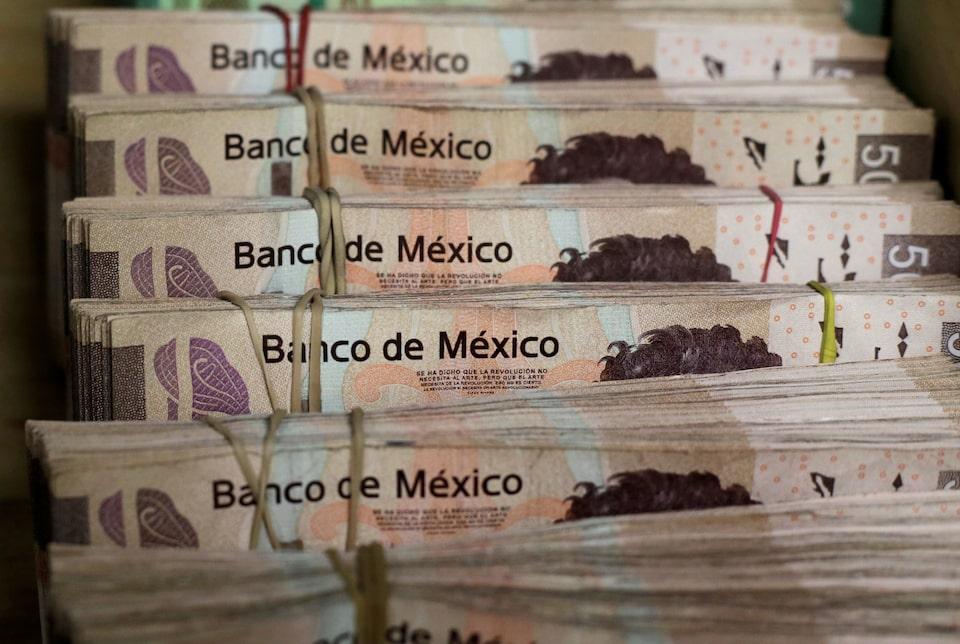
MEXICO CITY, Jan 26 (Reuters) - The Mexican peso depreciated in international trade after U.S President Donald Trump announced he would impose tariffs on Colombia, reviving concerns about his trade policy. The currency, one of the most liquid currencies globally, was trading at 20.4630 units per dollar, down 1% compared to the London Stock Exchange Group reference price on Friday. Tariffs on the South American country are part of a series of actions announced by the U.S. president in retaliation for Bogota's decision to reject two military planes carrying deported migrants. Sign up here. https://www.reuters.com/markets/currencies/mexicos-peso-falls-after-trump-announces-tariffs-colombian-goods-2025-01-26/
2025-01-26 22:04
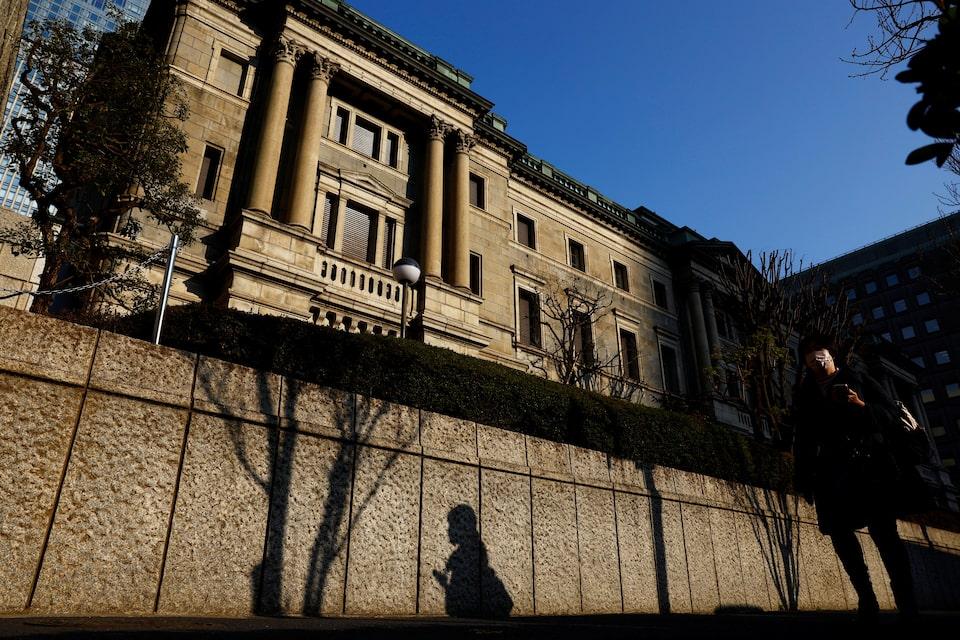
BOJ chief, deputy gave unusually explicit signals of Friday's hike Pre-announcement likely intended to avoid surprise Uncertainty over Japan's neutral rate to keep BOJ cautious Soft consumption, Trump risk complicate BOJ's rate-hike path TOKYO, Jan 27 (Reuters) - The Bank of Japan, after clearly signalling last week's interest rate hike, may return to its accustomed fuzzy guidance about central bank policy to maintain flexibility when it eventually begins to consider how much tightening is enough. The BOJ fumbled its communication in December, surprising investors when it left rates steady, but then telegraphed Friday's increase so unambiguously that markets had 90% priced it in and took the move in stride. That shift to clearer guidance, an approach the U.S. Federal Reserve used in August to signal a policy shift, may prove temporary. Japanese policymakers fear being led by the markets and are unsure how far the BOJ can raise rates without cooling growth, say analysts and people familiar with the central bank's thinking. Policymakers are wary of feeling they must give clear signals before each meeting, given an uncertain economic outlook, and they lack conviction about the Goldilocks "neutral" interest rate that neither chills nor overheats the economy. After the BOJ caught markets off guard with December's decision, Governor Kazuo Ueda flagged uncertainty over U.S. economic policy ahead of Donald Trump's return as president as a key reason it had refrained from raising rates. Considered dovish, Ueda's comments pushed down market pricing of January action to 46% from 70%. Keen to avoid startling markets again, the BOJ then laid the groundwork for the January hike, taking a page from Fed Chair Jerome Powell, who had explicitly signalled an imminent shift by pronouncing that "the time has come for policy to adjust". COSTS OF CLARITY Ueda and his deputy Ryozo Himino each said during the week before Friday's hike that the BOJ board would "debate whether to raise rates" - effectively pre-announcing its decision to double short-term rates to 0.5%. "Without those comments, a January hike would have been a huge surprise," said Naomi Muguruma, chief bond strategist at Mitsubishi UFJ Morgan Stanley Securities. "The BOJ probably had no other choice." Asked about the advance warnings, Ueda said after Friday's decision they were simply a "reminder" that the board would discuss the feasibility of changing policy at every rate review. But while the strategy let the BOJ smoothly raise its policy rate to the highest in 17 years, it is not without cost. Markets may focus too much on BOJ commentary, rather than scrutinising economic and price data, to gauge the bank's next rate hike, analysts say. Giving explicit advance signals, in addition to making the BOJ feel boxed in, could breach Japanese law stipulating the nine-member board must debate and sign off on rate decisions at each policy meeting. "It raises some alarm bells," a former policymaker said of the BOJ's communication about Friday's rate hike. "The market ought to be a guide for central banks on how the economy is doing. But if this practice continues, the BOJ will only see in the market a reflection of itself." 'GREATER VARIABILITY' Another reason to revert to ambiguity is uncertainty over the end point for tightening. BOJ staff estimates Japan's nominal neutral rate between 1% and 2.5%. While that has not been a factor so far with the policy rate so low, two more hikes would bring it to the bottom of that range - a level many analysts consider the neutral rate. Indeed, while signalling the bank's resolve to keep raising interest rates, Ueda gave few clues on Friday of the pace or timing of further hikes and said it was hard to pin down Japan's neutral rate in real time. "Because the BOJ doesn't know where exactly the neutral rate is, it would have to wait about six months after each hike to check the health of the economy," said Izuru Kato, chief economist at Totan Research. "Only after judging that the neutral rate is still distant would it raise rates again." Other complications loom as the BOJ eyes further rate hikes, which could heighten challenges in trying to convince the public of the need to keep pushing up borrowing costs. The bank justified Friday's increase by citing prospects of sustained wage gains, but it is uncertain whether consumption can weather rising living costs. Trump's threats of higher tariffs could weigh on Japan's export-reliant economy and business sentiment. "The BOJ's hands are looking increasingly tied with the complex task of managing price pressures, reflation efforts and market expectations all together," said Frederic Neumann, chief Asia economist at HSBC Bank, adding that risks surrounding Trump's policy cannot be dismissed. "These all translate to greater variability as to the policy rate path going forward." Sign up here. https://www.reuters.com/world/japan/boj-may-revert-fuzzy-communication-after-fed-style-clarity-rates-2025-01-26/
2025-01-26 21:47
Jan 27 (Reuters) - A look at the day ahead in Asian markets. A big week for world markets kicks off in Asia on Monday with investors still navigating the blizzard of headlines around U.S. President Donald Trump's likely economic agenda, while trying to gauge whether the "U.S. exceptionalism" narrative may be losing its luster. The dollar fell 1.8% last week, its worst week since November 2023. If the greenback is consolidating, it shouldn't really be a surprise - it hit a two-year high earlier this month and hedge fund net 'long' position was the biggest in nine years. The dollar and U.S. stocks have been closely correlated, lifted by the huge wave of global capital inflows as investors bet heavily on the American AI, tech, growth and returns boom. But if the dollar's slide is a sign that the "U.S. exceptionalism" flame is starting to flicker, is Wall Street primed for a cooling off period too? The S&P 500 hit a new high last week and the Nasdaq came close. Index levels are historically high, valuations are stretched, and big event risk looms this week in the shape of the Fed's policy meeting and 'Big Tech' earnings. Scrutiny on U.S. tech is intensifying as ripples from a Chinese AI startup called DeepSeek spread. DeepSeek recently launched a free, open-source AI model it claims is at least the equal of more established models like ChatGPT on many levels, but built at a fraction of the cost. It's early days but if this shines a critical light on the huge sums being spent on AI by U.S. tech firms, Wall Street could wobble. The Asian calendar on Monday is dominated by China's 'official' manufacturing and service sector purchasing managers index reports for January. A Reuters poll suggests the manufacturing PMI will be unchanged from the previous month at 50.1. On the one hand, that would represent the fourth straight month of expansion in the sector. It would also indicate almost no growth at all for the second month in a row. Data on Friday showed Chinese state-owned firms' profits last year virtually evaporated, rising only 0.4% on the previous year. Wider industrial sector profits figures are due this week, perhaps as early as Monday, and are expected to confirm that 2024 was the worst year in decades. Investors will give their second day verdict on Friday's Bank of Japan's rate hike. The initial take seemed to be that it was a 'hawkish hike', but Japanese money markets are still pricing in only another 25 basis points of tightening this year, unchanged from pre-Friday levels. This suggests BOJ guidance was actually pretty neutral, and Japanese stock futures are pointing to a strong rise on Monday. Meanwhile, South Korean markets will be sensitive to the news that prosecutors on Sunday indicted impeached President Yoon Suk Yeol on charges of leading an insurrection with his short-lived imposition of martial law on Dec. 3. Here are key developments that could provide more direction to markets on Friday: - China 'official' PMIs (January) - Japan leading indicator (November) - Germany Ifo index (January) Sign up here. https://www.reuters.com/markets/asia/global-markets-view-asia-graphic-2025-01-26/
2025-01-26 19:49
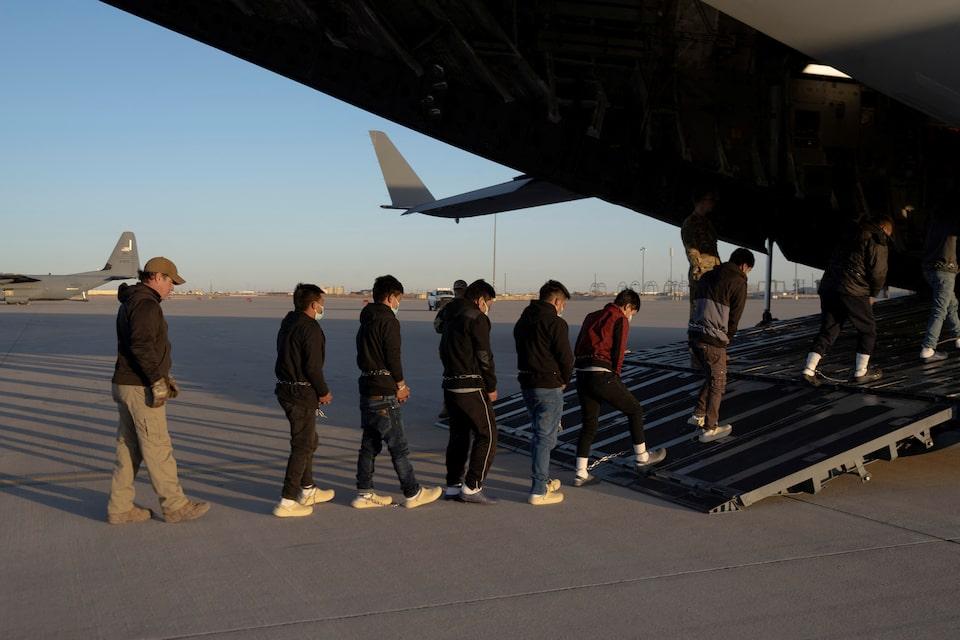
Colombia has agreed to deportation flights Washington says sanctions threat is on hold Trump's immigration crackdown hiking tensions in Latin America Brazil condemns US handcuffing of migrants on flight WASHINGTON/BOGOTA Jan 26 (Reuters) - The U.S. and Colombia pulled back from the brink of a trade war on Sunday after the White House said the South American nation had agreed to accept military aircraft carrying deported migrants. U.S. President Donald Trump had threatened tariffs and sanctions on Colombia to punish it for earlier refusing to accept military flights carrying deportees as part of his sweeping immigration crackdown. But in a statement late on Sunday, the White House said Colombia had agreed to accept the migrants after all and Washington would not impose its threatened penalties. "The Government of Colombia has agreed to all of President Trump’s terms, including the unrestricted acceptance of all illegal aliens from Colombia returned from the United States, including on U.S. military aircraft, without limitation or delay," it said. Draft orders imposing tariffs and sanctions on Colombia would be "held in reserve, and not signed, unless Colombia fails to honor this agreement", it added. "Today’s events make clear to the world that America is respected again. President Trump ... expects all other nations of the world to fully cooperate in accepting the deportation of their citizens illegally present in the United States," the White House statement said. In a statement late on Sunday, Colombian Foreign Minister Luis Gilberto Murillo said: "We have overcome the impasse with the U.S. government". "The government of Colombia ... has the presidential plane ready to facilitate the return of Colombians who were going to arrive in the country this morning on deportation flights." The statement did not specifically say that the agreement included military flights, but it did not contradict the White House announcement. Murillo and Colombia's ambassador to the United States will travel to Washington in coming days to follow up on agreements that led to the exchange of diplomatic notes between the two governments, the Colombian statement added. Washington's draft measures, now on hold, include imposing 25% tariffs on all Colombian goods coming into the U.S., which would go up to 50% in one week; a travel ban and visa revocations on Colombian government officials; and emergency treasury, banking and financial sanctions. Trump also threatened to direct enhanced border inspections of Colombian nationals and cargo. Ahead of the announcement of an agreement on the flights, a State Department spokesperson said the United States had suspended visa processing at the U.S. embassy in Bogota. Colombia is the third-largest U.S. trading partner in Latin America. The U.S. is Colombia's largest trading partner, largely due to a 2006 free trade agreement that generated $33.8 billion in two-way trade in 2023 and a $1.6 billion U.S. trade surplus, according to U.S. Census Bureau data. Alejo Czerwonko, chief investment officer for emerging markets Americas at UBS Global Wealth Management, said Colombia relied on access to the U.S. market for about a third of its exports, or about 4% of its GDP. Colombian President Gustavo Petro earlier condemned the military deportation flights and said he would never carry out a raid to return handcuffed Americans to the U.S. "We are the opposite of the Nazis," he wrote in a post on social media platform X. He also said however that Colombia would welcome home deported migrants on civilian planes, and offered his presidential plane to facilitate their "dignified return". 'DEGRADING TREATMENT' Trump declared illegal immigration a national emergency and has imposed a crackdown since taking office last Monday. He directed the U.S. military to help with border security, issued a broad ban on asylum and took steps to restrict citizenship for children born on U.S. soil. The use of U.S. military aircraft to carry out deportation flights is unusual. U.S. military aircraft carried out two flights, each with about 80 migrants, to Guatemala on Friday. Mexico also refused a request last week to let a U.S. military aircraft land with migrants. Trump has said he is thinking about imposing 25% duties on imports from Canada and Mexico on Feb. 1 to force further action against illegal immigrants and fentanyl flowing into the U.S. Brazil's foreign ministry on Saturday condemned "degrading treatment" of Brazilians after migrants were handcuffed on a commercial deportation flight. Upon arrival, some passengers also reported mistreatment during the flight, according to news reports. The plane, which was carrying 88 Brazilian passengers, 16 U.S. security agents, and eight crew members, had been originally scheduled to arrive in Belo Horizonte in the southeastern state of Minas Gerais. However, at an unscheduled stop due to technical problems in Manaus, capital of Amazonas, Brazilian officials ordered removal of the handcuffs, and President Luiz Inácio Lula da Silva designated a Brazilian Air Force (FAB) flight to complete their journey, the government said in a statement on Saturday. The commercial charter flight was the second this year from the U.S. carrying undocumented migrants deported back to Brazil and the first since Trump's inauguration, according to Brazil's federal police. U.S. officials did not reply to requests for comment about Brazil. Sign up here. https://www.reuters.com/world/americas/colombias-petro-will-not-allow-us-planes-return-migrants-2025-01-26/