2026-01-05 20:25
AMSTERDAM, Jan 5 (Reuters) - Dutch airline KLM expects to cancel at least 300 flights at Amsterdam Schiphol airport on Tuesday as problems caused by a cold spell and snowfall continue, a spokesperson for the Dutch arm of airline group Air France KLM (AIRF.PA) , opens new tab said on Monday. Snow and ice have already caused hunderds of cancellations every day since Friday at Schiphol, one of Europe's busiest hubs. Sign up here. https://www.reuters.com/world/klm-scraps-300-flights-tuesday-due-snow-amsterdam-2026-01-05/

2026-01-05 20:23
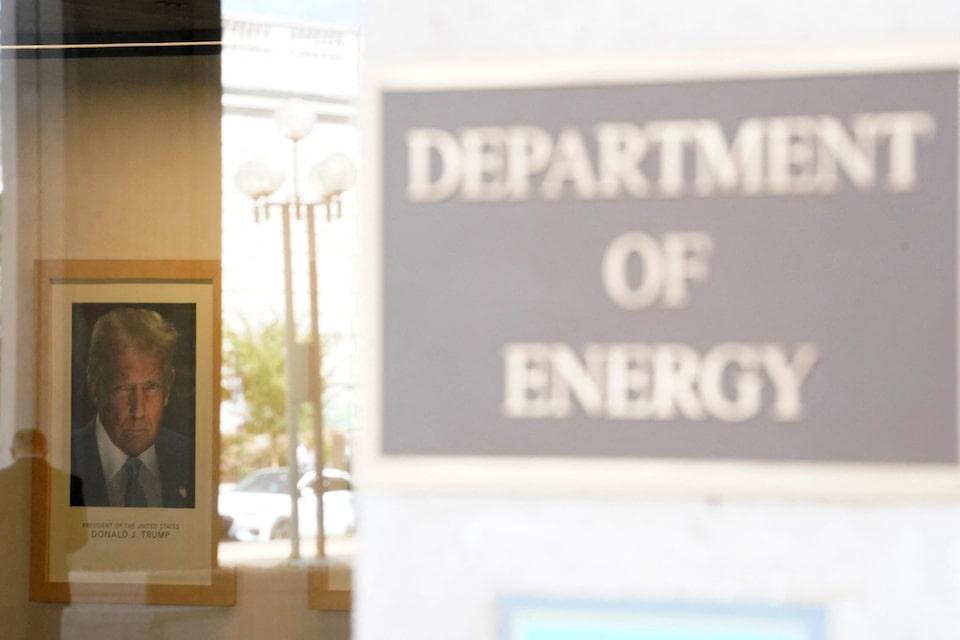
WASHINGTON, Jan 5 (Reuters) - The U.S. Energy Department announced on Monday it was awarding orders totaling $2.7 billion to three companies to boost domestic uranium enrichment over the next 10 years in a broader effort to reduce U.S. dependence on Russian supply. American Centrifuge Operating, General Matter and Orano Federal Services secured the orders, the department said in a statement. Sign up here. The contracts would require the companies to meet specific milestones to provide enrichment services for low-enriched uranium and high-assay low-enriched uranium, or HALEU, for existing nuclear power plants and new, smaller modular reactors. "Today’s awards show that this Administration is committed to restoring a secure domestic nuclear fuel supply chain capable of producing the nuclear fuels needed to power the reactors of today and the advanced reactors of tomorrow," Secretary of Energy Chris Wright said. Russia is currently the only country that makes HALEU - uranium enriched to between 5% and 20%, which is said to make new high-tech reactors more efficient - in commercial volumes. Funds to make the fuel domestically in the United States were included in a law to ban uranium shipments from Russia fully by 2028. The DOE awarded American Centrifuge Operating, a subsidiary of Centrus Energy, and General Matter, backed by tech billionaire Peter Thiel, with $900 million each to develop domestic HALEU enrichment capacity. It awarded Orano Federal Services with $900 million to expand domestic low-enrichment uranium production. The Energy Department separately awarded an additional $28 million to Global Laser Enrichment, part-owned by Canadian uranium company Cameco, to further its work to build next-generation uranium enrichment technology for the nuclear fuel cycle. Global Laser Enrichment had sought a $900 million award. HALEU's critics say it is a weapons risk if it gets into the wrong hands and recommend limiting enrichment to between 10% and 12% for safety. Uranium fuel used in today's reactors is enriched to about 5%. https://www.reuters.com/business/energy/us-awards-27-billion-worth-orders-boost-uranium-enrichment-2026-01-05/
2026-01-05 20:18
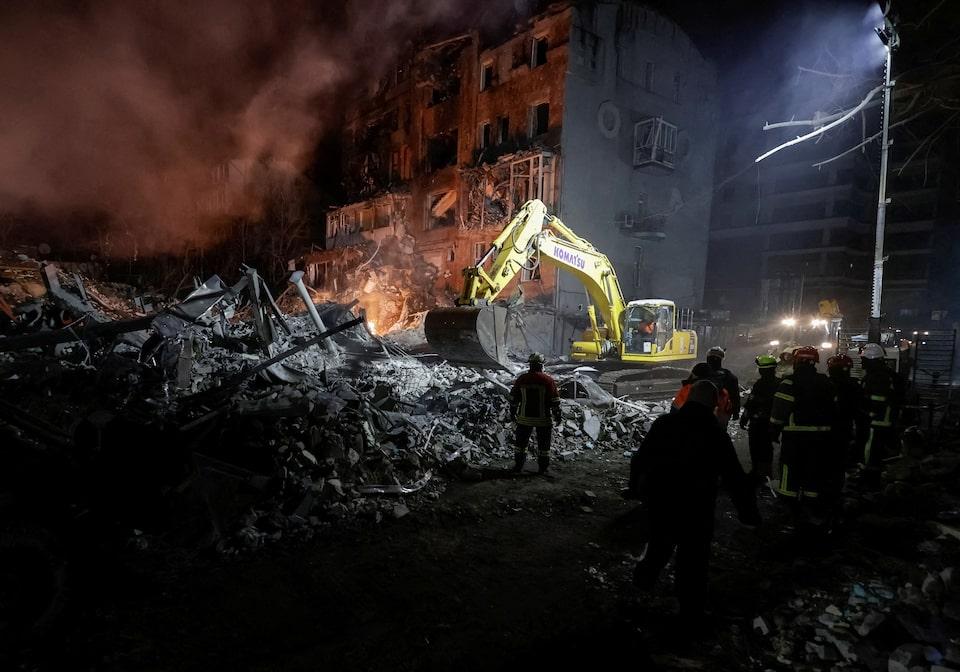
Strikes damage energy infrastructure in Kharkiv Attack on Dnipro hits Bunge facility, sunflower oil leaks Summit on Ukraine set for Paris on Tuesday KYIV, Jan 5 (Reuters) - Russia launched five missile strikes on Ukraine's second-biggest city Kharkiv on Monday, damaging energy infrastructure, and attacked an enterprise owned by U.S. agricultural producer Bunge (BG.N) , opens new tab in the southeastern city of Dnipro, Ukrainian officials said. Ukrainian Foreign Minister Andrii Sybiha said the Dnipro attack, which caused a leak of sunflower oil, underscored the fact that Russian forces were targeting U.S. businesses. Russian President Vladimir Putin, he said, had "complete disregard" for U.S.-led efforts to resolve the nearly four-year-old war. Sign up here. Kharkiv Mayor Ihor Terekhov said the strikes on his city were "not just an attack on facilities. It's an attack on heating, on water, on people's normal lives. They are trying to break us with fear and darkness." Terekhov gave no details on which targets had been hit. Kharkiv's regional prosecutors' office said in a statement that at least one civilian was injured in the attack. In Dnipro, the attack on the Bunge enterprise triggered a leak of 300 metric tons of sunflower oil, said Borys Filatov, the mayor. "Public utility workers are cleaning up, spreading sand and gravel," Filatov wrote on the Telegram messaging app, adding that the spill would close a major riverside road for two or three days. A spokesperson for Bunge, Christi Dixon, said the company was assessing damage at the Dnipro plant and "working with local authorities to mitigate the impact." There were no injuries in the facility, she said, adding that the company was focusing on the safety of its staff and restoring operations. 'TARGETING AMERICAN BUSINESSES' Sybiha, writing on the X social media platform, said: "This attack was not a mistake — it was deliberate, as the Russians attempted to strike this facility multiple times. Russia has been targeting American businesses in Ukraine systemically." He said the attacks exposed Putin's "complete disregard for peace efforts led by President Donald Trump. This is why it is so urgent to advance the peace process." There was no immediate comment on the strikes from Moscow. Ukrainian President Volodymyr Zelenskiy met U.S. President Donald Trump in Florida late last month to discuss ending the war, and more than 30 leaders are set to attend a summit on Ukraine in Paris on Tuesday. ENERGY ATTACKS Kharkiv, with over a million inhabitants, is located close to the border with Russia. The temperature was around minus 3 degrees Celsius (27°F) during the day on Monday and will drop at night. According to the local electricity supplier, prior to the latest attack residents received power for an average of 14-16 hours per day. Since November, Russia has sharply increased both the number and intensity of attacks on Ukraine's energy system and logistics, plunging entire regions into darkness. A third of Ukraine's capital Kyiv was left without heating after a vast Russian attack in late December, while Ukraine's largest seaport, Odesa, was virtually cut off from power for several days following a series of attacks. Russia also attacked stations that produced heat for the Chernihiv region on the Russian border and Kherson in the south. https://www.reuters.com/world/europe/russian-missile-strikes-damage-energy-infrastructure-ukraines-kharkiv-mayor-says-2026-01-05/
2026-01-05 16:55
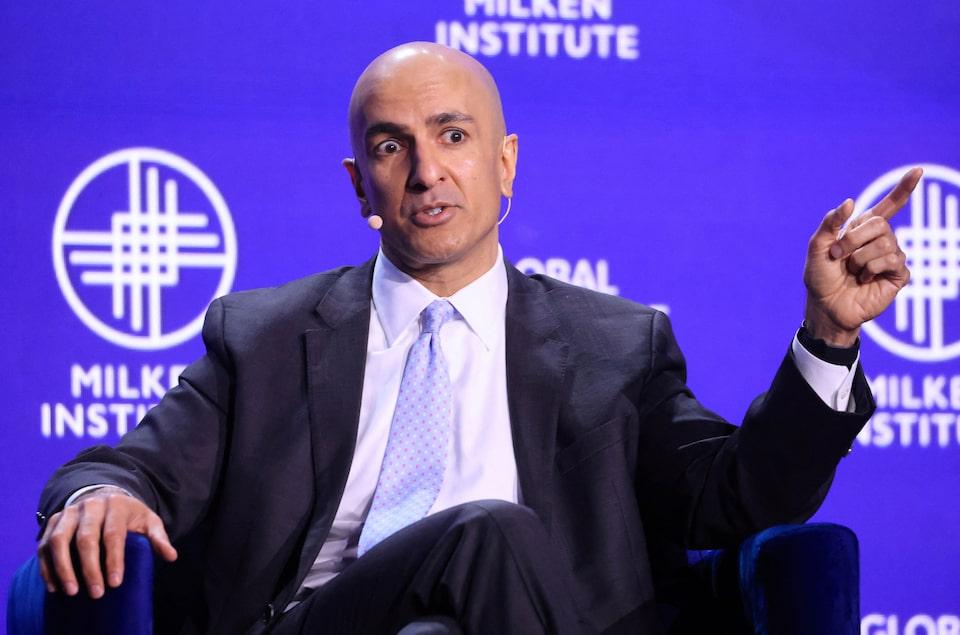
Kashkari says he feels policy rate is close to neutral Top risks are inflation persistence, jump in unemployment rate: Kashkari US intervention in Caracas could affect US economy via oil prices: Kashkari Jan 5 (Reuters) - Minneapolis Federal Reserve President Neel Kashkari on Monday said inflation is slowly trending down, but there is a risk the jobless rate could "pop" higher. "I think the inflation risk is one of persistence, that these tariff effects take multiple years to work their way through the system, whereas I do think there's a risk that the unemployment rate could pop from here," Kashkari said in an interview on CNBC. Sign up here. Economists polled by Reuters estimate the U.S. unemployment rate eased down in December to 4.5%, from 4.6% in November. The Labor Department is due to publish the monthly jobs report on Friday. Kashkari said Monday he believes the rate is around 4.6%, which shows the labor market is cooling. He is skeptical of data that shows inflation is also cooling, noting problems with data collection connected to the record-long government shutdown in the fall. The government reported last month that U.S. consumer prices rose 2.7% in November from a year earlier, less than projected. The Fed targets 2% by the personal consumption expenditures price index. The Fed last year cut its policy rate by three-quarters of a percentage point, and in December signaled it will likely pause in the new year to assess if further cuts are needed. Kashkari is a voter this year on the Fed's interest-rate-setting committee. "I think inflation is still too high. And the big question in my mind is how tight is monetary policy....My guess is we’re pretty close to neutral right now,” Kashkari said on Monday. “We just need to get more data to see which is the bigger force -- is it inflation or is it the labor market -- and then we can move from a neutral stance to whatever direction is necessary." OIL PRICE RISK President Donald Trump has railed against the Fed for cutting rates too slowly and by too little, and has taken a number of steps to try to reshape it more to his liking. Last year he appointed an advocate of aggressive rate cuts to the Fed Board, and he is making an unprecedented effort to fire another Fed governor in a case that is now before the Supreme Court. Trump is also expected this month to designate another rate-cut advocate to succeed Fed Chair Jerome Powell when his leadership term ends in May. Asked if Powell will step down then or take the unusual step of staying on as Fed governor, Kashkari said he had "no idea," but would "love to see him remain a colleague for as long as he likes." Powell's remaining as governor would deprive Trump of an open seat at the Fed Board. Kashkari on Monday was also asked about the implications of the Trump administration's capture of Venezuela's leader over the weekend. The risk is "mostly through oil prices," Kashkari said in an interview on CNBC. "When Russia invaded Ukraine, it sent a commodity shockwave all around the world. It didn't happen with Hamas attacking Israel. It has not happened now with the U.S. and Venezuela. But that's the mechanism that ... would directly affect the U.S." "I don't see it so far," he added. In the biggest intervention in Latin America since the 1989 invasion of Panama, U.S. Special Forces over the weekend captured Venezuela's long-time leader, Nicolas Maduro, and brought him to New York to face drug trafficking charges. Commodity and financial asset markets so far have shown only a modest response to the surprise development. U.S. light sweet crude oil prices on Monday were about 1% higher but were not far above five-year lows touched in December. https://www.reuters.com/business/feds-kashkari-sees-risk-jobless-rate-could-pop-higher-2026-01-05/
2026-01-05 12:52
MOSCOW, Jan 5 (Reuters) - Russia on Monday advised its citizens against travelling to Venezuela. The warning came after U.S. President Donald Trump announced that the United States had carried out a strike on Venezuela and captured President Nicolas Maduro and his wife. Sign up here. Both the Russian Embassy in Caracas and the Economy Ministry issued similar statements, cautioning Russians against visiting Venezuela "in connection with U.S. armed aggression against Venezuela and the threat of repeated attacks." The ministry also recommended that Russian tour operators suspend the sale and promotion of trips to the country. Russia has long maintained close ties with Venezuela, spanning energy cooperation, military links and high-level political contacts, and Moscow has backed Caracas diplomatically for years as both countries seek to deepen trade and investment. https://www.reuters.com/world/americas/russian-embassy-warns-citizens-against-travel-venezuela-tass-reports-2026-01-05/

2026-01-05 12:48
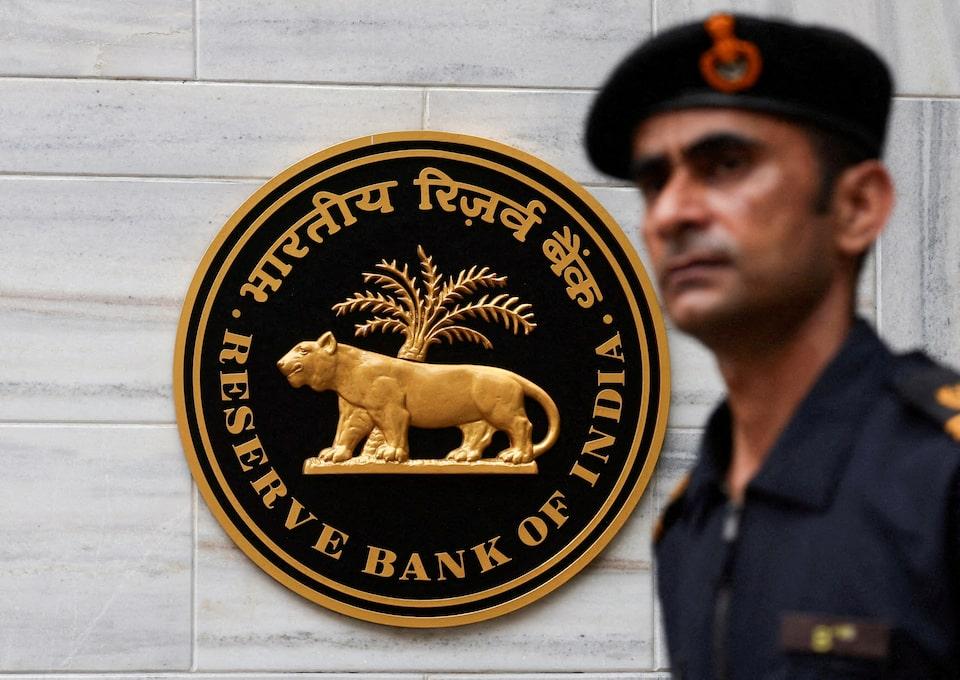
Jan 5 (Reuters) - India is likely to retain the existing inflation target for its central bank with the setup viewed as effective in managing prices, Bloomberg News reported on Monday, citing finance ministry officials familiar with the matter. The flexible inflation targeting in India mandates a 4% headline inflation target within a tolerance band of 2% to 6%. Sign up here. The RBI's target is set every five years and is due in March. The Ministry of Finance did not immediately respond to a Reuters request for comment. In September, Reuters reported that the RBI was expected to recommend retaining the existing inflation target for a third consecutive time following feedback from stakeholders who backed the framework. India adopted the inflation-targeting framework and formally tasked the central bank with it in 2016. It was last renewed in 2021. Over the past decade, inflation has stayed within the mandated band for roughly three-quarters of the time, with volatility peaking during the pandemic years. India's retail inflation rose in November from a record low in the prior month but stayed below the central bank's target range for the third consecutive month. https://www.reuters.com/world/india/india-likely-retain-4-inflation-target-central-bank-bloomberg-news-reports-2026-01-05/