2025-01-24 22:35
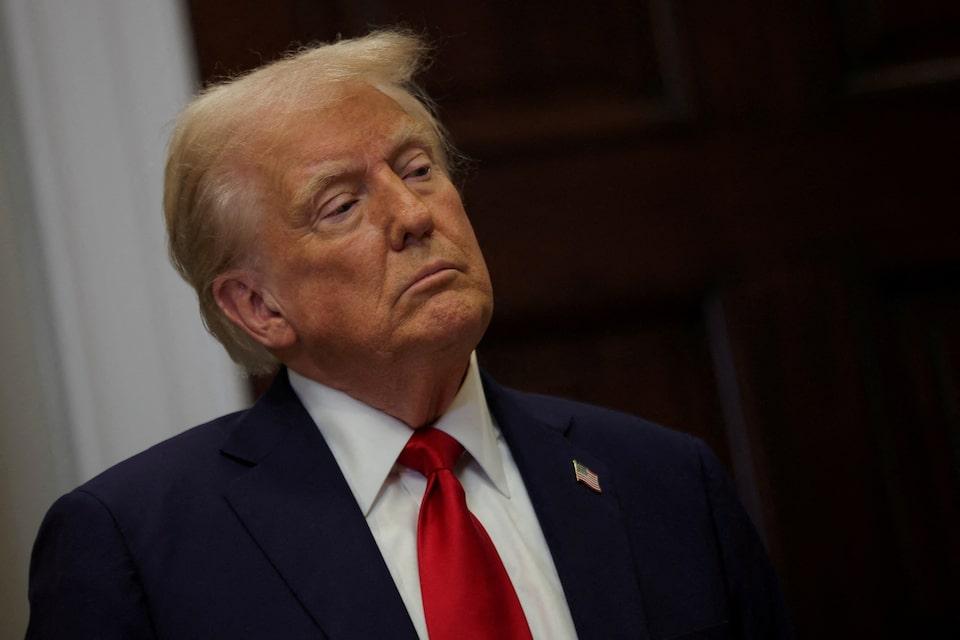
Separatist leader says gas supplies will soon be exhausted Accuses Moldova's pro-Western government of stalling Moldova says Russia to blame for the crisis CHISINAU, Jan 25 (Reuters) - The leader of Moldova's separatist Transdniestria region, gripped by power and heating cuts, said on Friday that gas reserves would be exhausted within days and urged the central government to end "artificial delays" and provide new supplies. But Moldova's prime minister said the solution could be solved only if Russian gas producer Gazprom (GAZP.MM) , opens new tab resumed shipments to Moldova, or if the pro-Russian separatist region agreed to pay for gas secured on European markets. Transdniestria, which split from Moldova as the Soviet Union was collapsing, had long received Russian gas passing through Ukraine, but authorities in Kyiv, locked in a nearly three-year war with Moscow, have refused to extend a transit agreement. The gas was also used to run a thermal plant that provided most of the power in government-held areas of Moldova. Transdniestria's self-styled president, Vadim Krasnoselsky, said many of his region's 350,000 residents were falling ill or dying from fires and carbon monoxide poisoning after trying to keep warm in winter conditions. "In a couple of days, the gas remaining in the pipelines will be gone. Without it, things will be very tough," he told Russian television Rossiya-24, according to a summary of his comments on the website of the region's parliament. "If the gas disappears it will take two to three months to get the heating going again in residential buildings." The region, he said, had agreed to conditions from Moldova's authorities, including purchasing more expensive European gas. "Five days have passed and we see nothing from Moldova but false accusations," he said. "Moldova is artificially dragging everything out to push the humanitarian situation to the limit." Krasnoselsky had earlier appealed to U.N. Secretary-General Antonio Guterres and several world leaders, asking for help in resolving the energy crisis. The region endures four to five hours of power cuts daily. Hundreds of residents gathered at crossing points into government-held areas, urging authorities to "let the gas in". Moldovan Prime Minister Dorin Recean, in a address posted on social media, said only his two proposed solutions could restore gas flows to the rebel region. "The Moldovan government wants the region to have gas," he said. "But the Kremlin does not want to resume gas supplies. It wants to create conflict between people on the east bank of the Dniester River and those on the other side." Government officials said no payment had been received from Transdniestria to cover gas purchases. Moldova has long been at odds with Russia, denouncing Moscow's invasion of Ukraine and accusing the Kremlin of trying to unseat its government. Gazprom has said it cannot resume gas flows to Moldova until its authorities settle $709 million in arrears, a figure disputed by the government. Sign up here. https://www.reuters.com/world/europe/moldovas-separatist-region-says-gas-running-out-2025-01-24/
2025-01-24 22:10
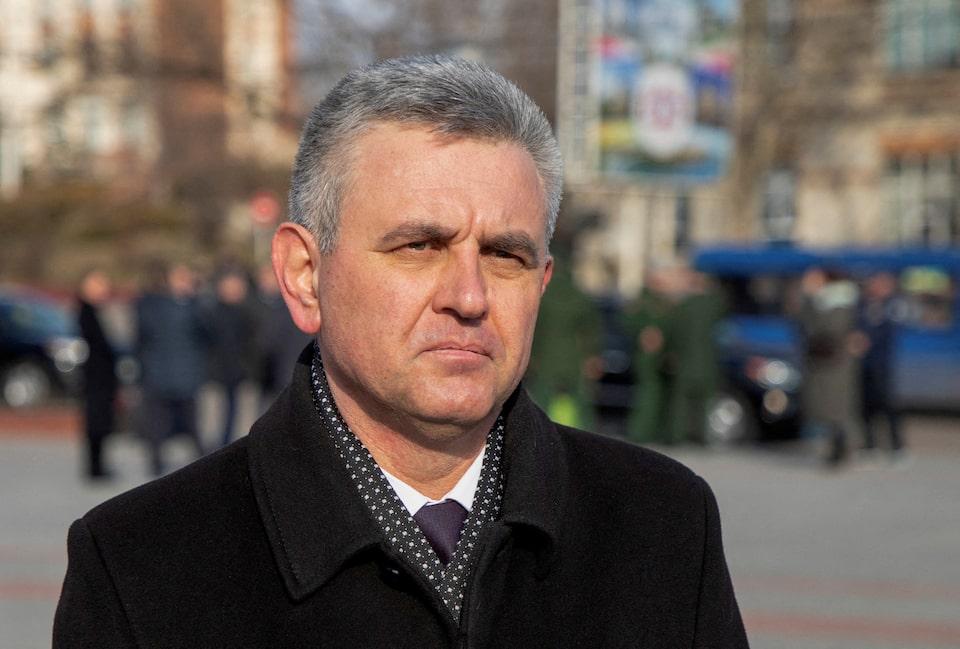
Jan 24 (Reuters) - President Donald Trump's oversight of an increasingly unreliable U.S. power grid requires swift action, he said this week, but there is no easy fix for one of the grid's most complex and troubled areas: long-distance transmission lines. Trump's National Energy Emergency declaration , opens new tab and executive orders , opens new tab detail a long list of interconnected problems dogging an electric grid vulnerable to fuel shortages, soaring demand, and an increasing number of wild weather events. "There's clearly a recognition of the need to increase energy production broadly in the United States and do it with whatever resources necessary," said Spencer Pederson, a top executive at the National Electrical Manufacturers Association. Trump's initial moves could help to some degree: The emergency declaration directs agencies to scour their books for laws and regulations that could be used to speed approval and permitting for projects like transmission, and overcome regulatory obstacles that have long hampered big projects. The executive orders, part of a slew of actions Trump signed his first day in office to accelerate broader energy production, seek to streamline permitting procedures that historically have taken years or even decades. Morgan Stanley, in a note this week to investors, said Trump's actions "could improve the speed of transmission infrastructure permitting and environmental reviews." Big obstacles remain. Pederson noted a shortage of large electrical transformers and skilled workers, and added that the U.S. grid's overseas supply chain is still adjusting to being reoriented away from China, a move that began during the first Trump administration. Also, some doubt that Trump's executive actions can penetrate an entrenched web of local, state and regional regulators who have strong political incentives to hold down spending for electric customers, said Kent Chandler, a former chairman of Kentucky’s Public Service Commission who teaches a class on public utility regulation at Yale Law School. Power lines spanning multiple states have been repeatedly blocked due to broad local resistance to what some view as unsightly or environmentally worrisome infrastructure projects. Shon Hiatt, Director of USC Marshall's Business of Energy Transition initiative, said Trump's emergency declaration could prove useful for speeding up transmission projects on public lands, but that overcoming local and state actors could require an Act of Congress. "It's not like there's public lands going across the entire country where this needs to happen," Hiatt said. DATACENTER BOOM The grid’s vulnerability has intensified since Trump’s first term, with booming power demand from datacenters for artificial intelligence and cryptocurrency along with manufacturing and EV adoption, utility executives, regulators and trade groups say. The grid's capacity of long-distance transmission lines would need to quintuple over the next decade to handle that big surge in power demand outlined in the U.S. Energy Department's latest state of the grid report. "The clear message from (Trump) is that it's time to really put a heavier foot on the gas pedal and get things moving," said Larry Gasteiger, executive director of WIRES, a trade association for transmission line companies. Making that happen would be good news not just for fossil fuel-fired power, but also for hundreds of renewable energy projects - like solar and wind farms - that have struggled for access to the grid. Christina Hayes, executive director of Americans for a Clean Energy Grid, said one of the most promising parts of Trump's executive order, titled Unleashing American Energy, is a directive to develop recommendations for Congress for interstate energy infrastructure. She said that "could potentially lead to meaningful reforms in siting and permitting procedures." "Western states are likely to see the most immediate impact from these changes, given the concentration of federal lands in the region," Hayes said. Catie Hausman, a University of Michigan economics professor, has studied how some public utilities have blocked transmission buildout for renewables to protect the economic viability of their incumbent gas and coal power plants. She does not expect Trump's executive actions to make those turf battles disappear. "There have been so many impediments to building long-distance transmission lines," Hausman said. "It's hard to even know where to start." Sign up here. https://www.reuters.com/business/energy/trumps-high-wire-act-transform-us-power-grid-wont-be-easy-2025-01-24/
2025-01-24 21:45
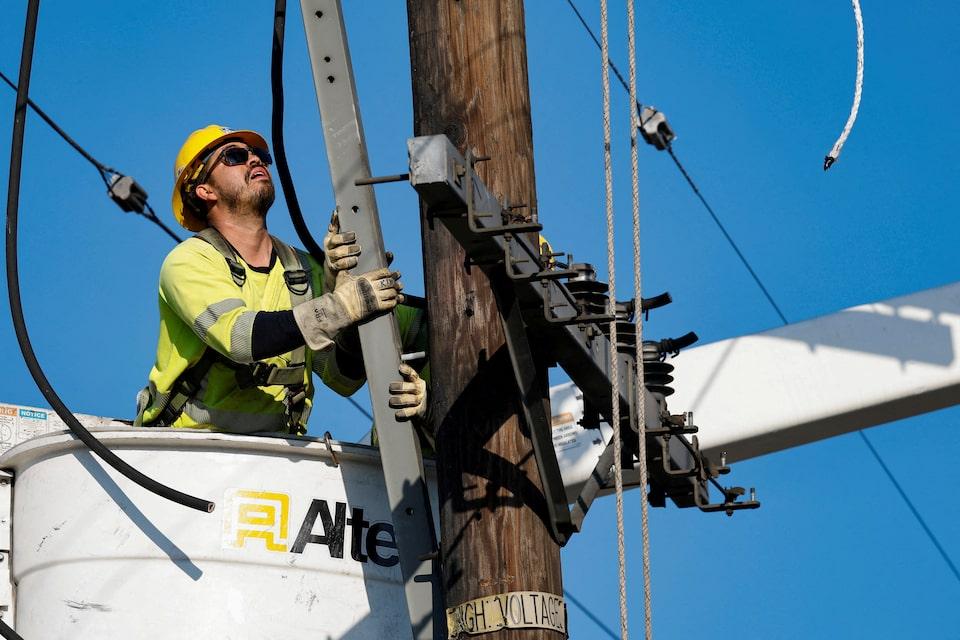
SAO PAULO, Jan 24 (Reuters) - China's suspension earlier this month of Brazilian soybean exports from five companies after cargoes did not meet plant health requirements will last two months, a top Brazilian agriculture official told Reuters on Friday. Brazil is the top soybean exporter to China, which is the world's top importer. Brazilian farmers and exporters compete with counterparts in the United States for the Chinese market. China suspended imports from the five companies on Jan. 8 and Jan. 14 after cargoes failed to meet Chinese import standards. The five suspended units are part of operations that accounted for more than 30% of the more than 73 million metric tons of soybeans that Brazil exported to China in 2024. However, other units of the same companies have not been suspended. The agriculture ministry is investigating the issue and would send clarifications to China in due course, Luis Rua, agriculture ministry's commerce and international relations secretary, told Reuters on Friday. Rua was unaware of the number of cargoes involved, or their origin, but said only a small volume was involved. The five units were only a fraction of the 1,700 Brazilian outfits authorized to export soybeans to China, he said. Brazilian soybean exports are due to surge over the coming weeks as more of the harvested crop is moved to market. Brazil sells about three-quarters of its soy exports to China. The companies affected by the suspensions had a meeting with government officials in Brasilia on Thursday, according to Anec, a Brazilian association representing global grain traders. Anec declined to name the companies or give more details. The five companies with units suspended were global merchants Cargill, ADM (ADM.N) , opens new tab and Olam (OLAG.SI) , opens new tab, and Brazilian outfits C.Vale and Terra Roxa. Cargill and ADM gave no immediate comment on the meeting. Terra Roxa declined to comment. The temporary suspension affected only one of C.Vale's units, a C.Vale spokesman said, adding that other units could continue exporting. The soybeans were likely exported from the port of Paranagua given the shippers involved, one grain trader said. The Paranagua port authority said it had not received any official communication indicating that any ship that has departed from Paranagua was under suspicion in Chinese ports. Sign up here. https://www.reuters.com/markets/commodities/chinas-suspension-five-brazilian-soy-exporters-last-2-months-says-brazilian-2025-01-24/
2025-01-24 21:35
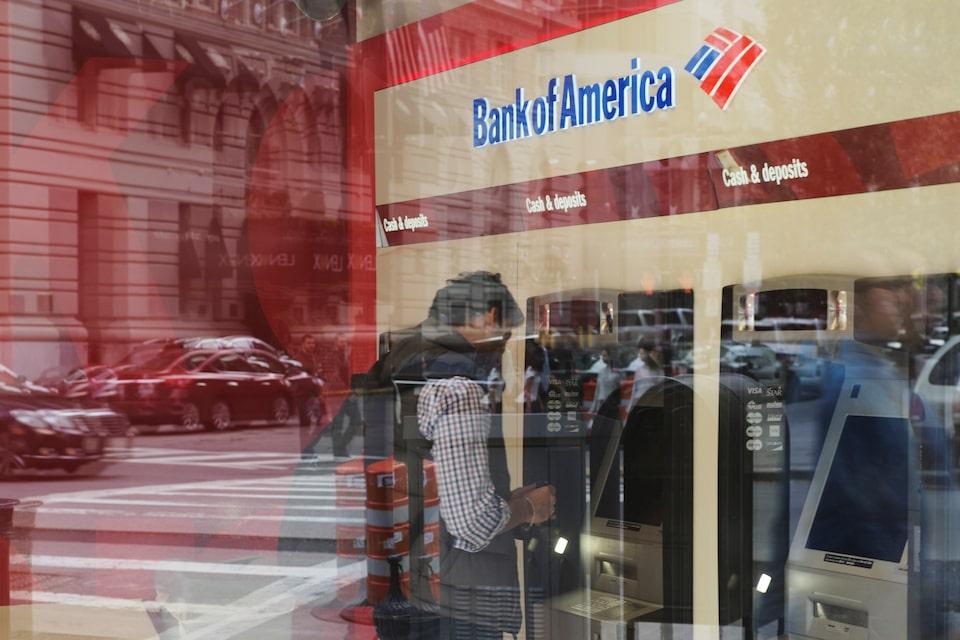
Banks seek clearer guidance on money laundering, other rules Trump alleged that BofA and JPMorgan do not serve conservatives Banks say they do not base banking decisions on politics NEW YORK, Jan 24 (Reuters) - Bank of America (BAC.N) , opens new tab and JPMorgan are set to lobby the White House and Congress to defend themselves from accusations by President Donald Trump and others that they have shut down accounts of conservative customers on political grounds. The banks said they need clearer guidance from the government on how best to police money laundering and provide services across a range of industries. On Thursday, Trump singled out JPMorgan Chase (JPM.N) , opens new tab and Bank of America, saying they did not provide banking services to conservatives. Trump's criticism echoed longstanding "debanking" complaints from Republicans, who have accused Wall Street banks of "woke capitalism," as well as denying services to gunmakers, fossil-fuel companies and others perceived to be aligned with the political right. The two banks on Thursday denied they made banking decisions based on politics. "We take this issue very seriously," a BofA spokesperson said on Friday. "We will be engaging with the administration and Congress regarding the extensive government regulations that sometimes result in requirements to exit relationships." The spokesperson said the bank serves more than 70 million clients and welcomes conservatives. "We never close accounts for political reasons and don’t have a political litmus test," the spokesperson said. The source familiar with the situation said that JPMorgan would also be lobbying for clearer regulation about assessing customers. Bank lobby groups will also be part of the effort, according to the source familiar with the situation. They will push the government to clarify anti-money laundering laws, establish a clear federal standard on fair access to financial services and streamline bank supervisory practices on who can be banked, said the source and two separate sources familiar with the matter. WHAT BANKS WILL BE ASKING FOR The Trump administration is expected to prioritize trimming regulations, and banks are hopeful that this could lead to some changes in rules and oversight which will enable them to have clearer standards around debanking, a banking source and two industry sources said. None of the sources wanted to be identified as these discussion are private. The U.S in 2020 passed a law overhauling anti-money laundering (AML) rules. However, the overhaul has not happened as planned. Banks are still waiting for clarity on the new rules and will be pushing for new, clearer rules on AML, the banking source and one of the industry sources said. Firms and individuals often see their bank accounts getting closed if there are concerns regarding the ability to police money laundering, both the sources said. Different state laws on some of these issues have made banking more challenging, leading big banks to push for a clear federal standard on fair access to financial services, the three source said. Banks also say the rules around who can be served are unclear, leading them at times to be hesitant to offer service to a particular industry or firms, the three sources said. While regulators do not issue directives to avoid specific clients, they may flag some activity as risky, prompting banks to step back for fear of supervisory rebuke and fines. “There should be far cleaner lines about what we have to do and we don't have to do,” JPMorgan CEO Jamie Dimon said in a podcast this week, before Trump made his comments. “We've been complaining about this for years. We need to fix it.” Lenders are also prohibited from informing customers why they have been debanked, opening the door for accusations of political bias. "We have not debanked anyone because of political or religious relationships, period. Now, when we debank someone, they often blame that reason, but that's not a reason," Dimon said in the podcast. Sign up here. https://www.reuters.com/business/finance/bofa-plans-engage-with-white-house-congress-debanking-spokesperson-2025-01-24/
2025-01-24 21:34
Trump administration to reassess EPA waiver decision Valero's Diamond Alternative Energy challenged waiver Jan 24 (Reuters) - President Donald Trump's administration asked the U.S. Supreme Court on Friday to put on hold planned arguments in a bid by fuel producers to challenge California's standards for vehicle emissions and electric cars under a federal air pollution law. The new Republican administration also made similar requests in three other cases involving the actions of federal agencies, giving an early indication that it will take a fresh look at a number of legal issues before the court and potentially change positions from Trump's Democratic predecessor Joe Biden. The expected changes in the government's position may be a closer ideological fit for the Supreme Court's 6-3 conservative majority, which includes three justices appointed by Trump. The dispute over California vehicle standards centers on an exception granted to that state in 2022 by the U.S. Environmental Protection Agency during Biden's presidency to national vehicle emission standards set by the agency under the landmark Clean Air Act anti-pollution law. Though states and municipalities are generally preempted from enacting their own limits, Congress let the EPA waive the preemption rule to allow California to set certain regulations that are stricter than federal standards. In asking the Supreme Court to pause the case, Acting Solicitor General Sarah Harris said in a filing, "After the change in administration, EPA's acting administrator has determined that the agency should reassess the basis for and soundness of the 2022 reinstatement decision." The EPA's action reinstated a waiver for California to set its own tailpipe emissions limits and zero-emission vehicle mandate through 2025, reversing a 2019 decision during Trump's first term in office rescinding the waiver. Valero's (VLO.N) , opens new tab Diamond Alternative Energy and related groups challenged the reinstatement of California's waiver, arguing that the decision exceeded the EPA's power under the Clean Air Act and inflicted harm on their bottom line by lowering demand for liquid fuels. The U.S. Court of Appeals for the District of Columbia Circuit threw out the lawsuits, finding that Valero and the states lacked the necessary legal standing to bring their claims. Harris told the Supreme Court that the EPA's reassessment of the matter "could obviate the need for this court to determine" whether the challengers have legal standing. The Supreme Court has taken a skeptical view toward expansive authority for federal regulatory agencies, and has restricted the powers of the EPA in some important rulings in recent years. In June, the court blocked the EPA's "Good Neighbor" rule aimed at reducing ozone emissions that may worsen air pollution in neighboring states. In 2023, the court hobbled the EPA's power to protect wetlands and fight water pollution. In 2022, it imposed limits on the agency's authority under the Clean Air Act to reduce coal- and gas-fired power plant carbon emissions. On Monday, his first day back in office, Trump said in an executive order that he was seeking the repeal of a new waiver granted to California in December by the EPA allowing the state to end the sale of gasoline-only vehicles by 2035. That rule has been adopted by 11 other states. Trump said the EPA should terminate "where appropriate, state emissions waivers that function to limit sales of gasoline-powered automobiles." Legal experts expect Trump's administration to change position in a number of major cases at the court, including a closely watched dispute involving Tennessee's ban on gender-affirming medical care for transgender minors and one involving a federal regulation targeting largely untraceable firearms called "ghost guns." Sign up here. https://www.reuters.com/business/environment/trump-administration-asks-supreme-court-pause-cases-it-reconsiders-policy-2025-01-24/
2025-01-24 21:19
All new cases and settlements are put on pause amid broad workforce changes Four career DOJ section chiefs re-assigned to Sanctuary City Working Group Environmental Justice employees placed on paid leave WASHINGTON, Jan 24 (Reuters) - U.S. President Donald Trump's administration has halted all pending environmental litigation and reassigned four career Justice Department attorneys focused on environmental issues, according to three sources familiar with the matter and a pair of memos seen by Reuters on Friday. The memos order the division not to file any new lawsuits or other legal briefs and to halt all pending settlements and consent decrees to give the new Republican administration time to reconsider previously agreed deals. The change, one of the memos said, is meant to ensure the federal government "speaks with one voice in its view of the law and to ensure the president's appointees or designees have the opportunity to decide whether to initiate any new cases." The decision to move the four officials, who are not political appointees, from overseeing the natural resources, environmental enforcement, appellate and environmental crimes sections is the latest in a string of similar actions as Trumpshakes up the federal government's 2.2 million-strong workforce. The department's Environment and Natural Resources Division is responsible for bringing criminal and civil cases related to air and water pollution, animal welfare and public safety, as well as defending in court government agencies such as the Department of the Interior and the Department of Energy. The four section chiefs were told in an email late Thursday they have 15 days to accept the new assignment to a newly created Sanctuary City Working Group or face adverse consequences, the sources told Reuters. A Justice Department spokesperson declined to comment. The sources were granted anonymity because they are not authorized to speak to the media. The sources said the reassigned officials have not been provided further details about their new assignments. Trump has long dismissed climate change as a "hoax," vowed to cut regulation and on his first day in office withdrew the U.S. from the Paris climate treaty. Four other Justice Department employees who worked on environmental justice issues were also placed on paid administrative leave this week, four sources familiar with the matter said. The four officials placed on leave include Cynthia Ferguson, who led the environmental justice office, and Lana Pettus, a prosecutor who worked on some high-profile cases such as the 2015 criminal Clean Water Act case against Duke Energy (DUK.N) , opens new tab. The Trump administration this week ordered anyone in the federal government on diversity, equity and inclusion issues to be placed on leave, and also called for the elimination of any office or position involving environmental justice. Ferguson and Pettus could not be immediately reached for comment. The order to freeze all pending environmental regulation was issued to employees on Thursday morning, the sources said. It is similar to another memo issued earlier in the week to the Civil Rights Division which also halted all litigation, including efforts to finalize court-approved settlements with Minneapolis and Louisville to address civil rights abuses by the police. Sign up here. https://www.reuters.com/world/us/trump-administration-halts-environmental-litigation-sidelines-lawyers-sources-2025-01-24/