2025-01-24 11:40
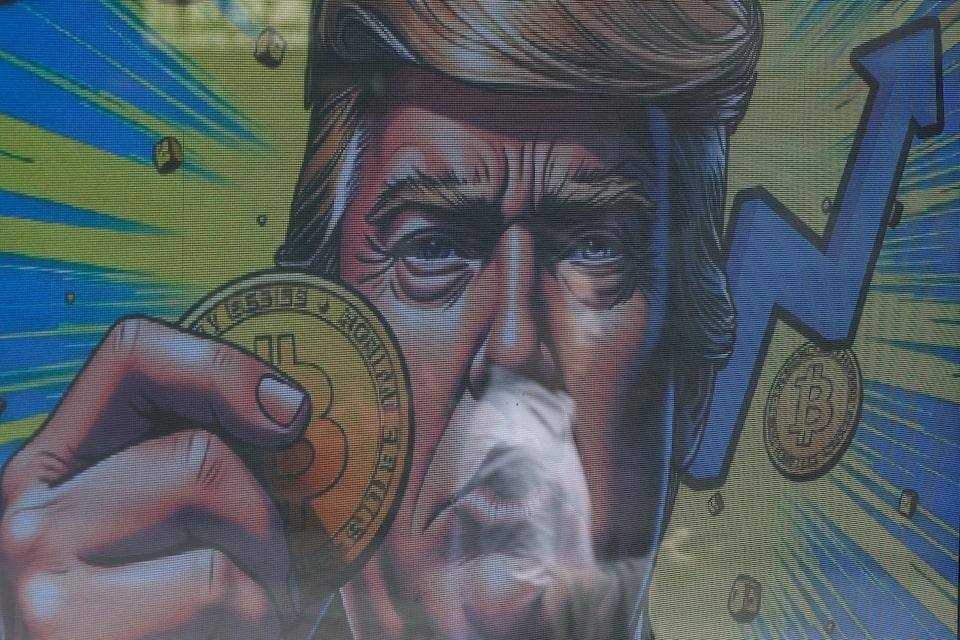
JD Vance is among 13 members reporting crypto holdings Crypto companies spent heavily on congressional races Trump has named crypto advocates to high-level roles in administration WASHINGTON, Jan 24 - President Donald Trump’s administration is expected to usher in a boom time for crypto but a Reuters review shows very few members of the incoming congress are invested in bitcoin or other digital currencies. On Thursday, Trump signed an order to create a cryptocurrency working group to open up the regulatory framework, and just days before he took office he launched a new crypto token. But while many Republicans in Congress have pledged to support Trump’s agenda, a Reuters review of the most recent financial disclosures by the 535 incoming members of Congress found that few have made personal investments in crypto: only 13 members of the House and Senate had investments in cryptocurrencies as of their most recent filings. The spouse of one other representative owns bitcoin, and a second spouse has an agreement that could bring her coins. All told, that is fewer than 3% of the members of the House of Representatives and Senate with direct exposure to cryptocurrency. Although members of Congress are in general far wealthier than the public as a whole, their filings suggest they are for now much less likely to own crypto assets. According to a recent Pew Research survey, nearly one in five Americans reported at some point having invested in, traded or used a cryptocurrency. The amounts, too, are small. One senator – wealthy former hedge fund executive Dave McCormick – has up to $5 million of investment in a bitcoin fund. Apart from him, the combined cryptocurrency value of all the other 12 lawmakers is between $1.1 million and $2.6 million - a fraction of their reported wealth. Vice President J.D. Vance reported crypto holdings of between $250,001 and $500,000. (Reuters included the former senator from Ohio and now vice president because his position makes him president of the Senate.) The small investments stand in contrast to the money poured into American politics by the crypto industry. By the summer, crypto companies had already spent more than $100 million, or nearly half of all corporate donations, on congressional races, accounting for nearly one in two dollars in corporate contributions, according to Public Citizen, a consumer advocacy group based in Washington, D.C. Tyler Gellasch, a former U.S. Securities and Exchange Commission lawyer who heads the Healthy Markets Association, an organization in Washington, D.C. that advocates for strong securities regulation, said legislators' low holdings might be an aversion to the lack of safeguards surrounding the assets. “They are likely more aware of the risks than the general public, especially the lack of a coherent and robust regulatory regime,” Gellasch said, adding: "It’s not a bad thing for members to not have a self-interest in pumping up the value of their own digital asset holdings.” Critics of cryptocurrencies, including some senior commercial and central bankers, highlight problems with fraud and say the fact that they are not backed by underlying, cash-generating assets or businesses makes buying them more like gambling than investing. Reuters requested comment from the 13 members of the incoming Congress whose disclosures showed cryptocurrency holdings. Only two replied. “Lawmakers' engagement now—before significant personal investments—underscores their commitment to ensuring crypto becomes a robust, U.S.-led industry in the years to come,” said Cody Carbone, president of the Digital Chamber, a leading crypto industry lobbying group with past ties , opens new tab to the man nominated as the next chair of the U.S. Securities and Exchange Commission, Paul Atkins. Atkins did not respond to a request for comment. LEGISLATION EXPECTED The Reuters review is the first of its kind to be published for the incoming Congress. It covers transactions through early January, before Trump launched his own cryptocurrency during the run-up to his inauguration. Reuters examined thousands of pages from 1,500 Congressional disclosure documents filed up to January 22, doing multiple automated searches of 1,300 of those and manual reviews for 200 filings that were handwritten or not scanned as clear images. The incoming Congress, both of its chambers now controlled by Republicans, is expected to move to create a legal framework for crypto to grow as part of more traditional finance. The crypto sector opened its wallet to back Trump and numerous congressional campaigns. Trump has tapped crypto advocates for high-level roles in his administration and named crypto investor David Sacks to be the White House’s artificial intelligence and crypto czar. “It seems virtually certain that Congress will take up crypto reform in the coming year,” said Yesha Yadav, associate dean at Vanderbilt University Law School, and an expert in digital asset regulation and market structure. The low rate of investment by Congressional members to date is not a surprise, Yadav said. Crypto is still a relatively new asset, and “it has not benefited from a well-tailored, protective perimeter in the U.S. historically (a fact that should be well-known to those serving in Congress),” she said by e-mail. In Ohio, crypto interests spent at least $40 million in the past election boosting pro-crypto Republican Bernie Moreno, who defeated crypto-skeptic Democrat Sherrod Brown, the chair of the Senate Banking Committee, according to campaign finance records. While a previous candidate filing for Moreno showed a revocable trust with between $100,000 and $250,000 in bitcoin in 2021, as of his most recent filing the senator had apparently divested, showing no crypto holdings at all. Moreno’s office did not respond to a request for comment. At least 10 of the lawmakers reported interests in bitcoin, the best-known cryptocurrency. Others held more obscure investments, such as Rep. Mike Collins, a Republican from Georgia who owns three small cryptocoins including “Aerodrome” and “Ski Mask Dog.” Collins’s total holdings in crypto are worth at least $56,015, and possibly more than $315,002. Because his filings recorded transactions and not balances, it was not possible to establish a clearer range. Collins did not respond to requests for comment. The disclosures in some cases listed assets that were not possible to parse. For example, Cynthia Lummis, a Republican from Wyoming, has been one of crypto’s top advocates in the Senate, sponsoring bills to create a regulatory framework for crypto – and one last year that would have required the U.S. government to stockpile bitcoin. Lummis said in a recent CNBC interview that she’s previously owned five bitcoin but did not know whether that’s still the case. Her most recent filing shows none. An entry in her 2022 disclosure for a blind trust showed holdings of bitcoin between $50,001 and $100,000. If she has held on to that investment, it should be worth $300,000 to $600,000 on Wednesday, assuming it moved in line with bitcoin’s price. Lummis was an “early investor before placing her assets in a blind trust…to prevent the possibility of any conflict of interest,” her spokesperson said in a statement. Sign up here. https://www.reuters.com/technology/us-lawmakers-are-light-crypto-heading-into-new-trump-era-2025-01-24/
2025-01-24 11:33
LONDON, Jan 24 (Reuters) - Chevron (CVX.N) , opens new tab said on Friday it had started production at a $48 billion expansion of the giant Tengiz oilfield which will bring its output to around 1% of global crude supply. The Tengiz field accounts for a large part of landlocked Kazakhstan's oil production and has been a major cash generator for Chevron for decades. But its exports depend almost entirely on a pipeline that runs through Russia to the Black Sea, putting it effectively under Moscow's control. Flows could also be impacted by Kazakhstan's agreement with OPEC and other major oil producers to curtail global supply in recent years. The expansion is expected to reach full capacity of 260,000 barrels per day by June, lifting overall production at Tengiz to around 1 million barrels of oil equivalent per day, Chevron's head of international exploration and production Clay Neff told Reuters. Chevron shares were down 0.25% at 1240 GMT. Tengiz is one of the world's deepest and most complex fields due to high levels of sulphur and harsh weather conditions. The expansion has suffered delays and huge cost overruns since launching in 2012. Investment was "at the low end" of $48 billion to $49 billion, Neff said, making it one of the world's most expensive developments. Chevron has a 50% stake in the Tengizchevroil joint venture which it operates, with Exxon Mobil (XOM.N) , opens new tab holding 25%, Kazakh oil firm KazMunayGas 20% and Russian oil producer Lukoil (LKOH.MM) , opens new tab the remaining 5%. Tengizchevroil is expected to generate $4 billion of free cash flow in 2025 and $5 billion next year at an average Brent price of $60 a barrel, Neff said. Benchmark Brent crude oil is currently trading at around $80 a barrel. "What this project allows us to do is not only increase production today but also extend the life of the field over time," Neff told Reuters. The expansion is part of Chevron's plans to increase its own production by around 3% per year over the next five years along with strong growth in the U.S. Permian shale basin. Sign up here. https://www.reuters.com/markets/commodities/chevron-starts-48-billion-kazakh-oilfield-expansion-2025-01-24/
2025-01-24 11:27
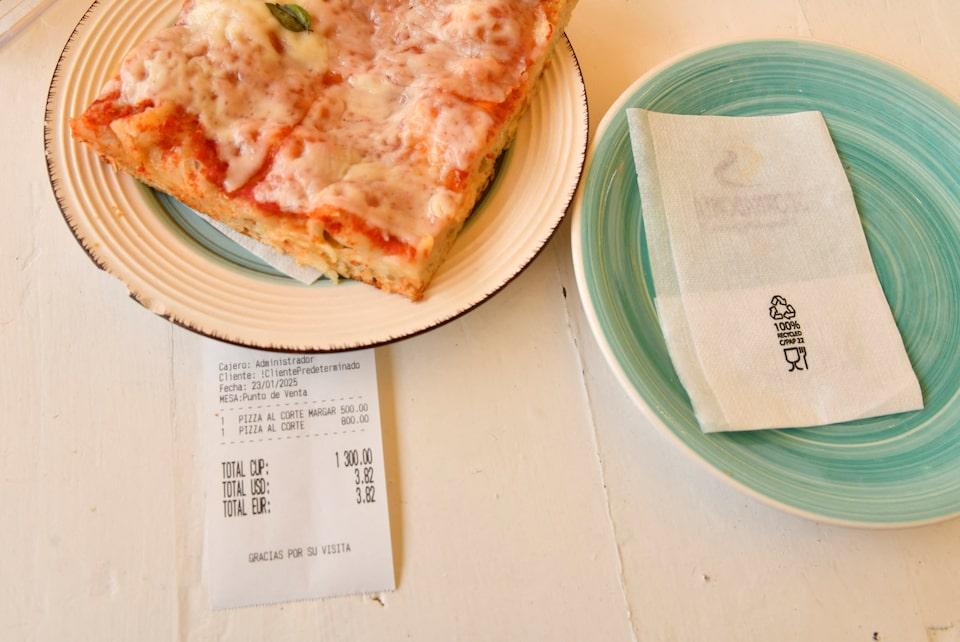
Cuba opens first grocery store accepting U.S. currency in two decades Partial dollarization aims to fix economy amid U.S. trade embargo Growing inequality between those with and without foreign currency access HAVANA, Jan 24(Reuters) - Cash-starved Cuba this month opened the first grocery store to accept hard U.S. currency on the island in nearly two decades, the latest sign in a trend towards dollarization in the Communist-run country. The store, open just a few weeks, garners praise from the lucky few with dollars on an island where, just four years ago, banks stopped accepting cash deposits in greenbacks. "This supermarket is quite good ... but not everyone has the possibility to buy here," said Yuliani González as she left the white-washed grocery store. The shop lies in the shadow of a newly built hotel complex near the sea in Miramar, a neighborhood popular with foreign diplomats. Cubans with access to dollars can also purchase gasoline without waiting in long lines, reserve a rental car or fancy hotel room and soon, top up their cellular data plans. Cuban officials have said this "partial dollarization," which kicked off a year ago is tough medicine necessary to fix the island's economy, devastated, in part, by a Cold War-era U.S. trade embargo and related sanctions. Relations between Havana and Washington this week took a turn for the worse, when U.S. President Donald Trump reversed a series of last-minute measures taken by the Biden administration that would have made it easier for Cuba to acquire dollars. That means the dollar crunch is likely to become even more severe, Cuban officials and economists say. Cuba's government has said it hopes dollar stores would reap some of the remittances that enter the country, allowing it to use that hard cash to underwrite social programs like free healthcare plus subsidized food, energy and transportation. Many state-run shops switched to a Cuban version of the greenback in 2004, called the CUC, and then in 2021 began accepting only a digital currency pegged to the dollar, called the MLC, in an effort to raise foreign currency without falling back on the cash dollar. "The government equivalent of the dollar keeps changing as it runs out of cash to back it up," Cuban economist Omar Everleny said in an interview. "They need cash quickly." "Soon dollar stores across the country will also accept U.S. currency." But the growing availability of goods and services in dollars, versus the local peso currency, also underscores growing inequality between those with and without access to remittances and other sources of foreign currency, economists like Everleny say. Housewife Odisbel Saavedra Hernández said she receives U.S. dollars from her husband abroad to feed her children. "Here you can find what you do not find in other markets. This one is more stocked. I hope that these markets spread throughout the country, but that other people can also have the same benefit as me," she said. Sign up here. https://www.reuters.com/world/americas/cuba-us-relations-sour-island-needs-dollars-more-than-ever-2025-01-24/
2025-01-24 11:23
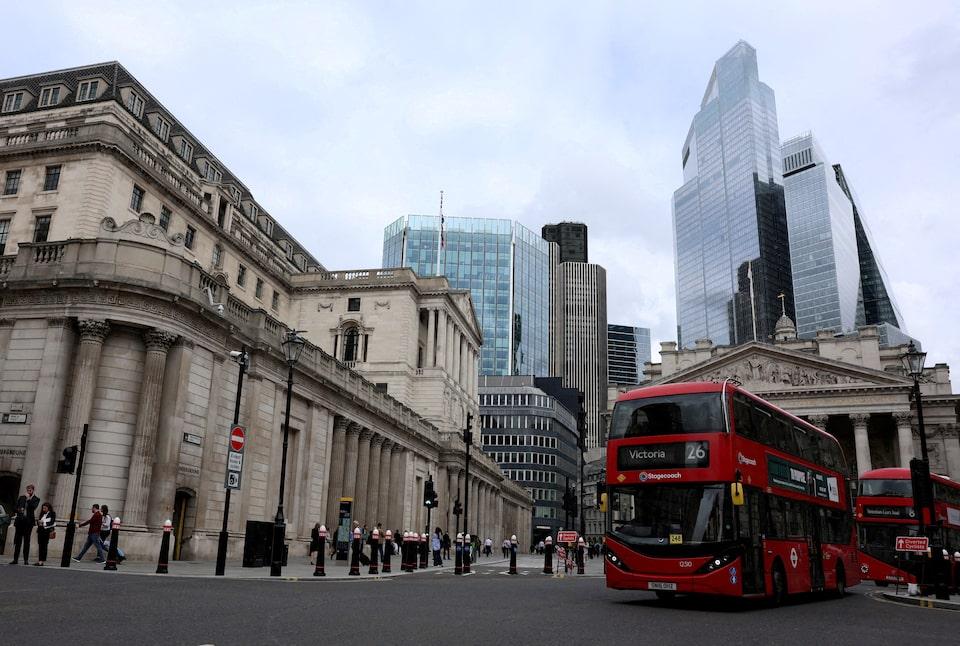
LONDON, Jan 24 (Reuters) - The Bank of England must contend with a slowdown in Britain's economy but also stubborn inflation pressures when it considers whether to cut interest rates in early February as well as its message about the outlook for the rest of the year. Inflation is stuck above the BoE's 2% target and looks set to rise further while the economy has stagnated since the middle of 2024, offering conflicting signals for the central bank's rate-setters. The graphics below illustrate the challenge facing the BoE at a time when investors are on edge over high borrowing and what some see as "stagflation" in the economy against a backdrop of global uncertainty about U.S. President Donald Trump's plans. Investors are putting a roughly 80% chance of the BoE cutting its benchmark Bank Rate to 4.5% from 4.75% on Feb. 6, and a similar chance that there will be two further quarter-point reductions before the end of 2025. INFLATION Britain's consumer price inflation rate has been above the BoE's 2% target every month since July 2021 with the exception of May, June and September 2024. The most recent reading of 2.5% is well below the four-decade peak of 11.1% in October 2022, after Russia's full-scale invasion of Ukraine. But the BoE expects it to rise this year and some private economists think it could hit 3% in data for January. Price growth for services, a key BoE gauge of future price pressures, fell sharply in December but remains too high to bring headline inflation back to target. INFLATION EXPECTATIONS The BoE monitors expectations about future inflation which can embed price pressures into the economy, for example through higher wage demands. A survey conducted by Citi and polling firm YouGov showed expectations for inflation in five to 10 years' time rose to 3.9% in December from 3.6% in November and also increased for the year ahead. Citi said inflation expectations still seemed anchored but the latest survey was concerning. WAGE GROWTH Employers have sped up the pace of raising pay for their staff in recent months despite signs of a slowdown in hiring, according to official data that offered little immediate relief for the BoE. A separate survey of businesses published by the central bank suggests pay growth pressure would come down in 2025 but only slowly. PRICES AHEAD The BoE survey showed companies' intentions to raise prices over the coming year were higher in the three months to December than at any point since the three months to June. Over half of firms intended to raise prices to offset a 25 billion-pound increase in social security contributions announced by finance minister Rachel Reeves in her first budget in October. GROWTH STAGNATION Economic output has largely flatlined since the time of last July's election that brought the Labour Party to power, due at least in part to uncertainty about the new government's tax plans and then the social security hike in Reeves' budget. A survey of businesses published on Friday showed that the slow growth in private sector activity barely edged up at the start of 2025, corporate optimism contracted again and price growth remained strong. Forecasters including the BoE expect overall economic growth will pick up in 2025 but largely as a result of higher government spending. HIRING AND INVESTMENT PLANS ARE WEAK Large British businesses intend to cut hiring this year at the fastest pace since the COVID-19 pandemic, according to a survey by Deloitte which linked the plans to the new government's increase in the corporate tax burden. Investment plans were the weakest in more than a year although Britain was more attractive for capital expenditure than the euro zone, the same survey showed. Sign up here. https://www.reuters.com/markets/rates-bonds/stumbling-growth-stubborn-inflation-boes-rate-cut-challenge-2025-01-24/
2025-01-24 11:19
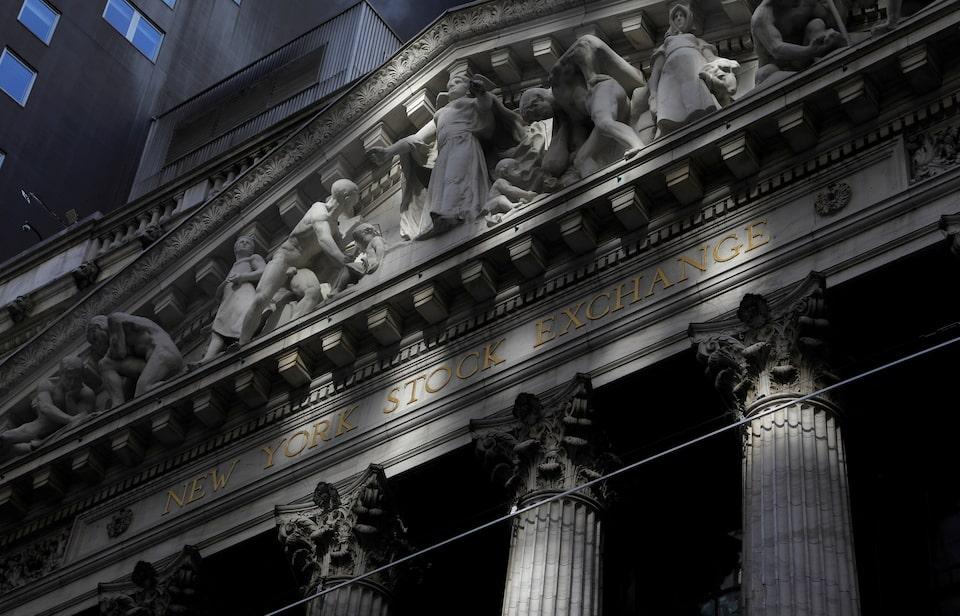
Venture Global raises $1.75 billion in U.S. IPO Investors cautious amid recovering IPO market - analysts Venture Global joins ranks of largest public U.S. energy firms Jan 24 (Reuters) - Venture Global's (VG.N) , opens new tab shares opened nearly 4% below their initial public offering price in a subdued NYSE debut on Friday, giving the LNG exporter a valuation of $58.2 billion and reinforcing the cautious approach of investors to new listings. The IPO was expected to be the first blockbuster listing of 2025, as well as a litmus test for the appetite for energy companies under the Trump administration. Arlington, Virginia-based Venture Global had already sharply lowered its valuation when it sold shares in the IPO on Thursday, settling for a price tag nearly 45% lower than the $110 billion it had aimed for earlier. It sold 70 million shares to raise $1.75 billion, much lower than its initial plan to raise as much as $2.3 billion. Investors and analysts said the initial target was 'lofty' and expressed concerns over its estimates for long-term profit and ongoing legal battles. The company's stock began trading at $24.05, compared with the IPO price of $25. "I don't think the investors were fully convinced that it commanded a multiple double that of its closest competitor," said Aakarsh Rattan Ramchandani, chief analyst and strategy officer at research firm Bigdata.com. Still, Venture Global will be one of the largest energy companies listed in the U.S., having surpassed rival Cheniere Energy (LNG.N) , opens new tab and high-profile players such as Occidental Petroleum (OXY.N) , opens new tab and Marathon Petroleum (MPC.N) , opens new tab. "Venture operates in a complex business that might appeal to a smaller subset of investors than some large IPOs," said Nicholas Einhorn, director of research at IPO-focused Renaissance Capital. Global LNG demand has risen in recent years amid a shift toward cleaner energy, with the U.S. emerging as a major supplier to both European and Asian countries. After his inauguration earlier this week, President Donald Trump issued an order to resume processing export permit applications for new LNG projects. "We will drill baby, drill," he said, outlining a plan to maximize U.S. oil and gas production by declaring a national energy emergency, removing excessive regulations and withdrawing the U.S. from a global climate change agreement. LARGEST LNG IPO IN HISTORY Venture Global's share sale marks the biggest IPO ever by an LNG company globally, according to Dealogic data. It is the third-largest energy and utility sector listing in the U.S. since 1995. "The high market cap reflects the company's ambitious development plans," Einhorn of Renaissance Capital said. "The company will definitely need to raise more capital over time, both equity and debt, to finance its growth plans." Rising commodity prices and optimism for pro-energy sector policies under the new Republican administration are also expected to drive a recovery in energy sector IPOs in 2025. The capital-intensive sector was among the slowest in U.S. IPO activity last year. There were only six energy sector IPOs in 2024, raising nearly $800 million—a small fraction of the broader market where 150 companies collectively raised $29.6 billion, according to data from Renaissance Capital. "For energy and LNG companies, as we are seeing with Venture Global, achieving those very high premiums at IPO is proving more challenging, particularly when measured against established public market peers," said Josef Schuster, CEO of IPO-focused investment indexes, IPOX. Venture Global began generating revenue in 2022 when its first facility, Calcasieu Pass, started producing superchilled gas. But it is locked in contract disputes with customers such as BP (BP.L) , opens new tab, Shell (SHEL.L) , opens new tab and Edison (EDNn.MI) , opens new tab over non-receipt of cargoes due to lengthy testing and optimizing process before commercial operation. Venture Global has said that since the Calcasieu facility was still in the commissioning phase, the company is not yet obliged to fulfill the long-term contracts. In addition to Cheniere, the company also competes with Freeport LNG, TotalEnergies (TTEF.PA) , opens new tab, Chevron (CVX.N) , opens new tab, ExxonMobil (XOM.N) , opens new tab and Petronas, among others for a share of the lucrative market. Sign up here. https://www.reuters.com/markets/deals/venture-global-debut-test-appetite-energy-ipos-after-trumps-policy-pivot-2025-01-24/
2025-01-24 11:17
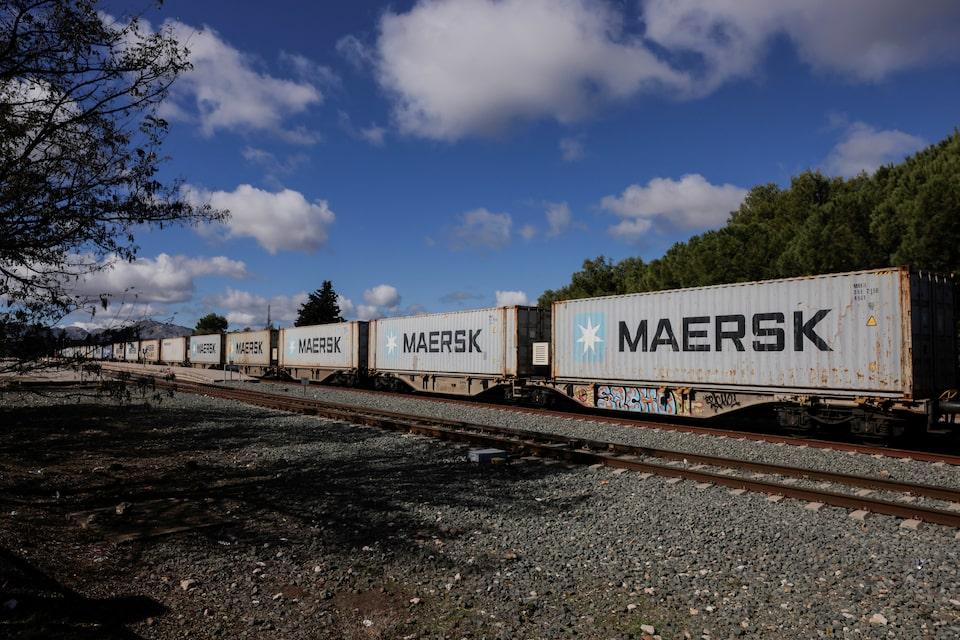
STOCKHOLM, Jan 24 (Reuters) - Maersk (MAERSKb.CO) , opens new tab will continue to divert vessels away from the Gulf of Aden and Red Sea and toward the southern tip of Africa despite Yemen's Houthis announcing they will curb their attacks on ships, the container shipping giant said on Friday. The Danish shipping company said the announcement by the Iran-backed militant group was "a very welcome step in the right direction towards stability and eventual normality for the global shipping industry". However, it said the security risk for commercial vessels transition the Red Sea and Bab-el-Mandeb strait remains high. "With this in mind – and the safety of our crew, vessels, and your cargo being our utmost priority – Maersk will continue to sail around Africa via the Cape of Good Hope until safe passage through the area is ensured for the longer term," it said. Sign up here. https://www.reuters.com/world/middle-east/maersk-not-returning-gulf-aden-now-2025-01-24/