2025-01-24 07:47
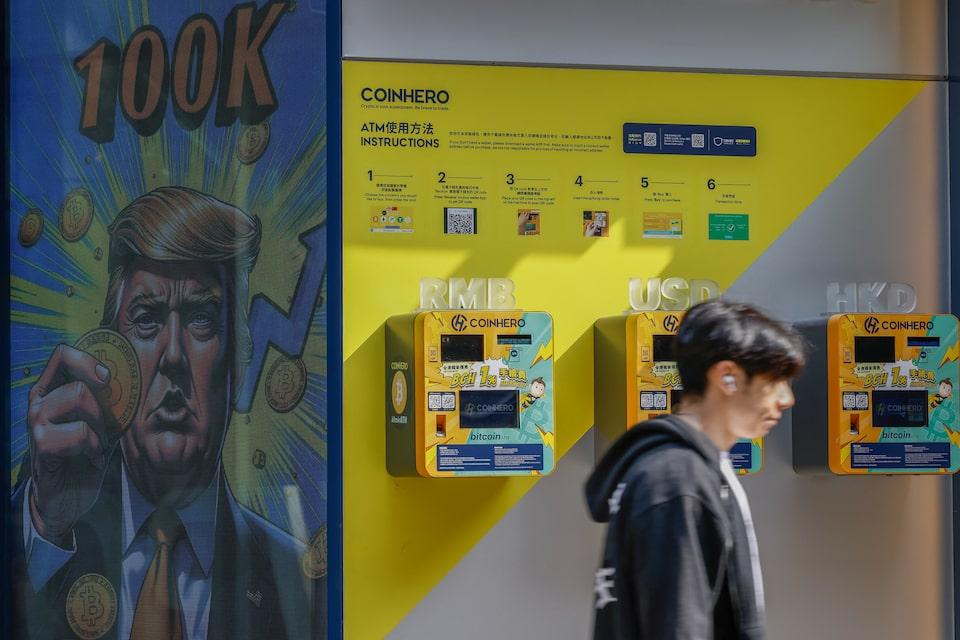
WASHINGTON, March 3 (Reuters) - U.S. President Donald Trump has given a first glimpse into what a U.S. cryptocurrency reserve could look like, saying the stockpile would include bitcoin and ethereum and a range of smaller tokens. Trump in January signed an executive order for the creation of a digital asset working group to explore the possibility of a strategic bitcoin reserve. Trump had directed the group to turn in a report by July addressing criteria for such a stockpile, potentially derived from cryptocurrencies seized by the federal government. On Sunday, he gave more details in a post , opens new tab on Truth Social of the reserve, including the tokens which will be included. Here are some of the issues at hand: WHAT IS A STRATEGIC RESERVE? A strategic reserve is a stock of a critical resource that can be released at times of crisis or supply disruptions. The best-known example is the U.S. Strategic Petroleum Reserve, the world's largest supply of emergency crude oil, which was created by an act of Congress in 1975 after a 1973-74 Arab oil embargo throttled the U.S. economy. Presidents have tapped the stockpile to calm oil markets during war or when hurricanes hit oil infrastructure along the U.S. Gulf of Mexico. Canada has the world's only strategic reserve of maple syrup, while China has strategic reserves of metals, grains and even pork products. WHAT CRYPTO TOKENS WOULD BE IN THE US STRATEGIC RESERVE? Smaller crypto tokens XRP , Solana and Cardano would be included in the stockpile, Trump said. That was the first indication the reserve would hold tokens besides bitcoin. Bitcoin and ethereum, the two largest cryptocurrencies by market value, will be the "heart of the Reserve," Trump said in a subsequent post. The president gave no explanation in the post for why the other tokens were included. HOW WOULD A U.S. STRATEGIC BITCOIN RESERVE WORK? The exact method of creating a crypto reserve remains uncertain. The working group was directed to evaluate potentially deriving a stockpile from cryptocurrency seized through law enforcement efforts. Currently, that stands at around 198,109 bitcoin, worth about $18.5 billion at market prices, according to bitcointreasuries.net. It remains unclear what the legal process would be for moving them out of the Justice Department. Trump has not said if the government would add to that stockpile by buying more bitcoin or other tokens in the open market and the order offers no further specific instructions. The most concrete bitcoin reserve proposal circulating in Washington comes from pro-crypto Republican Senator Cynthia Lummis, who personally holds five bitcoins. In July she introduced a bill, yet to gain traction, that would create a reserve operated by the Treasury. The bill envisages that the Treasury would create a program to buy 200,000 bitcoins annually for five years until the stockpile hit one million tokens. This would represent about 5% of the total global supply of bitcoin of around 21 million. The Treasury would fund the purchases with profits on Federal Reserve banks' deposits and gold holdings. The bitcoin reserve would subsequently be maintained for a minimum of 20 years. Lawmakers , opens new tabin around 24 individual U.S. states, meanwhile, have introduced legislation to create their own bitcoin stockpiles. However, the measures have failed in four states including Lummis' own Wyoming. WHAT ARE THE BENEFITS OF A BITCOIN RESERVE? In a July speech, Trump suggested a bitcoin reserve would help the U.S. dominate the global bitcoin market in the face of growing competition from China. Other proponents argue that by holding a stockpile of bitcoin, which they say is likely to continue appreciating over the long term, the U.S. could reduce its deficit without raising taxes, strengthening the U.S. dollar. In November, Lummis told Fox Business that her plan would allow the United States to cut its debt in half in 20 years. "What that does is help us protect ourselves against inflation and protect the U.S. dollar on the world stage," she said. A strong dollar would in turn give the United States more leverage over foreign adversaries like China and Russia, proponents say. WHAT ARE THE RISKS? Crypto skeptics say that, unlike most other commodities, bitcoin has no intrinsic use and is not crucial to the functioning of the U.S. economy. Created in 2008, bitcoin remains too young and volatile to presume its value will continue to rise in the long term, while crypto wallets remain notoriously vulnerable to cyber attacks, they also argue. And given its volatility, any government purchases or sales could have an outsized impact on bitcoin's price. The price impact would be even more pronounced for large purchases of smaller crypto tokens like Cardano and XRP, which generally have much lower trading volumes. The reserve is likely to be a key topic of discussion at the White House's upcoming cryptocurrency summit on March 7. Sign up here. https://www.reuters.com/technology/how-would-us-bitcoin-strategic-reserve-work-2025-01-24/
2025-01-24 07:46
China extends official holiday by a day to boost consumption Many people reluctant to spend because of job concerns Cinema ticket sales and overseas holidays offer bright spot BEIJING, Jan 24 (Reuters) - Travellers thronged railway stations and airports on Friday, clutching large suitcases and gifts such as boxes of fruit as they joined millions of Chinese returning to their hometowns to celebrate the Lunar New Year festival with family. The holiday, China's biggest, this year falls between Jan. 28-Feb. 4 and marks the arrival of the Year of the Snake. The festivities usually give a boost to businesses such as shops, cinemas and restaurants as families enjoy time together feasting and shopping. Authorities are especially keen for people to open their wallets this year to boost the sluggish economy, and have increased the official holiday period from seven days to eight. Official efforts to revive weak consumption also include promoting winter-themed holiday destinations and ensuring affordable airfares throughout the country, authorities said on Friday at a State Council press conference in Beijing. But businesses and travellers Reuters spoke to said they were seeing signs that people were continuing to tighten their belts in the face of a prolonged property slump and worries about job security. A Beijing-based sales professional named Liu, who was at a railway station in the Chinese capital preparing to return to his hometown in the northeast, said concerns about the economy and employment were widespread. "It's become even more difficult to earn money and find a job. There are many more unemployed people, and they all say it is more difficult," he said. Qiang, a hairdresser working in central Beijing, said that while people were still getting their hair cut for the holiday, they were being more selective about other services. "At this time of year, we usually have many customers who come to dye their hair or get a perm. But we have fewer of those lucrative clients now," he said. "We used to have eight to 10 such clients a day during this season in normal years. But last year and this year, we only have about two to three." China's transport ministry estimates a total of 9 billion trips will be made across the country during the 40 day travel period around the festival, up from 8.4 billion trips recorded during the same period last year. But some people said they were foregoing the return home so they could earn more money. "If I stay in Beijing, I will be paid triple salary for four days, I don't want to give up the opportunity to make money," said Mrs Nie, a 57-year-old who works at a sports centre in Beijing. "I started working here just three months ago, I haven't managed to make much money in 2024." OVERSEAS TRAVEL EYED One bright spot for consumption is the cinema, with advance film ticket sales exceeding 400 million yuan ($55.24 million) by Jan. 23, according to data from ticketing platform Maoyan, the fastest-ever pre-sales for the Lunar New Year season. Much of the demand has been driven by the film Legends of the Condor Heroes: The Gallants starring actor and singer Xiao Zhan, who is also a brand ambassador for luxury goods companies including Gucci and Tod's. The recovery is welcome news for the film industry, which has struggled recently, total revenues for China's box office were 22.6% lower in 2024 than in the year before. More Chinese are also opting to go overseas on long-haul trips this year, according to Trip.com, China's largest online travel agency. The extended holiday means people will only need to take two days leave for an 11-day break. Travel agency Qunar said that bookings for outbound flights and holiday packages on its platform had doubled from last year. The most popular destinations are elsewhere in Asia, according to data from the World Travel & Tourism Council (WTTC) Southeast Asia remains popular, with ticketing volume for Vietnam, Singapore and Indonesia all increasing more than 50%. Tickets to Japan grew by 58%, while demand for Hong Kong nearly doubled. ($1 = 7.2412 Chinese yuan renminbi) Sign up here. https://www.reuters.com/world/china/china-readies-lunar-new-year-amid-worries-about-economy-2025-01-24/

2025-01-24 07:44
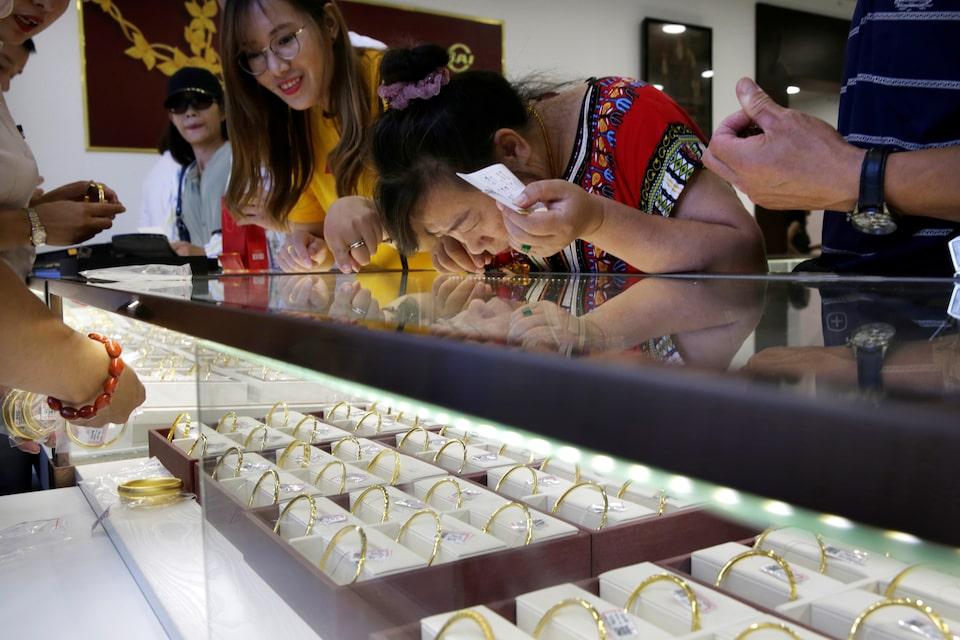
Jewellery stores witnessing thin footfall, Indian dealer says India sees a discount of up to $38/oz vs $30 last week China's Spring Festival holidays start on Jan 28 to Feb 4 Jan 24 (Reuters) - Elevated prices dampened demand for physical gold in most Asian hubs this week, while Indian dealers offered the biggest discounts in more than six months. In India, domestic prices hit an all-time high of 80,034 ($927.69) rupees per 10 grams on Friday, tracking the international spot gold prices and hovering near a record high of $2,790.15 hit on Oct. 31. "Retail demand was negligible this week due to the price rise. Most jewellery stores were witnessing thin footfall," a Chennai-based bullion dealer said. Indian dealers this week offered a discount of up to $38 an ounce over official domestic prices – inclusive of 6% import and 3% sales levies, up from the last week's discount of $30 an ounce. Jewellers were not making purchases as some are speculating that the government might change the import duty structure in the next week's annual budget, said a Mumbai-based dealer with a private bullion importing bank. Finance Minister Nirmala Sitharaman will present the next fiscal year's federal budget on Feb. 1, following a significant import tax cut on gold in the previous budget. In top consumer China, dealers offered discounts of $10 and charged a premium of $10 per ounce above international rates , versus premiums of $3-$13 last week. Chinese gold prices are higher again and close to historical highs, which has sucked out demand but some people are still buying due to the holiday season starting next week, said a mainland China-based precious metal trader. China's official Spring Festival holidays will run from Jan. 28 to Feb. 4. In Hong Kong, gold was sold at par with a $2 premium. In Japan, bullion was sold from a discount of $1 to a premium of $1. "Trading houses hesitate to purchase gold with rates increasing," said a Tokyo-based trader. ($1 = 86.2720 Indian rupees) Sign up here. https://www.reuters.com/markets/commodities/asia-gold-elevated-prices-deter-buyers-key-hubs-2025-01-24/
2025-01-24 07:08
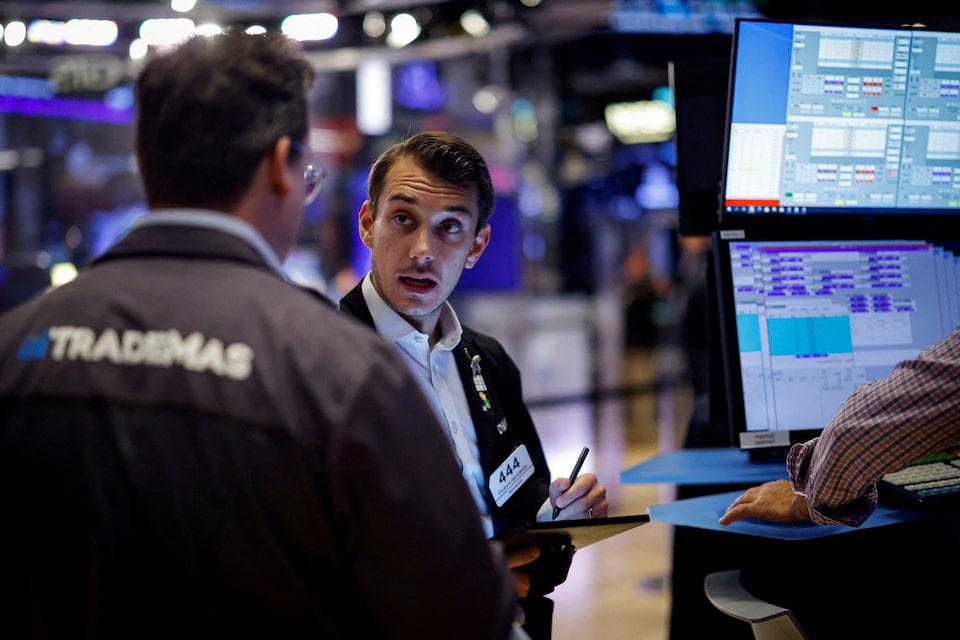
LONDON, Jan 24 (Reuters) - The extreme global investor bias for all things American may not need to end with some major U.S. shock, but could eventually reverse with just a modest lifting of the pervasive gloom surrounding Europe. Many experts are wary of the scale with which the U.S. is hoovering up global investment and the resulting strength of the dollar. This is raising fears that any missteps stateside could cause a sudden reversal of these gigantic cross-border flows. But the majority of those flows are coming from other rich economies, mostly in Europe. So the lack of a compelling case to stay at home is arguably as big a driver of the yawning geographic investment imbalances as the magnetic pull of Wall Street. Few question the attractions of the U.S. - impressively brisk growth, giant tech investment drivers, rising productivity and now, with the return of Donald Trump to the White House, a new round of deregulation to boot. Spurring this momentum is both the greater liquidity of U.S. markets compared to their foreign peers and the ever rising U.S. share of supposedly 'diversified' global equity and bond indexes. Indeed, U.S. stocks now make up two thirds of MSCI's all-country equity basket. (.MIWD00000PUS) , opens new tab. But the sheer scale of negativity surrounding the economic outlook beyond U.S. shores, especially in Europe, is a major driver keeping European money moving across the Atlantic and U.S. investors at home. To be sure, Trump's threatened trade wars and 'America First' investment agenda has much to do with keeping those clouds thick and dark overseas. The mood at the World Economic Forum on Davos this week spoke to that. "You meet the Americans, (it's) a real party. You meet the Europeans, it is like at a funeral," the chief executive of Norway's $1.8 trillion sovereign wealth fund Nicolai Tangen said of his meeting with other CEOs. BALLOONING NIIP The latest official U.S. net international investment position , opens new tab (NIIP), which measures the difference between the value of U.S. investment overseas against that of foreign holdings of U.S. securities, showed a record gap of $23.6 trillion at the end of the third quarter of 2024. This figure shows net overseas holdings of U.S. assets - U.S. liabilities to the rest of the world - at some 90% of the country's estimated full year gross domestic product in 2024. And the value of foreign holdings of U.S. assets has almost doubled to more than $60 trillion over the past decade. The explosion of the NIIP gap is partly due to the scale of price outperformance of U.S. securities over foreign securities held by U.S investors. The dollar's rising exchange rate is also playing a role. But, even more importantly, the underlying flows just keep coming. The Bureau of Economic Statistics last month said that additional foreign purchases of U.S. debt and equity securities in the third quarter of last year alone amounted to some $717 billion, stripping out valuation effects. Where does all the money keep coming from? One big player stands out. Germany overtook Japan last year as the world's largest net outward investor, with its contrasting NIIP surplus now soaring above $3 trillion to more than 70% of German GDP and double the share it recorded only a decade ago. So much so, the entire euro zone NIIP flipped into net surplus for the first time two years ago. As a share of GDP, Switzerland is another big outward investor - in part due to the Swiss National Bank's near $1 trillion reserve pile. Sweden's ranking is rising too. "STUPIDLY BIG" Societe Generale strategist Kit Juckes described the U.S. NIIP deficit at $23 trillion as a "stupidly big number" that raises reasonable questions about its long-term sustainability. "If this transpires to be some form of bubble in the U.S. equity market, I struggle to believe $23 trillion is just going to go back to $21.5 trillion. When it re-balances it's going to be a very big move indeed." But Juckes noted that a major driver of the imbalances was the fact that European investors can't find anything more attractive at home. If this perspective changes, the massive bias toward U.S. markets could possibly 'lighten up'. To that effect, the new year has provided some shards of light. Euro zone stocks (.STOXXE) , opens new tab have actually outperformed U.S. indexes (.SPX) , opens new tab, (.IXIC) , opens new tab two-to-one in dollar terms for the year so far. Drawing funds interest in the extremity of the Transatlantic valuation gap, it's a notable rarity over any timeline recently. Meanwhile, Bank of America's latest fund manager survey revealed this week that global funds recorded the second largest allocation to European stocks in a quarter of a century. A flash in the pan or a portent of things to come? Ironically, Trump may hold the keys to that. If successful, his push for an end to the war in Ukraine could do much to lift the mood on the eastern side of the Atlantic. Backing away from tariff hikes on Europe would obviously be another major relief for the continent. Germany's election next month could also possibly generate more optimism, if the outcome signals that there will be a review of the country's draconian public spending limit. Valuations in the U.S. and investor positioning are already at extremes. All that may be needed is a trigger and a narrative. The opinions expressed here are those of the author, a columnist for Reuters. Sign up here. https://www.reuters.com/markets/us-investment-bias-might-ebb-if-european-gloom-lifts-mike-dolan-2025-01-24/
2025-01-24 06:59
TOKYO, Jan 24 (Reuters) - The yen strengthened and Japanese government bond yields rose to fresh multi-year highs on Friday after the Bank of Japan hiked interest rates as expected and raised its inflation forecasts, reinforcing views it will push rates up again. Japan's Nikkei share average shed early gains to end the day down 0.07% at 39,931.98. It entered the midday recess up 0.6%, with the BOJ's announcement coming shortly before the start of afternoon trading. The yen rose as much as 0.8% to 154.845 per dollar following the policy decision, but pared gains to be at 155.56 as of 0742 GMT following Governor Kazuo Ueda's news conference, where he said that a rise in underlying inflation was "moderate" and the central bank wasn't "seriously behind the curve", suggesting no rush to tighten policy again. The two-year JGB yield rose as much as 3 basis points (bps) to 0.725% at its highest point, a level last seen in October 2008, and last stood at 0.715%. The bond hadn't traded since Ueda's news conference. Benchmark 10-year JGB futures ticked up 0.11 yen to 140.78 yen. Bond prices and yields move inversely. "I expect the rate will be kept the same for at least the next six months," keeping the pace broadly the same with hikes so far this cycle, said Kota Suzuki, a strategist at Nomura Asset Management. "The central bank will be a little more cautious from now on as it will carefully assess the economic situation and the impact of the interest rate hike." The BOJ hiked short-term lending rates by a quarter point to 0.5%. The move had been already priced into money markets after central bank officials, including Governor Ueda, had clearly signalled earlier this month that policy tightening was on the table. In its quarterly outlook report, the board raised its forecast for core consumer inflation to hit 2.4% in fiscal 2025 before slowing to 2.0% in 2026. In the previous projection made in October, it expected inflation to hit 1.9% in both fiscal 2025 and 2026. The market is currently priced for one further quarter-point increase by year-end, likely in December. "Looks like overseas investors took the Outlook Report as hawkish," said Shoki Omori, chief global desk strategist at Mizuho Securities. "Rates trading (is) choppy. Yields are higher but trading volume isn't high." Early gains in Japanese stocks came on the back of a 0.5% rise in the U.S. S&P 500 <.SPX> overnight to mark its first closing record since Dec. 6. The yen was supported by comments from U.S. President Donald Trump that he thought he could reach a trade deal with China and avoid additional tariffs. Sign up here. https://www.reuters.com/world/japan/yen-gains-bond-yields-rise-after-boj-hikes-rates-2025-01-24/
2025-01-24 06:55
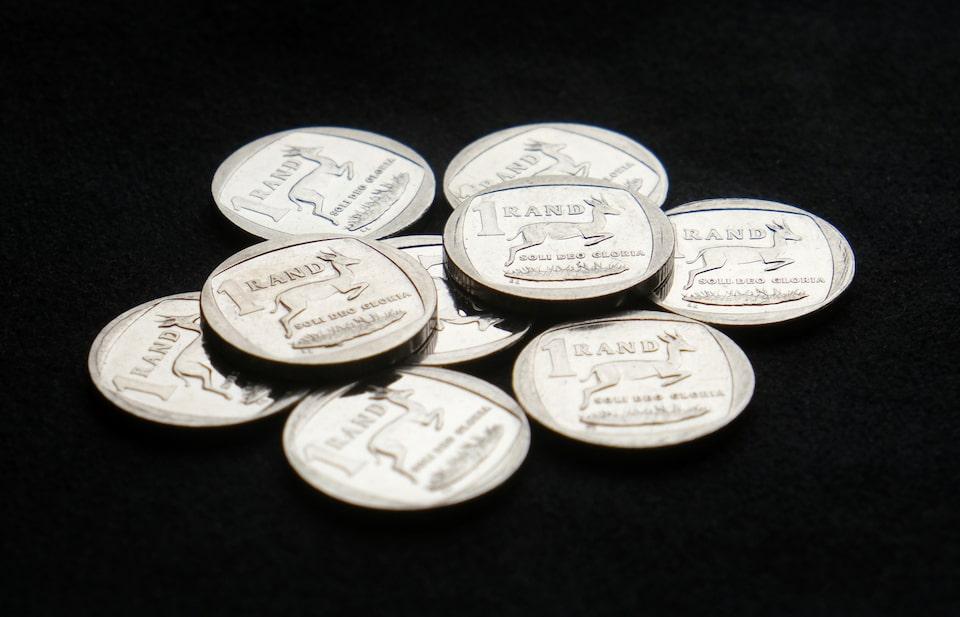
JOHANNESBURG, Jan 24 (Reuters) - South Africa's rand gained early on Friday, against a softer dollar, after U.S. President Donald Trump demanded lower interest rates by the Federal Reserve. At 0639 GMT, the rand traded at 18.38 against the dollar , about 0.8% stronger than its previous close. The greenback last traded about 0.5% weaker against a basket of currencies. Data out of the world's biggest economy on Thursday showed a rise in weekly jobless claims, while Trump, speaking virtually at the World Economic Forum meeting at Davos, said he would demand lower interest rates. These have led to a revision of U.S. rate cut expectations and driven U.S. Treasury yields lower on Friday, ETM Analytics said in a research note. "In turn, the dollar has come under renewed pressure, with the rand taking advantage as it trades to its strongest levels since before Christmas. Whether the rand bulls can sustain this momentum into the weekend remains to be seen." South Africa's benchmark 2030 government bond was stronger in early deals, with the yield down 5.5 basis points to 9.0%. Sign up here. https://www.reuters.com/markets/currencies/south-african-rand-firms-dollar-eases-after-trump-demands-lower-fed-rates-2025-01-24/