2026-01-05 12:43
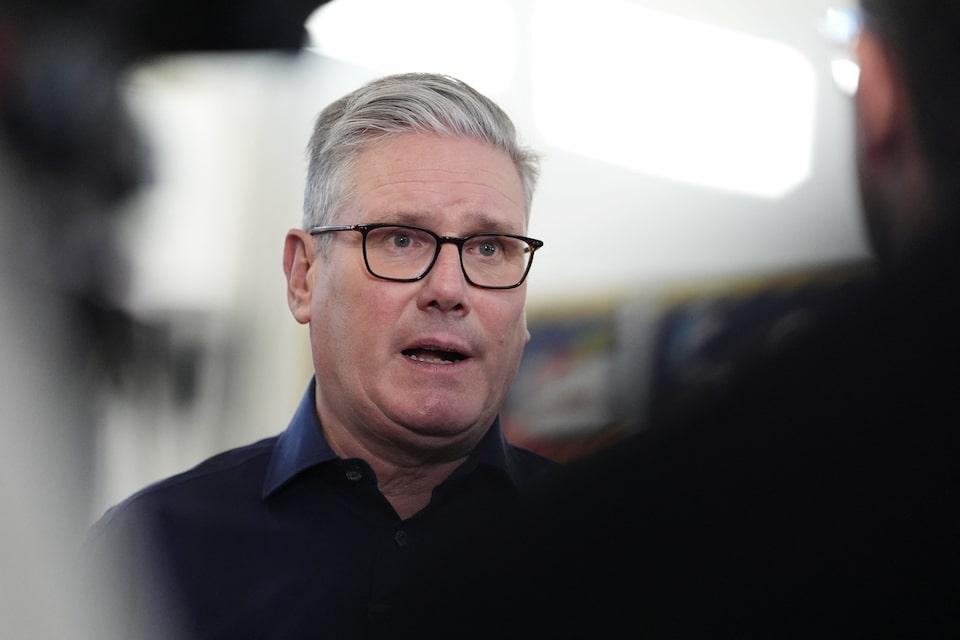
LONDON, Jan 5 (Reuters) - British Prime Minister Keir Starmer said on Monday it was up to the United States to justify its actions in Venezuela after capturing President Nicolas Maduro, describing the situation as "not straightforward." "What we need in Venezuela is a peaceful transition to democracy. That was our position before this weekend, it remains our position," Starmer told reporters. Sign up here. "International law is the framework, is the anchor or the benchmark, against which we judge the actions of all other governments. And it is, of course, for the U.S. to justify the action that it has taken. It is not straightforward. It is complicated, and even today, there are further developments." The United States captured Maduro in a raid early on Saturday and took him to New York to face drug-trafficking charges. A spokesperson for Starmer said the U.S. raid was not comparable to Russia's full invasion of Ukraine. Britain has repeatedly called President Vladimir Putin’s invasion of Ukraine illegal, and imposed what it said was the largest ever set of sanctions against Russia. "I think comparisons between the developments over the weekend, and the unprovoked, full-scale invasion of a sovereign democratic state doesn’t bare comparison,” Starmer’s spokesperson told reporters. "We have always been clear ... that Maduro’s rule in Venezuela is fraudulent." https://www.reuters.com/world/americas/uks-starmer-says-it-is-us-justify-its-actions-venezuela-2026-01-05/
2026-01-05 12:42
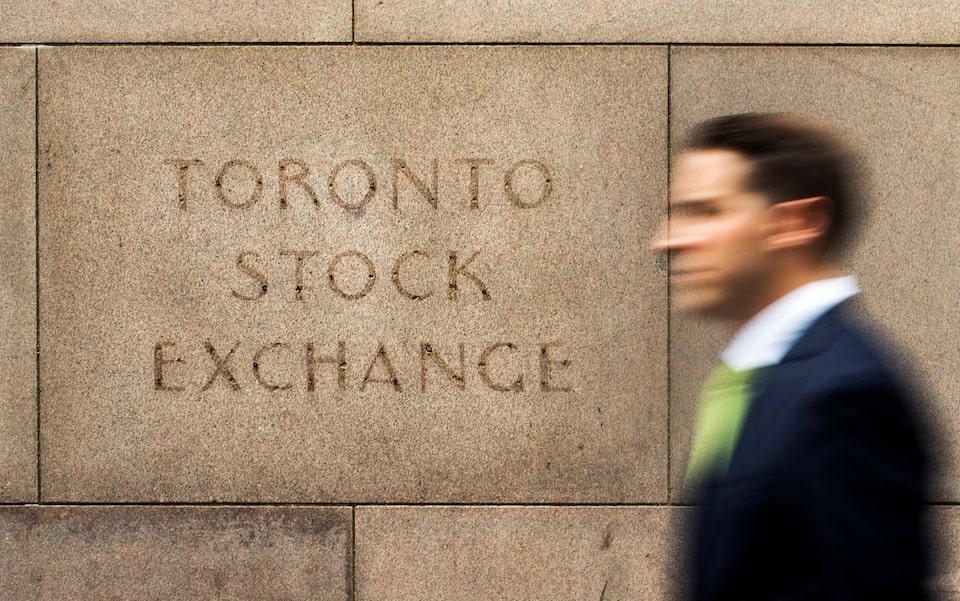
TSX ends up 1.1% at 32,219.95 Eclipses December 23 record closing high Materials group adds 3.3% as gold rallies Energy loses 3.6% TORONTO, Jan 5 (Reuters) - Canada's main stock index rose to a record high on Monday as gains for financial and metal mining shares overshadowed losses for energy stocks following turmoil in Venezuela. The S&P/TSX Composite Index (.GSPTSE) , opens new tab ended up 336.58 points or 1.1% at 32,219.95, eclipsing the record closing high from December 23. Sign up here. "Nothing can stop the freight train that is the TSX. It just seems to have all the right allocations for today's market," said Barry Schwartz, chief investment officer at Baskin Wealth Management. "Gold's a driver today, the banks are unstoppable ... there's no better place to be when stock markets are at record highs than financial stocks." Heavily weighted financials (.SPTTFS) , opens new tab added 1.6%, while the materials group (.GSPTTMT) , opens new tab, which includes metal mining shares, ended 3.3% higher after U.S. strikes in Venezuela added to gold's safe-haven appeal. The precious metal was up 2.7%. Shares of e-commerce company Shopify Inc (SHOP.TO) , opens new tab were up nearly 6%, which helped lift the technology sector (.SPTTTK) , opens new tab by 0.8%. The energy sector (.SPTTEN) , opens new tab fell 3.6%, with Canadian Natural Resources Ltd (CNQ.TO) , opens new tab down 6%, but finished well above its low for the day. The price of oil settled 1.7% higher at $58.32 a barrel. "The worry is that there will be all this oil flowing out of Venezuela and the U.S. won't need the Canadian supply," Schwartz said. "The truth is ... you can't flip the switch and replace the Canadian oil overnight. It's going to take at least a decade and in the meantime oil demand increases every year." https://www.reuters.com/business/tsx-futures-rise-venezuela-turmoil-fuels-precious-metals-rally-2026-01-05/
2026-01-05 12:31
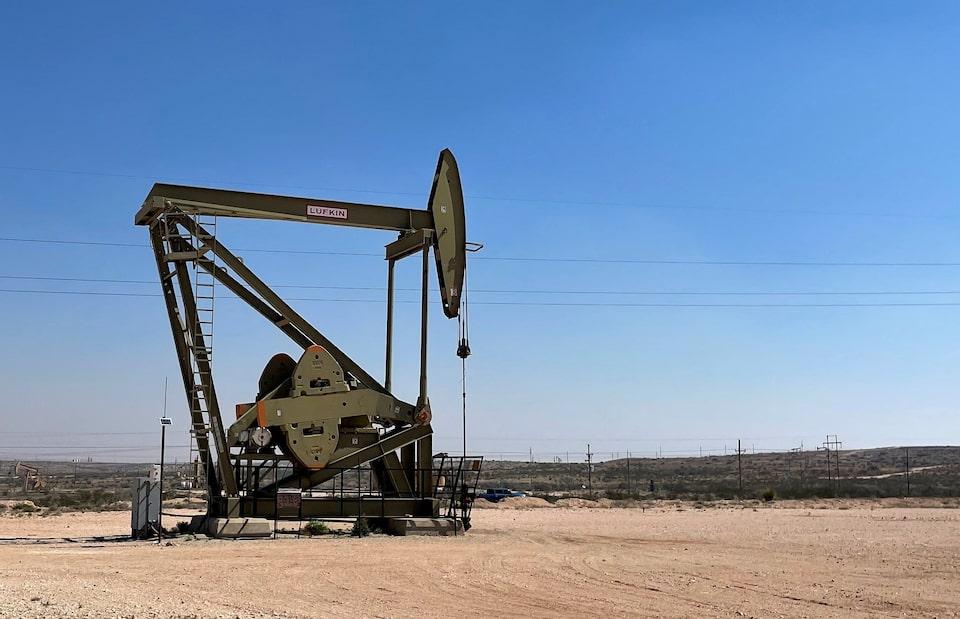
Brent projected to average $61.27 per barrel in 2026 WTI to average $58.15 per barrel in 2026 Poll was conducted before US-strikes on Venezuela and OPEC meeting For table of crude price forecasts, click Jan 5 (Reuters) - The global oil market is likely to be under pressure in 2026 as growing supply and weak demand curb prices, and traders monitor OPEC+ for policy signals and any attempts to bolster the market, a Reuters poll showed on Monday. The survey of 34 economists and analysts conducted in December forecast that Brent crude would average $61.27 per barrel in 2026, down from November's forecast of $62.23. U.S. crude is projected to average $58.15 per barrel, below November's estimate of $59.00. Sign up here. The poll was conducted in December 2025, prior to the U.S. military operation that launched strikes on OPEC-member Venezuela and captured its President Nicolas Maduro over the weekend. The poll also preceded a meeting of the Organization of the Petroleum Exporting Countries and allies, known as OPEC+, at the weekend. It left oil output unchanged on Sunday after a quick meeting that avoided discussion of the political crises affecting several of the producer group's members, not just Venezuela. SUPPLY IS EXPECTED TO EXCEED DEMAND, ANALYSTS SAY "Holding production steady through Q1 2026 helps limit near-term volatility and provides some support to prices, but it does not materially alter the underlying surplus. Even with quotas unchanged, supply is expected to exceed demand, keeping prices under pressure through the year," said Bridget Payne, Head of Energy Forecasting at Oxford Economics. Brent and WTI prices declined by about 19% and 20% respectively in 2025, the most since 2020, weighed down by production boosts from OPEC+, the United States and other producers. Following the weekend's events in Venezuela, crude output in the country, home of the biggest global oil reserves, could gradually increase, oil analysts said, but it will take time. "We see ambiguous but modest risks to oil prices in the short run from Venezuela depending on how U.S. sanctions policy evolves," Goldman Sachs , opens new tab analysts said in a note dated January 4. On average, the poll participants expect the market to be in surplus by around 0.5-3.5 million barrels per day in 2026, compared with a 0.5-4.2 mbpd surplus in the previous poll. OPEC data published in its most recent monthly report found world oil supply would match demand closely in 2026, an outlook contrasting with projections of a substantial supply surplus from the International Energy Agency. The highest forecast in the poll is from analysts at DBS Bank, who expect Brent crude to average $68 next year, as an OPEC+ pause and possible new sanctions on Russia could support prices. ABN Amro and Capital Economics have the lowest Brent crude price forecast for 2026 at $55 per barrel, as per the poll. The U.S. has tightened sanctions on Russia's oil trade, targeting tankers and supply routes to curb revenues, but analysts expect U.S. sanctions on Rosneft and Lukoil to be short-lived, given U.S. President Donald Trump's push for low gasoline prices. Analysts noted that these sanctions are unlikely to impact the market, as OPEC+'s substantial production increase in 2025 has already ensured ample global supply. https://www.reuters.com/business/energy/oil-prices-forecast-ease-2026-under-pressure-ample-supply-2026-01-05/
2026-01-05 12:26
LONDON, Jan 5 (Reuters) - British Prime Minister Keir Starmer said on Monday that he stood with Denmark in its defence of Greenland, saying no one else should determine the future of the vast territory after U.S. President Donald Trump said he needed it for defence. A U.S. military operation to capture Venezuelan President Nicolas Maduro, and Trump's intention to oversee governance of the oil-rich Latin American country, has rekindled concerns in Denmark that Greenland, an autonomous Danish territory, might face a similar scenario. Sign up here. "Greenland and the Kingdom of Denmark must determine the future of Greenland and nobody else," Starmer told reporters. When asked in a separate interview about Danish Prime Minister Mette Frederiksen telling Trump to stop threatening Greenland, Starmer said: "I stand with her and she's right about the future of Greenland." Starmer, who has sought to stay on good terms with Trump and adopted a less publicly critical approach than most other European leaders, was also asked about the raid in Venezuela. He said it was now up to the U.S. to justify its actions, and that Britain would judge other nations against the benchmark of international law. Starmer said on Saturday he was not sad that Nicolas Maduro was no longer president of Venezuela, but he wanted this to lead to a more democratic government. https://www.reuters.com/world/uks-starmer-says-greenlands-future-not-others-decide-2026-01-05/
2026-01-05 12:17
LONDON, Jan 5 (Reuters) - The pound eased against the dollar on Monday, as the greenback headed for a fifth daily rise in a row against a basket of major currencies ahead of a wave of economic data that could set the tone for trading over the near term. Currency traders said they were keeping an eye on developments in Venezuela, but were more immediately focussed on U.S. employment data, euro zone inflation and UK monthly business activity figures due this week. Sign up here. Sterling was last down marginally at $1.3461, having ended last week with a 0.3% loss. The pound rose by nearly 8% against the dollar in 2025, marking its strongest annual performance since 2017. "The pound's weakness reflects broader dollar strength rather than UK-specific concerns, though the move does impact returns for investors holding overseas assets," IG chief markets strategist Chris Beauchamp said. Against the euro , the pound was a touch stronger, leaving the single European currency down 0.34% on the day at 86.77 pence. The Bank of England, which cut rates by a quarter point last month, is expected to deliver at least one more rate cut this year, with a strong possibility of a second by year-end, according to money markets. https://www.reuters.com/world/uk/sterling-sags-traders-await-key-data-2026-01-05/
2026-01-05 11:59
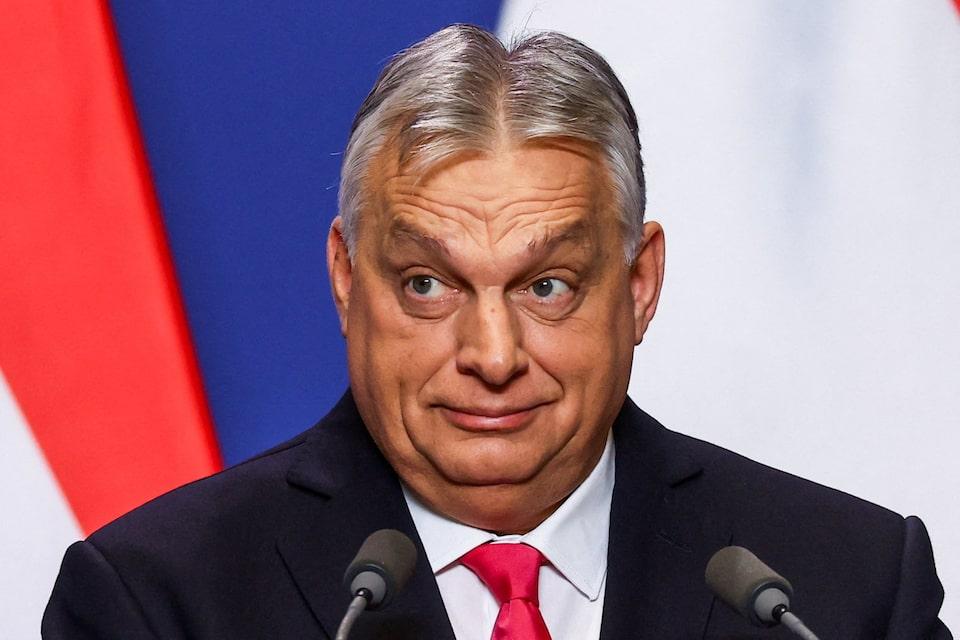
US and Venezuela may control up to 50% of global oil reserves Hungary diversifying energy supplies with Chevron LNG deal BUDAPEST, Jan 5 (Reuters) - The U.S. decision to topple Venezuelan leader Nicolas Maduro should have a positive impact on world energy markets, Hungarian Prime Minister Viktor Orban said on Monday, adding that the U.S. and Venezuela would control up to half of global oil reserves. In the biggest U.S. intervention in Latin America since the 1989 invasion of Panama, Special Forces swooped into Caracas in helicopters over the weekend and apprehended Maduro before taking him to New York to face drugs charges. Sign up here. U.S. President Donald Trump, Orban's ally, who has exempted Hungary from U.S. sanctions on Russian energy for the 2026 Hungarian election year, has made clear that he wants to share in Venezuela's oil riches. "What I consider important for Hungary from this is that, together with Venezuela, the United States, by my estimation, will be able to control 40-50% of the world's oil reserves," Orban said at an annual news conference for international media. "This is a power already capable of significantly influencing the world market price of energy... I see a strong chance that as a result of bringing Venezuela under control, a more favourable global energy situation will emerge for Hungary, and that is good news." Budapest has angered many fellow members of the European Union and NATO by continuing to import Russian oil and gas. While insisting that this remains necessary, Budapest has also been taking steps to diversify supplies. State-owned MVM group signed a 5-year deal with U.S. energy company Chevron (CVX.N) , opens new tab for the supply of 2 billion cubic metres of liquefied natural gas in December. https://www.reuters.com/business/energy/hungarys-orban-says-us-intervention-venezuela-good-energy-markets-2026-01-05/