2025-01-24 06:46
Most analysts expect a 100 bps rate cut One analyst expects rates to remain at 13% Inflation to start picking up in May-analyst KARACHI, Jan 24 (Reuters) - Pakistan's central bank is expected to lower its key interest rate by at least 1 percentage point on Monday, analysts said, in its sixth straight cut as it attempts to revive economic and business sentiment as inflation slows sharply. The central bank has slashed rates by 900 bps from an all-time high of 22% in June 2024, in one of the most aggressive moves among emerging markets' central banks and topping the 625 bps in rate cuts it did in 2020 during the COVID-19 pandemic. The median expectation of the fifteen analysts surveyed by Reuters is for the State Bank of Pakistan to lower rates by 100 basis points (bps). Only one analyst expects the bank to hold rates at 13%. Of the 14 analysts who expect a rate cut, 11 expect a 100 bps reduction, one expects the central bank to lower rates by 150 bps and two expect it to chop rates by 200 bps. Ahmad Mobeen, senior economist at S&P Global Market Intelligence, said his forecast for a 150 bps cut was "driven by the low December inflation figure and a stable exchange rate supported by a healthier current account." The South Asian country is navigating a challenging economic recovery path and has been buttressed by a $7 billion facility from the International Monetary Fund (IMF) in September. Pakistan's consumer inflation rate slowed to an over 6-1/2-year low of 4.1% in December, largely due to a high year-ago base. That was below the government's forecast and significantly lower than a multi-decade high of around 40% in May 2023. The central bank, in its policy statement in December, noted that it expected inflation to average "substantially below" its earlier forecast range of 11.5% to 13.5% this year. However, inflation may pick up in May as the base year effect wears off, said Saad Hanif, research analyst at Ismail Iqbal Securities. That is "in addition to other risks to inflation including increases in energy tariffs, new taxation measures, and a potential hike in the levy on petroleum prices," said Hanif, who expects a 100 bps cut. Sign up here. https://www.reuters.com/markets/asia/pakistan-central-bank-likely-deliver-sixth-straight-rate-cut-revive-economy-2025-01-24/

2025-01-24 06:32
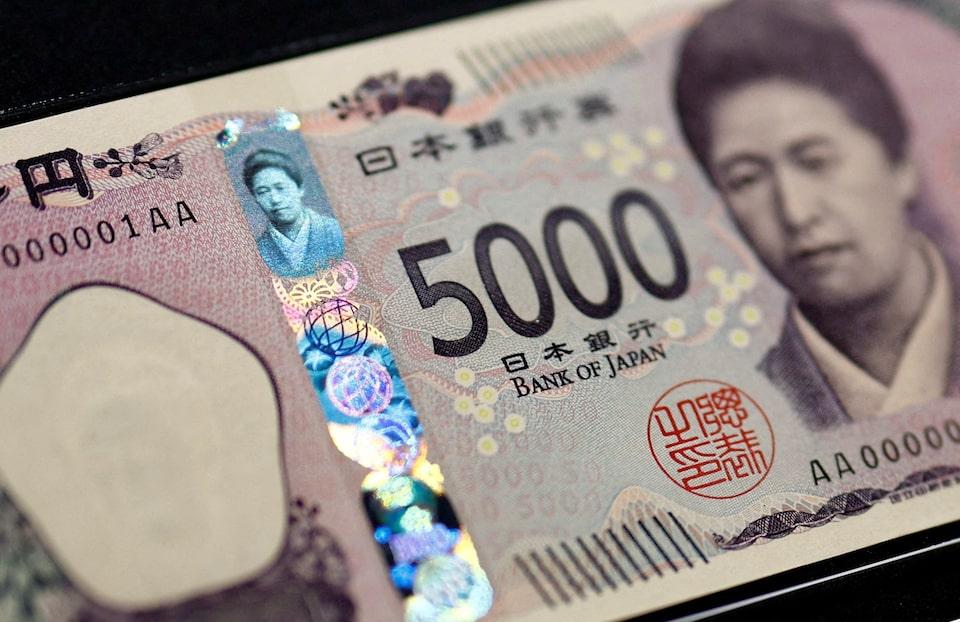
Dollar eyes worst week in over a year Yen higher after BOJ hike rates Euro, sterling up 2% against greenback on the week NEW YORK, Jan 24 (Reuters) - The dollar fell on Friday and was on track for its worst week in more than a year on expectations that tariffs enacted by U.S. President Donald Trump will be lower than previously feared and unlikely to spur an international trade war. The prospect of high tariffs on goods from countries including China, Canada, Mexico and the euro zone has raised concerns about a renewed bout of inflation, which has helped to send Treasury yields and the U.S. dollar higher in recent months. But that move partially reversed this week as traders bet that tariffs may not be as large or as widespread as previously feared. Trump said on Thursday that his conversation with Chinese President Xi Jinping last week was friendly and he thought he could reach a trade deal with China. “People are less and less convinced that the tariffs are coming,” said Adam Button, chief currency analyst at ForexLive in Toronto. The dollar index was last down 0.64% at 107.45. It reached 110.17 on Jan. 13, the highest since November 2022. It is on track to lose 1.79% this week, the biggest weekly fall since November 2023. The Chinese yuan also got a lift on the back of Trump's remarks, with the onshore unit rising to its strongest level in eight weeks at 7.2363 per dollar. Trump also said on Thursday that he wants the Federal Reserve to cut interest rates, before the U.S. central bank is due to meet next week. The Fed is expected to keep rates unchanged when it concludes its two-day meeting on Wednesday, though investors will be watching for any clues that a rate cut could come in March if inflation continues to ease closer to the U.S. central bank’s 2% annual target. Data on Friday showed that U.S. business activity slowed to a ninth-month low in January amid rising price pressures, while separately U.S. existing home sales increased to a 10-month high in December. U.S. consumer sentiment also weakened in January for the first time in six months amid worries about the labor market and potential higher prices for goods if Trump's new administration presses ahead with planned tariffs on imports. Some of the retrace in the greenback this week was likely due to technical reasons, after its 10% rise since the end of September, said Marc Chandler, chief market strategist at Bannockburn Global Forex in New York. "A lot of good news for the U.S. is priced in," Chandler said. A test for dollar strength may come next week if the Fed holds rates steady and the European Central Bank, Bank of Canada and Swedish Riksbank all cut rates, he added. The euro rose 0.76% to $1.0494. It is on pace for a 2.18% weekly gain, its best week since July 2023. The single currency was boosted by a survey showing that euro zone business began the new year with a modest return to growth as stable services activity in January was complemented by an easing of the long-running downturn in manufacturing. The yen was up slightly in choppy trading after the Bank of Japan raised interest rates on Friday to their highest since the 2008 global financial crisis and revised up its inflation forecasts. BOJ Governor Kazuo Ueda said the central bank will keep raising interest rates as wage and price increases broaden but offered few clues on the timing and pace of future rate hikes. The dollar was last down 0.11% on the day at 155.88 yen . Sterling advanced 1.04% to $1.2479 and was poised for a rise of 2.58% for the week, following three straight weeks of losses. In cryptocurrencies, bitcoin gained 2.94% to $106,159.29. Trump on Thursday ordered the creation of a cryptocurrency working group tasked with proposing new digital asset regulations and exploring the creation of a national cryptocurrency stockpile, making good on his promise to quickly overhaul U.S. crypto policy. Sign up here. https://www.reuters.com/markets/currencies/yen-guard-ahead-boj-decision-dollar-set-weekly-loss-2025-01-24/
2025-01-24 05:55
China suspended syrup and premixed powder imports from Thailand in December Thailand is the world's second-largest sugar exporter and main supplier to liquid sugar to China Trade groups implore Thai government to speed up negotiations Ban could cut demand for Thai sugar, impact domestic prices BANGKOK, Jan 24 (Reuters) - Thai businesses are expected to incur up to 1 billion baht ($29.5 million) in losses from China's ban on sugar syrup and premixed powder exports from the Southeast Asian nation, with shipments left stranded in Chinese ports, industry group said. China suspended imports of syrup and premixed powder from Thailand - the world's second-largest sugar exporter - in December because of concerns over factory hygiene. "Initially, we estimated the damage at 300 million to 400 million baht, but now it should be one billion," Todsaporn Ruangpattananont, president of the Thai Sugar Product Association, told Reuters. Todsaporn, whose association represents 44 sugar mills that mainly supply to China, said he had written a letter to the Thai government to speed up negotiations with Chinese authorities. "The sugar is in Chinese ports, we pay fines every day," he said. Thailand was China's main supplier of liquid sugar last year with shipments of more than 1.2 million metric tons, according to supply chain services company Czarnikow. The ban weighed on global prices earlier this month, with white sugar futures on the ICE exchange at their lowest in three years. Todsaporn said that he believed one reason for the ban was that Chinese authorities were seeking to protect local sugar producers, due to rising imports from Thailand. "To make claims about the quality of our sugar doesn't make sense at all," he said. "In the past, there has never been evidence of problems with the quality of our products." Chinese authorities have asked Thailand to inspect dozens of factories before opening negotiations to lift the ban because of concerns over factory hygiene, Thai officials said last week. The government sent a list of Thai factories with licenses from the Thai Food and Drug Administration, together with details of existing food safety regulations, to China on Jan. 14, two Thai officials told Reuters. The officials declined to be named because they are not authorised to speak to media. Rangsit Hiangrat, a director at the Thai Sugar Millers Corporation, which has 46 sugar mills nationwide, said his group had also urged the Thai government to accelerate negotiations. "Thai sugar factories have certified standards and export to the world," he said, adding that many factories were ready for inspections. If the ban isn't lifted, it could cut demand for Thai sugar by one million metric tons this year - the same amount used in making sugar syrup and premixed powder, a mixture of sugar and other food ingredients, last year, according to Todsaporn. "It will definitely affect domestic prices," he said. "We won't buy more sugar as our warehouses are overflowing with sugar." ($1 = 33.93 baht) Sign up here. https://www.reuters.com/markets/commodities/thailand-lose-29-million-chinas-syrup-import-ban-industry-group-says-2025-01-24/

2025-01-24 05:43
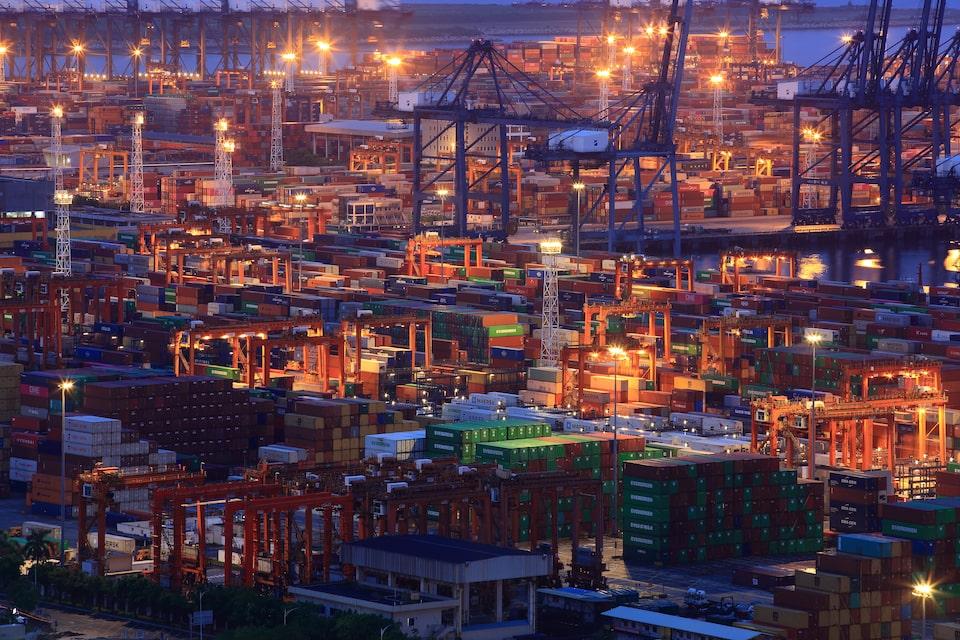
China's Yantian port congested, truck driver says Port steps up container handling Trump tariff threat pushes exporters to ship BEIJING, Jan 24 (Reuters) - Exporters this week jostled to load and ship cargo from Shenzhen's Yantian Port, one of the world's largest container ports, before an eight-day Lunar New Year holiday and ahead of a potential wave of U.S. tariffs on Chinese goods. Yantian, which handles one-third of Guangdong's international trade and one-quarter of China's exports to the United States, already increased the daily quota on containers by 15% to 15,000 units during Jan. 20-28, the port said in a statement on Wednesday. It took Li Guoliang, a truck driver, two hours on Thursday evening to transport a loaded container to a container yard at the port - quadrupling the time he spends on normal days. "The major reason is that factories rushed to ship before the holiday, and limited container quota at the port and space at container yards resulted in the congestion," Li told Reuters. Another truck company told Reuters that a driver was stuck in the port area for more than 24 hours on Thursday. U.S. President Donald Trump said on Tuesday that his administration was discussing a 10% punitive duty on Chinese imports, with Feb. 1 a potential deadline for a decision, which could hurt U.S. demand for Chinese products. The Chinese commerce ministry said on Thursday that China was willing to work with the United States to promote stable and healthy development of economic and trade ties, when asked about Trump's threat of fresh tariffs. Chinese factories and U.S. buyers had taken action long before Trump took office earlier this week. Some U.S. companies had frontloaded shipments of toys, furniture and electronics, and built up inventories ahead of any new Trump tariffs, driving China's exports to the U.S. in December. In 2024, container throughput at Yantian grew nearly 7% year-on-year to a record 17.365 million standard containers. That was in line with the 14.6% jump in Shenzhen's exports last year to a new all-time high of 2.81 trillion yuan. As the congestion at Yantian Port worsened this week, trucking fees rose, denting exporters' bottom line. Trucking fees from Shenzhen's Fuyong, a logistics hub, to Yantian Port rose to more than 2,500 yuan ($345) from 1,000 yuan prior. Due to congestion at Yantian, there may also be an additional container drop-off fee of more than 1,000 yuan. Li said Trump's tariff threat was to be blamed for the congestion. "If there is no relation, why wouldn't the factories ship the goods after the LNY holidays?" ($1 = 7.2551 Chinese yuan renminbi) Sign up here. https://www.reuters.com/world/china/major-chinese-port-hit-by-congestion-ahead-holiday-trump-tariff-threat-2025-01-24/
2025-01-24 05:38
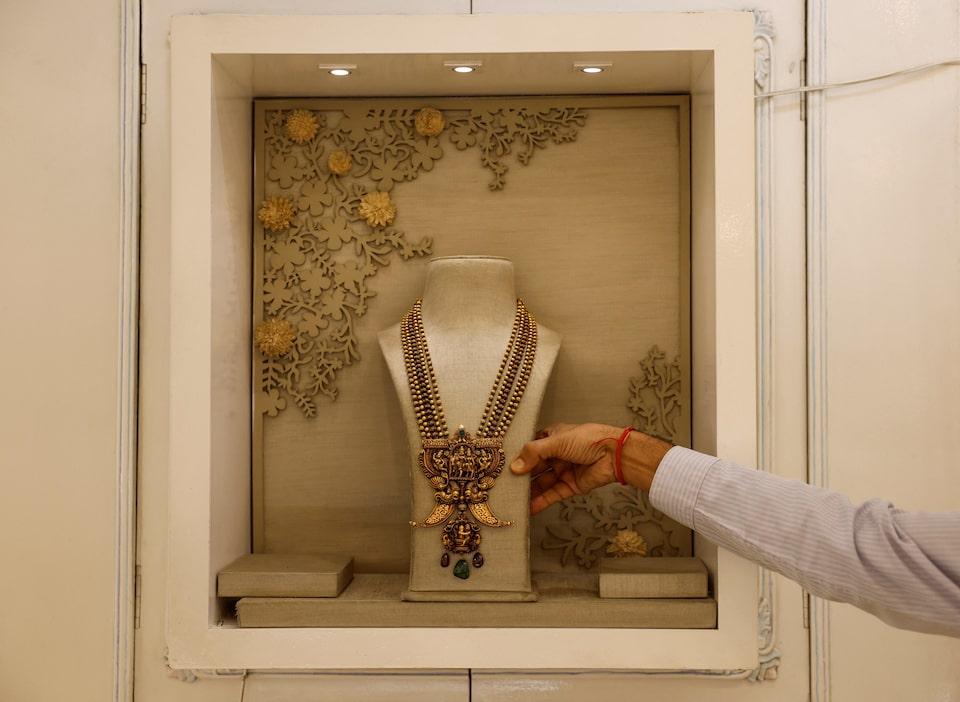
Gold trading just $17.3 below all-time peak Dollar hits an over one-month low Traders expect the Fed to leave rates unchanged next week All precious metals poised for weekly gains Jan 24 (Reuters) - Gold prices climbed over 1% on Friday, closing in on its all-time-high hit in October, as a weakening dollar on U.S. President Donald Trump's push for lower rates and tariff uncertainty drove the metal towards its fourth straight weekly rise. Spot gold was up 0.7% at $2,772.79 per ounce by 01:42 p.m. ET (1842 GMT). The prices, which have added 2.7% so far this week, are a mere $17.3 away from the record high of $2,790.15 hit on Oct. 31. U.S. gold futures settled 0.5% up at $2,778.90 per ounce. "One factor certainly seems to be the drop in the U.S. dollar... some of the biggest factors that are driving it are associated with (President Trump) talking tariffs," said Bart Melek, head of commodity strategies at TD Securities. "(Trump) is at risk of elevating prices and I think the gold market perceives perhaps a higher inflation and possibly a central bank that's more accommodative." In this climate of uncertainty, zero-yield gold continued to shine as a reliable hedge against inflation and instability, while it remains particularly appealing in a low-interest-rate environment. At the World Economic Forum on Thursday, Trump called for an immediate reduction in interest rates. The dollar (.DXY) , opens new tab hit an over one-month low, making bullion less expensive for foreign buyers. "Focus has now shifted to Feb. 1 in terms of tariff or trade policy announcements, with less focus on the Jan. 29 Fed meeting," Standard Chartered said in a note. Trump has said tariffs on Mexico, Canada, China and the European Union could be announced on Feb. 1. A short-covering rally has boosted spot prices, but ETF flows remain choppy ahead of the Fed meeting, the bank noted. Traders expect the Fed to leave rates unchanged at next week's meeting. Spot silver was up 0.8% at $30.67 per ounce and platinum rose 0.6% to $948. Palladium gained 0.1% to $992.75, hitting its highest since November 25. All were poised for weekly gains. Sign up here. https://www.reuters.com/markets/commodities/gold-jumps-near-all-time-high-set-weekly-gain-2025-01-24/
2025-01-24 05:32
A look at the day ahead in European and global markets from Tom Westbrook A rate hike in Japan added momentum to a tide of dollar selling in the Asia session, as the first week of Donald Trump's presidency has turned out to be less aggressive on the trade policy front than many in the markets had expected. The dollar is down about 1.7% on the euro this week and a touch further on sterling . The dollar index is down 1.5%. Tariffs are seen as positive for the dollar because the U.S. is a big importer and, in theory, if exporting countries can't find alternative customers, they may weaken their currencies to offset the trade levy and preserve market share. Tariffs do sound as though they are coming, but the rough conclusion from a few days of Trump's second term seems to be that they will be subject to negotiation. In a Fox News interview, Trump said he would rather not use tariffs against China and that a phone call with Chinese President Xi Jinping last week was friendly. Trump had earlier told the World Economic Forum in Davos, via video link from Washington, that he wanted the U.S.-China trade relationship to be "fair". "We don't have to make it phenomenal," he said. Hong Kong's Hang Seng (.HSI) , opens new tab was up 1.8% through the morning session. China's yuan hit a six-week high against the dollar. The China-sensitive Australian dollar hit a five-week peak, and MSCI's index of Asian emerging market currencies (.MIMS00000CUS) , opens new tab was heading for its largest one-week percentage gain in 18 months. The Bank of Japan lifted short-term interest rates to 0.5%, their highest in 17 years. Although the move was expected, traders pushed the yen about 0.6% higher to 155.12 per dollar. The focus now moves over to a news conference by BOJ Governor Kazuo Ueda at 0630 GMT. British and European PMI figures are due later in the session, with services seen outpacing manufacturing. Futures indicate a broadly steady open for Wall Street, putting the S&P 500 (.SPX) , opens new tab - which notched a record closing high on Thursday - on course for a weekly gain. Key developments that could influence markets on Friday: - British and European PMIs Sign up here. https://www.reuters.com/markets/europe/global-markets-view-europe-2025-01-24/