2025-01-23 11:22
KYIV, Jan 23 (Reuters) - Ukraine's largest oil company, Ukrnafta, increased oil output by 0.6% to 1.418 million metric tons last year, CEO Serhiy Koretsky said on Thursday. The company also increased gas output by 6.5% to 1.17 billion cubic metres (bcm). "Despite prolonged power outages that limited oil production, the company managed not only to compensate for the natural decline, but also to increase oil and gas output," he said on Facebook. Ukraine's state-run Naftogaz oil and gas company said last week that it had increased natural gas production to 13.9 bcm in 2024, up from 13.2 bcm in 2023. Naftogaz owns 50% plus one share of Ukrnafta. Sign up here. https://www.reuters.com/business/energy/ukraines-ukrnafta-increased-oil-output-by-06-2024-says-ceo-2025-01-23/

2025-01-23 11:18
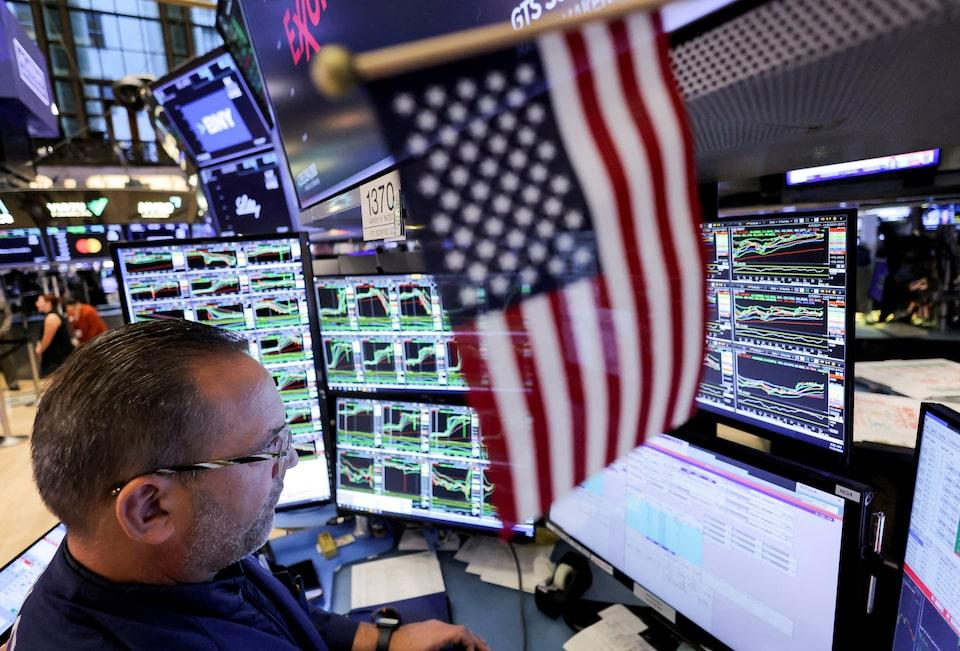
A look at the day ahead in U.S. and global markets from Mike Dolan After a frenetic first three days of the new Donald Trump presidency, buoyant Wall Street stocks hovered near new record highs - gradually turning attention back to a punchy corporate earnings season and economic updates. Wednesday's tech-led jump in U.S. equity indexes, infused by Trump's plan to boost investment in artificial intelligence and impressive Netflix results, saw the S&P500 (.SPX) , opens new tab clock a new intraday record and volatility gauges (.VIX) , opens new tab subside to the lowest of the year so far. Stock index futures stepped back a touch overnight and Treasury yields ticked higher in the renewed "risk on" environment, despite brisk demand for the latest sale of 20-year bonds on Wednesday. One of the background features of the week so far has been how heavy sovereign debt sales across developed markets have been met with robust orders from investors - easing some early-year fears about government funding. Aside from the 20-year bond sale, bond auctions in Britain, France and elsewhere have been gobbled up by fixed income funds. Benign inflation readings from the United States, Canada and Europe have helped and, at 46 basis points, the estimated "term premium" embedded in 10-year Treasuries has slipped back to its smallest of the year. Also helping has been the retreat in U.S. crude oil prices to two-week lows, in part due to Trump's pro-drilling push. On Monday the new president declared a national energy emergency, aimed at giving him the authority to reduce environmental restrictions on energy infrastructure and projects and ease permitting for new transmission and pipeline builds. TRUMP TALKS TO DAVOS There was not much new on Trump's new tariff push overnight. Despite statements on possible new tariffs on China, the European Union, Canada and Mexico prior pledges on "Day One" hikes have not materialised - leaving the issue lingering over the weeks ahead. Instead on Wednesday, Trump turned his attention to Russia, saying he would add new tariffs to his sanctions threat against Moscow if the country does not make a deal to end its war in Ukraine. All eyes will be on Trump's virtual appearance at the World Economic Forum in Davos at 11:00 a.m. ET. On Wall Street, Thursday brings a return of economic updates after a data-starved week so far, and weekly jobless claims numbers will be watched closely again later, with the first sweep of January business surveys also about to unfold. The day's earnings diary is topped by Texas Instruments and General Electric, with markets now bracing for next week's updates from Big Tech megacaps of the so-called Magnificent Seven. Overseas, Chinese stocks (.CSI300) , opens new tab perked up a bit after Beijing announced further measures on Wednesday to bolster the market there - although tariff threats limited any gains. Under the plan jointly released by six financial regulators including the securities regulator, big state-owned insurance companies will be directed to raise the size and proportion of their investments in Chinese A-shares traded on the mainland and equity funds. But overseas appetite for China risk looks tentative at best. More than half the American businesses in China, the most in five years, say they are concerned about a further deterioration in the bilateral relationship between the world's two largest economies, a survey published on Thursday showed. In Europe, stocks (.STOXX) , opens new tab also retained much of their gains to new records - with another European Central Bank interest rate cut next week now widely expected and ECB officials seemingly comfortable with market pricing for more cuts. A more hawkish Norwegian central bank held its key policy rates unchanged on Thursday, as expected. The dollar (.DXY) , opens new tab traded in narrow ranges against major peers. Japan's yen was flat at 156.49 per dollar with markets pricing 96% odds of a quarter-point Bank of Japan hike on Friday and seemingly now comfortable with the latest tightening after months of trepidation about the move. With another month of sub-target inflation recorded last month, the Bank of Canada is also seen as likely to reduce rates by a quarter point next Wednesday Key developments that should provide more direction to U.S. markets later on Thursday: * U.S. weekly jobless claims, Kansas City Federal Reserve's January business survey; euro zone January consumer confidence; Canada November retail sales * U.S. corporate earnings: Texas Instruments, General Electric, CSX, Northern Trust, Union Pacific, Intuitive Surgical, McCormick, Elevance * World Economic Forum in Davos - including Bank of Spain governor Jose Luis Escriva, German Finance Minister Joerg Kukies and Argentina President Javier Milei Sign up here. https://www.reuters.com/markets/us/global-markets-view-usa-2025-01-23/
2025-01-23 11:14
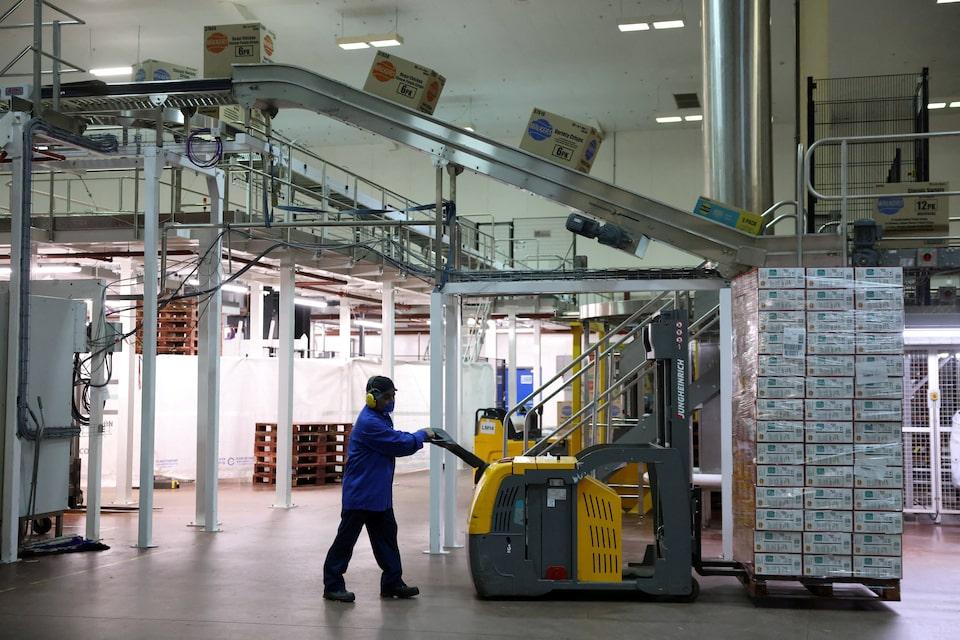
Jan 23 (Reuters) - A sharp downturn in British factories eased only slightly in January and optimism among manufacturers sagged to its lowest level in over two years, an industry survey showed on Thursday. The Confederation of British Industry's monthly order book gauge improved in January to -34 from -40 in December, which had been a more than four-year low. The CBI's quarterly gauge of business optimism fell in the first quarter of 2025 to its lowest level since late 2022. "Manufacturers have entered the new year in a grim mood. Confidence has evaporated over the last three months as orders have dropped," said Ben Jones, lead economist at the CBI. "A fall in domestic deliveries comes amid widespread concerns over the impact of the increase in National Insurance contributions, minimum wages and changes to employment law on firms’ operating costs," Jones said. British finance minister Rachel Reeves increased social security contributions employers must pay in her first budget announcement in October. The CBI said price expectations from manufacturers also increased in January to their highest level since April 2024. The survey was based on the responses of 343 manufacturers and was conducted between Dec. 19 and Jan. 13. Sign up here. https://www.reuters.com/world/uk/severe-uk-factory-downturn-eases-marginally-january-cbi-says-2025-01-23/
2025-01-23 11:10
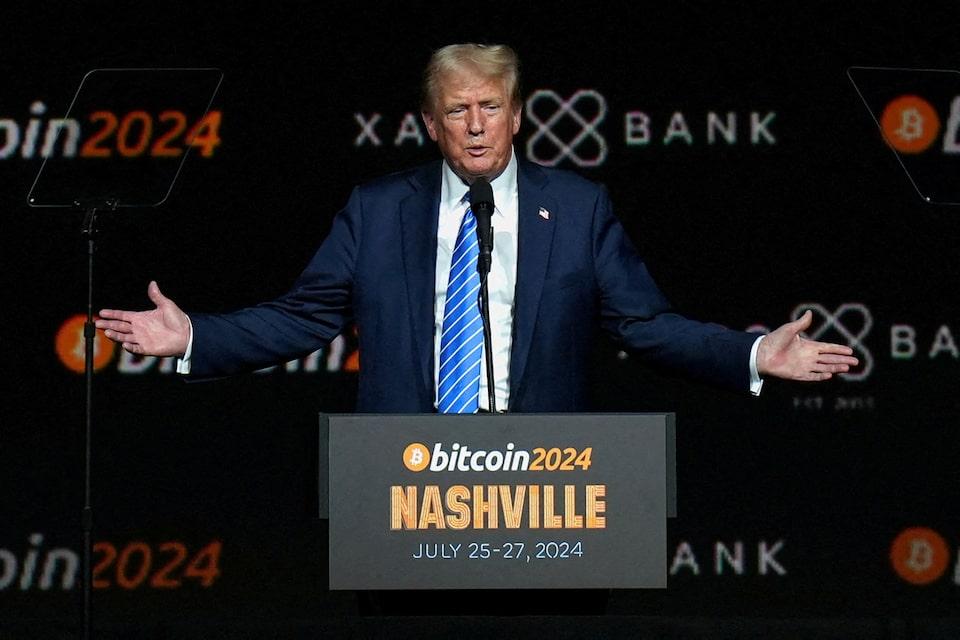
World Liberty Financial raised at least $300 mln-Reuters calculations Trump and affiliates stand to receive 75% of company revenue Purchases motivated by Trump's involvement, investors say NEW YORK/LONDON, Jan 23 (Reuters) - On Sunday, just before Donald Trump's inauguration, crypto investor Mike Dudas bought more than $145,000 worth of tokens from World Liberty Financial, a fledgling crypto company partly owned by the U.S. president. Unlike typical crypto investments, the World Liberty Financial tokens give their holders a vote on decisions about product features and marketing. Crypto tokens such as bitcoin and ether can be used for payments or developing applications. Dudas said he invested because he was friendly with the project's advisers and was excited about their plan to make decentralized finance (DeFi) more accessible. DeFi is a financial network run on crypto, without traditional gatekeepers like banks. "I think they'll appreciate greatly in value," Dudas told Reuters, explaining why he bought the tokens. "I believe a Trump DeFi company can be worth very much and that the public sale price was attractive." Reuters has identified five others--in locations including Gibraltar and Puerto Rico--who have bought millions of $WLFI tokens, based on interviews and data from Singapore-based blockchain analysis firm Nansen. To identify these people, Reuters reviewed the data from Nansen - which uses algorithms, investigations and user submissions to pinpoint the people behind anonymous crypto wallets. Reuters then confirmed their investments through interviews and analysis of public comments on social media. A primary draw for some of them: the connection with Trump, according to interviews with Dudas and two other investors. World Liberty Financial is "directly connected to our new crypto president Donald Trump," said Sigil Fund, a Gibraltar-based fund whose chief investment officer is one of the investors. The CIO, who goes only by the pseudonym "Fiskantes," spent 40 ether tokens, worth around $130,000 on Wednesday on $WLFI tokens, it said via email. "Fiskantes did ape some WLFI," the fund said, using a slang term popular in the crypto world for investing in new projects without doing due diligence. World Liberty Financial was announced just two months before the U.S. election by Trump, his three sons and one of his top advisors, the billionaire real estate businessman Steve Witkoff. The firm has so far raised at least $300 million selling the tokens, known as $WLFI, according to Reuters calculations based on World Liberty's website and its social media posts. Trump’s crypto ventures, including a meme coin known as $TRUMP that has become worth $7.7 billion in just a few days, are raising concerns among ethics experts, market participants and others about the dangers of conflicts of interest and potential of influence over the administration. Trump has long licensed out his name to sell everything from steaks to condos to real estate courses, such as at the now-defunct Trump University. Ethics experts said Trump does not appear to have violated any laws. While federal rules prohibit executive branch employees from being involved in policy issues that will affect their financial interests, that law does not apply to the president or vice president. The Trump administration, the Trump Organization, World Liberty Financial and Steve Witkoff, who is Trump's special envoy to the Middle East, did not respond to requests for comment. SUN IS BUYING So far, Justin Sun, the Chinese-born crypto entrepreneur who founded the blockchain network Tron, has emerged as the most prominent buyer of the token, spending at least $75 million, according to his posts on X. Sun's purchase into an entity where Trump directly benefits financially has raised concerns about potential conflicts of interest and ethics due to Tron's alleged use by militant groups and pending charges against him by U.S. securities regulators. The purchases by Tron have come as World Liberty Financial has made its own acquisitions of Tron's token. On Monday, World Liberty Financial said on X that to commemorate Trump's inauguration it had made "strategic purchases" of crypto tokens, including TRX, Tron's cryptocurrency. World Liberty Financial now holds 30 million TRX valued at $7.43 million, according to crypto analytics firm Arkham Intelligence. On Wednesday, Sun posted on X: "In my view, if I have made money in cryptocurrency, all credit goes to President Trump." Since Sun first purchased the WLF tokens on November 25, and WLF's announcement the next day that Sun was now a World Liberty Financial advisor, Tron's price has increased 29% to 25 cents, although that is far off its December high of 43 cents. World Liberty Financial and Sun did not immediately respond to requests for comment on the recent dealings. BIG REWARDS? Trump and other unnamed affiliates are set to reap 75% of some World Liberty Financial revenues and own about 22.5 billion $WLFI tokens through subsidiaries. The project had by Wednesday sold another 22 billion of its tokens to investors. It is not clear how much of that money, if any, goes to Trump, according to World Liberty's "gold paper" listed on its website. Unlike factories and warehouses, the costs in setting up crypto companies is negligible, said Jeff Hauser, director of the nonprofit Revolving Door Project, which scrutinizes executive branch employees. "So political investment is the way to influence it." Trump said earlier this month he will hand over daily management of his business assets to his children on entering the White House. Asked on Tuesday whether he would continue to sell products such as his $TRUMP coin that debuted over inauguration weekend and that could that benefit himself while president, Trump said: "I don't know much about it other than I launched it. I heard it was very successful. I haven't checked it. Where is it today?" Dudas, who founded crypto media outlet The Block, bought 9.7 million of the tokens at 1.5 cents each, according to blockchain records he shared with Reuters. The World Liberty Financial tokens cannot be resold to other investors. When asked if he worried about the prospect of any conflict of interest, Dudas rejected the idea. "This is very different from a meme coin in the President's name," said Dudas, referring to the $TRUMP coin brandished with an image from the President's assassination attempt. Dudas stressed that World Liberty was about the future of decentralized finance. Once a Democrat but now a registered Independent, Dudas said he donated to Republicans during the last election cycle, citing what he described as the Biden administration's hostility to the crypto industry. THE INVESTORS The sales of the tokens are recorded anonymously on the blockchain, the public ledger that underpins crypto transactions. Nansen identified a number of other holders which Reuters could not independently confirm. Reuters also could not ascertain the number of individual holders of the token. Tron’s Sun is the largest outside investor in the token, according to this analysis. In 2023, the SEC charged Sun with fraud linked to crypto trading and hiding payments to celebrities to promote his companies. The case is pending. The Swiss-based entrepreneur has said the SEC charges "lack merit." He did not respond to a request for comment. The SEC did not respond to a request for comment. Another buyer of the tokens is Troy Murray, a crypto entrepreneur based in Puerto Rico, according to the Nansen data. Murray bought about 666,000 $WLFI tokens, the data show. In 2023, Murray was hit by the SEC with a cease-and-desist order over a blockchain company he developed for selling complex investments via crypto asset vehicles, in violation of securities laws. The case was settled that year. "I was curious about the legal structure they set up around selling the tokens, and once I had gotten through all the steps I kind of figured, why not?" Murray told Reuters in a message on X, adding the "whynot" emoji. Sign up here. https://www.reuters.com/technology/trump-connection-why-some-bought-world-liberty-financial-tokens-2025-01-23/
2025-01-23 11:05
Brazil's debt hits worst composition in 20 years Floating-rate bonds exposing debt to interest rate shocks surge Further rate hikes expected, escalating debt pressures BRASILIA, Jan 23 (Reuters) - Investors already concerned about Brazil's ballooning public debt load under veteran leftist President Luiz Inacio Lula da Silva are being forced to reckon with an additional risk: a government debt profile with growing sensitivity to high interest rates. That's because Latin America's largest economy finances an unusually high portion of its debt through floating-rate bonds crafted to appeal to investors during times of market stress, a tool its Treasury was forced to lean on heavily last year, leaving the debt with its worst composition in 20 years. The rate sensitivity of Brazil's debt is poised to accelerate as the country's central bank aggressively tightens money supply to combat inflation, overshadowing improvements in the primary budget balance. No major country carries as much debt in floating-rate bonds as Brazil. Issuance of these instruments, known as LFTs, was the highest ever last year and their share of the total debt also rose by a record margin. Interest rate shocks now threaten to drive up the cost of servicing nearly half of the country's already large debt. "In the past year, interest rates rose. And with LFTs, you pay that cost right off the bat," said former Treasury Secretary Paulo Valle, adding this implies a riskier and, therefore, deteriorated debt composition in the eyes of rating agencies. With a heated economy and external and local uncertainties keeping Brazil's currency weak, the central bank has already signaled two more 100 basis-point increases to the Selic benchmark rate to battle inflation, which would lift it to 14.25% by March. Last year, demand for LFTs was boosted by market volatility amid shifting expectations for U.S. interest rates and growing fiscal concerns over Brazil's debt trajectory. The negative sentiment deteriorated further after Lula presented a spending control package that disappointed markets in November, following a kick-off of his third non-consecutive term in 2023, with surging expenses related to social benefits, increases to the minimum wage and public sector salaries. By November, the LFT's share of total debt had posted a year-to-date jump of a record 6.5 percentage points, accounting for 46.1% of Brazil's total debt. December data is expected to show an extension of that rise, the Treasury acknowledged to Reuters, putting the instrument's year-end share of total debt on course to be the highest since 2004. While the debt composition mirrors that of two decades ago, gross debt is nearly 20 percentage points higher at 77.8% of GDP in November, meaning debt servicing applies to a larger stockpile. As a result, despite a narrowing primary deficit in 2024, Brazil's nominal deficit is projected to approach 8% of GDP, the highest among major emerging economies and the most burdened by interest costs. This debt expansion pattern is expected to persist even if the government meets its zero primary deficit target this year, with Itau projecting the nominal deficit to deepen to 9.9% of GDP by 2026. The Treasury said that debt management in 2024 considered the prevailing economic scenario, demand conditions, and market dynamics. It hopes to gradually replace floating-rate bonds with fixed-rate and inflation-indexed securities. The government's 2025 debt strategy, due to be unveiled later this month, is expected to continue relying on floating-rate bonds amid local fiscal woes and global concerns over U.S. President Donald Trump's policies, even as borrowing costs are seen tightening further. As inflation expectations keep drifting from the 3% official target, economists are increasingly forecasting the Selic rate to surpass 15% this year, with market bets reflected in the yield curve suggesting it could exceed 16% by November. For Carlos Kawall, a partner at Oriz Asset Management and former Treasury Secretary, the government's fiscal framework has clearly proven inadequate to stabilize debt growth, with political unwillingness to pursue fiscal adjustment spilling over into LFT growth and accelerated debt expansion. "Debt management is a passenger in the government's misguided fiscal policy strategy," said Kawall. "You can't fix the consequences without addressing the cause." Sign up here. https://www.reuters.com/markets/rate-sensitivity-haunts-already-elevated-brazil-public-debt-2025-01-23/

2025-01-23 10:52
Budget likely to allocate over $20 bln for agriculture Focus on boosting crop yields to raise farm income, curb inflation India aims to boost farm exports to over $80 billion by 2030 NEW DELHI, Jan 23 (Reuters) - India plans to increase spending for the agriculture sector by about 15% to around $20 billion in next month's budget, two government sources said, marking the biggest increase in six years, as it tries to boost rural incomes and curb inflation. The additional cash would be directed to developing high-yielding seed varieties, increasing storage and supply infrastructure, and boosting production of pulse crops, oilseeds, vegetables, and dairy products, the sources said. The sources asked not to be named as they were not authorised to talk to the media. India's finance and agriculture ministries did not respond to emails seeking comments. India, the world’s second-largest producer of rice, wheat, and sugar, has grappled with high food prices, which surged past 10% year-on-year in October 2024. They have since eased slightly and have averaged over 6% in the last decade. To try to curb price rises, New Delhi has imposed export restrictions on some farm products, including wheat, and has extended duty free import policy , opens new tab for some pulse varieties. Total allocations for agriculture and allied activities in the 2025/26 fiscal year starting April are likely to increase to about 1.75 trillion rupees ($20.2 billion), up from 1.52 trillion rupees in the current fiscal year, said the sources familiar with budget discussions. This includes a rise in the agricultural ministry's budget from 1.23 trillion rupees, and higher spending on research to develop new varieties, which currently stands at 99.41 billion rupees, one of the sources said. The second source said agriculture was one of the priorities of the budget that Finance minister Nirmala Sitharaman will present on Feb. 1. The same source said the government was seeking not just to increase domestic supplies but to generate a surplus sufficient to increase farm exports to $80 billion by 2030, up from the current $50 billion. Agriculture employs nearly 45% of India's workforce and contributes nearly 15% to the $3.5 trillion economy. The budget is also expected to increase the limit for subsidised farm loans to 500,000 rupees from 300,000 rupees per farmer and expand crop insurance, the second source said. The government plans to boost pulse production to 30 million metric tons by 2030, and invest $9 billion in the fisheries sector over the next five years, both sources said. The plans also include providing incentives totalling 109 billion rupees for food processing firms through 2027. The likely announcements would fall short of addressing deeper issues including low productivity and stagnant farm incomes, Devinder Sharma, an independent farm policy analyst, said. "The government should increase direct transfers to farmers and improve procurement of crops to stablise incomes and ensure fair consumer prices," he added. ($1 = 86.55 rupees) Sign up here. https://www.reuters.com/world/india/india-set-raise-farm-budget-by-over-15-biggest-increase-six-years-2025-01-23/