2025-01-23 06:08
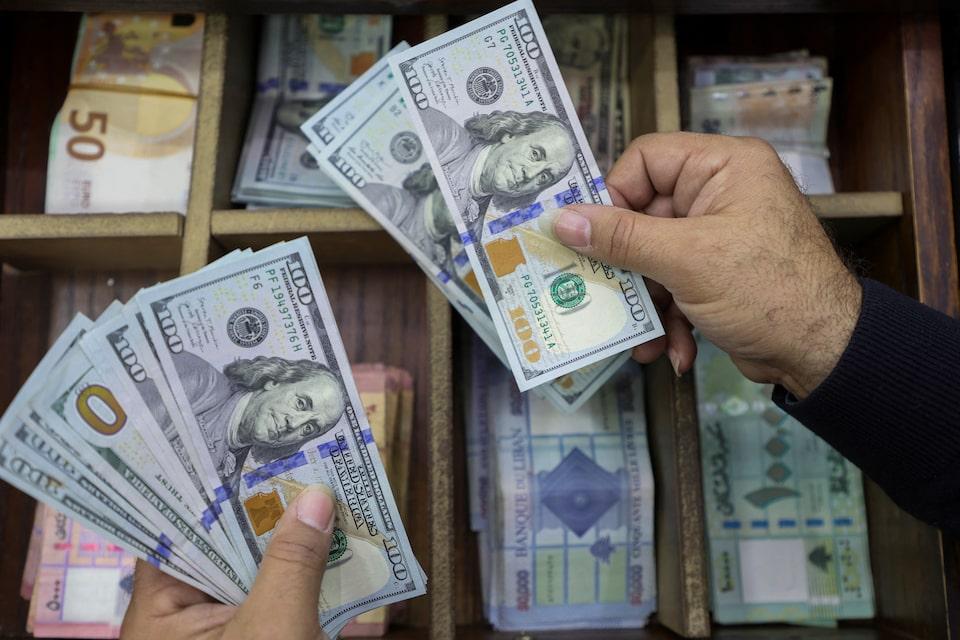
Trump calls for lower rates globally, threatens tariffs Dollar has fallen since Trump's inauguration on Monday Bank of Japan widely expected to raise rates on Friday NEW YORK, Jan 23 (Reuters) - The dollar was modestly lower on Thursday in a choppy session, after comments from U.S. President Donald Trump called for lower interest rates while providing no clarity on tariffs, and investors awaited a round of policy announcements from global central banks. The dollar is down more than 1% on the week, largely due to a sharp drop on Monday as widely expected tariff announcements from Trump failed to materialise after his inauguration. The dollar has moved only slightly in the sessions since. The greenback swung between gains and losses on the day as Trump demanded the world drop interest rates in a speech to global business and political leaders in Davos, Switzerland. He also warned they will face tariffs should they make their products anywhere but the U.S. Despite frequently mentioning tariffs, Trump again declined to give specifics of any duties he intends to put in place. "We don't have any truly certain information to go off of, so until we have a definitive answer, we'll continue to see a little more volatility," said David Eng, Investment Adviser at Sonora Wealth Group in Vancouver. "It seems like the markets are more concerned about rate cuts and any kind of greater indicator that there'll be more rate cuts." Investors are awaiting a host of policy decisions from global central banks over the next week, with the Bank of Japan widely expected to raise interest rates at the end of a two-day meeting on Friday. Rate decisions from the U.S. Federal Reserve and European Central Bank (ECB) are scheduled for Wednesday and Thursday of next week, respectively. Markets are pricing in a nearly 96% chance the ECB will cut rates at its meeting, with recent comments from the central bank's policymakers indicating a cut was likely. The dollar index , which measures the greenback against a basket of currencies including the yen and the euro, shed 0.19% to 108.06, with the euro up 0.14% at $1.0422. The greenback tumbled 1.2% on Monday in its steepest one-day slide since November 2023, as Trump's first day in office came with a slew of executive orders but no tariffs. The dollar had climbed to a more than two-year high of 110.17 on Jan. 13 on a resilient U.S. economy and expectations of widespread U.S. tariffs, which could weigh on the currencies of other countries. Data on Thursday showed new applications for U.S. unemployment benefits rose marginally last week, suggesting that solid job growth likely continued in January. Trump said this week that his administration was looking into imposing a 10% tariff on goods imported from China on Feb. 1, after he earlier said Mexico and Canada could face levies of around 25% by that date. He also promised duties on European imports, without providing details. On Monday Trump signed a trade memo ordering federal agencies to review a range of trade issues by April 1, which many market participants believe will be a key date in revealing tariff plans. Sterling strengthened 0.31% to $1.2354. The Mexican peso strengthened 0.92% versus the dollar to 20.329. The Canadian dollar gained 0.16% to C$1.435 per dollar. Canada's central bank is largely expected to cut rates at its policy meeting next week after inflation data earlier this week came in below its target rate of 2%. The Japanese yen firmed 0.33% against the greenback to 155.99. The dollar edged up 0.06% to 7.282 versus the offshore Chinese yuan . China announced plans on Thursday to channel hundreds of billions of yuan of investment from state-owned insurers into shares. Sign up here. https://www.reuters.com/markets/currencies/dollar-treads-water-trump-tariff-clarity-central-banks-awaited-2025-01-23/
2025-01-23 06:07
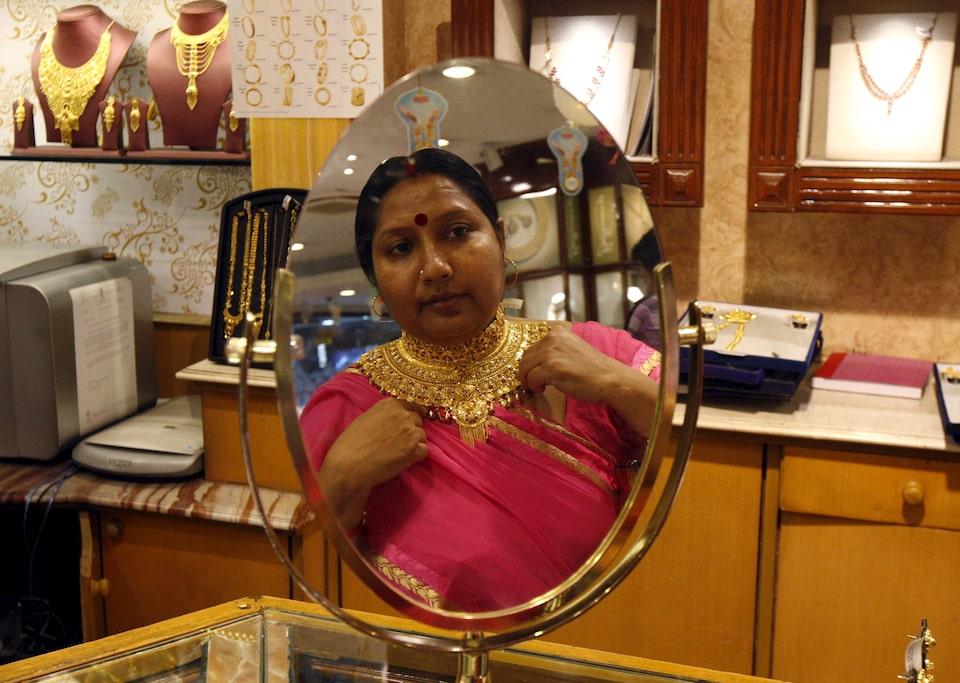
Trump says he would demand that interest rates drop immediately Fed likely to hold interest rates steady next week Jan 23 (Reuters) - Gold prices firmed on Thursday as the dollar softened following U.S. President Donald Trump's call for lower interest rates, with market attention remaining focused on the broader implications of his policies. Spot gold rose 0.1% to $2,753.19 per ounce by 03:28 p.m. ET (2028 GMT). Prices hit a more than three-month peak on Wednesday, $26.72 shy of their all-time high of $2,790.15 in October. U.S. gold futures settled 0.2% lower at $2,765. The dollar index (.DXY) , opens new tab was down 0.2%, making greenback-priced gold less expensive. "Some of it was the dollar, it was higher this morning and then sold off, so that pushed gold off its lows," said Daniel Pavilonis, senior market strategist at RJO Futures. "Today's moves are just cognizant of the direction coming out of the White House. I think part of the volatility was in anticipation of that." Speaking at the World Economic Forum, Donald Trump emphasized his commitment to reversing inflation, announcing plans to push for an immediate drop in interest rates. He also urged other nations to adopt similar measures to address global economic challenges. Non-yielding bullion thrives in a low interest rate environment. However, traders see a 99.5% chance of the U.S. Federal Reserve keeping rates unchanged at its Jan. 28-29 meeting, according to the CME Group's FedWatch Tool , opens new tab. Uncertainty about Trump's trade plans prevailed as he said tariffs on imports from Canada, Mexico, China and the European Union could be announced on Feb. 1. Lack of clarity about future policies has led to market participants flocking to safe-haven assets such as gold to hedge against volatility. "There's just so much uncertainty now, and I can imagine gold would probably pause for a little while with several other markets, to just kind of get some definition out of what is actually going to be implemented," Pavilonis added. Spot silver dropped 1.1% to $30.45 per ounce, while platinum shed 0.2% to $943.84. Trump had also threatened Russia "and other participating countries" with taxes, tariffs and sanctions if a deal to end the war in Ukraine is not struck soon. Russia is the world's largest palladium producer and a major supplier of the metal to the United States. Palladium added 1.3% to $990.31. Sign up here. https://www.reuters.com/markets/commodities/gold-eases-dollar-strength-amid-trump-policy-concerns-2025-01-23/
2025-01-23 05:48
A look at the day ahead in European and global markets from Rae Wee After drowning for days in headlines about Donald Trump's return to the White House, investors were delivered a bit of a diversion on Thursday with the announcement of new Chinese measures to boost its ailing stock market. Beijing plans to channel hundreds of billions of yuan per year from state-owned insurers' funds into the stock market, including at least 100 billion yuan ($13.75 billion) in the first half of this year, according to China Securities Regulatory Commission head Wu Qing. Chinese authorities are urgently trying to shore up their sagging stock markets, where the main benchmarks have fallen 3% so far this month despite a rise in major share markets elsewhere. China's CSI300 blue-chip index (.CSI300) , opens new tab and the Shanghai Composite Index (.SSEC) , opens new tab jumped more than 1% after the news, as did the Hang Seng Index (.HSI) , opens new tab, although they have since relinquished some of those gains. The news from China offered little support to MSCI's broadest index of Asia-Pacific shares outside Japan (.MIAPJ0000PUS) , opens new tab, which retreated on Thursday after seven straight sessions of gains. European shares also looked set for a negative open along with their U.S. counterparts, suggesting that enthusiasm over Trump's mammoth spending plans for artificial intelligence infrastructure may be ebbing after lifting shares on Wednesday. Trump offered little detail on how the $500 billion private-sector investment would be funded, although The Information reported that OpenAI and Japanese conglomerate SoftBank (9984.T) , opens new tab would each commit $19 billion to the project. The data calendar is light in Europe on Thursday. A rate decision is due from Norges Bank, which is widely expected to keep rates on hold. The Bank of Japan kicked off its two-day policy meeting on Thursday and markets have about fully priced in a 25-basis-point rate hike after hints last week by BOJ policymakers. It would likely take both the expected rate hike and an explicit promise of more hikes ahead to stop a renewed fall in the yen , which on Thursday continued to drift away from a one-month high hit early in the week. Key developments that could influence markets on Thursday: - Norges Bank rate decision - U.S. weekly jobless claims - American Airlines, General Electric earnings Sign up here. https://www.reuters.com/markets/europe/global-markets-view-europe-2025-01-23/
2025-01-23 05:20
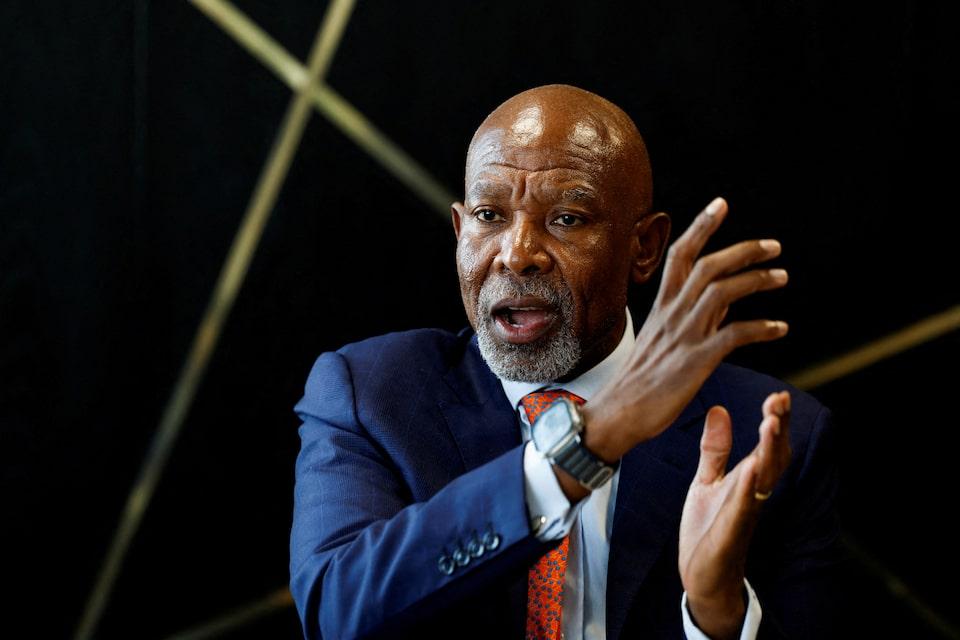
JOHANNESBURG, Jan 23 (Reuters) - The South African Reserve Bank will trim its repo rate next week by a quarter of a percentage point to 7.50% and repeat that in March, but then delay its final 25 basis point cut of the cycle to the third quarter, a Reuters poll forecast on Thursday. As U.S. President Donald Trump's new administration settles into office, South Africa's Reserve Bank was expected to ease interest rates gently this year as it awaits clarification on his proposed tariffs and other policies. All 19 economists surveyed in the past week were unanimous in saying the SARB would cut its repo rate by 25 basis points to 7.50% on Jan. 30. A slim majority in the poll said the central bank would cut by another 25 bps to 7.25% in March. Median forecasts showed the bank would wait until the third quarter to cut again by 25 bps, its last expected move this year and through 2027. In a December survey, a third cut was expected in May. Johannes Khosa, economist at the Nedbank Group Economic Unit, was one of the economists who expected only two 25 bps cuts this year to put the repo rate at 7.25% by end-2025. "We believe Trump's policies, if implemented, will be inflationary. This will cause inflation to be sticky and cause the U.S. Fed to reduce rates slower or even stop cutting. The SARB will have to follow suit, scaling down the cuts in order to maintain the interest rate differential," Khosa said. The rand weakened on Monday, after Trump announced a flurry of policy changes following his inauguration. On Tuesday, he vowed to hit the European Union with tariffs and said his administration was discussing a 10% punitive duty on Chinese imports. The U.S. Federal Reserve is due to meet next week and is expected to hold its benchmark rate steady as it also keeps an eye on Trump's administration and challenges from its own bond market. Inflation in South Africa rose for the second month in a row in December, yet at 3.0% year-on-year it was still below the mid-point of the Reserve Bank's 3%-6% comfort level. The poll suggested it would average 4.1% this year and quicken to 4.5% next year. The South African economy was expected to grow 1.7% this year and 1.9% next. "We think there's enough evidence to suggest the improvements seen in the macroeconomic backdrop will continue this year," said David Omojomolo, Africa analyst at Capital Economics. "The effects of load-shedding and logistics constraints should continue to fade, while the agriculture sector, which was a big factor behind the GDP contraction in Q3, should soon rebound," said Omojomolo. In this poll, Capital Economics was joint most bullish on growth, forecasting 2.3% for South Africa this year. (Other stories from the Reuters global economic poll) Sign up here. https://www.reuters.com/world/africa/safricas-reserve-bank-cut-rates-by-25-bps-jan-30-750-2025-01-23/
2025-01-23 05:09
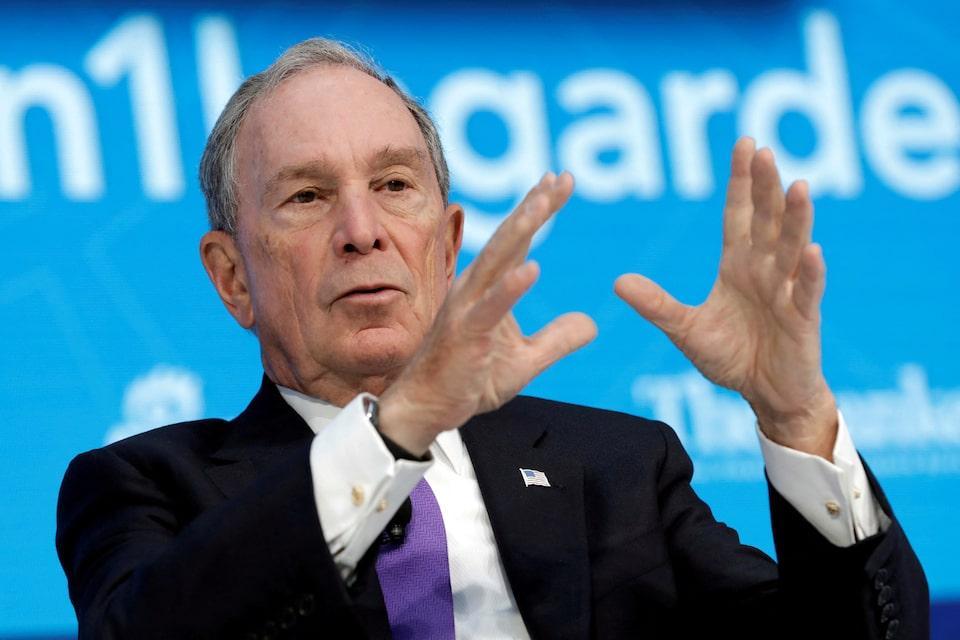
Bloomberg Philanthropies says efforts will include helping fund U.N. climate body Move follows Trump announcement U.S. again withdrawing from Paris deal Bloomberg Philanthropies will also help encourage state, local effort to meet U.S. climate goals WASHINGTON, Jan 23 (Reuters) - Former New York Mayor Michael Bloomberg's philanthropy arm said on Thursday it will provide funding to help cover the U.S. contribution to the U.N. climate body's budget, filling a gap left by President Donald Trump. The new Republican president announced after taking office on Monday that he would withdraw the U.S. from the Paris climate agreement and end the country's international climate funding. Trump had also withdrawn the U.S. from the Paris deal in his first 2017-2021 White House term. Bloomberg is a media billionaire who also serves as a U.N. special envoy on climate change. "Bloomberg Philanthropies and other U.S. climate funders will ensure the United States meets its global climate obligations," the organization said in a statement, adding this included covering the amount the U.S. owes each year to the United Nations Framework Convention on Climate Change (UNFCCC). Bloomberg Philanthropies did not give details of the amounts of funding or who the other climate funders are. The UNFCCC is the U.N.'s leading climate body. It runs annual climate negotiations among nearly 200 countries and helps implement the agreements that are made in these talks - the biggest of which is the 2015 Paris Agreement. Michael Bloomberg also pledged to work with states, cities and companies to ensure that the U.S. stayed on track with its global climate obligations. "From 2017 to 2020, during a period of federal inaction, cities, states, businesses, and the public rose to the challenge to uphold our nation’s commitments - and now, we are ready to do it again," he said in the statement. The U.S. is responsible for funding around 21% of the UNFCCC's core budget. Last year, it paid the UNFCCC a 7.2 million euro ($7.4 million) required contribution for 2024, and also paid off a 3.4 million euro arrears for missed contributions over 2010-2023. A Reuters analysis of UNFCCC documents last year found the U.N. body is experiencing a severe budget shortfall, which diplomats said had begun to disrupt parts of the world's climate dialogue. "We deeply appreciate the generous support from Bloomberg Philanthropies and the leadership shown by Mike Bloomberg," U.N. climate chief Simon Stiell said in a statement. Linda Kalcher, executive director at think-tank Strategic Perspectives, said Bloomberg's move demonstrated a willingness - also shared by some U.S. states - to step up and try to fill the gap left by the U.S. withdrawal from international climate cooperation. "This is where the other U.S. actors come in. I can foresee that a lot of interaction will happen again with the U.S. businesses and states that want to continue," said Kalcher, who is also a former climate adviser to the U.N. Secretary-General. While the UN climate body's core budget is formed of contributions from governments, other parts of its budget can accept contributions from philanthropies and other organizations. Bloomberg Philanthropies already contributed $4.5 million to the UNFCCC last year, according to U.N. public documents reviewed by Reuters. The UNFCCC's main budget lines total 240 million euros for 2024-2025, with about half of that expected to be allocated for this year. Sign up here. https://www.reuters.com/sustainability/bloomberg-philanthropy-cover-us-climate-dues-after-paris-withdrawal-2025-01-23/
2025-01-23 04:31
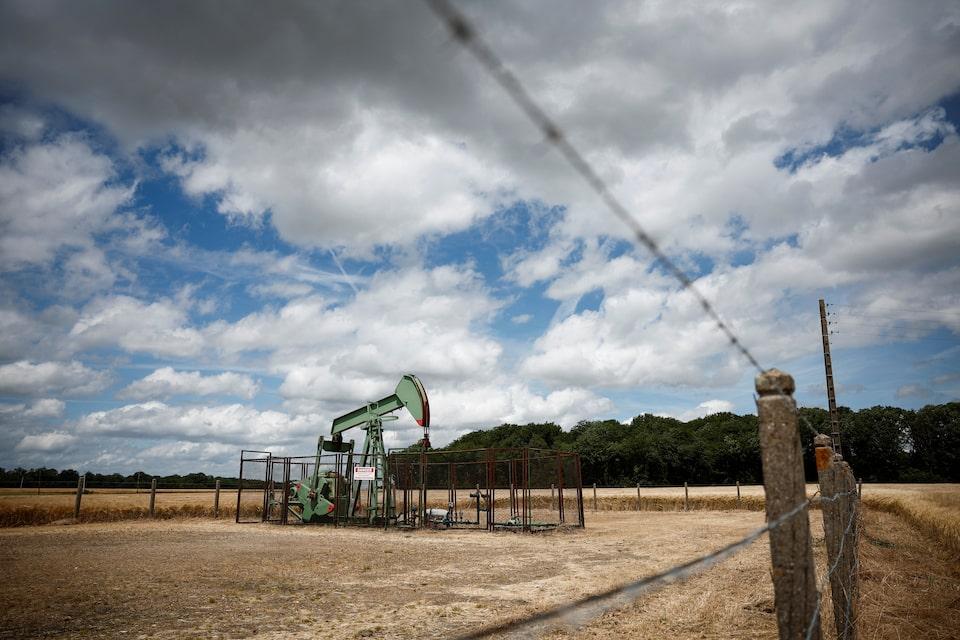
Trump says he will ask Saudi Arabia, OPEC to cut oil cost Tariffs could dampen global oil demand growth US crude and distillate stocks fell, gasoline inventories rose last week, EIA says NEW YORK, Jan 23 (Reuters) - Oil fell 1% on Thursday after U.S. President Donald Trump urged Saudi Arabia and OPEC to bring down its cost during his address at the World Economic Forum. Uncertainty over how Trump's proposed tariffs and energy policies would affect global economic growth and energy demand also weighed on prices. Brent crude futures settled 71 cents, or 0.9%, lower at $78.29 a barrel. U.S. West Texas Intermediate crude (WTI) settled down 82 cents, or 1.09%, to $74.62. Prices dipped after Trump announced he would ask Saudi Arabia and OPEC to bring down the cost of oil during his speech at the World Economic Forum in Davos, Switzerland. "Trump's call for lower oil prices will naturally be welcomed by consumers and businesses but received warily by the U.S. oil industry and other global suppliers," said Clay Seigle, senior fellow for energy security at the Center for Strategic and International Studies. The energy industry has been calling for increased investments in global oil and gas projects, but bringing down oil prices could raise concerns about the economics of new projects, he added. U.S. crude oil stockpiles slipped to their lowest level since March 2022 last week even as refining activity slowed, the Energy Information Administration (EIA) said on Thursday. But the drawdown was smaller than analysts had expected. Distillate inventories also declined, while gasoline inventories rose, the EIA said. The broader economic implications of U.S. tariffs could further dampen global oil demand growth, said Priyanka Sachdeva, senior market analyst at brokerage Phillip Nova. Trump has said he would add new tariffs to his sanctions threat against Russia if the country does not make a deal to end its war in Ukraine. He also vowed to hit the European Union with tariffs and impose 25% tariffs on Canada and Mexico. On China, Trump said his administration was discussing a 10% punitive duty because fentanyl is being sent from there to the U.S. On Monday he declared a national energy emergency intended to provide him with the authority to reduce environmental restrictions on energy infrastructure and projects and ease permitting for new transmission and pipeline infrastructure. There will be "more potential downward choppy movement in the oil market in the near term due to the Trump administration's lack of clarity on trade tariffs policy and impending higher oil supplies from the U.S.", OANDA senior market analyst Kelvin Wong said in an email. Sign up here. https://www.reuters.com/markets/commodities/oil-prices-extend-losses-uncertainty-over-trump-tariff-impact-2025-01-23/