2025-01-21 12:30
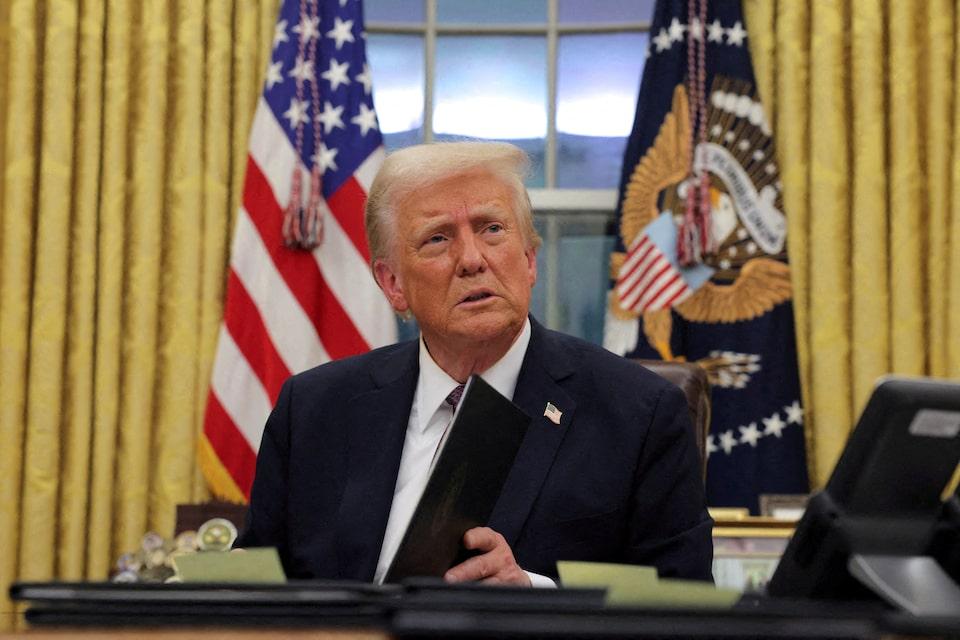
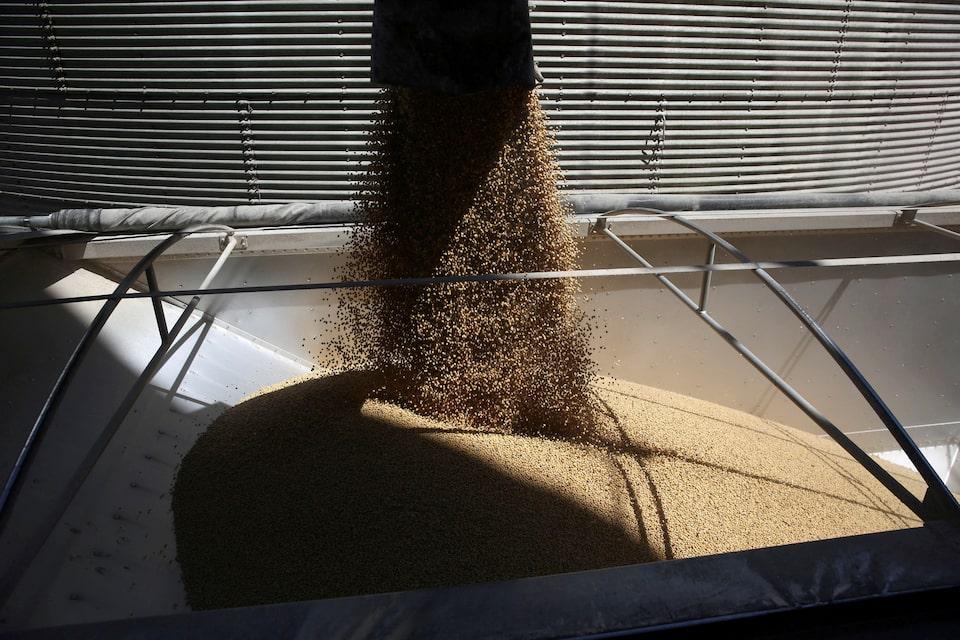
NAPERVILLE, Illinois, Jan 20 (Reuters) - Speculators have been busy stuffing their bullish Chicago corn bets to the brim, but last week they gave soybeans a nod of confidence for the first time in over a year. Tightening global corn supplies have had investors’ attention for months, though it has recently become apparent that soybean stocks later this year may not be as ample as previously thought. The U.S. Department of Agriculture on Jan. 10 revealed that the 2024 U.S. corn and soybean harvests were substantially smaller than analysts expected, causing an enormous round of short covering in CBOT soybeans. That helped establish a managed money net long position of 34,833 CBOT soybean futures and options contracts as of Jan. 14. That compares with a net short of 28,612 contracts a week earlier, and it is funds’ first bullish bean view since December 2023. Short covering was responsible for 71% of funds’ latest move in soybeans, but they also added a handful of gross longs, the most for any week since last May. Most-active CBOT soybean futures jumped 5% in the week ended Jan. 14, though they eased 1.3% in the last three sessions. Despite bullish factors such as the smaller U.S. soy numbers, dry weather in top soymeal exporter Argentina, and some hiccups to start Brazil’s soy harvest, global soybean production and ending stocks are both set for new record highs in 2024-25. This will be among soybean bulls’ biggest challenges. However, USDA pegs global 2024-25 corn ending stocks at a decade low. The agency’s latest round of reports caused CBOT corn futures to gain 3.6% in the week ended Jan. 14. Corn added another 2.1% in the following three sessions, topping at $4.85 per bushel on Friday, the most-active contract’s highest since mid-December 2023. As of Jan. 14, the managed money net long in CBOT corn reached 292,228 futures and options contracts, their most bullish stance since May 2022. About two-thirds of that move owed to new gross longs. There are only three years where funds were more bullish toward corn in January: 2011, 2021 and 2022. A year ago this week, they carried a heavy net short of around 261,000 contracts. Open interest in CBOT corn futures and options surged a massive 11% in the week ended Jan. 14. It now exceeds 2.37 million contracts, the most for any week since June 2021 and well above average for the date. Open interest in CBOT soybean futures and options gained 4% in the week ended Jan. 14 and is the month’s second highest ever after 2021. But the latest reading of 1.05 million contracts is down nearly 18% from the recent peak in October. Weather forecasts as of Monday were mixed on much-needed rainfall for parched Argentine corn and soy crops, and traders have begun closely monitoring the early stages of Brazil’s soybean harvest. But all eyes this week will be on U.S. President Donald Trump, who was sworn into office on Monday. Trump has pledged swift action on his policies, which may include tariffs against multiple U.S. trade partners, potentially threatening U.S. agricultural exports. Karen Braun is a market analyst for Reuters. Views expressed above are her own. Sign up here. https://www.reuters.com/markets/europe/bulls-take-control-cbot-soybeans-while-funds-corn-long-nears-three-year-high-2025-01-21/
2025-01-21 12:20
Crytocurrencies disappointed Canada, Mexico currencies hurt, euro reprieve Europe automakers, US crude oil drop LONDON, Jan 21 (Reuters) - U.S. President Donald Trump's return to the White House has been met with both relief and disappointment across world markets as investors try to work out what the next four years will bring. "The approach will be chaotic, unpredictable, spur of the moment and driven by Trump himself," said Russel Matthews, senior portfolio manager, global macro at RBC BlueBay Asset Management. Here's a look at some of the winners and losers emerging from Trump's first 24 hours in office. 1/ NAME CALLING Calling out Canada and Mexico as potential targets for tariffs took a further toll on their currencies, which fell sharply following Trump's inauguration speech. Bets on the Mexican peso or other tariff-exposed emerging market currencies were too risky, said Fidelity International multi-asset manager Becky Qin. "It is so binary and so dependent on the dollar," she said. "The policy uncertainty is too high." Goldman Sachs strategists said they see a 70% probability of Trump hitting China with 20% tariffs but said the odds of him fulfilling his pledge for 25% import levies on Canada and Mexico were low. The dollar is trading near its strongest levels against Canada's currency in almost five years, with the so-called Loonie also weighed down by economic weakness and rate cut expectations . Markets have swung towards bets that China will not permit its tightly controlled currency to weaken to counter heavy U.S. tariffs. Analysts still expect a 5% to 6% drop by year-end. Fidelity's Qin said she had a position that would profit if the offshore yuan weakens further against the dollar, which may be one of the few trades that shines if aggressive tariffs spook markets. 2/ ROLLER COASTER The euro and sterling rallied over 1% on Monday, notching their best one-day gains since late November versus the dollar, cheered by Trump's decision to not immediately impose tariffs. Yet, Tuesday's falls in European currencies suggested the relief rally was already over. ING currency strategist Francesco Pesole said if more days pass without Europe being explicitly mentioned in Trump’s tariff comments, the euro could benefit. "That support may, however, prove rather short-lived as things can – as we learned yesterday with Canada and Mexico – change abruptly on protectionism, and the euro remains generally unappealing from a number of macro fundamentals," he said. ABN AMRO downgraded its year-end euro/dollar forecast to $0.98 from $1, implying a 5% weakening from current levels . 3/ HOPE VERSUS FEAR European equities (.STOXX) , opens new tab posted their worst performance on record versus Wall Street last year but have gained more than 3% so far in January as investors judged pessimism about economic growth and U.S. tariffs to have gone too far. European stocks attracted their second largest allocation from big investors in 25 years this month, BofA's latest global fund manager survey showed. Amelie Derambure, senior multi-asset manager at Europe's biggest investor Amundi, said the group had raised its view on European stocks from negative to neutral on valuation grounds and favoured European banks for their relatively low exposure to tariffs. And despite U.S. policy risks, Citi economists expect euro area economic growth of 1% this year, up from 0.8% in 2024, as ECB rate cuts boost business investment and consumer spending. European stocks most exposed to U.S. trade policy suffered on Tuesday, however, with shares in automakers Stellantis (STLAM.MI) , opens new tab, Volkswagen (VOWG_p.DE) , opens new tab and BMW (BMWG.DE) , opens new tab all slipping. 4/ "DRILL, BABY, DRILL" Trump has vowed to increase U.S. oil and gas production, fill up strategic reserves and export American energy all over the world. U.S. oil prices have responded accordingly. U.S. crude futures have fallen nearly 5% in the last three trading days, while Brent crude shed about half as much for the same period. The United States is already the world's largest producer of crude oil, accounting for around 12% of total supply. It is also a major exporter, with some 4 million barrels a day. But it faces competition. The OPEC+ group of major exporters, which includes Russia, wants to remove self-imposed supply cuts, but is concerned about slack global demand. Meanwhile, Trump's plans to impose a 25% tariff on Canadian imports could hurt U.S. refiners, who rely on their neighbour for about 20% of their barrels. 5/ OUT IN THE COLD Notably, cryptocurrencies, which soared as Trump's Nov. 5 election win raised hopes of a more regulatory-friendly environment, suffered a setback as his first set of policies made no reference to the asset class. On Tuesday, bitcoin , the world's largest cryptocurrency, was up 3% to $106,070, well off the record high of $109,071 touched hours before the inauguration on Monday. Trump launched a cryptocurrency of his own on Friday which surged from less than $10 on Saturday morning to as high as $74.59 before giving up some of its gains on Monday to trade at $39.22, according to cryptocurrency price tracker CoinGecko. Trump's inaugural speech disappointed those who had hoped he would kick-start a sea-change in U.S. policies towards crypto, which could pave the way for more selling, analysts said. Others said some of his staffing picks were a positive sign. Trump has tapped two crypto-friendly figures - Mark Uyeda, a Republican member of the U.S. Securities and Exchange Commission, to be acting chair of the agency, and former SEC Commissioner Paul Atkins to run the agency on a permanent basis. Sign up here. https://www.reuters.com/markets/global-markets-trump-graphic-2025-01-21/
2025-01-21 12:13
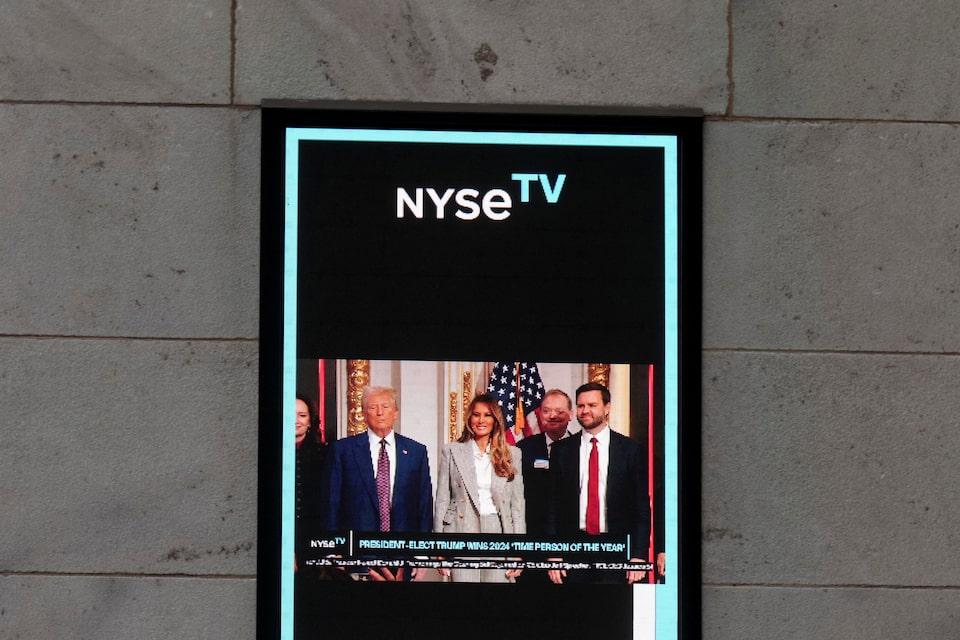
Jan 21 (Reuters) - Mexico's economy likely grew 1.1% in December compared with the same month a year earlier, a preliminary estimate from national statistics agency INEGI showed on Tuesday. Compared with the previous month, the economy likely grew by 0.4%, the agency said. Sign up here. https://www.reuters.com/world/americas/mexican-economy-up-11-yy-december-preliminary-estimate-shows-2025-01-21/

2025-01-21 12:09
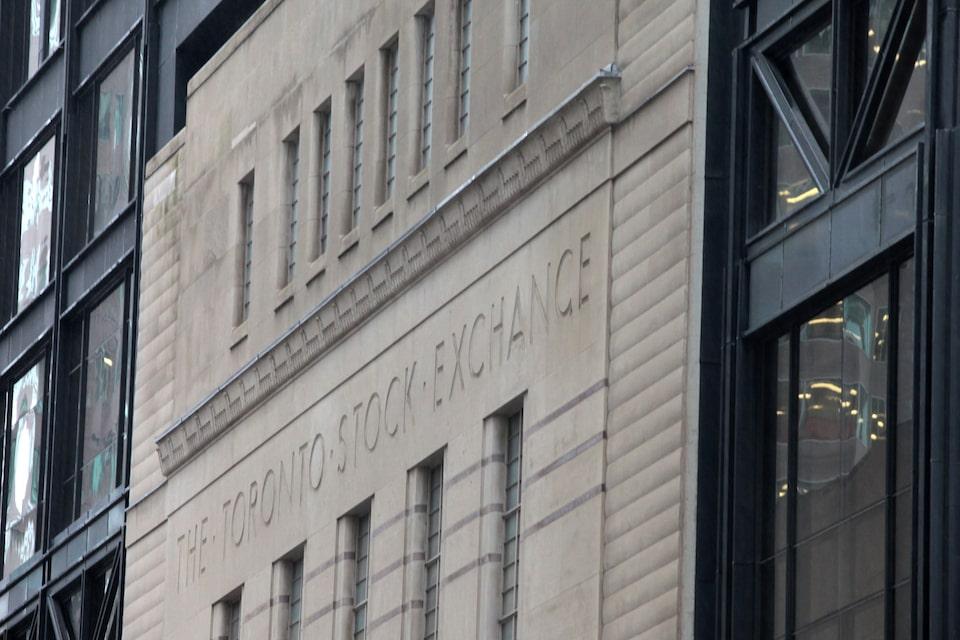
TSX ends up 0.4% at 25,281.63 Posts highest closing level since Dec. 12 Technology sector gains 1.6% Canada's annual inflation rate slows to 1.8% Jan 21 (Reuters) - Canada's main index rose for a sixth straight day on Tuesday, led by technology shares, as the potential benefit of a business friendly U.S. government offset the economic uncertainty of trade tariffs that are expected in the coming days. The Toronto Stock Exchange's S&P/TSX Composite Index (.GSPTSE) , opens new tab ended up 110.05 points, or 0.4%, at 25,281.63, its highest closing level since Dec. 12. The daily winning streak was the longest since August. Corporate profits could get a lift from tax cuts and looser regulation proposed by U.S. President Donald Trump. Trump has also proposed sweeping trade tariffs, which could include a 25% tax on imports from Canada beginning on Feb. 1. "You're balancing the fear of the Trump tariffs against the major short-term positive effect of the Trump presidency," said Matt Skipp, president of SW8 Asset Management. "If it hurts our economy it hurts our stock market to some extent but the actual direct impact of the tariffs (on the TSX) might be less than people think even if they come," Skipp added. U.S. operations are a major contributor to Canadian bank earnings, while energy and material companies benefit from a weaker Canadian dollar . Combined, the financial and resource sectors account for 62% of the TTS's weighting, while another block is made up of sectors such as telecommunication and real estate that don't rely on exports. The technology sector rose 1.6%, with shares of e-commerce company Shoplift Inc up 1.9%. Financials added 0.8% and the interest-rate sensitive utilities sector ended 0.4% higher. Canadian inflation slowed to a 1.8% annual rate in December, supporting bets for another rate cut by the Bank of Canada. Energy was a drag, falling 1.3%, as the price of oil settled 2.6% lower. Shares of business jet maker Bombardier (BBDb.TO) , opens new tab were down 5.3%, giving back much of Monday's gains. (This story has been corrected to fix the investor's surname to Skipp, not Skippy, in paragraphs 4 and 5) Sign up here. https://www.reuters.com/markets/tsx-futures-edge-down-amid-tariff-jitters-domestic-data-awaited-2025-01-21/
2025-01-21 12:09
Venture arm of fuel card company WEX joins Ansa-led round Series A raises $13 mln; Ansa executive to join board Comes as more countries seek emissions disclosures LONDON, Jan 21 (Reuters) - U.S. carbon accounting firm Gravity said it has won backing from Ansa Capital and the venture arm of fuel card company WEX (WEX.N) , opens new tab in a $13 million funding round as it looks to help energy-intensive companies track and reduce their emissions. Countries across the world are increasingly asking companies to disclose their carbon emissions as part of efforts to curtail global warming and more boards are looking to make energy efficiency savings. While various start-ups have sought to capture this demand, many require manual data entry that can be time consuming and costly, whereas Gravity is automated, Chief Executive and co-founder Saleh ElHattab said. "Ultimately, behind every ton of emissions is a cost – whether it's energy spend, logistics investments, or purchased goods and services," ElHattab said in a statement. "Gravity taps into the fact that these cost centers are already well-tracked and can be measured automatically, while connecting the task of reporting back to every company's core financial priorities of cost and risk mitigation." New investors Communitas Capital and Buoyant Ventures joined in the Ansa-led Series A round with WEX Venture Capital. Existing investors Eclipse, Hanover, and Caffeinated Capital also took part. The money will be used to expand Gravity's research and development efforts, as well as hire staff in the United States and European Union, it added. "We believe Gravity will be instrumental in helping the largest emitters move beyond emissions calculation to actively managing their energy costs...on one convenient platform," said Ansa Co-Founder Marco DeMeireles, who will join Gravity's board. Sign up here. https://www.reuters.com/sustainability/sustainable-finance-reporting/ansa-wex-back-carbon-accounts-firm-gravity-funding-round-2025-01-21/

2025-01-21 12:02
More US climate funding at stake than before Investors caught between EU and US diverging on green agenda Anti-green push deters US investment, business group says BRUSSELS/LONDON, Jan 21 (Reuters) - A second U.S. withdrawal from the world's primary climate pact will have a bigger impact - in the U.S. and globally - than the country's first retreat in 2017, analysts and diplomats told Reuters. One of President Donald Trump's first acts on returning to office on Monday was to quit the Paris Agreement as part of his plans to halt U.S. climate action. The impact will be to increase the chance of global warming escalating, to slow U.S. climate funding internationally, and leave investors struggling to navigate the divergence between European and U.S. green rules. This U.S. withdrawal will take effect in one year, faster than the 3.5-year exit period when Trump first quit the Paris accord in 2017. Since then, climate change has become more extreme. Last year was the planet's hottest on record, and the first in which the average global temperature exceeded 1.5 degrees Celsius (2.7 degrees Fahrenheit) of warming - the limit the Paris Agreement commits countries to trying to stay below. "We are looking at overshooting 1.5C degrees - that is becoming very, very likely," said law professor Christina Voigt at the University of Oslo. "Which, of course, brings to the forefront that much more ambitious global action on climate change is needed," she said. PARIS PACT PLANS Today's climate, measured over decades, is 1.3C warmer than in pre-industrial times, and on track for at least 2.7C of warming this century. While perilous, that is less severe than the 4C projected before countries negotiated the 2015 Paris Agreement. Each country's pledge toward the Paris goal is voluntary. Nevertheless, Trump is expected to scrap the U.S. national emissions-cutting plan and potentially also Biden-era tax credits for CO2-cutting projects. All of this will "further jeopardise the achievement of the Paris Agreement's temperature goals," Michael Gerrard, a legal professor at Columbia Law School, said. "That has obviously an impact on others. I mean, why should others continue to pick up the pieces if one of the key players once again leaves the room?" said Paul Watkinson, a former French climate negotiator who worked on the 2015 Paris Agreement. Some U.S. states have said they will continue climate action. Regardless of politics, favourable economics drove a clean energy boom during Trump's first term - with Republican stronghold Texas leading record-high U.S. solar and wind energy expansion in 2020, U.S. government data show. But Trump has already taken steps to try to prevent a repeat of that, on Monday suspending offshore wind leases and revoking Biden's electric vehicle targets. The U.S. produces around 13% of global CO2 emissions today but is responsible for most of the CO2 released into the atmosphere since the Industrial Revolution. CLIMATE CASH HALT As part of the Paris Agreement exit, Trump on Monday ordered an immediate cessation of all U.S. funding pledged under U.N. climate talks. That will cost poorer nations at least $11 billion - the U.S. government's record-high financial contribution delivered in 2024 to help them cope with climate change. Together, all rich countries' governments combined contributed $116 billion in climate funding for developing nations in 2022, the latest available OECD data show. That does not include the huge climate-friendly government funding Biden rolled out domestically, whose future under Trump is uncertain. Total U.S. climate spending - counting domestic and international, from private and public sources - jumped to $175 billion annually over 2021-2022, boosted massively by the 2022 Biden-era Inflation Reduction Act, according to non-profit research group the Climate Policy Initiative. The U.S. is also responsible for funding around 21% of the core budget for the U.N. climate secretariat - the body that runs the world's climate change negotiations, which faces a funding shortfall. MISSED OPPORTUNITIES The We Mean Business Coalition, which is backed by Amazon and Meta, said Trump's disruption of the U.S. business environment could drive green investment elsewhere. It could "open the door for other major economies to attract greater investment and talent," the non-profit group said. Three investors told Reuters the transition to green energy, including in the U.S., will move forward regardless. One impact of the Paris exit will be to prevent U.S. businesses from selling carbon credits into a U.N.-backed carbon market that could be valued at more than $10 billion by 2030, according to financial information provider MSCI. While no longer able to make money from selling any surplus credits, U.S. companies would be able to buy them on a voluntary basis. U.S. airlines, for instance, could still buy them to meet U.N. aviation climate targets, said Owen Hewlett, Chief Technical Officer at carbon market standard setter Gold Standard. The Paris withdrawal is also an issue for banks and money managers caught between the U.S. climate retreat and pressure from Europe to deliver faster on climate goals there. "U.S.-based asset managers with European clients will need to be like a two-headed Janus," Mark Campanale, founder of the non-profit Carbon Tracker Initiative, said. "Will they risk losing European clients to keep U.S. politicians happy? I doubt it." Already, U.S. banks have left a banking sector climate coalition following Republican criticism. That does not absolve them and other multinational companies from needing to comply with strict upcoming European rules for sustainability reporting. Given the patchwork of global climate policies, companies are likely to keep up their climate efforts – but to adopt green hushing tactics, he said. That means, Campanale said: "Do it, but don't publicise it." Sign up here. https://www.reuters.com/world/trumps-paris-climate-exit-will-hit-harder-than-2017-2025-01-21/