2026-01-05 07:10
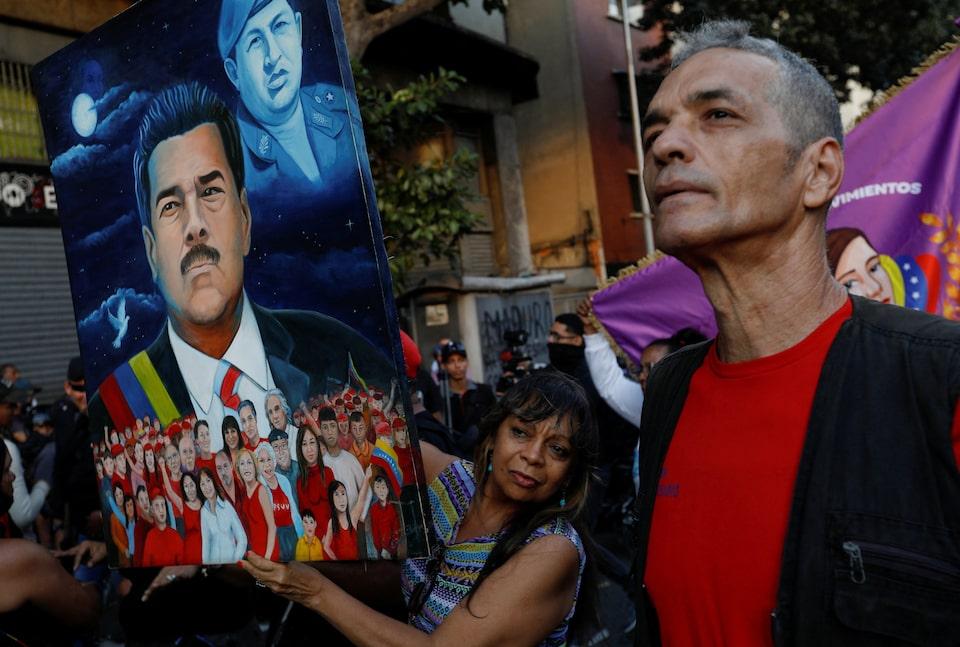
LATEST DEVELOPMENTS: Maduro sparks courtroom drama with claim he is still president Prosecutors allege he oversaw state-sponsored cocaine network Maduro's lawyer challenges legality of US military capture Protesters clash outside courthouse over Venezuelan leader NEW YORK, Jan 5 (Reuters) - Shackled at the ankles and dressed in prison garb, toppled Venezuelan President Nicolas Maduro stood before a U.S. judge on Monday and declared he was still his country's rightful leader as he faced charges that could put him behind bars for life. “I am innocent. I am not guilty. I am a decent man. I am still president of my country,” Maduro said through an interpreter, his voice rising before Judge Alvin Hellerstein cut him off. Sign up here. The 63-year-old, captured days earlier in a dramatic U.S. military raid, wore orange slippers, beige pants and layered black and orange shirts. He scribbled notes on a legal pad while lawyers discussed what promises to be a bruising legal fight. He faces four U.S. federal criminal counts that include narco-terrorism conspiracy, cocaine importation conspiracy and possession of machine guns and destructive devices. Each charge carries a maximum sentence of life in prison. His lawyer Barry Pollack told Hellerstein that he expects extensive litigation over the legality of Maduro's "military abduction." Maduro's wife Cilia Flores also pleaded not guilty. She faces the same charges except for narco-terrorism. The next court date was set for March 17. The U.S. has deemed Maduro an illegitimate dictator since he declared victory in a 2018 election marred by allegations of massive irregularities. His capture marks Washington's most controversial intervention in Latin America since the invasion of Panama 37 years ago. Two groups of protesters — supporters of Maduro and those backing his ouster — argued outside the courthouse on Monday. “We are outraged at what the U.S. has done to the head, the duly-elected head of Venezuela," said Sherry Finkelman, 80, a retired teacher. Alejandro Rojas, a 51-year-old data scientist who moved to the U.S. from Venezuela in 2017, said he hoped to return soon with Maduro gone. “It's so emotional, just being able to reconnect with family, being able to have a country back again," Rojas said. Maduro was first indicted in 2020 as part of a long-running narcotics trafficking case against Venezuelan officials and Colombian guerrillas. He was being held at a Brooklyn jail with a troubled history. In a new indictment unsealed on Saturday, prosecutors allege that Maduro is the kingpin of a cartel of Venezuelan officials that has partnered with some of the world's most violent and prolific drug trafficking groups, including Mexico’s Sinaloa and Zetas cartels, the Colombian paramilitary group FARC and the Venezuelan gang Tren de Aragua. "As Venezuela's President and now de-facto ruler, Maduro allows cocaine-fueled corruption to flourish for his own benefit, for the benefit of members of his ruling regime, and for the benefit of his family members," according to the indictment filed by prosecutors from the U.S. Attorney's Office in the Southern District of New York. Prosecutors allege that as president, Maduro directed cocaine trafficking routes, used the military to protect shipments, sheltered violent trafficking groups and used presidential facilities to move drugs. Legal experts said prosecutors will need to show evidence of Maduro's direct involvement in drug trafficking to secure a conviction, which could prove difficult if he insulated himself from decision-making. https://www.reuters.com/world/americas/maduro-set-appear-us-court-face-narco-terrorism-charges-2026-01-05/
2026-01-05 06:59
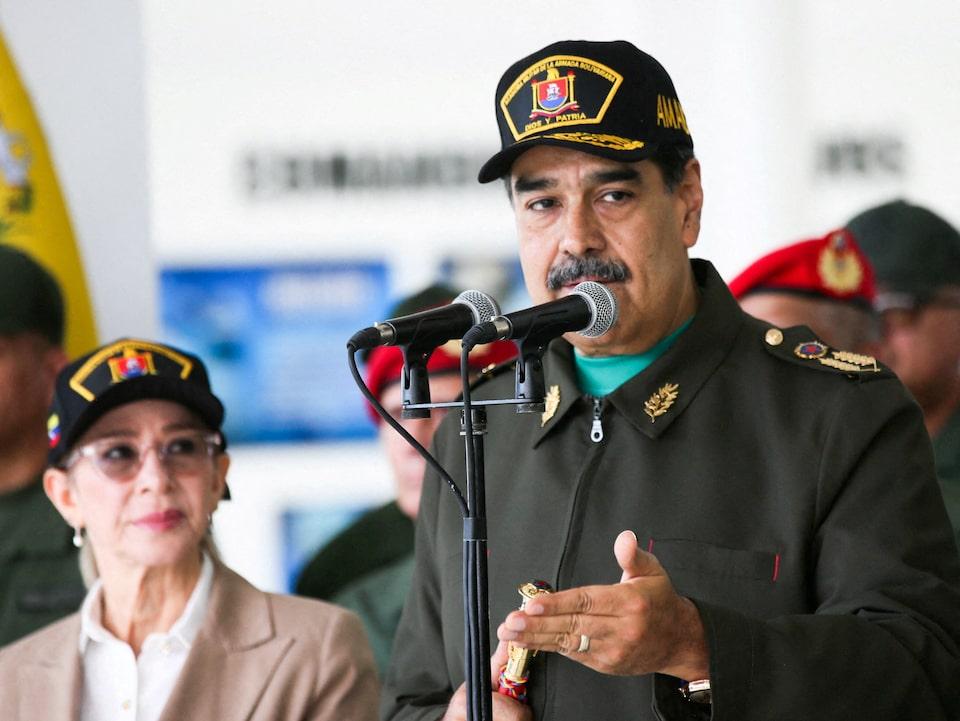
LATEST DEVELOPMENTS: Shackled Maduro, in prison garb, hears charges through headphones Captured Venezuelan and wife Cilia Flores plead not guilty Defense lawyer predicts legal fight over 'military abduction' Delcy Rodriguez sworn in as interim Venezuelan president NEW YORK, Jan 5 (Reuters) - Toppled Venezuelan President Nicolas Maduro pleaded not guilty on Monday to narcotics charges after President Donald Trump's stunning capture of him rattled world leaders and left officials in Caracas scrambling to regroup. "I am innocent. I am not guilty. I am a decent man. I am still president of my country," Maduro, 63, said through an interpreter, before being cut off by U.S. District Judge Alvin Hellerstein in Manhattan federal court. Sign up here. Maduro's wife Cilia Flores also pleaded not guilty. The next court date was set for March 17. Dozens of protesters, both pro- and anti-Maduro, gathered outside the courthouse before the half-hour hearing. Inside, as he stood shackled at the ankles and wearing orange and beige prison garb, Maduro declared he had been "kidnapped" and remained president of Venezuela. He listened to an interpreter through headphones as Hellerstein summarized the charges. Maduro is accused of overseeing a cocaine-trafficking network with international drug cartels and faces four criminal counts: narco-terrorism, cocaine importation conspiracy and possession of machine guns and destructive devices. Maduro has long denied the allegations, saying they were a mask for imperialist designs on Venezuela's rich oil reserves. Maduro's defense lawyer Barry Pollack said he anticipated voluminous and complex litigation over what he called his client's "military abduction." SUCCESSOR SWORN IN Hours later in Caracas, Maduro's vice president, Delcy Rodriguez, was sworn in as Venezuela's interim president with words of support for Maduro but no indication she would fight the U.S. move. A recent U.S. intelligence assessment determined Rodriguez would be best positioned to lead a temporary government in Maduro's absence, finding that opposition figures such as Nobel Peace Prize winner Maria Corina Machado or onetime presidential candidate Edmundo Gonzalez would struggle to gain legitimacy, the Wall Street Journal reported, citing people familiar with the classified report. Asked by Reuters about the report, White House spokeswoman Karoline Leavitt said, "The President and his national security team are making realistic decisions to finally ensure Venezuela aligns with the interests of the United States." While many anti-Maduro activists had assumed this would be their moment, Trump appeared to have sidelined the Venezuelan opposition for now. Instead, he has suggested Rodriguez was willing to work with Washington. Leavitt told Fox News that Secretary of State Marco Rubio was in "constant correspondence" with the remaining Maduro government, and that Washington maintained "leverage" over Caracas. In Caracas, senior officials from Maduro's 13-year-old government remained in charge of the South American oil producer of 30 million people, alternating between angry defiance and possible cooperation with the Trump administration. The intelligence assessment concluded that Rodriguez was among the few Venezuelan leaders capable of maintaining order, along with the interior and defense ministers, in a government dominated by ideological opponents of the U.S., the Wall Street Journal said. Trump told NBC News the U.S. was not at war with Venezuela but rather, "we're at war with the people that sell drugs." The U.S. would need to help address the South American country's problems before any new elections, Trump said, calling a 30-day timeline for a vote unrealistic. "We have to fix the country first. You can’t have an election. There’s no way the people could even vote," Trump told NBC. QUESTION OF LEGALITY The U.S. has considered Maduro an illegitimate dictator since he declared victory in a 2018 election marred by allegations of massive irregularities. At the same time experts in international law have questioned the legality of the raid, with some condemning Trump's actions as a repudiation of a rules-based international order. Deputy Attorney General Todd Blanche, who previously served as Trump's criminal defense lawyer while in private practice, told NBC News the Trump administration "did everything within the law," and that the United States has an "absolute legal right to go and arrest people charged with horrible crimes." As world leaders and U.S. politicians grappled with the extraordinary seizure of a head of state, the United Nations Security Council debated the implications of the raid, which was condemned by Russia, China and leftist allies of Venezuela. The future governance of Venezuela also remained uncertain, after Trump asserted on Sunday that "we are in charge." White House Deputy Chief of Staff Stephen Miller reiterated to CNN on Monday that "the United States of America is running Venezuela." "We set the terms and conditions. We have a complete embargo on all of their oil. So for them to do commerce, they need our permission," Miller said. Rubio, Secretary of Defense Pete Hegseth and other top administration officials spent more than two hours briefing congressional leaders and the heads of national security committees about the Venezuela operation on Monday evening. Senator Chuck Schumer of New York, the Senate's Democratic leader, told reporters the briefing was extensive but posed more questions than it answered. "Their plan for the U.S. running Venezuela is vague, based on wishful thinking, and was unsatisfying," Schumer said, adding that Trump officials would not rule out similar interventions in other countries. Meanwhile, Trump has made no secret of wanting to share in Venezuela's oil riches, telling reporters on Air Force One on Sunday that American oil companies will return to Venezuela and rebuild the sector's infrastructure. He told NBC News on Monday that the U.S. may subsidize the rebuilding of the country's oil infrastructure by U.S. companies, a project he said could be completed in less than 18 months. CBS News, citing two unnamed sources, said representatives of oil majors Exxon Mobil (XOM.N) , opens new tab, ConocoPhillips (COP.N) , opens new tab and Chevron Corp (CVX.N) , opens new tab would meet with Energy Secretary Chris Wright on Thursday. https://www.reuters.com/world/americas/venezuelas-maduro-appear-us-court-trump-says-further-strikes-possible-2026-01-05/
2026-01-05 06:19
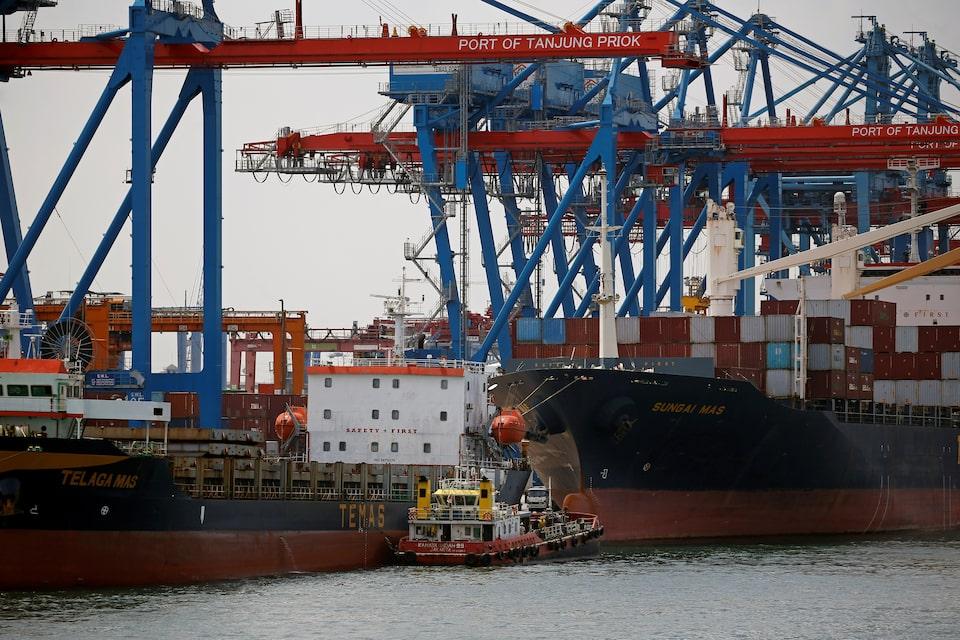
November exports down 6.6% y/y, imports up 0.46% y/y Shipments of top commodities weakened December annual inflation at 2.92%, vs forecast 2.73% December inflation highest since April 2024 JAKARTA, Jan 5 (Reuters) - Indonesia's trade surplus widened in November to $2.66 billion, official data showed on Monday, but was less than expectations after exports of commodities such as coal, nickel and copper dropped, while inflation in December climbed to a 20-month high. A Reuters poll had projected a $3.06 billion surplus in November after the country recorded a surplus of $2.39 billion in October. Sign up here. Southeast Asia's biggest economy maintained an expanding trade surplus for the January to November 2025 period, with exports boosted earlier in the year as manufacturers rushed shipments to get ahead of U.S. tariffs introduced in August. However, exports have been easing in recent months and fell 6.60% annually in November to reach $22.52 billion, compared with a 0.53% drop forecast by analysts polled by Reuters. Shipments fell mainly due to the lower export value of top commodities such as coal, palm oil, nickel metals and copper, Statistics Indonesia said. Imports in November were worth $19.86 billion, up 0.46% from a year earlier, compared with a 3.2% increase forecast in the poll. "The trade surplus is expected to persist but gradually narrow as import growth is seen to outpace exports, in line with the government's increasingly pro-growth policy stance," Permata Bank economist Faisal Rachman said. Indonesia has finalised free trade negotiations with the European Union and signed a free trade deal with the Russian-led Eurasian Economic Union, as it seeks to strengthen markets outside the United States. Jakarta has also set a target to sign a U.S. tariff deal by the end of this month. Meanwhile, annual inflation picked up to 2.92% in December, above analysts' median forecast of 2.73%, on higher prices of gold and some food items, as well as the impact of floods and landslides that hit distribution channels in northern Sumatra island. December's inflation rate was the highest since April 2024, though it remained within the central bank's 1.5% to 3.5% target range. Core inflation, which excludes government-controlled prices and volatile food prices, was at 2.38% in December, versus 2.40% expected in the poll. Faisal said inflation was expected to remain within Bank Indonesia's target, allowing the central bank to maintain an accommodative monetary policy. https://www.reuters.com/world/asia-pacific/indonesia-trade-surplus-less-than-forecast-inflation-quickens-2026-01-05/
2026-01-05 05:44
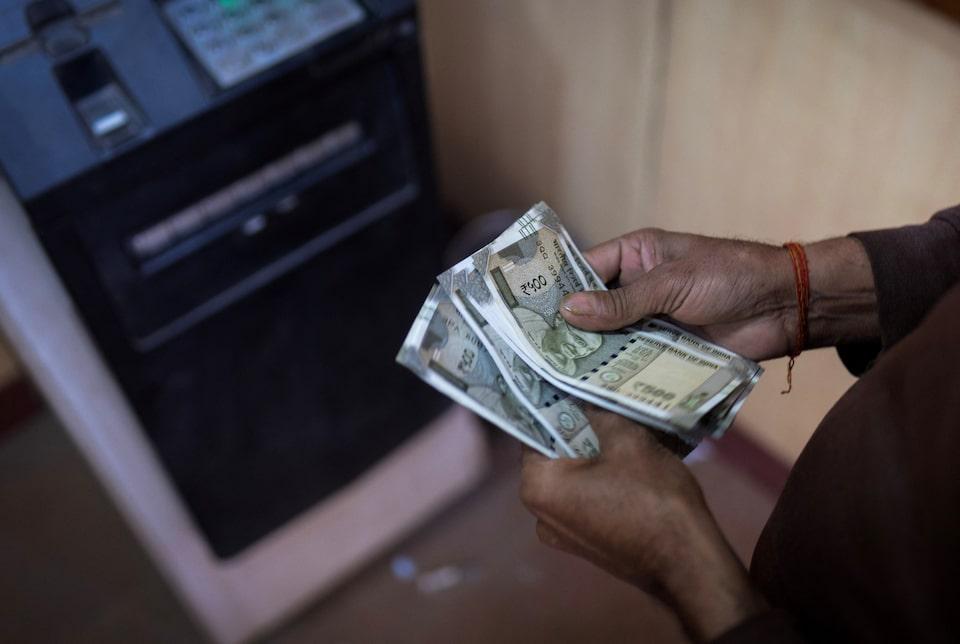
MUMBAI, Jan 5 (Reuters) - The Indian rupee edged lower on Monday, tracking Asian peers and pressured by dollar demand around the Reserve Bank of India's reference rate. The rupee ended at 90.2775 per dollar against 90.1975 on Friday. The currency traded in a narrow range of 10 paisa and witnessed its fourth straight drop. Dollar/rupee forward premiums moved higher after bottoming out on Friday. Sign up here. The RBI reference rate is the daily benchmark used to settle contracts that often attracts concentrated dollar buying or selling. The rupee's retreat reflects underlying dollar demand following the RBI intervention that triggered a recovery in the currency last week, traders said. Traders said routine corporate dollar buying and a lack of offers from exporters kept the currency on the defensive. Weakness in regional peers such as the Malaysian ringgit and Philippine peso added to the drag. Asian stocks climbed with AI-linked themes in focus at the start of the first full trading week of the year, while oil prices dipped on the view U.S. military action in Venezuela would be unlikely to disrupt a well-supplied energy market. In India, broader investor sentiment continues to remain cautious amid trade-related uncertainty, including concerns around the absence of a U.S.-India trade deal and tariff rhetoric linked to India's Russian oil purchases. U.S. President Donald Trump has warned of higher tariffs on India over Russian oil purchases. The U.S. doubled import tariffs on Indian goods to 50% last year as punishment for its heavy buying of Russian oil. ICICI Securities Primary Dealership believes that the central bank may again be quite tolerant of a strong rebound in the rupee, if that starts to occur, in order to hurt any speculative shorts. But it sees the risk of the rupee staying weaker for some time, until a U.S. trade deal is signed and foreign flows resume. https://www.reuters.com/world/india/rupee-faces-test-rbi-support-remains-centre-stage-after-challenging-week-2026-01-05/
2026-01-05 05:44
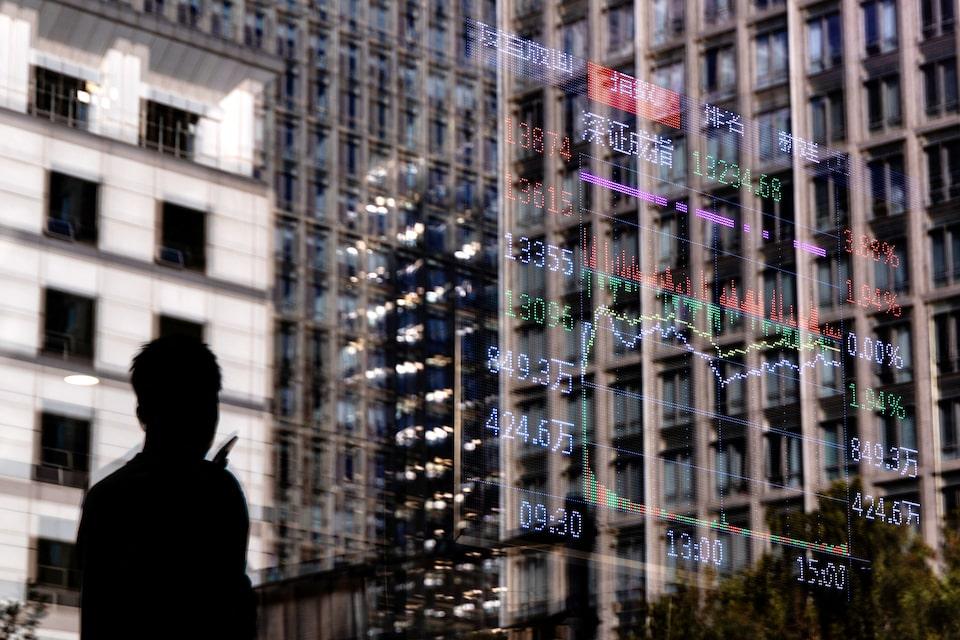
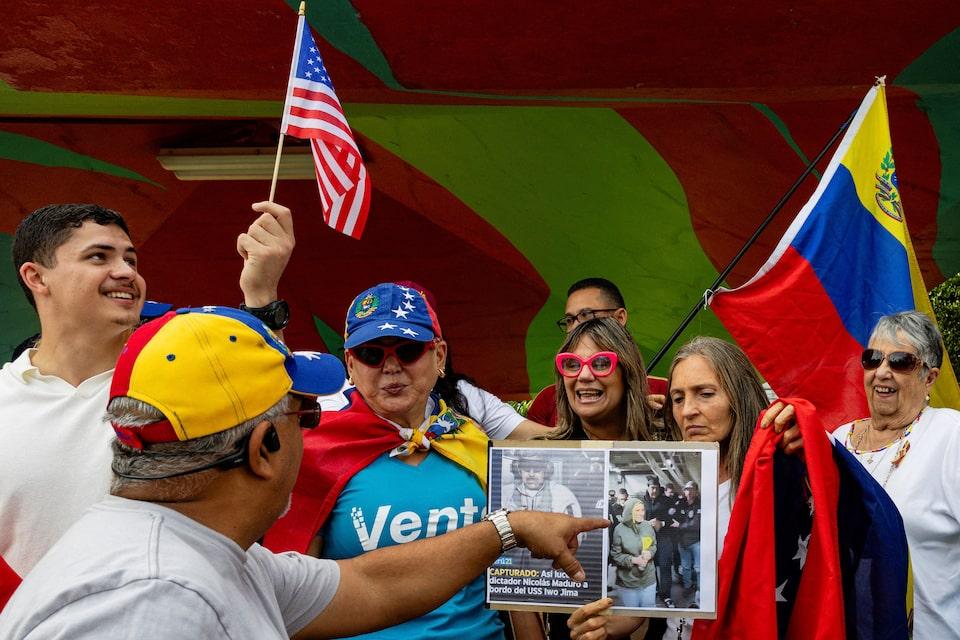
SINGAPORE, Jan 5 (Reuters) - Global investors are facing a fresh surge in geopolitical risk after the U.S. capture of Venezuelan President Nicolas Maduro, although initial market reaction has been relatively devoid of nerves with oil volatile and safe-haven flows lifting gold. Stocks rose, buoyed by tech and defence sectors while the dollar advanced on Monday. Sign up here. Here are some comments from market analysts: DAVID CHAO, GLOBAL MARKET STRATEGIST FOR ASIA-PACIFIC, INVESCO, SINGAPORE "The weekend's developments are unlikely to have any significant near‑term impact on global macro conditions or markets, given Venezuela’s relatively minor role in today’s energy landscape. This is why there hasn't been any significant movement for oil prices, U.S. equity futures nor major shifts in other macro assets. "The broader message is that geopolitical uncertainty has become an integral part of the macro environment, and this should continue to underpin demand for precious metals amid elevated volatility." GARY TAN, PORTFOLIO MANAGER, ALLSPRING GLOBAL INVESTMENTS, SINGAPORE "From EM perspective, the more immediate impact of growing U.S. presence in Latin America is likely to be felt in credit markets. We expect some narrowing of credit spreads, particularly for lower-rated sovereigns, as geopolitical risk premiums stabilise. "On the geopolitical front, we do not anticipate a meaningful shift in China–Taiwan dynamics as a result of developments in Venezuela. At this stage, Asian policymakers are more likely to view U.S. engagement in Latin America as a regional strategy rather than a signal of reduced U.S. commitment in Asia." RONG REN GOH, PORTFOLIO MANAGER, EASTSPRING INVESTMENTS, SINGAPORE "For Asia-based investors, Venezuela is mainly a headline risk. Direct exposure in the region is limited, so the impact comes more through market sentiment and, to a lesser extent, what it could mean for oil prices over time. "Fixed income markets have benefited from a relatively calm, carry-friendly backdrop in recent months. Events like this are a reminder that unexpected shocks can still happen, especially when markets are more tightly priced." CHARU CHANANA, CHIEF INVESTMENT STRATEGIST, SAXO, SINGAPORE "We're in a regime where geopolitics has become a persistent feature, not a surprise. Unless it threatens the broader supply chain, investors tend to fade the first shock and rotate back to rates, earnings, and positioning. This is more geopolitical shock than oil shock for now." VISHNU VARATHAN, HEAD OF MACRO RESEARCH, ASIA EX-JAPAN, MIZUHO, SINGAPORE "We are being reminded that geopolitical risks are much larger than some number cast on imports. "The sanctions on Venezuela and their exceptional reliance on only oil exports ... that means that the Venezuela regime change impact via trade channels, investment channels quite naturally is limited and ring-fenced. So that's why you don't get a huge selloff. "The case and the question in mind is - Is broader LatAm stability at risk? The flow-through effects and all could be much greater." KYLE RODDA, SENIOR MARKET ANALYST, CAPITAL.COM, MELBOURNE "The implications are limited in the short-term and relatively contained to the energy complex. We are definitely seeing a response in precious metals though and that's the market front-running governments and upping their exposure to non-dollar (and non-fiat) alternatives. Otherwise, I think the markets are looking forward to what's ahead rather than what happened on the weekend." TAI HUI, CHIEF MARKET STRATEGIST FOR ASIA-PACIFIC, J.P. MORGAN ASSET MANAGEMENT, HONG KONG "The lack of reaction so far is because of two factors. Venezuela's oil production relative to global output is small (around 1%). Years of under-investment means it won’t be able to ramp up production and add to global supply any time soon. "It remains unclear what will happen to the new regime as President Trump announced the U.S. would be 'running' Venezuela in the short term. The impact on global markets would at most be through the energy market. Of course, there should be broader geopolitical implications from this event, but in my view, the financial markets are not very efficient in pricing such risks accurately." VASU MENON, MANAGING DIRECTOR FOR INVESTMENT STRATEGY, OCBC, SINGAPORE "While President Trump has pledged U.S. industry support to revitalise oil production in the country (Venezuela), restoring operations will require significant time and substantial capital investment before the oil taps can be fully reopened. Supply disruptions amid ongoing political turmoil could push oil prices modestly higher in the short term. "However, the impact may be limited, given that Venezuela is not currently a major oil producer. Production decisions by OPEC could also help stabilise prices. It remains to be seen whether the Trump administration has an appetite for more regime changes." https://www.reuters.com/business/energy/market-analysts-react-trumps-venezuela-gambit-2026-01-05/
2026-01-05 05:44
A look at the day ahead in European and global markets from Gregor Stuart Hunter A dramatic weekend of events that saw the capture of Venezuelan President Nicolas Maduro by U.S. forces has roiled the oil market as the first full trading week of the year commences, even though global stocks appear to have looked past geopolitical risks for now. Sign up here. Brent crude futures veered between gains and losses to be down 0.4% at $60.49, as traders gauge the implications for global crude supply from the U.S. attack on Venezuela, which has the world's largest oil reserves. In the past few hours, U.S. President Donald Trump has said that U.S. forces might launch a second military strike on Venezuela if remaining members of the administration do not cooperate with his efforts to get the country "fixed", and hinted at further action in Colombia and Mexico. OPEC+, which pumps about half the world's oil, also kept output unchanged on Sunday after a quick meeting that avoided discussion of the political crises affecting several of the producer group's members. Meanwhile, Venezuela's state-run oil company PDVSA has begun cutting crude production because it is running out of storage capacity due to an ongoing U.S. oil blockade. Stocks took geopolitical concerns in their stride, with many of last year's winners in Asia extending gains. The Nikkei 225 (.N225) , opens new tab soared as much as 2.9% to near a record high reached two months ago as data showed manufacturing activity stabilised in December, ending a five-month streak of deterioration. Seoul's Kospi (.KS11) , opens new tab jumped 2.9% and Taiwan (.TWII) , opens new tab rallied more than 3.4% to hit fresh record highs. Shares in Samsung Electronics (005930.KS) , opens new tab rose as much as 6.5% thanks to the generally buoyant market sentiment, and as its co-CEO told Reuters the company plans to double this year the number of its mobile devices with AI features powered by Google's Gemini. Markets in China were more muted, with the Hang Seng Index (.HSI) , opens new tab 0.1% lower, dragged down by Chinese oil companies as a gauge of Hong Kong-listed energy stocks fell 2.8%. In early European trade, pan-region futures were up 0.7%, German DAX futures rose 0.5%, and FTSE futures advanced 0.6%. Key developments that could influence markets on Monday: Euro Zone: Sentix Index for January U.K.: BOE consumer credit and mortgage lending for November Debt auctions: France: 3-month, 6-month and 1-year government debt Germany: 3-month and 9-month government debt https://www.reuters.com/world/china/global-markets-view-europe-2026-01-05/