2025-01-21 06:33
Half analysts polled expect MAS to leave policy unchanged Half see first policy easing since March 2020 Inflation fell to 1.9% in November, lowest in almost 3 years GDP surprised on the upside at 4% in advance estimate SINGAPORE, Jan 21 (Reuters) - Economists are split on whether Singapore's central bank will loosen monetary policy this week or leave its settings unchanged to wait to see what policies U.S. President Donald Trump introduces in his second term. Reuters polled 12 analysts and six expect the Monetary Authority of Singapore to loosen its currency-based monetary policy at a scheduled review on Friday to reflect an easing in inflation and stronger-than-expected economic growth in 2024. The other six expected no change in the policy settings. The MAS has not changed policy since a tightening in October 2022, which was the fifth in a row, as broader concerns about growth kept authorities sidelined. It last eased policy in March 2020 as Singapore braced for a recession as COVID-19 was spreading worldwide. MAS "may want to assess the implications of policies from the Trump administration, which may only become clear in the second quarter", said Jonathan Koh, Asia economist at Standard Chartered bank, who expects the institution to stand pat this week. Lee Yen Nee, a risk analyst at Fitch Solutions unit BMI, said Singapore's economy gives MAS the space to wait and assess the global environment more thoroughly. Central banks globally are leaning towards gradual and cautious cuts in monetary policy. The Federal Reserve in December lowered rates but a Reuters poll expects a hold on policy this month as Trump's policies stir inflation worries. The European Central Bank has said further reductions are likely but a cautious approach was warranted because of prevailing uncertainties. Instead of using interest rates, Singapore manages monetary policy by letting the local dollar rise or fall against the currencies of its main trading partners within an undisclosed trading band, known as the Singapore dollar nominal effective exchange rate, or S$NEER. It adjusts policy via three levers: the slope, mid-point and width of the policy band. Maybank economist Chua Hak Bin sees room for the central bank to ease policy "given the more benign inflation outlook", forecasting a gentler appreciation in the slope of the S$NEER band. Chua expects core and headline inflation, now both below 2% after cooling from a peak of 5.5% in early 2023, to fall further in early 2025. The central bank expects core and headline inflation to be at 1.5% to 2.5% for the year. Bank of America analysts expect the MAS to leave policy unchanged, but with a dovish steer, before easing at the next scheduled review in April. The MAS last year started making policy announcements every quarter instead of semi-annually. "By the April meeting, there would be greater clarity on cost pass-through from usual start-of-year price adjustments, and the impact of Singapore’s budget," the analysts wrote. Singapore is often seen as a bellwether for global growth as its international trade dwarfs its domestic economy. Growth surprised on the upside in 2024 at 4% in advance estimates after slowing to 1.1% in 2023 from 3.8% in 2022. The trade ministry's GDP growth forecast for 2025 is 1.0% to 3.0%. Sign up here. https://www.reuters.com/markets/asia/economists-split-singapore-monetary-policy-amid-trump-20-uncertainties-2025-01-21/
2025-01-21 06:20
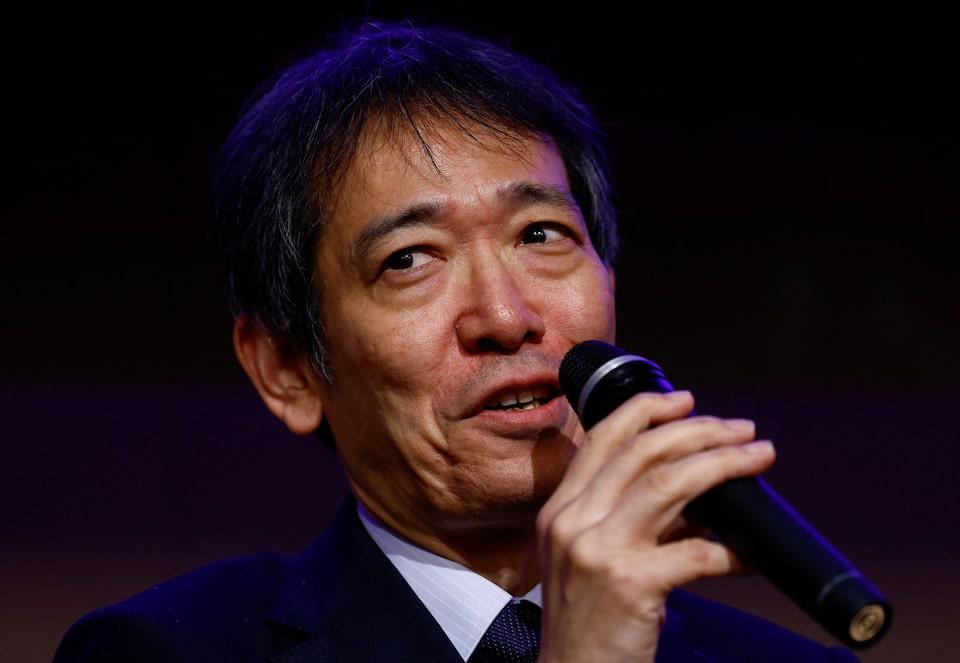
Japan watching for speculative FX positions, Mimura says Govt in close communication with BOJ on policy Weak yen accelerates inflation through rising import costs No country calling for tweak to G7 currency commitment TOKYO, Jan 21 (Reuters) - Japan is closely watching currency market positions, including those built on speculative bets, because volatility in exchange rates is undesirable, its top currency diplomat Atsushi Mimura said on Tuesday. Uncertainty over new U.S. President Donald Trump's economic policies could sway markets in unpredictable ways, Mimura said at a Reuters NEXT Newsmaker event, highlighting the difficulty of projecting whether the dollar's broad uptrend would continue. Mimura said authorities were focusing more on volatility, rather than yen levels, in guiding foreign-exchange rate policy. "We're definitely watching out for speculative positions on a daily basis as excessive volatility or disorderly currency movement are undesirable, as stated in the G7 agreement on exchange rates," said Mimura, who is vice finance minister for international affairs. When asked about the Bank of Japan's policy-setting meeting this week, Mimura said the government and the central bank were communicating closely every day through various channels. "I have been conveying my views to them. The BOJ is also likely gathering various information including on markets and the annual wage negotiations," Mimura said. The BOJ is expected to raise interest rates on Friday barring any market shocks from Trump, sources have told Reuters, a move that would lift short-term borrowing costs to levels unseen since the 2008 global financial crisis. The dollar pared some overnight losses on Tuesday after Trump suggested the United States could impose tariffs on Canada and Mexico in the near future. Against the yen, the U.S. unit slipped 0.5% to a near five-week low around 154.78 . A weak yen has been a headache for Japanese policymakers because it accelerates inflation by pushing up import costs, weighing on consumption. Some analysts blame the BOJ's ultra-low interest rates and the slow pace of rate hikes for contributing to the weaker yen. Mimura stressed the need to underpin consumption by turning real wages to positive territory. "The outlook of real wage is very important. From our perspective, a weak yen would work to push up inflation through higher import costs," he said. G7 CURRENCY COMMITMENT INTACT Mimura said he had not heard of any country calling for changing a long-held commitment among G7 advanced economies warning against volatile and disorderly currency moves. "As a matter of fact, the commitment, which has been reaffirmed by the G7 group at each meeting, was first agreed upon in 2017 during the first Trump administration," he said. Mimura was referring to the G7 finance leaders' agreement of May 2017, which reiterated that "excess volatility and disorderly movements in exchange rates could have adverse implications for economic and financial stability." Japan has consistently called on the G7 to re-affirm the commitment, as doing so would give it authority to intervene in the currency market to counter rapid yen moves. Trump did not immediately impose promised tariffs on Monday but directed federal agencies to "investigate and remedy" persistent U.S. trade deficits and unfair trade practices and currency manipulation by other countries. Japan's export-reliant economy is vulnerable to any damage to global trade from higher tariffs. While the International Monetary Fund last week raised its forecast for global growth in 2025, it warned countries against unilateral measures such as tariffs, non-tariff barriers or subsidies that could hurt trading partners and trigger retaliation. Mimura said it was important to distinguish between protectionist policies that cause fragmentation, and steps many countries implement as industrial policy. Tariffs are used for several different purposes, such as a bargaining tool to strike deals with other countries, reduce the trade deficit or increase tax revenues, he said. Japan must scrutinise the motivation for Trump's expected tariffs, in deciding how best to respond, Mimura said. "You need to look at the details of the Trump administration's tariff plans. It's not an 'all or nothing' or 'this or the other' decision," he said. Sign up here. https://www.reuters.com/markets/asia/japans-top-fx-diplomat-warns-impact-weak-yen-real-wages-2025-01-21/
2025-01-21 05:50
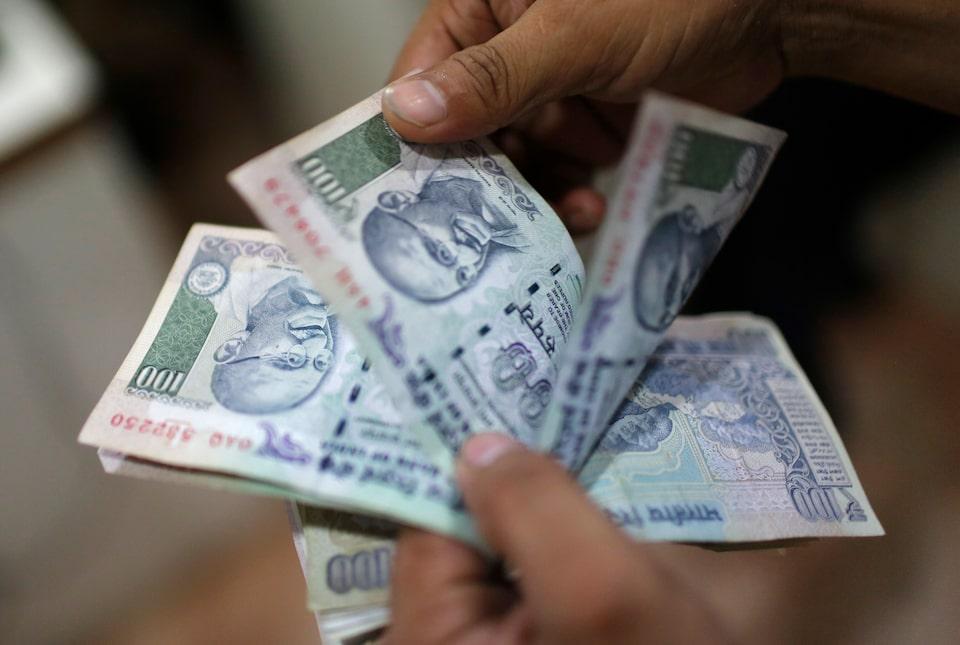
MUMBAI, Jan 21 (Reuters) - The Indian rupee is poised to open higher on Tuesday amid swings in the U.S. dollar, spurred largely by the news flow and headlines related to U.S. President Donald Trump's tariff plans. The 1-month non-deliverable forward indicated that the rupee will open at 86.36-86.38 to the dollar, compared with its close of 86.5675 in the previous session. At one point in the Asia session, the dollar index dropped to a two-week low of 107.86 amid news that Trump's new administration will not immediately impose trade tariffs. Trump will issue a broad trade memo that stops short of imposing new tariffs on his first day in office, an official for the new Trump administration said. The dollar index recovered to 108.40 after Trump said he plans to impose tariffs on Canada and Mexico by Feb. 1. The 1-month USD/INR non-deliverable forward was at 86.62, having briefly dropped below 86.40. "This is how it is going to be now that Trump is in charge... choppy and volatile," a currency trader at a bank said. The rupee will largely "do what the yuan does" and what the Chinese currency "does will depend on what Trump does", he said. The offshore Chinese yuan , having rallied to 7.25 to the U.S. dollar at one point, was at 7.2850. Trump's plan for tariffs is a major focus area for investors. The size and extent of the tariffs will dictate whether the dollar's rally since his election victory will hold up. With tariffs likely to be inflationary, it will also likely dictate the outlook on the number of rate cuts the Federal Reserve will deliver this year. "There will be a huge amount for markets to digest this week," ANZ Bank said in a note. KEY INDICATORS: ** One-month non-deliverable rupee forward at 86.61; onshore one-month forward premium at 25 paisa ** Dollar index up at 108.40 ** Brent crude futures up 0.1% at $80.2 per barrel ** Ten-year U.S. note yield at 4.54% ** As per NSDL data, foreign investors sold a net $418.9mln worth of Indian shares on Jan. 17 ** NSDL data shows foreign investors bought a net $61.7mln worth of Indian bonds on Jan. 17 Sign up here. https://www.reuters.com/markets/currencies/rupee-rise-amid-dollar-swings-trump-tariff-news-flow-2025-01-21/
2025-01-21 05:41
BANGKOK, Jan 21 (Reuters) - Thailand's cabinet on Tuesday agreed to levy a carbon tax of 200 baht ($5.88) per ton of carbon emissions, a deputy finance minister said, as part of the country's efforts to reduce greenhouse gas emissions. The tax, however, will be included in the existing oil tax and will not affect the retail price of oil and oil products, Paopoom Rojanasakul said in a statement. The measure is a change in the internal structure of the excise tax that calculates the carbon price embedded in the oil tax, he said. "The carbon price setting will not affect the cost of the industrial sector and will not affect retail oil prices," he added. The move seeks to help change consumer behaviour to be environmentally friendly and assist in international trade negotiations that prioritise environmental impacts, Paopoom said. Thailand has targeted carbon neutrality by 2050 and net-zero greenhouse gas emissions by 2065, while the automotive and oil industries are the source of 70% of carbon emissions, he said. Products to be subject to the carbon price mechanism include gasoline, gasohol, kerosene, jet fuel, diesel biodiesel, liquid petroleum gas and fuel oil, Paopoom said. ($1 = 34.01 baht) Sign up here. https://www.reuters.com/sustainability/thai-cabinet-approves-collection-carbon-tax-2025-01-21/

2025-01-21 05:33
A look at the day ahead in European and global markets from Kevin Buckland Everything that investors feared about another Donald Trump presidency was proven true in the first hours of day one, and currency traders in particular were left with a case of whiplash. A lack of tariff threats in Trump's inauguration speech was taken as a green light to sell the dollar. Hours later the new U.S. president surprised with plans for 25% levies on Canada and Mexico from Feb. 1. The loonie and peso plummeted. The moves mirror the volatility experienced in Trump's first term as Commander-in-Chief, with markets needing to remain on constant alert. But as was often the case then, Trump's salvo could turn out to be a negotiating tactic. Trump has always said he's a dealmaker and investors may have been heartened by his remarks on TikTok and China that looked like an invitation to the table, and also came with a warning of tariffs if Beijing tried to block a deal. For the EU too, Trump said tariffs were just one way to "straighten out" the trade deficit. Another would be bigger sales of U.S. oil and gas. Despite these comments, Trump backed away from a universal tariff, saying "we're not ready for that yet". Currencies have been on yo-yo strings in the past several hours. However, as of midday in Asia, the U.S. dollar was up against a basket of its biggest rivals , although not as strong as it was early on Tuesday. China's central bank protected the yuan by setting the strongest fixing since early November. Considering China has been a particular focus of Trump's tariff warnings though, analysts said prolonged strength seems unlikely. The euro and sterling were off about 0.3% each, while the yen strengthened. The Japanese currency was buoyed by bets for policy tightening by the Bank of Japan on Friday, despite some worries about the impact of any U.S. levies on the auto industry. Meanwhile, Trump's meme coin soared to more than $10 billion in market value, helping to lift other cryptocurrencies along with it. That included bitcoin , which pushed to a new all-time high above $109,000, although it was back below $102,000 in the latest trades. On Europe's economic calendar today, Britain releases jobs data and Germany has the ZEW sentiment surveys. EU finance ministers are meeting in Brussels to discuss how to improve competitiveness. ECB Vice-President Luis de Guindos joins the ECOFIN meeting, also in the Belgian capital. No Fed speakers are scheduled for this week, with officials in a blackout period ahead of next week's policy meeting. Key developments that could influence markets on Tuesday: - UK payrolls (Dec) - Germany ZEW surveys (Jan) - Canada CPI (Dec) Sign up here. https://www.reuters.com/markets/europe/global-markets-view-europe-2025-01-21/
2025-01-21 05:32
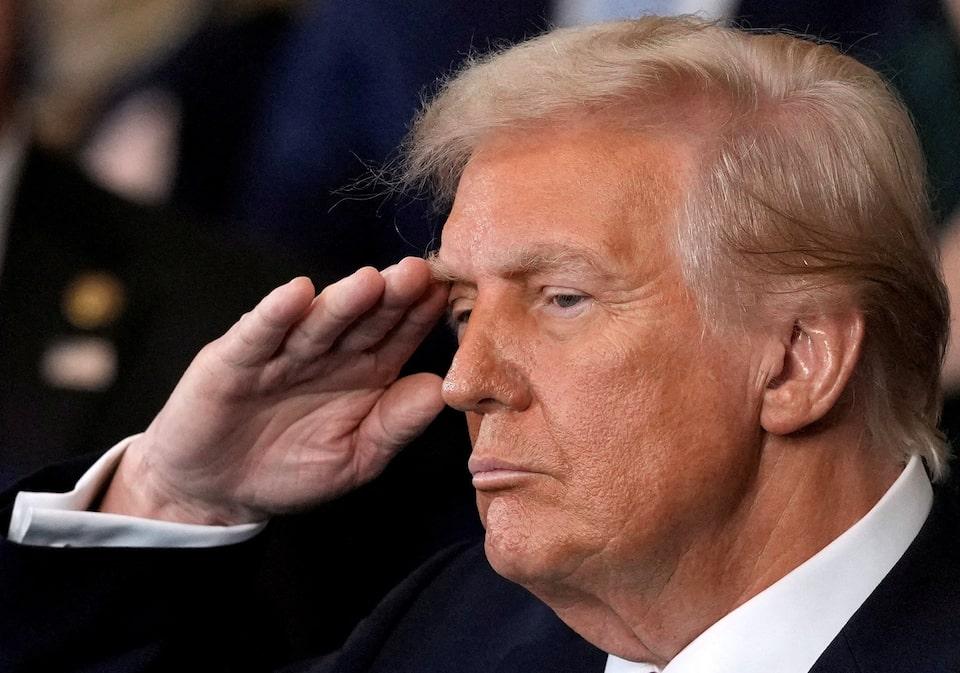
Trump memo calls for studying trade with China, Canada, Mexico Trump does not impose immediate tariffs on imports into US Dollar dives, stocks jump in tariff relief rally Trump says Canada, Mexico may get duties over border problems WASHINGTON, Jan 20 (Reuters) - President Donald Trump did not immediately impose tariffs on Monday as previously promised but said he was thinking about imposing 25% duties on imports from Canada and Mexico on Feb. 1 over illegal immigrants and fentanyl crossing into the U.S. As he was sworn into office, Trump stopped well short of a swift tariff action against the two U.S. neighbors, but directed federal agencies to investigate persistent U.S. trade deficits and unfair trade practices and alleged currency manipulation by other countries. In a presidential memo , opens new tab, Trump directed the Commerce and Treasury departments and the U.S. Trade Representative to probe the economic and national security risks of large trade deficits "and recommend appropriate measures, such as a global supplemental tariff, or other policies, to remedy such deficits." Investors and foreign capitals had been bracing for a day-one tariff action that could upend longstanding trade agreements, but Trump's trade memo essentially called for more research that could back future tariff actions. The reprieve prompted a rally in global stocks and sent other currencies higher against the dollar. U.S. financial markets were closed on Monday but will reopen on Tuesday. Asked by reporters at the White House whether he would impose a universal tariff on all imports into the United States, Trump said: "We may. But we're not ready for that yet." Asked about the Canada and Mexico tariffs, he said he was thinking about 25% because the two countries were allegedly allowing "vast numbers of people" and fentanyl into the U.S. Trump also said he wanted to reverse the U.S. trade deficit with the European Union, either with tariffs or more energy exports. Tariffs were the theme throughout inauguration day, with Trump saying such measures would generate "massive amounts" of federal income as his administration works to rebuild American industry. He said they would be collected by a new agency called the External Revenue Service. "Tariffs are going to make us rich as hell," Trump later told supporters at Capital One Arena in Washington. "It's going to bring our country's businesses back that left us." CHINA ACTIONS Trump's trade memo called for the USTR to assess China's performance under the "Phase 1" trade deal he signed with Beijing in 2020 to end a nearly two-year tariff war. The deal required China to increase purchases of U.S. exports by $200 billion over two years, but Beijing failed to meet the targets as the COVID-19 pandemic hit. USTR will determine China's compliance to recommend appropriate actions "up to and including the imposition of tariffs or other measures as needed," it said. The memo also asks USTR to recommend possible changes to China's Most Favored Nation trading status and to investigate other Chinese economic practices that may be "unreasonable or discriminatory and that may burden or restrict U.S. commerce" -- language associated with Section 301 investigations such as those used to impose tariffs on Chinese goods during Trump's first term and continued by former president Joe Biden. The new president also signed an executive order delaying the enforcement of a ban on popular short-video app TikTok, but said he might impose tariffs on China if Beijing did not approve a potential U.S. deal with TikTok. During his election campaign, Trump vowed to impose steep tariffs of 10% to 20% on global imports into the U.S. and 60% on goods from China to help reduce a trade deficit that now tops $1 trillion annually. Such duties would tear up longstanding trade agreements, including the U.S.-Mexico Canada Agreement (USMCA) upend supply chains and raise costs, according to trade experts. The memo calls on USTR to launch public consultations to prepare for a 2026 review of USMCA, and assess its impact on American workers, farmers, ranchers, and service providers. Some industry groups and trade lawyers in Washington had expected Trump to invoke the International Emergency Economic Powers Act, a law with sweeping powers to control imports, to impose broad tariffs. But Trump will coordinate closely with Congress on tariff measures, a senior administration official said, downplaying differences of opinion within his fledgling cabinet on how quickly to enact Trump's promised tariffs. The source said that Trump's Commerce secretary nominee, Howard Lutnick and his nominee for Treasury secretary, Scott Bessent, would push Trump's trade agenda forward soon, but gave no specific timetable. RELIEF RALLY The U.S. dollar slumped broadly on the news against a basket of major trading partners' currencies, with particularly large upswings in the euro, Canadian dollar, Mexican peso and Chinese yuan. MSCI's measure of global stock markets rose. U.S. financial markets are closed for the Martin Luther King Jr. Day holiday. Canadian Finance Minister Dominic LeBlanc told reporters in Ottawa that it would be a positive step for the U.S. to study bilateral trade ties rather than impose tariffs. Industry groups also expressed relief at the reported lack of immediate duties. "U.S. businesses would welcome a deliberative approach that identifies unfair trade practices and helps Americans succeed in the global economy," said Jake Colvin, president of the National Foreign Trade Council, which represents a broad swath of large American companies on trade matters. Trade analysts said they still expect Trump to press ahead with a global tariff early in his administration. Sign up here. https://www.reuters.com/world/trump-lay-out-trade-vision-wont-impose-new-tariffs-yet-wsj-reports-2025-01-20/