2025-01-21 01:51
WASHINGTON, Jan 20 (Reuters) - Republican U.S. President Donald Trump on Monday floated the idea of universal tariffs but said the United States was not yet ready for such a step. "We're not ready for that yet. We may put it ... because essentially countries take advantage of the U.S.," Trump told reporters at the White House. "Well, you put a universal tariff on anybody doing business in the United States because they're coming in and they're stealing our wealth, they're stealing our jobs, they're stealing our companies, they're hurting our companies. So you put a you put a tariff on to keep them from doing that," Trump, who took office on Monday, added. Sign up here. https://www.reuters.com/markets/trump-floats-idea-universal-tariff-says-us-not-ready-it-yet-2025-01-21/
2025-01-21 00:59
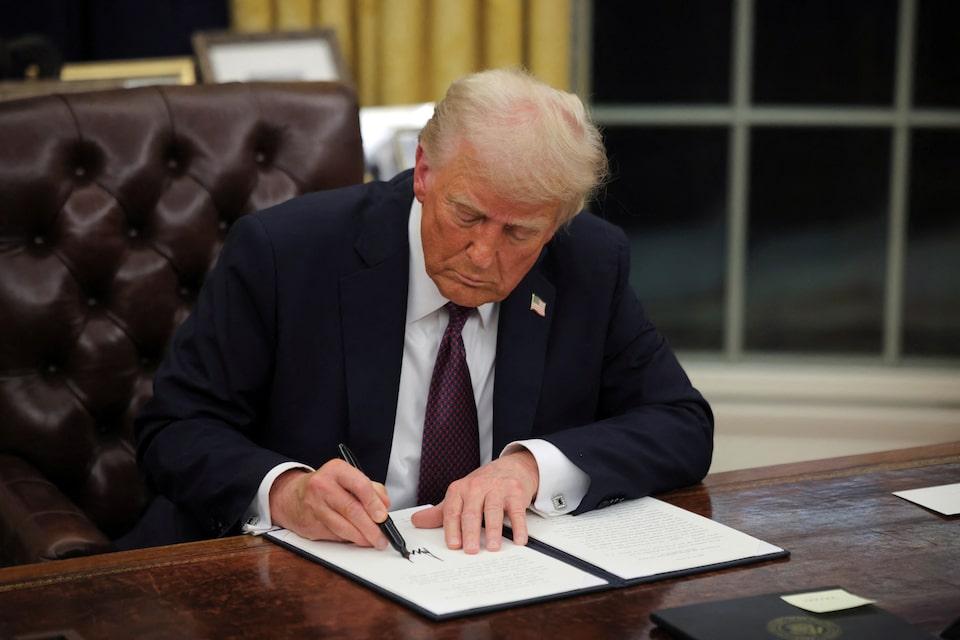
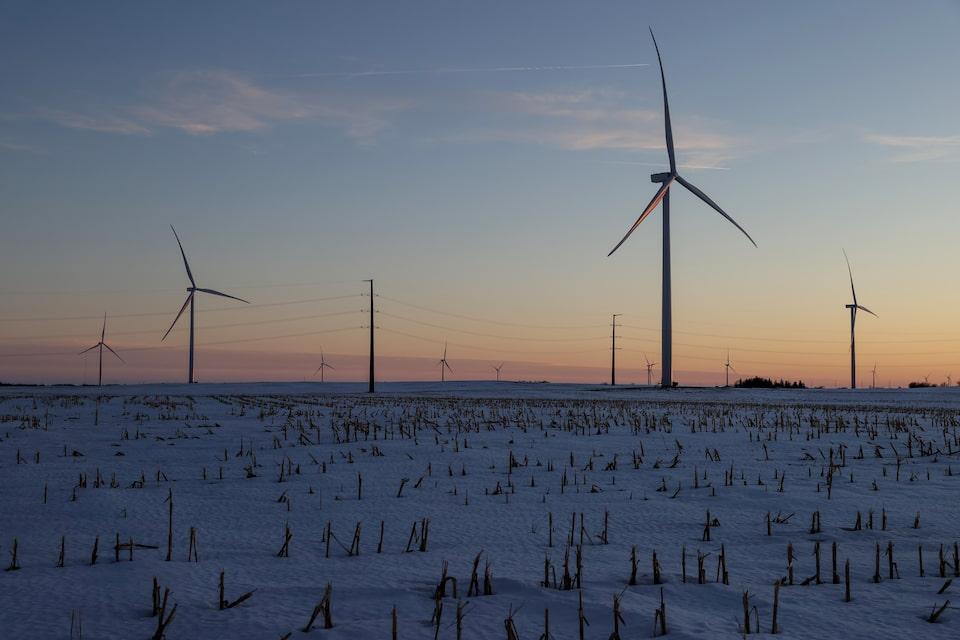
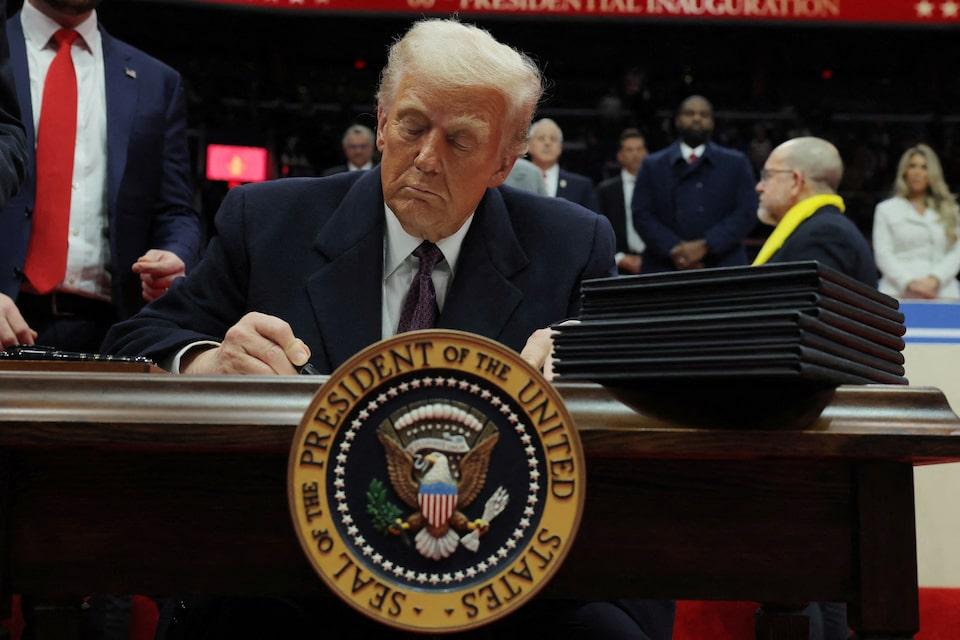
Jan 20 (Reuters) - President Donald Trump on Monday signaled an end to U.S. government support for wind power, saying wind mills are ugly, expensive and harm wildlife. "We're not going to do the wind thing," Trump said during an event after his inauguration. A White House press release earlier in the day said Trump intended to end new leasing for "massive wind farms." "President Trump’s energy policies will end leasing to massive wind farms that degrade our natural landscapes and fail to serve American energy consumers," it said. The comments stirred concern among wind power representatives, who said Trump's position jarred with his promise to maximize national energy output. "A national energy emergency requires us to unleash all necessary sources of American energy - including offshore wind," said Hillary Bright, Executive Director of offshore wind advocacy group Turn Forward. Former U.S. President Joe Biden saw wind power as a vital part of his strategy to decarbonize the U.S. power sector to fight climate change and his government held multiple auctions aimed at developing big new projects. Trump's opposition to wind power represents an about-face from his first term, when his administration had also sought to encourage offshore wind development. Sign up here. https://www.reuters.com/sustainability/climate-energy/trump-signals-end-new-us-wind-power-leasing-2025-01-21/
2025-01-21 00:46
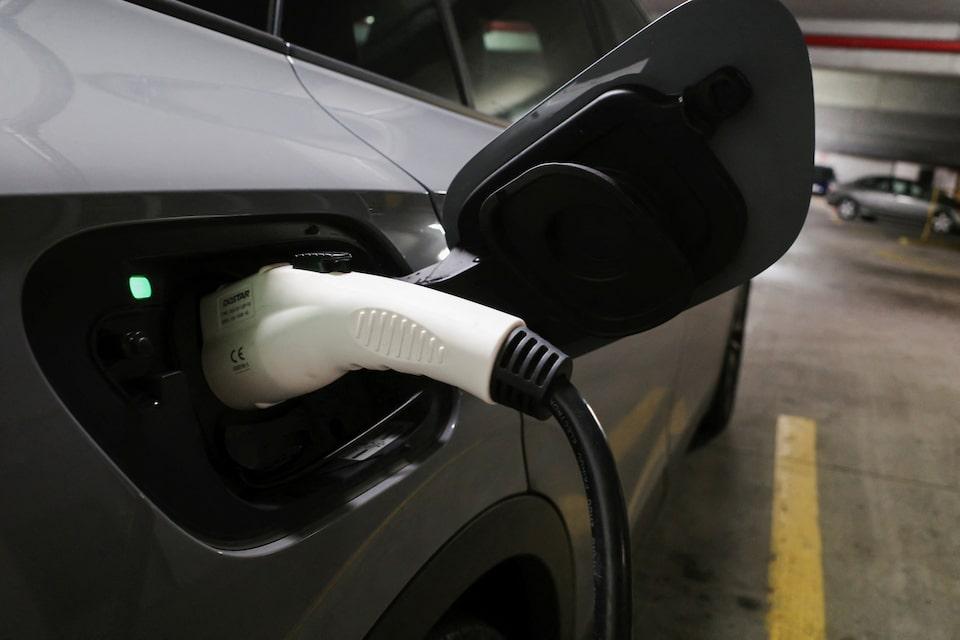
WASHINGTON, Jan 20 (Reuters) - President Donald Trump on Monday revoked a 2021 executive order signed by his predecessor Joe Biden that sought to ensure half of all new vehicles sold in 2030 were electric. The 50% target, which was not legally binding, won the support of U.S. and foreign automakers. Trump also plans to direct agencies to reconsider rules mandating more stringent emissions rules that would require automakers to sell between 30% to 56% EVs by 2032 in order to comply. Sign up here. https://www.reuters.com/business/autos-transportation/trump-revokes-biden-order-that-set-50-ev-target-2030-2025-01-21/
2025-01-21 00:45
Jan 20 (Reuters) - President Donald Trump signed an executive order on Monday repealing a 2023 memo from former President Joe Biden that barred oil drilling in some 16 million acres in the Arctic, the White House announced. Trump repealed dozens of actions taken by Biden, including the oil drilling ban, in his first day in office. Sign up here. https://www.reuters.com/business/energy/trump-repeals-2023-memo-barring-arctic-oil-drilling-some-16-million-acres-2025-01-21/
2025-01-21 00:37
LAUNCESTON, Australia, Jan 21 (Reuters) - There are two ways of looking at the 1.7% decline in China's steel output last year. The first is that it confirms that the world's largest producer of the key industrial metal is now in an established downtrend, and further weakness is likely this year. The second is that the steel industry is actually remarkably resilient in the face of major economic challenges, and that output has been essentially flat at extremely strong levels for the past five years. Both are essentially factual, and reflect the classic glass half-full or half-empty dilemma. On the half-empty side of the ledger is the fact that China's steel production peaked at 1.065 billion metric tons in 2020, and has trended lower since then, with 2024 output coming in at 1.005 billion tons. But another way to look at China's steel output is that it has been within a 70 million ton range between 2019 and 2024, which is actually quite a stable performance. Perhaps the best way to characterise China's steel production is that it likely has peaked, but the decline so far has been gentle, and output remains relatively high despite the well-publicised struggles of the world's second-biggest economy since the COVID-19 pandemic. The question then becomes, what is the likely trajectory for China's steel sector in 2025? Similar to other markets, the answer remains unclear and subject to factors yet to come into play, chief among them what trade tariffs are put in place by the new administration of U.S. President Donald Trump, who resumed the office on Monday. It's also uncertain as to whether 2025 is the year China's struggling residential property sector gets back on its feet, or whether it remains hostage to weak developer balance sheets and consumer wariness. A third factor is what will happen to China's steel exports in 2025, after they hit a nine-year high of 110.72 million tons in 2024. This was up 22.7%, or just over 20 million tons, from the previous year, with the increase helping to offset some loss of domestic consumption for steel mills. The volume of Chinese steel hitting global markets has led to some consternation among countries such as India, which is trying to boost the pace of expansion of its own steel sector. This raises the possibility that China may find it harder to increase steel exports in 2025. But it is worth noting that not all importing countries are opposed to buying more steel from China, especially those without a domestic steel sector. BEST-CASE SCENARIO The best-case scenario for China's steel sector this year is one where trade tariffs aren't too punitive, the domestic economy continues to regain momentum and construction activity stabilises, or perhaps even increases. Under such a scenario, the best outcome for China's steel production would be steady output around 1 billion tons. This also means that China's demand for iron ore is likely to remain steady as well, although it may ease from the record high of 1.24 billion tons in 2024. This is largely because much of the 4.9% rise in imports, which was equivalent to 57.5 million tons, went to replenish stockpiles rather than meet increased demand for the key steel raw material. Port inventories monitored by consultants SteelHome ended last year at 146.85 million tons, up 32.4 million from the 114.5 million at the end of 2023. It's unlikely that stockpiles will rise again strongly in 2025, which is likely to limit iron ore imports, although if the downward trend in prices of 2024 extends into this year, traders may be tempted to take advantage of cheaper supplies. The views expressed here are those of the author, a columnist for Reuters. Sign up here. https://www.reuters.com/markets/commodities/chinas-steel-sector-is-softening-with-resilience-russell-2025-01-21/

2025-01-21 00:26
Habeck describes US exit from Paris accord as 'fatal' Stresses energy self-reliance would cut import dependency Grid operator wants permission to charge higher prices BERLIN, Jan 21 (Reuters) - Sticking with growth plans for green energy is the best response to Donald Trump after the U.S. president's "fatal" move to withdraw from the Paris climate accord, German vice chancellor Robert Habeck said on Tuesday. "We have to bring our own technologies to the fore," said Habeck, the architect of plans to make 80% of electricity green in Germany by 2030, speaking at the Handelsblatt annual energy conference in Berlin. The move by Trump, a climate change sceptic, to withdraw from the Paris climate treaty was widely expected and further threatens the agreement's central goal to limit a rise in global temperatures to 1.5 degrees Celsius above pre-industrial levels. Germany, Europe's biggest economy, holds a national election on Feb. 23, where Habeck's Greens are trailing in opinion polls as a cost-of-living crisis and an economic downturn has shifted some voters' focus away from climate protection. Economy minister Habeck said self-reliance through domestic green energy remained the best response to dependency on energy imports and high costs, especially as Russian gas supplies to Europe dwindle following the invasion of Ukraine in 2022. Habeck urged parliament to pass a draft bill giving more digital control of expanding renewable capacity to help rein in rising costs and bring down consumer bills. Another unfinished plan, a capacity market for power, was also a priority, he said. Otherwise, coal-burning power plants, which offer stable supply, would have to operate beyond the targeted 2030 cut-off date. The chief executive of power transmission firm TenneT said the new German government needed to take a number of key steps to support the green energy roll-out. Renewable producers needed to pay a part of grid costs, Tim Meyerjuergens said. Currently, they pay nothing. Grid operators should also be allowed to raise their fees as they are too low to attract international investors to grids, he added. Sign up here. https://www.reuters.com/business/environment/trump-withdraw-paris-climate-agreement-2025-01-20/